

OBD-II Code C0044: Brake Pressure Sensor 'A' Circuit Malfunction
The Ultimate Guide to Diagnosing and Fixing C0044 for Technicians and DIYers
- Code C0044 disables your ABS and stability control because of a fault in the brake pressure sensor circuit, increasing stopping distances by up to 30%.
- The most frequent cause is an internal failure of the ABS module, which requires a $150-$350 remanufacturing service or an $800+ replacement.
- Diagnosis must start with an advanced scan tool to check live brake pressure data at rest; a reading above 0 PSI without pedal application confirms a fault.
- Before replacing expensive electronic parts, check for a $5 mechanical fix like lubricating a sticking brake booster pushrod, especially on Ford models.
What Does C0044 Mean?

Code C0044 signifies the ABS control module detects an illogical, missing, or incorrect signal from the primary brake pressure sensor ('A'). This sensor measures hydraulic pressure applied to the brake pedal and communicates it to the ABS and ESC systems. When compromised, these systems shut down as a fail-safe, triggering dashboard warning lights.
Technical definition: The SAE/OBD-II definition is "Brake Pressure Sensor 'A' (Subfault)". The Anti-lock Brake System (ABS) control module identifies a fault within the sensor's circuit, such as implausible voltage, pressure detected at rest, or an internal control module failure.
Can I Drive With C0044?
Yes, But With Caution. Driving is possible, but your primary safety systems—the Anti-lock Braking System (ABS) and Electronic Stability Control (ESC)—are disabled. In a panic stop, your wheels lock, increasing stopping distances by 15-30% and causing a complete loss of steering control. Continued driving risks a more severe failure of the entire ABS/HCU unit, exceeding $1,500.
Common Causes

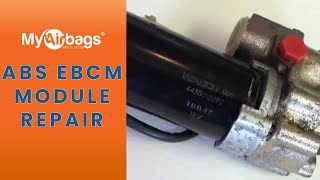
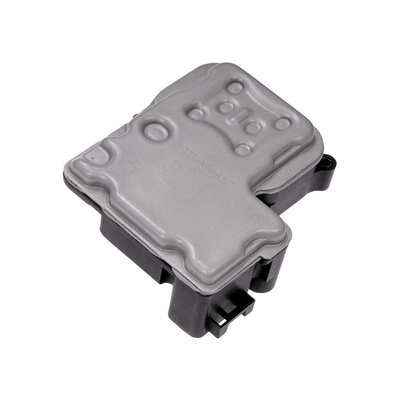
- Internal ABS Module/HCU Failure (Very Common) — On most modern vehicles, the pressure sensor is integrated directly into the ABS Hydraulic Control Unit (HCU). A failure of this internal sensor or the module's circuit board requires replacing or remanufacturing the entire ABS assembly. 🎬 See how an ABS module is professionally repaired
- Faulty External Brake Pressure Sensor (Common) — If mounted externally on the master cylinder, the sensor itself fails internally, sending erratic voltage signals, a stuck value (0V or 5V), or no signal at all.
- Damaged Wiring or Corroded Connectors (Common) — The wiring harness is exposed to heat, vibration, and moisture. Wires chafe or break, and connector pins corrode—especially in regions using road salt—leading to high resistance or a complete loss of connection.
- Mechanical Binding (Residual Hydraulic Pressure) (Less Common) — A sticking brake booster pushrod or seized caliper pin causes the brakes to drag slightly, maintaining low hydraulic pressure when the pedal is released. The sensor accurately reports this pressure, but the ABS module flags a C0044 plausibility fault because it expects zero pressure.
- Poor Ground Connection (Less Common) — The ABS module requires a clean, solid ground. A corroded or loose ground strap introduces electrical noise and voltage fluctuations, leading to erroneous codes.
- Contaminated or Low Brake Fluid (Less Common) — Air, moisture, or debris in the brake fluid alters its hydraulic characteristics, causing a spongy pedal and erratic pressure signals.
- Misadjusted Brake Pedal Switch (Rare) — The ABS module cross-references the pressure sensor with the brake pedal switch. If the switch signals the pedal is pressed when no hydraulic pressure exists (or vice-versa), the module sets a plausibility fault.
- Software/Calibration Issues (Rare) — After replacing an ABS module, a calibration procedure is required. Skipping this step results in codes like C0044:54 (Initialization Not Performed).
Symptoms

- ABS Light On — The Anti-lock Braking System warning light illuminates permanently on the instrument cluster.
- Traction/Stability Control Light On — The ESC/VSA/DSC or Traction Control System warning light illuminates alongside the ABS light, as these systems rely on the same sensor data.
- Brake Warning Light On — A general red or yellow 'BRAKE' warning light illuminates, indicating a fault in the primary braking system's electronics.
- Increased Stopping Distance — Without ABS, wheels lock during a hard stop, leading to skidding and significantly longer stopping distances.
- Brakes Feel Like They Are Dragging — If caused by a mechanical issue like a sticking booster pin, the brakes do not fully release, causing a dragging sensation and excessive heat.
- Spongy or Unresponsive Brake Pedal — The brake pedal feels soft or requires more travel if a related hydraulic issue (like air in the lines) is present.
Diagnostic Flowchart

Tap your situation to follow the diagnostic path that matches what you're seeing on this code.
Common Fixes & Costs
- Repair/Remanufacture ABS Module — Parts: $150-$350, Labor: $150-$250, ~2.5 hr book time (Professional)
- Replace ABS Control Module/HCU Assembly — Parts: $600-$1200, Labor: $200-$400, ~2.5 hr book time (Professional)
- Replace External Brake Pressure Sensor — Parts: $50-$150, Labor: $100-$150, ~1.2 hr book time (Intermediate)
- Lubricate Sticking Brake Booster Pin — Parts: $5, Labor: $0-$50, ~0.3 hr book time (DIY)
- Repair Wiring or Connector — Parts: $20-$100, Labor: $100-$200, ~1.5 hr book time (Intermediate)
- Perform Brake System Bleed — Parts: $20-$40, Labor: $100-$180, ~1.2 hr book time (DIY)
Used vs. New Parts: Buying Guide
When a used part is worth it: A used ABS module from a low-mileage vehicle (under 80K miles) scrapped for non-brake reasons is cost-effective for older vehicles.
Donor-vehicle mileage cap: roughly under 80000 miles for the part to have meaningful remaining life.
Donor quality checklist:
- Verify the donor vehicle's VIN to ensure compatibility; part numbers must match exactly.
- Avoid parts from flood-damaged or rust-belt vehicles, as corrosion is a key failure point.
- Ensure the seller has a return policy or short-term warranty (30-90 days).
Decision logic:
- If The fault is internal to the module and a reputable remanufacturing service is available. → Favor remanufacturing. It costs $150-$350, avoids VIN programming issues, and often includes a lifetime warranty.
- If Vehicle is older (>10 years, >150K miles) and budget is the primary concern. → A used part is a reasonable risk, provided you can have it programmed.
- If Vehicle is newer (<7 years) or the part is for a known high-failure-rate module (like ATE Mk60). → Favor new or remanufactured to avoid inheriting the same common fault.
Warranty tradeoff: Used parts typically offer a 30-90 day warranty. Remanufactured units often come with a 1-year to lifetime warranty. New OEM or aftermarket parts usually carry a 1-3 year warranty.
Worst-case if a used part fails: $400-$800 if a used part fails after the warranty period, requiring repeat labor costs plus the price of another replacement part.
What Happens If You Wait — Timeline
- 0-1 month: ABS/ESC lights illuminate, disabling safety systems. The fault is intermittent at first. Base hydraulic brakes function normally. (MPG impact: 0%% · Added cost: $0)
- 1-4 months: The fault becomes permanent. An intermittent wiring issue degrades due to corrosion, increasing the repair cost from a simple cleaning to a harness repair. (MPG impact: 0%% · Added cost: $0 - $250)
- 4-12 months: Continued thermal cycling causes an internal module fault to worsen. A module that was a candidate for a $250 remanufacturing service becomes unrepairable. (MPG impact: 0%% · Added cost: $300 - $1000)
- 12+ months: Severe internal failure of the hydraulic control unit leads to internal debris or seal degradation. This forces a full-cost replacement and compromises the base braking system. (MPG impact: 0%% · Added cost: $1500+)
Cost of Not Fixing It
- Immediate: ABS and Electronic Stability Control (ESC) are disabled. Wheels lock up during panic stops, causing loss of steering control and increased stopping distances. (Added cost: Cost of an at-fault accident.)
- 1-6 months: An intermittent fault within the ABS module becomes a permanent failure. A simple wiring repair degrades into a mandatory $800+ module replacement. (Added cost: $200 - $1800)
- 6+ months: Continued driving with a malfunctioning hydraulic unit causes internal debris generation or seal failure. This compromises the base brake system and forces a full-cost replacement exceeding $1,500. (Added cost: $1500+)
Diagnosis Steps

- Read Codes and Note Suffix
Use an advanced OBD-II scanner to access the ABS module. Confirm C0044 is active and record any suffix digits (e.g., :28, :49, :64). These suffixes indicate if the fault is related to plausibility, an internal electronic failure, or a calibration issue.
Tools: Advanced OBD-II Scanner (Beginner) - Analyze Live Sensor Data
Access the live data stream for the ABS module. With the engine on and foot off the pedal, 'Brake Pressure Sensor A' must read 0 PSI / 0 Bar. As you press the pedal, pressure must increase smoothly. A reading stuck high (e.g., 29 PSI at rest) or jumping erratically confirms a fault.
Tools: Advanced OBD-II Scanner with Live Data (Beginner) - Check for Mechanical Interference
If live data shows pressure at rest, check for a sticking brake booster pushrod. With the engine off, pull the brake pedal upward with your foot; if this releases dragging brakes and drops the live pressure to zero, the booster pin requires lubrication.
Tools: Advanced OBD-II Scanner, WD-40 or similar lubricant (Intermediate) - Visually Inspect Sensor, Wiring, and Fluid
Locate the brake pressure sensor or ABS module. Inspect the connector for corrosion or pushed-out pins. Trace the wiring harness for chafing or melting. Verify the brake fluid is at the correct level and not heavily contaminated.
Tools: Flashlight, Inspection Mirror (Beginner) - Test Sensor Circuit and Ground
Disconnect the sensor. Use a multimeter to verify the 5-volt reference, ground (less than 1 ohm to chassis), and signal wires. For advanced testing, back-probe the signal wire; voltage must rise smoothly from 0.5V to 4.5V as the pedal is pressed. An oscilloscope shows this as a clean, ascending line.
Tools: Digital Multimeter, Oscilloscope (optional), Back-probe kit (Advanced) - Bleed the Brakes
If the code appeared after brake work, a thorough brake bleed is necessary. Use a scan tool to cycle the ABS pump (an 'ABS Bleed' function) to purge trapped air from the HCU.
Tools: Brake Bleeder Kit, Wrench, Fresh Brake Fluid, Advanced OBD-II Scanner (Intermediate)
When This Code Triggers (Freeze-Frame Conditions)
- Vehicle Speed: 0-10 mph (During initial system self-check immediately after startup.)
- Brake Pedal Status: Off / Not Pressed (When the module detects hydraulic pressure without the brake pedal switch being active (plausibility fault).)
- System Voltage: 12.0-14.8V (Code sets during normal operating voltage; a drop below 10.5V triggers unrelated codes.)
- Time Since Engine Start: < 1 minute (Fault is detected quickly during the ABS module's power-on self-test routines.)
Related Codes
- C0045 — Refers to 'Brake Pressure Sensor B'. If both C0044 and C0045 are present, suspect a shared power/ground issue or a faulty ABS module.
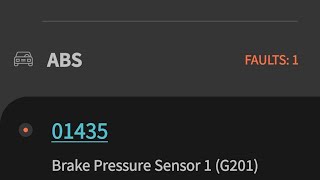
- 01435 (VAG) — The Volkswagen/Audi specific code for 'Brake Pressure Sensor 1 (G201)'. Functionally identical to C0044 and points to the ATE Mk 60 ABS module failure.
- P0504 — Indicates a 'Brake Switch A/B Correlation' fault. A faulty brake pedal switch sends implausible signals, triggering C0044 as a secondary plausibility fault.
- C006C — Relates to 'Vehicle Stability Control' system faults. Its presence reinforces that the stability system is disabled due to the primary C0044 fault.
Climate & Environmental Factors
- Road Salt / High Humidity: Salt spray acts as an electrolyte, accelerating corrosion on wiring harnesses, connectors, and ground points. This leads to high resistance, intermittent signals, or complete circuit failure.
- Extreme Cold: Extreme cold causes micro-cracks in old solder joints within the ABS control module, leading to intermittent internal electronic failures. It also makes plastic wiring insulation brittle.
How to Talk to a Mechanic About This Code
Say this: "I have an ABS light on and a C0044 code. I'd like to book a diagnostic. Can you please start by checking the live data from the brake pressure sensor to see if it's reading any pressure when my foot is off the brake? Also, please note any suffix codes, like :28 or :49, if my car provides them."
This signals you know the difference between a mechanical fault, a wiring issue, and a module failure. It directs the technician to perform the key diagnostic step first (checking live data) and prevents them from immediately quoting a module replacement.
Avoid saying:
- 'My ABS light is on, can you fix it?'
- 'Just do whatever it takes to get the light off.'
- 'I think I need a new ABS module.'
Questions to ask before authorizing the repair:
- What was the brake pressure sensor reading in PSI or Bar with the pedal released?
- Did you check for mechanical issues like a sticking caliper or brake booster pin that could cause residual pressure?
- If the ABS module needs to be replaced, is a remanufactured unit an option, and what is the warranty?
- Does the repair require programming or an ABS bleed procedure with a scan tool?
Where to Take It: Dealer vs Independent vs Chain
- Dealer:
Best for: Vehicles under warranty, Checking for recalls or extended warranties (e.g., on VW/Audi/Mazda ATE Mk60 units), Complex module programming and initialization
Downsides: Highest labor rates, Defaults to full module replacement instead of exploring remanufacturing options (Typical cost: +50% vs. baseline) - Independent Shop:
Best fit for most scenarios, provided the shop is properly equipped. Their willingness to use remanufactured modules saves you over $500.
Best for: Out-of-warranty vehicles, Cost-effective diagnosis and willingness to use remanufactured parts, Diagnosing common mechanical or wiring faults
Downsides: Must be equipped with an advanced, multi-system scan tool capable of reading ABS live data and performing an ABS bleed (Typical cost: +0% vs. baseline) - Chain Shop:
AVOID for C0044 diagnosis. Their business model is not suited for complex electronic and hydraulic troubleshooting.
Best for: Simple, unrelated maintenance like oil changes or tire rotations.
Downsides: Technicians lack the advanced diagnostic tools or specific training for complex electronic faults., High risk of misdiagnosis, leading to unnecessary parts replacement. (Typical cost: -10% vs. baseline)
When to Walk Away From the Repair
If the estimated repair cost for the ABS module replacement exceeds 40-50% of your car's private-party value, consider selling or trading in the vehicle.
- Car worth $4000, fix is $1800: Borderline. The repair is 45% of the car's value. Explore the cheaper remanufacturing option or get a second opinion before proceeding.
- Car worth $12000, fix is $1800: Fix it. The repair is only 15% of the car's value and restores a critical safety system.
- Car worth $2500, fix is $1800: Walk away. The repair cost is 72% of the car's value. It is not economically viable.
What Scan Tool You Need for This Code
Minimum: An OBD-II scanner that reads and clears codes from the ABS/Brake Control Module and displays LIVE DATA for that module.
A standard $20 engine code reader CANNOT communicate with the ABS module. It will not see the C0044 code or show the live brake pressure data essential for diagnosis.
Budget: Autel AutoLink AL619 / Foxwell NT630 Plus (~$120) — Reads and clears ABS codes and displays live data streams. This is the minimum required to see if the pressure sensor is reading pressure at rest.
Mid-range: Foxwell NT680 Pro / Autel MaxiCOM MK808 (~$380) — Includes BI-DIRECTIONAL CONTROL. This allows you to perform an 'ABS Bleed' or 'Service Bleed', required after replacing a module or if air is trapped in the system.
Professional: Autel MaxiSys MS906 Pro / Launch X431 Series (~$900-1500) — Full bidirectional control and ABS bleeding, plus OEM-level functions like programming and initializing a new ABS module to the vehicle's VIN.
Rent vs buy: Most auto parts stores only rent basic engine code readers that are useless for this code. For C0044, you must buy a scanner with ABS capabilities. A mid-range pick with ABS bleed function is the best value.
How to Clear the Code After You Fix It
- Perform any required component calibration (e.g., for a new ABS module).
- Use an ABS-capable OBD-II scan tool to clear the code from the brake control module.
- Perform a standard brake bleed, followed by a scan tool-actuated ABS bleed procedure if the hydraulic system was opened.
- Conduct a short test drive to allow the system to verify the repair.
Drive cycle (~15 minutes): After clearing the code, start the vehicle and idle for 2 minutes. Drive for 10-15 minutes in mixed conditions, including several smooth stops from above 30 mph. If the warning lights do not return, the repair is successful.
Readiness monitors affected: Not applicable for ABS codes
Watch out for:
- Using a basic code reader that cannot access or clear codes from the ABS module.
- Disconnecting the battery will not reliably clear a C0044 code and resets unrelated engine readiness monitors.
- The code returns immediately if the root cause of the fault is not properly repaired.
Will This Fail Emissions / State Inspection?
No — by itself this code doesn't fail OBD inspection (but it can keep readiness monitors from setting, which causes a separate fail).
- California: An illuminated ABS warning light is a safety-device failure and causes the vehicle to fail its safety inspection.
- New York: Per state law, an illuminated ABS warning light is grounds for the vehicle to fail the annual safety inspection.
- Texas: An illuminated amber ABS warning light will NOT cause a failure. However, if the fault triggers a red 'BRAKE' warning light, the vehicle WILL fail the safety inspection.
Most Commonly Affected Vehicles
- Ford Edge (2011-2014) — The pressure sensor is internal to the HCU. Suffix codes like C0044:28 indicate residual pressure is detected. The entire ABS module must be replaced if the sensor fails.
- Ford Fiesta (2011-2019) — Prone to a sticking brake booster pushrod causing brake drag and triggering C0044. Lubricating the pin often resolves the issue.
- Mazda 2, 3, 5 (2007-2012) — Equipped with the ATE Teves Mk 60 ABS module, which has a high failure rate of the internal pressure sensor. Module repair is the most cost-effective solution.
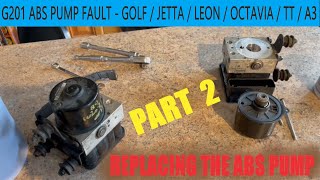
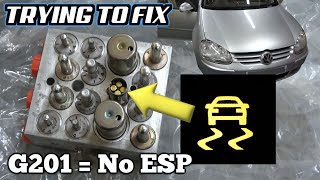
- Volkswagen/Audi Various (Golf, Jetta, A3) (2006-2010) — Uses the ATE Mk 60 module with a high failure rate of the internal G201 sensor. Triggers VAG-specific code 01435, equivalent to C0044.
- Dodge/Ram/Chrysler Ram 1500, Grand Caravan (2013-2018) — C0044 combined with suffixes like :01 or :62 indicates a complete internal failure of the Integrated Control Unit (ICU). Requires full unit replacement.
- Honda Accord, CR-V (2013-2022) — Appears as C0044-49 or C0044-F0, indicating an internal circuit failure within the VSA (Vehicle Stability Assist) modulator-control unit.
- Chevrolet/GMC Silverado, Sierra, Tahoe (2007-2014) — Commonly points to a failed sensor on the master cylinder, wiring issues near the module, or a faulty Electronic Brake Control Module (EBCM).
- Ford Maverick (2022-2024) — Instances of C0044 appear after brake service, ultimately requiring brake module replacement due to early-life part failure.
- Subaru Outback, Forester (2008-2014) — Uniquely indicates a 'TCM Communication Circuit' fault. The ABS module loses communication with the Transmission Control Module. Diagnosis must focus on the CAN bus.
Manufacturer-Specific Notes
- Ford: Suffix codes dictate the repair. C0044:28 means residual pressure (check mechanicals), C0044:49 means internal electronic failure (replace module), and C0044:64 means signal plausibility failure.
- Mazda: Suffix C0044:54 means 'brake fluid pressure sensor initialization procedure has not been performed'. This appears if a new module is installed but not calibrated with a scan tool.
- Dodge/Ram: Codes C0044-01 or C0044-62 on 2013+ models condemn the entire Integrated Control Unit (ICU). Replace the entire assembly to avoid repeat repairs.
- Subaru: C0044 is defined as 'TCM Communication Circuit Malfunction'. It points to a loss of communication between the ABS module and the Transmission Control Module over the CAN bus, not a sensor failure.
- Volkswagen/Audi: The VAG code 01435 for the G201 sensor failure in ATE Mk60 units was subject to an extended warranty program in the US. Owners should check dealer eligibility before paying out of pocket.
Real Owner Stories
2016 Ford Fiesta - Brakes Dragging
Owner experienced brakes that locked up or dragged after driving. Pulling up on the brake pedal temporarily released the brakes. Code C0044 appeared.
What they tried:
- Replaced sticking caliper and brake hose with no change.
- Replaced master cylinder with no change.
- Researched online forums and found information about a sticking brake booster pushrod.
Outcome: The owner lubricated the brake booster pushrod pin with WD-40. This freed the sticking pin, allowing the pedal to return fully and releasing the residual brake pressure. The total cost was under $5.
Lesson: For a C0044 code accompanied by dragging brakes, always check for simple mechanical issues like a sticking booster pin before replacing expensive hydraulic components.
2022 Ford Maverick - Misdiagnosis After Brake Job
ABS and traction control lights appeared a week after a professional rear brake pad replacement. The shop read code C0044 but found no mechanical issues.
What they tried:
- Took the truck to a Ford dealership for advanced diagnostics.
- Dealer diagnosed an internal brake module failure and ordered a replacement.
- The first replacement module was faulty; a second one was ordered.
Outcome: The issue was an internal failure of the ABS module that coincidentally occurred after a brake service. The repair required a new, programmed module from the dealer.
Lesson: A C0044 code appearing after a brake job is caused by improper service or coincidental part failure. Ask the shop if they followed the electronic brake service procedure.
2008 Mazda 3 - Classic ATE Teves Mk 60 Failure
The TSC/DSC warning light came on. A diagnostic test at the dealer revealed code C0044. The dealer quoted over $1,500 for a new hydraulic unit.
What they tried:
- Owner researched the code online and discovered the common failure of the ATE Teves Mk 60 ABS module's internal pressure sensor.
Outcome: Instead of a full dealer replacement, the owner used a specialist repair service to remanufacture the original ABS module for $250.
Lesson: If you have a C0044 code on a 2007-2012 Mazda, VW, or Ford, research if your vehicle has the ATE Teves Mk 60 ABS unit. Module remanufacturing is a highly common, cost-effective alternative.
How to Prevent This Code From Triggering
- Flush brake fluid every 2-3 years (Every 24-36 months) — Brake fluid absorbs moisture from the air. This moisture causes corrosion inside the expensive ABS module and hydraulic lines, leading to sensor failure or seized components.
- Perform regular undercarriage washes (Monthly, especially in winter) — Washing the undercarriage removes corrosive road salt that attacks the ABS module connector, wiring harnesses, and ground points, preventing electrical failures.
- Apply dielectric grease to electrical connectors (During any brake or electrical service) — Applying dielectric grease to the ABS module and sensor connectors seals out moisture and oxygen, preventing pin corrosion.
- Inspect and clean ABS module ground points (Every 60,000 miles or if electrical issues arise) — A clean, tight ground connection is essential. Removing and cleaning the ground strap connection to the chassis prevents erratic behavior and false codes.
Frequently Asked Questions
Can I drive my car with a C0044 code?
Yes, but it is strongly discouraged. Your basic hydraulic brakes function, but critical safety systems like ABS and stability control are offline. This causes wheels to lock up in a panic stop, leading to loss of steering and longer stopping distances.
What's the most common mistake when diagnosing C0044?
The biggest mistake is immediately replacing the expensive ABS module without ruling out simpler causes. Always check for mechanical issues like a sticking brake booster pin and analyze live scan tool data to verify pressure at rest.
Will the C0044 code clear itself?
No. This safety-related fault code remains active until the underlying issue is repaired. After the repair, manually clear the code from the ABS module using a compatible OBD-II scanner.
Is replacing the brake pressure sensor a DIY job?
If the sensor is external, an experienced DIYer can replace it and bleed the brakes. If the sensor is internal to the ABS module, take the vehicle to a shop equipped with a bi-directional scanner for module replacement and programming.
Why did C0044 appear right after a brake job or fluid flush?
Air introduced into the ABS hydraulic unit during service triggers this if not properly bled using a scan tool. Alternatively, a sticking caliper creates residual pressure that the sensor reads as a fault.
What do the suffix numbers like :28, :49, or :64 mean?
These manufacturer-specific fault type codes direct diagnostic efforts. For example, Ford's :28 points to residual pressure at rest, :49 indicates an internal electronic failure, and :64 is a signal plausibility failure.
Can a bad wheel speed sensor cause a C0044 code?
No, a bad wheel speed sensor sets its own specific codes (e.g., C0035-C003E). The C0044 code exclusively flags the brake pressure sensor circuit. However, both faults illuminate the ABS and traction control lights.
What is a 'pressure sensor initialization' and can it cause C0044?
Yes. After replacing an ABS module, a scan tool must calibrate it to learn the 'zero' pressure point. Skipping this step leaves the module without a baseline, triggering codes like Mazda's C0044:54.
Key Takeaways
- Code C0044 disables your ABS and stability control because of a fault in the brake pressure sensor circuit, increasing stopping distances by up to 30%.
- The most frequent cause is an internal failure of the ABS module, which requires a $150-$350 remanufacturing service or an $800+ replacement.
- Diagnosis must start with an advanced scan tool to check live brake pressure data at rest; a reading above 0 PSI without pedal application confirms a fault.
- Before replacing expensive electronic parts, check for a $5 mechanical fix like lubricating a sticking brake booster pushrod, especially on Ford models.
Helpful Videos

Shop the Parts Behind C0044
Below are the parts most often responsible for code C0044, ranked by how frequently each one is the actual culprit (per the diagnosis above). Tap any to see what we have for your vehicle.



The information in this article is provided for general reference and educational purposes only. Vehicle specifications, procedures, and part compatibility can vary by production date, trim level, and region. Always consult your vehicle's factory service manual and verify part numbers before purchasing or performing repairs. Safety-critical components such as airbags, seat belts, and braking systems should be installed by a qualified professional.
- 🧭 Diagnostic Flowchart
- 🎬 Helpful Videos
- 🛍️ Shop This Part
- What Does C0044 Mean?
- Can I Drive With C0044?
- Common Causes
- Symptoms
- Common Fixes & Costs
- Used vs. New Parts: Buying Guide
- What Happens If You Wait — Timeline
- Cost of Not Fixing It
- Diagnosis Steps
- When This Code Triggers (Freeze-Frame Conditions)
- Related Codes
- Climate & Environmental Factors
- How to Talk to a Mechanic About This Code
- Where to Take It: Dealer vs Independent vs Chain
- When to Walk Away From the Repair
- What Scan Tool You Need for This Code
- How to Clear the Code After You Fix It
- Will This Fail Emissions / State Inspection?
- Most Commonly Affected Vehicles
- Manufacturer-Specific Notes
- Real Owner Stories
- 2016 Ford Fiesta - Brakes Dragging
- 2022 Ford Maverick - Misdiagnosis After Brake Job
- 2008 Mazda 3 - Classic ATE Teves Mk 60 Failure
- How to Prevent This Code From Triggering
- Frequently Asked Questions
- Can I drive my car with a C0044 code?
- What's the most common mistake when diagnosing C0044?
- Will the C0044 code clear itself?
- Is replacing the brake pressure sensor a DIY job?
- Why did C0044 appear right after a brake job or fluid flush?
- What do the suffix numbers like :28, :49, or :64 mean?
- Can a bad wheel speed sensor cause a C0044 code?
- What is a 'pressure sensor initialization' and can it cause C0044?
- Key Takeaways
- 🎟️ Get 5% Off