

OBD-II Code C0045: Left Rear Wheel Speed Sensor Circuit
What C0045 means, why it triggers, and how to fix it
- Code C0045 disables your ABS and traction control, increasing stopping distances by up to 25% on slippery roads.
- Inspect the wiring harness and connector for corrosion before spending $150 to $350 on a new wheel speed sensor.
- Use an advanced OBD-II scanner to verify the left rear wheel speed reads 0 mph in live data before replacing any parts.
- On 2010-2017 Subaru models, C0045 is a communication error indicating a Transmission Control Module (TCM) fault, not a wheel sensor failure.
What Does C0045 Mean?

Your car's Anti-lock Brake System (ABS) module detects a problem with the electrical circuit for the left rear wheel speed sensor. This sensor tells the computer how fast the wheel spins. When the signal is lost, erratic, or incorrect compared to the other wheels, the computer illuminates warning lights and disables safety systems like ABS and traction control to prevent unpredictable braking behavior.
Technical definition: The official SAE/OBD-II definition for code C0045 is "Left Rear Wheel Speed Sensor Circuit Malfunction". This indicates the ABS control module (EBCM) detects an open circuit, short to ground, short to voltage, missing signal, or an abnormal signal in the left rear wheel speed sensor's electrical circuit. Advanced scanners display a symptom byte (e.g., '06' for Open, '0F' for Erratic, or '5A' for Not Plausible) specifying the exact fault.
Can I Drive With C0045?
Yes, But With Caution. Yes, but it is strongly discouraged. Your Anti-lock Braking System (ABS), traction control, and stability control are disabled. Your wheels will lock up during a hard stop, increasing stopping distances by up to 25% on slippery surfaces and causing an immediate loss of steering control. Continued driving is a severe safety risk in adverse weather or emergency situations.
Common Causes


- Damaged or Corroded Wiring/Connector (Very Common) — The wiring harness leading to the sensor is the most frequent point of failure. Wires fray, break, or short out from rubbing on suspension parts. The connector pigtail at the sensor and intermediate body connectors are highly susceptible to corrosion from water and road salt.
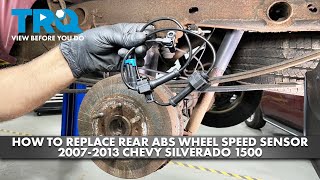
- Failed Left Rear Wheel Speed Sensor (Very Common) — Located at the wheel hub, the sensor is exposed to extreme heat, water, dirt, and vibrations, causing internal electrical failure over time. 🎬 See this walkthrough on how to replace the rear sensor.
- Failed Wheel Hub, Bearing, or Tone Ring (Common) — The sensor reads a toothed or magnetic tone ring that spins with the wheel. If this ring cracks, accumulates metallic debris, or if the wheel bearing develops excessive play (wobble), the sensor cannot get a clear reading. On modern vehicles, the tone ring is integrated into the hub assembly, requiring complete replacement.
- Low Battery Voltage or Charging System Faults (Less Common) — A weak battery or failing alternator causes low system voltage, leading control modules to behave erratically and set false codes. On Subaru vehicles, a C0045 is directly triggered by voltage issues or Transmission Control Module (TCM) faults.
- Faulty ABS Control Module (Rare) — An internal failure of the ABS control module prevents it from receiving or interpreting the sensor's signal. Suspect this only after definitively ruling out the sensor, wiring, and hub.
Symptoms

- ABS and Traction Control Lights Illuminated — The amber ABS light and systems like "Traction Control," "Stabilitrak," or "ESC" illuminate immediately and stay on.
- Safety Systems Disabled — Anti-lock brakes and traction control no longer function. Your standard brakes still work, but the wheels will lock up and skid during a hard stop.
- Unwanted ABS Activation at Low Speeds — A faulty signal from a cracked tone ring or debris tricks the ABS module into thinking a wheel is locking up. The ABS activates unnecessarily at low speeds, resulting in a pulsing brake pedal and grinding noises.
- Cruise Control Inoperative — Because accurate vehicle speed data from all wheels is compromised, the engine computer disables the cruise control system as a safety precaution.
Diagnostic Flowchart

Tap your situation to follow the diagnostic path that matches what you're seeing on this code.
Common Fixes & Costs
- Replace Left Rear Wheel Speed Sensor
— Parts: $40-$150, Labor: $100-$200, ~1 hr book time
(DIY)
Chevrolet Silverado 1500 (2014): OEM GM 22932573 (Alt: ACDelco 22932573, Standard Motor Products ALS2535)
Ford F-150 (2013): OEM Ford 9L3Z-2C190-D (Alt: Motorcraft BRAB319, Bosch 0265008985)
Honda CR-V (2018): OEM Honda 57475-TLA-A02 (Alt: Denso 2ABS0916, Walker Products 2ABS0731) - Repair or Replace Wiring Harness/Connector
— Parts: $25-$200, Labor: $150-$450, ~2.5 hr book time
(Intermediate)
Chevrolet/GM (Universal Pigtail): OEM ACDelco PT2298 (Alt: Dorman 970-040, Standard Motor Products S2008)
Ford F-150 (2009-2014 Rear Harness): OEM Ford 9L3Z-15A416-B (Alt: Dorman 645-937) - Replace Left Rear Wheel Hub Assembly
— Parts: $150-$400, Labor: $150-$300, ~1.8 hr book time
(Intermediate)
Chevrolet Silverado 1500 (2014, 2WD): OEM GM 84356526 (Alt: Timken HA590389, MOOG 512400)
Ford F-150 (2013, 4WD): OEM Ford BL3Z-1104-B (Alt: Timken HA590454, MOOG 515119) - Clean Debris from Tone Ring and Sensor — Parts: $0-$15, Labor: $75-$150, ~1 hr book time (DIY)
- Replace ABS Control Module — Parts: $600-$1,200, Labor: $150-$250, ~2 hr book time (Professional)
DIY vs Professional
- Replace Left Rear Wheel Speed Sensor 🟢 Beginner
Tools: Jack, Jack stands, Lug wrench, Socket set, Torque wrench - Repair or Replace Wiring Harness/Connector 🟢 Beginner
Tools: Soldering iron, Heat shrink tubing, Wire strippers/cutters, Multimeter, Vehicle-specific wiring diagram - Replace Left Rear Wheel Hub Assembly 🟢 Beginner
Tools: Jack, Jack stands, Breaker bar, Large axle nut socket, Torque wrench, Socket set, Mallet, Pry bar, Caliper hanger. A hub puller or slide hammer may be required. - Clean Debris from Tone Ring and Sensor 🟢 Beginner
Tools: Jack, Jack stands, Lug wrench, Brake cleaner, Wire brush, Rags
Used vs. New Parts: Buying Guide
When a used part is worth it: For a wheel speed sensor, buying used never makes sense as new aftermarket parts are inexpensive and carry a warranty. For a complete wheel hub assembly, a used part from a verified low-mileage (under 50k miles) vehicle wrecked due to collision is a budget-friendly option. Avoid parts from flood or rust-belt vehicles.
Donor-vehicle mileage cap: roughly under 50000 miles for the part to have meaningful remaining life.
Donor quality checklist:
- Verify donor vehicle was not scrapped for bearing noise, ABS, or other related issues.
- Inspect the magnetic encoder ring on the hub for any signs of rust, cracks, or delamination.
- Match the part number exactly, as different drivetrain options (2WD vs 4WD) use different hubs.
Decision logic:
- If The failed part is the sensor only → Always buy new. The cost savings for a used sensor are negligible compared to the risk and labor to replace it again.
- If The hub assembly must be replaced and budget is the top priority → A low-mileage used hub is a viable risk, but expect a shorter lifespan than a new part.
- If Reliability and peace of mind are priorities → Buy a new OEM or quality aftermarket hub assembly with a multi-year or lifetime warranty.
Warranty tradeoff: Used parts from a salvage yard typically offer a 30-90 day warranty. New aftermarket parts often come with a 1-year to limited lifetime warranty. A new OEM part installed by a dealer carries the manufacturer's parts and labor warranty.
Worst-case if a used part fails: $250-$500 if a used hub fails prematurely, requiring repeat labor and the purchase of another part.
What Happens If You Wait — Timeline
- 0-4 weeks: Fault is intermittent. The ABS light turns on after hitting a bump or in heavy rain, then turns off on the next drive cycle. This indicates the beginning of a wire break or water intrusion in a connector. (MPG impact: 0%% · Added cost: $0)
- 1-3 months: The fault becomes permanent. The ABS, Traction Control, and Stability Control warning lights are on constantly from the moment the vehicle starts moving. Safety systems are permanently disabled. (MPG impact: 0%% · Added cost: $0)
- 3-12 months (If caused by bad bearing): If the root cause is a failing wheel bearing, the bearing wear accelerates. A humming or grinding noise begins, getting louder with speed. A vibration is felt in the steering wheel or floor. (MPG impact: 1-3% (due to increased rolling resistance)% · Added cost: $250-$600 (The cost to replace the hub assembly is now mandatory, not just the sensor.))
- 12+ months (If bearing is ignored): Catastrophic failure of the ignored wheel bearing. The wheel develops severe wobble, damaging the brake caliper, rotor, and suspension knuckle. In a worst-case scenario, the bearing seizes or the wheel separates from the vehicle. (MPG impact: 5-10% (due to severe drag and wobble)% · Added cost: $1000-$2500+ (Repair now includes the hub, knuckle, axle, and brake components.))
Cost of Not Fixing It
- Immediate: Safety systems (ABS, Traction Control, Stability Control) are disabled. This results in a significantly increased risk of wheel lock-up and loss of control during emergency braking or on slippery surfaces. (Added cost: N/A)
- 0-6 months: Continued driving leads to uneven tire wear if the fault causes erratic braking behavior. You will fail any state safety inspection. (Added cost: $200-$800 (for premature tire replacement))
- 6+ months: The primary risk remains constant: the vehicle is less safe to operate. There is no direct evidence that a C0045 fault causes progressive mechanical damage to other major components like the transmission or engine. (Added cost: N/A)
Diagnosis Steps
- Read Codes & Check Live Data
Use an OBD-II scanner capable of reading ABS codes to confirm C0045. View the live data for all four wheel speed sensors. While driving slowly, compare the reading from the left rear sensor to the others. A reading of zero confirms a dead sensor or broken wire. An erratic signal confirms a dirty/damaged tone ring or loose bearing.
Tools: Advanced OBD-II Scanner (with ABS & live data capability) (Beginner) - Visual Inspection
Safely raise the vehicle and remove the left rear wheel. Visually inspect the wheel speed sensor, its wiring pigtail, and connector for frayed wires, corrosion, or damage. Inspect the tone ring (if visible) for cracks, missing teeth, or heavy rust.
Tools: Jack, Jack Stands, Lug Wrench, Flashlight (Beginner) - Test the Sensor Connector
Disconnect the sensor. Check the connector terminals (both sensor and harness side) for green corrosion, moisture, or spread pins. Clean with electrical contact cleaner and apply dielectric grease before reconnecting.
Tools: Electrical Contact Cleaner, Dielectric Grease (Intermediate) - Check Wiring for Continuity and Shorts
Disconnect the harness from both the sensor and the ABS module. Use a multimeter to check for continuity on each wire between the two connectors. Check each wire for a short to ground and a short to voltage. This definitively identifies breaks or shorts in the wiring harness.
Tools: Multimeter, Vehicle-specific Wiring Diagram (Advanced) - Test Sensor Resistance & AC Voltage (Passive Sensors)
For 2-wire passive sensors, measure resistance across its pins (typically 800-2,000 Ω). Infinite resistance means a dead sensor. Next, set the multimeter to AC Volts, backprobe the connected sensor, and spin the wheel by hand. A healthy sensor generates a small AC voltage (above 100mV). No voltage indicates a dead sensor or damaged tone ring.
Tools: Multimeter, Backprobe Pins (Intermediate) - Test Sensor Voltage Supply & Signal (Active Sensors)
Active sensors require a reference voltage. With the key on, backprobe the sensor connector. One wire must have a reference voltage (typically 5V or 12V DC). The signal wire outputs a pulsing DC square wave as the wheel spins. A missing reference voltage points to a wiring/module issue; a missing signal with good voltage points to a bad sensor.
Tools: Multimeter, Backprobe Pins (Advanced)
When This Code Triggers (Freeze-Frame Conditions)
- Vehicle Speed: 15-55 mph (The fault registers when the vehicle is moving and the ABS module detects an irrational signal (or lack of signal) from the left rear wheel compared to the other wheels.)
- Brake Pedal: Not Applied (The code sets during steady-state driving when no braking is occurring, as the module constantly compares wheel speeds for plausibility.)
- System Voltage: 13.0-14.5V (Normal operating voltage; the code sets during a self-test that runs continuously while driving.)
- Engine State: Running (The ABS module is active and performing self-checks whenever the ignition is on and the vehicle is in motion.)
Related Codes
- C0046 — Indicates 'Left Rear Wheel Speed Sensor Circuit Range/Performance'. While C0045 means a total circuit failure (open/short), C0046 means a signal is present but erratic, pointing to a damaged tone ring or excessive wheel bearing play.
- C0050 — The identical code for the 'Right Rear Wheel Speed Sensor Circuit'. Seeing C0045 and C0050 together means the problem is in a shared part of the circuit, such as the main wiring harness or the ABS module, not the individual sensors.
- C0035 — The code for the 'Left Front Wheel Speed Sensor Circuit'. Seeing this with C0045 raises suspicion of a larger problem, such as a faulty ABS control module or a failing battery.
- U0415 — Means 'Invalid Data Received From Electronic Brake Control Module'. It sets in other modules (like Power Steering or ECM) as a direct consequence of C0045, because the ABS module broadcasts that its speed data is unreliable.
Climate & Environmental Factors
- Road Salt & Humidity: This is the leading environmental cause. Salt and moisture accelerate corrosion of the sensor's wiring, connector pins, and internal components. In the 'Salt Belt' regions, this is a primary driver of C0045 failures.
- Cold Weather, Snow & Ice: Extreme cold makes wiring insulation brittle and prone to cracking. The buildup of snow and ice around the wheel hub physically blocks the sensor's view of the tone ring, causing a temporary loss of signal. The light turns off after the ice melts.
- Altitude: Altitude has no direct impact on the function of a wheel speed sensor.
How to Talk to a Mechanic About This Code
Say this: "I have an ABS light on and my scanner shows a C0045 code for the left rear wheel speed sensor circuit. I'd like to book a diagnostic appointment. Can you please check the live wheel speed data and inspect the sensor and wiring harness for damage before recommending a new hub assembly?"
This signals that you understand the common failure points (wiring vs. sensor vs. hub) and prevents the shop from defaulting to the most expensive repair (hub replacement) without proper diagnosis. It requests specific, simple diagnostic steps.
Avoid saying:
- 'My ABS light is on, can you fix it?'
- 'Just replace the left rear wheel speed sensor.'
- 'Do whatever you think is best.'
Questions to ask before authorizing the repair:
- What did the live data from the left rear wheel speed sensor show compared to the other wheels?
- Did you find any visible damage to the wiring or connector?
- Can you show me the damaged part?
- Is the recommended repair to replace the sensor, the wiring, or the entire hub assembly, and why?
- What is the warranty on the parts and labor for this repair?
Where to Take It: Dealer vs Independent vs Chain
- Dealer:
Best for: Vehicles under warranty, Complex, manufacturer-specific issues (like the Subaru TCM communication fault), When you want OEM parts and a nationwide warranty
Downsides: Highest labor rates, May be quicker to replace a whole hub assembly rather than repair wiring (Typical cost: +50% vs. baseline) - Independent Shop:
Best fit for most situations. A good independent shop easily diagnoses and repairs the common causes of C0045 without the high cost of a dealership.
Best for: Most out-of-warranty C0045 repairs, Cost-effective diagnosis and repair of common sensor and wiring issues
Downsides: Quality and diagnostic capabilities vary greatly; look for ASE certification and good reviews. (Typical cost: +0% vs. baseline) - Chain Shop:
Acceptable for a simple sensor replacement, but use caution. AVOID for initial diagnosis, as they are quick to replace parts without confirming the root cause.
Best for: Simple, straightforward sensor or hub replacement when you have already diagnosed the problem yourself.
Downsides: Technician skill varies widely., Lacks the advanced diagnostic tools or experience to trace complex wiring faults, leading to misdiagnosis. (Typical cost: -10% vs. baseline)
When to Walk Away From the Repair
If the estimated repair cost exceeds 50% of the car's private-party value (from a source like Kelley Blue Book), pause and carefully consider if the investment is worthwhile.
- Car worth $4000, fix is $2200: Walk away. The repair cost is over 50% of the car's value.
- Car worth $12000, fix is $500: Fix it. The repair is a small fraction of the vehicle's value.
- Car worth $3000, fix is $1600: Walk away. The repair cost is high relative to the car's value, and other age-related repairs are likely imminent.
What Scan Tool You Need for This Code
Minimum: An OBD-II scanner that reads and clears Anti-lock Brake System (ABS) trouble codes and displays live data for individual wheel speed sensors.
A basic $20 engine code reader cannot communicate with the ABS module. It will not see the C0045 code or read the live wheel speed data, leaving you completely blind to the problem.
Budget: BlueDriver Pro (~$100) — Connects to your smartphone via Bluetooth. It reads and clears ABS codes like C0045 and graphs the live data from all four wheel speed sensors so you can see which one is failing.
Mid-range: Foxwell NT510 Elite / NT630 Plus (~$150) — A handheld, all-in-one unit that provides deep ABS diagnostics, live data graphing, and bi-directional controls to perform active tests on the ABS pump and solenoids.
Professional: Autel MaxiCOM MK808 / MK808BT (~$450-550) — Provides professional-level, OE-style diagnostics for all vehicle systems. It offers comprehensive live data, bi-directional control, and special functions to quickly pinpoint whether the fault is the sensor, wiring, or module.
Rent vs buy: Auto parts stores like AutoZone scan your ABS codes for free. This is a good first step to confirm the code. However, their scanners do not show live data. If you plan to diagnose and repair the issue yourself, buying a capable scanner is a mandatory investment.
How to Clear the Code After You Fix It
- Use an OBD-II scan tool capable of accessing the ABS module to clear the code.
- Perform a test drive that includes speeds above 20 mph to allow the ABS module to confirm the repair.
- Re-scan the ABS module to ensure the code does not return.
Drive cycle (~15 minutes): After clearing the code, start the vehicle and drive for 10-15 minutes, including some turns and reaching a steady speed of over 20 mph. The ABS light remains off. If the repair is successful, the ABS light often turns off on its own after a short drive without needing a scanner.
Readiness monitors affected: None
Watch out for:
- Disconnecting the battery is not a reliable method for clearing ABS fault codes.
- The code returns immediately if the underlying electrical or mechanical fault is not properly fixed.
- A basic OBD-II reader that only communicates with the engine computer (PCM) cannot read or clear ABS codes.
Will This Fail Emissions / State Inspection?
Yes — this code typically fails an OBD-II emissions inspection.
- California: An illuminated ABS warning light is an automatic failure of the mandatory safety inspection. The vehicle cannot be certified until the fault is repaired and the light is off.
- New York: The NYS DMV safety inspection checks for the proper function of the ABS system, and an illuminated ABS light results in a test failure.
- Texas: In counties where vehicle safety inspections are required, an active ABS warning light on the dashboard causes the vehicle to fail the inspection.
Most Commonly Affected Vehicles
- Chevrolet Silverado, Suburban, Tahoe, Equinox (2007-2018) — Extremely common. Prone to wiring harness damage near the axle. Equinox/Terrain (2010-2017) are known for corrosion in the X411 connector under the vehicle, causing C0045 and C0050.
- GMC Sierra, Yukon, Terrain, Savana (2007-2020) — Shares platforms with Chevy; suffers identical issues. Savana/Express vans are noted in TSB PIT4648D for mis-routed harnesses that break.
- Ford F-150 (2009-2014) — Often presents with both C0045 and C0050. This strongly indicates a failure in the rear wiring harness (part # 9L3Z-15A416-B) near the spare tire, rather than two failed sensors.
- Honda CR-V, Accord (2004-2022) — The 5th Gen CR-V (2017-2022) is noted for rear sensor failures causing a cascade of dashboard warning lights. On older Accords, the sensor seizes in the knuckle, making replacement difficult.
- Subaru Outback, Forester, Impreza (2010-2017) — CRITICAL: On many Subarus, C0045 means 'Invalid Data Received from ABS Control Module' or 'TCM Malfunction'. This is a communication fault, NOT a sensor circuit fault. Diagnose TCM and battery codes first.
- Cadillac Escalade, CTS (2007-2014) — The CTS is particularly known for the magnetic ring on the rear hub assembly cracking or delaminating, requiring complete hub replacement.
- Chevrolet Corvette (2005-2013) — Common code on the C6 platform. If a new hub/sensor doesn't fix it, the cause is corrosion in the large C184 bulkhead connector located near the battery in the passenger footwell area.
- Buick Lucerne, Enclave, LaCrosse (2006-2017) — Susceptible to bad hub/bearing assemblies with integrated magnetic rings, and wiring harness pigtail failures.
Manufacturer-Specific Notes
- General Motors (Chevrolet, GMC, Buick, Cadillac): GM has multiple TSBs for this issue. PIT5427B points to corrosion in connector X411 on Equinox/Terrain. PIT4648D warns of a mis-routed harness on Express/Savana vans. PIC5428G advises cleaning metallic debris from the hub's magnetic ring.
- Subaru: The definition for C0045 is often 'Invalid Data Received from ABS Control Module' or 'TCM Malfunction'. It frequently indicates a fault in the Transmission Control Module (TCM) or a low voltage condition. Always diagnose TCM and power-related codes first.
- Chevrolet (Corvette C6): On 2005-2013 Corvettes, a persistent C0045 after replacing the hub traces to corrosion in the C184 bulkhead connector. This large connector is located in the passenger footwell near the battery and is a known water intrusion point.
- Ford (F-150): On 2009-2014 F-150s, seeing both rear wheel speed sensor codes (C0045 & C0050) simultaneously is common. The root cause is almost always a damaged rear wiring harness (part # 9L3Z-15A416-B) running along the frame rail near the spare tire.
Real Owner Stories
2013 Chevy Equinox with 125K miles - Misdiagnosis
ABS and Stabilitrak lights came on. Scan showed C0045. Owner replaced the left rear wheel hub assembly three separate times with different aftermarket brands.
What they tried:
- Replaced hub assembly with Dorman part - code returned.
- Replaced hub assembly again with Duralast part - code returned.
- Verified with live data that the left rear wheel speed was always zero, even with new hubs.
Outcome: The actual problem was a broken wire inside the main harness leading to the large X411 connector under the vehicle, a known issue documented in GM TSB PIT5171C. The wire was repaired, and the original hub was likely still good.
Lesson: Do not immediately replace the expensive hub assembly. On GM vehicles, the wiring harness (especially around connector X411) is a very common failure point and must be inspected first.
2007 Chevy Tahoe at 222K miles - Easy Fix
ABS light came on immediately after hitting a hard dip in the road. Code was C0045.
What they tried:
- As a diagnostic test, the owner swapped the left rear sensor with the right rear sensor.
- After swapping, the code changed to C0050 (Right Rear Wheel Speed Sensor Circuit), confirming the sensor itself had failed.
Outcome: A new OEM sensor was installed, fixing the problem. The owner noted the retaining bolt was very tight and recommended using an OEM part over cheaper aftermarket versions.
Lesson: Swapping a suspect sensor with a known good one from the other side is a definitive, no-cost diagnostic step to confirm if the sensor is the true cause before spending money.
2013 Subaru Outback - Unusual Root Cause
Multiple lights on the dash, including Check Engine, ABS, and AT Oil Temp. The vehicle almost stalled at idle. Codes pulled included C0045.
What they tried:
- A non-specialist mechanic found codes C0045 and C0057 (ECM Control System).
- The owner noted a previous battery issue.
Outcome: On this Subaru model, C0045 does not mean a sensor circuit failure. It is a 'sympathy code' that means 'TCM Malfunction'. The root cause was a faulty Transmission Control Module (TCM) or a related low voltage issue, not the wheel speed sensor circuit.
Lesson: On Subarus, C0045 is a communication code. Always diagnose other module codes (especially from the TCM) or power supply issues first before touching the wheel speed sensor.
2005 Corvette C6 - Persistent Code After Hub Replacement
Service ABS/Traction Control lights appeared. Code C0045 was present. Owner replaced the entire left rear wheel hub assembly with a new MOOG part.
What they tried:
- Replaced the left rear hub assembly.
- Cleared codes, but C0045 returned immediately upon driving.
Outcome: The problem was not the sensor or the hub. The actual cause was corrosion in the large C184 bulkhead connector located in the passenger footwell near the battery, a known water intrusion point on C6 Corvettes. Cleaning the connector pins resolved the issue.
Lesson: If a new sensor/hub does not fix the code, the fault is in the wiring. The issue is often far from the wheel itself, at intermediate connectors or at the main ABS module connector.
How to Prevent This Code From Triggering
- Apply Dielectric Grease to Connectors (During any brake or suspension work) — When connectors are accessible, disconnect them, inspect for corrosion, and apply a thin layer of non-conductive dielectric grease. This creates a barrier that seals out moisture and road salt, the primary causes of terminal corrosion.
- Regularly Wash Undercarriage (Monthly, especially in winter (Salt Belt)) — Washing the underbody, particularly in the wheel wells and along the frame rails, removes the buildup of corrosive road salt and grime that degrades wiring insulation and connectors over time.
- Inspect and Secure Wiring Harnesses (During tire rotations or oil changes) — Visually check that the wheel speed sensor harness is properly secured in its clips and not rubbing against suspension components or the tire. A loose harness chafes, wearing through the insulation and causing a short.
- Clean Hub and Sensor Area (During brake service) — When brake rotors are off, use a brush and brake cleaner to remove metallic dust and rust buildup from the magnetic encoder ring on the hub and the sensor mounting surface. This prevents debris from disrupting the magnetic signal.
Frequently Asked Questions
What is the most common mistake when fixing a C0045 code?
The most common mistake is immediately replacing the expensive wheel hub assembly. The actual failure is frequently a broken wire near the sensor, a corroded connector, or metallic debris on the tone ring. Always inspect and test the wiring circuit first.
Why did the code come back after I replaced the sensor?
The sensor was not the root cause. The failure exists further up the circuit in the wiring harness, at an intermediate connector, or on the hub's tone ring.
What are symptom bytes for C0045?
Advanced scanners display a two-digit 'symptom byte' alongside the code to pinpoint the electrical fault. For example, C0045 06 indicates an open circuit, C0045 0F means an erratic signal, and C0045 5A means the signal is not plausible.
Can I just clean the sensor to fix code C0045?
Yes, if the sensor tip or tone ring is covered in metallic debris or heavy rust. Cleaning restores the magnetic signal required for accurate speed readings. However, cleaning will not fix an internal sensor failure or a broken wire.
Can a bad battery cause a C0045 code?
Yes. Low system voltage from a failing battery or alternator causes control modules to malfunction and set erroneous codes. On Subaru vehicles, low voltage is a primary trigger for C0045.
Will a C0045 code cause my car to fail an inspection?
Yes. An illuminated ABS warning light is an automatic failure for vehicle safety inspections in states that require them.
What is the difference between a passive and active wheel speed sensor?
A passive sensor uses two wires to generate its own AC voltage signal that increases with wheel speed. An active sensor uses two or three wires, requires power from the ABS module, and produces a constant-voltage digital square wave signal.
Key Takeaways
- Code C0045 disables your ABS and traction control, increasing stopping distances by up to 25% on slippery roads.
- Inspect the wiring harness and connector for corrosion before spending $150 to $350 on a new wheel speed sensor.
- Use an advanced OBD-II scanner to verify the left rear wheel speed reads 0 mph in live data before replacing any parts.
- On 2010-2017 Subaru models, C0045 is a communication error indicating a Transmission Control Module (TCM) fault, not a wheel sensor failure.
Helpful Videos
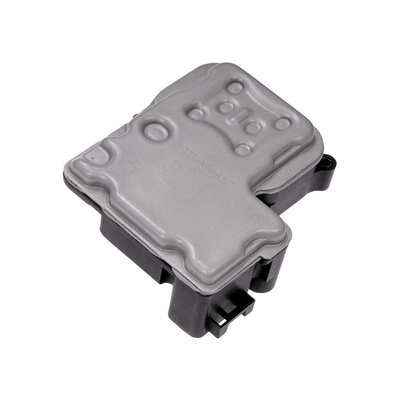
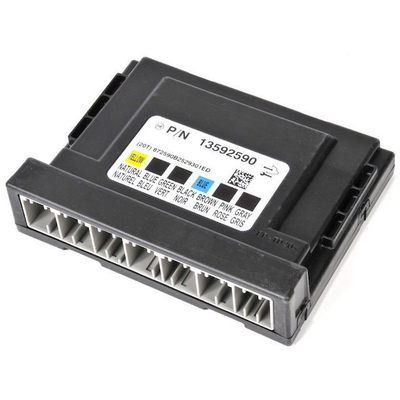
Shop the Parts Behind C0045
Below are the parts most often responsible for code C0045, ranked by how frequently each one is the actual culprit (per the diagnosis above). Tap any to see what we have for your vehicle.






The information in this article is provided for general reference and educational purposes only. Vehicle specifications, procedures, and part compatibility can vary by production date, trim level, and region. Always consult your vehicle's factory service manual and verify part numbers before purchasing or performing repairs. Safety-critical components such as airbags, seat belts, and braking systems should be installed by a qualified professional.
- 🧭 Diagnostic Flowchart
- 🎬 Helpful Videos
- 🛍️ Shop This Part
- What Does C0045 Mean?
- Can I Drive With C0045?
- Common Causes
- Symptoms
- Common Fixes & Costs
- DIY vs Professional
- Used vs. New Parts: Buying Guide
- What Happens If You Wait — Timeline
- Cost of Not Fixing It
- Diagnosis Steps
- When This Code Triggers (Freeze-Frame Conditions)
- Related Codes
- Climate & Environmental Factors
- How to Talk to a Mechanic About This Code
- Where to Take It: Dealer vs Independent vs Chain
- When to Walk Away From the Repair
- What Scan Tool You Need for This Code
- How to Clear the Code After You Fix It
- Will This Fail Emissions / State Inspection?
- Most Commonly Affected Vehicles
- Manufacturer-Specific Notes
- Real Owner Stories
- 2013 Chevy Equinox with 125K miles - Misdiagnosis
- 2007 Chevy Tahoe at 222K miles - Easy Fix
- 2013 Subaru Outback - Unusual Root Cause
- 2005 Corvette C6 - Persistent Code After Hub Replacement
- How to Prevent This Code From Triggering
- Frequently Asked Questions
- What is the most common mistake when fixing a C0045 code?
- Why did the code come back after I replaced the sensor?
- What are symptom bytes for C0045?
- Can I just clean the sensor to fix code C0045?
- Can a bad battery cause a C0045 code?
- Will a C0045 code cause my car to fail an inspection?
- What is the difference between a passive and active wheel speed sensor?
- Key Takeaways
- 🎟️ Get 5% Off