

C0045 on 2010-2017 Chevrolet Equinox: Left Rear Wheel Speed Circuit Causes and Fixes
Code C0045 on a 2010-2017 Equinox almost always means there's a problem with the left rear wheel speed sensor circuit. This is most often caused by a faulty sensor (which is part of the wheel hub assembly), a corroded wiring connector, or a damaged pigtail. Before replacing the expensive hub, inspect the wiring, especially the main X411 connector under the rear of the vehicle and the pigtail at the wheel. Expect to pay $100-$250 for a new hub assembly and tackle it as a DIY or pay a shop for 1-2
- Code C0045 on a 2010-2017 Equinox disables your ABS and StabiliTrak systems, so it should be addressed promptly.
- Before buying parts, thoroughly inspect the wiring. Check the sensor pigtail on the control arm and the large X411 connector near the fuel tank for corrosion or damage, as per GM service bulletins.
- The most common part to fail is the wheel speed sensor, which is integrated into the rear wheel hub and bearing assembly and must be replaced as a single unit.
- If you also have code C0050 (right rear sensor) or multiple communication codes (U-codes), the problem is very likely in the shared wiring, not multiple failed parts.
What's Unique About the 2010-2017 Chevrolet EQUINOX
On the second-generation Chevrolet Equinox and its platform-mate, the GMC Terrain, the C0045 code is frequently linked to specific wiring and connector issues that have been documented by GM. Technical Service Bulletin (TSB) PIT5427B points to corrosion within a large connector known as X411, located under the rear 🎬 Watch: How to diagnose and repair this common wiring failure. of the vehicle, as a cause for a host of communication and sensor codes, including C0045. Another bulletin, PI0934, specifically for the 2013 model year, highlights issues with the sensor's harness connector on the control arm not being fully seated or having unseated terminals. These known issues mean that a thorough inspection of the wiring and connectors is a critical first step before condemning the wheel hub assembly.
Diagnostic Flowchart
Tap your situation to follow the diagnostic path that matches what you're seeing on this vehicle.
Symptoms You May Notice
- ABS warning light on
- Traction control light on or flashing
- "Service StabiliTrak" message on the Driver Information Center (DIC)
- "Service Brake Assist" message on the DIC
- "Service All Wheel Drive" message (on AWD models)
- Hard steering effort at low speeds (as noted in TSB PIT5427B and PIC5428F, as the Power Steering Control Module defaults to a safe mode without a valid wheel speed signal)
- ABS activation at low speeds or pulsating brake pedal when not necessary
- Replacing the wheel hub assembly when the actual fault is a simple wiring or connector issue. The presence of multiple TSBs related to wiring makes this a common pitfall.
- Replacing the wheel speed sensor pigtail when the actual fault is corrosion in the main X411 body connector.
- Replacing the wheel hub assembly when the magnetic encoder ring is simply covered in metallic debris. TSB PIC5428G notes that in many cases, simply cleaning the debris off the encoder can restore function.
Most Likely Causes
- Faulty Left Rear Wheel Hub and Bearing Assembly 🔴 High Probability → Shop Hub Assembly The wheel speed sensor is integrated into the wheel hub assembly. The magnetic encoder ring on the hub can become brittle, crack, or get contaminated with metallic debris over time, leading to a bad or missing signal. This is a well-documented failure mode on many GM vehicles of this era.
How to confirm: After confirming the wiring is intact, use a scan tool to monitor live data from all four wheel speed sensors while driving. If the left rear sensor reads 0 MPH or has an erratic signal while the others read correctly, the hub assembly is the likely cause. Visually inspect the magnetic ring on the inboard side of the hub for cracks, missing chunks, or metallic debris stuck to it.
Typical fix: Replace the entire left rear wheel hub and bearing assembly.
Est. part cost: $80-$250 - Damaged or Corroded Wiring/Connectors 🔴 High Probability GM TSB PIT5427B specifically identifies corrosion in connector X411 (located under the vehicle, behind and to the left of the fuel tank) as a cause for this and other related codes. Additionally, TSB PI0934 and PI0934A point to the sensor pigtail connector on the control arm not being fully seated or having loose terminals. Internal wire breaks within the harness near X411 have also been found.
How to confirm: Visually inspect the wiring harness running to the left rear wheel for any chafing, breaks, or pinch points. Disconnect and inspect the terminals inside the sensor connector on the control arm and the larger X411 connector for green or white corrosion or backed-out pins. Gently pull on the wires near the connectors, as internal breaks can occur with no visible damage to the insulation.
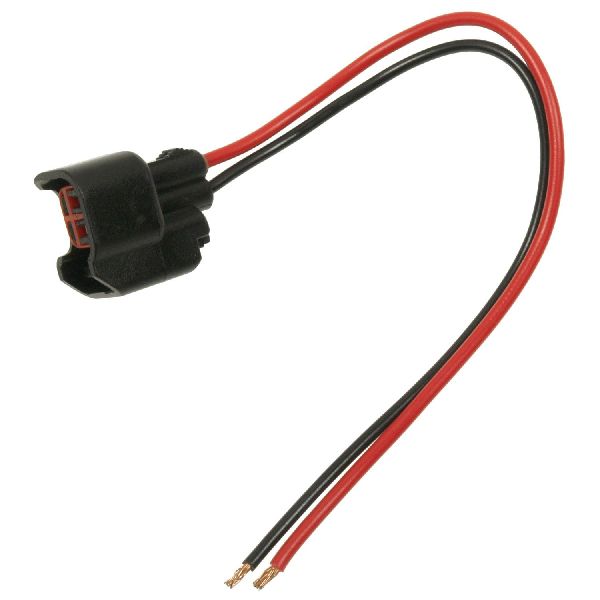
Typical fix: Clean corroded terminals with a contact cleaner and apply dielectric grease. Replace damaged connectors or pigtails (e.g., Dorman 970-040). Repair any broken wires found.
Est. part cost: $20-$100
Rare But Worth Checking
- Failed Electronic Brake Control Module (EBCM): → Shop ABS Control Module This is rare and should only be considered after thoroughly ruling out the wheel hub and all related wiring. The EBCM is an expensive component and is seldom the point of failure. Usually, a failed EBCM will present with multiple, seemingly unrelated codes, not just a single wheel speed sensor circuit fault.
Diagnosis Steps
- Connect an OBD-II scanner capable of reading ABS codes to confirm C0045 is present. Note any other codes, especially communication (U-codes) or codes for other wheel speed sensors.
- Use the scanner's live data function to view the wheel speed from all four sensors while driving slowly in a straight line. Verify if the Left Rear (LR) sensor reading is erratic, lagging, or stuck at zero compared to the others.
- If the signal is faulty, raise the rear of the vehicle and secure it on jack stands. Visually inspect the wiring harness leading to the left rear wheel hub. Look for any signs of physical damage, chafing against suspension components, or melted sections.
- Locate the wheel speed sensor connector on the upper control arm. Disconnect it and inspect the terminals for corrosion, moisture, or backed-out pins. Ensure it is fully seated when reconnected. Per TSB PI0934, if a terminal is out of position, the connector should be replaced, not just re-seated.
- Following TSB PIT5427B, locate and inspect the X411 connector. It is a large, multi-wire connector located under the vehicle, to the left of the fuel tank, often tucked above the rear cradle. Inspect for any signs of green or white corrosion or loose terminals.
- Remove the left rear wheel and brake caliper/rotor to access the hub. Visually inspect the magnetic encoder ring on the inboard side of the hub assembly. Clean off any accumulated metallic 'fuzz' or debris with a cloth or brush and re-test. Check for visible cracks or missing sections of the ring.
- If all wiring, connectors, and the encoder ring appear to be in good condition, the fault is most likely internal to the wheel speed sensor, which is integrated into the wheel hub.
- To confirm a bad hub, you can use an oscilloscope to check the square wave signal from the sensor while spinning the wheel. A missing or erratic waveform points to a bad hub/sensor assembly. However, if an oscilloscope is not available, and steps 1-6 have been completed, replacement of the hub is the most common next step.
- If a new hub assembly does not resolve the code, re-inspect the wiring harness for an intermittent internal break. If the wiring is confirmed to be good, the problem may lie with the EBCM, which requires advanced diagnostics.
Parts You'll Likely Need
- Left Rear Wheel Hub and Bearing Assembly
(OEM #13591999, 513288 (ACDelco Gold))— The wheel speed sensor is integrated into this assembly. Failure of the internal magnetic encoder ring or the sensor itself is a primary cause of code C0045 after wiring issues have been ruled out.
Trusted brands: ACDelco, MOOG, Timken, Duralast
OEM price range: $180-$280
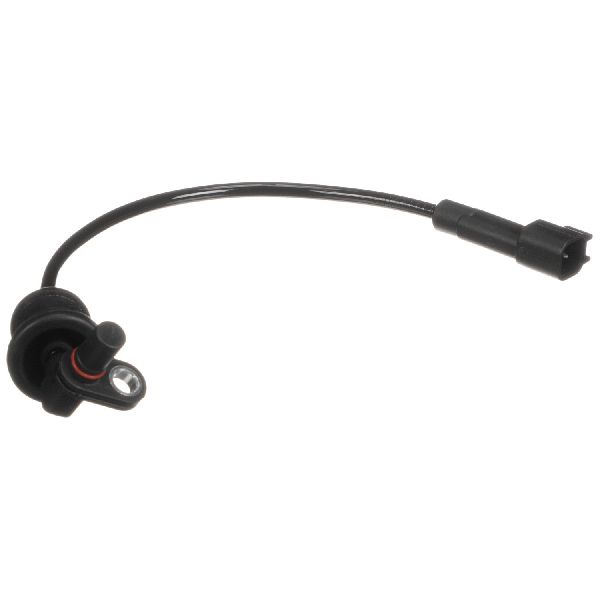
Aftermarket price range: $80-$160 - Rear Wheel Speed Sensor Harness Connector
(OEM #13586115)— A GM service bulletin (PI0934) identifies this connector as a potential failure point due to terminals not being fully seated or locked in place. Corrosion or damage to the pigtail is also common. Aftermarket versions like Dorman 970-040 are widely available.
Trusted brands: ACDelco, Dorman
OEM price range: $30-$50
Aftermarket price range: $15-$30
Related Codes That Often Appear With This One
- C0050 — This is the code for the Right Rear Wheel Speed Sensor. Seeing both C0045 and C0050 strongly suggests a common wiring problem, like the X411 connector issue mentioned in TSB PIT5427B, rather than two failed hubs at once.
- U0077, U0100, U0101, U0121, etc. — These are communication (U-prefix) codes. TSB PIT5427B lists numerous U-codes alongside C0045, indicating that a wiring fault in the X411 connector can disrupt communication between multiple vehicle modules, including the EBCM, ECM, and TCM.
- U0415 — Invalid Data Received From Electronic Brake Control Module. This code is often set in the Power Steering Control Module (PSCM) as a direct result of the C0045 code. The power steering system relies on wheel speed data for variable assist, and when a sensor signal is lost, it defaults to a higher-effort mode and sets U0415.
Technical Service Bulletins (TSBs) & Recalls
- PIT5427B: Notes that C0045 (and many other codes) can be caused by damage or corrosion in the X411 connector, leading to various service messages and potential hard steering.
- PI0934 / PI0934A: Specific to 2013 models, this bulletin addresses C0045/C0050 caused by improperly seated terminals in the wheel speed sensor harness connector on the control arm.
- PIC5428G: A broad GM bulletin covering many vehicles, including the Equinox, that states C0035-C0050 codes can often be fixed by simply cleaning accumulated metallic debris from the magnetic encoder ring on the hub, rather than replacing the entire hub.
- PIT5171B: Discusses intermittent Service Stability/Traction/ABS messages and C0045/C0050 codes caused by internal wire breaks or chafing within the harness near the X411 connector.
Platform-Specific Known Issues
- Corrosion in Connector X411: Corrosion in the X411 connector, located under the rear of the vehicle to the left of the fuel tank, is a known issue that can cause C0045 and a host of other communication and sensor codes, as documented in TSB PIT5427B. This connector is a junction for many circuits, and water intrusion can cause widespread electrical problems.
Mechanic-Grade Diagnostic Values
- Wheel Speed Sensor Signal Circuit Voltage — expected: > 7.5 Volts. Failure: Voltage below 7.5V indicates a possible short to ground or an open circuit.
- Wheel Speed Sensor Current Flow — expected: Switches between 4 mA and 16 mA. Failure: A static reading or a reading outside this range when the wheel is spun slowly indicates a faulty sensor.
- Wheel Speed Sensor Resistance (Passive Sensor) — expected: 850 - 1350 Ohms. Failure: A reading of OL (open) or significantly outside this range indicates a bad sensor. Note: This applies to passive, 2-wire sensors, and may not be accurate for all sensor types used on these models.
Hidden / Shadow Codes Worth Checking
- C0045 06: Left Rear Wheel Speed Sensor Circuit Low Voltage/Open. This indicates a potential open wire, short to ground, or high resistance in the circuit. (see via A professional-grade scan tool (like GM's GDS2) that can read manufacturer-specific symptom bytes.)
- C0045 0F: Left Rear Wheel Speed Sensor Circuit Signal Erratic. This suggests the sensor is providing a signal, but it's unstable or noisy, often caused by a damaged encoder ring or electromagnetic interference. (see via )
- C0045 18: Left Rear Wheel Speed Sensor Circuit Low Signal Amplitude. The signal from the sensor is too weak, which can be caused by an excessive air gap or a failing sensor. (see via A professional-grade scan tool (like GM's GDS2) that can read manufacturer-specific symptom bytes.)
- C0045 5A: Left Rear Wheel Speed Sensor Circuit Not Plausible. The signal from this sensor doesn't match the signals from the other wheel speed sensors, suggesting it's incorrect for the vehicle's actual speed. (see via )
Scan Tool Commands That Help
- GDS2 / Professional Scan Tool: Live Data > EBCM > Wheel Speed Sensors — This is the primary diagnostic step. It allows the technician to view the speed reported by all four wheels simultaneously while the vehicle is moving. A faulty left rear sensor will show a reading of 0, or a value that is erratic or doesn't match the other sensors.
- GDS2 / Professional Scan Tool: Clear DTCs — Used after a repair is performed to erase the code from the EBCM's memory. Note that on some GM systems, the ABS light may remain on after clearing until the vehicle is driven above a certain speed (e.g., 8 mph).
Wiring & Ground Locations
- X411 — Under the vehicle at the left rear, located behind and to the left of the fuel tank, often tucked above the rear cradle.. This is a major pass-through connector for the rear of the vehicle. The wheel speed sensor circuits, as well as the high-speed GMLAN communication bus, run through it. TSB PIT5427B specifically calls out corrosion in this connector as a primary cause for C0045 and various communication codes.
- EBCM Ground — The main ground for the Electronic Brake Control Module (EBCM) is typically located on the frame rail near the EBCM itself in the engine bay.. A poor ground for the control module can cause a host of erratic electrical issues, including false sensor codes. While less common than a sensor or harness fault, it's a critical part of the circuit that must be clean and tight.
- G112 — On the engine block (for 2.4L engine).. While this is a primary ground for the Powertrain Control Module (PCM), not the EBCM, poor engine or body grounds can introduce electrical noise onto the vehicle's network, which can sometimes interfere with sensitive modules like the EBCM.
Real Owner Repair Stories
- Reddit user on r/chevyequinox (2013 Equinox) — ABS light on, code C0045.
❌ Tried (didn't work) Replaced the wheel speed sensor (pigtail). The fix only lasted for 160 miles., Replaced the entire left rear wheel hub and bearing assembly.
✅ What actually fixed it The user was still diagnosing the issue after replacing the most common parts. The code would clear for 3 seconds and then immediately return, pointing to a persistent wiring fault between the hub and the EBCM or a faulty EBCM itself. This story highlights the necessity of testing the wiring harness thoroughly. - Reddit user on r/AskMechanics (2011 Equinox 3.0 FWD, 175k miles) — ABS and traction control lights on, code C0045.
❌ Tried (didn't work) Replaced the wheel speed sensor, which fixed the problem for several months before the same code returned.
✅ What actually fixed it The final fix was not posted, but a key suggestion was made: GM has known issues with the magnetic encoder ring on the hub attracting metallic debris. The advice was to inspect and clean this ring before replacing any more parts, as the debris can interfere with the sensor reading, causing the code to appear even with a new sensor.
"I Checked Everything" — The Actual Cause
- A common scenario is not a failed smoke test, but when a technician replaces both the wheel speed sensor pigtail and the entire wheel hub assembly, yet the C0045 code persists or returns immediately. One Reddit user with a 2013 Equinox experienced this exact failure pattern. After replacing the sensor and then the hub, the code would not stay cleared, indicating the fault was not in the parts that are most commonly replaced. The actual cause in these cases is almost always a break or short in the wiring harness between the wheel well and the EBCM (often near the X411 connector) or, rarely, a failed EBCM.
When the Usual Fixes Don't Work
- While the most common fixes are replacing the hub assembly or the sensor pigtail, numerous owner accounts detail these repairs failing to solve the problem. In a 2013 Equinox, an owner replaced both the sensor and the hub, but the code C0045 came back instantly, indicating the problem was further upstream in the main wiring harness, likely near the known-problematic X411 connector. This demonstrates that simply 'firing the parts cannon' without diagnosing the full circuit from the hub to the EBCM can lead to wasted time and money.
OEM Part Supersession History
13500574, 13502873, 13577407, 13580091, 13598920→13591999— GM periodically updates parts to improve reliability, durability, or to consolidate inventory. The multiple superseded numbers for the rear wheel hub suggest several revisions have been made over the years.
Heads up: While all parts should be interchangeable for the specified model years, using the latest part number (13591999) is recommended to get the most recent design.
Model Year Variations Within This Range
- 2013: Per TSB PI0934, models built prior to February 26, 2013, are specifically called out for having issues with the rear wheel speed sensor harness connectors not being fully seated or having terminals that are not properly locked into the connector. The TSB explicitly states to replace the connector if a terminal is out of position, not just reseat it.
Helpful Videos
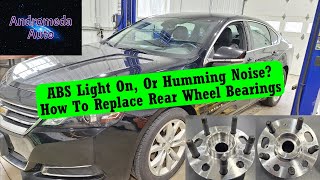
We Have This Part in Stock

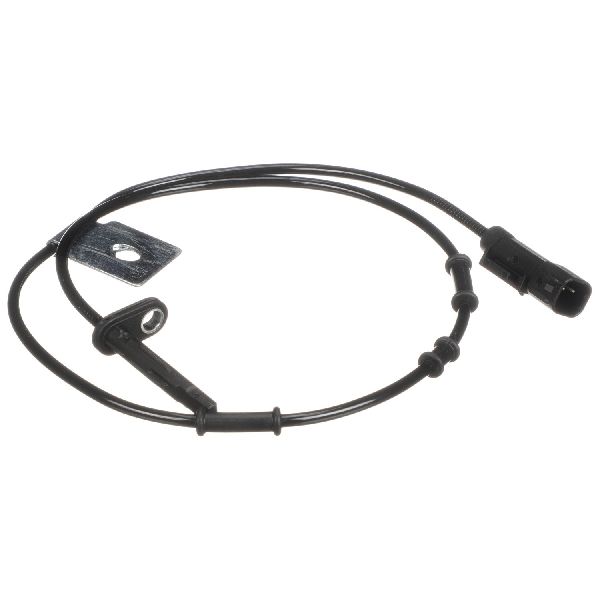
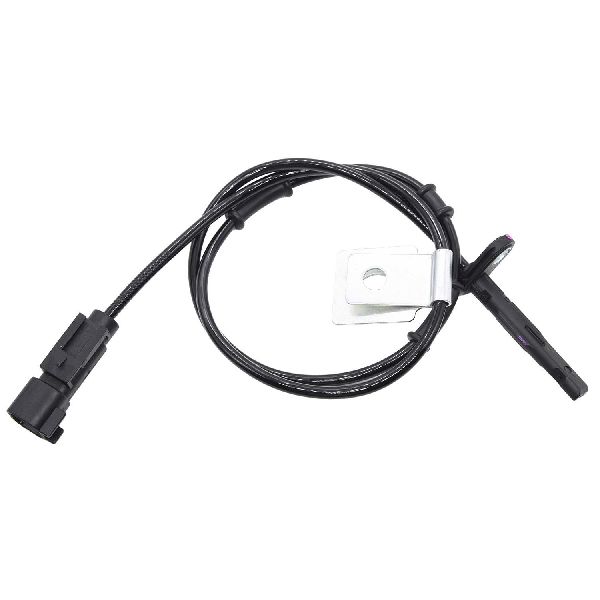

The information in this article is provided for general reference and educational purposes only. Vehicle specifications, procedures, and part compatibility can vary by production date, trim level, and region. Always consult your vehicle's factory service manual and verify part numbers before purchasing or performing repairs. Safety-critical components such as airbags, seat belts, and braking systems should be installed by a qualified professional.
- Chevrolet EQUINOX:
- 🧭 Diagnostic Flowchart
- 🎬 Helpful Videos
- 🛍️ Shop This Part
- What's Unique About the 2010-2017 Chevrolet EQUINOX
- Symptoms You May Notice
- Most Likely Causes
- Rare But Worth Checking
- Diagnosis Steps
- Parts You'll Likely Need
- Related Codes That Often Appear With This One
- Technical Service Bulletins (TSBs) & Recalls
- Platform-Specific Known Issues
- Mechanic-Grade Diagnostic Values
- Hidden / Shadow Codes Worth Checking
- Scan Tool Commands That Help
- Wiring & Ground Locations
- Real Owner Repair Stories
- "I Checked Everything" — The Actual Cause
- When the Usual Fixes Don't Work
- OEM Part Supersession History
- Model Year Variations Within This Range
- 🎟️ Get 5% Off