

C0045 on 2008-2012 Chevrolet Express: Causes and Fixes for the Left Rear Wheel Speed Sensor Circuit
This code indicates a fault in the left rear wheel speed sensor circuit. On the 2008-2012 Express, the most common cause is damaged wiring or a bad connector right at the sensor, often due to improper routing as detailed in a GM TSB. Always inspect the wiring harness from the sensor to the frame before replacing the sensor or hub assembly.
- For code C0045 on a 2008-2012 Express, always inspect the left rear wheel speed sensor wiring harness first.
- A GM service bulletin (PIT4648D) specifically warns that the harness can be routed incorrectly, causing it to break.
- Do not immediately buy a new wheel hub assembly; the problem is very often the inexpensive wiring pigtail.
- A scan tool that can read ABS live data is essential for confirming which wheel is having the issue before you begin repairs.
- When the repair is complete, ensure the new wiring is secured properly and not wrapped around the brake hose.
What's Unique About the 2008-2012 Chevrolet EXPRESS

For this generation of Chevrolet Express and its platform-mate, the GMC Savana, there is a well-documented issue outlined in Technical Service Bulletin (TSB) PIT4648D. The bulletin states that the rear wheel speed sensor wiring harness is often routed incorrectly from the factory or during prior service. Specifically, it gets wrapped around the flexible brake hose. During normal suspension travel (bumps, turns), this improper routing causes the harness to be pulled tight, stretching the wires until they break internally or pull out of the connector terminals, leading directly to a C0045 (left side) or C0050 (right side) code. This makes a thorough wiring inspection even more critical on these vans compared to other vehicles where sensor failure might be more common.
Diagnostic Flowchart

Tap your situation to follow the diagnostic path that matches what you're seeing on this vehicle.
Symptoms You May Notice

- ABS warning light is on
- "Service Stability" or "Service Stabilitrak" message on the dashboard
- Traction control light is on
- ABS system is disabled and does not activate during hard braking 🎬 See common causes and fixes for the Service Stabilitrak light.
- A 'clicking' or 'grinding' noise from the ABS pump on startup, followed by the warning lights
- Replacing the entire wheel hub/speed sensor assembly when the actual fault is a simple, inexpensive break in the wiring harness or a corroded pigtail connector. This is the most common misdiagnosis due to the prevalence of the wiring issue described in TSB PIT4648D.
Most Likely Causes

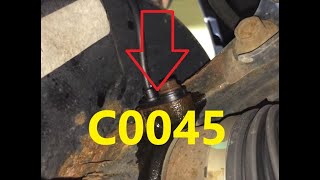
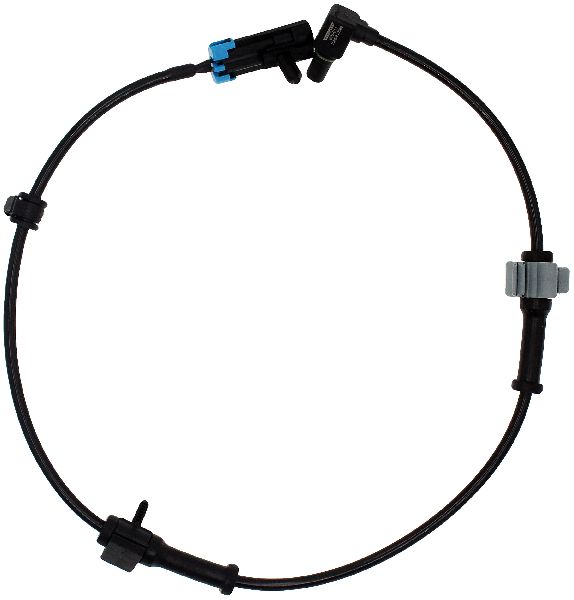
- Damaged Wiring or Connector at Left Rear Wheel Speed Sensor 🔴 High Probability → Shop ABS Wheel Speed Sensor A GM Technical Service Bulletin (PIT4648D) specifically calls out that the harness can be misrouted around the brake hose, causing it to stretch and break wires internally or pull them from the connector during suspension travel. This is the most common point of failure for this specific code on this vehicle. 🎬 Watch: Diagnosing the C0045 code and common wiring fixes.
How to confirm: Visually inspect the entire harness from the sensor to where it enters the main loom on the frame. Per the TSB, confirm the harness is NOT wrapped around the brake hose. Look for chaffing, stretched sections, or broken wires at the connector. Wiggle the harness while observing live data on a scan tool to see if the signal cuts out or returns.
Typical fix: Repair the broken wire(s) or, more reliably, replace the pigtail connector. Ensure the new harness is routed correctly with enough slack and is NOT wrapped around the brake hose. Secure it away from moving suspension parts.
Est. part cost: $20-$50 - Failed Left Rear Wheel Speed Sensor (within Hub Assembly) 🟡 Medium Probability → Shop ABS Wheel Speed Sensor The sensor is part of the wheel hub assembly and is exposed to harsh conditions like water, road salt, and debris, which can lead to internal failure over time. Bearing failure can also create vibration that damages the integrated sensor.
How to confirm: Use a scan tool to monitor live data from the left rear sensor; it should read 0 when stopped and increase smoothly with speed, matching the other sensors. If the wiring is confirmed to be good, the sensor/hub assembly is the next likely culprit. You can also test the sensor's internal resistance with a multimeter, though specs must be verified.
Typical fix: On these models, the wheel speed sensor is integrated into the wheel hub assembly. The entire hub must be replaced. 🎬 Watch: Step-by-step guide to replacing the rear wheel hub assembly.
Est. part cost: $100-$250 - Debris on Magnetic Encoder Ring ⚪ Low Probability The magnetic encoder ring, which is part of the hub assembly, can attract metallic debris (rust, brake dust, etc.). This buildup interferes with the sensor's ability to get a clean reading, causing an erratic signal. This is a known issue on many GM vehicles.
How to confirm: After removing the wheel speed sensor (if separate) or inspecting the back of the hub, visually check the magnetic ring for any attached metal filings or debris. A piece of tape can be used to lift off debris for inspection.
Typical fix: Carefully clean the magnetic ring with a soft brush or cloth. If the ring is damaged (cracked, missing segments) or the problem persists, the wheel hub assembly needs to be replaced.
Est. part cost: $0-$250
Rare But Worth Checking
- Failed Electronic Brake Control Module (EBCM): → Shop ABS Control Module This is rare and should only be considered after all other possibilities (sensor, wiring, hub) have been definitively ruled out. An EBCM failure often triggers multiple wheel speed sensor codes, not just one, and may have other communication-related DTCs.
Diagnosis Steps
- Connect a scan tool capable of reading ABS codes to confirm C0045 is present and active.
- Use the scan tool to view live data for all four wheel speed sensors. Drive the vehicle slowly (above 13 mph) in a straight line and verify that the left rear sensor reading is missing, erratic, or does not match the other sensors.
- Raise and safely support the rear of the vehicle. Remove the left rear wheel.
- Perform a thorough visual inspection of the wheel speed sensor wiring harness. Look for chafing, breaks, corrosion in the connector, or signs of stretching. Per TSB PIT4648D, confirm the harness is NOT wrapped around the brake hose. This is the most critical step.
- If wiring looks suspicious, gently wiggle the harness while a helper watches the live data on the scan tool to see if the signal appears or disappears.
- Disconnect the sensor connector and inspect the terminals for corrosion, moisture, or being pushed out of the connector body.
- If wiring and connector appear perfect, inspect the magnetic encoder ring on the back of the hub for metallic debris or damage. Clean if necessary.
- If the wiring is good and the encoder ring is clean, the hub assembly (which contains the sensor) is the most likely failed component. Resistance tests can be performed but can be misleading; live data is more reliable.
- If a new hub assembly does not resolve the issue, test the circuit continuity and for shorts to ground/voltage between the sensor connector and the EBCM connector to rule out a break further up the harness.
- As a last resort, if all wiring and sensors are confirmed good, suspect a fault in the EBCM.
Parts You'll Likely Need
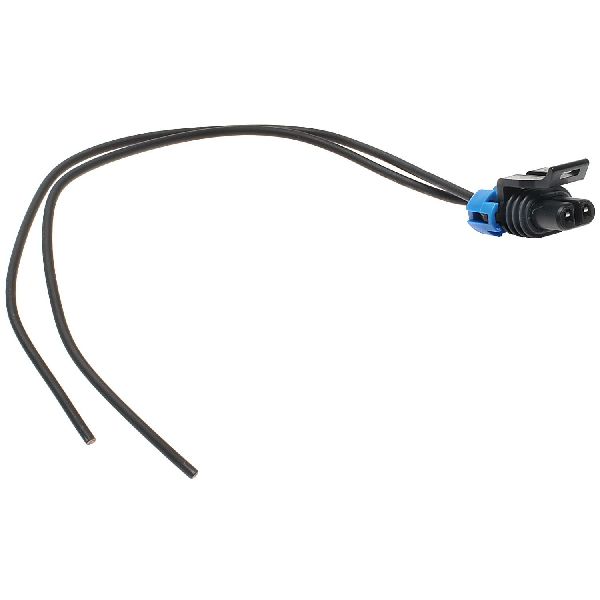
- ABS Wheel Speed Sensor Wiring Harness Connector
(OEM #12125649 (superseded by 12167120))— This is the most likely failure point due to the wiring issues described in TSB PIT4648D. The wires often break right at the connector. GM part 12167120 is a common replacement pigtail.
Trusted brands: ACDelco, Dorman, Carquest, Wells
OEM price range: $35-$65
Aftermarket price range: $15-$30 - Rear Wheel Hub and Bearing Assembly
(OEM #84378139)— On the Express, the wheel speed sensor is integrated into the hub assembly. If the sensor itself fails internally or the magnetic encoder ring is damaged, the entire hub must be replaced.
Trusted brands: ACDelco (GM Genuine), Timken, MOOG, SKF
OEM price range: $200-$300
Aftermarket price range: $100-$180
Related Codes That Often Appear With This One
- C0050 — This code is for the Right Rear Wheel Speed Sensor Circuit. TSB PIT4648D notes that both codes can appear if the wiring harnesses on both rear wheels are routed improperly and fail. A user on GMTNation reported getting both codes at once, pointing to a common wiring issue.
Technical Service Bulletins (TSBs) & Recalls
- PIT4648D: ABS Light and/or Service Stability Message On With DTC C0045 and/or C0050. This TSB is the primary diagnostic clue, pointing directly to wiring harness issues as the cause.
- PI0934: A TSB for a 2013 Equinox/Terrain with C0045, noting that terminals not being fully seated in the connector can cause this code, reinforcing the importance of checking the connector integrity.
Platform-Specific Known Issues
- A General Motors TSB (PIT4648D) directly addresses code C0045 on the 2008-2012 Express and Savana. It highlights that the rear wheel speed sensor harness can be misrouted around the brake hose, causing it to be pulled tight and damaged during suspension movement. The fix is to repair the wiring (often with a new pigtail connector) and ensure it is routed correctly to prevent future failure.
Mechanic-Grade Diagnostic Values
- Wheel Speed Sensor Circuit Resistance — expected: Less than 2.0 ohms between the signal and low reference circuit terminals at the EBCM connector.. Failure: A reading greater than 2.0 ohms indicates high resistance or an open in the wiring or sensor.
- Wheel Speed Sensor Power Supply (at sensor connector) — expected: Approximately 12 Volts (Ignition ON).. Failure: No voltage or intermittent voltage suggests a wiring problem between the EBCM and the sensor, or a faulty EBCM. Note: The EBCM may cut power to the circuit when a fault is detected, so codes may need to be cleared to test.
- Sensor Signal (at sensor connector) — expected: A square wave signal visible on an oscilloscope when the wheel is spun. The sensor receives 12V power and returns this signal to the EBCM.. Failure: No signal, an erratic signal, or a flat line indicates a faulty sensor/hub or a wiring issue on the signal return line.
Hidden / Shadow Codes Worth Checking
- C0045 06: Indicates Left Rear Wheel Speed Sensor Circuit Low Voltage/Open. This points specifically to an open wire, poor connection, or a short to ground. (see via A professional scan tool like the GM Tech2 or GDS2 that can read ABS symptom bytes (also known as sub-codes).)
- C0045 0F: Indicates Left Rear Wheel Speed Sensor Circuit Signal Erratic. This often points to a damaged magnetic encoder ring on the hub, debris on the sensor, or interference. (see via A professional scan tool like the GM Tech2 or GDS2 that can read ABS symptom bytes.)
- C0045 18: Indicates Left Rear Wheel Speed Sensor Circuit Low Signal Amplitude. This suggests a missing signal, often due to a completely failed sensor or a total circuit break. (see via A professional scan tool like the GM Tech2 or GDS2 that can read ABS symptom bytes.)
- C0045 5A: Indicates Left Rear Wheel Speed Sensor Circuit Not Plausible. The EBCM is receiving a signal that doesn't make sense compared to the other wheel speeds. (see via A professional scan tool like the GM Tech2 or GDS2 that can read ABS symptom bytes.)
Scan Tool Commands That Help
- GM Tech2 / GDS2: Live Data - Wheel Speed Sensors — This is the primary diagnostic step. Observing the live data from all four sensors while driving in a straight line above 13 mph will clearly show if the left rear sensor is dropping out, reading erratically, or not reading at all compared to the others.
- GM Tech2 / GDS2: Clear DTCs — The EBCM may disable the 12V supply to the sensor circuit once a hard fault is detected. To test for power at the sensor connector, you may need to clear the codes first, then cycle the ignition to briefly restore power for testing purposes.
Wiring & Ground Locations
- EBCM Connector (X1) — The Electronic Brake Control Module (EBCM) is located on the driver's side frame rail, below the driver's door.. This is the destination for the wheel speed sensor signals. Testing for continuity and shorts should be done between this connector and the sensor connector. For C0045, the Left Rear WSS Signal is on Pin 2 and the Low Reference is on Pin 3 of the EBCM connector.
- G300 — On the left frame rail, near the EBCM.. This is the primary chassis ground for the Electronic Brake Control Module (EBCM). A corroded or loose G300 ground can cause a variety of erratic ABS faults, including false sensor codes, because it affects the module's reference voltage.
- WSS Harness Connectors X413 / X414 — These are the individual rear wheel speed sensor connectors at each wheel.. This is the most common point of failure. TSB PIT4648D specifically calls for inspecting the wires, crimps, and terminals at these connectors for damage from being stretched or pulled.
Real Owner Repair Stories
- SureTrack Community Real Fix (2006 Chevrolet Express G3500 6.0L) — ABS light on, codes C0040 and C0045 present.
❌ Tried (didn't work) Initial visual inspection of the wiring harness showed no obvious faults.
✅ What actually fixed it While monitoring the 12V supply to the left rear sensor with a multimeter, the technician manipulated the harness and found the voltage was intermittent. Opening the harness insulation revealed broken wires inside. The fix was to replace the faulty section of the ABS wheel speed sensor wiring harness.
Helpful Videos
We Have This Part in Stock


The information in this article is provided for general reference and educational purposes only. Vehicle specifications, procedures, and part compatibility can vary by production date, trim level, and region. Always consult your vehicle's factory service manual and verify part numbers before purchasing or performing repairs. Safety-critical components such as airbags, seat belts, and braking systems should be installed by a qualified professional.
- Chevrolet EXPRESS:
- 🧭 Diagnostic Flowchart
- 🎬 Helpful Videos
- 🛍️ Shop This Part
- What's Unique About the 2008-2012 Chevrolet EXPRESS
- Symptoms You May Notice
- Most Likely Causes
- Rare But Worth Checking
- Diagnosis Steps
- Parts You'll Likely Need
- Related Codes That Often Appear With This One
- Technical Service Bulletins (TSBs) & Recalls
- Platform-Specific Known Issues
- Mechanic-Grade Diagnostic Values
- Hidden / Shadow Codes Worth Checking
- Scan Tool Commands That Help
- Wiring & Ground Locations
- Real Owner Repair Stories
- 🎟️ Get 5% Off