

C0045 on 2015-2019 GMC Canyon: Left Rear Wheel Speed Circuit Causes and Fixes
On a 2015-2019 GMC Canyon, code C0045 is most often caused by water intrusion and corrosion in the Electronic Brake Control Module (EBCM) connector, a known issue covered by TSB #PIT5499B. Before replacing any parts, inspect this connector located on the driver's side frame rail under the cab. If it's clean, the left rear wheel speed sensor or its wiring harness is the next likely culprit.
- For a C0045 code on a 2015-2019 GMC Canyon, your first and most important check should be the Electronic Brake Control Module (EBCM) connector for corrosion, as noted in TSB #PIT5499B.
- Do not drive the vehicle unnecessarily, as critical safety systems (ABS, Stabilitrak) are disabled.
- If the EBCM connector is clean, the most likely culprits are a failed left rear wheel speed sensor or damaged wiring near the wheel.
- A DIY replacement of the sensor is possible with basic tools, but diagnosing the root cause may require a scan tool that can read ABS live data.
What's Unique About the 2015-2019 Gmc CANYON
For the second-generation GMC Canyon and its sibling, the Chevrolet Colorado, the C0045 code is strongly linked to a specific, documented vulnerability. GM Technical Service Bulletin #PIT5499B directly addresses this code, pointing technicians to inspect the Electronic Brake Control Module (EBCM) connector for water intrusion and corrosion. This issue is a common source of wheel speed sensor circuit faults on this platform, often leading to a "Service Trailer Brake" message alongside the ABS and Stabilitrak lights. The TSB also mentions inspecting the tape on the conduit for ground G400 as a related step.
Diagnostic Flowchart
Tap your situation to follow the diagnostic path that matches what you're seeing on this vehicle.
Symptoms You May Notice
- ABS warning light is on
- Stabilitrak / Traction Control warning light is on
- "Service Trailer Brake" message on the Driver Information Center (DIC)
- "Service Stabilitrak" message on the DIC
- Cruise control may be disabled
- Replacing the wheel speed sensor without first checking the EBCM connector for corrosion, which is the most common, vehicle-specific failure point documented in TSB #PIT5499B.
- Replacing the entire wheel hub/bearing assembly when only the sensor, wiring, or EBCM connector is faulty.
Most Likely Causes
- Water Intrusion and Corrosion at EBCM Connector 🔴 High Probability As identified in TSB #PIT5499B, the EBCM connector on this platform is susceptible to moisture, leading to corrosion on the pins for the wheel speed sensor circuits. This is the most common cause for this code on the Canyon and Colorado.
How to confirm: Locate the EBCM bolted to the driver's side frame rail, underneath the cab. Disconnect the large electrical connector and carefully inspect the pins and cavities for any signs of moisture, green or white powder (corrosion), or bent/damaged pins.
Typical fix: Clean the connector and module pins with a dedicated electronics cleaner and a soft brush. Apply dielectric grease before reconnecting. If corrosion is severe and has damaged the pins or wires, the connector pigtail and/or the EBCM may need to be replaced.
Est. part cost: $10-$50 for cleaner, or $70-$150 for a new connector pigtail. - Faulty Left Rear Wheel Speed Sensor 🔴 High Probability → Shop ABS Wheel Speed Sensor Wheel speed sensors are exposed to harsh conditions (water, dirt, vibration) and fail over time. This is a common failure item on most modern vehicles.
How to confirm: Use a scan tool to monitor live data from the left rear wheel speed sensor while driving; the reading should be erratic or absent compared to the other wheels. The sensor's resistance can also be tested with a multimeter.
Typical fix: Replace the left rear wheel speed sensor. It is typically held in by a single bolt (often a T30 Torx) into the wheel hub assembly.
Est. part cost: $30-$80 - Damaged Wiring Harness or Connector at the Wheel 🟡 Medium Probability The wiring leading to the wheel hub can be damaged by road debris, improper routing during previous repairs, or repeated suspension movement. On other GM platforms, bulletins have noted that the terminals can back out of the sensor connector, causing an open circuit.
How to confirm: Visually inspect the wiring from the frame to the left rear wheel hub for any cuts, chafing, or tight spots. Disconnect the sensor and check its connector for corrosion, backed-out pins, or broken wires right at the connector body.
Typical fix: Repair the damaged section of wire or replace the sensor's pigtail connector.
Est. part cost: $15-$40 for a pigtail connector. - Debris on Magnetic Encoder Ring ⚪ Low Probability The wheel bearing has an integrated magnetic encoder ring that the sensor reads. Metallic debris (like rust flakes) can stick to this ring and disrupt the signal. GM TSB PIC5428C addresses this issue on many vehicles, including the Canyon's predecessor.
How to confirm: Remove the wheel speed sensor and visually inspect the magnetic ring on the inboard side of the wheel hub/bearing assembly for rust, metallic particles, or physical damage like cracks.
Typical fix: Carefully clean the debris from the magnetic encoder ring with a soft brush or compressed air. Do not use harsh solvents or scratch the ring's surface. If the ring is cracked or damaged, the entire wheel hub assembly must be replaced.
Est. part cost: $0 for cleaning, $150-$300 for a new hub assembly.
Rare But Worth Checking
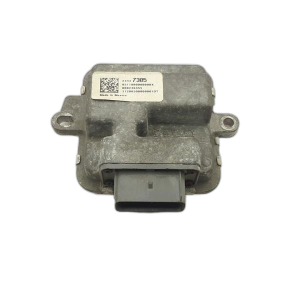
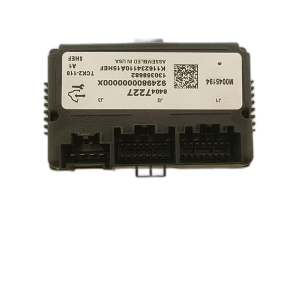
- Failed Electronic Brake Control Module (EBCM): → Shop ABS Control Module This is the least likely cause. TSB #PIT5499B suggests replacing the EBCM if corrosion from the connector is severe and has migrated into the module itself. Internal electronic failure is possible but should only be considered after all wiring, connector, and sensor issues have been definitively ruled out.
Diagnosis Steps
- Read the trouble codes from the EBCM with an ABS-capable scan tool.
- CRITICAL STEP: Locate the Electronic Brake Control Module (EBCM) on the driver's side frame rail. Disconnect the large electrical connector and thoroughly inspect for any signs of water intrusion or corrosion, as per TSB #PIT5499B. This is the most important vehicle-specific step.
- If the EBCM connector is clean, inspect the tape on the wiring conduit leading to the G400 ground, as also mentioned in the TSB.
- Visually inspect the left rear wheel speed sensor wiring harness from the frame to the wheel hub for any signs of damage, chafing, or improper routing.
- Disconnect the sensor connector at the wheel and inspect for corrosion or loose pins.
- Use a scan tool to graph the output of all four wheel speed sensors while driving. Look for the left rear sensor signal to be missing, erratic, or dropping out compared to the others.
- If the signal is erratic, remove the sensor (usually one T30 Torx bolt) and inspect the magnetic encoder ring on the wheel bearing for metallic debris or damage.
- If the signal is absent, test the sensor's resistance with a multimeter (if specifications are available) or test for voltage and ground at the sensor connector.
- If wiring and the sensor itself test good, the fault may lie within the EBCM, but this is rare.
Parts You'll Likely Need
- Left Rear Wheel Speed Sensor
(OEM #ACDelco 84070322 (or GM 84070322))— This sensor is a common failure point due to its exposure to the elements and is often the root cause if wiring and connectors are intact.
Trusted brands: ACDelco, Delphi, Standard Motor Products (SMP)
OEM price range: $50-$90
Aftermarket price range: $30-$60 - EBCM Connector Pigtail
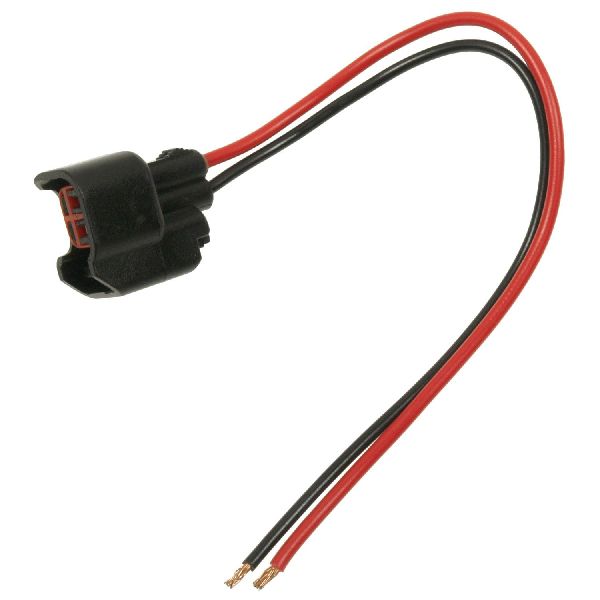
(OEM #GM 19178085)— If the EBCM connector is found to be corroded beyond cleaning (as per TSB #PIT5499B), the connector itself will need to be cut out and a new pigtail spliced in.
Trusted brands: ACDelco, Dorman
OEM price range: $70-$150
Aftermarket price range: $50-$100
Related Codes That Often Appear With This One
- C0035, C0040, C0050 — These are codes for the other wheel speed sensor circuits. Seeing them together strongly points to a common connection point issue, like the EBCM connector mentioned in TSB #PIT5499B, which lists all these codes as potential results of the water intrusion.
- U0121, U0415, U0420 — These are communication codes related to the EBCM. They often appear with wheel speed sensor codes when there is a significant electrical issue, such as the water intrusion at the EBCM connector described in TSB #PIT5499B.
Technical Service Bulletins (TSBs) & Recalls
- PIT5499B: Addresses various ABS/Stabilitrak codes, including C0045, and points to potential water intrusion at the Electronic Brake Control Module connector as a primary cause. It instructs technicians to inspect the connector and, if corrosion is found, replace the EBCM and affected terminals. It also advises removing tape from the G400 ground conduit.
Platform-Specific Known Issues
- TSB #PIT5499B: EBCM Connector Water Intrusion: This Technical Service Bulletin is the most critical document for this issue. It explicitly states that codes C0035, C0040, C0045, and C0050 on 2015-2016 models can be caused by water and corrosion in the Electronic Brake Control Module connector. The recommended action is to inspect the connector, replace it if corroded, and also inspect the tape on the G400 ground wire conduit.
- Owner Experience: Reddit Repair Story: In a Reddit thread on r/chevycolorado, a user with a 2017 Z71 experiencing intermittent Stabilitrak and ABS lights was advised by others that it is likely a wheel speed sensor. This aligns with the common causes, though many owners may not be aware of the primary EBCM connector issue and may replace the sensor first.
Mechanic-Grade Diagnostic Values
- Wheel Speed Sensor Resistance — expected: 800 - 2,500 Ohms. Failure: An open circuit (infinite resistance), a short (near zero ohms), or a value significantly different from the sensor on the opposite side.
- Wiring Harness Continuity — expected: Less than 1.0 Ohm. Failure: High resistance or an open circuit (OL) indicates a break in the wire between the EBCM connector and the sensor connector.
- Signal Wire Voltage (Oscilloscope) — expected: A digital square wave that toggles between a low voltage (~1.6V) and a high voltage (~10.6V) as the wheel is spun.. Failure: A flat line, erratic signal, or no signal while the wheel is spinning points to a faulty sensor or a damaged magnetic encoder ring.
Hidden / Shadow Codes Worth Checking
- C0045 06: Left Rear Wheel Speed Sensor Circuit Low Voltage/Open. This points specifically to an open wire, a poor connection, or a complete sensor failure. (see via Professional scan tools like the GM GDS2 can read manufacturer-specific symptom bytes.)
- C0045 0F: Left Rear Wheel Speed Sensor Circuit Signal Erratic. This strongly suggests a problem with the magnetic encoder ring (debris, damage) or electromagnetic interference. (see via Professional scan tools like the GM GDS2 can read manufacturer-specific symptom bytes.)
- C0045 18: Left Rear Wheel Speed Sensor Circuit Low Signal Amplitude. This indicates the signal is weak or missing, often due to an excessive air gap between the sensor and ring, or a broken wire. (see via Professional scan tools like the GM GDS2 can read manufacturer-specific symptom bytes.)
- C0045 5A: Left Rear Wheel Speed Sensor Circuit Not Plausible. The signal's pattern doesn't make sense compared to other vehicle sensors, often caused by a damaged/cracked tone ring or an intermittent wiring fault. (see via Professional scan tools like the GM GDS2 can read manufacturer-specific symptom bytes.)
Scan Tool Commands That Help
- GDS2 / Tech 2 / Pro-level Scanner: Live Data Graphing (All four wheel speeds) — This is the primary diagnostic step to visually confirm if the left rear sensor is dropping out, reading zero, or providing an erratic signal compared to the other three wheels while driving.
- GDS2 / Tech 2 / Pro-level Scanner: Automated Bleed Procedure — This service function is required after replacing the EBCM or any hydraulic component of the ABS system to ensure all air is purged from the brake lines.
Wiring & Ground Locations
- EBCM Connector (X1) — Bolted to the driver's side frame rail, underneath the cab area, below the driver's door.. This is the central connection point for all wheel speed sensors. TSB #PIT5499B identifies it as a primary failure point due to water intrusion and corrosion, which can directly cause a C0045 by affecting the pins for the left rear sensor circuit.
- EBCM Pins (for C0050, Right Rear) — Within the 38-pin EBCM main connector (X1).. For the adjacent C0050 code, Pin 19 (Brown wire) is the Right Rear WSS Signal and Pin 20 (Orange wire) is the Low Reference. The pins for C0045 (Left Rear) will be a different pair in this same connector and are the specific terminals to test for continuity and voltage when diagnosing a circuit fault that isn't at the wheel end.
- G400 — Mounted to the left rear body mount, located behind the left rear tire on the frame.. TSB #PIT5499B specifically advises inspecting the tape on the G400 ground conduit as part of the diagnostic process for wheel speed sensor codes, indicating it is a relevant ground path for the EBCM system.
Real Owner Repair Stories
- YouTube channel 'Jimmy, Making it work' (Chevrolet Traverse (Similar GM platform)) — ABS and Stabilitrak lights on, code C0045 with a 'plausibility failure' message.
❌ Tried (didn't work) The mechanic did not replace any parts unnecessarily.
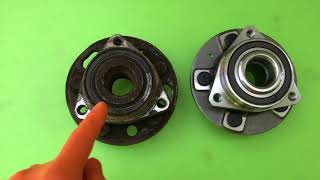
✅ What actually fixed it After graphing the live data and seeing glitches in the left rear sensor's signal, the mechanic correctly diagnosed a faulty magnetic encoder ring on the wheel hub. Upon disassembly, the encoder ring was found to have physically broken apart. The entire wheel hub assembly was replaced, which resolved the code. - YouTube channel 'OldGuyDIY' (2013 Chevrolet Impala (Similar GM platform)) — Persistent C0045 code immediately after replacing the left rear hub assembly.
❌ Tried (didn't work) Replacing the hub assembly did not fix the code because the sensor connector was damaged in the process.
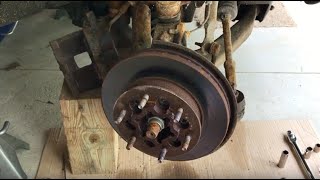
✅ What actually fixed it The plastic housing for the wheel speed sensor harness connector had been damaged and deformed, preventing the pins from making a solid connection. The final fix was to insert small strands of copper wire into the female side of the connector to ensure a tight fit when plugged in, which cleared the lights. The long-term fix is to splice in a new pigtail connector.
Helpful Videos
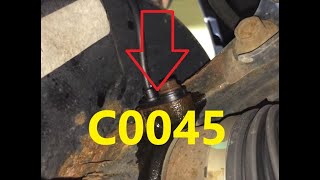
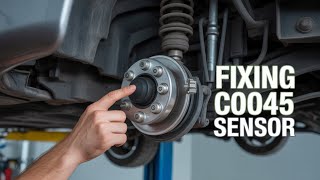


Used OEM Parts in Stock
New Aftermarket Parts Available


The information in this article is provided for general reference and educational purposes only. Vehicle specifications, procedures, and part compatibility can vary by production date, trim level, and region. Always consult your vehicle's factory service manual and verify part numbers before purchasing or performing repairs. Safety-critical components such as airbags, seat belts, and braking systems should be installed by a qualified professional.
- Gmc CANYON:
- 🧭 Diagnostic Flowchart
- 🎬 Helpful Videos
- 🛍️ Shop This Part
- What's Unique About the 2015-2019 Gmc CANYON
- Symptoms You May Notice
- Most Likely Causes
- Rare But Worth Checking
- Diagnosis Steps
- Parts You'll Likely Need
- Related Codes That Often Appear With This One
- Technical Service Bulletins (TSBs) & Recalls
- Platform-Specific Known Issues
- Mechanic-Grade Diagnostic Values
- Hidden / Shadow Codes Worth Checking
- Scan Tool Commands That Help
- Wiring & Ground Locations
- Real Owner Repair Stories
- 🎟️ Get 5% Off