

OBD-II Code C0046: Brake Pressure Sensor Circuit Fault
What C0046 means, why it triggers, and how to fix it
- Code C0046 disables your ABS and traction control, increasing stopping distances by up to 20% on wet roads, so drive cautiously until repaired.
- On General Motors vehicles from 2005-2018, C0046 indicates a left rear wheel speed sensor failure, not a brake pressure sensor issue.
- Before replacing a $1,000+ ABS module, perform a 5-minute visual inspection and 'wiggle test' on the sensor wiring harness to rule out a $20 connector fault.
- For Volkswagen and Audi models (2002-2015), sending your original ATE MK60 ABS module to a specialist for a $250 rebuild saves over $1,500 compared to a dealer replacement.
What Does C0046 Mean?
Code C0046 means the Electronic Control Unit (ECU) detects a fault in the brake pressure sensor circuit. This sensor measures how hard you press the brake pedal, providing essential data for the ABS and ESC. When the module receives an irrational, out-of-range, or missing signal, it triggers C0046 and disables these safety systems.
Technical definition: The SAE/ISO definition for C0046 is "Brake Pressure Sensor 'A'/'B' (Subfault)", indicating an electrical circuit failure or irrational signal. However, on General Motors vehicles, C0046 means "Left Rear Wheel Speed Sensor Circuit Range/Performance". This requires a completely different diagnostic approach focused on the wheel hub.
Can I Drive With C0046?
Yes, But With Caution. Yes, but your Anti-lock Braking System (ABS) and Electronic Stability Control (ESC) are disabled. Your wheels will lock up during hard braking, increasing stopping distances and skidding risk on wet roads. Your primary hydraulic brakes still function. Ignoring this light, especially if caused by a failing GM wheel bearing, leads to catastrophic hub failure and adds hundreds to the repair bill.
Common Causes
- Damaged or Corroded Wiring/Connectors (Very Common) — Road salt, moisture, and debris corrode connector pins, while vibrations break wires. This is the most frequent cause of C0046 across all makes.
- Defective Wheel Speed Sensor or Hub (GM Specific) (Very Common) — On GM vehicles, this code points exclusively to the left rear wheel speed sensor. The sensor fails, wiring breaks, or rust builds up under the sensor, increasing the air gap and causing an erratic signal.
- Faulty Brake Pressure Sensor (Common) — The sensor's internal electronics and diaphragms wear out, crack, or suffer damage from contaminated brake fluid, causing incorrect pressure readings.
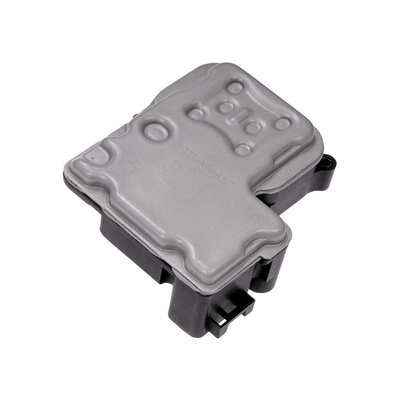
- Failing ABS/ESC Control Module (Common) — Internal failures, typically cracked solder joints on the circuit board, cause the module to misread a perfectly good sensor.
- Low or Contaminated Brake Fluid (Less Common) — Old, moisture-heavy brake fluid or air in the lines alters hydraulic pressure readings and triggers this fault.
- Unstable Vehicle Voltage (Less Common) — A weak battery or failing alternator causes voltage drops during self-tests. The ABS controller interprets these drops as a component fault.
- Damaged Reluctor Ring / Tone Ring (Rare) — A cracked or debris-covered reluctor ring on the axle produces an erratic signal, triggering a range/performance code on wheel speed sensor applications.
- Software or Calibration Issues (Rare) — After replacing the ABS module, skipping the factory-level recalibration prevents the module from interpreting sensor signals correctly.
Symptoms
- ABS and Traction Control Lights On — The dashboard warning lights illuminate immediately, indicating the safety systems are offline.
- ABS and Traction Control Disabled — Wheels lock up during hard stops and tires spin easily on slippery surfaces.
- Spongy or Unresponsive Brake Pedal — The brake pedal feels soft or requires more travel to stop the vehicle, indicating a hydraulic issue or air in the lines.
- Erratic Speedometer (GM Specific) — On GM vehicles, the speedometer needle jumps or cruise control fails due to the erratic wheel speed sensor signal.
- Warning Messages — The driver information center displays 'Service Brake System' or 'Service StabiliTrak'.
Diagnostic Flowchart
Tap your situation to follow the diagnostic path that matches what you're seeing on this code.
Common Fixes & Costs
- Repairing Damaged Wiring or Connectors — Parts: $10-$50, Labor: $120-$250, ~1.5 hr book time (Intermediate)
- Replacing a Wheel Speed Sensor (GM-specific) — Parts: $50-$150, Labor: $100-$200, ~1 hr book time (DIY)
- Replacing the Brake Pressure Sensor — Parts: $75-$300, Labor: $100-$175, ~1.2 hr book time (DIY)
- Rebuilding the ABS Control Module — Parts: $200-$350, Labor: $150-$300, ~2 hr book time (Professional)
- Replacing the ABS Control Module — Parts: $600-$1,800, Labor: $200-$400, ~2.5 hr book time (Professional)
- Brake Fluid Flush and Replacement — Parts: $20-$40, Labor: $100-$150, ~1 hr book time (DIY)
Used vs. New Parts: Buying Guide
When a used part is worth it: Used wheel speed sensors are a reasonable budget option. Used ABS modules are risky due to VIN-locking; a professionally rebuilt original module is superior.
Donor-vehicle mileage cap: roughly under 60000 miles for the part to have meaningful remaining life.
Donor quality checklist:
- Verify the part number matches exactly.
- Ask if the used ABS module requires VIN programming.
- Inspect connectors for corrosion.
- Ensure the seller offers a 30-90 day warranty.
Decision logic:
- If The part is a simple bolt-on sensor on an older vehicle → A used part from a salvage yard is cost-effective.
- If The part is the ABS control module → Rebuild your original module to avoid VIN programming issues.
- If The vehicle is newer or budget allows → Buy a new OEM part for maximum reliability.
Warranty tradeoff: Used parts have 30-90 day warranties. Rebuilt ABS modules offer 1-year to lifetime warranties. New OEM parts offer the best coverage.
Worst-case if a used part fails: $300-$600 if a used electronic part is dead on arrival, requiring repeat labor.
What Happens If You Wait — Timeline
- 0-1 month: ABS and Traction Control lights illuminate. Systems are disabled, but primary hydraulic brakes function normally. No physical damage occurs yet. (MPG impact: 0%% · Added cost: $0)
- 1-6 months (GM-specific progression): If caused by a failing wheel bearing creating wobble, continued driving destroys the hub assembly. A simple sensor fix becomes a hub replacement. (MPG impact: 0-1%% · Added cost: $300-$600)
- Immediate Risk: During an emergency stop on a wet road, the wheels lock up. The vehicle skids, resulting in a loss of steering control and a potential collision. (MPG impact: 0%% · Added cost: $500+)
- 6+ months (VW/Audi Module Progression): Continued operation with an internal sensor fault rarely causes further physical damage, but internal electronic faults cascade, forcing a full $1,500+ replacement instead of a $250 rebuild. (MPG impact: 0%% · Added cost: $1000+)
Cost of Not Fixing It
- Immediate: Loss of ABS and ESC functions, increasing the risk of skidding during emergency braking. (Added cost: N/A)
- 1-6 months: On GM vehicles, ignoring a wheel speed sensor fault caused by bearing play destroys the wheel hub assembly. (Added cost: $300-$600)
- 6+ months: Continued driving with a faulty ABS module cascades into severe internal electronic failure, forcing a full replacement instead of a rebuild. (Added cost: $1,000+)
Diagnosis Steps
- Read the Trouble Codes & Check for TSBs
Use an OBD-II scanner to confirm C0046 is active. Check the code's exact definition for your vehicle's make. Search for Technical Service Bulletins (TSBs) for your vehicle, as the manufacturer often provides a known fix.
Tools: OBD-II Scanner (capable of reading ABS codes) (Beginner) - Visually Inspect the Wiring and Connector
Locate the relevant sensor. Follow the wiring harness and look for cuts, chafing, or corrosion. Unplug the connector and check for bent or green pins. Apply dielectric grease before reconnecting.
Tools: Flashlight, Dielectric Grease (Beginner) - Test Sensor Voltage and Ground at the Connector
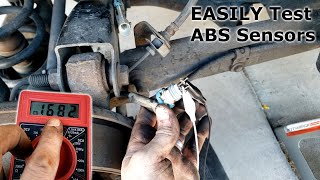
Identify the power, ground, and signal wires. With the ignition on, use a multimeter to check for a 5V reference voltage and a solid ground (less than 0.1V). Missing voltage indicates a wiring problem to the ABS module.
Tools: Multimeter, Vehicle-specific wiring diagram (Intermediate) - Perform a 'Wiggle Test'
While monitoring the sensor's live data on a scan tool or voltage with a multimeter, gently wiggle the wiring harness. If the signal drops out, you have an intermittent open or short in the wiring.
Tools: Advanced Scan Tool or Multimeter (Intermediate) - Test the Sensor's Live Signal Output
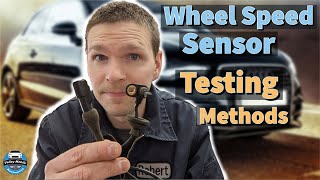
Backprobe the signal wire. For a brake pressure sensor, voltage should rise smoothly from ~0.5V to ~4.5V as you press the pedal. For a GM wheel speed sensor, graph the live data while driving slowly; it should be a smooth wave.
Tools: Multimeter, Backprobe kit, Advanced Scan Tool (Intermediate) - Check the Brake Fluid
Ensure the fluid level is between the 'MIN' and 'MAX' lines. If the fluid is dark brown or black, it is contaminated and requires a flush.
Tools: None (Beginner) - Oscilloscope Pattern Analysis (Wheel Speed Sensor)
Connect an oscilloscope to the wheel speed sensor. A good sensor produces a clean square wave. Gaps or noisy patterns definitively point to a bad sensor, damaged tone ring, or excessive wheel bearing runout.
Tools: Oscilloscope, Backprobe kit (Advanced) - Test Brake Pressure Sensor Resistance
Disconnect the sensor and measure resistance between the specified pins using a service manual. A reading of OL (Over Limit) or zero indicates a failed sensor.
Tools: Multimeter, Vehicle-specific service manual (Advanced) - Check for a Faulty ABS Module
If the sensor, wiring, and tone ring test good with specified voltages and clean waveforms, the ABS control module has failed internally. Send the module to a specialist for bench testing.
Tools: Advanced Scan Tool (Advanced)
When This Code Triggers (Freeze-Frame Conditions)
- Vehicle Speed: 15-45 mph (Sets during initial acceleration or steady-state driving as the module performs self-checks.)
- Brake Pedal Status: Off (Detected during a system self-test when brakes are not applied to check for a valid baseline reading.)
- System Voltage: 12.0-14.5V (Sets when system voltage is stable, ruling out a low-voltage trigger.)
- Time Since Engine Start: 1-5 minutes (Logged shortly after startup once the vehicle moves and the ABS module completes initialization.)
Related Codes
- C0044 — Refers to 'Brake Pressure Sensor A'. C0046 is a sub-fault code appearing alongside C0044. Together, they strongly implicate the sensor circuit.
- C0045 — On GM vehicles, this is the 'Left Rear Wheel Speed Sensor Circuit'. Appearing with C0046, it indicates an electrical circuit problem rather than a tone ring issue.
- C0131 — Relates to 'Brake Pressure Sensor Circuit'. Used by different manufacturers to indicate the exact same fault as C0046.
- U0121 — Means 'Lost Communication With ABS Module'. If present, C0046 is a secondary symptom of the module being offline due to a power or ground failure.
Climate & Environmental Factors
- Road Salt / Humidity: Saltwater accelerates corrosion on wiring, connector pins, and ABS module seals, causing intermittent shorts that are difficult to trace.
- Extreme Cold: Moisture trapped in connectors freezes, causing temporary sensor malfunctions. Low battery voltage in cold weather triggers false codes.
- Off-Road / Debris: Mud and rocks physically damage exposed wheel speed sensor wiring harnesses running along the frame or suspension.
How to Talk to a Mechanic About This Code
Say this: "I have an ABS light on and my scanner shows code C0046. My car is a [Your Make/Model], so I believe this points to a fault in the [Brake Pressure Sensor circuit / GM-specific: Left Rear Wheel Speed Sensor circuit]. I'd like to schedule a diagnostic to confirm if the problem is the sensor, the wiring, or the ABS module itself."
This directs the technician to the correct system (crucial for GM vehicles), focuses the diagnosis, and prevents them from immediately suggesting a $1,500 module replacement without testing.
Avoid saying:
- 'My ABS light is on, can you fix it?'
- 'Just do whatever it takes to turn the light off.'
- 'I think I need a new ABS computer.'
Questions to ask before authorizing the repair:
- What were the results of the electrical tests on the sensor's power, ground, and signal wires?
- Did you perform a 'wiggle test' on the wiring harness?
- Can you show me the live data from the sensor?
- (For GM) Did you clean the rust from the sensor's mounting surface?
- If the module needs replacement, what is the cost for a new one versus sending mine out for a rebuild?
Where to Take It: Dealer vs Independent vs Chain
- Dealer:
Necessary for in-warranty repairs or if a new, programmed module is the only solution. Otherwise, it is the most expensive route.
Best for: Vehicles under warranty., Complex repairs requiring brand-new module replacement and programming., Checking for warranty extensions or recalls.
Downsides: Highest labor rates and part costs., Refuses to install customer-supplied or rebuilt parts. (Typical cost: +50% vs. baseline) - Independent Shop:
Best fit for most C0046 repairs. Offers the best balance of electrical diagnostic expertise and cost.
Best for: Out-of-warranty vehicles., Electrical diagnostics., Working with rebuilt modules or performing detailed wiring repairs.
Downsides: Quality varies; check reviews and ASE certifications., May lack dealer-specific programming tools. (Typical cost: +0% vs. baseline) - Chain Shop:
High risk. This code requires careful diagnosis, not just part replacement. Avoid for initial diagnosis.
Best for: Simple part swaps if the diagnosis is already 100% certain.
Downsides: Technician skill varies dramatically., Lacks advanced diagnostic tools for complex electrical problems., High pressure to sell parts leads to misdiagnosis. (Typical cost: -10% vs. baseline)
When to Walk Away From the Repair
If the estimated repair cost exceeds 40-50% of the car's private-party value, seriously consider selling or trading it in.
- Car worth $6000, fix is $3200: Walk away. The repair cost is over 50% of the car's value.
- Car worth $10000, fix is $1200: Fix it. The repair is well below the threshold and restores a critical safety feature.
- Car worth $3500, fix is $1500: Borderline. At ~43% of the car's value, get a second opinion. Consider a rebuilt module instead of new.
What Scan Tool You Need for This Code
Minimum: A scanner that reads and clears Anti-lock Brake System (ABS) codes. A basic $20 engine-only reader will not see code C0046.
C0046 is stored in the ABS module, not the Engine Control Unit (ECU). Without an ABS-capable scanner, you won't know the code exists.
Budget: BlueDriver Pro or Foxwell NT630 Plus (~$99) — Reads and clears ABS codes, provides freeze-frame data, and graphs live sensor data to verify sensor output.
Mid-range: Autel MaxiCOM MK808 / Foxwell NT510 Elite (~$350) — Includes bi-directional controls to activate the ABS pump for a proper brake fluid bleed after a hydraulic component replacement.
Professional: Autel MaxiSys / Launch X431 Series (~$500-1200) — Performs advanced functions like programming a new ABS module to the vehicle's VIN.
Rent vs buy: AutoZone offers loaner scanners that read ABS codes. Renting is the most cost-effective option for a one-time repair.
How to Clear the Code After You Fix It
- Use an OBD-II scan tool capable of accessing the ABS module to clear the C0046 code.
- Perform the ABS system's specific calibration procedure if a new module or sensor was installed.
- Perform a test drive including several stops to allow the system to verify the repair.
Drive cycle (~15 minutes): Start the vehicle and idle for 1-2 minutes. Drive over 25 mph and perform several normal stops. The ABS light remains off if the repair was successful. The system self-tests continuously.
Readiness monitors affected: Does not affect emissions readiness monitors.
Watch out for:
- Using a basic code reader that cannot access or clear ABS codes.
- Skipping the required calibration after replacing a module, causing the code to return immediately.
- Failing to fully resolve an intermittent wiring connection.
Will This Fail Emissions / State Inspection?
No — by itself this code doesn't fail OBD inspection (but it can keep readiness monitors from setting, which causes a separate fail).
- California: An illuminated ABS light does NOT cause a Smog Check failure.
- New York: An illuminated ABS warning light fails the annual safety inspection.
- Texas: An illuminated ABS light passes the safety inspection, but a red 'BRAKE' warning light fails it.
Most Commonly Affected Vehicles
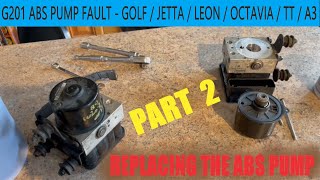
- Volkswagen Jetta, Golf, Passat, GTI (2002-2015) — The internal G201 pressure sensor in the ATE MK60 ABS module fails. Rebuilding the module is the most affordable option.
- Audi A3, TT (2002-2015) — Shares the problematic ATE MK60 ABS module with Volkswagen. Module rebuilding is the standard fix.
- Chevrolet / GMC Silverado, Sierra, Suburban, Tahoe (2005-2018) — C0046 means 'Left Rear Wheel Speed Sensor Circuit Range/Performance'. Caused by a bad sensor, damaged pigtail, or rust under the sensor mount.
- Dodge / Chrysler Grand Caravan, Town & Country (2012-2020) — Wheel speed sensor wiring harnesses corrode or break near the suspension clips.
- Ford F-150, Explorer, Focus (2004-2012) — Experiences failures in the ABS module itself. Check for corrosion at the main ABS module connector.
- BMW 3-Series (E90), 5-Series (E60) (2006-2013) — The two brake pressure sensors on the master cylinder fail frequently. They are replaceable separately from the main DSC unit.
- Hyundai / Kia Sonata, Optima, Elantra (2011-2020) — Issues are often related to wiring harness connectors for the wheel speed sensors. Check for corrosion first.
- Nissan Altima, Rogue, Murano (2014-2024) — On newer models, C0046 relates to the Intelligent Cruise Control (ICC) and points to a misaligned forward-facing radar sensor.
Manufacturer-Specific Notes
- General Motors (Chevrolet, GMC, Cadillac): C0046 means 'Left Rear Wheel Speed Sensor Circuit Range/Performance'. Do not diagnose the brake pressure sensor on a GM vehicle.
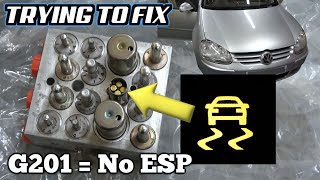
- Volkswagen / Audi: The brake pressure sensor (G201) is integrated into the ABS module. C0046 means the entire ABS module must be rebuilt or replaced.
- Ford: Ford issues numerous TSBs for brake system sensors and wiring. Always check for TSBs before beginning a repair.
- Chrysler / Dodge / Jeep: The wiring harness for the wheel speed sensors breaks internally near the connector. A 'wiggle test' is highly effective here.
Real Owner Stories
2011 VW Jetta with 186k miles
ABS and traction control lights illuminated. A dealership quoted $4,800 for a new ABS module and pump.
What they tried:
- Scanned the vehicle, confirming faults pointing to the internal G201 sensor.
- Verified the battery was healthy to rule out voltage drops.
- Removed the ABS module and sent it to a rebuilding service.
Outcome: The owner fixed the issue by having the original ABS module rebuilt for $250. Total DIY repair cost was under $300, saving $4,500.
Lesson: On VW/Audi models, C0046 points to an internal brake pressure sensor. Dealership replacement is exorbitant. A rebuilt original module is the most cost-effective repair and avoids reprogramming fees.
2002 Chevrolet Silverado 2500HD
ABS light illuminated, and brakes pulsed at low speeds (false ABS activation).
What they tried:
- Replaced the left rear wheel speed sensor based on the C0046 code.
- The problem persisted.
- Removed the new sensor and inspected the mounting surface.
Outcome: The owner found severe rust buildup on the wheel hub directly under the sensor. Cleaning the rust to bare metal restored the correct sensor air gap and fixed the issue for $0 in parts.
Lesson: On GM trucks, rust jacks the wheel speed sensor away from the tone ring. Always clean the hub surface underneath the sensor to bare metal before replacing parts.
General Misdiagnosis Story
ABS light illuminated with code C0046. The owner assumed the ABS module failed.
What they tried:
- Replaced the ABS control module for $1,200.
- The C0046 code returned immediately after programming.
Outcome: A technician performed a 'wiggle test' on the wiring harness, revealing an intermittent break in a wire going to the sensor. The actual fix was a $20 wiring pigtail.
Lesson: Never assume the most expensive component is the cause. Always perform a full circuit diagnosis—checking power, ground, and signal integrity—before condemning a control module.
How to Prevent This Code From Triggering
- Flush brake fluid every 2-3 years (Every 2-3 years or 30,000 miles) — Brake fluid absorbs moisture, which corrodes sensitive internal components of the ABS module and pressure sensors. Clean fluid maintains hydraulic integrity.
- Apply dielectric grease to connectors (During any brake or wheel-related service) — Dielectric grease seals out moisture and road salt from connector pins, preventing the corrosion that causes 80% of circuit faults.
- Clean wheel speed sensor mounting surfaces (When replacing brake rotors or wheel bearings) — Rust buildup under the sensor increases the air gap to the tone ring, causing erratic signals. Cleaning this surface to bare metal prevents this failure.
- Maintain a healthy battery and clean terminals (Annually before winter) — A weak battery causes low voltage during system self-tests, triggering false electronic codes like C0046.
Frequently Asked Questions
Can I just clear the C0046 code and keep driving?
You can clear the code, but it returns immediately when the ABS module runs its self-test. Clearing the code does not fix the underlying problem. Your ABS and ESC systems remain disabled until you repair the fault.
Is it safe to drive with the C0046 code active?
Your primary braking system still works, but you lack ABS and traction control. This makes it easier to lock up the brakes and skid on wet roads. Repair the system promptly to restore full safety functionality.
What is the most common misdiagnosis for C0046?
On GM vehicles, mechanics mistakenly diagnose the brake pressure sensor when the code actually refers to the left rear wheel speed sensor. On other cars, replacing the expensive ABS module without testing the wiring first is a costly error. A simple broken wire perfectly mimics a dead module.
Why did the code appear after I changed my brake pads or a wheel bearing?
The sensor or its wiring was likely damaged or disconnected during the repair. For wheel speed sensor faults, a common error is installing a new wheel bearing backwards or using one missing the magnetic encoder ring. Re-inspect the work area for unplugged connectors.
Why do my ABS and traction control lights turn on at the same time?
The ABS and traction control systems are integrated and share the same sensors. A fault in the brake pressure or wheel speed sensor disables both systems simultaneously. This triggers both warning lights on your dashboard.
Can a bad battery cause a C0046 code?
Yes. A weak battery causes low voltage during engine cranking or system self-tests. The ABS module interprets this voltage drop as a component fault and sets false codes.
Will C0046 go away on its own?
Rarely. If a connector gets wet and dries out, the code might clear after several drive cycles. However, C0046 usually points to a hard fault like a failed sensor or broken wire requiring physical repair.
What is a reluctor ring or tone ring?
A reluctor ring is a toothed or magnetic wheel that spins with the axle. The wheel speed sensor reads this ring to calculate wheel speed. Damage, rust, or debris on this ring corrupts the signal and causes fault codes.
Key Takeaways
- Code C0046 disables your ABS and traction control, increasing stopping distances by up to 20% on wet roads, so drive cautiously until repaired.
- On General Motors vehicles from 2005-2018, C0046 indicates a left rear wheel speed sensor failure, not a brake pressure sensor issue.
- Before replacing a $1,000+ ABS module, perform a 5-minute visual inspection and 'wiggle test' on the sensor wiring harness to rule out a $20 connector fault.
- For Volkswagen and Audi models (2002-2015), sending your original ATE MK60 ABS module to a specialist for a $250 rebuild saves over $1,500 compared to a dealer replacement.
Helpful Videos
Shop the Parts Behind C0046
Below are the parts most often responsible for code C0046, ranked by how frequently each one is the actual culprit (per the diagnosis above). Tap any to see what we have for your vehicle.



The information in this article is provided for general reference and educational purposes only. Vehicle specifications, procedures, and part compatibility can vary by production date, trim level, and region. Always consult your vehicle's factory service manual and verify part numbers before purchasing or performing repairs. Safety-critical components such as airbags, seat belts, and braking systems should be installed by a qualified professional.
- 🧭 Diagnostic Flowchart
- 🎬 Helpful Videos
- 🛍️ Shop This Part
- What Does C0046 Mean?
- Can I Drive With C0046?
- Common Causes
- Symptoms
- Common Fixes & Costs
- Used vs. New Parts: Buying Guide
- What Happens If You Wait — Timeline
- Cost of Not Fixing It
- Diagnosis Steps
- When This Code Triggers (Freeze-Frame Conditions)
- Related Codes
- Climate & Environmental Factors
- How to Talk to a Mechanic About This Code
- Where to Take It: Dealer vs Independent vs Chain
- When to Walk Away From the Repair
- What Scan Tool You Need for This Code
- How to Clear the Code After You Fix It
- Will This Fail Emissions / State Inspection?
- Most Commonly Affected Vehicles
- Manufacturer-Specific Notes
- Real Owner Stories
- 2011 VW Jetta with 186k miles
- 2002 Chevrolet Silverado 2500HD
- General Misdiagnosis Story
- How to Prevent This Code From Triggering
- Frequently Asked Questions
- Can I just clear the C0046 code and keep driving?
- Is it safe to drive with the C0046 code active?
- What is the most common misdiagnosis for C0046?
- Why did the code appear after I changed my brake pads or a wheel bearing?
- Why do my ABS and traction control lights turn on at the same time?
- Can a bad battery cause a C0046 code?
- Will C0046 go away on its own?
- What is a reluctor ring or tone ring?
- Key Takeaways
- 🎟️ Get 5% Off