

C0050 on 2013-2014 Cadillac ATS: Right Rear Wheel Speed Sensor Causes and Fixes
Code C0050 on a 2013-2014 Cadillac ATS means there's a fault with the right rear wheel speed sensor circuit. The most common cause is metallic debris on the wheel hub's magnetic ring, which can often be fixed by cleaning, as noted in GM TSB PIC5428G. If cleaning doesn't work, the wheel speed sensor or the entire hub assembly (which contains a new magnetic ring) likely needs replacement.
- C0050 means a fault in the Right Rear Wheel Speed Sensor circuit, which disables ABS and StabiliTrak.
- Before buying any parts, inspect and clean the magnetic ring on the right rear wheel hub, as metallic debris is a very common cause per a GM TSB.
- If cleaning doesn't work, the most likely parts to fail are the wheel speed sensor itself or the entire wheel hub bearing assembly.
- Driving is possible, but your vehicle's primary electronic safety aids are offline, so exercise increased caution, especially in poor weather.
What's Unique About the 2013-2014 Cadillac ATS
On this generation of Cadillac and other GM vehicles built on the Alpha platform, the wheel speed sensor's magnetic encoder ring is integrated into the wheel hub assembly. This design is highly susceptible to attracting and accumulating ferrous metallic debris from brake wear and road grime. GM issued a Technical Service Bulletin (TSB #PIC5428G, later superseded by #17-NA-047) highlighting that this debris is a very common cause for C0050, and often a simple cleaning—not part replacement—is the solution.
Diagnostic Flowchart
Tap your situation to follow the diagnostic path that matches what you're seeing on this vehicle.
Symptoms You May Notice
- ABS warning light is on
- Traction Control (TCS) warning light is on
- "Service StabiliTrak" message on the driver information center (DIC)
- "Service Steering" message may appear, with heavier steering at low speeds
- Intermittent grinding or clicking noises from the ABS pump at low speeds
- Hesitation or delayed acceleration from a stop
- Replacing the wheel speed sensor without first cleaning and inspecting the magnetic encoder ring on the hub. The TSB specifically calls out cleaning as the first step and notes that part replacement is often not necessary.
- Replacing the wheel speed sensor when the actual fault is a cracked or delaminated magnetic ring on the wheel hub assembly, which requires hub replacement.
Most Likely Causes
- Metallic Debris on Wheel Hub Magnetic Encoder Ring 🔴 High Probability As documented in GM TSB #PIC5428G, the magnetic encoder on the inboard side of the wheel bearing is prone to collecting ferrous debris, which disrupts the wheel speed sensor signal. This issue is widespread across many GM models from this era with the same hub design.
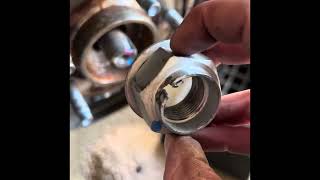
How to confirm: Remove the right rear wheel and the wheel speed sensor (held by a T30 Torx bolt). Visually inspect the magnetic ring on the hub assembly for metallic shavings or a paste-like accumulation of debris using a flashlight and mirror. 🎬 See how to inspect and clean the magnetic encoder ring.
Typical fix: Gently clean the debris off the magnetic encoder ring using a dry, soft nylon bristle brush and/or compressed air. Do not use a magnet or harsh chemicals, as this can damage the encoder. In many cases, this resolves the code without replacing any parts.
Est. part cost: $0 - Failed Right Rear Wheel Hub Bearing Assembly 🟡 Medium Probability → Shop Hub Assembly The magnetic encoder ring is integrated into the hub assembly. If the bearing fails, or the ring cracks, delaminates, or gets damaged, it will produce an erratic or no signal that a new sensor cannot fix. This is a common failure point noted by technicians and owners after cleaning fails to solve the problem.
How to confirm: If cleaning the hub and replacing the sensor do not resolve the issue, the hub assembly is the next logical point of failure. A visual inspection may reveal a cracked or peeling magnetic ring. A diagnostic technique involves swapping the sensor signal wires from the good side to the bad side to see if a good signal can be read from the suspect hub.
Typical fix: Replace the entire right rear wheel hub bearing assembly. 🎬 Watch: Step-by-step walkthrough for replacing the rear wheel hub assembly.
Est. part cost: $90-$250 - Failed Right Rear Wheel Speed Sensor ⚪ Low Probability → Shop ABS Wheel Speed Sensor While the sensor itself can fail, it is less common than debris or hub failure on this platform. The sensor is exposed to harsh conditions (water, heat, vibration) and can fail electronically over time.
How to confirm: After confirming the hub is clean and intact, use a scan tool to monitor live data from the right rear wheel speed sensor while driving. If the reading is zero, erratic, or doesn't match the other wheels, the sensor is suspect. You can also test the sensor's internal resistance with a multimeter or swap it with the left side sensor to see if the code follows (changes to C0045).
Typical fix: Replace the right rear wheel speed sensor. The sensor is typically held in by a single T30 Torx or 10mm bolt.
Est. part cost: $25-$60 - Damaged Wiring or Connector ⚪ Low Probability
How to confirm: Visually inspect the wiring harness leading to the right rear wheel speed sensor for any signs of chafing, breaks, corrosion in the connector, or heat damage from the exhaust. Check for continuity and shorts using a multimeter from the sensor connector to the EBCM connector.
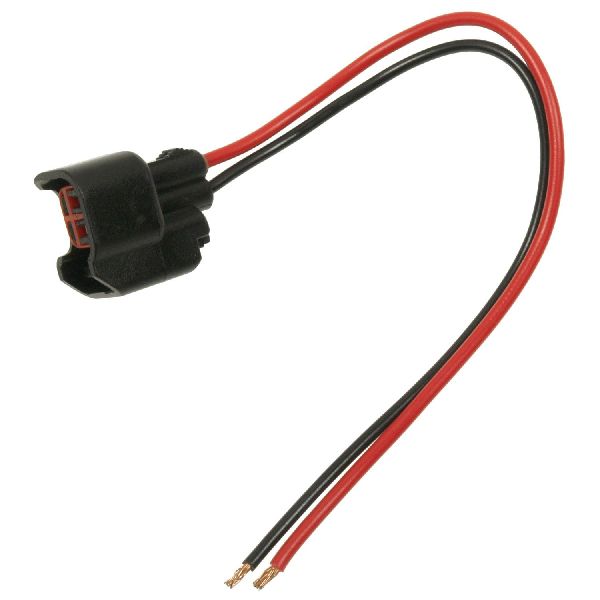
Typical fix: Repair the damaged section of the wire or replace the pigtail connector.
Est. part cost: $15-$40
Rare But Worth Checking
- Failed Electronic Brake Control Module (EBCM): → Shop ABS Control Module This is the least likely cause and should be considered a last resort. The EBCM should only be suspected for replacement after all other possibilities (hub, sensor, wiring) have been definitively ruled out through proper, step-by-step testing.
Diagnosis Steps
- Connect an OBD-II scanner capable of reading ABS/EBCM codes and confirm C0050 is present. 🎬 Watch: Understanding the common causes and fixes for code C0050. Note any symptom bytes (e.g., 18, 5A, 0F).
- View the live data stream for all four wheel speed sensors. While driving slowly in a straight line (above 13 mph), compare the Right Rear (RR) speed reading to the others. A reading of zero, an erratic signal, or a signal that doesn't match the other wheels from the RR sensor confirms the problem area.
- Raise and secure the vehicle on jack stands. Remove the right rear wheel.
- Visually inspect the wheel speed sensor wiring harness and connector for obvious damage, chafing, or corrosion.
- Remove the T30 Torx or 10mm bolt holding the wheel speed sensor in place and carefully pull/twist the sensor out of the hub.
- Thoroughly inspect the magnetic encoder ring on the face of the wheel hub using a flashlight. Look for any metallic debris stuck to the surface, which often looks like a dark paste. Also inspect for cracks or peeling on the ring itself.
- If debris is present, use a soft, dry nylon brush and compressed air to gently clean the entire surface of the ring. Reinstall the sensor and clear the codes. Test drive to see if the light returns.
- If cleaning does not fix it, or if the ring was visibly damaged, the wheel hub bearing assembly is the most likely culprit and should be replaced.
- If the hub is clean and intact, consider testing the sensor by swapping it with the left rear sensor to see if the code changes to C0045. If it does, the sensor is bad. If it does not, the problem likely lies in the wiring or EBCM.
Parts You'll Likely Need
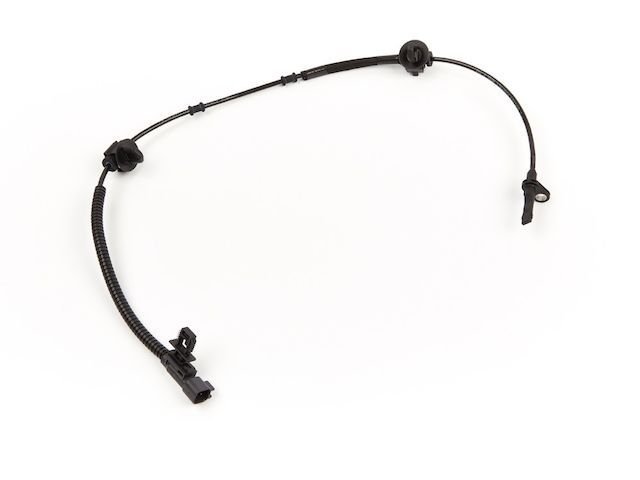
- Rear Wheel Speed Sensor
(OEM #23483150)— This is the sensor that reads the wheel speed. It can fail electronically, but is less likely than hub issues. Note: The original part number 20938122 has been superseded by 23483150 for the ATS. 20938122 fits older trucks/SUVs.
Trusted brands: ACDelco (GM Genuine), Standard Motor Products (SMP), Delphi, NTK
OEM price range: $40-$70
Aftermarket price range: $25-$50 - Rear Wheel Hub Bearing Assembly
(OEM #13583479)— This assembly contains the bearing and the integrated magnetic encoder ring. If the ring is cracked, damaged, or the bearing has failed, the entire hub must be replaced. This is a very common fix. This part number may be superseded by 13546938.
Trusted brands: ACDelco (GM Genuine), Timken, MOOG, SKF, Duralast
OEM price range: $180-$250
Aftermarket price range: $90-$160
Related Codes That Often Appear With This One
- U0415 — According to TSB PIC5428G, a loss of a wheel speed sensor signal is a common reason for the Power Steering Control Module to log code U0415 (Invalid Data Received From EBCM), resulting in a 'Service Steering' message and increased steering effort at low speeds.
- C0035, C0040, C0045 — These are the corresponding wheel speed sensor circuit codes for the other three wheels (Left Front, Right Front, Left Rear). The underlying cause of debris on the hub can affect any corner, and it's not uncommon for multiple codes to appear.
Technical Service Bulletins (TSBs) & Recalls
- PIC5428G: Addresses ABS, Service Traction Control, and/or Service Stabilitrak lights with DTCs C0035-C0050 (symptom bytes 18, 5A, 0F). It identifies metallic debris on the wheel bearing encoder ring as a primary cause and provides a cleaning procedure.
- 17-NA-047: This bulletin supersedes PIC5428G, updating the model years and reinforcing the same diagnostic and cleaning procedures.
Platform-Specific Known Issues
- As per TSB #PIC5428G, these vehicles are known to accumulate metallic debris on the wheel bearing's magnetic encoder, which causes an erratic signal and triggers wheel speed sensor codes like C0050. Cleaning is the first prescribed step.
- Owner forums frequently cite that if cleaning the hub doesn't work, the next most common failure is the magnetic ring on the hub itself cracking or delaminating, requiring a full hub replacement, not just a sensor.
Mechanic-Grade Diagnostic Values
- Wheel Speed Sensor Signal Type — expected: This is a two-wire active sensor that produces a digital square wave. The signal switches between approximately 7mA (Low) and 14mA (High) DC current.. Failure: Signal that is stuck high or low, or is erratic, as viewed on an oscilloscope. Simple multimeter voltage or resistance tests can be misleading.
- Wheel Speed Sensor Resistance — expected: No single Ohm value is reliable for modern active sensors. The recommended test is to compare the resistance reading of the suspect sensor with the reading from the known-good sensor on the opposite wheel. The values should be very close (within a few percent).. Failure: A reading of OL (open circuit), a dead short (near zero ohms), or a value that is significantly different from the sensor on the other side of the axle.
- EBCM Connector Voltage Test — expected: With the EBCM harness connector disconnected and ignition ON, test for less than 1V between the ignition voltage circuit terminal for the right rear sensor and a known good ground.. Failure: Voltage significantly higher than 1V may indicate a short to power in the harness.
Hidden / Shadow Codes Worth Checking
- C0050 06: Right Rear Wheel Speed Sensor Low Voltage/Open. The EBCM has detected an open circuit or a short to ground. (see via GM-specific scan tool (e.g., GDS2, high-end aftermarket scanner).)
- C0050 0F: Right Rear Wheel Speed Sensor Circuit Signal Erratic. The EBCM detected an implausible signal change, indicating debris or a damaged encoder ring. (see via GM-specific scan tool (e.g., GDS2, high-end aftermarket scanner).)
- C0050 18: Right Rear Wheel Speed Sensor Circuit Signal Low Signal Amplitude. The signal from the sensor is weak, a primary indicator for the debris issue noted in TSBs. (see via GM-specific scan tool (e.g., GDS2, high-end aftermarket scanner).)
- C0050 5A: Right Rear Wheel Speed Sensor Not Plausible. The signal from this sensor is out of sync with other vehicle sensors, strongly suggesting debris or a damaged ring. (see via GM-specific scan tool (e.g., GDS2, high-end aftermarket scanner).)
Scan Tool Commands That Help
- GDS2 / Tech2 / High-End ABS Scanner: Live Data Graphing — This is the most critical diagnostic function. Use it to monitor and graph the speed signals from all four wheels simultaneously while driving. A glitch, dropout, or noisy signal from the right rear sensor becomes immediately obvious when compared to the smooth graphs of the other three sensors.
- GDS2 / Tech2 / High-End ABS Scanner: Read DTC with Symptom Byte — Use this to retrieve the specific symptom byte (e.g., 18, 5A) associated with C0050. This helps narrow the diagnosis; symptom bytes 18 and 5A strongly point to a physical problem at the hub (debris/damage) rather than a purely electrical fault.
Wiring & Ground Locations
- EBCM — In the engine compartment, located forward of the right front strut tower.. This is the control module that receives the sensor signal and sets the code. All circuit testing ultimately leads back to its connector.
- EBCM Connector (Harness Side) — At the EBCM module.. On a related GM platform, the right rear wheel speed sensor signal circuit is on pin 3 and the voltage supply is on pin 2. These are the points to test for continuity and shorts back from the sensor. Verify with a model-specific diagram before probing.
- G104 — On the rear of the cylinder head.. This is a primary engine/chassis ground. A GM TSB specifically calls for inspecting the torque and connection of G104 on 2013 models to resolve intermittent 'Service Power Steering' messages, a known side effect of a C0050 code.
- G401 — In the rear of the vehicle, near the battery well.. This is a major rear body ground. A poor connection here could potentially affect components in the rear of the vehicle, including the wheel speed sensor circuit.
Real Owner Repair Stories
- YouTube channel 'Phillip Bailey' (2017 GM Sierra (similar system)) — ABS and TCS lights on, with an active C0050 code.
❌ Tried (didn't work) The vehicle had already had the right rear speed sensor replaced, which did not fix the problem.
✅ What actually fixed it Using a graphing ohmmeter on the sensor harness revealed intermittent high resistance. Wiggling the harness pinpointed the fault to a spot near the sensor connector where green corrosion had formed inside the wire's insulation, causing an open circuit that wasn't visible externally. Repairing this section of wire resolved the code. - Reddit user in r/Silverado (GM Truck (similar system)) — Stabilitrak, Traction Control, and ABS lights on with code C0050.
❌ Tried (didn't work) The owner was about to replace the sensor.
✅ What actually fixed it Another user commented that a low or failing battery can cause these specific service messages to appear on GM vehicles. The advice was to check the battery's health and voltage before replacing parts.
"I Checked Everything" — The Actual Cause
- A standard continuity test with a multimeter might show the wiring is good, but the actual fault can be internal corrosion within a wire that only separates and causes high resistance under vibration or load. This was found on a similar GM truck with C0050 using a graphing ohmmeter while flexing the harness, revealing the intermittent open circuit that a static test missed.
OEM Part Supersession History
13583479→13546938— Standard part number update by GM.
Heads up: The parts are interchangeable. Some catalogs may also list the part as 13583479 S1.20938122→23483150— Part number update and consolidation.
Heads up: Part number 20938122 was used on older GM trucks and SUVs and should not be used on the ATS, even if it appears to fit. 23483150 is the correct part for this application.
Model Year Variations Within This Range
- 2013 only: A specific GM Preliminary Information bulletin (PI1097) related to intermittent 'Service Power Steering' messages (a known symptom of WSS failure) advises technicians to inspect the torque and connection quality of engine ground G104 specifically on 2013 model year vehicles.
Helpful Videos
We Have This Part in Stock


The information in this article is provided for general reference and educational purposes only. Vehicle specifications, procedures, and part compatibility can vary by production date, trim level, and region. Always consult your vehicle's factory service manual and verify part numbers before purchasing or performing repairs. Safety-critical components such as airbags, seat belts, and braking systems should be installed by a qualified professional.
- Cadillac ATS:
- 🧭 Diagnostic Flowchart
- 🎬 Helpful Videos
- 🛍️ Shop This Part
- What's Unique About the 2013-2014 Cadillac ATS
- Symptoms You May Notice
- Most Likely Causes
- Rare But Worth Checking
- Diagnosis Steps
- Parts You'll Likely Need
- Related Codes That Often Appear With This One
- Technical Service Bulletins (TSBs) & Recalls
- Platform-Specific Known Issues
- Mechanic-Grade Diagnostic Values
- Hidden / Shadow Codes Worth Checking
- Scan Tool Commands That Help
- Wiring & Ground Locations
- Real Owner Repair Stories
- "I Checked Everything" — The Actual Cause
- OEM Part Supersession History
- Model Year Variations Within This Range
- 🎟️ Get 5% Off