

C0050 on 2011-2015 Chevrolet Camaro: Right Rear Wheel Speed Sensor Causes and Fixes
On a 2011-2015 Camaro, code C0050 almost always points to a problem with the right rear wheel speed signal. Before replacing any parts, inspect and clean the magnetic encoder ring on the wheel hub assembly, as metallic debris is a very common cause noted in GM Technical Service Bulletin PIC5428G and its successor, 17-NA-047. If cleaning doesn't work, the wheel hub assembly's integrated magnetic ring has likely failed, requiring replacement of the entire hub.
- Code C0050 on your 2011-2015 Camaro means there's a fault with the right rear wheel speed sensor signal, which will disable your ABS and StabiliTrak systems.
- The most common cause is metallic debris stuck to the magnetic ring on the wheel hub. Always start by cleaning this area before buying parts.
- If cleaning doesn't work, the issue is most likely a damaged magnetic ring, which requires replacing the entire wheel hub and bearing assembly.
- Less common causes include a failed sensor or damaged wiring.
- Driving is possible, but exercise caution as key safety features are inactive.
What's Unique About the 2011-2015 Chevrolet CAMARO
The 5th generation Camaro, built on the GM Zeta platform, integrates the wheel speed sensor's magnetic encoder ring directly into the wheel hub and bearing assembly. This design makes the ring highly susceptible to accumulating ferrous metallic debris from brake wear or road grime. As documented extensively in TSB PIC5428G, this debris disrupts the sensor's magnetic reading and triggers a C0050 code, often making a simple cleaning the first and most important diagnostic step before any parts are replaced. The TSB explicitly warns not to use a magnet for cleaning, as it can damage the encoder ring.
Diagnostic Flowchart
Tap your situation to follow the diagnostic path that matches what you're seeing on this vehicle.
Symptoms You May Notice
- Service StabiliTrak message on the dash
- ABS warning light on
- Traction Control warning light on
- Brake pedal may vibrate or pulse at low speeds as the ABS system incorrectly activates.
- Service Rear Axle message may appear on models with eLSD.
- Replacing the wheel speed sensor when the actual problem is metallic debris on the hub's magnetic ring. Always inspect and clean the hub first, as this is a no-cost fix and a very common cause for this specific vehicle, as stated in TSB PIC5428G.
- Replacing the wheel hub/bearing because it has noise or play. The bearing can be mechanically sound (no noise/play) but have a failed magnetic encoder ring, which is the actual cause of the C0050 code.
Most Likely Causes
- Debris on Wheel Hub Magnetic Encoder Ring 🔴 High Probability As detailed in GM TSB PIC5428G, the design of the hub's integrated magnetic ring makes it a magnet for metallic debris, which disrupts the sensor signal. This is the most common cause for this code on this platform.
How to confirm: Remove the right rear wheel and the wheel speed sensor (held by a T30 or 10mm bolt). Visually inspect the brown magnetic ring on the inboard side of the hub assembly for a build-up of metallic 'fuzz' or shavings.
Typical fix: Thoroughly clean all debris from the magnetic encoder ring using a dry, soft nylon bristle brush and/or brake cleaner. Do not use a magnet. In many cases, this resolves the fault without replacing parts, as confirmed by dealer technicians in forum posts.
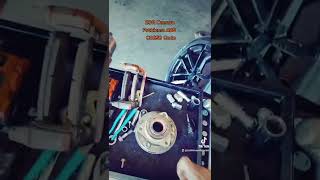
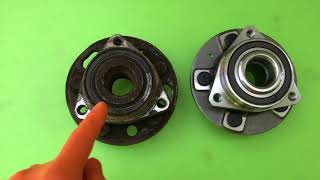
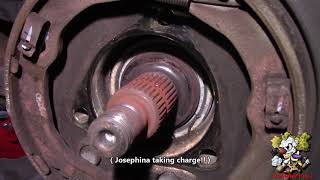
Est. part cost: $0 - Damaged or Failed Wheel Hub / Bearing Assembly 🟡 Medium Probability → Shop Hub Assembly The magnetic encoder ring is part of the hub assembly. Over time, the ring can become brittle, crack, or break apart, causing a permanent loss of signal. A YouTube video shows a 2011 Camaro where the ring had physically disintegrated into pieces.
How to confirm: After cleaning, if the code returns, inspect the encoder ring for physical damage like cracks or missing sections. A scan tool showing an erratic or zero MPH reading from the right rear wheel while others read normally points to this failure. The bearing itself may feel smooth and have no play, but the ring can still be bad.
Typical fix: Replace the entire right rear wheel hub and bearing assembly. Popular aftermarket options include Timken (P/N 512441) and MOOG, alongside the OEM ACDelco part.
Est. part cost: $100-$250 - Failed Right Rear Wheel Speed Sensor ⚪ Low Probability → Shop ABS Wheel Speed Sensor
How to confirm: Use a scan tool to monitor live data; a complete lack of signal can indicate a failed sensor. A more definitive test is to swap the right rear sensor with the left rear sensor. If the code changes to C0045 (left rear), the sensor is bad. If the C0050 code remains, the problem is in the hub or wiring.
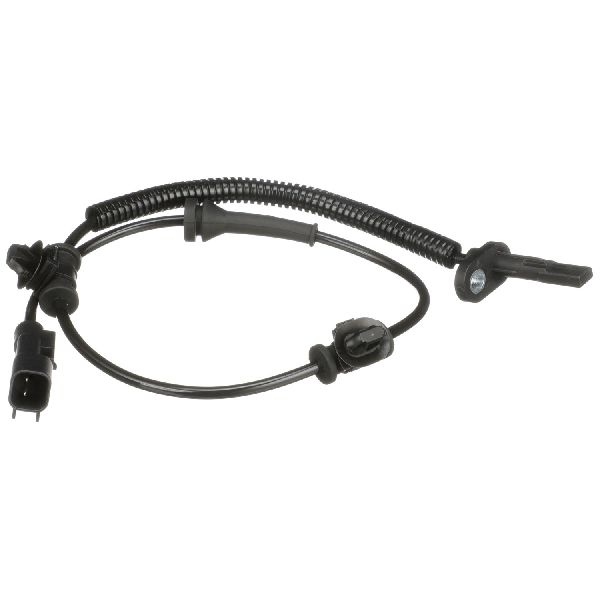
Typical fix: Replace the right rear wheel speed sensor.
Est. part cost: $30-$70 - Damaged Wiring or Connector ⚪ Low Probability
How to confirm: Visually inspect the wiring harness from the sensor to the main chassis for chafing, breaks, or corrosion, especially near the connector and where the harness flexes with suspension travel. A graphing multimeter can help find intermittent opens or shorts in the circuit.
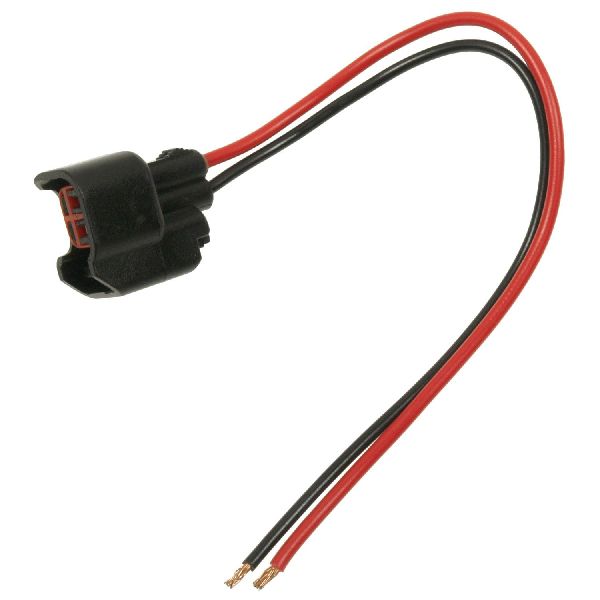
Typical fix: Repair the damaged section of wire or replace the pigtail connector.
Est. part cost: $15-$40
Rare But Worth Checking
- Broken Axle Hardware: In one documented case on a Camaro5 forum, a user found that a broken tab from the three-tab axle washer had fallen and stuck to the magnetic encoder ring, causing the C0050 code. This occurred after a differential change. This highlights how any loose ferrous metal in the vicinity can cause this issue.
- Faulty Electronic Brake Control Module (EBCM): → Shop ABS Control Module This is very rare. The EBCM should only be considered after all other possibilities (hub, sensor, wiring) have been definitively ruled out. An EBCM failure typically triggers multiple wheel speed sensor codes or other EBCM-specific faults, not just one.
Diagnosis Steps
- Connect a scan tool and confirm C0050 is the active code. Note any symptom bytes like '5A' (implausible signal), '18' (low signal amplitude), or '0F' (erratic signal), which are specifically mentioned in TSB PIC5428G.
- Use the scan tool's live data function to monitor all four wheel speed sensors while driving slowly in a straight line. Confirm that the right rear sensor reads 0 MPH or shows erratic dropouts while the others read smoothly.
- Raise and secure the vehicle. Remove the right rear wheel.
- Visually inspect the wheel speed sensor wiring harness and connector for any signs of damage, chafing, or corrosion.
- Unbolt and remove the wheel speed sensor (typically a single T30 or 10mm bolt).
- Carefully inspect the brown magnetic encoder ring on the inboard face of the wheel hub assembly. Look for a build-up of metallic 'fuzz' or debris.
- If debris is present, thoroughly clean the magnetic ring with a brake cleaner and a soft nylon brush. Do NOT use a magnet or a wire brush, as this can damage the encoder. Reinstall the sensor, clear the codes, and perform a road test to see if the fault returns.
- If no debris was found or if the code returns, inspect the magnetic ring for physical damage like cracks or missing sections. A video of a 2011 Camaro shows the ring completely shattered. If it is damaged, the hub assembly must be replaced.
- If the hub appears clean and intact, consider swapping the right and left rear wheel speed sensors to isolate the fault. If the code moves to C0045 (Left Rear), the sensor is faulty. If C0050 returns, the issue is the hub or wiring.
- If the sensor and wiring test good, the fault lies in the wheel hub assembly's magnetic ring, even if it looks visually okay. The magnetic properties can degrade over time. Replacement of the hub is the final step.
Parts You'll Likely Need
- Rear Wheel Hub and Bearing Assembly
(OEM #22937549)— This is the most common repair if cleaning the magnetic ring doesn't solve the issue. The magnetic encoder ring that the sensor reads is integrated into this part and is a frequent point of failure, either by contamination or physical damage.
Trusted brands: ACDelco (OEM), Timken (P/N 512441), MOOG
OEM price range: $180-$250
Aftermarket price range: $100-$180 - Rear ABS Wheel Speed Sensor
(OEM #23483153)— While less common than hub failure on this platform, the sensor itself can fail electronically. It's a potential cause if the hub and wiring are confirmed to be in good condition. Swapping with the opposite side is a good diagnostic step before purchasing.
Trusted brands: ACDelco, Standard Motor Products (SMP), Delphi
OEM price range: $50-$70
Aftermarket price range: $30-$50
Related Codes That Often Appear With This One
- C0035 — Left Front Wheel Speed Sensor circuit fault. These codes are often grouped in service literature due to having the same failure modes.
- C0040 — Right Front Wheel Speed Sensor circuit fault. These codes are often grouped in service literature due to having the same failure modes.
- C0045 — Left Rear Wheel Speed Sensor circuit fault. These codes are often grouped in service literature due to having the same failure modes.
- U0415 — Invalid Data Received From EBCM. This code can set in the Power Steering Control Module as a secondary fault when a wheel speed sensor signal is lost, sometimes causing a 'Service Steering' message and heavier steering feel at low speeds.
Technical Service Bulletins (TSBs) & Recalls
- PIC5428G: Addresses ABS, Service Traction Control, or Service Stabilitrak lights with DTCs C0035-C0050. It identifies the primary cause as ferrous metallic debris on the wheel speed sensor magnetic encoder ring and provides a cleaning procedure as the recommended repair. It warns technicians not to use magnets for cleaning. This TSB was later superseded by 17-NA-047.
- 17-NA-047: This bulletin supersedes PIC5428G and contains updated model years and largely the same diagnostic advice, focusing on cleaning the magnetic encoder ring as the primary repair for these codes.
Platform-Specific Known Issues
- The platform is highly susceptible to metallic debris accumulating on the rear wheel bearing's magnetic encoder ring, as documented in GM Technical Service Bulletin
Mechanic-Grade Diagnostic Values
- Wheel Speed Sensor Type — expected: Active Magneto-Resistive Sensor. Failure: Testing with an ohmmeter is incorrect. A resistance test on an active sensor will yield misleading results.
- Sensor Voltage Supply (Key-On, Engine-Off) — expected: Approximately 10.5-12 Volts. Failure: No voltage at the sensor connector (harness side) indicates a wiring or EBCM fault, not a sensor fault.
- Sensor Signal Output (viewed with oscilloscope) — expected: A clean square wave that increases in frequency as the wheel is spun.. Failure: A missing, erratic, or 'noisy' waveform indicates a failing sensor or a problem with the magnetic encoder ring.
Hidden / Shadow Codes Worth Checking
- C0050 5A: Indicates an 'Implausible Signal'. The EBCM is receiving a signal from the right rear sensor, but its speed reading is nonsensical compared to the other wheel speed sensors. (see via A professional scan tool like the GM GDS2/Tech2 that can read manufacturer-specific symptom bytes.)
- C0050 18: Indicates 'Low Signal Amplitude'. The signal from the sensor is weak or intermittent, often caused by excessive air gap, debris, or a failing sensor. (see via A professional scan tool like the GM GDS2/Tech2 that can read manufacturer-specific symptom bytes.)
- C0050 00: Indicates a general 'Circuit Malfunction'. This points towards an open circuit, short to ground, or high resistance in the sensor's wiring. (see via A professional scan tool like the GM GDS2/Tech2 that can read manufacturer-specific symptom bytes.)
Scan Tool Commands That Help
- GDS2 / Tech2 or equivalent professional scanner: Live Data - Wheel Speed Sensors — This is the first and most crucial diagnostic step. The technician views the speed readings from all four wheels simultaneously while the vehicle is driven. This confirms if the right rear sensor is reading 0 MPH, dropping out, or lagging behind the others, which is a classic symptom of this fault.
Wiring & Ground Locations
- EBCM Connector — The Electronic Brake Control Module is located on the driver's side of the engine bay, attached to the ABS hydraulic block.. The wheel speed sensor harness connects directly to this module. For C0050, a technician may test for continuity on pins 3 and 4 (on some GM light trucks) of the EBCM connector to the sensor connector to rule out a wiring break.
- G201 / G204 — G201 is in the left (driver's) kick panel area. G204 is in the right (passenger) kick panel area.. These are major interior ground points for various modules. The Body Control Module (BCM) and other systems that communicate with the EBCM rely on these grounds. A loose or corroded ground here can cause a wide range of difficult-to-diagnose electronic issues.
- Sensor Pigtail Connector — The connector at the end of the sensor's wire, where it joins the main body harness in the right rear wheel well.. This connector is exposed to weather and vibration and is a common point of failure due to corrosion or broken wires. Replacement pigtails are available.
OEM Part Supersession History
92242285→92242286— Represents a revision or update from GM for the Electronic Brake Control Module (EBCM).
Heads up: For the 2012-2015 Camaro, these part numbers are generally considered interchangeable, but the new module must be programmed to the vehicle's VIN to function.23483153 (Sensor)→ACDelco 92199862— Alternate OEM part number.
Heads up: Both part numbers are listed for the rear of a 2010-2015 Camaro. Always verify the correct part for your specific vehicle with a dealer or parts catalog.
Model Year Variations Within This Range
- 2013-2015: Starting in the 2013 model year, the Camaro switched from a hydraulic power steering system to an electric power steering (EPS) system. This is relevant because a wheel speed sensor fault (like C0050) can cause a secondary fault in the power steering module (U0415), leading to a 'Service Steering' message. The diagnostic approach for the steering-related message differs between the hydraulic and electric systems.
Helpful Videos
We Have This Part in Stock


The information in this article is provided for general reference and educational purposes only. Vehicle specifications, procedures, and part compatibility can vary by production date, trim level, and region. Always consult your vehicle's factory service manual and verify part numbers before purchasing or performing repairs. Safety-critical components such as airbags, seat belts, and braking systems should be installed by a qualified professional.
- Chevrolet CAMARO:
- 🧭 Diagnostic Flowchart
- 🎬 Helpful Videos
- 🛍️ Shop This Part
- What's Unique About the 2011-2015 Chevrolet CAMARO
- Symptoms You May Notice
- Most Likely Causes
- Rare But Worth Checking
- Diagnosis Steps
- Parts You'll Likely Need
- Related Codes That Often Appear With This One
- Technical Service Bulletins (TSBs) & Recalls
- Platform-Specific Known Issues
- Mechanic-Grade Diagnostic Values
- Hidden / Shadow Codes Worth Checking
- Scan Tool Commands That Help
- Wiring & Ground Locations
- OEM Part Supersession History
- Model Year Variations Within This Range
- 🎟️ Get 5% Off