

C0050 on 2011-2015 Chevrolet Cruze: Right Rear Wheel Speed Sensor Fault Causes & Fixes
On a 2011-2015 Chevy Cruze, code C0050 almost always points to a problem with the right rear wheel speed signal. The most common cause is a faulty wheel hub/bearing assembly, as the magnetic encoder ring is built into it and often gets contaminated by metallic debris or damaged. Replacing the hub assembly typically costs between $100 and $250 for the part. Less common causes include a failed sensor or damaged wiring.
- Code C0050 on a 2011-2015 Cruze means your ABS and StabiliTrak systems are disabled due to a fault with the right rear wheel speed signal.
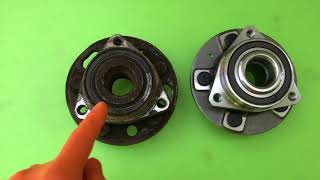
- The most likely cause is NOT the sensor itself, but the entire wheel hub/bearing assembly, which contains the magnetic ring the sensor reads.
- Before buying parts, inspect the magnetic ring on the hub for metallic debris or damage, as cleaning it may solve the problem, per a GM service bulletin.
- Use a scan tool that can read live ABS data to confirm that the right rear wheel's speed reading is erratic or dropping out compared to the other three wheels.
What's Unique About the 2011-2015 Chevrolet CRUZE

The Chevrolet Cruze, like many GM vehicles of this era built on the Delta II platform, integrates the wheel speed sensor's magnetic encoder ring directly into the wheel hub and bearing assembly's inboard seal. This design makes the system highly susceptible to problems from ferrous metallic debris, rust, or seal failure, as highlighted in GM Technical Service Bulletin #PIC5428G and its successor, #17-NA-047. As a result, a C0050 code on a Cruze—especially with symptom bytes like 5A (Plausibility Failure), 18 (Low Signal Amplitude), or 0F—is more frequently caused by a bad hub assembly rather than just a simple sensor or wiring failure.
Diagnostic Flowchart

Tap your situation to follow the diagnostic path that matches what you're seeing on this vehicle.
Symptoms You May Notice

- ABS warning light is on
- "Service StabiliTrak" message on the dash
- Traction Control (TC) warning light is on
- "Service Brake Assist" message may appear.
- Brake pedal may feel inconsistent or produce a slight kickback.
- Replacing only the wheel speed sensor when the actual fault lies with the magnetic ring on the wheel hub assembly. This is a frequent mistake that results in the code returning, especially if the code was a C0050-5A (Plausibility Failure).
- Assuming the sensor is bad without checking for debris on the hub's encoder ring first, which is the specific issue highlighted by GM's service bulletins.
Most Likely Causes

- Faulty Right Rear Wheel Hub/Bearing Assembly 🔴 High Probability → Shop Hub Assembly The magnetic encoder ring is integrated into the hub's inboard seal, making it vulnerable to contamination from metallic debris or damage from rust and wear. A 'plausibility' (5A) or 'erratic signal' code often points directly to this ring failing or being obstructed. TSBs PIC5428G and 17-NA-047 specifically call out debris accumulation as the primary cause.
How to confirm: With a scan tool, graph the live data for the right rear wheel speed while spinning the wheel or driving. If the signal drops out, is erratic, or doesn't match the other wheels, the hub is the likely cause. Visually inspect the magnetic ring (a brown, rubber-like ring on the inboard side of the hub) for cracks, missing chunks, or metallic debris. Do not use a magnet to clean it, as this can damage the encoder.
Typical fix: Replace the entire right rear wheel hub and bearing assembly. While cleaning debris is possible per the TSB, if the seal is compromised, the issue will return, making replacement the permanent solution.
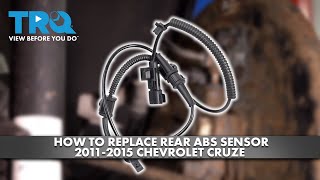
Est. part cost: $80-$200 - Failed Right Rear Wheel Speed Sensor 🟡 Medium Probability → Shop ABS Wheel Speed Sensor The sensor is exposed to the elements in the wheel well and can fail electronically over time due to moisture intrusion, heat, or vibration. However, it is often misdiagnosed when the hub's encoder ring is the true fault.
How to confirm: Test the sensor's circuit for proper voltage (typically 12V reference) and ground from the EBCM. A definitive test is to swap the right rear sensor with the left rear sensor (if the harness length allows) and see if the code changes to C0045 (Left Rear Wheel Speed Sensor). If the code moves, the sensor is bad. A multimeter can be used to test the sensor's resistance, though specific values are not consistently published; a good sensor will have a reading, while a bad one may be open (OL) or shorted.
Typical fix: Replace the right rear wheel speed sensor. The sensor is typically held in by a single T30 or T27 Torx bolt.
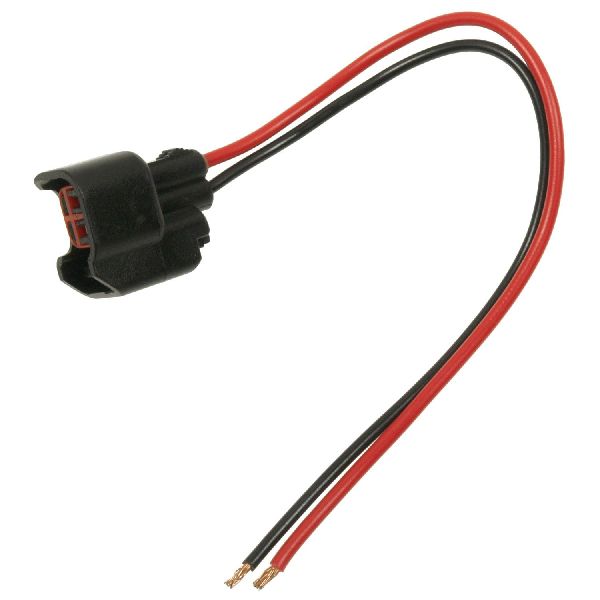
Est. part cost: $25-$70 - Damaged Wiring or Connector ⚪ Low Probability The wiring harness runs in the wheel well and can be damaged by road debris, improper jacking, suspension work, or corrosion, especially at the connector pins. Water intrusion is a common issue.
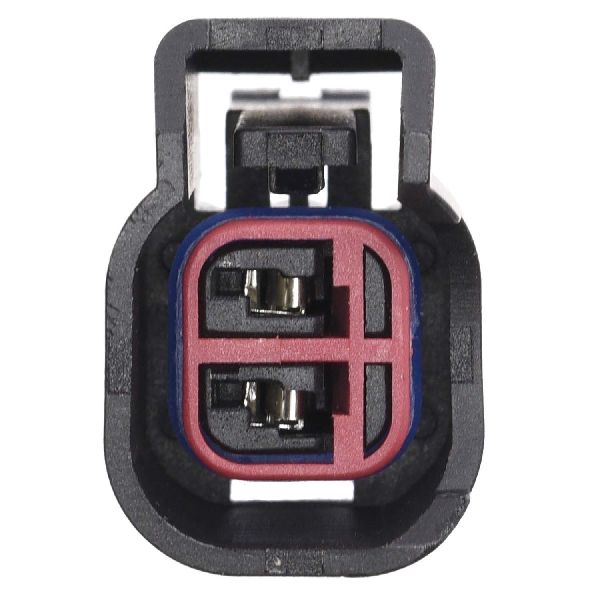
How to confirm: Visually inspect the wiring harness from the sensor to where it enters the vehicle body for any cuts, chafing, or green corrosion at the connector pins. A multimeter can be used to check for continuity, shorts to ground, or shorts to power between the EBCM and the sensor connector.
Typical fix: Repair the damaged section of wire or replace the connector pigtail. Ensure the repair is sealed against moisture.
Est. part cost: $15-$40
Rare But Worth Checking
- Faulty Electronic Brake Control Module (EBCM): → Shop ABS Control Module This is very uncommon and should only be considered after the hub, sensor, and wiring have all been proven to be good. An EBCM failure usually triggers multiple wheel speed sensor codes, communication codes (like U0121), or shows no voltage output to the sensor circuit.
Diagnosis Steps
- Connect a scan tool capable of reading ABS/chassis codes to confirm C0050 is active. Note any symptom bytes like '5A' (Not Plausible), '18' (Low Signal Amplitude), or '00' (Circuit Malfunction), as they guide diagnosis. '5A' and '18' strongly suggest a hub/encoder issue.
- Use the scan tool's live data function to monitor all four wheel speed sensors while driving or spinning the wheel by hand. The right rear (RR) reading should be smooth and match the left rear (LR) reading. Dropouts, erratic jumps, or a flat-line signal on the RR sensor point to the fault location.
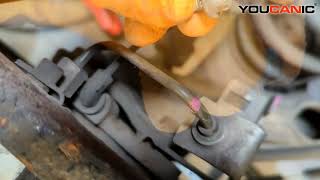
- Lift the rear of the vehicle and secure it on jack stands. Visually inspect the wiring harness leading to the right rear wheel speed sensor for any signs of damage, chafing, or corrosion. Check the connector for bent or corroded pins.
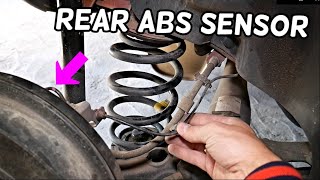
- Remove the T30 Torx bolt holding the sensor in place and carefully pull the sensor out of the hub.
- Carefully inspect the magnetic encoder ring on the face of the wheel hub assembly. It is a brown, rubberized ring. Look for metallic debris stuck to the ring, cracks, peeling, or missing sections. As noted in TSB PIC5428G, debris is a very common cause.
- If debris is found, you can try cleaning it with a non-magnetic tool like a nylon brush and brake cleaner. However, if the seal is compromised, the problem will likely return, and hub replacement is the permanent fix.
- If the ring is clean and undamaged, and the wiring looks good, the sensor itself is the next likely suspect. Test the sensor circuit for power and ground or swap the sensor with the left side to see if the fault follows.
- If a Cruze has rear drum brakes, the wheel cylinder may need to be loosened or the brake line disconnected to gain clearance to remove the sensor, which complicates the job.
- If all other components test good, the final step would be to diagnose the EBCM itself, which is best left to a professional.
Parts You'll Likely Need

- Right Rear Wheel Hub and Bearing Assembly
(OEM #13589519 (ACDelco FW409))— This is the most common failure. The assembly includes the bearing and the integrated magnetic encoder ring that the wheel speed sensor reads. When this ring is damaged, contaminated with debris, or cracked, it causes an erratic signal (C0050-5A) or signal loss.
Trusted brands: ACDelco (GM Original), Timken, MOOG, SKF, TRQ
OEM price range: $150-$250
Aftermarket price range: $80-$180 - Right Rear Wheel Speed Sensor
(OEM #13470642 (ACDelco))— If the magnetic ring on the hub is in perfect condition and the wiring is intact, the sensor itself may have failed electronically. This is less common than the hub failing.
Trusted brands: ACDelco, Delphi, Standard Motor Products (SMP), Dorman
OEM price range: $40-$70
Aftermarket price range: $25-$50
Related Codes That Often Appear With This One
- C0045 — If both rear wheel speed sensor codes appear (C0045 and C0050), it could indicate a shared wiring problem, a connector issue further up the harness, or a more systemic issue like a failing EBCM.
- U0121 — This code indicates a loss of communication with the EBCM. It can appear alongside C0050 if the module is failing, has a power/ground issue, or there's a problem on the vehicle's data bus.
Technical Service Bulletins (TSBs) & Recalls
- PIC5428G: Addresses ABS, Service Traction, and/or Service Stabilitrak lights with DTCs C0035-C0050. It points to metallic debris on the wheel speed sensor magnetic encoder ring as a primary cause and provides a cleaning procedure. It explicitly warns against using magnets for cleaning.
- 17-NA-047: This bulletin supersedes PIC5428G, providing updated information on the same issue.
Platform-Specific Known Issues
- As documented in GM Technical Service Bulletin PIC5428G and its successor 17-NA-047, the 2011-2015 Cruze is prone to setting wheel speed sensor codes (C0035-C0050) with symptom bytes 18, 5A, or 0F due to ferrous metallic debris accumulating on the magnetic encoder ring of the wheel bearing. The bulletin advises inspection and cleaning of this ring as a primary diagnostic step, but replacement of the hub is often the only permanent fix.
- On models equipped with rear drum brakes, replacing the wheel speed sensor can be more difficult as the wheel cylinder for the drum brake may physically block the sensor's removal path, requiring additional disassembly.
Mechanic-Grade Diagnostic Values
- Wheel Speed Sensor Supply Voltage — expected: Approximately 12V (Battery Voltage). Failure: Voltage is not present when testing the sensor connector with the key on.
Hidden / Shadow Codes Worth Checking
- C0050 00: Symptom byte indicating a general circuit malfunction, such as an open circuit, short to ground, or high resistance in the wiring. (see via A professional scan tool capable of reading GM-specific chassis codes and symptom bytes, like a GM GDS2 or high-end aftermarket scanner.)
- C0050 0F: Symptom byte indicating an erratic signal. This is often caused by debris on the magnetic encoder ring or a failing hub bearing. (see via A professional scan tool capable of reading GM-specific chassis codes and symptom bytes, like a GM GDS2 or high-end aftermarket scanner.)
- C0050 18: Symptom byte indicating low signal amplitude, meaning the signal from the sensor is weak. This often points to a large air gap or a damaged magnetic encoder ring on the hub. (see via A professional scan tool capable of reading GM-specific chassis codes and symptom bytes, like a GM GDS2 or high-end aftermarket scanner.)
- C0050 5A: Symptom byte indicating a plausibility failure. The EBCM sees a signal that doesn't make sense compared to the other wheels (e.g., dropping out intermittently). This is the most common symptom byte for a failing hub/bearing assembly on the Cruze. (see via A professional scan tool capable of reading GM-specific chassis codes and symptom bytes, like a GM GDS2 or high-end aftermarket scanner.)
Scan Tool Commands That Help
- GM GDS2 (Global Diagnostic System 2): Module Diagnostics -> EBCM -> Data Display — This function is used to view and graph the live data from all four wheel speed sensors simultaneously to identify dropouts or erratic signals from the right rear sensor.
- GM GDS2 (Global Diagnostic System 2): Vehicle DTC Information -> Clear All DTCs — Used after a repair to clear the C0050 code and other related codes from all modules to turn off the warning lights and confirm the fix after a test drive.
Wiring & Ground Locations
- EBCM Connector Pin 33 — At the Electronic Brake Control Module (EBCM), which is part of the ABS hydraulic unit in the engine bay.. This is the specific pin for the Right Rear Wheel Speed Sensor Signal. The wire is typically Violet (VT). Testing for a signal here can confirm if the signal is reaching the module.
- EBCM Connector Pin 34 — At the Electronic Brake Control Module (EBCM).. This is the pin for the Right Rear Wheel Speed Sensor Control circuit. The wire is typically Gray/Yellow (GY/YE).
- G402 — Located in the luggage compartment on the right side.. This is a major chassis ground point for components in the rear of the vehicle. A loose or corroded G402 could potentially cause issues with rear-mounted sensors, including the wheel speed sensor circuit.
Real Owner Repair Stories
- YouTube video by 'JL's Auto Solution' (2012 Chevrolet Cruze 1.4L) — ABS and StabiliTrak lights on, code C0050 with a 'plausibility failure' symptom.
❌ Tried (didn't work) The technician went straight to diagnosis with a scan tool.
✅ What actually fixed it The technician graphed the left and right rear wheel speed sensors and saw significant dropouts from the right rear signal while spinning the wheel. Replacing the right rear wheel hub assembly resulted in a smooth, consistent signal, fixing the problem. - ScannerDanner Forum user 'Richard6767' (2011 Chevy Cruze w/1.8L engine) — Initial code was C0050-5A (Right Rear Wheel Speed Sensor Circuit-Not Plausible). After unplugging the sensor to inspect, additional codes for low voltage/open circuit appeared (C0050-06, C0045-06).
❌ Tried (didn't work) Inspecting the wiring and connector., Considering a faulty BCM or complex wiring issue.
✅ What actually fixed it Based on forum advice confirming that symptom code 5A strongly points to a mechanical fault like a damaged tone wheel, the owner proceeded with replacing the right rear wheel hub assembly, which was the correct fix.
OEM Part Supersession History
13328513→13470642— Part has been updated or replaced by the manufacturer. 13470642 is the current service replacement part number for the rear wheel speed sensor.
Helpful Videos
We Have This Part in Stock


The information in this article is provided for general reference and educational purposes only. Vehicle specifications, procedures, and part compatibility can vary by production date, trim level, and region. Always consult your vehicle's factory service manual and verify part numbers before purchasing or performing repairs. Safety-critical components such as airbags, seat belts, and braking systems should be installed by a qualified professional.
- Chevrolet CRUZE:
- 🧭 Diagnostic Flowchart
- 🎬 Helpful Videos
- 🛍️ Shop This Part
- What's Unique About the 2011-2015 Chevrolet CRUZE
- Symptoms You May Notice
- Most Likely Causes
- Rare But Worth Checking
- Diagnosis Steps
- Parts You'll Likely Need
- Related Codes That Often Appear With This One
- Technical Service Bulletins (TSBs) & Recalls
- Platform-Specific Known Issues
- Mechanic-Grade Diagnostic Values
- Hidden / Shadow Codes Worth Checking
- Scan Tool Commands That Help
- Wiring & Ground Locations
- Real Owner Repair Stories
- OEM Part Supersession History
- 🎟️ Get 5% Off