

C0050 on 2008-2012 Chevrolet Express: Right Rear Wheel Speed Sensor Circuit Fault Causes & Fixes
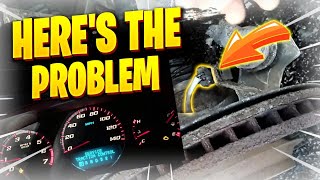
On a 2008-2012 Chevy Express, code C0050 almost always points to a problem in the right rear wheel speed sensor circuit. Before replacing the sensor, inspect the wiring harness and connector for damage or corrosion, as this is a very common failure point noted in GM Technical Service Bulletins. A replacement wiring pigtail is often the fix, and many owners find corroded or broken wires a few inches from the sensor connector.
- Code C0050 on a 2008-2012 Chevy Express means there's a problem with the right rear wheel speed sensor circuit.
- **Always inspect the wiring and connector first.** A GM Technical Service Bulletin points to faulty wiring as a very common cause for this code on these vans.
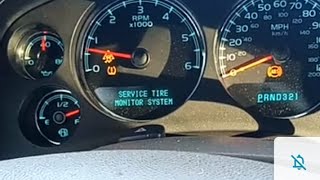
- Symptoms include the ABS and StabiliTrak/Traction Control warning lights illuminating on the dashboard.
- Driving is possible, but your vehicle's key safety features (ABS and stability control) will not function until the issue is repaired.
- The most common parts needed are a wiring pigtail connector or a new wheel speed sensor.
What's Unique About the 2008-2012 Chevrolet EXPRESS

For this generation of Chevrolet Express and its platform-mate, the GMC Savana, the wiring harness leading to the rear wheel speed sensors is a known weak point. A General Motors Technical Service Bulletin (TSB PIT4648D) specifically calls out that the wires, crimps, and terminals at the wheel speed sensor connector are common culprits for setting C0045 (left rear) and C0050 (right rear) codes. Owner and technician experiences frequently confirm that previous, poorly-sealed repairs or simple corrosion from road salt and moisture are to blame for breaks in the wiring near the connector. The TSB also notes that incorrect harness routing around the brake hose can cause the wires to be pulled tight during suspension travel, leading to failure.
Diagnostic Flowchart

Tap your situation to follow the diagnostic path that matches what you're seeing on this vehicle.
Symptoms You May Notice
- ABS warning light is on.
- "Service StabiliTrak" or "Service Stability System" message on the driver information center.
- Traction Control System (TCS) warning light is on.
- Traction control and ABS are disabled.
- Brake pedal may pulse at very low speeds as the system incorrectly interprets a slipping wheel.
- Replacing the wheel speed sensor when the actual fault is in the wiring harness or connector pigtail. This is a common mistake that doesn't resolve the code. Always wiggle-test the harness first. 🎬 Watch: A technician demonstrates the wiggle test and harness repair.
Most Likely Causes

- Damaged Wiring or Connector Terminals 🔴 High Probability As documented in TSB #PIT4648D, the wiring harness and connector terminals for the rear wheel speed sensors are a known failure point due to exposure, incorrect routing, and potential for corrosion or physical damage. Forum and video evidence shows repairs often involve fixing breaks or corrosion within the harness, sometimes from previous improper repairs.
How to confirm: Visually inspect the wiring harness from the right rear wheel up to the main frame for any chafing, breaks, or corrosion. Disconnect the sensor and check the terminals for green or white corrosion. Wiggle the harness while monitoring live wheel speed data on a scan tool to see if the signal cuts out or becomes erratic; this is a very effective diagnostic technique.
Typical fix: Repair the damaged section of wire or replace the connector pigtail. Ensure the repair is sealed against moisture using heat-shrink tubing or connectors.
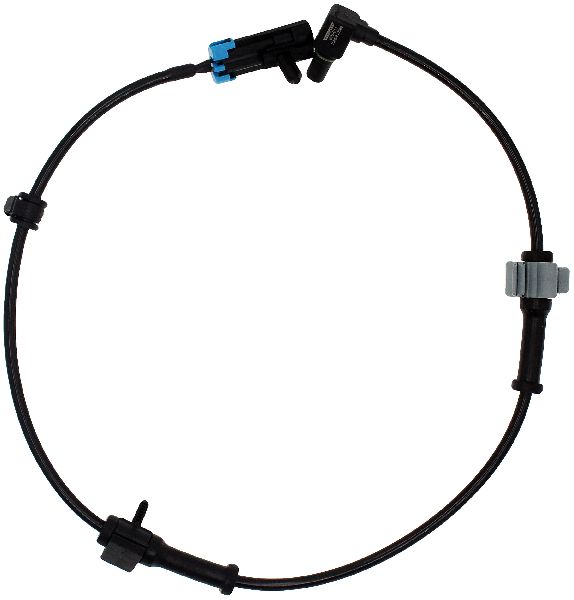
Est. part cost: $15-$40 - Failed Right Rear Wheel Speed Sensor 🟡 Medium Probability → Shop ABS Wheel Speed Sensor The sensor is exposed to harsh conditions like water, road salt, and debris, which can lead to internal failure over time. It's a common wear item, though less so than the wiring on this specific platform.
How to confirm: Use a scan tool to monitor live data from the right rear sensor while driving or spinning the wheel; the reading should be erratic or zero. You can also test the sensor's internal resistance with a multimeter. While specs vary, a typical passive sensor should read between 800-1300 ohms; a common reading is around 1040-1100 ohms. 🎬 See how to test sensor resistance with a multimeter. An open circuit (infinite resistance) or a reading far out of spec indicates a bad sensor.
Typical fix: Replace the right rear wheel speed sensor. The sensor is typically held in by a single T30 Torx bolt.
Est. part cost: $30-$80 - Damaged or Dirty Tone Ring ⚪ Low Probability The tone ring (or reluctor ring), which the sensor reads, is part of the wheel hub assembly. Heavy rust buildup or physical damage (like cracked or missing teeth on the magnetic ring) can cause an incorrect signal.
How to confirm: Visually inspect the tone ring on the wheel hub for rust, debris, or broken/missing segments. This may require removing the sensor to get a clear view into the hub assembly.
Typical fix: In most cases, the tone ring is integrated into the wheel hub/bearing assembly, so the entire hub must be replaced.
Est. part cost: $150-$300
Rare But Worth Checking
- Failed Electronic Brake Control Module (EBCM): → Shop ABS Control Module This is the least likely cause. Before condemning the expensive EBCM, all other possibilities (sensor, wiring, tone ring) must be exhaustively ruled out. A diagnostic test showing no voltage supply from the EBCM to the sensor could point to this issue, but only after confirming the wiring integrity between the module and the sensor.
Diagnosis Steps
- Connect an OBD-II scanner capable of reading ABS codes to confirm C0050 is present and check for any specific symptom bytes (e.g., 0F, 05, 5A).
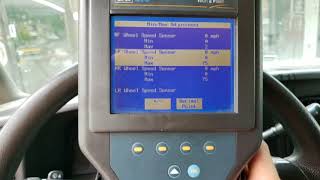
- Use the scanner to view live data for all four wheel speed sensors. Drive the vehicle slowly or raise the rear axle and spin the right rear wheel by hand. Confirm that the right rear sensor's reading is zero, erratic, or doesn't match the other wheels.
- Perform a thorough visual inspection of the right rear wheel speed sensor's wiring harness and connector. Look for chafed wires, loose connections, or signs of corrosion, paying close attention to the area near the connector as noted in TSB PIT4648D.
- While watching the live data on the scan tool, wiggle the harness from the sensor connector and along its path to the frame. If the signal reading jumps or changes, the fault is in the wiring.
- Disconnect the sensor and inspect the connector terminals for corrosion or damage. Clean if necessary.
- If no visual faults are found, use a multimeter to test the sensor's resistance. Compare the reading to the manufacturer's specifications (typically 800-1300 ohms). An open or shorted reading indicates a failed sensor.
- Check for proper voltage and ground at the harness connector coming from the EBCM. For this active sensor, one pin should have ignition voltage. Lack of voltage points to a wiring problem upstream or a faulty EBCM.
- If the sensor and wiring test good, remove the sensor and inspect the tone ring inside the wheel hub for damage, debris, or excessive rust.
Parts You'll Likely Need
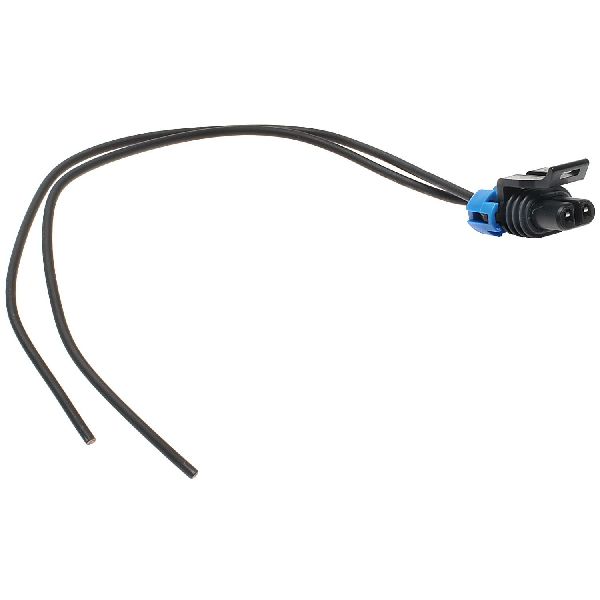
- Wheel Speed Sensor Connector Pigtail
(OEM #ACDelco PT2298)— Often the fix due to the high probability of corrosion or damage at the connector, as highlighted by GM's TSB. This part allows for a clean repair of the most common failure point.
Trusted brands: ACDelco, Dorman (645-508)
OEM price range: $30-$50
Aftermarket price range: $15-$40 - Right Rear Wheel Speed Sensor
(OEM #20938121)— This is the second most common failure part if the wiring is confirmed to be intact. Note that some sources cite 23348259 as a superseding part number; always verify with VIN. This part number supersedes 10384745, 15872664, and 20763148.
Trusted brands: ACDelco, Dorman (970-059), Standard Motor Products
OEM price range: $60-$90
Aftermarket price range: $30-$80 - Rear Wheel Hub and Bearing Assembly — Required if the tone/reluctor ring is damaged, as it is typically integrated with the hub.
Trusted brands: ACDelco, Timken, MOOG
OEM price range: $250-$400
Aftermarket price range: $150-$300
Related Codes That Often Appear With This One
- C0045 — This is the code for the Left Rear Wheel Speed Sensor Circuit. TSB PIT4648D mentions that both codes can appear if there are similar wiring issues on both sides of the rear axle.
Technical Service Bulletins (TSBs) & Recalls

- PIT4648D: States that an ABS Malfunction Lamp or Service Stability message with DTC C0045 and/or C0050 may be caused by issues in the wiring, crimps, or terminals at the wheel speed sensor connector. Diagnostic aid suggests checking harness routing and for water intrusion.
Platform-Specific Known Issues
- Technical Service Bulletin PIT4648D specifically identifies that the ABS and/or Service Stability message with DTC C0050 is often caused by issues with the wires, crimps, or terminals at the wheel speed sensor connector, rather than the sensor itself.
- Owner repair videos frequently demonstrate that simply wiggling the harness near the right rear sensor while monitoring live data is enough to confirm a wiring fault, causing the speed reading to jump erratically.
Mechanic-Grade Diagnostic Values
- Wheel Speed Sensor Resistance — expected: 800 - 1300 Ohms. A common reading is ~1040-1100 Ohms.. Failure: An open circuit (infinite resistance, OL) or a reading significantly outside the expected range.
- Wheel Speed Sensor AC Voltage Output (Passive Sensor Test) — expected: Any AC voltage reading (e.g., >100mV) that increases as the wheel is spun faster.. Failure: No AC voltage produced when the wheel is spinning.
- Wheel Speed Change Threshold (for C0050 0F) — expected: Change in wheel speed should not exceed 20 km/h (12 mph) in 10 milliseconds.. Failure: The EBCM detects a speed change greater than this threshold, indicating an erratic signal.
Hidden / Shadow Codes Worth Checking
- C0050 0F: Signal Erratic. The EBCM detects a change in wheel speed that is physically implausible, such as a jump of over 12 mph in 10 milliseconds. (see via Requires a scan tool capable of reading GM-specific chassis codes and symptom bytes, such as a Tech2 or GDS2.)
- C0050 5A: Signal Not Plausible. The signal from the right rear sensor is inconsistent with the signals from other wheel speed sensors. (see via Requires a scan tool capable of reading GM-specific chassis codes and symptom bytes.)
- C0050 18: Low Signal Amplitude. The signal from the sensor is weak, which can be caused by an excessive air gap, debris, or a failing sensor. (see via Requires a scan tool capable of reading GM-specific chassis codes and symptom bytes.)
- C0050 05 / C0050 00: Circuit Open or Shorted. Indicates a general circuit malfunction like an open wire, short to ground, or high resistance. (see via Requires a scan tool capable of reading GM-specific chassis codes and symptom bytes.)
Scan Tool Commands That Help
- Tech2 / GDS2 or equivalent: Live Data Plot / Graphing — Essential for diagnosing intermittent wiring faults. By setting a very low max speed on the graph (e.g., 2 mph) and wiggling the harness, even tiny signal dropouts or spikes become clearly visible, confirming a wiring issue without needing to drive the vehicle.
- Tech2 / GDS2 or equivalent: Clear DTCs — Used after the repair is complete to clear the C0050 code from the EBCM's memory. The ABS light should then extinguish after a key cycle or short drive.
Wiring & Ground Locations

- EBCM Pins 3 & 4 — At the main connector for the Electronic Brake Control Module (EBCM).. These are the specific pins for the right rear wheel speed sensor circuit (Signal and 12V reference). Testing for continuity and voltage here can confirm if a wiring break exists between the sensor and the module.
- G401 — On top of the right 'D' pillar in the rear of the van.. This is a primary ground point for multiple components in the rear of the vehicle, including the right side exterior lighting. While not the direct ground for the WSS (which grounds through the EBCM), a poor G401 can cause general electrical noise and issues in the rear harness.
- WSS Harness Routing — The harness section from the rear axle to the frame rail.. TSB PIT4648D specifically warns that this harness must NOT be wrapped around the brake hose. Incorrect routing causes the wire to be pulled taut during suspension travel, eventually breaking the wire or pulling it from the connector crimp.
Real Owner Repair Stories
- YouTube channel 'New Level Auto' (2008 Chevrolet Express) — ABS and traction control light would come on, sometimes even at idle. Codes C0050 0F (erratic signal) and C0050 05 (open/short circuit) were present.
❌ Tried (didn't work) The video implies this was not the first attempt at a fix, as a previous, poorly done repair was discovered.
✅ What actually fixed it The technician found that simply wiggling the harness near the right rear sensor caused the speed reading to jump on the scan tool. The final fix was cutting out a section of wire that was corroded from a previous, unsealed repair and soldering in a new section of wire. - YouTube channel 'Dre's Cars' (2018 Chevrolet Express 2500 (newer model, but same wiring failure pattern)) — ABS light on with code C0050, circuit open.
❌ Tried (didn't work) The customer had already tried replacing the wheel speed sensor, but the code remained.
✅ What actually fixed it The technician found two separate breaks in the wiring harness near the sensor connector. One wire was broken further up the harness, and another was broken right by the connector itself. A bypass wire was run to repair the damaged section, which resolved the code.
OEM Part Supersession History
10384745, 15872664, 20763148→20938121— Part consolidation and design updates by the manufacturer.
Heads up: Part 20938121 is the correct current replacement for the specified vehicle range and is listed for both left and right rear positions.
Helpful Videos

We Have This Part in Stock


The information in this article is provided for general reference and educational purposes only. Vehicle specifications, procedures, and part compatibility can vary by production date, trim level, and region. Always consult your vehicle's factory service manual and verify part numbers before purchasing or performing repairs. Safety-critical components such as airbags, seat belts, and braking systems should be installed by a qualified professional.
- Chevrolet EXPRESS:
- 🧭 Diagnostic Flowchart
- 🎬 Helpful Videos
- 🛍️ Shop This Part
- What's Unique About the 2008-2012 Chevrolet EXPRESS
- Symptoms You May Notice
- Most Likely Causes
- Rare But Worth Checking
- Diagnosis Steps
- Parts You'll Likely Need
- Related Codes That Often Appear With This One
- Technical Service Bulletins (TSBs) & Recalls
- Platform-Specific Known Issues
- Mechanic-Grade Diagnostic Values
- Hidden / Shadow Codes Worth Checking
- Scan Tool Commands That Help
- Wiring & Ground Locations
- Real Owner Repair Stories
- OEM Part Supersession History
- 🎟️ Get 5% Off