

C0050 on 2014-2017 Chevrolet Impala: StabiliTrak Light Causes and Fixes
Code C0050 on a 2014-2017 Impala almost always means there's an issue with the right rear wheel speed sensor system, triggering the ABS and StabiliTrak lights. The most common cause is metallic debris on the wheel bearing's magnetic ring, which can often be cleaned. If that doesn't work, or the ring is cracked, the entire wheel hub assembly (which includes the ring) likely needs replacement for about $100-$280.
- C0050 means a problem with the right rear wheel speed sensor circuit, which will disable your ABS and StabiliTrak systems.
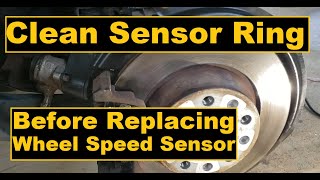
- Before buying any parts, inspect and clean the magnetic ring on the back of the right rear wheel hub; this is a free fix and the most common cause per GM TSB #PIC5428G.
- If the magnetic ring is physically cracked or broken, the entire wheel hub assembly must be replaced.
- If the ring is clean and intact, the issue is likely the wheel speed sensor itself or the wiring leading to it.
What's Unique About the 2014-2017 Chevrolet IMPALA
For this generation of Chevrolet Impala and related GM Epsilon II platforms, the C0050 code is very frequently caused by a design characteristic rather than a simple part failure. A Technical Service Bulletin (TSB PIC5428G, later superseded by 17-NA-047) points to the accumulation of metallic debris on the magnetic encoder ring, which is integrated into the wheel hub assembly. This means a 'free' fix by cleaning is often possible, but it also means that if the ring is physically damaged, the entire hub assembly must be replaced, not just the sensor.
Diagnostic Flowchart
Tap your situation to follow the diagnostic path that matches what you're seeing on this vehicle.
Symptoms You May Notice
- ABS warning light is on
- StabiliTrak or Traction Control (TC) warning light is on
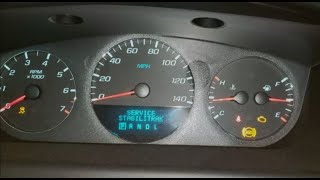
- "Service StabiliTrak", "Service Traction Control", or "Service Brake Assist" message on the driver information center
- ABS system does not activate during hard braking (wheels may lock up)
- Traction control does not activate on slippery surfaces (wheels may spin)
- Cruise control may be disabled
- On some models, a "Service Steering" message may appear and steering effort may increase at low speeds.
- Replacing the wheel speed sensor without first inspecting and cleaning the magnetic encoder ring on the hub. Many people buy a new sensor when the only problem is debris on the ring or a cracked ring on the hub assembly.
- Replacing the wheel hub assembly without checking the wiring harness for chafing or damage, which can cause identical symptoms.
Most Likely Causes
- Debris on Right Rear Wheel Bearing Magnetic Encoder Ring 🔴 High Probability As documented in GM TSB #PIC5428G, metallic dust from brake and bearing wear is attracted to the magnetic encoder ring on the hub, disrupting the sensor's reading. This is a very common issue across many GM models of this era that use this open-encoder bearing design.
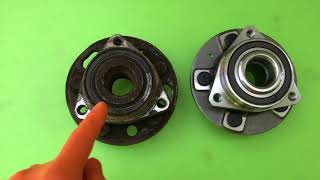
How to confirm: Remove the right rear wheel speed sensor and visually inspect the magnetic ring on the hub assembly for a build-up of dark, metallic paste or filings. The debris can be surprisingly fine and look like a layer of grease.
Typical fix: Carefully clean the debris from the encoder ring using an electronics-safe cleaner (like MAF sensor cleaner) and a non-magnetic tool (like a plastic pick or wood stick). Reinstall the sensor and clear the codes. Some owners report success with just cleaning.
Est. part cost: $0-$15 - Damaged or Cracked Right Rear Wheel Bearing Encoder Ring 🟡 Medium Probability The encoder ring is a brittle, magnetic composite material exposed to the elements. Over time, especially in areas with road salt and moisture, it can deteriorate, crack, and have chunks break off. This is a frequent point of failure documented by many owners.
How to confirm: Visually inspect the encoder ring for any visible cracks, missing chunks, or severe deterioration. A damaged ring will provide an erratic or nonexistent signal, which can be observed on a scan tool's live data graph as a noisy or flat-lined signal.
Typical fix: The encoder ring is not sold separately. The entire right rear wheel hub and bearing assembly must be replaced.
Est. part cost: $80-$280 - Failed Right Rear Wheel Speed Sensor 🟡 Medium Probability → Shop ABS Wheel Speed Sensor The sensor is located in a harsh environment behind the wheel, exposed to water, dirt, and vibration, which can lead to internal failure over time. However, it is often misdiagnosed when the hub is the real problem.
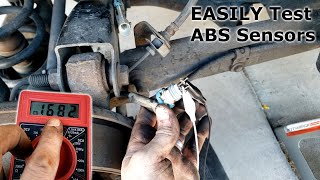
How to confirm: After confirming the encoder ring is clean and intact, test the sensor's resistance with a multimeter (should be 850-1350 ohms for some models, but check specs) or watch its live data output on a scan tool. A reading of zero or an erratic signal when the wheel is spinning points to a bad sensor.
Typical fix: Replace the right rear wheel speed sensor. It is typically held in by a single 10mm or T30 bolt.
Est. part cost: $25-$75 - Damaged Wiring or Connector ⚪ Low Probability The wiring harness leading to the sensor can be damaged by road debris, improper routing causing it to rub against suspension components, or corrosion in the connector, especially in the rust belt. Owners have found chafed wires inside the protective loom near the wheel well where it flexes.
How to confirm: Visually inspect the entire length of the harness from the sensor to the main body connector for breaks, chafing, or corrosion. Check for loose or corroded pins in the connector. A wiring issue was diagnosed in a YouTube video where a temporary tape-up of a chafed wire resolved the warning lights.
Typical fix: Repair the damaged section of wire with a weatherproof butt connector and heat shrink, or replace the connector pigtail.
Est. part cost: $15-$50
Rare But Worth Checking
- Faulty Electronic Brake Control Module (EBCM): → Shop ABS Control Module This is very rare. The EBCM is the computer that controls the ABS. A failure here would typically set multiple wheel speed sensor codes or other EBCM-specific codes, not just C0050. Always diagnose all other possibilities first.
Diagnosis Steps
- Connect an ABS-capable OBD-II scanner. Confirm code C0050 is present and note any symptom bytes (e.g., 18, 5A, 0F).
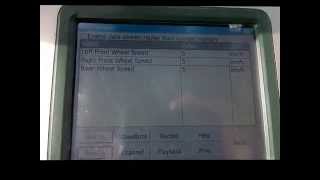
- Use the scanner's live data feature to monitor the speed of all four wheels while driving slowly in a straight line. Confirm the right rear sensor reads 0 MPH, is erratic, or does not match the other three sensors.
- Raise and safely support the rear of the vehicle on jack stands.
- Remove the right rear wheel.
- Locate the wheel speed sensor on the rear of the steering knuckle and its wiring harness. Inspect the harness for any obvious signs of damage, chafing, or corrosion, paying close attention to where it flexes or passes near suspension parts.
- Unplug the sensor and inspect the connector terminals for corrosion or damage.
- Remove the single bolt (often a 10mm or T30) holding the sensor in place and gently pull the sensor out.
- Shine a light into the sensor mounting hole and inspect the magnetic encoder ring on the wheel hub. Look for a build-up of metallic debris or any cracks/damage to the ring itself.
- If debris is present, use an electronics-safe cleaner (e.g., Mass Airflow Sensor cleaner) and a non-magnetic tool to thoroughly clean the face of the ring. Avoid using harsh brake cleaners that can damage the rubber seal.
- If the ring is cracked or has missing sections, the entire wheel hub assembly must be replaced.
- If the ring is clean and intact, the sensor itself is the next most likely culprit. It can be tested or replaced.
- If the sensor and hub appear good, carefully inspect the wiring harness for internal breaks by checking continuity with a multimeter from the sensor connector to the EBCM connector.
- After the repair, clear the DTCs with the scan tool. The warning lights should turn off on their own after driving a short distance (e.g., a quarter mile) as the EBCM confirms the signal is restored.
Parts You'll Likely Need
- Right Rear Wheel Hub and Bearing Assembly
(OEM #ACDelco FW381 (GM 84433433), ACDelco 513288)— This is the most common fix if cleaning the encoder ring doesn't work, as the ring is integrated into the hub and cannot be replaced separately. The part is often replaced due to a cracked or deteriorated magnetic encoder ring.
Trusted brands: ACDelco, Timken, MOOG, SKF
OEM price range: $180-$280
Aftermarket price range: $80-$180 - Right Rear ABS Wheel Speed Sensor
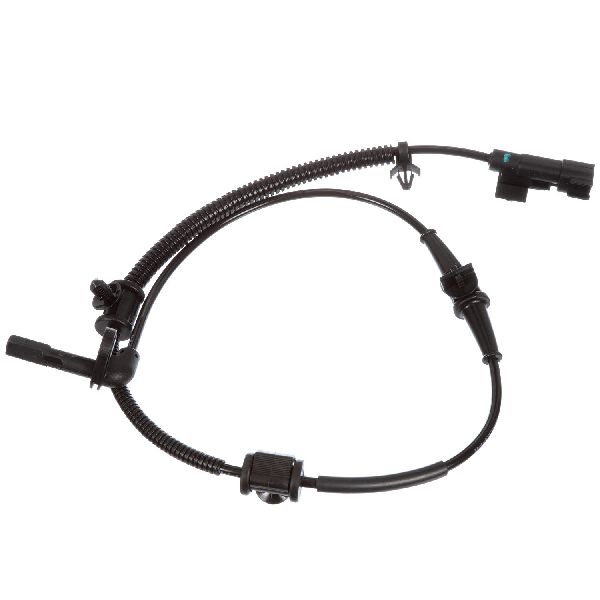
(OEM #23483152 (supersedes 22831246, 22868987))— This part is replaced if diagnostics confirm the sensor itself has failed, and the encoder ring is clean and undamaged. It's less common to fail than the hub assembly's encoder ring.
Trusted brands: ACDelco, Duralast, Standard Motor Products (SMP)
OEM price range: $50-$75
Aftermarket price range: $25-$50
Related Codes That Often Appear With This One
- C0050 with symptom byte 18, 5A, or 0F — These specific symptom bytes are called out in TSB #PIC5428G. '18' means low signal amplitude, '5A' means the signal is not plausible, and '0F' means the signal is erratic. All point towards debris or damage at the encoder ring.
- C0045 — This is the code for the Left Rear Wheel Speed Sensor. Seeing both codes together could point to a shared wiring problem or similar debris/wear issues affecting both rear hubs.
- U0415 — Invalid Data Received From Electronic Brake Control Module. This code may set in the Power Steering Control Module as a downstream effect of the EBCM losing a valid wheel speed signal, sometimes causing a 'Service Steering' message.
Technical Service Bulletins (TSBs) & Recalls
- PIC5428G: States that for codes C0035-C0050 with symptom bytes 18, 5A, or 0F, the cause is often debris on the wheel bearing magnetic encoder. It advises technicians to inspect and clean the ring before replacing parts. This TSB covers a wide range of GM vehicles from 2007-2017.
- 17-NA-047: This bulletin supersedes PIC5428G, updating the model years and providing the same diagnostic advice. It confirms the issue persists across many model years.
Platform-Specific Known Issues
- Per TSB #PIC5428G and its successors (e.g., 17-NA-047), these vehicles are prone to debris accumulation on the
Mechanic-Grade Diagnostic Values
- Active Wheel Speed Sensor Digital Signal (Current) — expected: Switches between 7mA (Low) and 14mA (High) DC current as the wheel rotates.. Failure: Signal is stuck high or low, does not switch, or is erratic.
- Voltage Supply at Wheel Speed Sensor Connector — expected: Approximately 12V (battery voltage) at one terminal and a 1.0V bias voltage at the other (with sensor disconnected, key on).. Failure: Absence of the 12V supply points to a wiring or EBCM fault. Absence of the bias voltage can also indicate a circuit issue.
- Wheel Speed Sensor Resistance (Passive Sensors) — expected: While these Impala models use active (powered) sensors, older or different GM models may use passive sensors with a resistance between 850-1350 Ohms.. Failure: An open circuit (infinite resistance) or a short (zero resistance) indicates a failed sensor. This is for reference only, as the 2014-2017 Impala uses active sensors that are not diagnosed by resistance.
Hidden / Shadow Codes Worth Checking
- C0050 18: Symptom byte for 'Signal Amplitude Low'. This is the most common byte seen with this code and strongly indicates that debris on the magnetic encoder ring is weakening the signal. (see via GM-specific scan tool (GDS2, Tech2) or high-end professional scanner.)
- C0050 5A: Symptom byte for 'Signal Plausibility Failure'. The signal is not consistent with other vehicle sensors (e.g., other wheel speeds). This often points to a physically damaged or cracked encoder ring with missing sections. (see via GM-specific scan tool (GDS2, Tech2) or high-end professional scanner.)
- C0050 0F: Symptom byte for 'Erratic Signal'. The signal is present but has frequent dropouts or noise. This can be caused by a loose connection, damaged wiring, or a failing sensor. (see via GM-specific scan tool (GDS2, Tech2) or high-end professional scanner.)
Scan Tool Commands That Help
- GDS2 (GM Global Diagnostic System 2): Live Data - Wheel Speed Sensors — This is the primary diagnostic step. Graphing the output of all four wheel speed sensors while driving allows a technician to instantly see if the right rear sensor is dropping out, reading erratically, or not matching the other three, confirming the fault location.
- GDS2 (GM Global Diagnostic System 2): Clear DTCs — Used after the repair is complete. However, on this system, the ABS/StabiliTrak lights will typically extinguish on their own after a short drive once the EBCM receives a valid signal from the repaired sensor circuit.
Wiring & Ground Locations
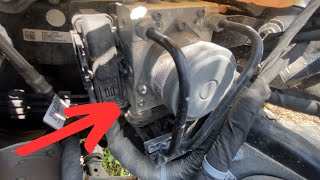
- EBCM Connector X1, Pin 19 — At the Electronic Brake Control Module (EBCM), located in the engine compartment, often near the brake master cylinder/booster assembly.. This is the specific pin for the Right Rear Wheel Speed Sensor Signal. A technician can back-probe this pin to test for the 7mA/14mA digital signal directly at the module, confirming if the signal is reaching the EBCM or if the fault is in the wiring/sensor. The wire color is typically Brown (BN).
- EBCM Harness Chafe Point — A known issue involves the EBCM harness branch chafing against a transmission mounting bolt, down behind the radiator surge tank.. A GM Preliminary Information bulletin (PI1505A) notes that this abrasion can damage wiring within the harness, potentially causing various EBCM-related DTCs, including wheel speed sensor circuit faults. This should be inspected if direct sensor/hub/connector issues are not found.
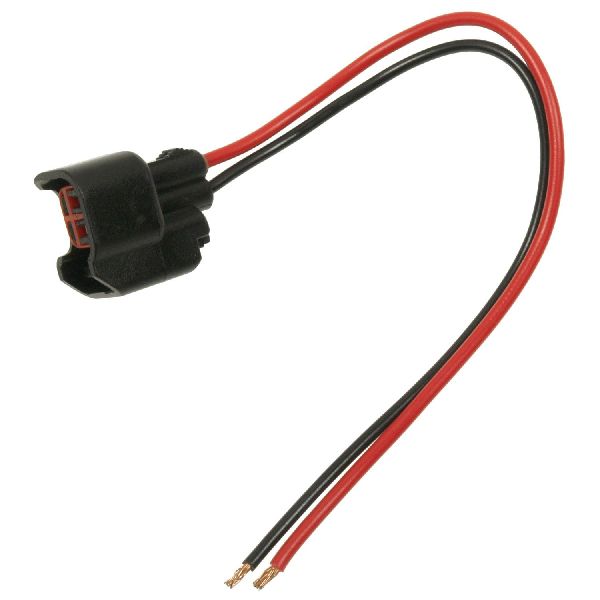
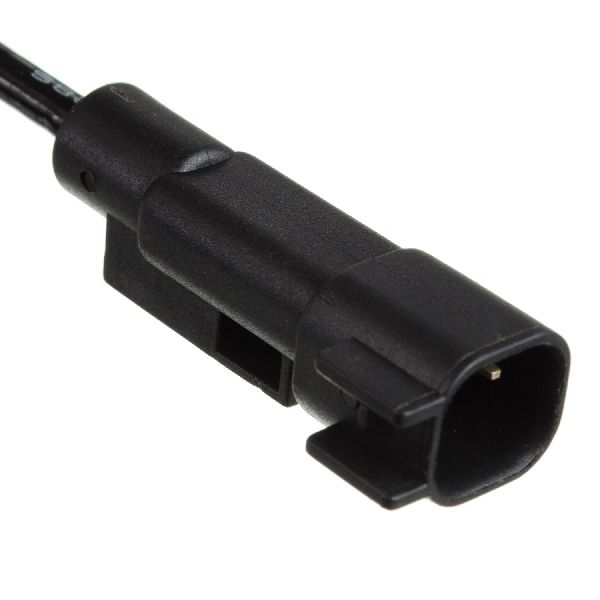
- Wheel Speed Sensor Connector — At the right rear wheel hub, connecting the sensor pigtail to the main body harness.. This 2-pin connector is a common point for corrosion, moisture intrusion, and damaged terminals. A 'wiggle test' of this connector and its wiring while monitoring live data can often reveal intermittent connection problems.
Real Owner Repair Stories
- Mitchell1 SureTrack Community Fix (2014 Chevrolet Tahoe LTZ 5.3L (Similar GM Platform)) — ABS light on, code C0050.
❌ Tried (didn't work) Initial inspection of wiring and connector found no faults.
✅ What actually fixed it A dual failure was found. The EBCM was not providing the required 12V supply to the sensor. After replacing and programming the EBCM, the signal was still erratic on a lab scope. The new wheel hub assembly (with integrated sensor) was also found to be faulty. The final repair required replacing BOTH the EBCM and the right rear wheel hub assembly. - YouTube user 'How-to and Reviews' (2014 Chevrolet Impala) — ABS and Stabilitrak warning lights on.
❌ Tried (didn't work) Cleaning the magnetic encoder ring had worked on a previous occasion but did not fix the issue this time.
✅ What actually fixed it Visual inspection revealed the magnetic encoder ring on the wheel bearing was physically damaged. Replacing the entire right rear wheel bearing hub assembly resolved the problem. The lights turned off automatically after driving about a quarter mile. - Camaro5 Forum user 'mattisbritish' (Similar GM Platform) (Chevrolet Camaro) — ABS light, engine light, traction control light, skid light on.
✅ What actually fixed it The dealer found C0050 with symptom byte 5A. Following TSB PIC5428, the technician removed the hub assembly, cleaned debris from the magnetic encoder ring and the sensor, and reinstalled. This cleaning procedure fixed the issue without replacing any parts.
OEM Part Supersession History
22831246, 22868987→23483152— Standard part evolution for improved reliability or manufacturing changes.
Heads up: The new part number (23483152) is the correct replacement for the older numbers on the specified vehicles. No known incompatibility issues.
Model Year Variations Within This Range
- 2014: A specific note in TSB 17-NA-047 states that for 2014 Impalas, if the wheel bearing encoder ring is found to be damaged, technicians should also follow a separate bulletin (16-NA-348). This may indicate a related procedure or consideration specific to that early model year.
Helpful Videos
We Have This Part in Stock


The information in this article is provided for general reference and educational purposes only. Vehicle specifications, procedures, and part compatibility can vary by production date, trim level, and region. Always consult your vehicle's factory service manual and verify part numbers before purchasing or performing repairs. Safety-critical components such as airbags, seat belts, and braking systems should be installed by a qualified professional.
- Chevrolet IMPALA:
- 🧭 Diagnostic Flowchart
- 🎬 Helpful Videos
- 🛍️ Shop This Part
- What's Unique About the 2014-2017 Chevrolet IMPALA
- Symptoms You May Notice
- Most Likely Causes
- Rare But Worth Checking
- Diagnosis Steps
- Parts You'll Likely Need
- Related Codes That Often Appear With This One
- Technical Service Bulletins (TSBs) & Recalls
- Platform-Specific Known Issues
- Mechanic-Grade Diagnostic Values
- Hidden / Shadow Codes Worth Checking
- Scan Tool Commands That Help
- Wiring & Ground Locations
- Real Owner Repair Stories
- OEM Part Supersession History
- Model Year Variations Within This Range
- 🎟️ Get 5% Off