

C0050 on 2007-2014 Chevrolet Silverado: Right Rear Wheel Speed Sensor Fault Causes and Fixes
Code C0050 on a 2007-2014 Silverado means a fault in the right rear wheel speed sensor circuit, disabling ABS and StabiliTrak. On 2007-2013 trucks, this is often a simple, inexpensive sensor replacement (~$25-$60). On 2014 models, it may require replacing the entire wheel hub assembly. Before replacing parts, inspect the wiring harness for chafing, a very common cause.
- C0050 means your ABS and StabiliTrak are offline due to a fault with the right rear wheel speed signal.
- For 2007-2013 trucks, the most likely fix is replacing the individual right rear wheel speed sensor, a DIY-friendly job.
- For 2014 trucks, the sensor is likely part of the wheel hub assembly, making replacement more expensive and involved.
- Always inspect the wiring harness for damage before buying parts, as this is a common and often overlooked cause.
- If you have a 2014 model, check if your vehicle is affected by recall N192261050, which involves a free software update from a dealer.
What's Unique About the 2007-2014 Chevrolet Silverado
The 2007-2014 Silverado spans two generations, and the fix for C0050 differs between them. On the GMT900 generation (2007-2013), the rear wheel speed sensor is a separate, individually replaceable part that bolts into the rear axle housing. For the new K2XX generation starting in 2014, the sensor is integrated into the non-serviceable wheel hub and bearing assembly, making the repair more involved and costly. Across both generations, the wiring harness that runs along the frame is a known weak point, often chafing and causing an open or short circuit that mimics a sensor failure.
Generation note: This range covers the GMT900 (2007-2013) and the first year of the K2XX (2014) generation. The primary difference for this code is the serviceability of the rear wheel speed sensor. On GMT900 models, the sensor is a standalone part. On K2XX models, it is integrated into the wheel hub assembly.
Symptoms You May Notice
- ABS warning light illuminated on the dashboard.
- StabiliTrak or Traction Control warning light on.
- "Service StabiliTrak" or "Service Traction Control" message in the driver information center.
- "Service Trailer Brake System" message may appear.
- Cruise control may be disabled.
- A brief grinding or ratchet noise from the ABS pump at low speeds may occur before the lights come on.
- Replacing the wheel hub assembly on a 2007-2013 model when only the inexpensive, separate wheel speed sensor has failed.
- Replacing the sensor or hub when the actual problem is a simple wiring break or corrosion in the harness further up the frame.
- Replacing the sensor without thoroughly cleaning the mounting surface on the axle, leading to an incorrect air gap and a persistent code.
Most Likely Causes
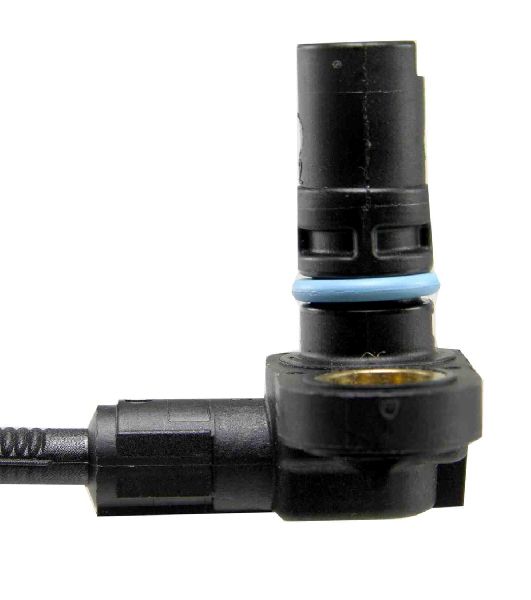
- Failed Right Rear Wheel Speed Sensor (2007-2013 GMT900) 🔴 High Probability → Shop ABS Wheel Speed Sensor The sensor is exposed to heat, moisture, and road debris at the wheel, leading to failure over time. It can develop internal faults that are sensitive to temperature changes.
How to confirm: After confirming the RR sensor has no reading on a scan tool, the sensor itself can be tested for resistance with a multimeter (set to ohms) and compared to the known-good left side sensor; an open circuit (OL) indicates failure. A diagnostic trick is to heat the sensor with a heat gun while monitoring the signal, as failing sensors often drop out when hot.
Typical fix: Replace the right rear wheel speed sensor. It is held in by a single T30 Torx bolt. The mounting surface in the axle housing should be cleaned thoroughly of rust and debris before installing the new sensor to ensure a proper air gap.
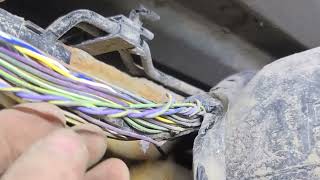
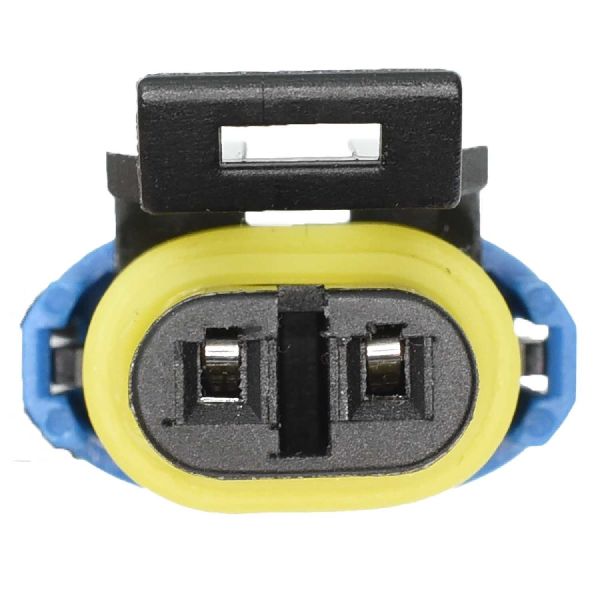
Est. part cost: $25-$75 - Damaged Wiring Harness or Connector 🔴 High Probability The harness runs along the frame and axle, where it is highly susceptible to chafing, corrosion, and moisture intrusion. A common chafe point is where the harness runs over the top of the frame rail or near the fuel tank. GM TSB PIT5171C also notes that intermittent C0050 codes can be caused by internal wire breaks near the main X411 connector under the rear of the vehicle. Manufacturer service bulletin TSB Bulletin #PIT5499B further advises technicians to inspect the Electronic Brake Control Module (EBCM) connector specifically for water intrusion or corrosion when C0050 is present.
How to confirm: Visually inspect the entire harness from the sensor connector back to the main loom on the frame. Pay close attention to any areas where the harness makes contact with the frame or other components. Perform a wiggle test on the harness while monitoring the live sensor data on a scan tool. 🎬 Watch: Diagnosing an intermittent C0050 code on a GMT900 truck. A fluctuating signal indicates a wiring issue. Check for 12V reference voltage and ground at the connector with the key on.
Typical fix: Repair the broken or shorted section of wire using solder and heat-shrink tubing. If the connector is corroded or damaged, replace it with a new pigtail connector. In one documented case, a wire was found to be compromised right inside the connector shell.
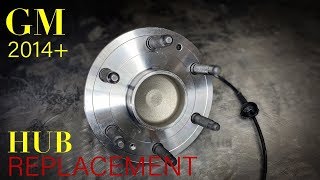
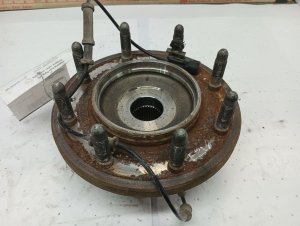
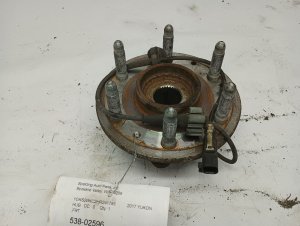
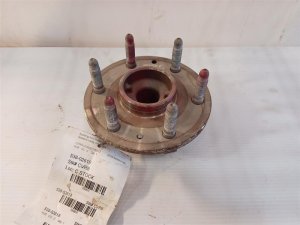
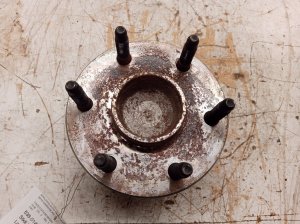
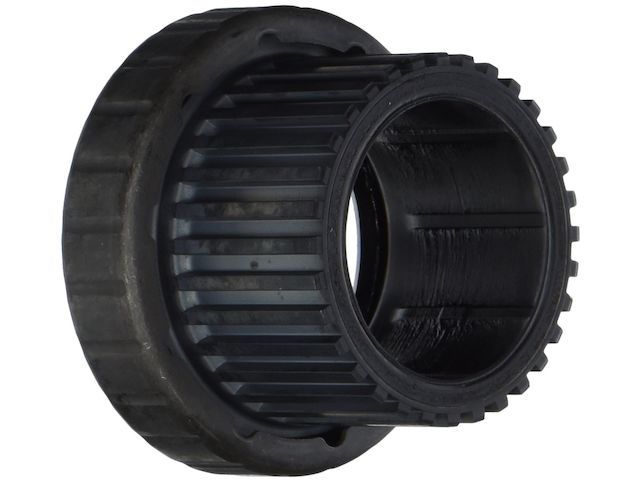
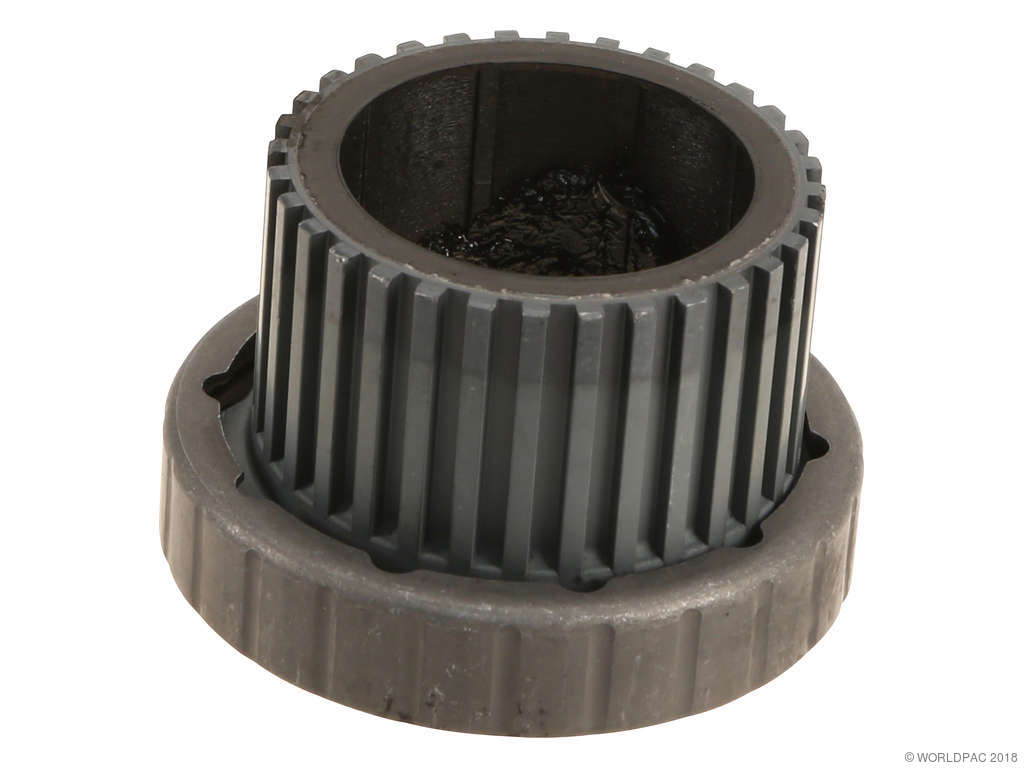
Est. part cost: $15-$40 - Failed Right Rear Wheel Hub Assembly (2014 K2XX) 🔴 High Probability → Shop Hub Assembly On the newer K2XX platform, the magnetic encoder ring and sensor are an integral part of the sealed wheel hub assembly. Corrosion can cause the ring to crack or delaminate, or the internal sensor can fail, requiring replacement of the entire unit. 🎬 See this walkthrough for replacing the K2XX wheel hub assembly.
How to confirm: After ruling out wiring, the most reliable method is to replace the hub assembly. A visual inspection after removing the sensor may reveal a cracked, swollen, or damaged magnetic ring on the back of the hub.
Typical fix: Replace the entire right rear wheel hub and bearing assembly.
Est. part cost: $150-$400 - Debris on Magnetic Encoder Ring ⚪ Low Probability The rear axle can generate fine metallic particles that become attracted to the magnetic encoder ring on the hub or axle, disrupting the sensor's reading. This is more common on vehicles where the ring is part of the hub assembly.
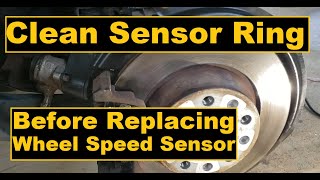
How to confirm: Remove the wheel speed sensor and use a borescope or a soft, non-magnetic tool to inspect the surface of the encoder ring for a paste-like accumulation of metallic debris. This is addressed in GM TSB PIC5428G (superseded by 17-NA-047).
Typical fix: Clean the debris from the face of the magnetic encoder ring with a soft nylon brush and brake cleaner. Do not use magnetic tools for cleaning. 🎬 Watch: How to properly clean the magnetic encoder ring. Reinstall the sensor and test drive.
Est. part cost: $0
Rare But Worth Checking
- Failed Electronic Brake Control Module (EBCM): → Shop ABS Control Module While uncommon, the EBCM itself can fail. A diagnostic sign is the lack of the 12-volt reference signal at the sensor connector even when the wiring back to the module is confirmed to be good. This is typically the last part to suspect after all other causes are eliminated. One shop documented a case on a 2014 Tahoe where both the EBCM and the sensor had failed simultaneously.
- Faulty Power Steering Control Module (PSCM): In some cross-platform instances, such as described in NHTSA ODI #10763888, a C0050 code was diagnosed as a faulty Power Steering Control Module, requiring replacement of the steering column assembly.
Diagnosis Steps
- Connect an ABS-capable scan tool. Confirm C0050 is present and check for any related codes. Note any symptom bytes like '0F' (erratic signal), '18' (low signal), or '5A' (plausibility failure), which often point to debris or a wiring issue.
- View live data from all four wheel speed sensors. Drive the vehicle slowly (over 5 mph) and observe the Right Rear (RR) sensor reading. A reading of 0 MPH or an erratic signal compared to the others confirms the fault location.
- Raise and secure the rear of the vehicle and remove the right rear wheel.
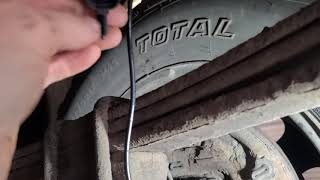
- Visually inspect the wheel speed sensor wiring harness for any signs of chafing, melting, corrosion, or physical damage. Follow it from the sensor connector up and over the frame rail, paying close attention to contact points. As noted in TSB Bulletin #PIT5427B, technicians should specifically inspect the X411 connector for damage or corrosion.
- If wiring appears intact, disconnect the sensor. Turn the ignition on and use a multimeter to check for a reference voltage (typically 12V) and ground at the harness connector. If voltage is missing, the problem is in the wiring or the EBCM.
- For 2007-2013 models, remove the single T30 Torx bolt and pull the sensor out of the axle housing. Inspect the sensor for damage and the housing bore for rust or debris.
- For all models, inspect the magnetic encoder ring on the hub assembly (2014) or axle (2007-2013). Look for cracks, damage, or an accumulation of metallic debris, which looks like a dark paste. Clean as per TSB PIC5428G if debris is present.
- If wiring is good and the encoder ring is clean, the most likely cause is the sensor (on 2007-2013 models) or the entire hub assembly (on 2014 models).
Parts You'll Likely Need
- Rear Wheel Speed Sensor (2007-2013)
(OEM #20938122)— This is the most common failure point for this code on GMT900 trucks and is a simple, standalone part to replace. The left and right rear sensors are often the same part.
Trusted brands: ACDelco, Standard Motor Products (SMP), Delphi
OEM price range: $50-$90
Aftermarket price range: $25-$60 - Rear Wheel Hub and Bearing Assembly (2014)
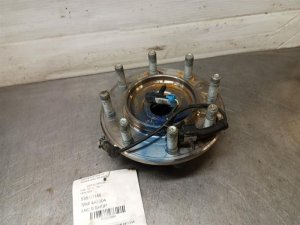
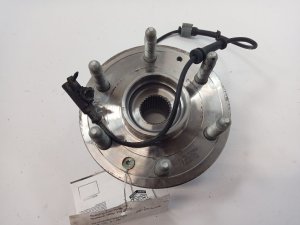
(OEM #515159)— On 2014 K2XX models, the sensor is integrated into the hub assembly, requiring the replacement of the entire unit if the sensor or its magnetic ring fails.
Trusted brands: ACDelco, Timken, MOOG, Dorman
OEM price range: $250-$400
Aftermarket price range: $150-$280
Related Codes That Often Appear With This One
- C0045 — This is the code for the Left Rear Wheel Speed Sensor. It is common to see both rear sensor codes if there is a shared wiring harness issue or if both sensors/hubs are failing around the same time due to age.
- U0415 — Invalid Data Received From EBCM. As noted in TSB PIC5428G, a loss of a wheel speed sensor signal can cause the Power Steering Control Module to set this code, resulting in a 'Service Steering' message and heavier steering feel at low speeds. This is a normal default action.
- C0035 & C0040 — Front wheel speed sensor codes. NHTSA ODI #11228687 reports a case where C0050 appeared alongside C0035 and C0040, resulting in multiple warning lights being illuminated.
Technical Service Bulletins (TSBs) & Recalls
- PIC5428G / 17-NA-047: Addresses DTCs C0035-C0050 with symptom bytes 18 (low amplitude), 5A (not plausible), or 0F (erratic). It states the cause is often ferrous debris on the magnetic encoder ring and provides a cleaning procedure as the primary fix. It warns against using magnetic tools for cleaning.
- PIT5171C: Notes that intermittent C0050 codes can be caused by internal wire breaks in the harness, specifically mentioning the circuit leading to the X411 connector under the rear of the vehicle.
- TSB Bulletin #PIT5499B: Notes that a "Service Trailer Brake" message may appear on the Driver Information Center alongside C0050, and technicians should check the EBCM connector for corrosion.
- TSB Bulletin #PIT5427B: Mentions that C0050 can be associated with "Service Suspension Control" or "Hard Steering" messages, and directs inspection of the X411 connector.
Platform-Specific Known Issues
- DIY Sensor Replacement on a 2008 GMC Sierra: A detailed video shows the process on a 2008 GMC Sierra (a GMT900 twin). The owner uses a multimeter to test the faulty sensor, showing a clear resistance reading on the bad sensor versus an open loop on the good one. He replaces the sensor using only a T30 Torx bit and confirms the fix clears the ABS and traction control lights. He notes the GM part number for the sensor is 20938121 (this may vary).
- Wiring Failure on a 2017 Sierra (K2XX): A professional diagnostic video on a newer K2XX truck with C0050 shows that a new sensor did not fix the problem. The technician traces the wiring and finds a corroded, compromised wire right at the sensor connector, hidden under the factory tape. Repairing this single wire resolved the code, highlighting the importance of checking wiring before replacing the expensive hub assembly.
Mechanic-Grade Diagnostic Values
- Wheel Speed Sensor Resistance (2007-2013) — expected: 1000-1300 Ohms. A user testing a new sensor recorded a reading around 1090 Ohms.. Failure: An open circuit (OL) or a reading significantly outside the expected range indicates a failed sensor coil.
- Wheel Speed Sensor Circuit Voltage (at sensor connector) — expected: Approximately 12V reference on one pin and a good ground (<1 Ohm) on the other, with the key on.. Failure: Absence of the 12V reference voltage points to a problem upstream in the wiring or with the EBCM itself.
- Continuity between Sensor Connector and EBCM Connector — expected: Less than 2 ohms on both the signal and reference wires.. Failure: High resistance or an open circuit (OL) confirms a break in the wiring harness between the sensor and the EBCM.
Hidden / Shadow Codes Worth Checking
- C0050 0F: Signal Erratic. The EBCM detected an illogical or intermittent signal. This often points to a loose connection, wiring damage, or debris on the magnetic ring. (see via Requires an ABS-capable scan tool like the GM Tech2, GDS2, or a high-end aftermarket scanner.)
- C0050 18: Low Signal Amplitude. The signal from the sensor is weak. This is commonly caused by an excessive air gap (due to rust buildup under the sensor mount), metallic debris on the encoder, or a failing sensor. (see via Requires an ABS-capable scan tool like the GM Tech2, GDS2, or a high-end aftermarket scanner.)
- C0050 5A: Signal Plausibility Failure. The signal is present but doesn't make sense when compared to other wheel speed sensors (e.g., it reads 5 mph while others read 50 mph). This often indicates a damaged or cracked reluctor/encoder ring. (see via Requires an ABS-capable scan tool like the GM Tech2, GDS2, or a high-end aftermarket scanner.)
Wiring & Ground Locations
- EBCM Connector (Pins 3 & 4) — On the Electronic Brake Control Module (EBCM), located on the driver's side frame rail, generally below the driver's door.. Pins 3 (Green/Yellow) and 4 (Violet) at the EBCM connector are the specific terminals for the right rear wheel speed sensor circuit. Testing for continuity and voltage here can definitively isolate a fault to the wiring harness, the sensor, or the EBCM itself.
- G110 (EBCM Ground) — On the frame beneath the driver's side door. It is identifiable as a heavy gauge (12-gauge) wire.. A poor connection at the main EBCM ground can cause a host of ABS-related codes, including C0050, and can lead to a loss of communication with the module. GM issued a TSB (04-05-25-002D) regarding this specific ground, advising technicians to clean the frame contact point thoroughly before reattaching.
- Sensor Harness Connector — The harness runs up from the axle and the connector is located on top of the frame rail, above the axle.. This connector is a common point for moisture intrusion and corrosion. It's also where the harness is susceptible to chafing against the frame, which can cause an intermittent open or short in the circuit.
Real Owner Repair Stories
- YouTube channel 'ScannerDanner' (2017 GMC Sierra (similar K2XX platform to 2014 Silverado)) — ABS light on with an active C0050 code for right rear wheel speed sensor circuit failure.
❌ Tried (didn't work) Initial visual inspection of the harness showed no obvious damage.
✅ What actually fixed it Using a graphing ohmmeter, a corroded wire was found right at the wheel speed sensor connector, inside the sheathing. The wire was compromised but not fully broken, causing an intermittent connection. Repairing this single wire and reconnecting the original sensor cleared the code. - YouTube channel 'Joe's Fix All Garage' (2008 GMC Sierra (GMT900 platform)) — Traction control and ABS warning lights on. Scan tool showed code C0050.
❌ Tried (didn't work) Considered replacing the common brake light switch, but diagnostics pointed elsewhere.
✅ What actually fixed it The technician tested the resistance of the right rear wheel speed sensor and found it was faulty. A new sensor showed a correct resistance reading of approximately 1090 ohms. Replacing the faulty sensor with the new one resolved the issue and turned off the warning lights. - NHTSA ODI #11228687 — An owner reported that their vehicle's ABS and traction control lights were illuminated. A diagnostic scan by an independent mechanic revealed code C0050 along with several other communication and sensor codes.
OEM Part Supersession History
15121067, 20763147→20938122— Part consolidation and potential design improvements.
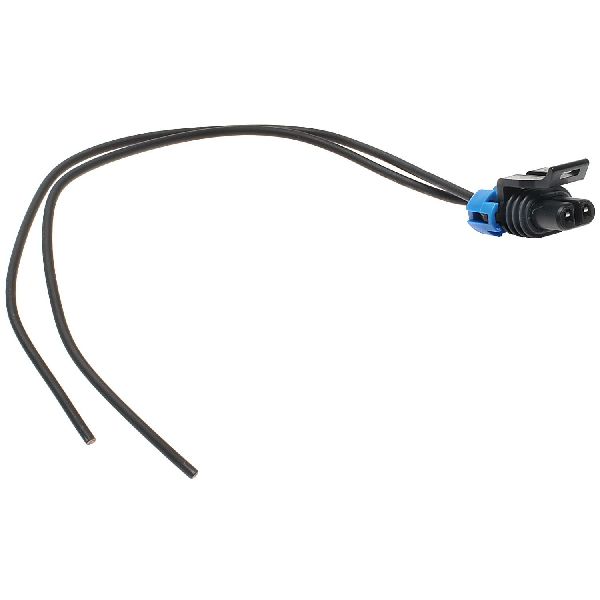
Heads up: GM notes that when replacing the older part numbers with 20938122, you may also need to purchase a new connector pigtail, part number 13586114, suggesting a change in the connector design on the sensor itself.
Model Year Variations Within This Range
- 2007-2013: Uses a separate, bolt-in wheel speed sensor (PN 20938122) that is relatively inexpensive and easy to replace with a single T30 Torx bolt.
- 2014: The wheel speed sensor is integrated into the sealed rear wheel hub and bearing assembly. A sensor failure requires the replacement of the entire hub assembly, a more costly and labor-intensive repair.
Diagnostic Flowchart
Other Known Issues on This Vehicle
Issues unrelated to this code that are worth knowing about as an owner of this generation:
- Active Fuel Management (AFM) Lifter Failure 🔴 High — Very common, especially on 5.3L and 6.2L engines. Can occur at any mileage but is more frequent over 75,000 miles. Often leads to misfires (P0300) and requires significant engine repair. (Ref: Multiple TSBs exist, including updates to the valve cover and oil deflector to reduce oil consumption, which is a contributing factor.)
- Cracked Dashboard (GMT900) 🟡 Low — Extremely common on 2007-2013 models, particularly in warmer climates. A large crack typically develops on the driver's side near the instrument panel or over the passenger airbag. (Ref: No recall was issued, but it was a widespread cosmetic defect.)
- Excessive Oil Consumption 🟠 Medium — Common on AFM-equipped V8 engines. Piston rings can become stuck, leading to oil burning at a rate of 1 quart per 2,000 miles or more. Often related to the PCV system and AFM operation. (Ref: GM issued TSBs related to piston ring cleaning procedures and updated valve cover designs.)
- Steering Position Sensor Failure 🟠 Medium — Fairly common issue causing the 'Service StabiliTrak' message to appear without any ABS codes. The sensor within the steering column fails, requiring replacement.
Used vs. New Parts: Buying Guide for This Vehicle
When a used part is the smart pick: A used wiring harness pigtail from a junkyard is a smart choice if your connector is damaged, as it provides OEM-grade wire and terminals. A complete EBCM module could be sourced used, but it MUST be from an identical vehicle (match part numbers) and may require programming to your vehicle's VIN.
Donor-vehicle mileage cap: roughly under 100000 miles for the part to have meaningful remaining life.
What to inspect on the donor part:
- For wiring: Check for flexibility, no cracking in the insulation, and clean, corrosion-free pins in the connector.
- For a hub assembly (2014+): Check for zero play or roughness when spinning the bearing by hand. Inspect the back for a clean, undamaged magnetic encoder ring.
- For an EBCM: Look for a vehicle with no collision damage near the module's location. Check that the donor vehicle's warning lights were not illuminated if possible.
OEM-only on this vehicle (don't cheap out):
- Electronic Brake Control Module (EBCM) - While used is an option, new OEM or a reputable remanufacturer (like Dorman) is highly recommended due to the critical safety function and potential for programming requirements.
Aftermarket brands forum-validated for this vehicle:
- Hub Assemblies: Timken, MOOG, ACDelco (OEM), SKF
- Sensors (2007-2013): ACDelco (OEM), Standard Motor Products (SMP), Delphi, NTK
Brands owners have reported issues with on this vehicle:
- Unbranded 'white-box' sensors and hub assemblies from online marketplaces. These often have high failure rates, poor fitment, and can cause immediate or premature return of the fault code.
Real Owner Stories
Aggregated from forums and TSBs cited above. Mileages and costs reflect what owners reported in those sources.
2008 GMC Sierra
Symptoms: ABS and traction control lights illuminated. The owner used a multimeter to find the faulty sensor had an open loop (OL) reading.
What fixed it: Replaced the right rear wheel speed sensor using a T30 Torx bit.
Source hint: Vehicle_specific_issues: DIY Sensor Replacement on a 2008 GMC Sierra
2017 GMC Sierra (K2XX)
Symptoms: C0050 code present; replacing the sensor did not resolve the issue.
What fixed it: Repaired a corroded, compromised wire found right at the sensor connector hidden under factory tape.
Source hint: Vehicle_specific_issues: Wiring Failure on a 2017 Sierra (K2XX)
2013 Chevrolet Silverado
Symptoms: Code C0050; replaced the sensor and cleaned the mounting surface but the warning lights remained on.
What fixed it: The owner's report highlights ongoing troubleshooting of the wiring harness and EBCM after a sensor replacement failed to clear the code.
Source hint: forum_citations: Rear wheel ABS speed sensor - GM-Trucks.com
Related OBD-II Codes
Frequently Asked Questions
Why are my ABS, StabiliTrak, and Traction Control lights all on at the same time on my Silverado?
Does GM TSB PIC5428G apply to my C0050 code, and what does it recommend?
I replaced the sensor on my 2013 Silverado but the C0050 code won't go away. What else should I check?
Is there a specific part number for the rear speed sensor on a GMT900 Sierra or Silverado?
Can I use a magnet to clean the debris off my wheel hub encoder ring?
Where is the most common place for the wiring to fail on a 2014+ K2XX Silverado?
Helpful Videos
Used OEM Parts in Stock
New Aftermarket Parts Available


The information in this article is provided for general reference and educational purposes only. Vehicle specifications, procedures, and part compatibility can vary by production date, trim level, and region. Always consult your vehicle's factory service manual and verify part numbers before purchasing or performing repairs. Safety-critical components such as airbags, seat belts, and braking systems should be installed by a qualified professional.
- Chevrolet Silverado:
- 🧭 Diagnostic Flowchart
- 🎬 Helpful Videos
- 🛍️ Shop This Part
- What's Unique About the 2007-2014 Chevrolet Silverado
- Symptoms You May Notice
- Most Likely Causes
- Rare But Worth Checking
- Diagnosis Steps
- Parts You'll Likely Need
- Related Codes That Often Appear With This One
- Technical Service Bulletins (TSBs) & Recalls
- Platform-Specific Known Issues
- Mechanic-Grade Diagnostic Values
- Hidden / Shadow Codes Worth Checking
- Wiring & Ground Locations
- Real Owner Repair Stories
- OEM Part Supersession History
- Model Year Variations Within This Range
- Other Known Issues on This Vehicle
- Used vs. New Parts: Buying Guide for This Vehicle
- Real Owner Stories
- 2008 GMC Sierra
- 2017 GMC Sierra (K2XX)
- 2013 Chevrolet Silverado
- Related OBD-II Codes
- Frequently Asked Questions
- 🎟️ Get 5% Off