

C0050 on 2017 Chevrolet Traverse: Right Rear Wheel Speed Sensor Fault Causes & Fixes
On a 2017 Traverse, code C0050 almost always points to an issue with the right rear wheel speed sensor signal. The most common cause is metallic debris on the wheel hub's magnetic encoder ring, which can often be cleaned per GM TSB PIC5428G. If cleaning doesn't work, or if the ring is cracked, the entire wheel hub assembly needs replacement. A failed sensor is a less common, but possible, cause.
- Code C0050 on a 2017 Traverse means the right rear wheel speed sensor circuit has a fault, which will disable your ABS and StabiliTrak systems.
- Before buying any parts, remove the right rear wheel speed sensor and inspect the magnetic ring on the hub for metallic debris. Cleaning this ring is a very common, no-cost fix.
- If the ring is clean but cracked or damaged, the entire wheel hub assembly must be replaced.
- If the ring is clean and intact, the wheel speed sensor itself is the next most likely part to have failed.
- A scan tool that can read ABS codes and live data is essential for an accurate diagnosis.
What's Unique About the 2017-2017 Chevrolet TRAVERSE
The first-generation Traverse (2009-2017) and its GM Lambda platform siblings (GMC Acadia, Buick Enclave, and Saturn Outlook) are well-known for this specific issue. The design uses a magnetic encoder ring on the inboard side of the wheel hub assembly, which is read by the wheel speed sensor. This ring is exposed and highly susceptible to collecting a paste-like mixture of metallic rust and brake dust, which disrupts the sensor's signal and triggers codes like C0050. This is directly referenced in GM Technical Service Bulletin #PIC5428G and its successor, #17-NA-047, which state that cleaning the debris is often a sufficient repair.
Diagnostic Flowchart
Tap your situation to follow the diagnostic path that matches what you're seeing on this vehicle.
Symptoms You May Notice
- "Service StabiliTrak" message on the driver information center
- "Service Traction Control" message
- ABS warning light is on
- Traction Control/StabiliTrak warning light is on
- On AWD models, the AWD system may be disabled
- Cruise control may be inoperative
- A "Service Steering" message may appear on some models as a default action when a wheel speed signal is lost
- Replacing the wheel speed sensor without first inspecting the magnetic encoder ring for debris. Cleaning the ring is a very common fix and costs nothing in parts.
- Replacing the wheel hub assembly when only the separate, bolt-on wheel speed sensor has failed.
Most Likely Causes
- Debris on Right Rear Wheel Bearing Magnetic Encoder Ring 🔴 High Probability The design of the hub assembly leaves the magnetic encoder ring exposed to road grime and metallic dust, a well-documented issue on this platform as noted in TSB PIC5428G and its successor 17-NA-047.
How to confirm: Remove the right rear wheel speed sensor (one 10mm bolt). Use a light and a small mirror or borescope to inspect the brown magnetic ring on the hub for a paste-like accumulation of metallic debris.
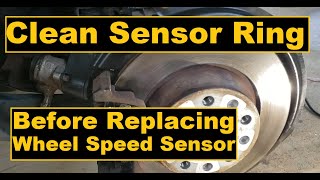
Typical fix: Thoroughly clean the debris from the magnetic ring using a non-magnetic tool like a soft nylon bristle brush and compressed air or mild soap and water. Do not use magnetic tools as they can damage the encoder. 🎬 Watch: How to properly clean the magnetic encoder ring. Reinstall the sensor and clear the codes.
Est. part cost: $0 - Damaged or Cracked Magnetic Encoder Ring on Hub Assembly 🟡 Medium Probability The nitrile rubber material of the encoder ring can become brittle with age and exposure, leading to cracks or chunks breaking off, causing a total loss of signal.
How to confirm: Visually inspect the encoder ring as you would for debris. Look for visible cracks, missing sections, or deformation of the ring. Spinning the wheel while observing the ring can help spot damage.
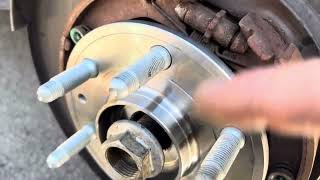
Typical fix: The encoder ring is integrated into the wheel bearing/hub assembly. The entire right rear hub assembly must be replaced. 🎬 Watch: Step-by-step guide to replacing the rear wheel bearing.
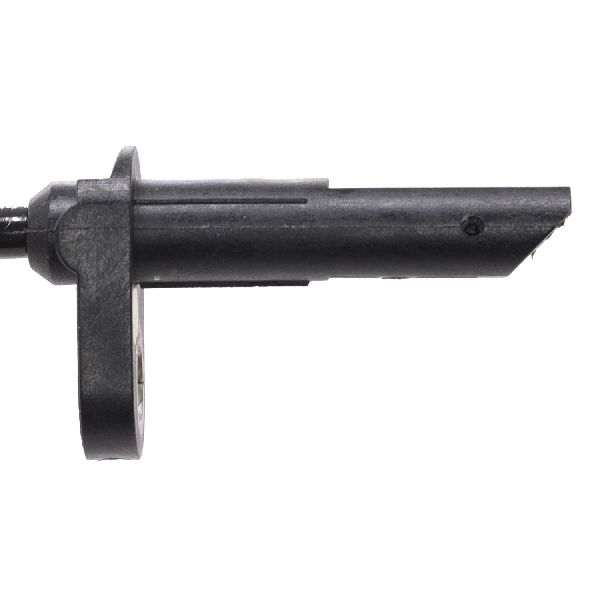
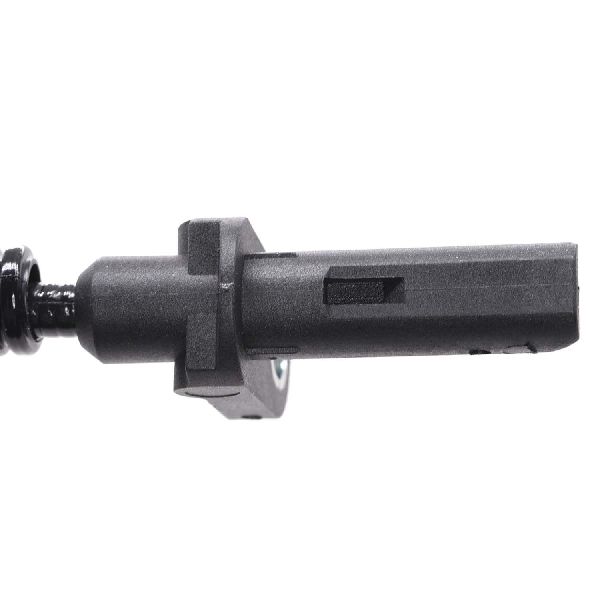
Est. part cost: $80-$250 - Failed Right Rear Wheel Speed Sensor 🟡 Medium Probability → Shop ABS Wheel Speed Sensor Sensors can fail electronically over time due to heat cycles and vibration. While common, it's less frequent than debris contamination or ring damage on this specific vehicle.
How to confirm: Use a scan tool to monitor live data from all four wheel speed sensors while driving. If the right rear sensor reads 0 mph or shows an erratic signal compared to the others, the sensor is likely bad. You can also swap the right and left rear sensors to see if the code changes to C0045 (Left Rear).
Typical fix: Replace the right rear wheel speed sensor. It is typically held in by a single 10mm bolt. 🎬 See this walkthrough for replacing the wheel speed sensor.
Est. part cost: $25-$75 - Damaged Wiring or Connector ⚪ Low Probability The wiring harness is exposed to the elements and suspension movement, which can lead to chafing, corrosion, or broken wires over time, sometimes inside the insulation.
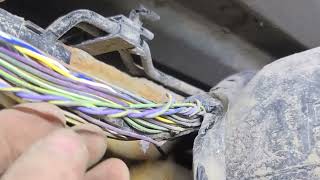
How to confirm: Visually inspect the wiring harness from the sensor to the main vehicle body for damage. Unplug the connector and check for corrosion on the pins. A multimeter can be used to check for continuity and for shorts to power or ground between the sensor connector and the EBCM connector.
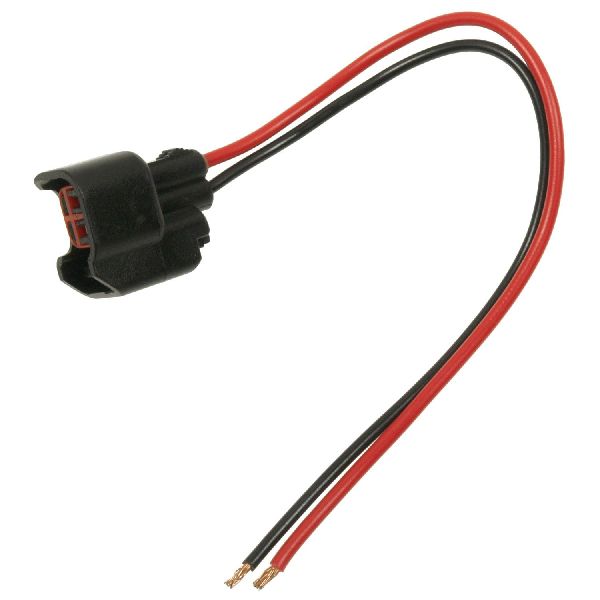
Typical fix: Repair the broken wire or replace the pigtail connector if it is corroded or damaged. A common pigtail is the Standard Motor Products S-824.
Est. part cost: $15-$40
Rare But Worth Checking
- Faulty Electronic Brake Control Module (EBCM): → Shop ABS Control Module This is rare. The EBCM should only be suspected after all other possibilities (sensor, hub, wiring) have been definitively ruled out. A failure here would typically set multiple codes, not just one for a single wheel. A professional diagnosis using a lab scope may be needed to confirm an internal EBCM fault.
Diagnosis Steps
- Connect a scan tool capable of reading ABS/chassis codes to confirm C0050 is active. Note any symptom bytes like 0F (erratic), 18 (low signal amplitude), or 5A (not plausible), which strongly suggest a mechanical issue with the encoder ring.
- Use the scan tool to view live data for all four wheel speed sensors. Drive the vehicle slowly in a straight line and watch the right rear (RR) speed reading. It will likely be zero, erratic, or different from the other three.
- Lift and safely support the rear of the vehicle. Visually inspect the wiring and connector going to the RR wheel speed sensor for obvious damage, chafing, or corrosion.
- Remove the single 10mm bolt holding the RR wheel speed sensor and carefully pull the sensor out of the hub.
- Inspect the sensor tip and the mounting hole for a build-up of dark, metallic, paste-like debris.
- Using a light and mirror (or borescope), inspect the brown magnetic encoder ring on the hub assembly. Check for debris, cracks, or missing chunks.
- If debris is present, clean it off with a soft nylon brush and mild soap/water or compressed air. Do not use magnetic tools. Reinstall the sensor, clear the codes, and test drive to see if the code returns.
- If the ring is clean and undamaged, test the sensor. You can swap it with the left rear sensor. If the code changes to C0045, the sensor is bad.
- If the code remains C0050 after swapping the sensor, and the encoder ring is confirmed to be good, the problem lies in the wiring harness or the EBCM. Test the harness for continuity and shorts from the sensor connector to the EBCM.
- If the wiring is good, the hub assembly (with its integrated encoder ring) is the most likely remaining cause, especially if the ring was cracked or damaged on inspection.
Parts You'll Likely Need
- Right Rear Wheel Hub and Bearing Assembly
(OEM #513277)— This is the most definitive fix, as it replaces both the bearing and the problematic magnetic encoder ring which is often cracked or contaminated. The encoder ring is not sold separately.
Trusted brands: ACDelco, Timken, MOOG, SKF
OEM price range: $150-$250
Aftermarket price range: $80-$180 - Right Rear ABS Wheel Speed Sensor
(OEM #22951116)— If the magnetic ring on the hub is clean and intact, the sensor itself may have failed electronically. It is a separate, bolt-on part on this vehicle.
Trusted brands: ACDelco, Delphi, Dorman, Standard Motor Products
OEM price range: $50-$90
Aftermarket price range: $25-$75
Related Codes That Often Appear With This One
- C0045 — This is the code for the Left Rear Wheel Speed Sensor. It may appear if a technician swaps sensors side-to-side for diagnostic purposes, or if both rear hubs have similar levels of debris/wear.
- C0035 — This is the code for the Left Front Wheel Speed Sensor. Seeing multiple wheel speed sensor codes may point towards a more systemic issue like a failing EBCM or widespread wiring problems.
- C0040 — This is the code for the Right Front Wheel Speed Sensor. As with C0035, multiple codes suggest a larger problem than a single sensor.
- U0415 — Invalid Data Received From EBCM. TSB PIC5428G notes this code may set in the Power Steering Control Module, causing a 'Service Steering' message. This is a normal default action when a wheel speed signal is lost and should clear after the C0050 fault is fixed.
Technical Service Bulletins (TSBs) & Recalls
- PIC5428G — EBCM Wheel Speed Sensor Diagnostic Aid for ABS Message — Advises that DTCs C0035-C0050 with symptom bytes 18, 5A, or 0F are often caused by ferrous debris on the magnetic encoder ring. Provides a diagnostic and cleaning procedure, noting that part replacement is often unnecessary. This TSB was later superseded by 17-NA-047. (2016-06-21)
- 17-NA-047 — EBCM Wheel Speed Sensor Diagnostic Aid for ABS Message — This bulletin replaces PIC5428G, updating the model list and reinforcing the diagnostic procedure. It emphasizes that cleaning the encoder ring is the first step and often the complete repair if the ring is not physically damaged. (2017-02-01)
Platform-Specific Known Issues
- Per TSB PIC5428G and its successor 17-NA-047, these vehicles are highly prone to debris accumulation on the wheel bearing's magnetic encoder, causing erratic signals and setting codes C0035 through C0050. The bulletin explicitly states that cleaning the ring is often the only repair needed and warns technicians not to use magnetic tools for the cleaning process.
Mechanic-Grade Diagnostic Values
- Active Wheel Speed Sensor Supply Voltage — expected: Briefly ~12V (battery voltage) at the sensor connector harness side upon key-on, then may drop to 0V if a code is set. Should be a steady ~12V when operational.. Failure: 0V at key-on pulse suggests a wiring or EBCM issue.
- Wheel Speed Sensor Signal (Oscilloscope) — expected: A clean digital square wave that increases in frequency as the wheel is spun.. Failure: A missing, noisy, or inconsistent square wave pattern points to a bad sensor or a contaminated/damaged encoder ring.
- Wheel Speed Sensor Circuit Voltage (Fault Condition) — expected: Normal operating voltage varies, but fault thresholds are defined.. Failure: Voltage on both signal and return wires > 4.25V indicates a short to voltage. Voltage on both wires < 0.75V indicates a short to ground.
Hidden / Shadow Codes Worth Checking
- C0050 0F: Signal Erratic. This is the most common symptom byte for this platform and strongly indicates that metallic debris on the magnetic encoder ring is causing an inconsistent signal. (see via Professional scan tool capable of reading GM-specific chassis codes and symptom data (e.g., GM GDS2/Tech2).)
- C0050 18: Signal Amplitude Less Than Minimum. The signal from the sensor is too weak. This can be caused by a large air gap between the sensor and ring, a severely damaged/cracked ring, or a failing sensor. (see via Professional scan tool capable of reading GM-specific chassis codes and symptom data.)
- C0050 5A: Signal Not Plausible. The signal from the right rear sensor is illogical when compared to the other three wheel speed sensors. For example, three wheels report 30 MPH while the right rear reports 5 MPH. (see via Professional scan tool capable of reading GM-specific chassis codes and symptom data.)
- C0050 06: Low Voltage/Open. The EBCM has detected an open circuit or abnormally low voltage on the sensor's power supply or signal line. This points more toward a wiring or connector issue than debris. (see via Professional scan tool capable of reading GM-specific chassis codes and symptom data.)
Scan Tool Commands That Help
- GM GDS2 / Tech2 or equivalent: Live Data > EBCM > Wheel Speed Sensors — This is the primary diagnostic step. Monitor all four wheel speeds while driving slowly in a straight line. A reading for the right rear that is zero, erratic, or does not match the other wheels confirms the fault location.
- Oscilloscope: Capture Key-On Voltage Pulse — To quickly verify the integrity of the wiring harness and EBCM. Connect to the sensor harness and cycle the key. A brief 12V pulse indicates the EBCM is attempting to power the sensor, ruling out the module and wiring as the initial cause. This is useful because the EBCM will cut power once the fault is active, which can mislead technicians.
Wiring & Ground Locations
- EBCM (Electronic Brake Control Module) — Typically located in the engine bay, attached to the hydraulic ABS block near the brake master cylinder.. This module receives the signal from the right rear wheel speed sensor. All wiring tests terminate here. The relevant pins for the RR WSS on a typical 38-pin connector are Pin 29 (Signal) and Pin 32 (Low Reference).
- Connector X411 — On similar GM platforms like the Equinox, this connector is located under the rear of the vehicle, to the left of the fuel tank.. TSB PIT5427B identifies this specific intermediate connector as a common source of corrosion that can cause a C0050 code. This is a critical, often-overlooked failure point if checks at the wheel and EBCM appear normal.
- EBCM Ground — The main chassis ground for the EBCM is typically located on the frame rail near the EBCM itself in the engine bay.. A poor ground can cause erratic behavior and multiple, difficult-to-diagnose codes. While less likely to cause a single wheel speed code, it should be checked for tightness and corrosion if other issues are present.
Real Owner Repair Stories
- YouTube channel 'DIY with Michael Borders' (Chevrolet Malibu (similar GM platform)) — ABS and StabiliTrak lights on, code C0050.
❌ Tried (didn't work) Initial diagnosis pointed to the right rear wheel area.
✅ What actually fixed it Visual inspection revealed a large chunk of the magnetic encoder ring on the wheel hub assembly had broken off and was missing. Replacing the entire right rear wheel hub assembly resolved the code. - Reddit user in r/Silverado (Chevrolet Silverado (similar GM system)) — ABS, StabiliTrak, and Traction Control warning lights all on simultaneously with code C0050.
✅ What actually fixed it The user asked if replacing just the one right rear wheel speed sensor could fix all three lights. Other users confirmed this is the expected behavior, and a follow-up implies the single part replacement was the correct fix. - CorvetteForum user 'grandsport2013' (Chevrolet Corvette (similar GM system)) — ABS and traction lights would only come on when hitting a big bump or slamming on the brakes, setting code C0050.
✅ What actually fixed it The user was advised that the symptoms strongly pointed to an intermittent connection issue. The symptom byte '18' (low signal amplitude) or '0F' (erratic signal) would confirm this. The resolution points toward inspecting the wiring harness for a loose connection or internal break that is aggravated by suspension movement.
"I Checked Everything" — The Actual Cause
- On similar GM platforms, technicians have reported that after confirming the sensor is good and the magnetic ring is clean and intact, the C0050 code was finally traced to corrosion inside the X411 body harness connector, located under the rear of the vehicle near the fuel tank. This spot is often missed as it is far from the wheel itself.
OEM Part Supersession History
PIC5428G→17-NA-047— Updated service procedure and expanded model list for the known issue of debris on the magnetic encoder ring.
Helpful Videos
We Have This Part in Stock


The information in this article is provided for general reference and educational purposes only. Vehicle specifications, procedures, and part compatibility can vary by production date, trim level, and region. Always consult your vehicle's factory service manual and verify part numbers before purchasing or performing repairs. Safety-critical components such as airbags, seat belts, and braking systems should be installed by a qualified professional.
- Chevrolet TRAVERSE:
- 🧭 Diagnostic Flowchart
- 🎬 Helpful Videos
- 🛍️ Shop This Part
- What's Unique About the 2017-2017 Chevrolet TRAVERSE
- Symptoms You May Notice
- Most Likely Causes
- Rare But Worth Checking
- Diagnosis Steps
- Parts You'll Likely Need
- Related Codes That Often Appear With This One
- Technical Service Bulletins (TSBs) & Recalls
- Platform-Specific Known Issues
- Mechanic-Grade Diagnostic Values
- Hidden / Shadow Codes Worth Checking
- Scan Tool Commands That Help
- Wiring & Ground Locations
- Real Owner Repair Stories
- "I Checked Everything" — The Actual Cause
- OEM Part Supersession History
- 🎟️ Get 5% Off