

C0050 on 2011-2014 Chrysler 200: Right Rear Wheel Speed Sensor Fault Guide
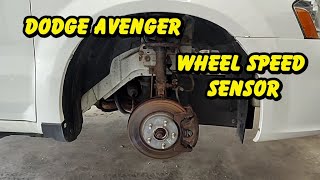
On a 2011-2014 Chrysler 200, code C0050 almost always means the right rear wheel speed sensor has failed or its wiring is damaged. A replacement sensor is inexpensive, but check the wiring near the wheel for breaks first. This is a common fault on this platform and its Dodge Avenger sibling.
- Code C0050 on a 2011-2014 Chrysler 200 means there's a fault in the right rear wheel speed sensor circuit, which will disable your ABS and stability control.
- The most likely cause is a failed wheel speed sensor, followed by damaged wiring near the sensor.
- Before buying parts, use a scan tool to check live data and visually inspect the sensor and wiring for obvious damage.
- Driving is possible, but your vehicle's braking safety systems are compromised. Repair should be done promptly.
- Replacing the sensor is a relatively simple DIY job for those with basic tools, but diagnosing a wiring issue can be more complex and the sensor may be seized in place by rust.
What's Unique About the 2011-2014 Chrysler 200
The first-generation Chrysler 200 (2011-2014) is mechanically similar to the Dodge Avenger and shares its ABS components. For this platform, the C0050 code is a straightforward fault. The most common failures are the sensor itself, which is exposed to the elements, or the wiring harness near the wheel, which can be damaged by road debris or suspension movement. Unlike some vehicles where the magnetic tone ring in the hub is a common failure point, on the 200, the sensor and its wiring are the primary suspects. The sensor can also become seized in the steering knuckle due to rust, making removal difficult without breaking it.
Symptoms You May Notice
- ABS warning light is on
- Traction Control or Electronic Stability Control (ESC) light is on
- Cruise control may be disabled
- ABS system does not activate during hard braking (wheels may lock up)
- Traction control does not activate on slippery surfaces (wheels may spin)
- Brake warning light may also be illuminated
- Replacing the wheel hub/bearing assembly when only the sensor or wiring was faulty.
- Replacing the ABS control module before thoroughly testing the sensor and circuit.
Most Likely Causes
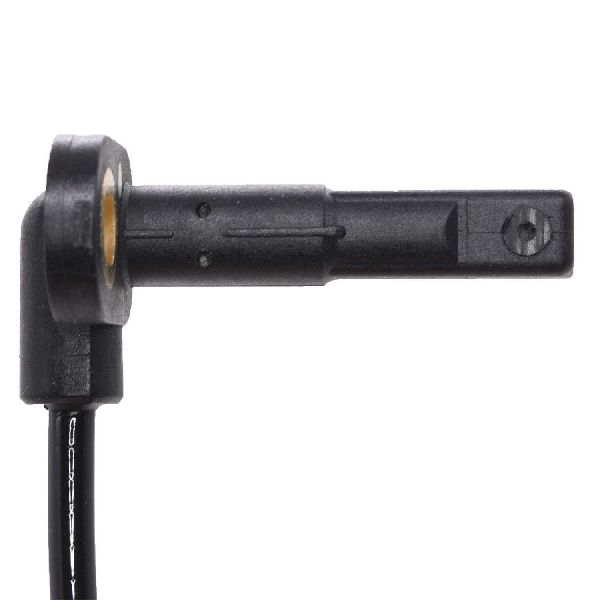
- Failed Right Rear Wheel Speed Sensor 🔴 High Probability → Shop ABS Wheel Speed Sensor The sensor is located at the wheel hub, where it is exposed to water, road salt, dirt, and vibrations, which can cause it to fail over time. It is the most common cause for an ABS light on this platform.
How to confirm: Use a scan tool with live data capability to monitor all four wheel speeds while driving. If the right rear sensor reads 0 MPH or has an erratic signal while the others read correctly, the sensor is likely bad. You can also test the sensor's internal resistance with a multimeter and compare it to the manufacturer's specification. An open circuit (infinite resistance) or short circuit (zero resistance) indicates a failed sensor.
Typical fix: Replace the right rear wheel speed sensor. The sensor is typically held in by a single bolt. Clean the mounting surface before installing the new sensor. Be prepared for the old sensor to be seized in the hub and potentially break upon removal.
Est. part cost: $15-$60 - Damaged Wiring or Connector 🟡 Medium Probability The wiring harness leading to the sensor can be damaged by road debris, improper routing after previous repairs, or repeated flexing from suspension movement. The wires can fray or break, often within a few inches of the connector.
How to confirm: Visually inspect the wiring harness from the sensor up into the wheel well for any signs of chafing, breaks, or corrosion. Pay close attention to the connector itself for bent or corroded pins. A multimeter can be used to check for continuity between the sensor connector and the ABS module connector.
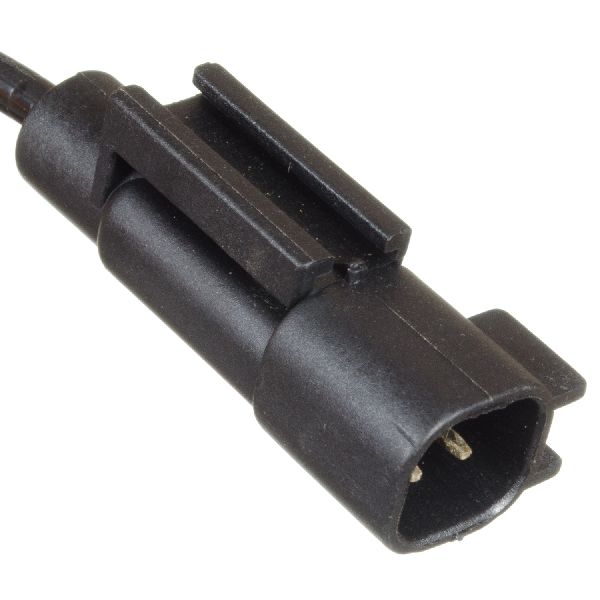
Typical fix: Repair the damaged section of wire using solder and heat-shrink tubing. If the connector is damaged, replace the pigtail connector. A common pigtail connector part is Standard Motor Products S-824.
Est. part cost: $15-$40 for a pigtail connector - Damaged or Dirty Tone Ring ⚪ Low Probability The tone ring (or magnetic encoder) is part of the wheel hub bearing assembly. While durable, it can be damaged during other repairs or become obstructed by rust or debris.
How to confirm: Remove the wheel speed sensor and visually inspect the tone ring through the sensor hole while rotating the hub. Look for missing teeth, cracks, or heavy rust/debris buildup.
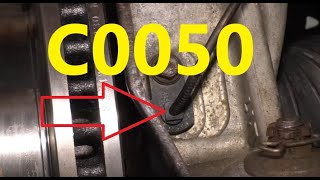
Typical fix: If the tone ring is dirty, cleaning it may resolve the issue. If it is damaged, the entire wheel hub bearing assembly must be replaced 🎬 Watch: How to replace the hub bearing and ABS sensor. as the ring is integrated.
Est. part cost: $80-$200 for a wheel hub assembly
Rare But Worth Checking
- Faulty ABS Control Module: → Shop ABS Control Module This is very rare. The ABS module will typically set multiple wheel speed sensor codes or other internal fault codes if it has failed. Do not replace the module unless all other possibilities have been exhaustively ruled out. A replacement module must be programmed to the vehicle's VIN.
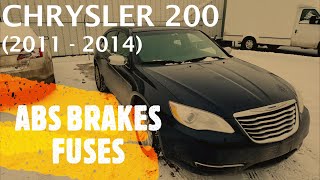
- Blown ABS Fuse: Uncommon, but easy to check. In the under-hood fuse box (TIPM), check fuse #34 (30A) and fuse #35 (40A), which provide power to the ABS module. 🎬 See this quick video to find your ABS fuse location. If these are blown, it usually indicates a more significant short circuit in the system.
Diagnosis Steps
- Connect a professional-grade scan tool capable of reading ABS codes and live data.
- Confirm C0050 is the active code. Note any other codes present, especially sub-codes like C0050-00 (general circuit malfunction) or C0050-5A (signal plausibility failure) which can help pinpoint the issue.
- View the live data stream for all four wheel speed sensors.
- Drive the vehicle slowly (above 5 mph) and observe the speed readings. Confirm that the Right Rear (RR) sensor reads 0 MPH or shows an erratic/illogical value compared to the other three.
- If the RR sensor is not reading, raise the rear of the vehicle and secure it on jack stands.
- Visually inspect the wheel speed sensor and its wiring harness for any obvious damage, corrosion, or loose connections. Check for chafing where the harness passes through the suspension components.
- Disconnect the sensor. Inspect the connector pins for corrosion or damage.
- If the wiring appears intact, use a multimeter to test the sensor's resistance. Compare the reading to the service manual specification. An open circuit (infinite resistance) or short circuit (zero resistance) indicates a failed sensor.
- If the sensor tests good, check for voltage and ground at the harness connector with the ignition on. Lack of power or ground points to a wiring issue further up the harness or a problem with the ABS module.
- If the sensor and wiring are confirmed to be good, remove the sensor and inspect the tone ring on the wheel hub for damage or debris through the mounting hole.
- If all components test good, the fault may be intermittent or, in very rare cases, within the ABS control module itself.
Parts You'll Likely Need
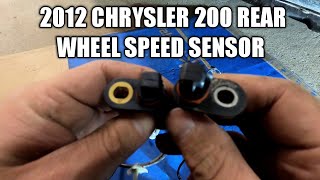
- Right Rear Wheel Speed Sensor
(OEM #56029339AD (supersedes 56029339AB, 56029339AC))— This is the most common failure point for code C0050, as the sensor is an electronic component exposed to harsh conditions at the wheel.
Trusted brands: Mopar, Standard Motor Products (SMP), Delphi, Duralast, SKP
OEM price range: $40-$70
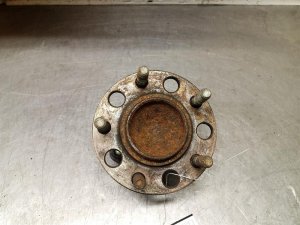
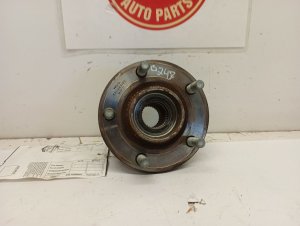
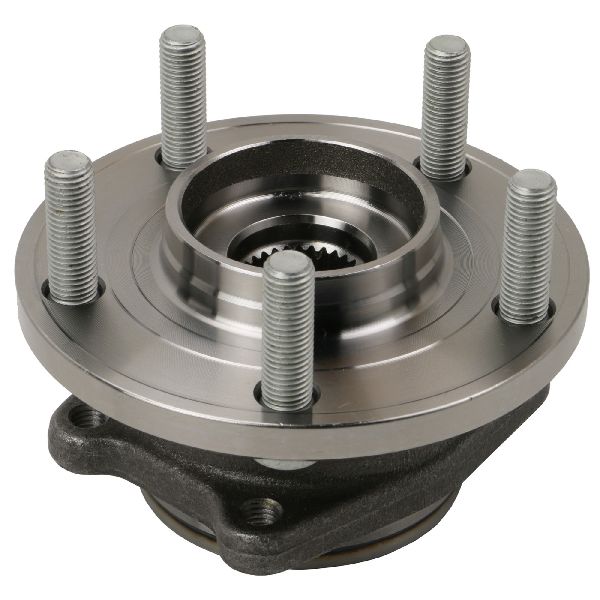
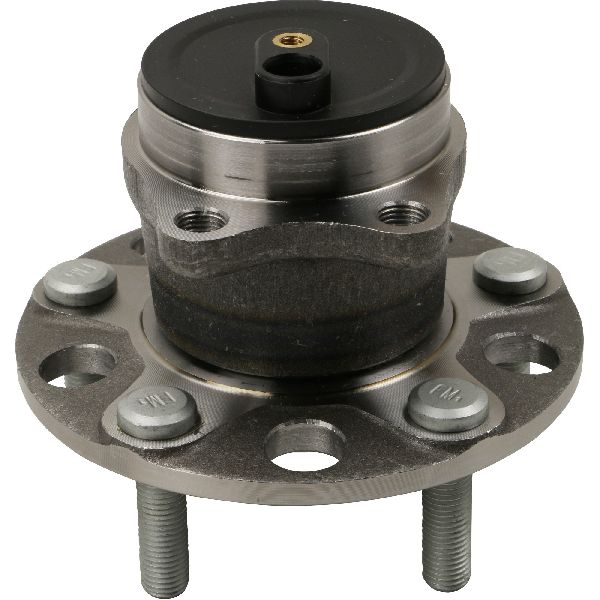
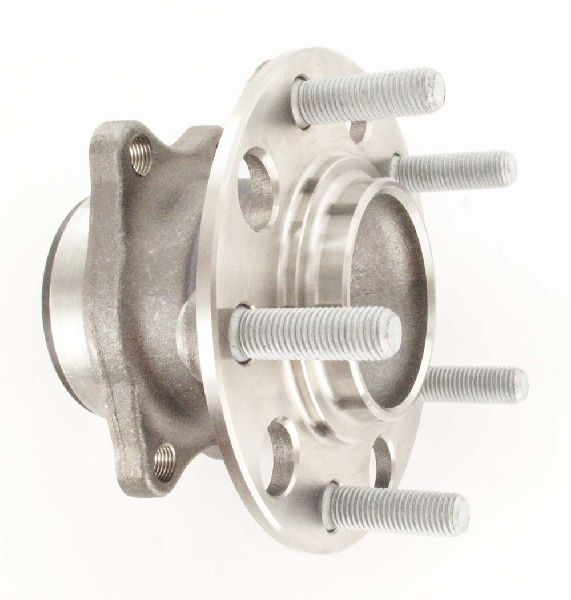
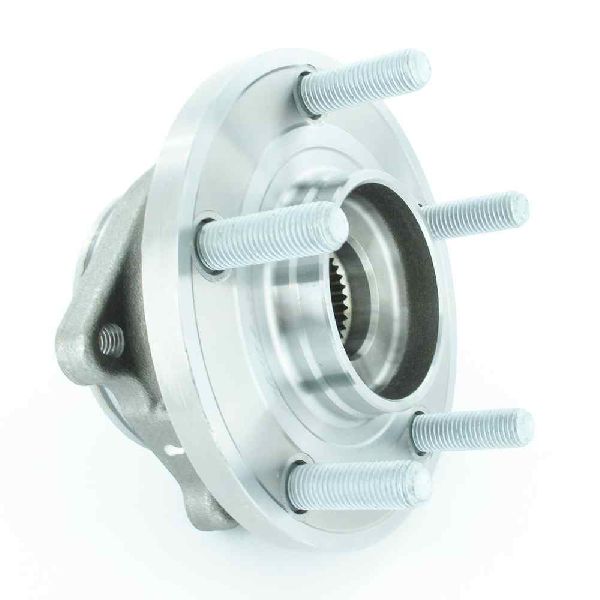
Aftermarket price range: $15-$50 - Right Rear Wheel Hub Bearing Assembly — This part is only needed if the magnetic tone ring integrated into the hub is found to be damaged, or if the bearing itself has failed, causing excessive play that damages the sensor.
Trusted brands: Mopar, Timken, SKF, MOOG
OEM price range: $150-$250
Aftermarket price range: $80-$200 - ABS Wheel Speed Sensor Connector Pigtail
(OEM #Standard Motor Products S-824 or Wells 1P1344)— Needed if the connector itself is corroded or damaged, or if the wiring is broken right at the connector where a simple splice is not possible.
Trusted brands: Standard Motor Products, ACDelco, Wells
OEM price range: $25-$40
Aftermarket price range: $15-$30
Platform-Specific Known Issues
- source — An owner of a 2011 Chrysler 200 with 130,000 miles reported the simultaneous illumination of the ABS and traction control lights. This is a classic symptom of a wheel speed sensor failure on this model.
- source — A YouTube video by 'globalmissionforchildren.org/diy' demonstrates the replacement of all four ABS sensors on a 2011 Chrysler 200. The video shows the location of the bolts and connectors for both front and rear sensors, noting that the rear sensor wire is routed behind the drum brake assembly and held by push-in clips.
- source — While not the rear sensor, it's notable that on this platform, replacing the *front driver's side* sensor is significantly more difficult than the others. It requires moving the ECU and fuse box to access the connector, which is buried deep in the engine bay. This highlights the variability in repair difficulty even on the same car.
Diagnostic Flowchart
Other Known Issues on This Vehicle
Issues unrelated to this code that are worth knowing about as an owner of this generation:
- Totally Integrated Power Module (TIPM) Failure 🔴 High — Common across many 2007-2014 Chrysler/Dodge/Jeep products. Can cause a wide range of random electrical issues.
- 62TE Automatic Transmission Problems 🟠 Medium — Affects models with the 6-speed automatic. Issues can appear at various mileages.
- Engine Stalling / Oil Pressure Loss (2.4L) 🔴 High — Primarily affects 2013 models with the 2.4L engine, but can occur in others. (Ref: NHTSA Recall 13V043000)
- Clogged Heater Core 🟡 Low — A common complaint leading to a lack of heat from the vents.
- Active Head Restraint (AHR) Random Deployment 🟠 Medium — Reported in some 2011-2014 models. (Ref: NHTSA Recall 17V640000 (related to controller))
Documented NHTSA Reports
While C0050 is primarily associated with the wheel speed sensor on the Chrysler 200, records from other manufacturers show how this code can manifest in different systems. For instance, NHTSA ODI #10763888 describes a case where C0050 was diagnosed as a faulty power steering control module (PSCM) requiring replacement of the steering column. Additionally, in some heavy-duty applications, an owner reported in NHTSA ODI #11228687 that C0050 appeared alongside several other communication and sensor codes (C0035, C0040, U0077) before the vehicle was taken for diagnosis. More recently, reports involving other Stellantis products like the Jeep Grand Cherokee L (NHTSA ODI #11693418) noted C0050-00 appearing when rear brake pads, rotors, and adapter plates required replacement. Another technician noted in NHTSA ODI #11649367 that the code could be set if extra brake fluid is required to return caliper piston contact to the brake pad after service.
Real Owner Stories
Aggregated from forums and TSBs cited above. Mileages and costs reflect what owners reported in those sources.
2011 Chrysler 200 — 130000 miles
Symptoms: Simultaneous illumination of the ABS and traction control lights.
What fixed it: Replacement of the wheel speed sensor.
Source hint: Reddit r/MechanicAdvice thread titled '2011 chrysler 200 abs light and traction control'
Related OBD-II Codes
Frequently Asked Questions
Is there a recall for my 2013 Chrysler 200 regarding engine stalling?
My ABS and Traction Control lights are both on; is this common for the 2011-2014 Chrysler 200?
I'm replacing the rear sensor myself; are there any specific parts I might need if the wiring is damaged?
Why is my cruise control not working along with the ABS light?
Can I just clean the sensor, or do I have to replace the whole hub?
Are there other Chrysler vehicles that have this same ABS sensor issue?
Helpful Videos
Used OEM Parts in Stock
New Aftermarket Parts Available

The information in this article is provided for general reference and educational purposes only. Vehicle specifications, procedures, and part compatibility can vary by production date, trim level, and region. Always consult your vehicle's factory service manual and verify part numbers before purchasing or performing repairs. Safety-critical components such as airbags, seat belts, and braking systems should be installed by a qualified professional.
- Chrysler 200:
- 🧭 Diagnostic Flowchart
- 🎬 Helpful Videos
- 🛍️ Shop This Part
- What's Unique About the 2011-2014 Chrysler 200
- Symptoms You May Notice
- Most Likely Causes
- Rare But Worth Checking
- Diagnosis Steps
- Parts You'll Likely Need
- Platform-Specific Known Issues
- Other Known Issues on This Vehicle
- Documented NHTSA Reports
- Real Owner Stories
- 2011 Chrysler 200 — 130000 miles
- Related OBD-II Codes
- Frequently Asked Questions
- 🎟️ Get 5% Off