

C0050 on 2008-2016 Chrysler Town & Country: Right Rear Wheel Speed Sensor Fixes
Code C0050 on a 2008-2016 Town & Country means there's a fault in the right rear wheel speed sensor circuit. The most common fix is replacing the sensor itself or repairing its damaged wiring harness. The sensor is known to break during removal. Expect to pay $25-$70 for an aftermarket sensor, with a DIY difficulty of 3/5.
- C0050 means the ABS computer has lost the signal from the right rear wheel, which disables your ABS and stability control.
- The most likely cause is a bad wheel speed sensor, followed by damaged wiring near the sensor.
- Before buying parts, use a scan tool to confirm the right rear sensor is the one failing and visually inspect its wiring for breaks.
- The sensor can be difficult to remove due to rust; be prepared for potential extraction challenges.
- If the sensor and wiring are good, inspect the magnetic ring on the hub for debris or damage before considering more expensive repairs.
What's Unique About the 2008-2016 Chrysler Town & Country
For the 2008-2016 Chrysler Town & Country and its sibling, the Dodge Grand Caravan, code C0050 very commonly points to one of two specific issues: failure of the wheel speed sensor itself, or damage to the wiring harness within a few inches of the sensor connector. The sensor is also notoriously prone to seizing in the wheel hub due to rust, often breaking during removal and requiring significant effort to extract the remaining piece. This often requires carefully drilling or prying out the broken plastic piece without damaging the hub. Unlike some other vehicles where the magnetic tone ring is a frequent point of failure, on these minivans, the sensor and its wiring are the primary suspects.
Symptoms You May Notice
- ABS warning light is on
- Traction Control or Electronic Stability Control (ESC) warning light is on
- Brake warning light may be on
- Cruise control is disabled
- ABS system does not activate during hard braking
- Replacing the wheel hub/bearing assembly before thoroughly checking the less expensive sensor and wiring harness.
- Replacing the ABS control module when the fault is a simple wiring break.
- Assuming the new sensor is bad when the real problem is a broken wire or debris on the tone ring.
Most Likely Causes
- Failed Right Rear Wheel Speed Sensor 🔴 High Probability → Shop ABS Wheel Speed Sensor The sensor is exposed to road debris, water, and salt, leading to internal failure or corrosion. It is notoriously prone to seizing in the hub from rust, often breaking during removal, leaving the plastic body stuck in the knuckle.
How to confirm: Use an ABS-capable scan tool to watch live data; the right rear sensor will read 0 MPH or have an erratic, jumping signal while the other wheels show a steady speed. You can also test the sensor's internal resistance with a multimeter, comparing it to the known-good left rear sensor. A good sensor typically has a resistance between 800 and 2,350 ohms.
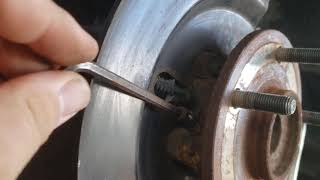
Typical fix: Replace the right rear wheel speed sensor. The old sensor may need to be soaked in penetrating oil, then carefully twisted and pulled out. If it breaks, the remaining plastic piece must be drilled or carefully chiseled out of the hub.
Est. part cost: $25-$70 - Damaged Wiring Harness or Connector 🟡 Medium Probability The wiring leading to the sensor is subject to constant movement from the suspension and exposure to the elements. Wires can fatigue and break internally or corrode, typically within a few inches of the sensor connector.
How to confirm: Visually inspect the wiring harness leading to the right rear sensor for any chafing, breaks, or green corrosion, paying close attention to the area where the harness flexes. Wiggle the harness near the connector while monitoring live data on a scan tool to see if the signal cuts in and out. Check for continuity with a multimeter.
Typical fix: Repair the broken wire(s) using solder and heat-shrink tubing or replace the connector with a new pigtail harness. Ensure the repair is sealed against moisture.
Est. part cost: $15-$30 - Damaged or Debris-Covered Tone Ring ⚪ Low Probability The magnetic tone ring is integrated into the wheel hub and bearing assembly. While generally durable, it can accumulate metallic debris (rust scale) from the brakes and hub, which disrupts the sensor's reading. Cracks are less common but possible.
How to confirm: After removing the wheel speed sensor, use a flashlight and a small mirror to inspect the tone ring inside the hub. Look for cracks, missing sections, or a build-up of rust and metallic shavings.
Typical fix: If dirty, clean the tone ring with a brush and brake cleaner. If the ring is cracked or damaged, the entire wheel hub and bearing assembly must be replaced.
Est. part cost: $100-$250
Rare But Worth Checking
- Faulty ABS Control Module: → Shop ABS Control Module This is an unlikely cause for a single wheel speed sensor code. It should only be considered after the sensor, wiring, and hub assembly have all been confirmed to be in good working order. A faulty module typically sets multiple, seemingly unrelated codes.
Diagnosis Steps
- Connect an ABS-capable scan tool to the vehicle. Confirm that C0050 is present and check for any manufacturer-specific sub-codes or symptom bytes.
- Use the scan tool's live data function to monitor the speeds of all four wheels while driving slowly (above 5 mph) in a straight line.
- Confirm that the right rear wheel speed sensor reads 0 MPH or shows a signal that is erratic or significantly different from the other three sensors.
- Raise and safely support the rear of the vehicle. Remove the right rear wheel.
- Visually inspect the wheel speed sensor and its wiring harness for obvious signs of damage, such as cracks, chafing, or corrosion at the connector. Pay special attention to the first 4-6 inches of wire from the sensor.
- Disconnect the sensor and inspect the connector terminals for corrosion or damage.
- Remove the sensor (typically held by one 5mm Allen bolt). Be prepared for it to be seized with rust. Apply penetrating oil and twist gently. If it breaks, the plastic remnant must be carefully drilled or chiseled out.
- Inspect the magnetic encoder ring on the wheel hub assembly. Clean off any metallic debris or rust with a brush and brake cleaner. Spin the hub and check for cracks on the ring.
- If the wiring and tone ring appear to be in good condition, the sensor itself is the most likely culprit. Replace the sensor. It is good practice to apply a small amount of dielectric grease to the new sensor's o-ring to ease installation and prevent future seizing.
- If a new sensor does not resolve the issue, perform a continuity and voltage drop test on the wiring harness between the sensor connector and the ABS module to find any hidden breaks or high resistance.
- If the wiring and sensor are confirmed good, the wheel hub/bearing assembly (with its integrated tone ring) is the next most likely cause.
Parts You'll Likely Need
- Rear Wheel Speed Sensor
(OEM #68003281AC (superseded by 68003281AD, 68003281AF))— This is the most common component to fail, triggering the C0050 code. The left and right rear sensors are interchangeable.
Trusted brands: Mopar, Dorman, SKP, Holstein, Standard Motor Products (ALS2295)
OEM price range: $80-$120
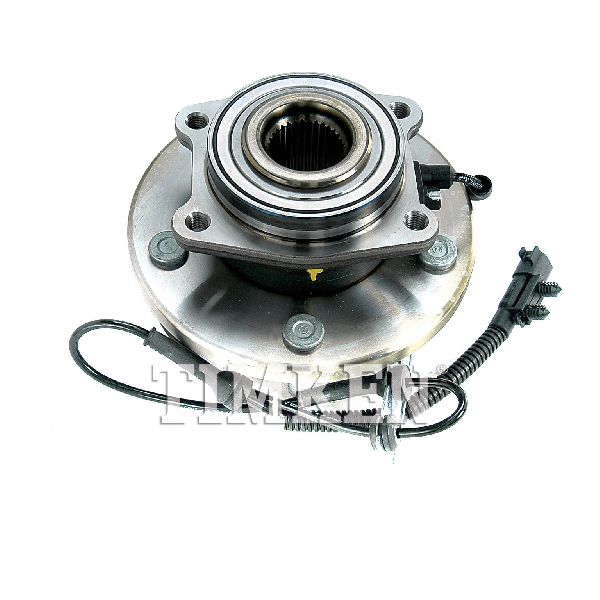
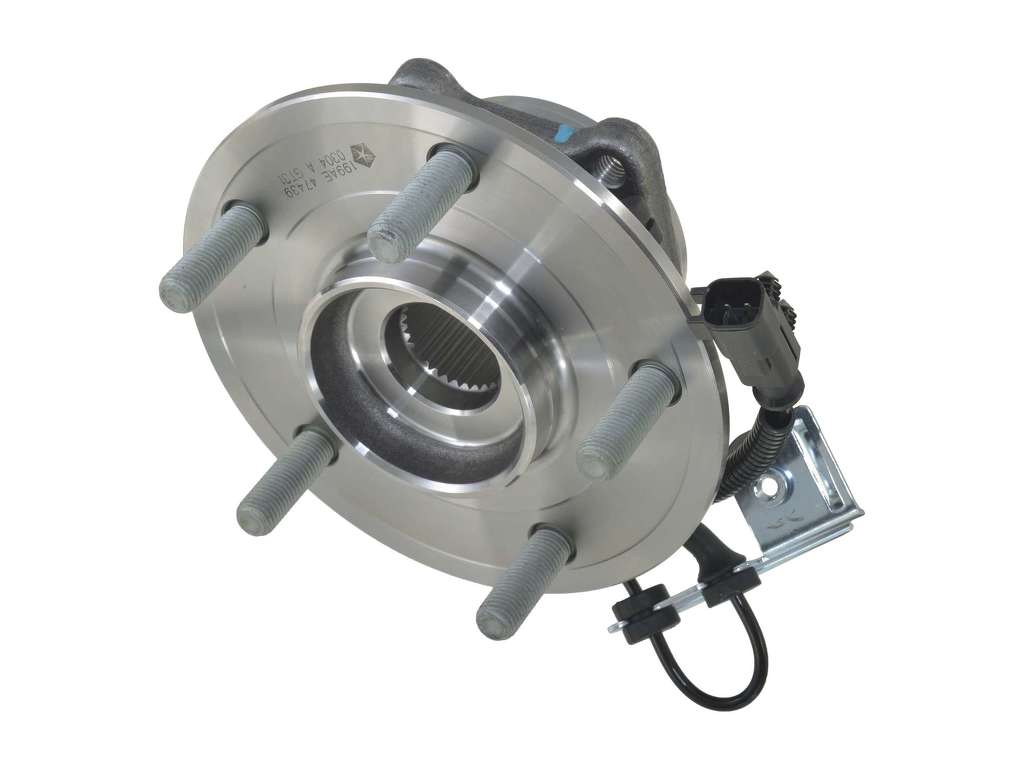
Aftermarket price range: $25-$70 - Rear Wheel Hub and Bearing Assembly — Required if the integrated magnetic tone ring is found to be cracked or damaged, as the ring is not serviced separately.
Trusted brands: Timken, MOOG, SKF, DuraGo
OEM price range: $200-$300
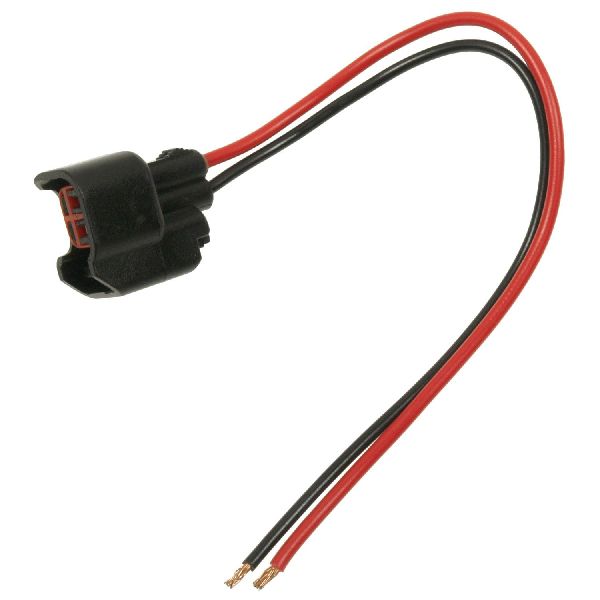
Aftermarket price range: $100-$180 - ABS Sensor Connector Pigtail — Needed if the connector itself is damaged or if the wiring is broken too close to the connector to be repaired effectively.
Trusted brands: Dorman, Mopar
OEM price range: $25-$40
Aftermarket price range: $15-$30
Related Codes That Often Appear With This One
- U0415 — This code for 'Invalid Data Received From ABS Control Module' can be set as a secondary fault because the erratic signal from the C0050 fault is considered invalid by other modules that rely on wheel speed data.
- C0045 — This is the code for the Left Rear Wheel Speed Sensor. If both C0045 and C0050 appear together, it could point towards a shared wiring issue, a problem with the ABS module itself, or a systemic issue like water intrusion affecting both sides.
Technical Service Bulletins (TSBs) & Recalls
- While no specific TSB for C0050 on this platform was found, Chrysler has issued TSBs for other models like 05-003-21 for the Jeep Compass, which addresses wheel speed sensor failure due to water intrusion, a similar environmental cause.
Platform-Specific Known Issues
- A common owner experience shared on forums is the frustration of the sensor breaking off in the hub. One user on a forum described having to use a drill and a small screwdriver to slowly break up the remaining plastic piece by piece to get it out without damaging the hub bore.
- Another frequent story involves finding a broken wire inside the insulation, just a few inches from the connector. The wire looks fine externally, but a continuity test or wiggling the wire reveals the internal break.
Mechanic-Grade Diagnostic Values
- Wheel Speed Sensor Resistance — expected: 800 - 2,350 Ohms. Failure: A reading of infinity (open circuit), zero (short circuit), or a value significantly outside the expected range indicates a failed sensor.
- Wheel Speed Sensor AC Voltage (Passive Sensor) — expected: Greater than 100-200 millivolts (0.1-0.2 VAC) while spinning the wheel at approximately one revolution per second.. Failure: No voltage or very low voltage while the wheel is spinning points to a failed sensor or a problem with the tone ring.
- ABS Module Ground Voltage Drop — expected: < 0.1 Volts. Failure: A reading higher than 0.1V between the battery negative terminal and the ABS ground point indicates high resistance in the ground circuit, which can cause erratic module behavior.
Hidden / Shadow Codes Worth Checking
- C0050-5A: Signal Plausibility Failure. The sensor's signal is present but illogical compared to other wheel speeds, often pointing to a damaged tone ring or an intermittent wiring fault. (see via Professional scan tools like Mopar wiTECH or high-end aftermarket scanners that can read manufacturer-specific symptom bytes.)
- C0050-18: Low Signal Amplitude. The signal from the sensor is too weak, commonly caused by an excessive air gap, heavy debris on the tone ring, or a failing sensor. (see via Professional scan tools like Mopar wiTECH or high-end aftermarket scanners.)
- C0050-00 or C0050-06: General Circuit Malfunction / Low Voltage / Open Circuit. This indicates a likely open wire, short to ground, or high resistance in the sensor's electrical circuit. (see via Professional scan tools with manufacturer-specific code reading capabilities.)
Wiring & Ground Locations
- ABS Module Connector — The ABS module is part of the hydraulic control unit, typically located in the engine bay on the driver's side, below and behind the master cylinder.. This is the termination point for the wheel speed sensor harness. Testing for power, ground, and signal continuity at this connector can confirm if the wiring harness is intact from the wheel to the module.
- G100 Series Grounds — Located in the engine bay, near the battery tray.. These are main grounds for several modules in the engine bay. A corroded G100 ground can cause various electrical issues, including random ABS faults.
- Right Rear WSS Circuit — The two wires run from the right rear wheel hub, along the rear suspension and chassis, to the main harness which leads to the ABS module in the engine bay.. This harness is the direct signal path. The most common failure points are within the first foot of the sensor connector due to suspension flex and exposure to road debris.
Documented NHTSA Reports
- An owner reported in NHTSA ODI #11649367 that the vehicle disabled the ABS and supporting systems, setting codes C0050 and C2227; the technician noted that extra brake fluid was required to return caliper piston contact to the brake pad after service.
- In NHTSA ODI #11693418, a diagnostic showed code C0050-00 in a scenario where the rotors, rear brake pads, and adapter plate required replacement.
- A report in NHTSA ODI #11228687 describes a vehicle where C0050 appeared alongside several other codes including C0035, C0040, and U0415, indicating a broader system failure.
- While involving a different manufacturer, NHTSA ODI #10763888 notes that code C0050 was used to identify a fault in a power steering control module (PSCM), demonstrating that this code can occasionally have manufacturer-specific interpretations outside of the ABS system.
Real Owner Repair Stories
- CorvetteForum User (2009 Chevrolet Corvette Z06 (similar diagnostic principle)) — ABS, Active Handling, and Traction Control service messages on the dash.
❌ Tried (didn't work) Swapping the right rear sensor to the left rear input on the module to test the sensor (sensor was OK)., Checking terminals at the connector.
✅ What actually fixed it The final fix was not posted in the initial query, but the diagnostic path pointed directly to a break in the wiring harness between the wheel sensor connector and the main engine harness connector (C184), which is a common failure pattern for this code across many vehicle platforms.
OEM Part Supersession History
68003281AC→68003281AD, then 68003281AF— Standard part revisions by the manufacturer for improvements or supplier changes.
Heads up: All versions (AC, AD, AF) are reported to be interchangeable for the 2008-2016 model years. The left and right rear sensors use the same part number.
Model Year Variations Within This Range
- 2008-2016: No significant variations in the cause or repair of code C0050 have been documented within this generation. The ABS system, sensors, and common failure points remained consistent.
Diagnostic Flowchart
Other Known Issues on This Vehicle
Issues unrelated to this code that are worth knowing about as an owner of this generation:
- Totally Integrated Power Module (TIPM) Failure 🔴 High — Common across 2007-2014 Chrysler vehicles. Can cause a wide range of electrical issues, including no-start conditions, fuel pump failure, or random operation of accessories. (Ref: Multiple recalls and lawsuits were issued, but they did not cover all affected vehicles. Example recall for a related issue is V62 for 2011-2013 Durango/Grand Cherokee.)
- 3.6L Pentastar Left Cylinder Head Failure 🔴 High — Primarily affects 2011-2013 models. Causes misfires (P0302, P0304, P0306) and a ticking noise, requiring cylinder head replacement. (Ref: Chrysler issued TSB 09-002-14 REV. B and extended the warranty to 10 years/150,000 miles for this specific issue (X56 warranty extension).)
- 62TE Automatic Transmission Shudder/Harsh Shifting 🟠 Medium — Reported by many owners, sometimes feeling like driving over rumble strips. Can be caused by fluid breakdown or internal valve body/solenoid issues. (Ref: Software updates were released, but mechanical repair is often necessary. More frequent fluid changes than the 120k mile recommendation are advised by some experts.)
- Oil Filter Housing/Cooler Assembly Leaks 🟠 Medium — Common on the 3.6L Pentastar engine. The plastic housing can crack, causing oil to leak down the back of the engine and onto the transmission. (Ref: An updated part was released by Chrysler to address the issue.)
- Power Sliding Door Wiring Harness Failure 🟡 Low — Very common. The wires in the track that power the sliding doors fatigue and break over time, causing the doors to become inoperative or act erratically. (Ref: Several TSBs were released. The fix is typically to replace the wiring harness.)
- Rear Air Conditioning (EVAP) Line Leaks 🟡 Low — The aluminum lines running to the rear A/C evaporator are prone to corrosion and leaking, causing the A/C system to lose refrigerant and stop blowing cold.
Used vs. New Parts: Buying Guide for This Vehicle
When a used part is the smart pick: A used wheel speed sensor is generally not recommended due to the low cost of new aftermarket parts and the high likelihood of failure from age and exposure. A used wheel hub assembly from a low-mileage, non-corroded donor vehicle can be a cost-effective option if the tone ring is the confirmed point of failure. A used ABS module is a viable option but requires professional programming.
Donor-vehicle mileage cap: roughly under 80000 miles for the part to have meaningful remaining life.
What to inspect on the donor part:
- For a hub assembly, ensure the donor vehicle is from a dry, salt-free climate to minimize rust.
- Inspect the tone ring on the used hub for any cracks, chips, or heavy rust scale.
- Verify the part number on a used ABS module matches the original exactly.
- Ask for the VIN of the donor vehicle to help with potential programming needs for the ABS module.
OEM-only on this vehicle (don't cheap out):
- ABS Control Module (if buying new). While used is an option, if buying new, OEM is the safest bet for guaranteed compatibility and programming support.
Aftermarket brands forum-validated for this vehicle:
- Sensors: Delphi, NGK/NTK, Standard Motor Products (SMP), Holstein.
- Hub Assemblies: Timken, MOOG, SKF.
Brands owners have reported issues with on this vehicle:
- Unnamed or 'white-box' sensors from online marketplaces can have high failure rates and poor fitment.
Real Owner Stories
Aggregated from forums and TSBs cited above. Mileages and costs reflect what owners reported in those sources.
Chrysler Town & Country (RT Platform)
Symptoms: The sensor broke off during an attempted removal, leaving the plastic body seized inside the hub assembly.
What fixed it: Used a drill and a small screwdriver to slowly break up the remaining plastic piece by piece to extract it from the hub bore.
Source hint: vehicle_specific_issues forum report
Chrysler Town & Country (RT Platform)
Symptoms: The ABS light was on, but the wiring looked fine externally upon visual inspection.
What fixed it: Performed a continuity test and wiggled the harness, which revealed a broken wire hidden inside the insulation just a few inches from the connector.
Source hint: vehicle_specific_issues owner story
Related OBD-II Codes
Frequently Asked Questions
Does TSB 05-003-21 apply to my 2008-2016 Chrysler Town & Country?
I'm seeing misfire codes P0302, P0304, or P0306 on my 2012 Town & Country; is this related to the ABS sensor?
My ABS sensor is stuck in the hub of my Dodge Grand Caravan; how should I remove it?
Can a faulty TIPM cause my ABS and Traction Control lights to come on?
Is there a specific part number revision I should look for when replacing the sensor?
What is the correct resistance range for a new right rear speed sensor on this vehicle?
Helpful Videos

Used OEM Parts in Stock
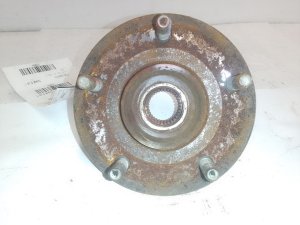
New Aftermarket Parts Available


The information in this article is provided for general reference and educational purposes only. Vehicle specifications, procedures, and part compatibility can vary by production date, trim level, and region. Always consult your vehicle's factory service manual and verify part numbers before purchasing or performing repairs. Safety-critical components such as airbags, seat belts, and braking systems should be installed by a qualified professional.
- Chrysler Town & Country:
- 🧭 Diagnostic Flowchart
- 🎬 Helpful Videos
- 🛍️ Shop This Part
- What's Unique About the 2008-2016 Chrysler Town & Country
- Symptoms You May Notice
- Most Likely Causes
- Rare But Worth Checking
- Diagnosis Steps
- Parts You'll Likely Need
- Related Codes That Often Appear With This One
- Technical Service Bulletins (TSBs) & Recalls
- Platform-Specific Known Issues
- Mechanic-Grade Diagnostic Values
- Hidden / Shadow Codes Worth Checking
- Wiring & Ground Locations
- Documented NHTSA Reports
- Real Owner Repair Stories
- OEM Part Supersession History
- Model Year Variations Within This Range
- Other Known Issues on This Vehicle
- Used vs. New Parts: Buying Guide for This Vehicle
- Real Owner Stories
- Chrysler Town & Country (RT Platform)
- Chrysler Town & Country (RT Platform)
- Related OBD-II Codes
- Frequently Asked Questions
- 🎟️ Get 5% Off