

C0050 on 2009-2020 Dodge Journey: Right Rear Wheel Speed Sensor Causes and Fixes
Code C0050 on a Dodge Journey means the right rear wheel speed sensor circuit has a problem, disabling your ABS and traction control. The most likely fix is replacing the faulty wheel speed sensor itself, which costs about $25-$75 for an aftermarket part. Always check the wiring and connector first, as they are also common failure points.
- C0050 on a Dodge Journey means the right rear wheel speed sensor circuit has failed, which will disable your ABS and traction control.
- The most likely cause is a bad wheel speed sensor, which is a relatively inexpensive part and a straightforward DIY replacement for many.
- Before replacing parts, visually inspect the sensor's wiring for damage and use a scan tool to confirm the right rear wheel is the one with the faulty reading.
- Be aware that the magnetic ring is part of the hub; if it's damaged, the entire hub assembly must be replaced.
- If you own a 2012-2015 model, check if your vehicle is affected by recall 15V-675 for water leaking into the ABS module harness.
What's Unique About the 2009-2020 Dodge Journey
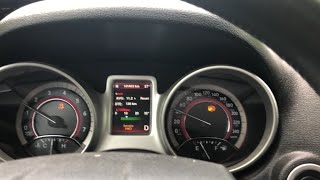
On the Dodge Journey, this code is very common and almost always points to a direct failure of the sensor or its immediate wiring. A notable platform-specific issue is the potential for the rear wheel hub seals to fail, allowing moisture and debris to enter the sensor area, which can lead to repeated sensor failures, especially in wet conditions. Additionally, owners of 2012-2015 models should be aware of a major recall for water intrusion into the main ABS module harness, which can cause similar warning lights and system failure. The wiring harness in the rear of the vehicle, particularly where it passes through to the liftgate, is also known to fray and break from repeated opening and closing, which can sometimes affect circuits related to the rear wheels. Forum discussions also point to a generally weak electrical ground system on the Journey, which can cause various strange electrical problems; upgrading the main chassis and engine grounds 🎬 Watch: How to fix common ABS and traction control electrical issues. is a recommended preventative measure by some owners.
Symptoms You May Notice
- ABS warning light is on
- Traction Control or Electronic Stability Control (ESC) warning light is on
- Cruise control is disabled
- Brake warning light may be on
- A buzzing or grinding noise may be heard from the ABS pump area
- Replacing the ABS module before thoroughly testing the sensor, wiring, and hub assembly. The module is the most expensive part and the least likely to be the cause of a single sensor code.
- Replacing the wheel speed sensor without first inspecting the wiring harness. A broken wire a few inches up from the connector is a common issue and will not be fixed by a new sensor.
Most Likely Causes
- Failed Right Rear Wheel Speed Sensor 🔴 High Probability → Shop ABS Wheel Speed Sensor The sensor is exposed to road debris, water, salt, and extreme temperatures, leading to eventual failure. It is a very common wear item on the Journey.
How to confirm: Use an ABS-capable scan tool to monitor live data. While driving, the right rear wheel speed should read 0 or be erratic while other wheels show a correct speed. The sensor can also be tested with a multimeter for resistance; a reading outside of the 800-2,500 Ohm specification for passive sensors indicates failure.
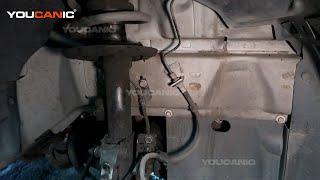
Typical fix: Replace the right rear wheel speed sensor. 🎬 Watch: Step-by-step guide to replacing the rear wheel speed sensor. The sensor is typically held in by a single bolt, but can seize in the hub due to rust, making removal difficult.
Est. part cost: $25-$75 - Damaged Wiring or Connector 🟡 Medium Probability The wiring harness runs down to the wheel hub and is susceptible to damage from road debris, corrosion, or chafing from suspension movement. The connector pins can corrode or the wires can break right at the connector.
How to confirm: Visually inspect the wiring harness from the sensor up into the wheel well for any signs of breaks, chafing, or corrosion at the connector pins. Perform a continuity test with a multimeter from the sensor connector to the ABS module connector. Check for voltage and ground at the vehicle-side connector with the key on.
Typical fix: Repair the damaged section of wire with solder and heat shrink tubing. If the connector is damaged, replace the pigtail connector. A common pigtail is Standard Motor Products S-824.
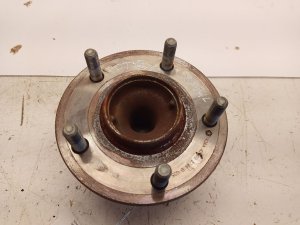
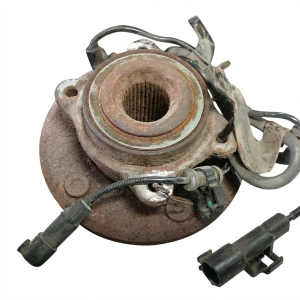
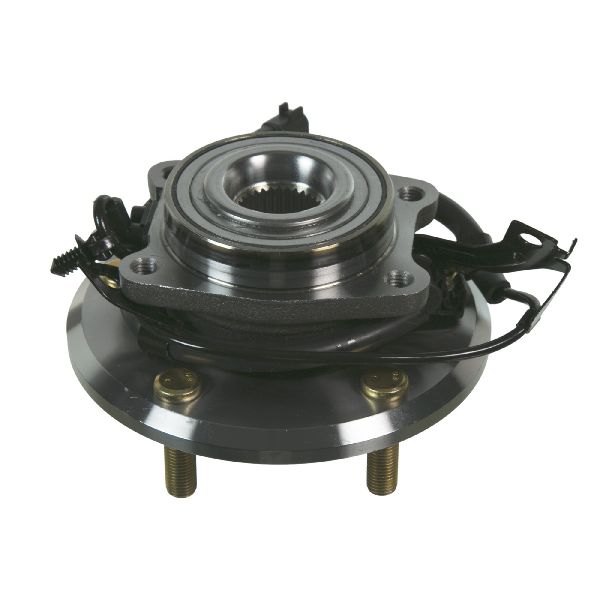
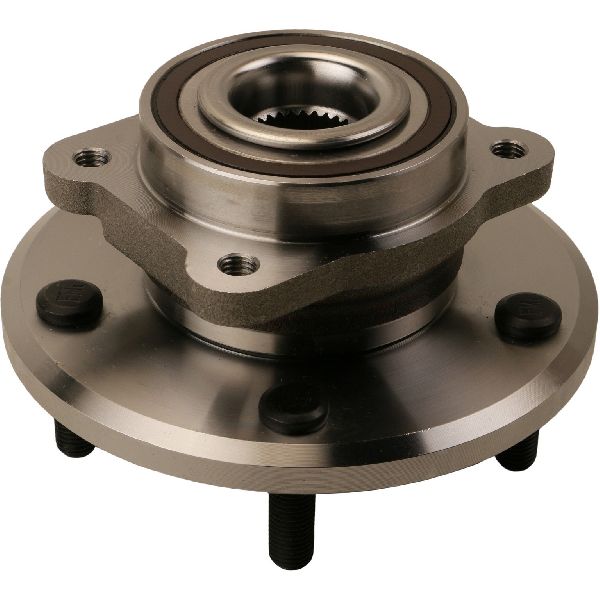
Est. part cost: $15-$40 - Damaged Wheel Hub / Bearing Assembly ⚪ Low Probability → Shop Hub Assembly The magnetic encoder ring (or tone ring) is integrated into the wheel hub. Rust jacking or a hard impact (like hitting a curb) can crack or damage this ring. A failing hub seal can allow water and debris to cover the ring, disrupting the sensor's reading.
How to confirm: After removing the speed sensor, inspect the magnetic ring inside the hub for visible cracks, missing sections, or heavy rust/debris. A bad hub may also make grinding or humming noises while driving that change with vehicle speed.
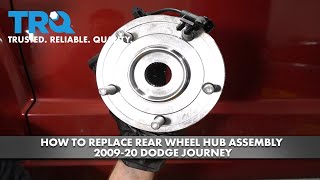
Typical fix: Replace the entire rear wheel hub and bearing assembly. 🎬 See how to replace the rear wheel hub and bearing.
Est. part cost: $100-$200
Rare But Worth Checking
- Faulty ABS Control Module: → Shop ABS Control Module This is an unlikely cause. The ABS module typically fails in a way that generates multiple wheel speed sensor codes or specific internal module fault codes, not just a single one. Before condemning the module, all other possibilities (sensor, wiring, hub) must be exhaustively ruled out. A Reddit user noted that on their 2011 Journey, the ABS module was no longer available as a new OEM part, requiring a used or remanufactured unit.
Diagnosis Steps
- Connect an OBD-II scanner capable of reading ABS codes to confirm C0050 is the active fault. Note any sub-codes (e.g., -00, -18, -5A).
- Use the scanner to view the live data stream for all four wheel speed sensors.
- Drive the vehicle slowly (above 5-10 mph) and observe the readings. Confirm that the Right Rear (RR) sensor reads 0 mph or has an erratic/jumpy signal compared to the other three sensors.
- Safely raise and support the rear of the vehicle. Remove the right rear wheel.
- Visually inspect the wheel speed sensor and its wiring harness for any obvious physical damage, fraying, melting, or corrosion. Pay close attention to the area where the harness flexes with suspension travel.
- Unplug the sensor connector. Inspect the pins on both sides for corrosion or damage. Apply dielectric grease upon reassembly.
- Unbolt and remove the wheel speed sensor (typically a single 10mm bolt). It may be seized with rust and require careful prying or even destruction to remove.
- Inspect the sensor's tip for metallic debris or damage. Shine a light into the hub and inspect the magnetic encoder ring for cracks, rust, or physical damage.
- If the visual inspection is inconclusive, use a multimeter. Check for reference voltage (often 5V or 12V) and ground at the vehicle-side connector with the ignition on.
- Test the old sensor's resistance (if it's a 2-wire passive sensor) and compare it to the new sensor or manufacturer specs. A healthy passive sensor should read between 800 and 2,500 Ohms. An open or shorted sensor is faulty.
- If the sensor tests good and wiring has power/ground, the fault is likely in the signal wire between the sensor and the ABS module. A continuity test is needed to find the break.
Parts You'll Likely Need
- Rear Wheel Speed Sensor
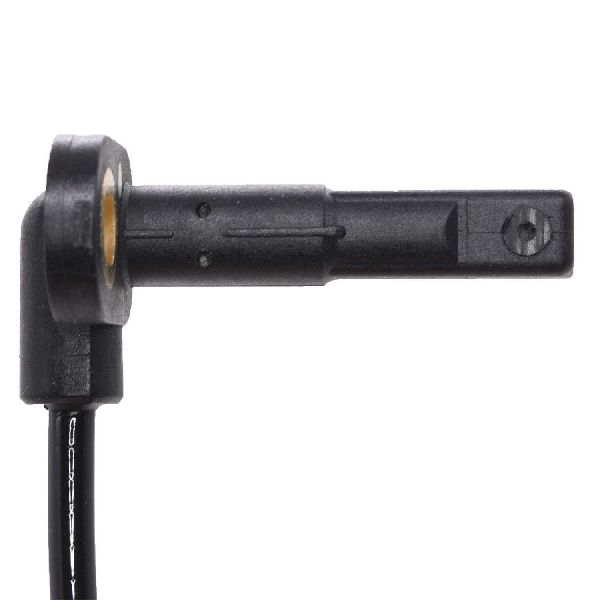
(OEM #5105573AA (Note: Part numbers can vary by year and FWD/AWD. Always verify with VIN))— This is the most common failure point for code C0050. It is an electronic sensor that lives in a harsh environment and fails over time.
Trusted brands: Mopar, Dorman (e.g., 695-319), Duralast (e.g., SU9943), NTK, Holstein
OEM price range: $60-$90
Aftermarket price range: $25-$75 - Rear Wheel Hub Bearing Assembly
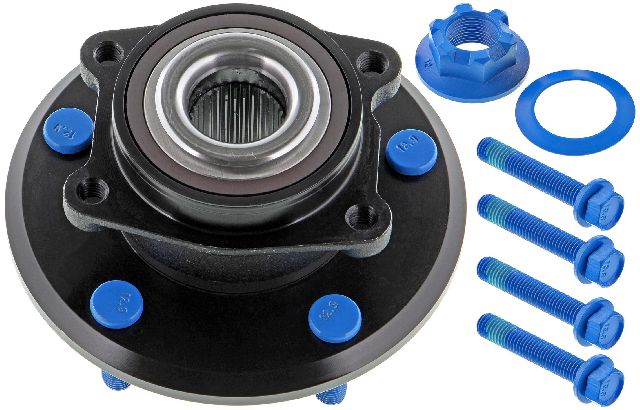
(OEM #e.g., 4766729AC (FWD), 4766728AC (AWD) (Note: Part numbers vary. Always verify with VIN))— This part is needed if the integrated magnetic encoder ring is damaged, or if a bad bearing seal is allowing moisture to destroy the sensor.
Trusted brands: Timken, SKF, MOOG, Driveworks
OEM price range: $200-$300
Aftermarket price range: $100-$200 - ABS Wheel Speed Sensor Connector Pigtail
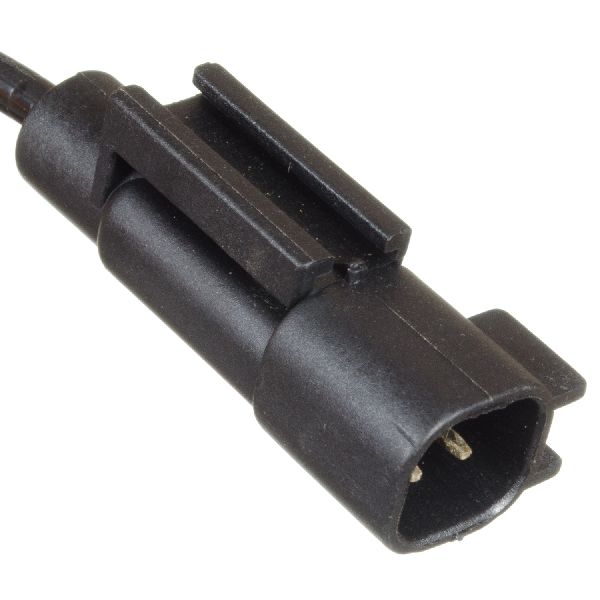
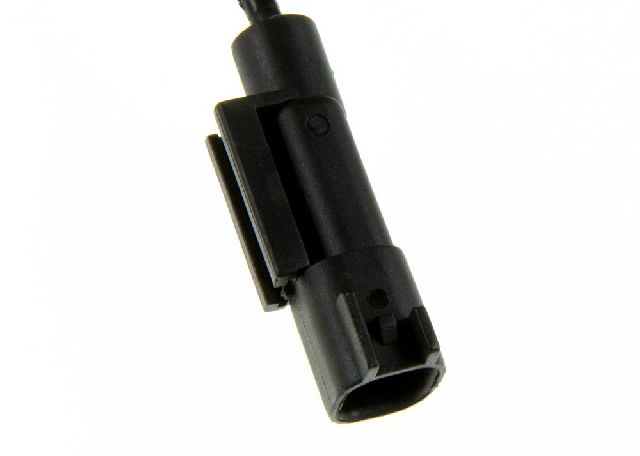
(OEM #e.g., Standard Motor Products S-824)— Needed if the connector itself or the wires immediately attached to it are corroded or broken.
Trusted brands: Standard Motor Products, Dorman
OEM price range: $20-$40
Aftermarket price range: $15-$30
Platform-Specific Known Issues
- Recall 15V-675 (FCA R61): Affects 2012-2015 Dodge Journey models. Water can leak into the ABS module wiring harness, causing the ABS and ESC systems to become disabled. While not a direct cause of C0050, it's a critical related wiring issue on this platform that results in the same warning lights. Dealers will seal the harness and replace components as needed.
- Liftgate Wiring Harness Failure: The wiring harness that passes from the body to the rear liftgate is known to fatigue and break from repeated opening and closing. This typically affects the rear wiper and lights, but can cause electrical noise or shorts that may, in rare cases, interfere with other rear-body circuits.
Documented NHTSA Reports
While C0050 is a standard code for the right rear wheel speed sensor on the Dodge Journey, other manufacturers use this identifier for different components. For example, NHTSA ODI #10763888 describes a case where C0050 identified a faulty power steering control module (PSCM) on a different make, requiring a steering column replacement. Additionally, NHTSA ODI #11228687 shows C0050 appearing alongside multiple communication codes (U-codes) and other wheel sensor faults on a different platform. In some cases, as noted in NHTSA ODI #11649367, the code may trigger after brake service if extra fluid is required to return caliper piston contact to the brake pad, resulting in the system disabling ABS. Another report, NHTSA ODI #11693418, mentions C0050-00 appearing when rotors, rear pads, and adapter plates required replacement on a different vehicle model.
Mechanic-Grade Diagnostic Values
- Passive 2-wire Wheel Speed Sensor Resistance — expected: 800 - 2,500 Ohms (Ω). Failure: A reading of infinity (Open Loop) or near zero (short circuit) indicates a failed sensor.
- Active 3-wire Wheel Speed Sensor AC Voltage Output — expected: > 0.250 Volts AC (250mV AC). Failure: No voltage or significantly lower voltage when spinning the wheel at approximately 0.5 revolutions per second indicates a faulty sensor.
- Voltage at Sensor Harness Connector (Vehicle Side) — expected: Reference voltage (typically 5V or 12V) on one pin and good ground (<1 Ohm) on the other, with key on.. Failure: Absence of reference voltage or high resistance to ground points to a problem in the wiring or the ABS module itself.
Hidden / Shadow Codes Worth Checking
- C0050-00: General circuit malfunction. This can indicate an open circuit, a short to ground, or high resistance in the wiring. (see via Requires a professional-level scan tool with manufacturer-specific code reading capabilities.)
- C102B: An older or alternative DTC for 'Right Rear Wheel Speed Sensor Circuit' used in some diagnostic literature for the Dodge Journey. Diagnostic procedures are identical to C0050. (see via May appear on some scan tools or in service manuals as an equivalent to C0050.)
- C0050-18: Low Signal Amplitude. The signal from the sensor is weak, which could be caused by an excessive air gap, debris on the sensor/ring, or a failing sensor. (see via Requires a professional-level scan tool with manufacturer-specific code reading capabilities.)
- C0050-5A: Signal Plausibility Failure. The signal from the right rear sensor is illogical when compared to the other wheel speed sensors. (see via Requires a professional-level scan tool with manufacturer-specific code reading capabilities.)
Scan Tool Commands That Help
- wiTECH or equivalent professional scanner: ABS Live Data / Data Display — This is the primary diagnostic step. Use this to view and compare the speed readings from all four wheels simultaneously while driving. A reading of '0' or an erratic signal from the right rear wheel while others are reporting speed correctly confirms the fault is isolated to that corner.
- wiTECH or equivalent professional scanner: ABS Verification Test — After a repair (like replacing a sensor or fixing wiring), this function runs a system self-test to confirm the fault is cleared and the ABS module is communicating correctly with all components.
Wiring & Ground Locations
- ABS Control Module — Located in the engine bay, on the driver's side, behind the engine. It is attached to the hydraulic block with multiple brake lines connected to it.. This is the destination for the wheel speed sensor wiring. The connector at the module is the endpoint for continuity tests from the sensor harness to check for broken wires.
- Right Rear Wheel Speed Sensor Connector — At the right rear wheel hub, connecting the sensor to the main vehicle harness. It is a 2-pin, weatherproof male connector.. This is the most common location for corrosion and wire breakage due to exposure and suspension movement. It's the primary point for visual inspection and electrical testing (voltage, ground, resistance).
- G105 (suspected ABS ground) — A forum member identified a ground point on the driver's side front frame rail/cab mount area that they believed was for the ABS module.. A poor ground for the ABS module can cause a variety of erratic codes and behavior. While the sensor circuit itself is a loop, the module's main ground integrity is critical for proper operation. Cleaning this ground point is a wise step in troubleshooting.
- Passenger Strut Tower Ground Stud — On the passenger side strut tower in the engine bay, near the coolant reservoir and ABS module.. A Reddit user with a no-start issue traced a loose ground wire here that was part of the ABS ground circuit. Ensuring this connection is clean and tight is crucial, as it appears to be a key grounding point for the module.
- G923a (Rear Body Ground) — A wiring diagram for a 2012 Journey shows a ground point 'G923a' located at the base of the left 'D' pillar (rear of the vehicle).. While not directly for the sensor circuit, a poor rear body ground can introduce electrical noise that may interfere with sensitive sensor signals in the vicinity. This is a good secondary location to check if direct circuit tests are inconclusive.
Real Owner Repair Stories
- Reddit user /u/IndianaJonathan (2011 Dodge Journey 3.5L) — No crank, no start, with communication bus errors related to the ABS module.
❌ Tried (didn't work) Initial diagnosis pointed towards complex COM bus issues.
✅ What actually fixed it The user found a loose ground wire hanging near the passenger side strut tower, just in front of the ABS module connector. The wire was supposed to connect to a small nipple on the engine mount, providing a ground path. Reconnecting this wire was part of resolving the electrical issues. The user later had to replace the entire ABS module as well.
OEM Part Supersession History
5105573AA→5105573AB— Standard part revision/update by the manufacturer.
Heads up: The parts are interchangeable. 5105573AB is the current replacement for 5105573AA. Note that this part number is often listed for the front left, but cross-references indicate it may be used in other positions depending on the specific vehicle configuration. Always verify fitment with a VIN.
Model Year Variations Within This Range
- 2012-2015: These model years are subject to FCA recall R61 (NHTSA 15V-675) for water intrusion into the ABS module wiring harness connector. This specific vulnerability can cause the same symptoms as a failed sensor but requires a different fix (sealing the connector and potentially replacing the harness/module).
Diagnostic Flowchart
Other Known Issues on This Vehicle
Issues unrelated to this code that are worth knowing about as an owner of this generation:
- Premature Brake and Rotor Wear 🔴 High — Extremely common on 2009-2012 models, with owners reporting replacement needed as early as 12,000-20,000 miles. Less frequent but still present on later models. (Ref: Dodge extended the brake warranty for early models but did not issue a full recall.)
- 3.6L Pentastar V6 Left Cylinder Head Failure 🔴 High — Common on 2011-2013 models. Causes misfires (P0300, P0302, P0304, P0306) and a ticking noise. (Ref: Chrysler issued an extended warranty (X56) for 10 years/150,000 miles on the left cylinder head for affected years. TSB 09-002-14 REV relates to this.)
- 62TE Automatic Transmission Problems 🟠 Medium — Affects both V6 and some 4-cylinder models. Symptoms include harsh shifting, shuddering, slipping out of gear, or entering 'limp mode'. Often caused by solenoid pack failure or fluid contamination.
- Uconnect Infotainment System Glitches 🟡 Low — Widespread across many model years. Issues include screen freezing, blank screen, Bluetooth connectivity problems, and navigation freezing. Often requires a system reboot or dealer software update.
- Interior Water Leaks 🟠 Medium — Reported by many owners. Leaks can come from improperly sealed body seams, sunroof drains, or the windshield cowl area, often resulting in a wet passenger-side floor or damp headliner.
- Throttle Body Failure (2.4L Engine) 🟠 Medium — A known issue on the 2.4L 'World Engine', causing rough idle, stalling, or codes like P2110, P2111, and P2112. Often requires replacement of the entire throttle body assembly.
Used vs. New Parts: Buying Guide for This Vehicle
When a used part is the smart pick: A used ABS module from a junkyard can be a cost-effective option, especially since new OEM modules may be discontinued for older models. However, it may require programming to the vehicle's VIN. Simple mechanical parts like the sensor mounting bolt are also fine to source used.
Donor-vehicle mileage cap: roughly under 80000 miles for the part to have meaningful remaining life.
What to inspect on the donor part:
- For an ABS module, check the donor vehicle for signs of front-end collision or fire damage. Ensure the connector pins are clean and free of corrosion.
- Look for a donor vehicle from a dry, salt-free climate to minimize the risk of corrosion on electrical components.
- Verify the part number on the used module exactly matches the original part.
Aftermarket brands forum-validated for this vehicle:
- Sensors: NTK, Dorman, Standard Motor Products (SMP), Holstein are frequently cited as reliable aftermarket options.
- Hubs/Bearings: Timken, SKF, and MOOG are premium brands known for quality bearings and integrated encoder rings.
- Connectors: Standard Motor Products (S-824) and Dorman offer direct-fit pigtail connectors for wiring repairs.
Brands owners have reported issues with on this vehicle:
- Avoid unbranded, 'white-box' sensors from online marketplaces. While cheap, they have a high failure rate and may have incorrect resistance values, leading to persistent codes.
Real Owner Stories
Aggregated from forums and TSBs cited above. Mileages and costs reflect what owners reported in those sources.
2012-2015 Dodge Journey
Symptoms: ABS and ESC systems became disabled due to water ingress in the wiring harness.
What fixed it: Dealer performed Recall 15V-675 (FCA R61) to seal the harness and replace affected components.
Source hint: Recall 15V-675 (FCA R61)
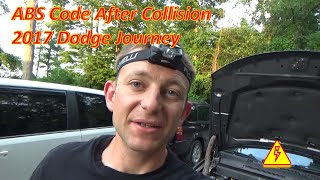
2017 Dodge Journey
Symptoms: ABS warning light stayed on following a collision.
What fixed it: Traced the wiring harness to find and repair hidden breaks in the electrical circuit.
Source hint: YouTube - Pine Hollow Auto Diagnostics
Dodge Journey (General)
Symptoms: Recurring ABS light issue that only occurred after it rained.
What fixed it: Identified a bad seal on the wheel hub that was allowing moisture to interfere with the sensor signal.
Source hint: YouTube/Owner Forums
Dodge Journey (General)
Symptoms: Various difficult-to-diagnose electrical issues and ABS faults.
What fixed it: Upgraded the main battery, engine, and chassis grounds to address weak factory grounding.
Source hint: Dodge Journey Forum (dodge-journey.net)
Related OBD-II Codes
Frequently Asked Questions
Is there a recall for my 2014 Dodge Journey regarding ABS and Traction Control lights?
My 2012 Dodge Journey is making a grinding noise from the wheel area along with the ABS light; is this the sensor?
What is the specific resistance I should look for when testing the RR wheel speed sensor on my Journey?
Can a bad liftgate wiring harness cause my ABS light to come on?
Is there a specific replacement part for a corroded ABS sensor connector?
Why does my ABS light only come on after it rains?
Helpful Videos
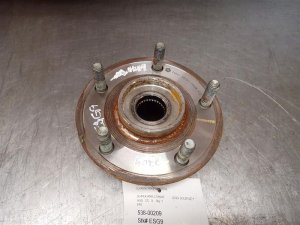
Used OEM Parts in Stock
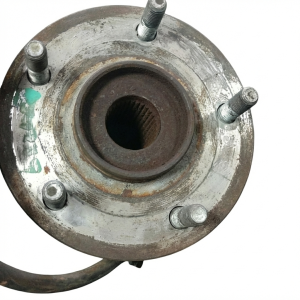
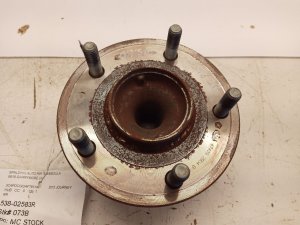
New Aftermarket Parts Available

The information in this article is provided for general reference and educational purposes only. Vehicle specifications, procedures, and part compatibility can vary by production date, trim level, and region. Always consult your vehicle's factory service manual and verify part numbers before purchasing or performing repairs. Safety-critical components such as airbags, seat belts, and braking systems should be installed by a qualified professional.
- Dodge Journey:
- 🧭 Diagnostic Flowchart
- 🎬 Helpful Videos
- 🛍️ Shop This Part
- What's Unique About the 2009-2020 Dodge Journey
- Symptoms You May Notice
- Most Likely Causes
- Rare But Worth Checking
- Diagnosis Steps
- Parts You'll Likely Need
- Platform-Specific Known Issues
- Documented NHTSA Reports
- Mechanic-Grade Diagnostic Values
- Hidden / Shadow Codes Worth Checking
- Scan Tool Commands That Help
- Wiring & Ground Locations
- Real Owner Repair Stories
- OEM Part Supersession History
- Model Year Variations Within This Range
- Other Known Issues on This Vehicle
- Used vs. New Parts: Buying Guide for This Vehicle
- Real Owner Stories
- 2012-2015 Dodge Journey
- 2017 Dodge Journey
- Dodge Journey (General)
- Dodge Journey (General)
- Related OBD-II Codes
- Frequently Asked Questions
- 🎟️ Get 5% Off