

C0050 on 2011-2014 Ford Edge: Right Rear Wheel Speed Fault Causes and Fixes
On a 2011-2014 Ford Edge, code C0050 is most often caused by a failed rear wheel hub and bearing assembly, not the sensor itself. The magnetic encoder ring integrated into the hub cracks or delaminates, disrupting the speed signal. The second most likely cause is corrosion in the wiring connector. Expect to pay $75-$150 for a new hub assembly and another 1-2 hours for labor.
- Code C0050 almost always means the ABS and stability control systems are disabled, so drive with increased caution.
- Before buying any parts, use a scanner with live data to confirm the fault is with the right rear wheel.
- The most likely cause is a failed rear wheel hub assembly due to a cracked internal magnetic ring, not a bad sensor.
- Always inspect the wiring and connector for damage before replacing expensive components.
- Replacing the hub is a moderately difficult DIY job, often complicated by rust and seized components.
What's Unique About the 2011-2014 Ford Edge
For this generation of Ford Edge, the magnetic encoder ring (or 'tone ring') that the ABS sensor reads is integrated directly into the rear wheel hub and bearing assembly. While the code C0050 points to the sensor 'circuit,' the most common point of failure is actually this ring within the hub assembly. It is exposed to moisture and road salt, which causes the metal ring to rust, swell, and crack, or delaminate from the hub body. This damage creates an erratic or nonexistent signal, leading to the unnecessary replacement of the wheel speed sensor when the hub itself is the real problem.
Symptoms You May Notice
- ABS warning light is on
- Traction control or stability control (AdvanceTrac) warning light is on
- "Service AdvanceTrac" message on the instrument cluster
- "Hill Start Assist Disabled" message on the instrument cluster
- ABS and traction control are disabled
- Brakes may lock up during hard braking
- A grinding or humming noise from the rear wheel if the bearing is failing
- Replacing only the ABS wheel speed sensor without first inspecting the magnetic ring on the wheel hub assembly. The hub is the more common failure point for this code on this vehicle.
- Replacing the hub assembly when the actual fault is hidden corrosion inside the wiring harness connector.
Most Likely Causes
- Failed Rear Wheel Hub & Bearing Assembly 🔴 High Probability → Shop Hub Assembly The magnetic encoder ring for the ABS system is integrated into the hub assembly. This ring is susceptible to moisture intrusion, leading to rust and corrosion that causes the ring to crack, swell, or delaminate from the hub body, disrupting the signal.
How to confirm: After confirming the RR wheel shows erratic or zero speed on a scanner, remove the ABS sensor. Use a light and a small mirror to visually inspect the magnetic ring on the hub through the sensor hole. Rotate the hub and look for visible cracks, breaks, swelling, or significant rust buildup. A cracked ring is a definitive failure.
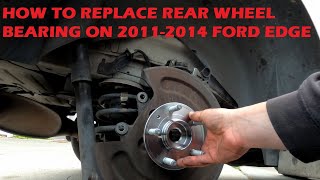
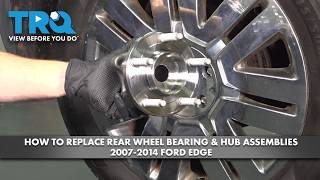
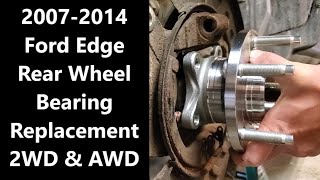
Typical fix: Replace the entire right rear wheel hub and bearing assembly. 🎬 See how to replace the rear hub and bearing assembly This is a single, sealed unit that includes a new bearing and encoder ring.
Est. part cost: $75-$150 - Damaged Wiring or Connector 🟡 Medium Probability The wiring harness leading to the wheel speed sensor is located in the wheel well, where it is exposed to water, road salt, and debris. This can cause corrosion within the connector pins (often hidden by the weather seal) or physical damage to the wires.
How to confirm: Visually inspect the wiring harness for any chafing, breaks, or signs of damage. Unplug the connector and check for bent pins or green/white corrosion. Perform a 'wiggle test' on the harness while monitoring live data on a scan tool to see if the signal drops out.
Typical fix: Repair the damaged section of wire with a weatherproof solder splice and heat shrink. If the connector is corroded, replace it with a new pigtail connector, such as Standard Motor Products S-824 or Dorman 645-140.
Est. part cost: $15-$40 - Failed Right Rear Wheel Speed Sensor ⚪ Low Probability → Shop ABS Wheel Speed Sensor The sensor itself is generally reliable but lives in a harsh environment and can fail electronically. Corrosion can also build up between the sensor and the knuckle ('rust jacking'), increasing the air gap and weakening the signal. It is less common than hub or wiring failure on this platform.
How to confirm: If the hub's magnetic ring and wiring are confirmed to be in good condition, the sensor is the next likely culprit. It can be tested with a multimeter for proper resistance (if specs are available) or by swapping it with the sensor from the left side to see if the fault code follows the sensor.
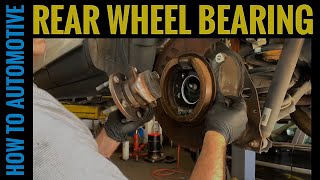
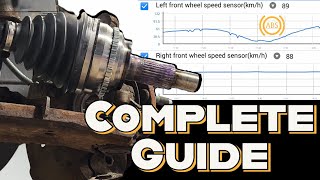
Typical fix: Replace the right rear wheel speed sensor. It is typically held in by a single 8mm bolt. 🎬 Watch this video for a step-by-step rear wheel bearing guide Ensure the mounting surface in the knuckle is cleaned of all rust and corrosion before installing the new sensor.
Est. part cost: $25-$70
Rare But Worth Checking
- Failed ABS Control Module: → Shop ABS Control Module This is very rare. This should only be considered after all other possibilities (hub, sensor, and wiring) have been exhaustively tested and ruled out. It would likely be accompanied by other fault codes or communication errors.
Diagnosis Steps
- Connect an OBD-II scanner capable of reading ABS codes to confirm C0050 is present.
- Use the scanner's live data function to monitor the speed of all four wheels while driving. Confirm that the Right Rear (RR) wheel speed sensor reads 0 MPH or shows an erratic, jumpy signal compared to the other three.
- Safely raise and support the vehicle and remove the right rear wheel.
- Visually inspect the ABS sensor wiring harness and connector for any obvious signs of damage, chafing, or corrosion. Disconnect it and check the pins carefully.
- Remove the single 8mm bolt holding the ABS sensor and carefully pull the sensor out of the knuckle. It may be seized by corrosion and require gentle prying or twisting.
- Thoroughly inspect the magnetic encoder ring on the face of the wheel hub assembly using a light and mirror. Look for cracks, missing chunks, or heavy rust/debris. A cracked ring is a definitive failure and the most common cause.
- If the ring is damaged, the wheel hub assembly must be replaced.
- If the ring and wiring appear okay, clean the sensor mounting hole thoroughly to ensure the correct air gap. If the code persists, the sensor itself is the likely cause. Test by checking resistance or swapping with the opposing side if possible.
- If all components test good, a more in-depth circuit trace to the ABS module may be required to check for a wiring fault further up the harness.
Parts You'll Likely Need
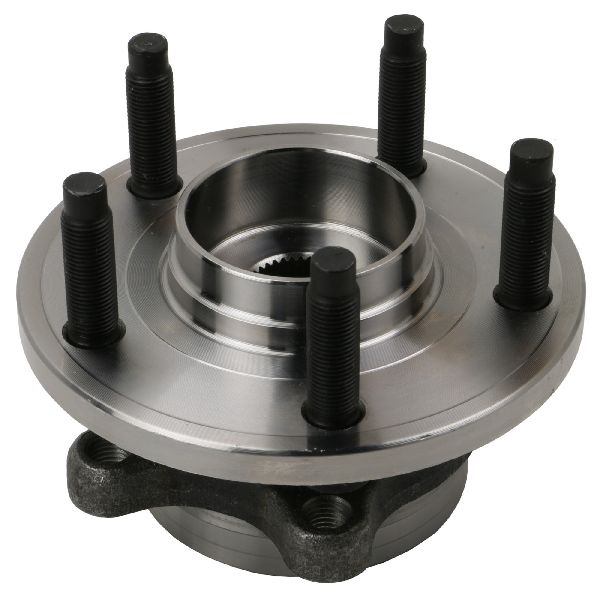
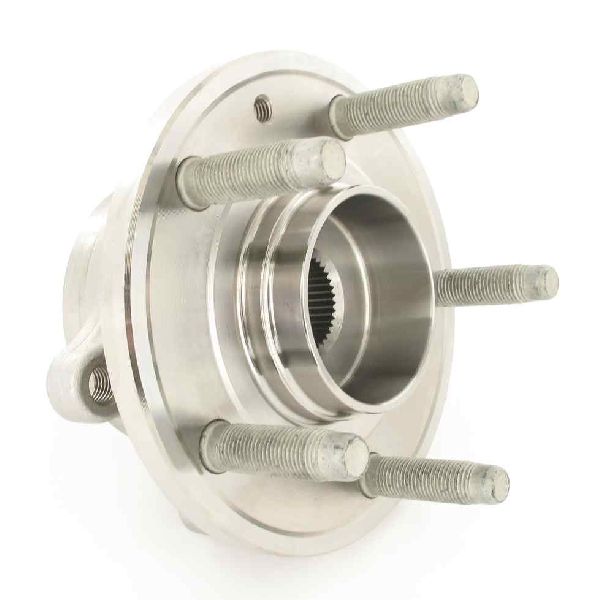
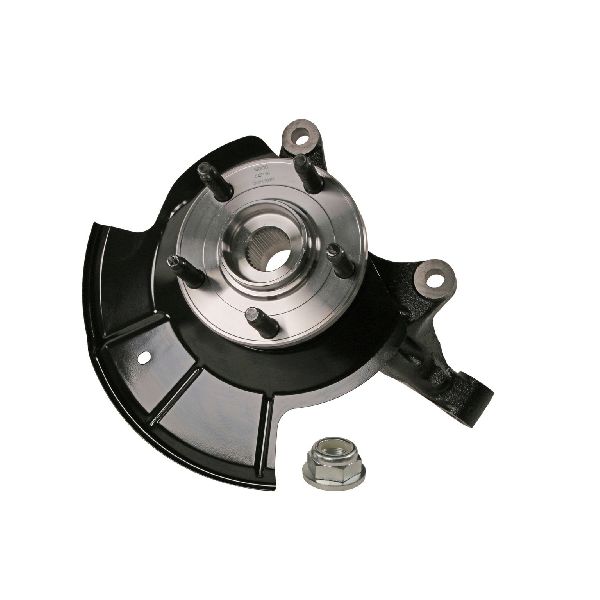
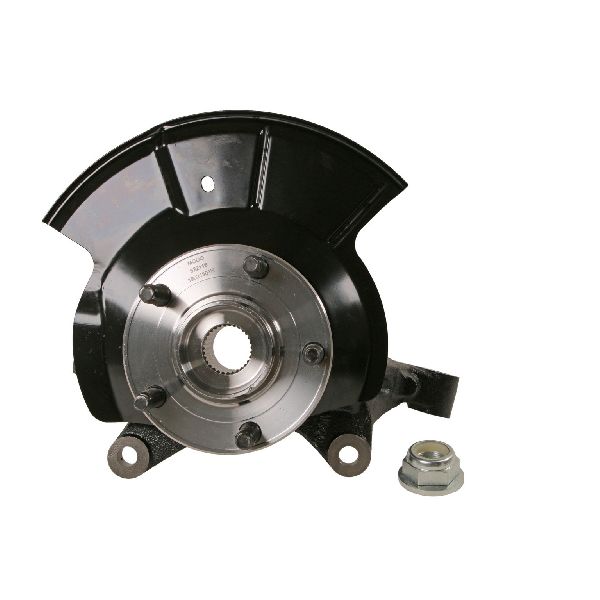
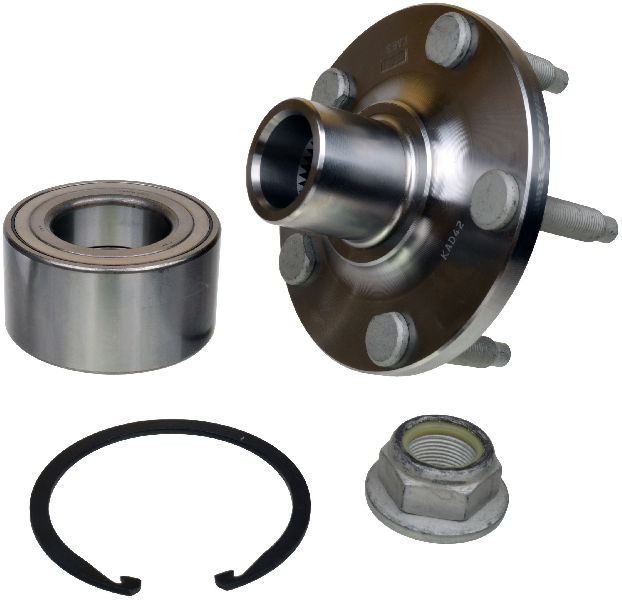
- Rear Wheel Hub and Bearing Assembly
(OEM #BT4Z-1104-B)— This is the most common cause of code C0050 on this vehicle because the integrated magnetic encoder ring fails, not the sensor itself.
Trusted brands: Motorcraft, Moog, Timken, SKF, Dorman, Detroit Axle
OEM price range: $180-$250
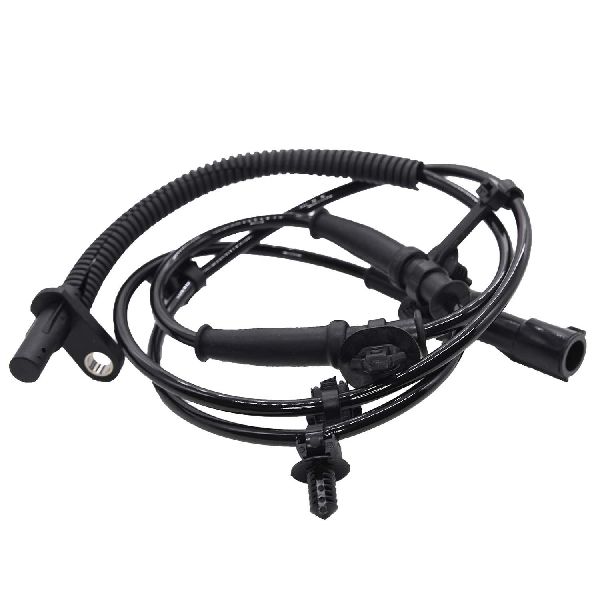
Aftermarket price range: $75-$150 - Rear ABS Wheel Speed Sensor
(OEM #DT4Z-2C190-B (replaces BT4Z-2C190-B))— If the hub assembly and wiring are confirmed to be good, the sensor itself may have failed electronically or has an incorrect air gap due to rust.
Trusted brands: Motorcraft, Delphi, Dorman, Standard Motor Products (SMP)
OEM price range: $60-$90
Aftermarket price range: $25-$70 - Rear ABS Sensor Connector Pigtail
(OEM #WPT-1158 (Motorcraft))— If the connector pins are corroded, a new pigtail is needed to ensure a good connection to the new sensor or hub.
Trusted brands: Motorcraft, Dorman, Standard Motor Products
OEM price range: $30-$50
Aftermarket price range: $15-$30
Related Codes That Often Appear With This One
- C0037 — This is the code for the Left Rear Wheel Speed Sensor Circuit. If both appear, it could indicate a common wiring issue or that both rear hub assemblies are failing around the same time due to age and mileage.
- C0050:5A — This sub-code for 'Signal Not Plausible' often points directly to an erratic signal from a cracked or damaged tone ring, as the signal is present but doesn't match other vehicle sensors.
Platform-Specific Known Issues
- Owner Experience: Hub Failure, Not Sensor: Multiple owners on fordedgeforum.com report chasing the C0050 code by first replacing the ABS sensor, only to have the light return. The problem was ultimately solved by replacing the entire rear hub and bearing assembly due to a cracked tone ring. One user noted that after replacing the sensor to no effect, a visual inspection of the hub's ring through the sensor hole revealed a clear crack, confirming the true point of failure.
- DIY Repair Story: Seized Hub: A DIYer on a YouTube tutorial noted that while the repair is straightforward, the hub assembly can be severely seized into the aluminum knuckle, especially in rust-belt states. It required extensive use of penetrating oil, heat, and a slide hammer to remove. They recommended applying anti-seize compound to the knuckle and hub surfaces during installation to prevent future issues.
Documented NHTSA Reports
While C0050 is a standard ABS code, its meaning can vary across manufacturers. For example, NHTSA ODI #10763888 describes a case where a technician identified C0050 as a faulty power steering control module (PSCM) on a different make, requiring the replacement of the entire steering column. On other platforms, NHTSA ODI #11649367 notes that the vehicle disables ABS and supporting systems and sets codes C0050 and C2227, sometimes following brake service where extra fluid is required to return caliper piston contact to the brake pad. Furthermore, NHTSA ODI #11693418 reports a diagnostic showing C0050-00 in a scenario where rotors, rear brake pads, and adapter plates required replacement. Finally, NHTSA ODI #11228687 records a vehicle with multiple illuminated warnings where C0050 appeared alongside several other codes including C0035 and C0040.
Mechanic-Grade Diagnostic Values
- Right Rear Wheel Speed Sensor Circuit Continuity at ABS Module — expected: Less than 2 ohms. Failure: A reading of infinite ohms (OL) indicates an open circuit in the harness. A reading higher than 2 ohms indicates high resistance.
- Right Rear Wheel Speed Sensor Circuit Short to Ground Test at ABS Module Connector — expected: Infinite resistance (OL). Failure: Any reading less than 10,000 ohms indicates a short to ground in the wiring harness.
- Active Sensor Signal (Oscilloscope) — expected: A digital square wave that switches between approximately 7mA and 14mA as the wheel is spun.. Failure: A flat line, erratic pattern, or missing square wave when the wheel is spinning (and reference voltage is confirmed present) indicates a faulty sensor or damaged hub ring.
Hidden / Shadow Codes Worth Checking
- C0050:01: General Electrical Failure. Points to a general open, short, or high resistance in the circuit. (see via Ford IDS, FORScan, or other professional-grade scan tools with manufacturer-specific capabilities.)
- C0050:0F: Signal Erratic. This strongly suggests an inconsistent signal, often from a cracked encoder ring, debris on the ring, or an intermittent wiring fault. (see via Ford IDS, FORScan, or other professional-grade scan tools.)
- C0050:18: Signal Amplitude Less Than Minimum. Indicates a weak signal. This is often caused by an excessive air gap (from rust jacking or improper installation), a severely damaged encoder ring, or an internal sensor failure. (see via Ford IDS, FORScan, or other professional-grade scan tools.)
- C0050:5A: Signal Not Plausible. The signal is present but does not correlate with other vehicle speed inputs, often caused by a damaged or cracked encoder ring sending incorrect pulse counts. (see via Ford IDS, FORScan, or other professional-grade scan tools.)
Scan Tool Commands That Help
- Ford IDS / FORScan: Live Data Graphing (WSS_RR) — This is the first step in diagnosis. Graphing the Right Rear Wheel Speed (WSS_RR) alongside the other three wheels during a test drive will immediately confirm if the signal is dropping out, erratic, or reading zero.
- Ford IDS / FORScan: ABS KOEO (Key On, Engine Off) Self-Test — After performing a repair (e.g., replacing the hub or sensor), this command initiates an internal diagnostic of the ABS module and circuits to confirm the fault is resolved before a test drive.
- Ford IDS: PMI (Programmable Module Installation) — This is a mandatory procedure if the ABS control module itself is replaced. It transfers vehicle-specific configuration data from the old module to the new one.
Wiring & Ground Locations
- ABS Module Connector C135 (Pins 42 & 43) — The main connector on the ABS module, which is located in the left rear of the engine compartment.. Pin 42 (Circuit RCA20, Brown wire) and Pin 43 (Circuit VCA06, White/Orange wire) are the specific terminals for the Right Rear wheel speed sensor. Testing for continuity and shorts between these pins and the sensor connector at the wheel is the definitive way to rule out a wiring harness failure.
- G100 / G103 — Located on the left side of the engine compartment, on the inner fender or frame rail.. These are primary ground points for components in the engine bay. A loose or corroded ground here can cause multiple, difficult-to-diagnose electrical issues, including problems with the ABS module.
Real Owner Repair Stories
- YouTube channel 'Super Auto Dent' (2007 Ford Edge (similar procedure and components)) — ABS and Traction Control lights on, codes C1175 (Left Rear) and C1236 (Lost communication with Left Rear).
❌ Tried (didn't work) Initial scan showed no signal from the left rear wheel when spun by hand.
✅ What actually fixed it The technician swapped the left and right rear sensor connectors at a central point on the subframe. When he spun the (good) right wheel, the signal now appeared on the scan tool's data for the left wheel. This proved the wiring from the subframe to the ABS module was good, and the sensor on the left side was bad. The final fix was replacing the left rear wheel speed sensor. This connector swap is a powerful diagnostic technique.
"I Checked Everything" — The Actual Cause
- While not a smoke test, a relevant analogy is when a visual inspection of the wiring harness appears perfect, but the fault persists. On similar Ford platforms (like the Fusion), an issue was documented in SSM 44504 where moisture wicks inside the wire insulation, causing corrosion 1-3 inches back from the connector. The wire looks fine from the outside, but is broken internally. The fix is to cut back the loom and insulation to inspect the copper itself, then splice in a new pigtail if corrosion is found.
OEM Part Supersession History
8a8z1104a, 8a8z1104b→BT4Z-1104-B— Standard part revision and consolidation for the rear wheel hub and bearing assembly.
Diagnostic Flowchart
Other Known Issues on This Vehicle
Issues unrelated to this code that are worth knowing about as an owner of this generation:
- Door Ajar Switch Failure 🟠 Medium — Very common. The switch inside the door latch assembly fails, causing the 'Door Ajar' light to stay on, interior lights to remain lit (draining the battery), and preventing doors from locking. (Ref: Customer Satisfaction Program 19N09 extended warranty coverage for the driver's door latch.)
- Power Transfer Unit (PTU) Failure (AWD Models) 🔴 High — Common, especially on vehicles over 70,000 miles. The PTU fluid overheats due to proximity to the exhaust, breaks down, and leads to gear/bearing failure. (Ref: No recall, but a widely known issue. Preventative fluid changes every 30,000 miles are highly recommended.)
- Brake Booster Failure 🔴 High — Common enough that Ford issued an extended warranty. The internal diaphragm can tear, causing a hissing noise from the pedal and increased braking effort. (Ref: Extended Warranty Program 13N02 covered the brake booster for 10 years or 150,000 miles.)
- MyFord Touch / APIM Module Failure 🟡 Low — Frequent issue where the central touchscreen becomes unresponsive, freezes, or goes black. Often requires a module reboot or replacement. (Ref: Multiple software updates and a warranty extension (CSP 12M01) were issued to address these concerns.)
- Internal Water Pump Failure (3.5L/3.7L V6) 🔴 High — A significant potential failure, typically after 100,000 miles. The water pump is located internally and driven by the timing chain. When it fails, it can leak coolant directly into the engine oil, leading to catastrophic engine damage if not caught immediately.
Used vs. New Parts: Buying Guide for This Vehicle
When a used part is the smart pick: A used ABS wheel speed sensor or a wiring pigtail from a wrecking yard can be a cost-effective option, provided it comes from a vehicle with low mileage and from a dry, non-rust-belt region.
Donor-vehicle mileage cap: roughly under 60000 miles for the part to have meaningful remaining life.
What to inspect on the donor part:
- For wiring, check for flexible, uncracked insulation and bright, corrosion-free connector pins.
- For a sensor, ensure the plastic housing is not cracked and the mounting bolt hole is intact.
- Avoid any parts with visible signs of heavy rust, water intrusion, or physical damage.
OEM-only on this vehicle (don't cheap out):
- ABS Control Module - While aftermarket modules exist, programming and compatibility issues are common. Sticking with an OEM Motorcraft module (new or professionally remanufactured) is strongly advised to avoid complex troubleshooting.
Aftermarket brands forum-validated for this vehicle:
- Hub Assemblies: Timken, SKF, MOOG, and Motorcraft (OEM) are consistently cited as high-quality, reliable choices by professionals and experienced DIYers.
- Sensors: Motorcraft (OEM), Standard Motor Products (SMP), and Delphi are reputable brands for electronic sensors.
Brands owners have reported issues with on this vehicle:
- Unbranded 'white box' or suspiciously cheap hub assemblies from online marketplaces. These often use lower-quality bearings and seals, leading to premature failure (noise, looseness) within 20,000-30,000 miles.
Real Owner Stories
Aggregated from forums and TSBs cited above. Mileages and costs reflect what owners reported in those sources.
2011 Ford Edge
Symptoms: ABS and traction control lights on. Replaced the ABS sensor first, but the light returned. A visual inspection through the sensor hole with a light and mirror revealed a clear crack in the hub's magnetic ring.
What fixed it: Replacement of the entire rear hub and bearing assembly.
Source hint: fordedgeforum.com thread titled 'ABS / Traction Control lights on - Code C0050'
2011-2014 Ford Edge
Symptoms: C0050 code present. During repair, the hub assembly was found to be severely seized into the aluminum knuckle due to road salt and rust.
What fixed it: Extensive use of penetrating oil, heat, and a slide hammer to remove the seized hub, followed by applying anti-seize compound during installation of the new unit.
Source hint: DIY Repair Story: Seized Hub (YouTube tutorial)
2011 Lincoln MKX
Symptoms: ABS and traction control lights on; vehicle shares the same platform and hub design (BT4Z-1104-B) as the Edge.
What fixed it: Replacement of the rear wheel hub and bearing assembly due to failure of the integrated magnetic tone ring.
Source hint: Lincolnforums.com thread 'Changed ABS sensor but light is still on 2011 MKX'
Related OBD-II Codes
Frequently Asked Questions
I replaced the ABS sensor on my 2011 Ford Edge but the C0050 code and 'Service AdvanceTrac' message are still there. What did I miss?
Is there a specific connector pigtail I should use if my RR wheel speed sensor wiring is corroded?
My 2011 Edge has a 'Door Ajar' light that won't go off; is this related to the C0050 ABS code?
Can I just replace the magnetic tone ring on the rear hub of my 2013 Edge?
Why is my Hill Start Assist showing as disabled along with the ABS light?
Is the brake booster failure on the 2011-2014 Edge related to the C0050 code?
Helpful Videos
We Have This Part in Stock

The information in this article is provided for general reference and educational purposes only. Vehicle specifications, procedures, and part compatibility can vary by production date, trim level, and region. Always consult your vehicle's factory service manual and verify part numbers before purchasing or performing repairs. Safety-critical components such as airbags, seat belts, and braking systems should be installed by a qualified professional.
- Ford Edge:
- 🧭 Diagnostic Flowchart
- 🎬 Helpful Videos
- 🛍️ Shop This Part
- What's Unique About the 2011-2014 Ford Edge
- Symptoms You May Notice
- Most Likely Causes
- Rare But Worth Checking
- Diagnosis Steps
- Parts You'll Likely Need
- Related Codes That Often Appear With This One
- Platform-Specific Known Issues
- Documented NHTSA Reports
- Mechanic-Grade Diagnostic Values
- Hidden / Shadow Codes Worth Checking
- Scan Tool Commands That Help
- Wiring & Ground Locations
- Real Owner Repair Stories
- "I Checked Everything" — The Actual Cause
- OEM Part Supersession History
- Other Known Issues on This Vehicle
- Used vs. New Parts: Buying Guide for This Vehicle
- Real Owner Stories
- 2011 Ford Edge
- 2011-2014 Ford Edge
- 2011 Lincoln MKX
- Related OBD-II Codes
- Frequently Asked Questions
- 🎟️ Get 5% Off