

C0050 on 2015-2020 Ford F-150: Right Rear Wheel Speed Sensor Fault Causes and Fixes
Code C0050 on a 2015-2020 F-150 means there's a fault with the right rear wheel speed sensor circuit, disabling ABS and AdvanceTrac. The most common fixes are replacing a damaged wiring pigtail, the sensor itself, or the rear wheel bearing assembly which contains the magnetic tone ring. Expect to pay $25-$70 for a sensor or pigtail, and $150-$300 for a wheel bearing.
- Code C0050 specifically points to a problem in the right rear wheel speed sensor circuit, which will disable your F-150's ABS and AdvanceTrac systems.
- Do not immediately assume the sensor is bad. A thorough visual inspection of the wiring harness and connector for damage is the most important first step.
- Use a scan tool to watch live data from all four wheels. This is the fastest way to confirm the fault is isolated to the right rear wheel.
- If the wiring and sensor are good, the magnetic ring on the wheel bearing is the next most likely cause. Inspect it for damage or metallic debris before replacing expensive parts.
What's Unique About the 2015-2020 Ford F-150
For the 13th generation F-150 (2015-2020), the C0050 code points to one of three main culprits: the wiring, the sensor, or the wheel bearing assembly. Unlike some vehicles where the sensor is almost always the point of failure, on many modern trucks, including the F-150, the magnetic encoder ring (or 'tone ring') is integrated into the wheel bearing assembly. This ring can become damaged or contaminated with metallic debris, causing an erratic signal even with a perfectly good sensor. A very common failure point is the wiring harness near the sensor, which is exposed and can chafe or corrode. Diagnosing requires checking all three components to avoid replacing unnecessary parts.
Symptoms You May Notice
- ABS warning light is on
- AdvanceTrac or Stability Control warning light is on
- Traction control warning light is on
- Loss of anti-lock braking function (wheels may lock and skid during hard braking)
- Cruise control may be disabled
- Hill Descent Control Fault warning may appear
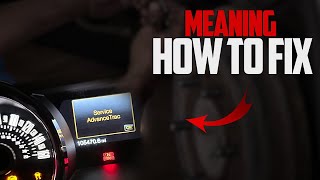
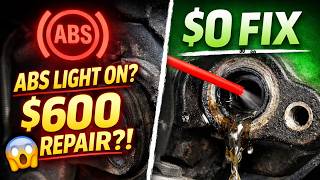
- Service AdvanceTrac warning message 🎬 See what the Service AdvanceTrac message means and how to fix it.
- Replacing the wheel speed sensor when the actual problem is a damaged wire in the harness or a contaminated tone ring on the wheel bearing.
- Replacing the wheel bearing assembly when the fault is a simple wiring connector or a failed sensor.
Most Likely Causes
- Damaged or Corroded Wiring Connector 🔴 High Probability The wiring harness for the rear speed sensor is exposed to road debris, water, and salt, making it susceptible to physical damage, internal corrosion, or rodent damage. The harness is often routed along the frame rail and axle tube, where it can chafe and break internally, often with no visible signs of damage on the outer sheathing.
How to confirm: Visually inspect the wiring harness leading to the right rear wheel speed sensor for any signs of chafing, breaks, or melting. Disconnect the sensor and check the connector pins for corrosion (green or white powder). A continuity test with a multimeter from the sensor connector to the ABS module can confirm an open or shorted wire. Wiggling the harness while testing for continuity can help expose intermittent breaks.
Typical fix: If the damage is localized to the connector, replace the pigtail (Motorcraft WPT-984 or WPT-1125, depending on the specific harness). If the harness is damaged further up, the affected section of wire will need to be professionally repaired with solder and heat-shrink tubing or the harness replaced.
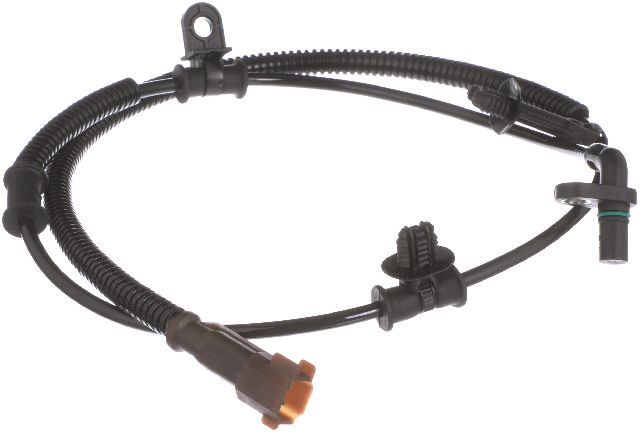
Est. part cost: $20-$50 - Failed Right Rear Wheel Speed Sensor 🔴 High Probability → Shop ABS Wheel Speed Sensor The sensor operates in a harsh environment and can fail electronically over time due to heat, vibration, and moisture intrusion.
How to confirm: After ruling out wiring, the easiest way to confirm a bad sensor is to use a scan tool that can read live ABS data. Watch the output from all four wheel speed sensors while driving. If the right rear sensor reads 0 MPH or shows an erratic signal while the others read correctly, the sensor is the likely culprit. You can also swap the left and right rear sensors (if they are interchangeable) to see if the code follows the sensor.
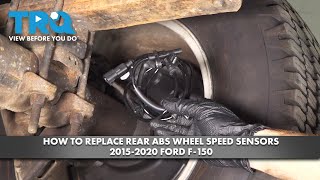
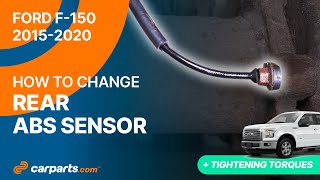
Typical fix: Replace the right rear wheel speed sensor. It is typically held in by a single 10mm bolt on the rear axle housing. 🎬 Watch: Step-by-step guide to replacing the rear ABS sensor.
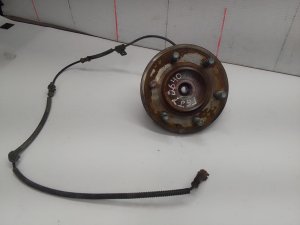
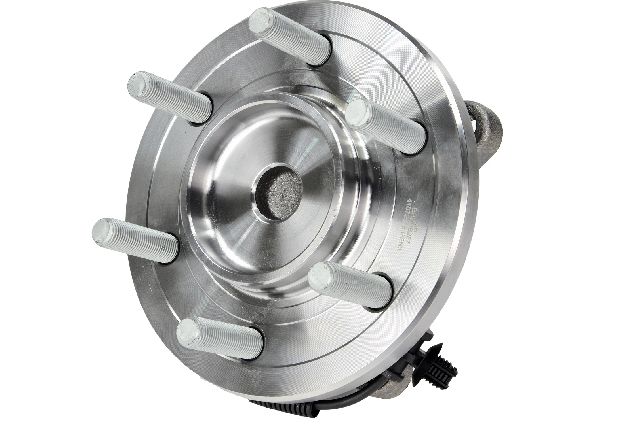
Est. part cost: $25-$70 - Damaged or Contaminated Wheel Bearing Encoder Ring 🟡 Medium Probability The magnetic encoder ring is integrated into the seal of the rear wheel bearing assembly. Metallic debris from normal brake and axle wear can stick to the magnetic ring, disrupting the signal. The ring can also be damaged during other axle repairs or crack due to corrosion.
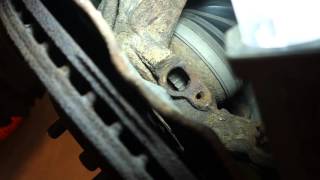
How to confirm: Remove the wheel speed sensor from its mounting hole. Use a flashlight to look inside and inspect the magnetic ring on the wheel bearing as you slowly rotate the wheel. Look for metallic shavings, heavy rust, or physical cracks on the ring.
Typical fix: If the ring is just dirty with debris, it can sometimes be carefully cleaned with a non-magnetic tool and brake cleaner. 🎬 Watch: How to clean the magnetic tone ring without removing wheels. If the ring is cracked or physically damaged, the entire wheel hub and bearing assembly must be replaced.
Est. part cost: $150-$300
Rare But Worth Checking
- Failed ABS Control Module: → Shop ABS Control Module This is the least likely cause. The ABS module is the computer that processes the sensor inputs. It should only be considered after definitively ruling out the sensor, wiring, and wheel bearing encoder ring as the cause. A failure here would typically set multiple wheel speed sensor codes.
Diagnosis Steps
- Connect an ABS-capable scan tool and confirm that C0050 is the active code. Check for any sub-codes (e.g., C0050:00 for general circuit malfunction) which can provide more specific clues.
- Use the scan tool's live data function to monitor the speeds of all four wheels while driving slowly (above 5 mph). Confirm that the Right Rear (RR) wheel speed sensor is reading 0 MPH or is providing an erratic signal compared to the other three wheels.
- Raise and safely support the rear of the vehicle. Remove the right rear wheel.
- Perform a thorough visual inspection of the wheel speed sensor's wiring harness and connector. Look for any signs of physical damage, chafing against the frame or suspension, or corrosion inside the connector. Pay close attention to the harness section along the axle tube and where it flexes.
- If the wiring appears intact, remove the single 10mm bolt holding the wheel speed sensor in place and carefully pull the sensor out of the axle housing.
- Inspect the tip of the sensor for metallic debris or physical damage.
- Look into the sensor mounting hole. Inspect the magnetic encoder ring on the wheel bearing for cracks, damage, or an accumulation of metallic debris. Slowly rotate the axle to inspect the entire ring.
- If the ring is dirty, clean it carefully with brake cleaner and a non-magnetic brush. Reinstall the sensor, clear the codes, and test drive to see if the fault returns.
- If the wiring, sensor, and ring appear visually okay, perform a resistance and continuity test on the sensor and its wiring harness. Disconnect the harness at the sensor and at the ABS module and check for opens or shorts to ground/power. Wiggle the harness during testing to find intermittent faults.
- If the ring is damaged, replace the rear wheel bearing assembly. If the sensor is faulty, replace the sensor. If the wiring is faulty, repair the harness or replace the pigtail connector.
Parts You'll Likely Need
- Right Rear ABS Wheel Speed Sensor
(OEM #FL3Z-2C190-A)— This sensor is a common failure point due to its exposure to the elements and constant vibration. It is often the primary cause of a C0050 code.
Trusted brands: Motorcraft, Bosch, Delphi, Standard Motor Products
OEM price range: $50-$80
Aftermarket price range: $25-$50 - Rear Wheel Hub and Bearing Assembly
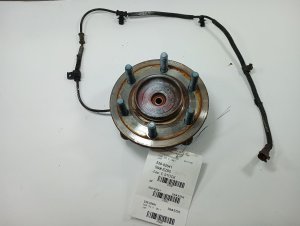
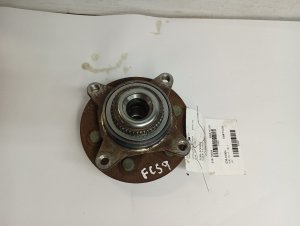
(OEM #FL3Z-1104-H)— Required if the integrated magnetic encoder (tone) ring is cracked or damaged, as it is not serviced separately from the bearing.
Trusted brands: Motorcraft, Timken, SKF, MOOG
OEM price range: $250-$350
Aftermarket price range: $150-$250 - ABS Wheel Speed Sensor Connector (Pigtail)
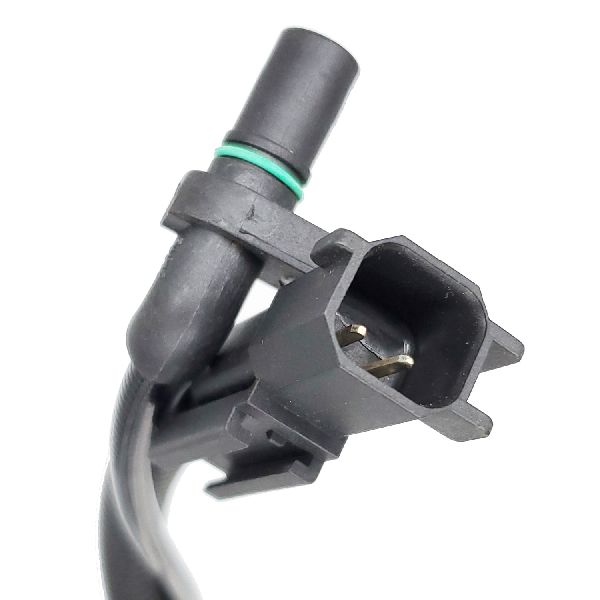
(OEM #WPT-984 / WPT-1125)— The connector at the end of the harness is prone to corrosion or wire fatigue, requiring it to be cut out and a new pigtail spliced in. Verify the correct pigtail for your specific harness.
Trusted brands: Motorcraft, Dorman
OEM price range: $30-$50
Aftermarket price range: $20-$40
Related Codes That Often Appear With This One
- U0415 — This code indicates 'Invalid Data Received From Anti-Lock Brake System Control Module'. It often appears as a secondary code because other modules on the vehicle rely on the ABS system for accurate speed data, and when the ABS module sets a fault like C0050, it broadcasts this invalid data status to the rest of the network. An owner report in NHTSA ODI #11228687 confirms that C0050 can appear alongside U0415 and other communication codes like U0126 and U0151.
- C0045 — This is the equivalent code for the Left Rear Wheel Speed Sensor Circuit. It's not uncommon for wiring on both sides to degrade over time, potentially causing both codes to appear.
Platform-Specific Known Issues
- source — An owner on F150forum.com describes getting the C0050 code along with multiple dash warnings. After replacing the sensor didn't fix the issue, the dealership found a broken wire in the harness near the rear axle. This is a common real-world example of wiring being the root cause.
Documented NHTSA Reports
While the C0050 code is standard across manufacturers, its implications can vary. For example, NHTSA ODI #10763888 describes a case on a different vehicle platform where C0050 was used to identify a faulty power steering control module (PSCM) rather than a wheel speed sensor. However, on the F-150 platform, it remains primarily associated with the braking system. NHTSA ODI #11649367 notes that the vehicle may disable ABS and supporting systems when C0050 is set, sometimes in conjunction with code C2227. Additionally, NHTSA ODI #11693418 reports a diagnostic showing C0050-00 in a scenario where the rotors, rear brake pads, and adapter plates required replacement.
Mechanic-Grade Diagnostic Values
- Wheel Speed Sensor Circuit Current — expected: 6.3 - 15.4 mA. Failure: A reading outside this range indicates a fault in the sensor or wiring.
- Wheel Speed Sensor Resistance (Passive Sensor - Older Models) — expected: 800 - 2,000 Ohms. Failure: A reading of infinite ohms (open) or zero ohms (short) indicates a failed sensor. Note: This test is not for the active sensors used on 2015-2020 F-150s, which require voltage tests.
- ABS Module Power Supply Voltage — expected: 12V+. Failure: Low or no voltage at the ABS module power pins indicates a problem with the fuse, relay, or power feed wiring, not the sensor circuit itself.
Hidden / Shadow Codes Worth Checking
- C0050:07: Mechanical Failure. This points to a physical issue like a damaged tone ring, excessive wheel bearing play changing the air gap, or an incorrectly installed sensor. (see via Ford IDS, FORScan, or other professional-grade scan tools capable of reading manufacturer-specific symptom bytes.)
- C0050:0F: Signal Erratic. This suggests an inconsistent signal, often caused by a loose connection, intermittent wiring break, or debris on the magnetic encoder ring. (see via Ford IDS, FORScan, or other professional-grade scan tools.)
- C0050:13: Circuit Open. This indicates a complete break in the wiring, a disconnected connector, or a failed sensor creating an open circuit. (see via Ford IDS, FORScan, or other professional-grade scan tools.)
- C0050:18: Signal Amplitude Less Than Minimum. This points to a weak signal, which could be caused by a large air gap between the sensor and ring, a failing sensor, or low voltage in the circuit. (see via Ford IDS, FORScan, or other professional-grade scan tools.)
- C0050:5A: Signal Not Plausible. The signal from the sensor doesn't make sense when compared to other vehicle data, like the other wheel speed sensors. (see via Ford IDS, FORScan, or other professional-grade scan tools.)
Scan Tool Commands That Help
- FORScan / Ford IDS: ABS Module On-Demand Self-Test — Use this after a repair to command the ABS module to check all its inputs and outputs. A passing test confirms the repair was successful and the fault is no longer present. A failing test indicates the issue persists.
- FORScan / Ford IDS / High-End Scanners: Live Data / PID Monitoring (WSS_RR) — This is the primary diagnostic step. Monitor the 'WSS_RR' (Wheel Speed Sensor - Right Rear) PID while driving. If it reads 0 or shows erratic values while other sensors read correctly, it confirms the fault is isolated to the right rear circuit.
Wiring & Ground Locations
- ABS Control Module — On the driver's side frame rail, mounted to the top of the ABS hydraulic unit, typically beneath the air filter housing.. This is the destination for the wheel speed sensor signal. All circuit testing ultimately leads back to the connector on this module.
- Connector C134 — The main electrical connector at the ABS control module.. The wires from the right rear wheel speed sensor terminate here. A forum post suggests pins 26-29 are related to the rear speed sensors. Pinpoint testing at this connector can determine if a wiring fault exists between the sensor and the module, bypassing the need to trace the entire harness.
- Ground Point G303 — Located behind the driver's side kick panel, near the parking brake pedal lever.. While not the direct ground for the sensor circuit (which is provided by the ABS module), a poor chassis ground in this area can cause electrical interference and various module communication issues. It is a known ground point for other rear vehicle functions.
Real Owner Repair Stories
- F150forum.com user (2013 F-150 5.0L) — ABS, brake, and TCS error lights on. Codes C1165 (RR WSS Failure), C1175 (LR WSS Failure), and C109E (Vacuum Sensor Fault).
❌ Tried (didn't work) Initial diagnosis was confusing due to multiple, seemingly unrelated codes appearing at once.
✅ What actually fixed it The user was advised that the wiring for all three affected components runs through a large connector near the brake master cylinder. The problem was likely damage or corrosion within that single connector (C134), causing multiple circuit failures simultaneously. - YouTube channel 'Schneids15' (Ford F-150 (2009-2014 generation, but demonstrates a common failure mode)) — ABS, Brake, Hill Descent Fault lights. Code for front right wheel speed sensor.
❌ Tried (didn't work) Replacing the wheel speed sensor, which only temporarily fixed the issue because moving the connector cleaned the contacts., Cleaning the connector, which worked for about a year until moisture caused the issue to return.
✅ What actually fixed it The electrical connector for the wheel speed sensor had severe internal corrosion (green and crusty). The final fix was to cut out the failed connector and splice the wires directly using heat shrink butt connectors, permanently resolving the poor connection.
OEM Part Supersession History
FL3Z-2C190-B→JL3Z-2C190-D— Part revision or supplier change.
Heads up: This part number (JL3Z-2C190-D) is listed for the LEFT rear sensor, but it supersedes a previous part number that may have been used more broadly. Always verify the correct part for the specific side (Right vs Left) with a VIN. The correct part for the Right Rear is FL3Z-2C190-A.
Diagnostic Flowchart
Other Known Issues on This Vehicle
Issues unrelated to this code that are worth knowing about as an owner of this generation:
- Frozen Door Latches in Cold Weather 🔴 High — Very common on 2015-2018 models in cold climates. Doors may fail to open or fail to latch closed. (Ref: Customer Satisfaction Program 18N03 extends coverage for this issue until Oct 31, 2028.)
- Excessive Oil Consumption (5.0L V8) 🟠 Medium — Affects a significant number of 2018-2020 models with the 5.0L engine. Often presents as needing more than 1 quart of oil per 3,000 miles. (Ref: TSB 19-2365 addresses this with a PCM reprogram and a revised oil dipstick.)
- Harsh or Delayed Shifting (10R80 Transmission) 🔴 High — Widespread on 2017-2020 models equipped with the 10-speed automatic transmission. Can manifest as harsh shifts, clunks, or delayed engagement. (Ref: Multiple TSBs exist, including 21-2357 and 23-2123, which may involve a PCM reflash or a main control valve body overhaul.)
- Warped Dashboard 🟡 Low — Common cosmetic issue where the dashboard cover lifts and separates near the defrost vents, particularly in hot climates. Not a safety or functional defect.
Used vs. New Parts: Buying Guide for This Vehicle
When a used part is the smart pick: A used wiring harness pigtail from a junkyard is an excellent choice, as it's an OEM part and often the only way to get a factory connector with a usable length of wire. A used ABS sensor can be a cost-effective option if its history is known or if it can be tested, but it carries a risk of having limited remaining life.
Donor-vehicle mileage cap: roughly under 80000 miles for the part to have meaningful remaining life.
What to inspect on the donor part:
- For a pigtail connector: Check for flexible, non-brittle wires. Ensure the locking tab is intact and that there is no green or white corrosion on the pins.
- For a sensor: Inspect the plastic housing for cracks or heat damage. Ensure the mounting tab is not broken.
- For a wheel bearing/hub: Spin the hub by hand. It should be completely silent and smooth with zero roughness or grinding. Check the integrated magnetic tone ring for any cracks, chips, or heavy rust.
OEM-only on this vehicle (don't cheap out):
- Wheel Hub and Bearing Assembly: While not strictly 'OEM-only', using a high-quality, reputable brand (like Motorcraft, Timken, SKF, MOOG) is critical. Cheap, unbranded hub assemblies are notorious for premature failure, leading to a repeat of the same C0050 code or other noise/vibration issues within a short period.
Aftermarket brands forum-validated for this vehicle:
- Sensors: Bosch, Delphi, Standard Motor Products (SMP), NTK.
- Hub Assemblies: Timken, SKF, MOOG.
Brands owners have reported issues with on this vehicle:
- Avoid generic, no-name 'white box' sensors and hub assemblies from online marketplaces. Forum discussions frequently mention these parts failing quickly or being dead-on-arrival.
Real Owner Stories
Aggregated from forums and TSBs cited above. Mileages and costs reflect what owners reported in those sources.
2015-2020 Ford F-150
Symptoms: ABS, traction control, and hill descent control fault lights all appeared on the dash simultaneously.
What fixed it: The dealership identified a broken wire in the harness located near the rear axle after a new sensor failed to resolve the issue.
Source hint: f150forum.com thread titled 'ABS, Traction Control, Hill Descent Control Fault'
Related OBD-II Codes
Frequently Asked Questions
Which Motorcraft pigtail connector do I need for a 2015-2020 F-150 rear speed sensor repair?
My F-150 is showing 'Service AdvanceTrac' and 'Hill Descent Control Fault' along with C0050. Are these related?
Can I just clean the sensor, or do I have to replace the whole wheel bearing?
Is there a specific bolt size for the F-150 rear speed sensor?
Does the 2018-2020 Ford Expedition suffer from the same C0050 issues as the F-150?
I replaced the sensor on my F-150 but the C0050 code is still active. What should I check next?
Helpful Videos
Used OEM Parts in Stock
New Aftermarket Parts Available


The information in this article is provided for general reference and educational purposes only. Vehicle specifications, procedures, and part compatibility can vary by production date, trim level, and region. Always consult your vehicle's factory service manual and verify part numbers before purchasing or performing repairs. Safety-critical components such as airbags, seat belts, and braking systems should be installed by a qualified professional.
- Ford F-150:
- 🧭 Diagnostic Flowchart
- 🎬 Helpful Videos
- 🛍️ Shop This Part
- What's Unique About the 2015-2020 Ford F-150
- Symptoms You May Notice
- Most Likely Causes
- Rare But Worth Checking
- Diagnosis Steps
- Parts You'll Likely Need
- Related Codes That Often Appear With This One
- Platform-Specific Known Issues
- Documented NHTSA Reports
- Mechanic-Grade Diagnostic Values
- Hidden / Shadow Codes Worth Checking
- Scan Tool Commands That Help
- Wiring & Ground Locations
- Real Owner Repair Stories
- OEM Part Supersession History
- Other Known Issues on This Vehicle
- Used vs. New Parts: Buying Guide for This Vehicle
- Real Owner Stories
- 2015-2020 Ford F-150
- Related OBD-II Codes
- Frequently Asked Questions
- 🎟️ Get 5% Off