

C0050 on 2015-2022 Ford Mustang: Right Rear Wheel Speed Sensor Fault Causes and Fixes
On a 2015-2022 Mustang, code C0050 almost always means the right rear ABS wheel speed sensor has failed. This disables ABS, AdvanceTrac stability control, and sometimes cruise control. Replacing the sensor is a common DIY fix, with the Motorcraft part costing between $40 and $100. The sensor is held by a single 8mm or 10mm bolt on the rear knuckle.
- C0050 on a 2015-2022 Mustang means there's a problem with the right rear wheel speed sensor circuit, which will disable your ABS and traction control.
- The most likely fix is replacing the right rear ABS sensor, a relatively inexpensive part that can be changed with basic tools.
- Before buying parts, use an ABS-capable scan tool to watch live wheel speed data to confirm the right rear sensor is the one that's not reporting speed.
- Always perform a quick visual inspection of the sensor's wiring and connector for obvious damage or corrosion before replacing the sensor itself.
- Driving is possible, but reduced braking performance in emergencies necessitates a prompt repair.
What's Unique About the 2015-2022 Ford Mustang
For the S550 generation Mustang (2015-2022), this code is overwhelmingly tied to the wheel speed sensor circuit, not other generic definitions like 'ABS pump motor' that may appear on some websites. The repair is typically straightforward as the sensor is a separate, bolt-in component on the rear knuckle. Unlike some other Ford platforms like the Explorer where the magnetic tone ring in the hub is the common failure point, on the S550 Mustang, direct sensor failure is more frequent. While hub or wiring failure is possible, starting with the sensor is the most common and cost-effective diagnostic path for this platform.
Symptoms You May Notice
- ABS warning light is on
- Traction Control or Stability Control (AdvanceTrac) warning light is on
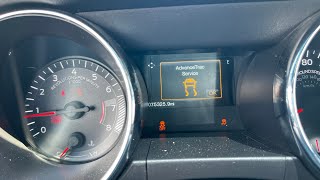
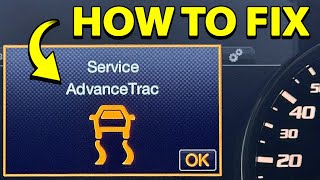
- Service AdvanceTrac message displayed
- ABS and traction control are non-functional
- Selectable drive modes (Sport, Track, etc.) may be unavailable or revert to Normal.
- Cruise control may be disabled.
- Hill Start Assist Not Available 🎬 See how these specific warning lights are fixed. message may appear.
- Replacing the wheel hub assembly before confirming the sensor or wiring is the actual cause. While the hub contains the tone ring, sensor failure is more common and a much cheaper first step on this platform.
- Confusing the definition with 'ABS Hydraulic Pump Motor Circuit', which applies to other manufacturers and would lead to unnecessary diagnosis of the ABS pump and relays.
- Replacing an O2 sensor. A similar-looking code, P0050, relates to the Bank 2 Heated Oxygen Sensor 1 circuit and is a common code on Mustangs with aftermarket headers, but it is unrelated to the ABS system.
Most Likely Causes
- Failed Right Rear Wheel Speed Sensor 🔴 High Probability → Shop ABS Wheel Speed Sensor The sensor is exposed to harsh conditions behind the wheel, including water, road salt, brake dust, and debris, which can lead to internal electronic failure or corrosion over time. High-performance brake pads used on track can create excessive dust that coats the sensor, leading to signal loss.
How to confirm: Use an ABS-capable scan tool to monitor live data from all four wheel speed sensors while driving. If the right rear sensor reads 0 MPH or shows an erratic signal while the others report speed accurately, the sensor has failed. The sensor is held by a single 8mm or 10mm bolt, making removal for inspection or replacement straightforward. 🎬 Watch: Step-by-step S550 Mustang rear wheel speed sensor replacement.
Typical fix: Replace the right rear ABS wheel speed sensor. The rear sensors are not side-specific. After replacement, the code may need to be cleared with a scan tool, or it may clear itself after a short drive.
Est. part cost: $40-$100 - Damaged Wiring or Connector 🟡 Medium Probability The wiring harness runs along the suspension and can be damaged by road debris, improper jack placement, or suspension work. The connector pins can also corrode, causing a poor signal. Wiggling the harness while monitoring live data can help identify an intermittent break.
How to confirm: Visually inspect the wiring harness from the sensor to the main chassis loom for any signs of fraying, melting, or physical damage. Unplug the connector (it has a red locking tab) and check for corrosion (green or white powder) or bent pins. A multimeter can be used to check for continuity between the connector and the ABS module plug.
Typical fix: Repair the damaged section of wire with solder and heat shrink tubing. If the connector is corroded, it may need to be cleaned or replaced with a new pigtail connector.
Est. part cost: $15-$50
Rare But Worth Checking
- Damaged Wheel Hub / Tone Ring: The ABS sensor reads a magnetic encoder ring (tone ring) built into the wheel hub assembly. While less common on the S550, if this ring becomes cracked, contaminated with metallic debris, or if a related component like a thrust washer breaks and moves around, it can block the sensor and cause an erratic signal. This was a more frequent issue on other Ford platforms but is still worth considering if a new sensor doesn't fix the code. In some forum-documented cases, replacing the sensor did not fix the issue, but replacing the hub assembly did. The fix requires replacing the entire wheel hub assembly.
- Failing Battery or Charging System: On the S550 platform, a weak or failing battery can cause the Battery Management System (BMS) to shut down power to various modules to conserve energy. This can lead to a cascade of seemingly unrelated error codes, including ABS, power steering, and hill start assist faults. If C0050 appears with multiple other 'lost communication' codes, test the battery and charging system 🎬 Watch: Common reasons your AdvanceTrac light stays on. before diagnosing the ABS circuit.
- Failed ABS Control Module: → Shop ABS Control Module In very rare cases, the internal circuitry of the ABS module itself can fail for the specific channel that reads the right rear sensor. This should only be considered after the sensor, wiring, and hub have all been confirmed to be in good working order. A module failure would typically throw multiple sensor codes, not just one.
Diagnosis Steps
- Connect an ABS-capable OBD-II scanner and confirm the presence of code C0050. Check for any manufacturer-specific sub-codes (e.g., :18, :5A) which can provide more detail.
- Access the live data stream for the ABS module.
- Safely drive the vehicle while a passenger monitors the speeds of all four wheels on the scanner. Confirm that the Right Rear (RR) wheel speed sensor reads 0 MPH or shows an erratic/implausible signal compared to the other three.
- If the signal is faulty, raise and safely support the rear of the vehicle on jack stands.
- Remove the right rear wheel. Locate the ABS sensor on the rear steering knuckle. It is held in by a single 8mm or 10mm bolt.
- Visually inspect the sensor and its wiring harness for any obvious damage, such as cracks, melting, or frayed wires.
- Disconnect the sensor's electrical connector. This involves pulling up a red locking tab, then depressing a black release tab. Inspect the pins on both the sensor and the harness side for corrosion, moisture, or damage.
- If the visual inspection reveals no issues, the sensor is the most likely culprit. Replace the right rear ABS wheel speed sensor. The rear sensors are interchangeable side-to-side.
- If a new sensor does not resolve the issue, use a multimeter to check for proper voltage and ground at the harness connector with the key on. Then, check for continuity on the signal and ground wires back to the ABS module connector.
- If wiring is confirmed good, the next step is to inspect the tone ring on the wheel hub for damage or metallic debris. This can sometimes be viewed through the sensor mounting hole while spinning the hub. If the tone ring is damaged, the hub assembly must be replaced.
- After repairs, clear the code with the scan tool and perform a test drive to ensure the warning lights do not return. Some systems may self-clear after a drive cycle.
Parts You'll Likely Need
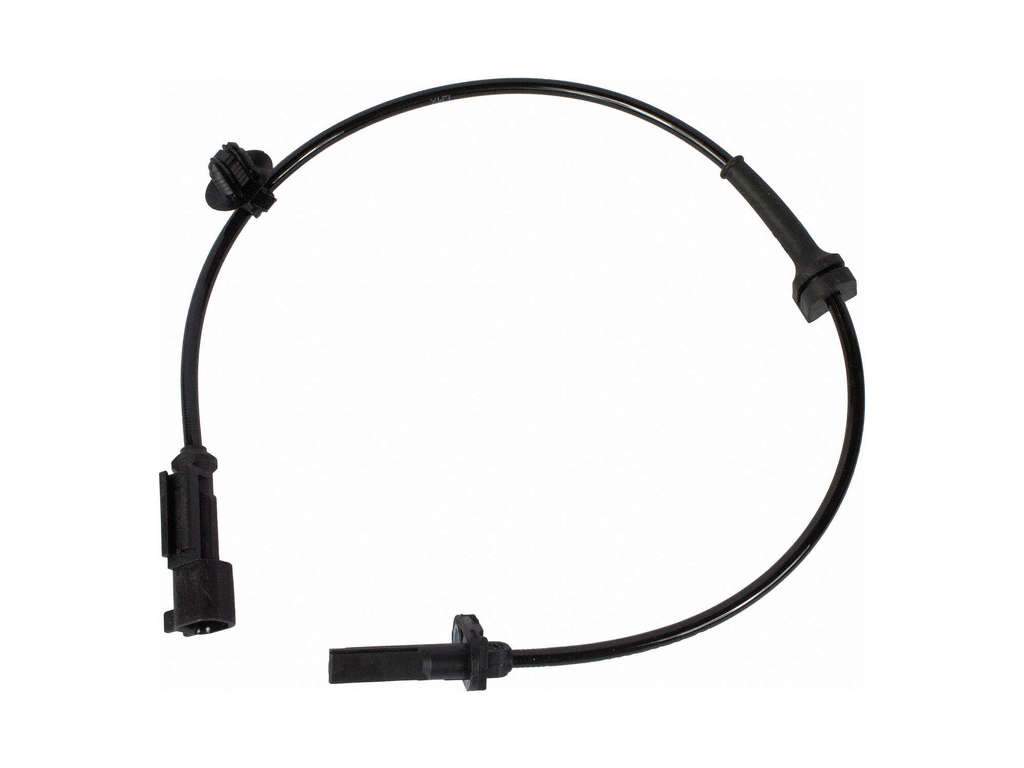
- Rear ABS Wheel Speed Sensor
(OEM #FR3Z-2C190-B)— This is the most common failure point for code C0050. The sensor is exposed to the elements and fails electronically over time. Note: Part number FR3Z-2C190-B is specified for models with an automatic transmission and without adaptive cruise control. Part number JR3Z-2C190-A is specified for models with a manual transmission and adaptive cruise control. Always verify the correct part for your specific VIN, though forum users report the rear sensors are physically interchangeable.
Trusted brands: Motorcraft, Standard Ignition (SMP), Bosch, NTK
OEM price range: $60-$100
Aftermarket price range: $30-$75
Related Codes That Often Appear With This One
- C003A (Right Rear Wheel Speed Sensor - with sub-codes)
- U0415 (Invalid Data Received From Anti-Lock Brake System Control Module)
Platform-Specific Known Issues
- Track Use and Brake Dust: Owners who frequently track their S550 Mustangs, especially with aggressive, high-dust brake pads, report that an accumulation of brake dust on the magnetic sensor tip can cause the signal to drop out and trigger this code. Cleaning the sensor can be a temporary fix, but the issue may recur.
- Connector Release Tab: The electrical connector for the sensor can be difficult to release due to its location. It has a red locking tab that must be pulled out or up before the main black release tab can be depressed. Some owners have resorted to using a small tool to help release the tabs.
Mechanic-Grade Diagnostic Values
- Sensor Harness Reference Voltage (Key On, Engine Off) — expected: 5V or 12V (depending on system design) at one pin, and good ground (<1 Ohm) at the other pin.. Failure: No voltage or no ground indicates a wiring or ABS module power supply issue.
- Sensor AC Voltage Output (while spinning wheel by hand) — expected: A fluctuating AC voltage signal, typically greater than 100mV, that increases with speed.. Failure: A reading of 0V or a non-fluctuating signal while the wheel is spinning points to a failed sensor.
- Sensor Resistance (Ohms) — expected: DO NOT perform this test. S550 Mustangs use active sensors which cannot be accurately tested for resistance.. Failure: An Ohm test is not a valid diagnostic procedure for this type of sensor and can give misleading results.
Hidden / Shadow Codes Worth Checking
- C0050:0F: Signal Erratic. This points to an inconsistent signal, often caused by a loose connection, debris on the tone ring, or a failing sensor. (see via Ford IDS, FORScan, or high-end professional scan tools (Autel, Snap-on) capable of reading manufacturer symptom bytes.)
- C0050:18: Signal Amplitude Less Than Minimum. The signal is too weak, often due to an excessive air gap between the sensor and ring, internal sensor failure, or high resistance in the wiring. (see via Ford IDS, FORScan, or high-end professional scan tools.)
- C0050:5A: Signal Not Plausible. The signal from the sensor does not make sense when compared to other vehicle data, like the other three wheel speed sensors. (see via Ford IDS, FORScan, or high-end professional scan tools.)
Scan Tool Commands That Help
- Ford IDS, FORScan: Live Data / Data Logger — This is the primary diagnostic step. Use it to monitor and graph the signal from all four wheel speed sensors simultaneously while driving to confirm the right rear sensor is the one dropping out or providing an erratic reading.
- Ford IDS, FORScan: ABS Module Programming (PMI) — This is mandatory if the ABS control module itself is replaced. The new module must be configured with the vehicle's specific VIN and factory calibration data.
Wiring & Ground Locations
- C4092 (Right Rear Wheel Speed Sensor Connector) — The sensor connector is not immediately visible. The harness runs from the sensor on the knuckle up into the wheel well, where the connector is located high up, requiring the plastic wheel well liner to be partially removed or folded back for access.. Technicians may expect the connector to be easily accessible near the sensor. Knowing it is hidden behind the liner saves diagnostic time and prevents unnecessary pulling on the harness.
- ABS Module Fuses (2018+) — In the under-hood fuse box. Specifically, check fuse #5 (50A, ABS pump), #28 (30A, ABS valve), #62 (5A), and #66 (5A, ABS run-start switch).. While a single sensor code is unlikely to be a fuse, if multiple ABS codes are present or if there is no power at the sensor harness, these fuses are the first place to check before condemning the module.
Real Owner Repair Stories
- YouTube channel 'Dreko TV' (2015 Ford Mustang GT) — ABS light on, traction control light on, unable to select drive modes (stuck in normal).
❌ Tried (didn't work) The owner first took the car to a Ford dealer for diagnosis.
✅ What actually fixed it The Ford dealer diagnosed a bad driver-side rear ABS sensor. The owner purchased the OEM part and replaced it himself, which resolved all symptoms and warning lights. The video documents the replacement process, including locating the connector and removing the sensor.
OEM Part Supersession History
FR3Z-2C190-B→FR3Z-2C190-B (current)— This part number is primarily associated with 2015-2017 models, often specified for automatic transmissions.JR3Z-2C190-A→JR3Z-2C190-A (current)— This part number is primarily associated with 2018-2022 models, including Shelby and manual transmission variants.
Heads up: While the rear sensors are reported to be physically interchangeable, using the correct part number for the vehicle's model year and options is highly recommended to ensure correct electronic operation, as internal calibrations may differ.
Model Year Variations Within This Range
- 2018-2022: The specified OEM part number for the rear ABS sensor is typically JR3Z-2C190-A for the facelift models, differing from the FR3Z-2C190-B commonly used on 2015-2017 models. Additionally, fuse locations and ratings in the under-hood fuse box may vary slightly; for example, on a 2018 model, the key ABS fuses are #5, #28, #62, and #66.
Diagnostic Flowchart
Other Known Issues on This Vehicle
Issues unrelated to this code that are worth knowing about as an owner of this generation:
- Leaking A/C Evaporator Core 🔴 High — Very common across 2015+ models. Often manifests as weak A/C performance or warm air from vents. Repair is extremely labor-intensive (8-14 hours) as it requires full dashboard removal. (Ref: TSB 18-2256 (supersedes 18-2166) was issued for 2015-2017 models, but the problem is widely reported to persist in later years.)
- 10R80 Automatic Transmission Harsh/Delayed Shifting 🟠 Medium — Affects many 2018+ Mustangs with the 10-speed automatic. Symptoms include harsh, jerky, or delayed shifts, lunging, and clunking. Subject of multiple TSBs and a class-action lawsuit. (Ref: Multiple TSBs exist, including 23-2123, which involves overhauling the main control valve body or performing an adaptive learning drive cycle.)
- MT82 Manual Transmission High-RPM Lockout/Shift Issues 🟠 Medium — Common complaint on GT models with the 6-speed manual transmission. Drivers experience being locked out of gears (especially 2nd and 3rd) during high-RPM, aggressive shifting.
- 5.0L V8 Engine "BBQ Tick" Noise 🟡 Low — A light, rhythmic ticking noise from the engine at idle, often more noticeable on the passenger side. Ford has stated this is a normal operating characteristic of the direct-injection 5.0L engine and does not affect durability. (Ref: TSB 19-2144 states that this is a normal characteristic and no repairs should be attempted.)
- Seat Pan Looseness or Clunking 🟡 Low — Some vehicles may experience a clunk or thump noise from the driver or passenger seat during turns, or a feeling of lateral movement, due to the seat pan tracks. (Ref: TSB 21-2283 (and earlier versions) provides a procedure to install a reinforcement bracket.)
Used vs. New Parts: Buying Guide for This Vehicle
When a used part is the smart pick: A used part is a reasonable choice for the wheel hub/bearing assembly or the ABS control module, but not for the sensor itself.
Donor-vehicle mileage cap: roughly under 75000 miles for the part to have meaningful remaining life.
What to inspect on the donor part:
- For a used hub: Inspect the magnetic tone ring on the back for any cracks, chips, or heavy metallic contamination. Spin the bearing by hand to ensure it is smooth, silent, and has no side-to-side play.
- For a used ABS module: The part number must be an exact match to the original. Inspect all electrical connector pins for any signs of corrosion (green/white powder) or physical damage. Ensure the housing is not cracked.
OEM-only on this vehicle (don't cheap out):
- ABS Control Module: While a used OEM module is acceptable, avoid new aftermarket modules. Programming a replacement module requires specific software (IDS/FORScan) and can fail with non-OEM hardware, leading to more diagnostic headaches.
Aftermarket brands forum-validated for this vehicle:
- For the ABS Sensor: Motorcraft (OEM), Bosch, NTK, Standard Motor Products (SMP).
Brands owners have reported issues with on this vehicle:
- No specific brands are consistently reported as problematic, but ultra-low-cost, unbranded sensors from online marketplaces may have a higher failure rate and are best avoided.
Real Owner Stories
Aggregated from forums and TSBs cited above. Mileages and costs reflect what owners reported in those sources.
2015-2022 Ford Mustang
Symptoms: ABS warning light, Traction Control light, and 'Service AdvanceTrac' message displayed. ABS and traction control were non-functional.
What fixed it: Replacement of the right rear ABS wheel speed sensor. The sensor was held by a single 8mm or 10mm bolt, making the fix straightforward.
Source hint: Mustang6G.com - 'ABS speed sensor repl'
S550 Mustang (Track Use)
Symptoms: Signal drop out and C0050 code triggered after track sessions with aggressive brake pads.
What fixed it: Cleaning the magnetic sensor tip of accumulated brake dust provided a temporary fix.
Source hint: vehicle_specific_issues - 'Track Use and Brake Dust'
Documented NHTSA Reports
While the following reports involve different manufacturers, they illustrate how C0050 is interpreted across the industry and can provide cross-platform diagnostic context:
- An owner reported that after a diagnostic, code C0050-00 was shown alongside the need to replace rotors, rear brake pads, and an adapter plate (NHTSA ODI #11693418).
- A technician noted that code C0050 can be set when extra brake fluid is required to take up open space after service, disabling the ABS and supporting systems (NHTSA ODI #11649367).
- In some vehicle architectures, a local dealership diagnosed C0050 as a faulty Power Steering Control Module (PSCM), requiring replacement of the entire steering column (NHTSA ODI #10763888).
- One report describes C0050 appearing with a cascade of other codes including C0035, C0040, and various communication codes (U0415, U0126), resulting in multiple warning lights (NHTSA ODI #11228687).
Related OBD-II Codes
Frequently Asked Questions
Can I swap the left and right rear ABS sensors on my S550 Mustang to troubleshoot code C0050?
Why did my Mustang's drive modes (Sport/Track) stop working when the ABS light came on?
I track my Mustang and keep getting C0050; is there a specific cause for high-performance use?
Is there a TSB for the 'BBQ Tick' noise on my 5.0L V8 Mustang?
My Mustang has harsh shifting and a 'Service AdvanceTrac' message. Are these related?
How do I release the electrical connector for the right rear speed sensor?
Helpful Videos
We Have This Part in Stock

The information in this article is provided for general reference and educational purposes only. Vehicle specifications, procedures, and part compatibility can vary by production date, trim level, and region. Always consult your vehicle's factory service manual and verify part numbers before purchasing or performing repairs. Safety-critical components such as airbags, seat belts, and braking systems should be installed by a qualified professional.
- Ford Mustang:
- 🧭 Diagnostic Flowchart
- 🎬 Helpful Videos
- 🛍️ Shop This Part
- What's Unique About the 2015-2022 Ford Mustang
- Symptoms You May Notice
- Most Likely Causes
- Rare But Worth Checking
- Diagnosis Steps
- Parts You'll Likely Need
- Related Codes That Often Appear With This One
- Platform-Specific Known Issues
- Mechanic-Grade Diagnostic Values
- Hidden / Shadow Codes Worth Checking
- Scan Tool Commands That Help
- Wiring & Ground Locations
- Real Owner Repair Stories
- OEM Part Supersession History
- Model Year Variations Within This Range
- Other Known Issues on This Vehicle
- Used vs. New Parts: Buying Guide for This Vehicle
- Real Owner Stories
- 2015-2022 Ford Mustang
- S550 Mustang (Track Use)
- Documented NHTSA Reports
- Related OBD-II Codes
- Frequently Asked Questions
- 🎟️ Get 5% Off