

C0050 on 2013-2017 GMC Savana: Right Rear Wheel Speed Sensor Fault Causes & Fixes
On a 2013-2017 GMC Savana, code C0050 points to a fault in the right rear wheel speed sensor circuit. This is most often caused by damaged wiring near the sensor connector or a bad sensor. Expect to pay $60-$80 for a new sensor and $212-$324 for a professional replacement. Before replacing parts, thoroughly inspect the wiring harness as per TSB PIT4648D.
- Code C0050 on a GMC Savana means the right rear wheel speed sensor circuit has a fault, which disables ABS and Stabilitrak.
- Before replacing the sensor, thoroughly inspect the wiring harness for damage, especially where it's routed near the suspension and brake lines, as this is a known issue.
- Also, inspect and clean the tone ring on the wheel hub/axle, as debris can disrupt the sensor's reading.
- Driving is possible, but your vehicle's key electronic safety aids will not function, so exercise increased caution.
- A scan tool that can read live ABS data is essential for accurate diagnosis.
What's Unique About the 2013-2017 Gmc SAVANA
GMC Savana and Chevrolet Express vans are highly prone to wiring issues related to this code. A key Technical Service Bulletin (PIT4648D) notes that the wheel speed sensor harness can be routed incorrectly, causing it to be pulled tight and damaged during normal suspension movement. This leads to broken wires or terminals at the sensor connector, making a thorough wiring inspection a critical first step before replacing any parts on these specific vehicles. Repair videos on the platform-mate Chevrolet Express show this exact failure mode, where wires break internally right at the connector from stress.
Diagnostic Flowchart
Tap your situation to follow the diagnostic path that matches what you're seeing on this vehicle.
Symptoms You May Notice
- ABS warning light is on
- Stabilitrak or Traction Control warning light is on
- "Service Stabilitrak" or "Service Traction Control" message on the Driver Information Center.
- Replacing the wheel speed sensor without first inspecting the wiring harness for damage, which is a very common issue on the Savana/Express according to TSBs and real-world repairs.
Most Likely Causes
- Damaged Wiring Harness or Connector 🔴 High Probability A manufacturer TSB (PIT4648D) specifically calls out that the sensor harness can be routed incorrectly around the brake hose, causing wires to be pulled out of their terminal crimps during suspension travel. This is the most common failure point on these vans. Videos of repairs on the identical Chevrolet Express show technicians finding broken wires right at the back of the connector where it flexes.
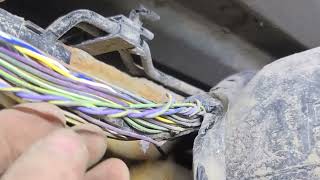
How to confirm: Visually inspect the entire wiring harness from the right rear wheel sensor to the main vehicle harness. Pay close attention to the routing near the brake hose and the integrity of the pins inside the connector. Gently wiggle the harness near the connector while monitoring live sensor data on a scan tool; a jumpy or dropping signal indicates a broken wire. 🎬 See how to perform a professional wiring harness wiggle test A multimeter test for continuity between the sensor connector and the EBCM can confirm an open circuit.
Typical fix: Repair the damaged section of wire or replace the connector pigtail. Ensure the harness is routed correctly with enough slack to prevent future damage. In one documented repair, a technician ran a new wire to bypass the broken section near the connector. 🎬 Watch: How to diagnose and repair a broken wire at the connector
Est. part cost: $15-$40 - Failed Right Rear Wheel Speed Sensor 🔴 High Probability → Shop ABS Wheel Speed Sensor The sensor is exposed to harsh conditions, road debris, and moisture, leading to eventual failure. While wiring is a more vehicle-specific issue, sensor failure is still a very common cause for this code on any vehicle.
How to confirm: Use a scan tool to monitor live data from the right rear wheel speed sensor while driving. If the reading is zero, erratic, or doesn't match the other wheels (and wiring has been confirmed good), the sensor is likely bad. You can also test the sensor's internal resistance with a multimeter, though this may not catch intermittent failures.
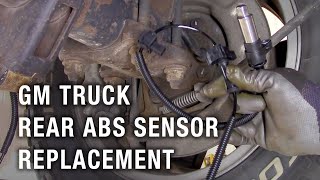
Typical fix: Replace the right rear wheel speed sensor. It is typically held in by a single T30 Torx bolt. 🎬 Watch: Step-by-step guide to replacing the rear ABS sensor
Est. part cost: $60-$80 - Damaged or Contaminated Tone Ring (Magnetic Encoder) 🟡 Medium Probability The tone ring, which the sensor reads, is an integral magnetic encoder on the wheel hub assembly. Rust, brake dust, or metallic debris can accumulate on it, disrupting the signal. Cracks in the magnetic ring from age or impact will also cause an erratic signal.
How to confirm: Remove the sensor and visually inspect the magnetic encoder ring on the hub for metallic debris, rust, or physical damage like cracks or missing sections. A cracked ring is a definitive failure.
Typical fix: Clean the tone ring with a brake cleaner and a soft brush. If the ring is cracked or physically damaged, the entire wheel hub assembly must be replaced as the ring is not serviced separately.
Est. part cost: $0 (for cleaning) or $150-$250 (for hub replacement)
Rare But Worth Checking
- Faulty Electronic Brake Control Module (EBCM): → Shop ABS Control Module This is the least likely cause and the most expensive part to replace. The EBCM should only be considered after the sensor, wiring, and tone ring have all been thoroughly tested and confirmed to be good. A failure here would typically set multiple codes, not just C0050.
Diagnosis Steps
- Connect an OBD-II scanner capable of reading ABS/chassis codes to confirm C0050 is active. Note any symptom bytes (e.g., 0F, 18, 5A).
- Use the scanner's live data function to monitor the speed of all four wheels while driving. Confirm that the right rear wheel's signal is erratic, absent, or doesn't match the others.
- Raise and secure the vehicle. Perform a thorough visual inspection of the right rear wheel speed sensor's wiring harness. Look for incorrect routing (especially around the brake hose), chafing, pinch points, or corrosion. Gently wiggle the wires near the connector to check for internal breaks.
- Disconnect the sensor and inspect the connector terminals for corrosion or damage.
- Remove the sensor (typically held by a single T30 bolt) and inspect the magnetic tone ring on the hub/axle for metallic debris, rust, or physical damage like cracks. Clean as necessary.
- If wiring and the tone ring appear okay, test the sensor. You can check its resistance with a multimeter or swap it with the left side sensor to see if the fault code follows the sensor (e.g., changes to C0045).
- If the sensor tests good, perform a continuity test on the wiring harness from the sensor connector to the EBCM to find any hidden breaks or shorts. This is a critical step for these vans.
- If all other components test good, the EBCM may be at fault, but this is rare.
Parts You'll Likely Need
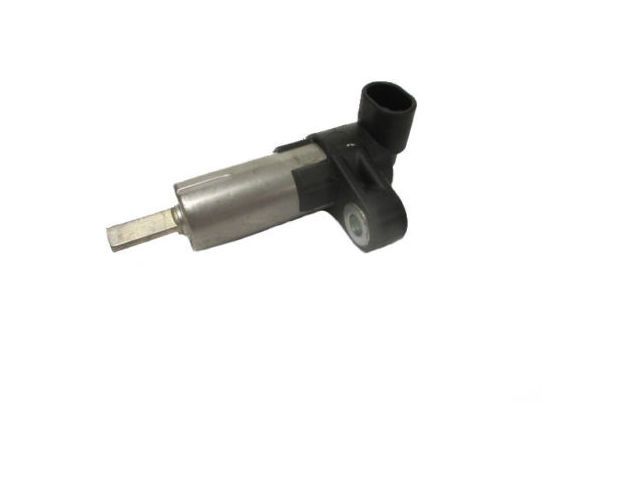
- Rear Wheel Speed Sensor
(OEM #20938122)— This sensor is the primary component that fails in the circuit, after wiring issues are ruled out. It is exposed to the elements and can fail internally. Note: Part numbers can vary, always verify with VIN.
Trusted brands: ACDelco, Standard Motor Products, Dorman
OEM price range: $70-$90
Aftermarket price range: $40-$70 - Rear Wheel Speed Sensor Connector Pigtail
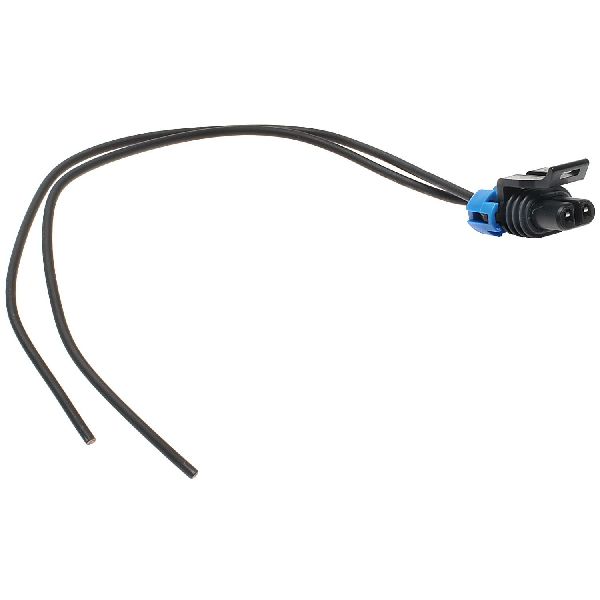
(OEM #ACDelco PT2830 / Standard Motor Products S-636)— If the wiring is damaged at the connector, replacing the pigtail is the standard repair. TSB PIT4648D specifically mentions issues with the terminals and crimps at the connector, and repair videos confirm this is a common failure point.
Trusted brands: ACDelco, Dorman, Standard Motor Products
OEM price range: $25-$40
Aftermarket price range: $15-$30
Related Codes That Often Appear With This One
- C0045 — This code is for the Left Rear Wheel Speed Sensor. Seeing both C0045 and C0050 together is mentioned in TSB PIT4648D and could point to a wiring harness issue common to both rear sensors or a problem at a shared connector.
Technical Service Bulletins (TSBs) & Recalls
- PIT4648D: ABS Light and/or Service Stability Message On With DTC C0045 and/or C0050. Points to wiring harness routing and terminal issues.
- 18316: Mentions C0050 0F being set by an erratic signal, causing ABS, Stabilitrak, and Traction Control lights to illuminate.
- PIT5623A: Notes an investigation into intermittent C0050 on dual rear wheel vans.
Platform-Specific Known Issues
- TSB PIT4648D highlights that on 2008-2012 Savana models (and applicable to later years), the wheel speed sensor harness can be misrouted around the brake hose, causing it to pull tight and damage the wires or terminals at the connector.
- TSB #18316 notes that an erratic signal can set code C0050 with a symptom byte of 0F, illuminating the ABS and Stabilitrak lights.
- For dual rear wheel models, TSB #PIT5623A noted that an intermittent C0050 was under investigation by GM engineering, indicating a potentially unique issue for that specific configuration.
Mechanic-Grade Diagnostic Values
- Wheel Speed Sensor Harness Voltage (Active Sensor) — expected: Approximately 12V on the power supply wire and a bias voltage of ~1.0V on the signal wire with key on, engine off.. Failure: Voltage is missing on either wire, indicating an open/short in the harness or a fault in the EBCM.
- Wheel Speed Sensor Signal (Active Sensor) — expected: A digital square wave that switches between ~7mA and ~14mA DC current, viewable on a lab scope. The frequency increases with wheel speed.. Failure: The signal is missing, flat-lined, or shows erratic dropouts when the wheel is spinning.
- Wheel Speed Sensor Resistance (Passive Sensor for comparison) — expected: 800 - 2700 Ohms, though comparing to a known-good sensor is best.. Failure: Resistance is infinite (open), near zero (shorted), or significantly outside the typical range.
Hidden / Shadow Codes Worth Checking
- C0050 06: Right Rear Wheel Speed Sensor Circuit Low Voltage/Open. Points to a likely break in the wiring or a complete sensor failure. (see via Professional scan tool like the GM GDS2/Tech2 that can read manufacturer-specific symptom bytes.)
- C0050 0F: Right Rear Wheel Speed Sensor Circuit Signal Erratic. Suggests the signal is inconsistent or choppy, often due to a failing sensor, wiring issue, or debris on the tone ring. (see via Professional scan tool like the GM GDS2/Tech2.)
- C0050 18: Right Rear Wheel Speed Sensor Circuit Low Signal Amplitude. The signal from the sensor is weak, often caused by an excessive air gap, debris, or a failing sensor. (see via Professional scan tool like the GM GDS2/Tech2.)
- C0050 5A: Right Rear Wheel Speed Sensor Circuit Not Plausible. The signal is illogical compared to other wheel speed sensors, often caused by a damaged tone ring or an intermittent wiring issue. (see via Professional scan tool like the GM GDS2/Tech2.)
- C0050 05: Right Rear Wheel Speed Sensor Circuit Short to Voltage or Open. Indicates a short to power or an open circuit. (see via Professional scan tool like the GM GDS2/Tech2.)
Scan Tool Commands That Help
- GDS2 / Tech2 (or equivalent): Live Data Graphing - Wheel Speed Sensors — This is the most effective diagnostic step. Graphing all four wheel speeds while driving or spinning the wheels allows a technician to visually confirm if the right rear signal drops out, is erratic, or does not match the other wheels, which is a definitive sign of a fault in that circuit.
Wiring & Ground Locations
- EBCM Connector Pins 19 & 20 — At the main harness connector for the Electronic Brake Control Module (EBCM).. Pin 19 is the signal wire (Brown) and Pin 20 is the low reference wire (Orange) for the right rear wheel speed sensor. These are the specific pins to test for continuity, shorts, or voltage when diagnosing a circuit fault directly at the control module.
- G402 — In the rear of the vehicle, typically on the chassis frame near the right rear tail light area.. This is a major chassis ground point for components in the right rear of the van. While service information lists it for the rear defogger grid, a poor ground at this location could potentially cause electrical noise or intermittent issues for other nearby circuits, including the wheel speed sensor. Checking that this ground is clean and tight is a good practice when chasing intermittent electrical faults in the area.
Real Owner Repair Stories
- YouTube video '2018 Chevy EXPRESS abs light on C0050 diagnoses and repair!!!' (2018 Chevrolet Express 2500) — ABS light on with a current code C0050.
❌ Tried (didn't work) A new sensor had already been tried.
✅ What actually fixed it The technician found two broken wires right at the sensor connector, a direct confirmation of the issue described in TSB PIT4648D. He repaired the fault by running a new bypass wire to fix the open circuit. - YouTube video '2008 Chevy Express C0050 05 and C0050 0f' (2008 Chevrolet Express) — Intermittent traction control light, sometimes coming on at idle. Codes C0050 0F (erratic signal) and C0050 05 (open circuit) were stored.
✅ What actually fixed it The technician confirmed the fault without even lifting the vehicle by graphing the live wheel speed sensor data and simply wiggling the wiring harness near the right rear wheel. The signal jumped erratically on the graph, proving a wiring issue. The final repair was fixing corroded wires from a previous repair in that harness. - YouTube video '2017 GM Truck ABS TCS Lights On. C0050' (2017 GMC Sierra) — ABS and TCS lights on with code C0050.
❌ Tried (didn't work) Basic visual inspection of the harness showed no obvious damage.
✅ What actually fixed it Using a graphing ohmmeter, the technician found an open circuit with extremely high resistance (over 4 million ohms). By flexing the harness, he isolated the break to a section of the yellow wire that had corroded internally (green corrosion) but looked fine from the outside. Splicing in a new section of wire fixed the problem.
OEM Part Supersession History
15121067, 20763147→20938122— Standard part evolution and consolidation by the manufacturer.
Heads up: The newer part number 20938122 is the correct replacement for the older numbers on specified vehicles.
Helpful Videos

We Have This Part in Stock


The information in this article is provided for general reference and educational purposes only. Vehicle specifications, procedures, and part compatibility can vary by production date, trim level, and region. Always consult your vehicle's factory service manual and verify part numbers before purchasing or performing repairs. Safety-critical components such as airbags, seat belts, and braking systems should be installed by a qualified professional.
- Gmc SAVANA:
- 🧭 Diagnostic Flowchart
- 🎬 Helpful Videos
- 🛍️ Shop This Part
- What's Unique About the 2013-2017 Gmc SAVANA
- Symptoms You May Notice
- Most Likely Causes
- Rare But Worth Checking
- Diagnosis Steps
- Parts You'll Likely Need
- Related Codes That Often Appear With This One
- Technical Service Bulletins (TSBs) & Recalls
- Platform-Specific Known Issues
- Mechanic-Grade Diagnostic Values
- Hidden / Shadow Codes Worth Checking
- Scan Tool Commands That Help
- Wiring & Ground Locations
- Real Owner Repair Stories
- OEM Part Supersession History
- 🎟️ Get 5% Off