

C0050 on 2006-2011 Hyundai Azera: Right Rear Wheel Speed Sensor Fault Guide
Code C0050 on a 2006-2011 Hyundai Azera means there's a fault with the right rear wheel speed sensor circuit. This is almost always caused by a failed sensor. Expect to pay $25-$70 for a new sensor and about one hour of labor for replacement.
- C0050 on a 2006-2011 Azera points to a problem with the right rear wheel speed sensor circuit.
- The most likely cause is a failed sensor, which is an affordable and DIY-friendly replacement.
- Driving with this code is possible, but your ABS and stability control will not work, so repair it as soon as possible.
- Always use a scan tool that can read ABS live data to confirm which wheel sensor is faulty before buying parts.
- Check the wiring and connector for damage before replacing the sensor.
- Be aware of major safety recalls for this vehicle, including the ABS module fire risk and rear subframe corrosion, and verify they have been addressed.
What's Unique About the 2006-2011 Hyundai Azera
For the first-generation Hyundai Azera (2006-2011), the C0050 code is a straightforward fault, typically pointing directly to the wheel speed sensor itself. Unlike some vehicles where the sensor is integrated into a more expensive hub assembly, on the Azera, it is a separate, bolt-on component that is relatively easy to access and replace. This makes for a more affordable and simpler repair compared to platforms that require a full hub replacement for a sensor fault. However, the magnetic tone ring it reads is integrated into the rear wheel hub and bearing assembly, meaning if the ring is damaged, the entire hub must be replaced.
Symptoms You May Notice
- ABS warning light is on
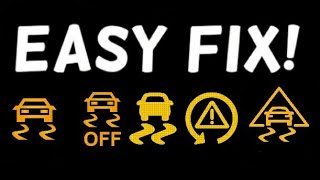
- Electronic Stability Control (ESC) or Traction Control (TCS) warning light is on 🎬 Learn how to diagnose and reset a flashing ESC warning light.
- Brake warning light may be on
- Cruise control may not function
- Possible erratic speedometer behavior, though less common as primary speed is often read from the transmission or front wheels
- Transmission may hesitate or shift roughly
- Replacing the ABS control module when the fault is a simple sensor or wiring issue.
- Replacing the wheel hub assembly when only the bolt-on sensor has failed.
Most Likely Causes
- Failed Right Rear Wheel Speed Sensor 🔴 High Probability → Shop ABS Wheel Speed Sensor Wheel speed sensors are exposed to harsh conditions (water, heat, debris) and are common wear items on many vehicles, including the Azera. Internal failure of the magnetic induction sensor is the most frequent cause.
How to confirm: Use a scan tool with ABS capabilities to monitor live data from all four wheel speed sensors while driving. The right rear sensor will show no reading, an erratic reading, or a reading that doesn't match the others. You can also test the sensor's resistance with a multimeter; an open circuit or out-of-spec resistance indicates failure. Compare the reading to the left rear sensor as a baseline.
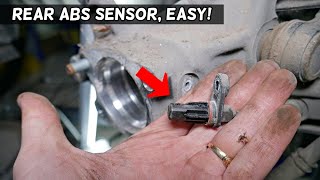
Typical fix: Replace the right rear wheel speed sensor. It is typically held in by a single 10mm or 12mm bolt. 🎬 Watch this step-by-step guide on replacing the rear wheel speed sensor.
Est. part cost: $25-$70 - Damaged Wiring or Connector 🟡 Medium Probability The wiring harness leading to the wheel speed sensor is susceptible to damage from road debris, corrosion, or improper servicing. The wire can break internally right at the connector, making a visual repair difficult.
How to confirm: Visually inspect the wiring harness from the sensor to the main vehicle harness for any signs of breaks, chafing, or corrosion in the connector pins. Wiggle the connector and harness while monitoring live data to see if the signal returns intermittently. Perform a continuity test on the wires if visual inspection is inconclusive.
Typical fix: Repair the damaged section of wire or replace the connector pigtail. In some cases, replacing the short harness section is easier than soldering in a tight space.
Est. part cost: $10-$40 - Damaged or Corroded Tone Ring ⚪ Low Probability The tone ring (or encoder ring), which the sensor reads, is integrated into the wheel hub/axle assembly. In areas with high road salt use, it can rust, crack, or accumulate metallic debris, causing an erratic signal. A failing wheel bearing can also cause excessive play, altering the air gap and disrupting the signal.
How to confirm: After removing the wheel and brake components, visually inspect the magnetic encoder ring on the back of the hub for cracks, missing sections, or heavy rust/debris. Check for any play in the wheel bearing by rocking the wheel at the 12 and 6 o'clock positions.
Typical fix: If the tone ring is damaged, the entire wheel hub assembly must be replaced.
Est. part cost: $100-$250
Rare But Worth Checking
- Failed ABS Control Module: → Shop ABS Control Module This is extremely rare. All other possibilities, especially the sensor and wiring, should be exhaustively ruled out before considering the module. A module failure would likely present with multiple wheel speed sensor codes, communication errors, or a pump motor code.
Diagnosis Steps
- Connect an OBD-II scanner capable of reading ABS codes to confirm C0050 is present and check for any sub-codes (e.g., C0050-00 for a general circuit malfunction as noted in NHTSA ODI #11693418).
- Access the live data stream for the ABS system. Monitor the wheel speed readings from all four sensors while driving the vehicle slowly in a straight line.
- Confirm that the Right Rear (RR) wheel speed sensor is reading 0 mph or providing an erratic signal compared to the other three wheels.
- Raise and safely support the rear of the vehicle. Visually inspect the right rear wheel speed sensor and its wiring harness for any obvious damage, corrosion, or loose connections.
- If no visual damage is found, disconnect the sensor and use a multimeter to test its internal resistance. Compare the reading to the manufacturer's specification or to the resistance of a known good sensor (like the left rear). An open circuit (infinite resistance) or a short indicates a bad sensor.
- If the sensor tests good, inspect the wiring harness for continuity from the sensor connector back to the ABS module connector. Check for shorts to ground or power.
- While the sensor is removed, use a flashlight to inspect the tone ring on the wheel hub for damage, debris, or excessive rust. Spin the hub to check its entire circumference.
- If the tone ring is suspect, also check for wheel bearing play, as a worn bearing can cause the tone ring to move out of alignment with the sensor.
- Based on the findings, replace the faulty component (most often the sensor itself).
Parts You'll Likely Need
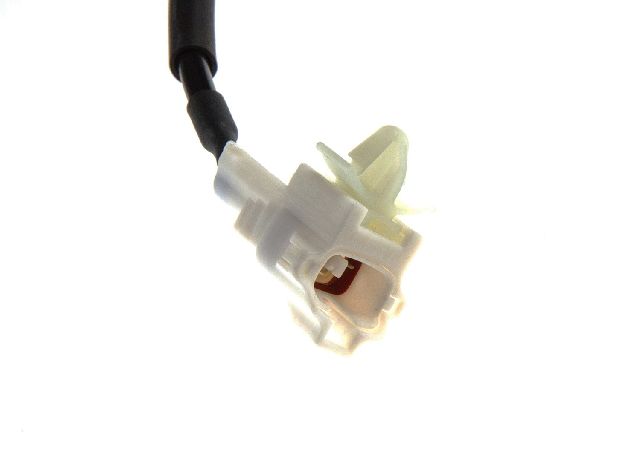
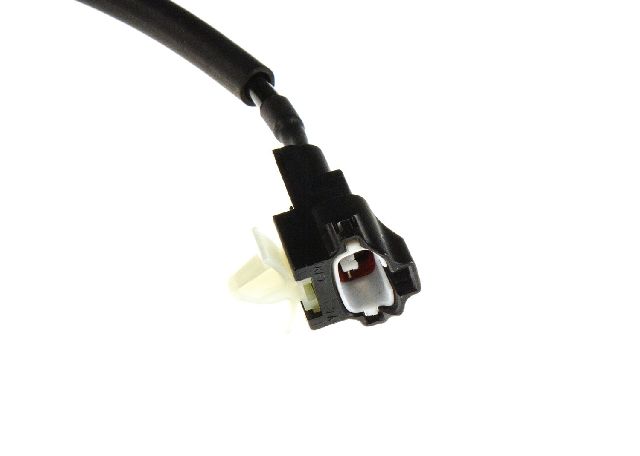
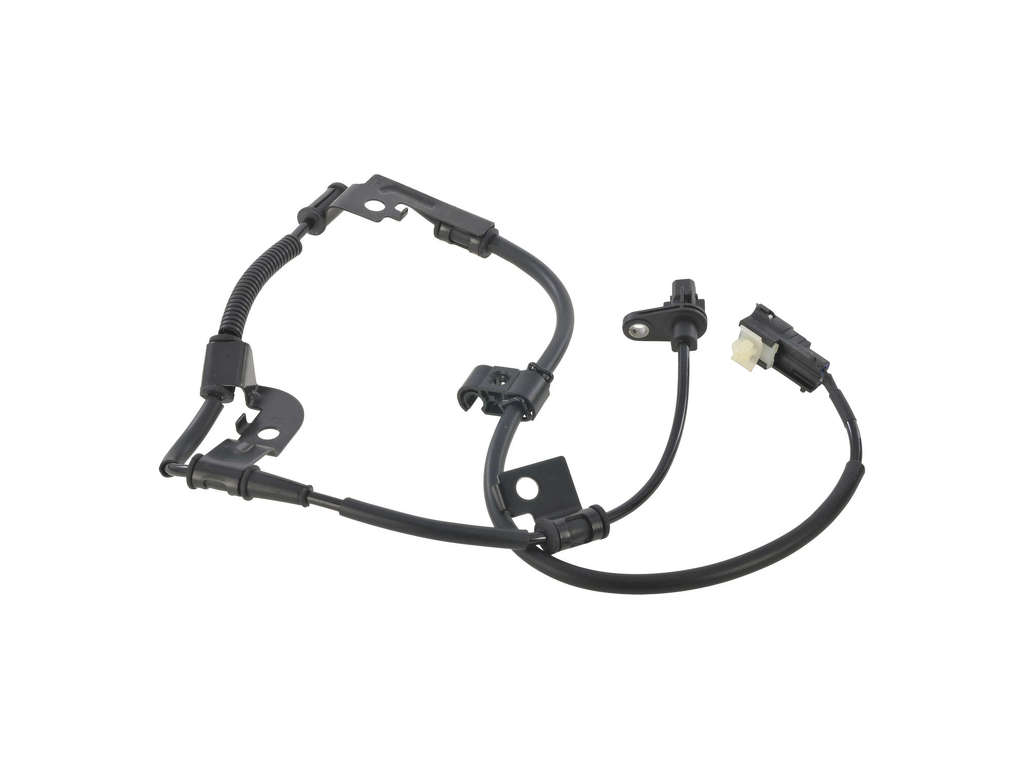
- ABS Wheel Speed Sensor (Right Rear)
(OEM #59930-3K001)— This is the most common failure point for a C0050 code. The sensor itself fails internally from age and exposure to the elements. This part number is confirmed for 2006-2011 Azera and also fits the 2006-2010 Sonata.
Trusted brands: Hyundai (Genuine), Bosch, Duralast, Standard Motor Products (SMP), WVE
OEM price range: $50-$90
Aftermarket price range: $25-$70
Technical Service Bulletins (TSBs) & Recalls
- TSB 17-01-009-2: While for Santa Fe models, this TSB is relevant as it describes a similar issue where saltwater ingress into the rear wheel speed sensor housing causes signal interruption and ABS/ESC lights. The fix involved applying silicone spray or replacing a sensor cap, highlighting the sensor's vulnerability to moisture.
- TSB 19-BR-002H: This TSB for various Hyundai models clarifies that the rear wheel speed sensor is available as a separate service part from the hub assembly, encouraging replacement of only the failed sensor when appropriate.
Platform-Specific Known Issues
- There was a recall on some Hyundai models, including the 2006-2011 Azera, related to the ABS module potentially shorting out due to water ingress and causing a fire risk, particularly when parked (NHTSA Recall #18V-137). This recall involved installing a relay kit in the main junction box to cut power to the module when the car is off. While not a direct cause of the C0050 code, it's a critical safety note for the vehicle's ABS system and all owners should ensure this recall has been performed.
- A separate major recall (NHTSA #13V354000) was issued for 2006-2011 Azeras in 'salt belt' states due to severe corrosion of the rear subframe (crossmember). This corrosion could lead to the detachment of a rear control arm, causing a sudden loss of vehicle control. While not directly causing C0050, severe subframe issues could potentially damage nearby ABS wiring.
Documented NHTSA Reports
While C0050 is typically a wheel speed sensor fault on Hyundai vehicles, cross-manufacturer records show variations in interpretation. For instance, NHTSA ODI #10763888 (Chevrolet) notes C0050 identifying a faulty power steering control module, while NHTSA ODI #11649367 (Jeep) describes the code appearing after brake service to return caliper piston contact to the brake pad. Furthermore, NHTSA ODI #11228687 (Chevrolet) reports C0050 appearing alongside multiple other communication and sensor codes (C0035, C0040, U0077) during a suspension-related failure.
Mechanic-Grade Diagnostic Values
- Wheel Speed Sensor Internal Resistance — expected: Approximately 1.0 to 2.0 kOhms (1000-2000 Ohms). The most reliable test is to compare the resistance of the suspect sensor with the known-good sensor on the opposite side (left rear); they should be very close.. Failure: A reading of OL (Open Loop/infinite resistance) or 0 Ohms (a dead short) indicates a failed sensor.
- Wheel Speed Sensor AC Voltage Output — expected: At least 100-200 millivolts (0.1-0.2V) AC when the wheel is spun by hand at a rate of about one revolution per second. Voltage should increase steadily as the wheel is spun faster.. Failure: No AC voltage produced, or an erratic/jumpy voltage reading while spinning the wheel smoothly, points to a failed sensor or a problem with the tone ring.
Hidden / Shadow Codes Worth Checking
- C0050-00: General Circuit Malfunction. A generic sub-code indicating an open, short to ground, or high resistance in the sensor circuit. (see via Advanced scan tool with manufacturer-specific capabilities (e.g., Hyundai GDS, Autel, Launch).)
- C0050-18: Signal Amplitude Less Than Minimum. The signal from the sensor is too weak, often pointing to an excessive air gap, debris on the sensor, or an internal sensor failure. (see via Advanced scan tool with manufacturer-specific capabilities.)
- C0050-5A: Signal Plausibility Failure. The sensor's signal is not logical when compared to other vehicle speed inputs, strongly suggesting a faulty sensor or a damaged tone ring. (see via Advanced scan tool with manufacturer-specific capabilities.)
Scan Tool Commands That Help
- Hyundai GDS (Global Diagnostic System): Live Data Graphing / Wheel Speed Comparison — This is the primary diagnostic step. Graphing all four wheel speeds on one screen during a test drive will instantly show if the right rear sensor is dropping out, reading zero, or providing an erratic signal compared to the other three.
- Hyundai GDS (Global Diagnostic System): Read DTC with Symptom Byte — After confirming the C0050 code, use this function to check for the presence of more specific sub-codes (like -18 or -5A) which can help narrow down the diagnosis between an electrical failure and a mechanical one (tone ring/air gap).
- Hyundai GDS (Global Diagnostic System): Flight Record (Mobile Data-recording) — Extremely useful for intermittent faults. This function allows a technician to record sensor data over a longer drive cycle to capture the exact moment the fault occurs, which is invaluable if the problem doesn't appear during a short shop test drive.
Real Owner Repair Stories
- Hyundai Forums user (2006 Hyundai Sonata (shares the same platform and part number 59930-3K001 as the Azera)) — ABS/ESC lights were on, and the car became difficult to steer, feeling like it 'wanted to go all over the road'.
✅ What actually fixed it Repairing a damaged wire in the wheel speed sensor harness resolved both the warning lights and the unusual steering behavior. - NHTSA ODI #11693418 — An owner reported that the diagnostic showed code C0050-00, and it was determined that the rotors, rear brake pads, and adapter plate needed to be replaced.
Model Year Variations Within This Range
- 2006-2011: Some parts databases list the rear wheel speed sensor (59930-3K001) as being for models built 'From 1/3/07'. However, further research shows this same part number is specified for the entire 2006-2011 model range. This indicates there is no functional difference or separate part number for 2006 models, and 59930-3K001 should be compatible with all first-generation Azeras.
Diagnostic Flowchart
Other Known Issues on This Vehicle
Issues unrelated to this code that are worth knowing about as an owner of this generation:
- Leaking Valve Cover Gaskets 🟠 Medium — Very common, especially on the 3.3L and 3.8L V6 engines, often after 60,000-80,000 miles. Oil leaks onto the alternator or exhaust, causing a burning smell.
- Rear Subframe/Crossmember Corrosion 🔴 High — Common in 'salt belt' regions. Can lead to control arm detachment and loss of vehicle control. (Ref: NHTSA Recall #13V354000)
- Leaking Oil Pressure Switch 🟠 Medium — A common issue where the switch, located in the engine valley under the intake manifold, leaks oil. Often misdiagnosed as a more expensive rear main seal leak.
- ABS Module Electrical Short (Fire Risk) 🔴 High → Shop ABS Control Module — Affects many Hyundai models of the era. Water can enter the ABS module, causing a short and potential fire, even when the vehicle is off. (Ref: NHTSA Recall #18V-137)
- Failing Stop Lamp Switch 🟡 Low — Widespread issue across many Hyundai/Kia models. A faulty switch can cause brake lights to fail or stay on, prevent shifting out of Park, and disable cruise control. (Ref: Hyundai Recall 092 (part of a massive recall campaign))
Used vs. New Parts: Buying Guide for This Vehicle
When a used part is the smart pick: For this repair, buying a used part is generally not recommended. The wheel speed sensor is an electronic component exposed to harsh road conditions, heat, and moisture, and it fails due to age and wear. A used sensor from a junkyard has unknown remaining life and may fail soon after installation, wasting time and labor costs.
Donor-vehicle mileage cap: roughly under 50000 miles for the part to have meaningful remaining life.
What to inspect on the donor part:
- If buying used is unavoidable, source from a low-mileage, accident-free vehicle from a dry, non-salt-belt climate.
- Inspect the wiring pigtail for any signs of brittleness, cracking, or previous repairs.
- Ensure the connector pins are clean, straight, and free of any green or white corrosion.
- Check the plastic sensor body for any cracks or signs of physical impact.
OEM-only on this vehicle (don't cheap out):
- While not strictly OEM-only, using a Genuine Hyundai sensor is the safest bet for guaranteed compatibility and longevity. The ABS system is a critical safety component.
Aftermarket brands forum-validated for this vehicle:
- Bosch
- NTK
- Standard Motor Products (SMP)
- WVE (a brand of NTK)
Brands owners have reported issues with on this vehicle:
- Avoid unbranded, 'white-box' sensors from online marketplaces. These often have lower quality control, may not meet OEM specifications for signal output, and can lead to persistent or intermittent codes.
Real Owner Stories
Aggregated from forums and TSBs cited above. Mileages and costs reflect what owners reported in those sources.
2006-2011 Hyundai Azera
Symptoms: The ABS and ESC warning lights were illuminated. Upon inspection, a wire in the wheel speed sensor harness had broken right at the connector.
What fixed it: Repairing the damaged section of the wire/connector pigtail or replacing the short harness section.
Source hint: G8-GT Forum: C0050 - broken rear wheel speed sensor harness wire
Related OBD-II Codes
Frequently Asked Questions
Is there a recall for the ABS system on my 2006-2011 Hyundai Azera?
Can I replace just the right rear wheel speed sensor, or do I need to buy the whole hub assembly?
Why is my Azera's transmission shifting roughly along with the ABS light?
Does the Santa Fe TSB regarding saltwater ingress apply to my Azera's C0050 code?
What is the typical cost for the sensor part (P/N 59930-3K001) used in the Azera and Sonata?
Helpful Videos

We Have This Part in Stock


The information in this article is provided for general reference and educational purposes only. Vehicle specifications, procedures, and part compatibility can vary by production date, trim level, and region. Always consult your vehicle's factory service manual and verify part numbers before purchasing or performing repairs. Safety-critical components such as airbags, seat belts, and braking systems should be installed by a qualified professional.
- Hyundai Azera:
- 🧭 Diagnostic Flowchart
- 🎬 Helpful Videos
- 🛍️ Shop This Part
- What's Unique About the 2006-2011 Hyundai Azera
- Symptoms You May Notice
- Most Likely Causes
- Rare But Worth Checking
- Diagnosis Steps
- Parts You'll Likely Need
- Technical Service Bulletins (TSBs) & Recalls
- Platform-Specific Known Issues
- Documented NHTSA Reports
- Mechanic-Grade Diagnostic Values
- Hidden / Shadow Codes Worth Checking
- Scan Tool Commands That Help
- Real Owner Repair Stories
- Model Year Variations Within This Range
- Other Known Issues on This Vehicle
- Used vs. New Parts: Buying Guide for This Vehicle
- Real Owner Stories
- 2006-2011 Hyundai Azera
- Related OBD-II Codes
- Frequently Asked Questions
- 🎟️ Get 5% Off