

C0050 on 2005-2010 Hyundai Sonata: Right Rear Wheel Speed Sensor Fault Causes and Fixes
Code C0050 on a Hyundai Sonata means the right rear wheel speed sensor circuit is failing. This is most often caused by a bad sensor or damaged wiring. Replacing the sensor is a common DIY fix, with parts costing between $25 and $75. In rust-prone areas, check for wiring damage caused by a corroded rear subframe.
- C0050 means there is a problem with the right rear wheel speed sensor circuit, which will disable your ABS and ESC.
- The most likely cause is a faulty wheel speed sensor, which is an affordable and accessible part for DIY replacement.
- Before replacing the sensor, always use a scanner to confirm the fault with live data and visually inspect the wiring and connector for damage.
- If a new sensor doesn't fix the code, the problem is likely a damaged magnetic ring on the wheel hub assembly, which requires replacing the entire hub.
What's Unique About the 2005-2010 Hyundai Sonata
On this generation of Sonata, the C0050 code is a straightforward fault almost always isolated to the wheel speed sensor circuit itself. Unlike some vehicles where this code is frequently caused by complex module issues, the Sonata's system is relatively simple. The magnetic tone ring the sensor reads is integrated into the wheel hub and bearing assembly. This means that if the ring is the cause of the problem (due to cracks or damage), the entire hub assembly must be replaced. A significant issue for this platform is severe rear subframe corrosion, which was subject to a recall (NHTSA 13V354). This rust can cause the subframe to shift or break, potentially stretching or severing the nearby ABS sensor wiring harness.
Generation note: The 2005-2010 range covers two Sonata generations: the end of the 4th generation (EF, 2005 model year) and the full 5th generation (NF, 2006-2010). While the causes and symptoms are identical, the part numbers for the wheel speed sensor and rear subframe are different for each generation. The NF generation (2006-2010) is specifically covered under the rear subframe rust recall (Hyundai Recall 113).
Symptoms You May Notice
- ABS warning light illuminated
- Electronic Stability Control (ESC) or Traction Control System (TCS) warning light illuminated
- ABS and traction/stability control systems are disabled and will not function
- Cruise control may not work
- Brake pedal may feel different or pulsate incorrectly at low speeds
- Replacing the wheel speed sensor when the actual problem is a broken wire a few inches up the harness.
- Replacing the wheel speed sensor when the root cause is a cracked or contaminated tone ring on the wheel hub assembly.
- Replacing the wheel hub assembly when the only issue is debris on the magnetic encoder ring, which could be cleaned off.
Most Likely Causes
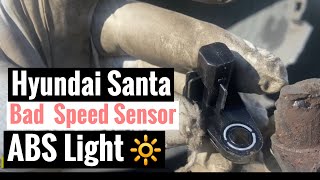
- Failed Right Rear Wheel Speed Sensor 🔴 High Probability → Shop ABS Wheel Speed Sensor The sensor is exposed to road debris, water, and extreme temperatures, which can cause its internal electronics to fail over time. It is the most common point of failure for this code. 🎬 Watch: How to diagnose a bad speed sensor and ABS light.
How to confirm: Use a scan tool capable of reading live ABS data. Drive the vehicle and observe the wheel speed readings from all four sensors. The right rear sensor will likely read 0 MPH or have an erratic, jumpy signal compared to the others.
Typical fix: Replace the right rear wheel speed sensor. The sensor is typically held in by a single 10mm bolt.
Est. part cost: $25-$75 - Damaged Wiring or Connector 🟡 Medium Probability The wiring harness runs down the suspension and is susceptible to damage from road debris, improper jacking, or corrosion from road salt. On this specific platform, severe corrosion of the rear subframe (crossmember) can cause it to flex or break, stretching and breaking the attached ABS sensor harness.
How to confirm: Visually inspect the wiring harness from the sensor to where it enters the cabin, paying close attention to the area around the rear subframe mounting points. Look for any cuts, abrasions, melting, or corrosion on the connector pins. Use a multimeter to check for continuity and shorts in the wiring between the sensor connector and the ABS module.
Typical fix: Repair the damaged section of wire using solder and heat-shrink tubing or replace the connector pigtail. If subframe rust is the cause, the subframe itself may need to be repaired or replaced per recall 113. 🎬 Watch: Dealing with severe rear subframe rust and repairs.
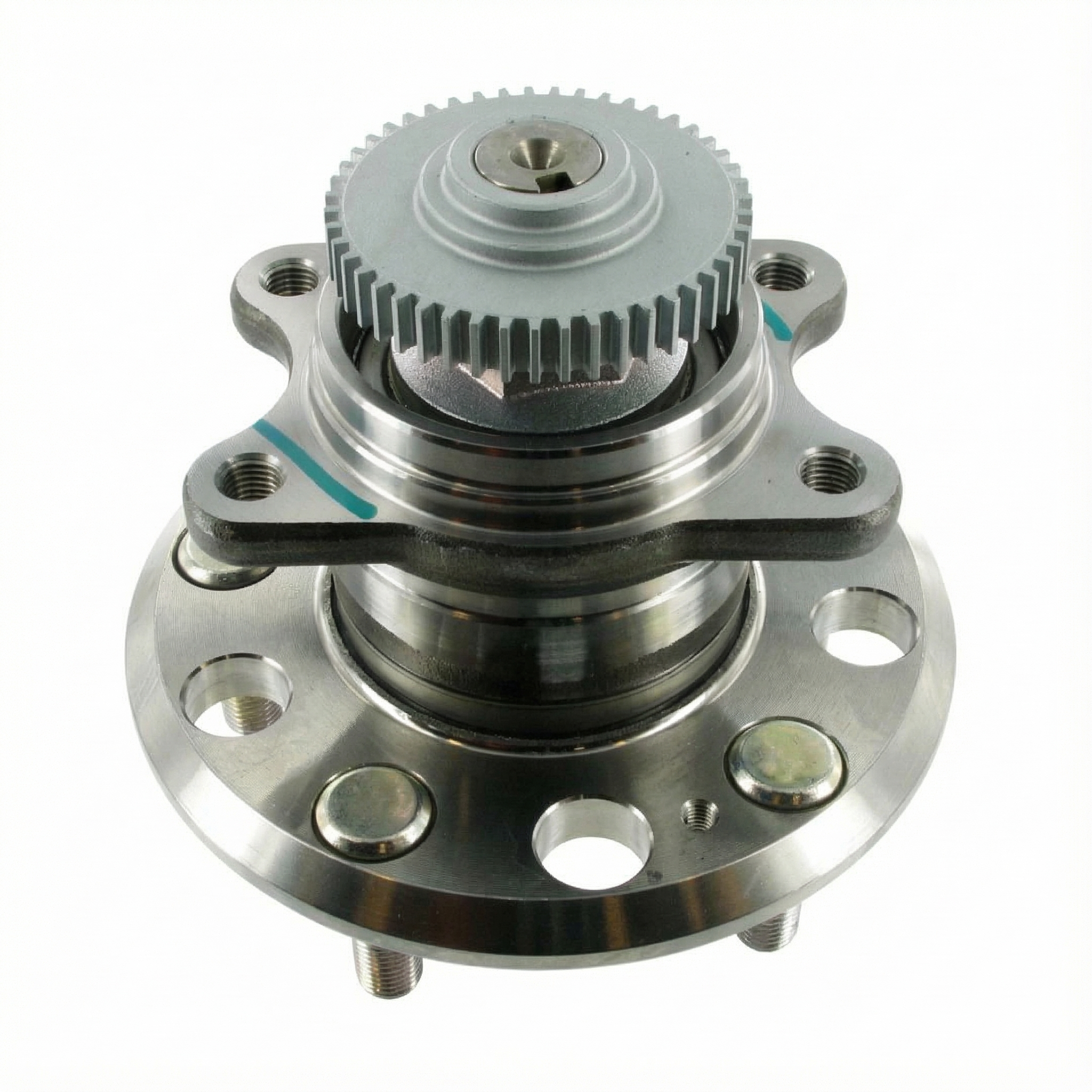
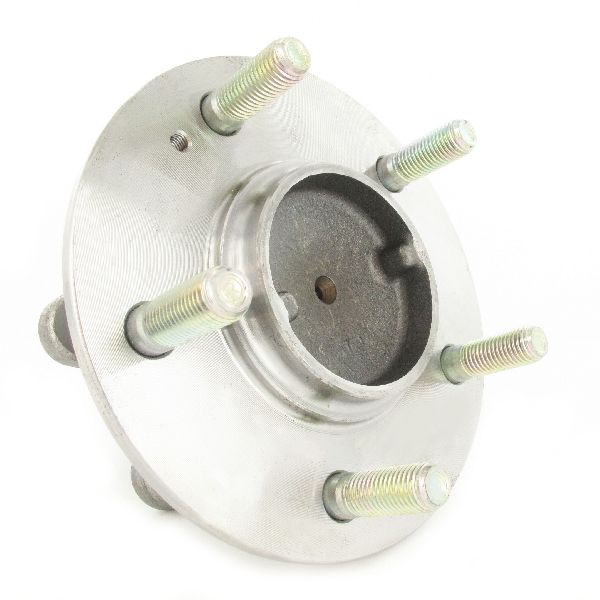
Est. part cost: $15-$40 - Damaged Tone Ring / Wheel Hub Assembly ⚪ Low Probability → Shop Hub Assembly The tone ring (a magnetic encoder integrated into the hub) can crack or become contaminated with metallic debris from brake wear, causing an erratic signal. A failing wheel bearing can also cause excessive play, altering the sensor's air gap and triggering the code.
How to confirm: After removing the sensor, use a flashlight to inspect the magnetic ring on the face of the wheel hub. Look for cracks, missing sections, or heavy rust/debris. Also, check for any play or roughness in the wheel bearing by shaking the tire at the 12 and 6 o'clock positions.
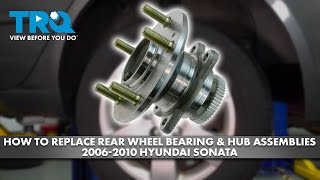
Typical fix: If the tone ring is damaged or the bearing is bad, the entire rear wheel hub and bearing assembly must be replaced. 🎬 See this walkthrough for replacing the rear wheel hub assembly.
Est. part cost: $70-$150
Rare But Worth Checking
- Failed ABS Control Module: → Shop ABS Control Module This is very uncommon. Before suspecting the module, you must exhaustively rule out the sensor, wiring, and hub assembly. A failed module will typically store other codes as well.
Diagnosis Steps
- Connect an OBD-II scanner capable of reading ABS codes to confirm C0050 is present. Check for manufacturer-specific sub-codes like C0050-18 (Low Signal Amplitude) or C0050-5A (Signal Plausibility Fault), which can point towards a failing sensor or tone ring issue.
- Access the live data stream for the ABS module. Monitor the speeds of all four wheels while driving slowly in a straight line. Confirm that the Right Rear (RR) wheel speed sensor reads 0 MPH or is erratic while the others read correctly.
- Safely raise and support the vehicle. Perform a thorough visual inspection of the rear subframe for excessive rust, cracking, or perforation, especially in 'Salt Belt' regions, per Hyundai Recall 113.
- Remove the right rear wheel. Visually inspect the wheel speed sensor and its wiring harness for any obvious signs of damage, such as cuts, melting, corrosion, or tension/stretching caused by subframe movement.
- Disconnect the sensor and inspect the connector pins for corrosion or damage.
- Remove the 10mm bolt holding the sensor in place and pull the sensor out of the knuckle.
- Inspect the magnetic encoder ring on the wheel hub for cracks, heavy rust, or metallic debris. Clean it with a brake cleaner and a rag.
- If no visual faults are found, use a multimeter to test the old sensor's resistance (if applicable for the sensor type) and compare it to the new sensor. Test the wiring harness for continuity and for shorts to power or ground between the sensor connector and the ABS module.
- If the sensor and wiring are confirmed to be good, the issue likely lies with the wheel hub assembly's tone ring or, rarely, the ABS module itself.
Parts You'll Likely Need
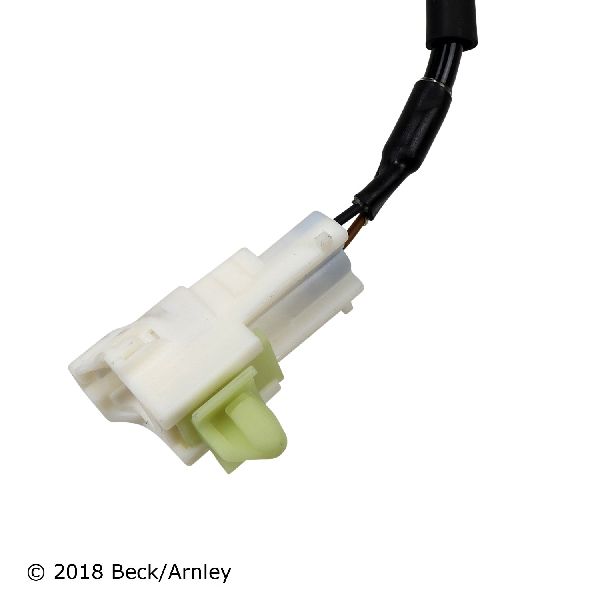
- Right Rear ABS Wheel Speed Sensor (2006-2010)
(OEM #59930-3K001)— This is the most common failure point for code C0050. It is a relatively fragile electronic component located in a harsh environment.
Trusted brands: Hyundai (Genuine), Mando, Standard Motor Products (SMP), Holstein, WJB
OEM price range: $150-$210
Aftermarket price range: $25-$75 - Right Rear ABS Wheel Speed Sensor (2005)
(OEM #95680-38601)— For the 2005 model year (EF generation), this specific sensor is required. It is the most common failure point for this code.
Trusted brands: Hyundai (Genuine), SKP, Beck Arnley, API
OEM price range: $180-$220
Aftermarket price range: $30-$80 - Rear Wheel Hub and Bearing Assembly (2006-2010)
(OEM #52730-3K000)— Required if the integrated magnetic tone ring is cracked or damaged, or if the wheel bearing itself has failed. Part number 512265 is a common aftermarket equivalent.
Trusted brands: SKF, Timken, MOOG, TRQ
OEM price range: $180-$250
Aftermarket price range: $70-$150
Technical Service Bulletins (TSBs) & Recalls
- NHTSA Campaign: 13V354 / Hyundai Recall 113 - Describes the inspection and replacement procedure for the rear crossmember (subframe) due to corrosion in Salt Belt states. This is critically relevant as subframe failure can directly damage the ABS sensor wiring.
Platform-Specific Known Issues
- Subframe Corrosion Damaging ABS Harness: On 2006-2010 models, severe corrosion of the rear crossmember (subframe) was common enough to warrant NHTSA Campaign 13V354. Owners on forums have noted that as the subframe rusts and deteriorates, it can stretch, pinch, or sever the ABS wheel speed sensor harness that is routed along it, directly causing a C0050 fault.
Documented NHTSA Reports
While the C0050 code on the Hyundai Sonata is primarily a wheel speed sensor circuit fault, it is important to note that this code can have different meanings on other platforms. For example, NHTSA ODI #10763888 describes a case on a Chevrolet HHR where C0050 identified a faulty power steering control module (PSCM) requiring a steering column replacement. Additionally, on some vehicles, C0050 can be triggered by mechanical brake service issues; NHTSA ODI #11649367 notes that the code was set after a brake service required extra fluid to return caliper piston contact to the pad, disabling the ABS.
Other cross-manufacturer reports show that C0050 often appears alongside multiple communication or suspension codes. NHTSA ODI #11228687 reports C0050 appearing with C0035, C0040, and various "U" communication codes on a Chevrolet Silverado. Furthermore, NHTSA ODI #11693418 describes a C0050-00 fault where a vehicle required the replacement of rotors, rear brake pads, and an adapter plate to resolve the diagnostic findings.
Mechanic-Grade Diagnostic Values
- Passive Wheel Speed Sensor Resistance — expected: 800 - 2,000 Ohms. Failure: A reading of OL (Open Loop/infinite resistance) or close to 0 Ohms indicates a failed sensor.
- Wiring Harness Continuity — expected: < 2.0 Ohms. Failure: Higher resistance indicates corrosion or a partial break in the wire between the sensor connector and the ABS module.
- Wiring Harness Reference Voltage (at sensor connector) — expected: 5V or 12V (Key On, Engine Off). Failure: No voltage indicates a problem with the power supply from the ABS module or a break in the power wire.
Hidden / Shadow Codes Worth Checking
- C0050-5A: Signal Plausibility Fault. This means the sensor's reading is illogical compared to other wheel speed sensors (e.g., three wheels at 30 MPH, one at 0 MPH). (see via Advanced ABS/ESC capable scan tools; may be displayed on Hyundai GDS.)
- C0050-18: Signal Amplitude Less Than Minimum. The signal from the sensor is too weak. This often points to an excessive air gap, debris on the tone ring, or high resistance in the circuit. (see via Advanced ABS/ESC capable scan tools; may be displayed on Hyundai GDS.)
- C0050-00: General Circuit Malfunction. This is a generic sub-code indicating a short to ground, an open circuit, or high resistance in the sensor circuit. (see via Advanced ABS/ESC capable scan tools; may be displayed on Hyundai GDS.)
Scan Tool Commands That Help
- Hyundai GDS (Global Diagnostic System): DTC Analysis & Live Data — Used to read the specific C0050 sub-code and to graph the live wheel speed data from all four sensors simultaneously to confirm the fault is with the right rear wheel.
- Hyundai GDS (Global Diagnostic System): Actuation Test / Solenoid Valve Inspection — This is used after confirming the sensor and wiring are good to test the ABS module's ability to command the hydraulic unit. It is not a primary test for a C0050 but can help rule out a faulty module if other codes are present.
Wiring & Ground Locations
- ABS Control Module (HECU) — In the engine bay, typically on the driver's side, attached to the hydraulic block with the brake lines running into it. You will need to remove the air filter box to access it.. This is the termination point for the wheel speed sensor wiring. Technicians need to access its connector to perform continuity and short-to-ground tests on the harness running to the right rear wheel.
- Right Rear Wheel Speed Sensor Connector — In the right rear wheel well, attached to the chassis or suspension components. The harness runs from the sensor itself to this connector.. This is the primary point for initial testing. A technician will disconnect it to test the sensor's resistance and to check for voltage/ground from the main harness.
Real Owner Repair Stories
- YouTube user comment on a sensor replacement video (2006-2009 Hyundai Sonata (NF)) — ABS and Traction Control lights were on.
❌ Tried (didn't work) Replacing the wheel speed sensor did not fix the problem.
✅ What actually fixed it Found a broken wire in the harness near the sensor connector. The wire had rubbed against the tire due to a forgotten bracket during a previous suspension repair. Soldering the wire back together and securing the harness correctly resolved the issue and the lights went out. - Hyundai Forums user (2006 Hyundai Sonata) — Car became difficult to steer and wanted to go all over the road.
✅ What actually fixed it The rear subframe had rusted and broken while driving. This is a known issue covered by a recall. While not directly a C0050 story, it highlights the root cause of many wiring-related C0050 faults on this platform, where the subframe failure severs the attached ABS sensor harness.
OEM Part Supersession History
Unknown→59930-3K001— Standard part evolution and supplier changes.
Heads up: Ensure the part is correct for the vehicle's specific production date, especially for the 2007 model year, as there may be connector or mounting differences.
Model Year Variations Within This Range
- 2005 only: The 2005 model year is the final year of the EF (4th) generation. It uses a different right rear wheel speed sensor (Part No. 95680-38601) and has different subframe components compared to the 2006-2010 NF generation.
- 2006-2010: These are NF (5th) generation models. They use right rear wheel speed sensor Part No. 59930-3K001. This generation is specifically included in the rear subframe corrosion recall (Hyundai Recall 113 / NHTSA 13V354) which is a common cause of wiring damage leading to code C0050.
Diagnostic Flowchart
Other Known Issues on This Vehicle
Issues unrelated to this code that are worth knowing about as an owner of this generation:
- Rear Subframe Corrosion 🔴 High — Very common in 'Salt Belt' states, leading to a major recall. Can occur elsewhere. (Ref: NHTSA Campaign 13V354 (Hyundai Recall 113))
- Timing Chain Tensioner Failure (V6 Models) 🔴 High — Common on the 3.3L V6 engine, typically presenting as a rattling noise on cold startup. Failure can lead to catastrophic engine damage. (Ref: Hyundai TSB 09-EM-004)
- Parking Lights Staying On 🟡 Low — A widely reported electrical issue where the interior fuse box (Junction Block) shorts internally, causing parking lights to remain on and drain the battery.
- Faulty Accelerator Pedal Position Sensor 🟠 Medium — Can cause the ESC warning light to illuminate and the vehicle to enter a 'limp mode' with reduced power.
- Airbag Control Unit Malfunction (2011+ models primarily) 🔴 High — While the major recalls (NHTSA 18V137000) targeted 2011-2013 models, electrical issues with the Airbag Control Unit (ACU) are a known Hyundai problem area. (Ref: NHTSA Campaign 18V137000)
Used vs. New Parts: Buying Guide for This Vehicle
When a used part is the smart pick: A used part is a reasonable choice for a connector pigtail if you need to repair a damaged connector. Sourcing a complete used wiring harness is also an option if a large section is damaged, but inspect it carefully. A used wheel hub assembly can be a budget-friendly option if from a low-mileage, non-corroded donor, but the bearing's remaining life is a gamble.
Donor-vehicle mileage cap: roughly under 80000 miles for the part to have meaningful remaining life.
What to inspect on the donor part:
- For wiring: Check for any signs of brittleness, cracking, or previous repairs (tape, butt connectors). Ensure connectors are not corroded and locking tabs are intact.
- For a hub assembly: Spin the bearing by hand; it should be perfectly smooth with no noise or roughness. Check the magnetic tone ring on the back for any cracks, chips, or deep gouges. Avoid parts from regions where road salt is heavily used.
Aftermarket brands forum-validated for this vehicle:
- For wheel hub assemblies: SKF, Timken, MOOG are considered top-tier brands with a reputation for quality bearings.
- For wheel speed sensors: Mando (often the OEM supplier), Standard Motor Products (SMP), Holstein, and Beck/Arnley are generally reliable choices.
Brands owners have reported issues with on this vehicle:
- Be cautious with unbranded, 'white box' sensors and hub assemblies from online marketplaces. While cheap, they have a higher reported failure rate, sometimes being dead-on-arrival or failing within a few months.
Real Owner Stories
Aggregated from forums and TSBs cited above. Mileages and costs reflect what owners reported in those sources.
2006-2010 Hyundai Sonata
Symptoms: The rear crossmember (subframe) suffered from severe corrosion, which caused the attached ABS wheel speed sensor harness to stretch, pinch, or sever.
What fixed it: Inspection and replacement of the rear crossmember (subframe) under NHTSA Campaign 13V354 / Hyundai Recall 113.
Source hint: NHTSA Campaign: 13V354 / Hyundai Recall 113
2007 Hyundai Sonata 3.3L V6
Symptoms: Owner reported a rattling noise on cold startup.
What fixed it: Replacement of the timing chain tensioner per Hyundai TSB 09-EM-004.
Source hint: Hyundai Forum: Dealership/Timing chain tensioner problem
Related OBD-II Codes
Frequently Asked Questions
Is there a recall for the rear subframe issues that cause my ABS light and C0050 code?
Can I just replace the sensor if my 2006-2010 Sonata has a C0050 code?
Why does my ESC light come on along with the ABS light for code C0050?
Could a bad wheel bearing be causing my C0050 code?
Is the C0050 code related to the timing chain rattle I hear on my 3.3L V6 Sonata?
Helpful Videos

Used OEM Parts in Stock
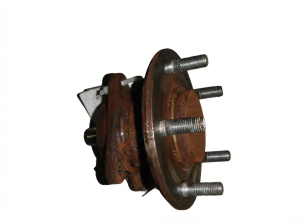
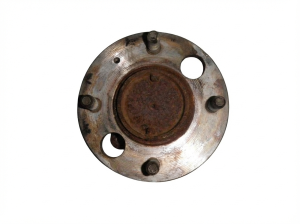
New Aftermarket Parts Available

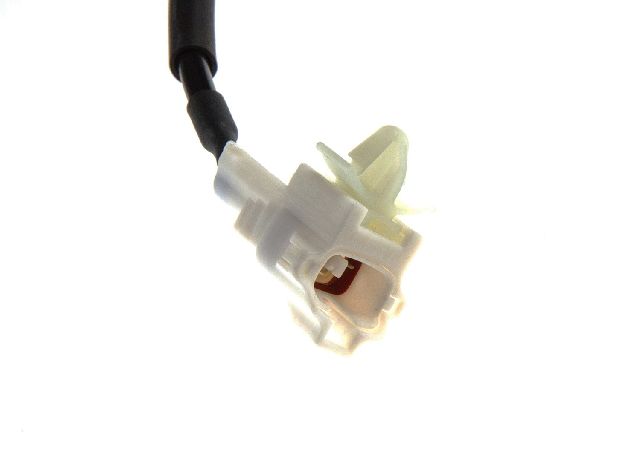

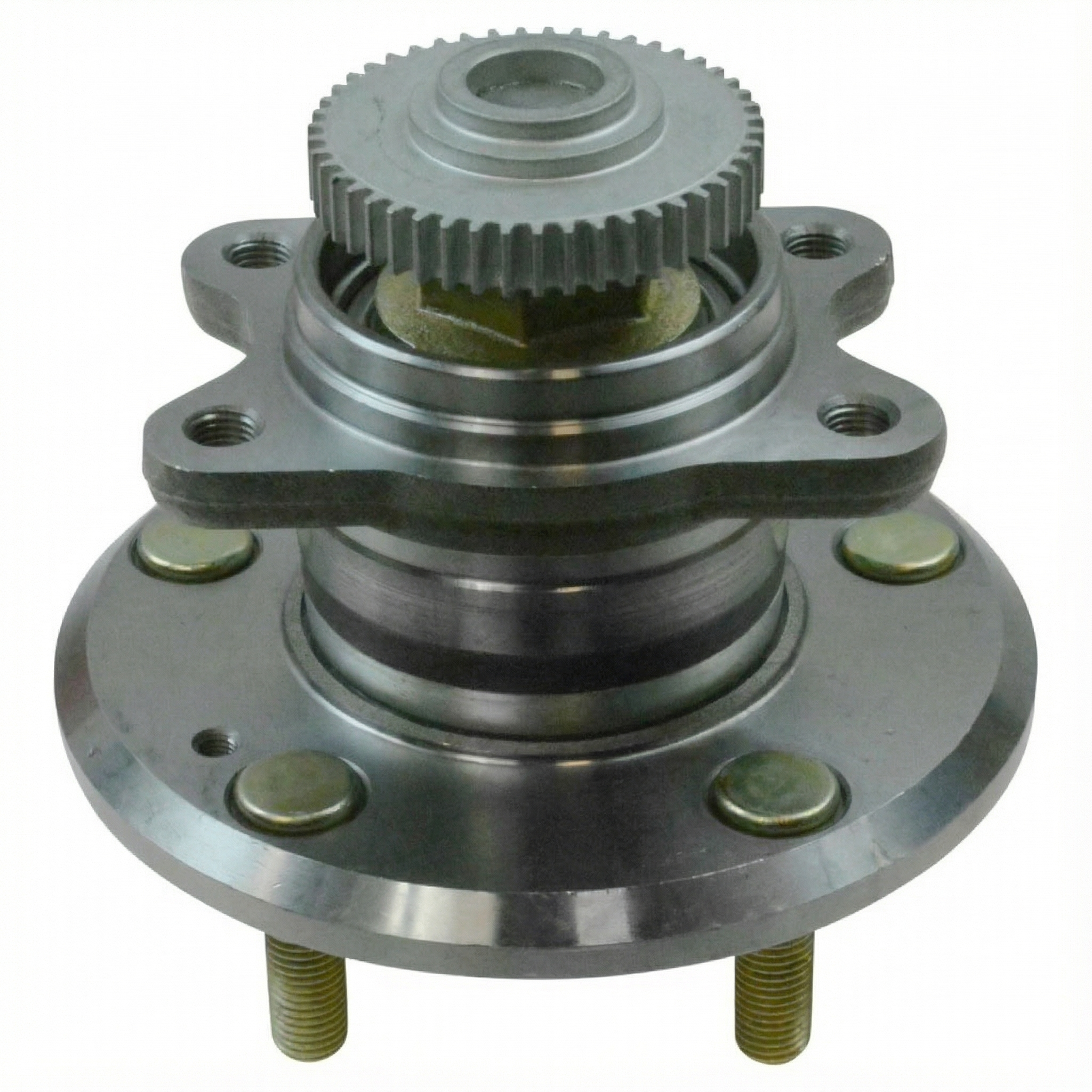
The information in this article is provided for general reference and educational purposes only. Vehicle specifications, procedures, and part compatibility can vary by production date, trim level, and region. Always consult your vehicle's factory service manual and verify part numbers before purchasing or performing repairs. Safety-critical components such as airbags, seat belts, and braking systems should be installed by a qualified professional.
- Hyundai Sonata:
- 🧭 Diagnostic Flowchart
- 🎬 Helpful Videos
- 🛍️ Shop This Part
- What's Unique About the 2005-2010 Hyundai Sonata
- Symptoms You May Notice
- Most Likely Causes
- Rare But Worth Checking
- Diagnosis Steps
- Parts You'll Likely Need
- Technical Service Bulletins (TSBs) & Recalls
- Platform-Specific Known Issues
- Documented NHTSA Reports
- Mechanic-Grade Diagnostic Values
- Hidden / Shadow Codes Worth Checking
- Scan Tool Commands That Help
- Wiring & Ground Locations
- Real Owner Repair Stories
- OEM Part Supersession History
- Model Year Variations Within This Range
- Other Known Issues on This Vehicle
- Used vs. New Parts: Buying Guide for This Vehicle
- Real Owner Stories
- 2006-2010 Hyundai Sonata
- 2007 Hyundai Sonata 3.3L V6
- Related OBD-II Codes
- Frequently Asked Questions
- 🎟️ Get 5% Off