

C0050 on 2012-2017 Kia Rio: Right Rear Wheel Speed Sensor Fault Guide
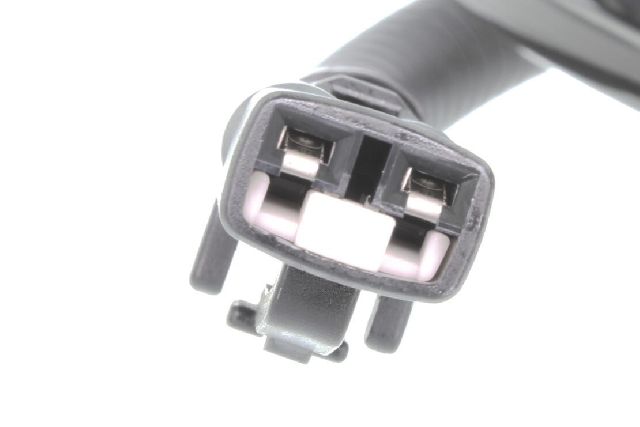
On a 2012-2017 Kia Rio, code C0050 is almost always a failed right rear ABS wheel speed sensor. A replacement sensor is relatively inexpensive and easy to install, making it a common DIY fix. The OEM part number for the sensor is 95681-1W000.
- Code C0050 on a 2012-2017 Kia Rio means there's a problem with the right rear wheel speed sensor circuit, which will disable your ABS and stability control.
- The most likely cause is a failed wheel speed sensor (OEM Part #95681-1W000), which is a common and relatively easy DIY replacement.
- Before replacing parts, use a scanner with live data to confirm the right rear sensor is the one not reporting speed.
- Always inspect the wiring and connector for damage before buying a new sensor.
- Driving is possible, but reduced safety in emergency situations means you should get this fixed promptly.
What's Unique About the 2012-2017 Kia Rio
For the third-generation Kia Rio (UB; 2012-2017), the C0050 code is a straightforward fault, typically with no platform-specific complexities. Unlike some vehicles where the magnetic encoder ring on the wheel hub is a common failure point, on the Rio, the sensor itself is the most frequent culprit. The magnetic encoder is integrated into the wheel hub/bearing assembly's seal, making it less susceptible to external damage but requiring a full hub replacement if it fails. The diagnosis is generally direct, focusing on the sensor and its immediate wiring.
Symptoms You May Notice
- ABS warning light is on
- Traction Control System (TCS) or Electronic Stability Control (ESC) warning light is on
- ABS system does not activate during hard braking (wheels may lock up)
- Traction control does not activate on slippery surfaces
- Brake pedal may feel different or pulsate at very low speeds if the sensor is sending erratic signals
- Replacing the wheel hub/bearing when only the sensor was bad.
- Replacing the ABS module when the fault was a simple wiring break.
- Replacing the wrong side's wheel speed sensor due to not confirming with live data.
Most Likely Causes
- Failed Right Rear Wheel Speed Sensor 🔴 High Probability → Shop ABS Wheel Speed Sensor The sensor is exposed to harsh environmental conditions like water, salt, and road debris, which can lead to internal electronic failure over time. It is the most common point of failure for this code on this platform.
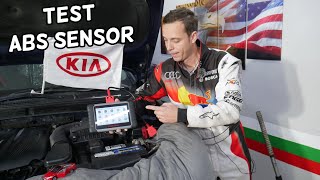
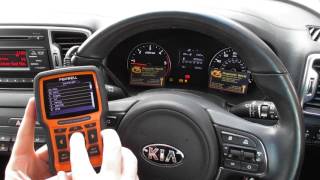
How to confirm: Use a scanner with live data capability to monitor all four wheel speeds while driving. 🎬 Watch: How to use a scanner to diagnose ABS lights. If the right rear sensor reads 0 MPH or an erratic speed while the others read correctly, the sensor has failed. An ohmmeter test is not effective on this type of active sensor; a voltage test is required. 🎬 Watch: How to test the sensor signal with a multimeter.
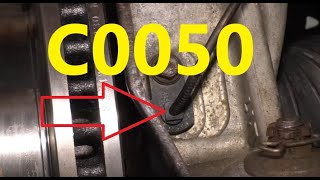
Typical fix: Replace the right rear wheel speed sensor. It is typically held in by a single 10mm bolt. 🎬 See this step-by-step rear wheel speed sensor replacement guide. The OEM part number is 95681-1W000.
Est. part cost: $50-$150 - Damaged Wiring or Connector 🟡 Medium Probability The wiring harness leading to the wheel speed sensor can be damaged by road debris, improper servicing, or corrosion in the connector pins. The section of the harness within a few inches of the sensor, often hidden by the wheel well liner, is most vulnerable.
How to confirm: Visually inspect the wiring harness from the sensor to where it enters the vehicle body for any signs of fraying, breaks, or melting. Unplug the connector and check for green/white corrosion or bent pins. A continuity test with a multimeter from the sensor connector to the main ABS harness connector can identify a broken wire.
Typical fix: Repair the damaged section of wire using solder and heat-shrink tubing or replace the connector pigtail.
Est. part cost: $15-$40 - Damaged or Dirty Tone Ring / Magnetic Encoder ⚪ Low Probability The magnetic encoder is integrated into the seal of the rear wheel hub/bearing assembly. While less common than sensor failure, it can become damaged during other repairs (like axle work) or contaminated with metallic debris, preventing the sensor from getting a clean reading.
How to confirm: Remove the wheel speed sensor and the brake rotor. Slowly rotate the hub and inspect the dark, magnetic seal on the inboard side of the hub assembly. Look for cracks, gouges, or a heavy buildup of metallic dust. A clean, uniform surface is required.
Typical fix: Cleaning the encoder ring with brake cleaner and a soft cloth may resolve contamination issues. If the encoder ring itself is physically damaged, the entire wheel hub assembly must be replaced.
Est. part cost: $100-$200 for a wheel hub assembly
Rare But Worth Checking
- Faulty ABS Control Module: → Shop ABS Control Module This is very rare and should only be considered after all other possibilities (sensor, wiring, tone ring) have been exhaustively ruled out. A faulty module will typically set other codes as well and may have communication issues with the scan tool. The module is located in the engine bay on the driver's side.
Diagnosis Steps
- Connect an OBD-II scanner capable of reading ABS/Chassis codes to confirm C0050 is present and active.
- Access the live data stream on the scanner. Graph the speeds of all four wheels and drive the vehicle above 10 MPH.
- Observe the 'RR Wheel Speed' data point. If it reads 0 MPH, is erratic, or does not match the other three wheels, the issue is confirmed to be in that corner's circuit.
- Safely raise and support the vehicle. Remove the right rear wheel.
- Visually inspect the wheel speed sensor and its wiring harness for any obvious damage, such as cracks, fraying, or loose connections. Pay close attention to the area where the harness may rub against suspension components, especially behind the wheel well liner.
- Disconnect the sensor's electrical connector. Inspect the pins on both the sensor and harness side for corrosion, moisture, or damage.
- If no visual faults are found, the sensor is the most probable cause. Replace the right rear wheel speed sensor (Part No. 95681-1W000).
- If a new sensor does not resolve the code, the next step is to inspect the magnetic encoder ring. Remove the brake caliper and rotor to gain access to the wheel hub assembly. Inspect the hub's inner seal for damage or debris.
- If the encoder ring is dirty, clean it with brake cleaner. If it is damaged, the entire wheel hub assembly must be replaced.
- If the sensor and ring are confirmed good, perform a continuity test on the sensor harness. Using a multimeter, check for a continuous, low-resistance connection on both wires from the sensor connector back to the main ABS module connector.
- After any repair, clear the codes with the scanner and perform a test drive to ensure the ABS and ESC warning lights do not return. The lights may go out on their own after a short drive once the module receives a good signal.
Parts You'll Likely Need
- Right Rear ABS Wheel Speed Sensor
(OEM #95681-1W000)— This is the most common failure point for code C0050 on this vehicle.
Trusted brands: Kia (OEM), Hyundai (OEM), Mando, Bosch, Standard Motor Products (SMP), Delphi
OEM price range: $110-$160
Aftermarket price range: $50-$120
Mechanic-Grade Diagnostic Values
- Sensor Harness Reference Voltage — expected: 5V or 12V (check service manual). Failure: 0V or significantly low voltage indicates a problem with the wiring or ABS module.
- Sensor Harness Ground Circuit Resistance — expected: Less than 1 ohm. Failure: High resistance (OL or >1 ohm) indicates a bad ground wire.
- Sensor Signal (Oscilloscope) — expected: A clean, regular square wave that increases in frequency as the wheel is spun.. Failure: A missing, flat, noisy, or erratic waveform indicates a faulty sensor or damaged encoder ring.
Hidden / Shadow Codes Worth Checking
- C0050-18: Low signal amplitude is detected. This often points to an increased air gap between the sensor and the ring, or an internal sensor failure. (see via Advanced OBD-II scanner with manufacturer-specific capabilities (e.g., Hyundai/Kia GDS, Autel, Launch).)
- C0050-0F: An erratic wheel speed sensor signal is detected. This is a strong indicator of a damaged/cracked tone ring, debris on the sensor, or a loose wheel bearing. (see via Advanced OBD-II scanner with manufacturer-specific capabilities (e.g., Hyundai/Kia GDS, Autel, Launch).)
- C0050-5A: The wheel speed sensor signal is not plausible (e.g., it conflicts with data from other sensors). (see via Advanced OBD-II scanner with manufacturer-specific capabilities (e.g., Hyundai/Kia GDS, Autel, Launch).)
Scan Tool Commands That Help
- Kia GDS (Global Diagnostic System): Live Data / Data Stream for ABS/ESC Module — This is the primary diagnostic step. Use this function to view and graph the output from all four wheel speed sensors in real-time while driving. A faulty sensor or circuit will show a speed of zero, an erratic signal, or a reading that does not match the other three wheels.
- Kia GDS (Global Diagnostic System): Actuation Test — Can be used to test components of the ABS system, though less relevant for a sensor circuit fault unless diagnosing the ABS module itself.
Wiring & Ground Locations
- ABS Control Module — In the engine compartment, on the driver's side, typically below and behind the brake master cylinder.. This is the destination for the wheel speed sensor wiring. Final continuity checks of the harness are performed at the large electrical connector on this module.
- Right Rear Sensor Harness Chafe Point — The section of wiring harness located behind the right rear wheel well liner, within a few inches of the sensor connector.. This area is a common, but often overlooked, failure point. Wires can break internally from stress or corrosion while the outer insulation remains intact, making a visual-only inspection insufficient. This can lead to replacing a good sensor when the fault is in the wiring.
Real Owner Repair Stories
- Reddit user, r/kia (2014 Kia Rio) — ABS, Traction Control, and EPS lights all came on.
❌ Tried (didn't work) Replacing the wheel speed sensor with an aftermarket part., Replacing the aftermarket sensor with a new, genuine OEM Kia sensor.
✅ What actually fixed it Found a broken wire in the harness that the sensor plugs into. The break was hidden a few inches from the connector, behind the wheel well liner. Repairing the wire resolved the issue.
OEM Part Supersession History
59930-1W000→95681-1W000— Part number consolidation and updates.
Heads up: While 95681-1W000 is the most current and reliable OEM part number for the sensor assembly, the older 59930-1W000 number may still be found in some parts catalogs or on older stock. Both refer to the right rear sensor for this vehicle. For guaranteed fitment, order using your VIN.
Model Year Variations Within This Range
- 2016-2017: The Kia Rio received a mid-cycle refresh for the 2016 model year, including revised styling and interior materials. The SX trim level also offered a 'sport-tuned suspension'. While the standard ABS sensor is the same, if replacing the entire wheel hub assembly, be aware of potential part differences between standard and sport suspension setups.
Diagnostic Flowchart
Other Known Issues on This Vehicle
Issues unrelated to this code that are worth knowing about as an owner of this generation:
- GDI Engine Carbon Buildup 🟠 Medium — Becomes symptomatic around 60,000-80,000 miles, causing rough idle, hesitation, and reduced fuel economy. More common with frequent short trips. (Ref: No specific TSB for the Rio, but it's a well-documented characteristic of all Kia/Hyundai GDI engines.)
- Steering Coupler Failure 🟠 Medium — A flexible rubber coupler in the electronic power steering column wears out, causing a clicking or knocking sound when turning the steering wheel. Typically occurs after 50,000 miles. (Ref: Kia TSB CHA-074 addresses this issue for multiple models, including the Forte and Soul which share a similar MDPS design. The repair involves replacing the small rubber coupler.)
- Anti-Theft Software Incompatibility with Remote Start 🟡 Low — On vehicles that had the anti-theft software update performed and are also equipped with a genuine Kia remote start, the horn may honk five times inadvertently after a remote start. (Ref: Kia TSB CS2310 provides a software update for the remote start module to fix this compatibility issue.)
Used vs. New Parts: Buying Guide for This Vehicle
When a used part is the smart pick: For the ABS control module, if it has been definitively diagnosed as faulty. A used module from a reputable salvage yard can offer significant savings over a new unit. A used wheel hub assembly can also be a cost-effective choice if the magnetic encoder ring is visually inspected and confirmed to be free of cracks and damage.
Donor-vehicle mileage cap: roughly under 80000 miles for the part to have meaningful remaining life.
What to inspect on the donor part:
- For a wheel hub: Check for a smooth, crack-free surface on the magnetic encoder ring (the dark seal on the inboard side). Avoid any hubs with visible damage, heavy rust, or signs of impact.
- For an ABS module: Ensure the part number matches your original module EXACTLY. Check for any signs of corrosion on the aluminum block or pins in the electrical connector.
- Verify the donor vehicle was not involved in a major collision, especially on the side of the part being sourced.
Aftermarket brands forum-validated for this vehicle:
- Mando (often the original OEM supplier for Kia/Hyundai)
- Bosch
- Delphi
- Standard Motor Products (SMP)
Brands owners have reported issues with on this vehicle:
- No-name, unbranded sensors from online marketplaces should be avoided. While inexpensive, they have a higher rate of out-of-box failure and can cause diagnostic confusion, as seen in real repair stories.
Real Owner Stories
Aggregated from forums and TSBs cited above. Mileages and costs reflect what owners reported in those sources.
2013 Kia Rio
Symptoms: ABS and Traction control lights on.
What fixed it: Replacement of the wheel speed sensor.
Source hint: Kia-Forums: ABS and Traction control light on
2014 Kia Soul (Platform Equivalent)
Symptoms: TCS/ABS Warning Lights On.
What fixed it: Replacement of the rear wheel speed sensor after removing the caliper and rotor to access the mounting bolt.
Source hint: YouTube: 2014 KIA Soul Rear Wheel Speed Sensor Replacement (C1206 TCS/ABS Warning Lights On)
Documented NHTSA Reports
Cross-Manufacturer Reference: Steering Column Diagnosis
While C0050 is typically a wheel speed sensor fault on Kia platforms, it is worth noting that on other makes, the code can have different meanings. For example, NHTSA ODI #10763888 describes a case where a dealership used code C0050 to identify a faulty power steering control module (PSCM), requiring replacement of the entire steering column.
Cross-Manufacturer Reference: Brake Service Correlation
In some service scenarios, C0050 has been documented alongside other brake system faults. NHTSA ODI #11649367 reports a vehicle setting codes C0050 and C2227 after brake service, where a technician noted that extra fluid required to return caliper piston contact might be related to the system disabling ABS.
Cross-Manufacturer Reference: Multiple Sensor Faults
NHTSA ODI #11228687 describes a situation where C0050 appeared alongside several other codes, including C0035 and C0040, as well as various communication codes (U-series), indicating a broader electrical or module-related issue rather than a single sensor failure.
Cross-Manufacturer Reference: Brake Component Replacement
NHTSA ODI #11693418 notes a diagnostic showing code C0050-00 in a case where the rear rotors, rear brake pads, and adapter plate required replacement to resolve the underlying mechanical issues.
Related OBD-II Codes
Frequently Asked Questions
What is the specific OEM part number for the right rear wheel speed sensor on my 2012-2017 Kia Rio?
Can I use parts from a Hyundai Accent to fix the C0050 code on my Kia Rio?
My Kia Rio has a clicking sound when turning the steering wheel; is this related to the ABS code C0050?
Will cleaning the sensor fix the C0050 code, or do I have to replace it?
Does the 2012-2017 Kia Rio use a specific type of sensor that I can test with an ohmmeter?
Why did my ABS and Traction Control lights come on at the same time?
Helpful Videos

We Have This Part in Stock


The information in this article is provided for general reference and educational purposes only. Vehicle specifications, procedures, and part compatibility can vary by production date, trim level, and region. Always consult your vehicle's factory service manual and verify part numbers before purchasing or performing repairs. Safety-critical components such as airbags, seat belts, and braking systems should be installed by a qualified professional.
- Kia Rio:
- 🧭 Diagnostic Flowchart
- 🎬 Helpful Videos
- 🛍️ Shop This Part
- What's Unique About the 2012-2017 Kia Rio
- Symptoms You May Notice
- Most Likely Causes
- Rare But Worth Checking
- Diagnosis Steps
- Parts You'll Likely Need
- Mechanic-Grade Diagnostic Values
- Hidden / Shadow Codes Worth Checking
- Scan Tool Commands That Help
- Wiring & Ground Locations
- Real Owner Repair Stories
- OEM Part Supersession History
- Model Year Variations Within This Range
- Other Known Issues on This Vehicle
- Used vs. New Parts: Buying Guide for This Vehicle
- Real Owner Stories
- 2013 Kia Rio
- 2014 Kia Soul (Platform Equivalent)
- Documented NHTSA Reports
- Cross-Manufacturer Reference: Steering Column Diagnosis
- Cross-Manufacturer Reference: Brake Service Correlation
- Cross-Manufacturer Reference: Multiple Sensor Faults
- Cross-Manufacturer Reference: Brake Component Replacement
- Related OBD-II Codes
- Frequently Asked Questions
- 🎟️ Get 5% Off