

C0050 on 2016-2020 Kia Sorento: Right Rear Wheel Speed Sensor Fault Causes and Fixes
Code C0050 on a 2016-2020 Kia Sorento means there's a fault in the right rear wheel speed sensor circuit, which disables the ABS and traction control. The most common fix is replacing the right rear wheel speed sensor harness. Inspect the wiring and connector first, as damage is common. Ensure you get the correct part for FWD vs. AWD.
- C0050 means your ABS and traction control are off. Drive with extra care, especially in wet or slippery conditions.
- The most likely cause is a faulty right rear wheel speed sensor harness.
- Before buying parts, use a scan tool to watch the live wheel speed data to confirm the fault is with the right rear wheel.
- Verify if your Sorento is FWD or AWD, as the replacement sensor part number is different for each.
- Always inspect the wiring for damage and the hub's magnetic ring for debris before replacing parts.
What's Unique About the 2016-2020 Kia Sorento
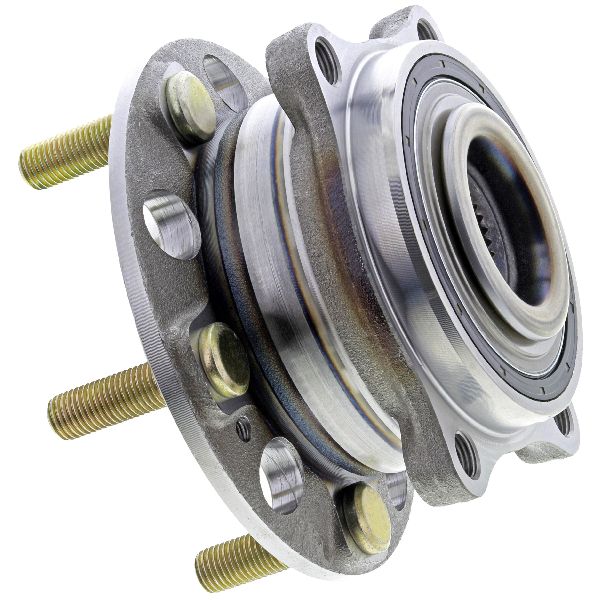
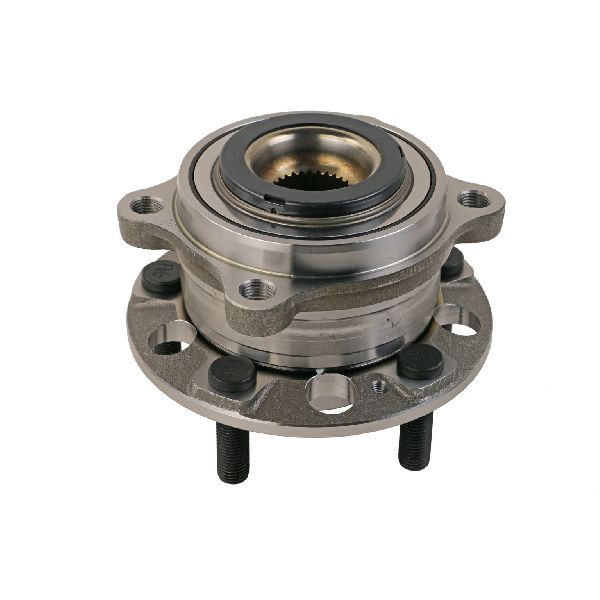
For the third-generation (2016-2020) Kia Sorento, the wheel speed sensor is not just a small sensor head but is integrated into a wiring harness assembly. It's crucial to identify if your Sorento is Front-Wheel Drive (FWD) or All-Wheel Drive (AWD), as they use different part numbers for the rear sensor harness. Additionally, the magnetic 'tone ring' that the sensor reads is built into the wheel hub and bearing assembly, meaning if the ring is damaged, the entire hub must be replaced.
Symptoms You May Notice
- ABS warning light is on
- Traction Control or Electronic Stability Control (ESC) warning light is on
- Cruise control may be disabled
- ABS system does not activate during hard braking (wheels may lock up)
- All-Wheel Drive (AWD) warning light may illuminate
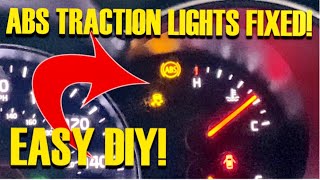
- Replacing the wheel hub/bearing when only the sensor is bad. Always use a scan tool to check live data before replacing the more expensive hub assembly. 🎬 See how to quickly diagnose ABS and traction control lights.
- Replacing the sensor when the wiring is damaged a few inches up the harness. A thorough visual and electrical inspection of the harness is critical.
Most Likely Causes
- Failed Right Rear Wheel Speed Sensor / Harness 🔴 High Probability → Shop ABS Wheel Speed Sensor The sensor and its wiring are exposed to road debris, water, and salt, which can lead to corrosion and physical damage over time. A service campaign (SC148) on the previous generation for water intrusion into the rear WSS housing suggests a historical vulnerability in this area.
How to confirm: Use an ABS-capable scan tool to monitor live data from all four wheels while driving. If the right rear wheel speed reads 0 MPH or is erratic while the others read correctly, the sensor or its circuit is faulty.
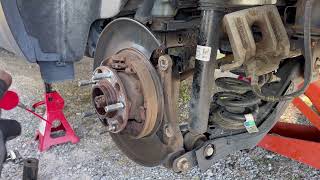
Typical fix: Replace the right rear wheel speed sensor harness assembly. Ensure you purchase the correct part: 91920-C5100 for FWD or 95681-C5000 for AWD. 🎬 Watch: Step-by-step guide to replacing the rear ABS sensor harness.
Est. part cost: $60-$120 - Damaged Wiring or Connector 🟡 Medium Probability The wiring harness can be damaged near the wheel well or at the connector due to suspension movement, road debris, or improper servicing. The section within a few inches of the sensor is most vulnerable.
How to confirm: Visually inspect the entire length of the wiring from the sensor to the main harness. Check the connector for corrosion, bent pins, or a loose connection. A multimeter can be used to check for continuity and shorts in the wiring.
Typical fix: Repair the damaged section of wire with solder and heat-shrink tubing or replace the connector pigtail if it is corroded or damaged.
Est. part cost: $15-$40 - Dirty or Damaged Magnetic Encoder Ring ⚪ Low Probability The magnetic ring is part of the wheel hub assembly and can accumulate metallic debris from brake wear or rust, which interferes with the sensor's reading. While less common, the ring can also crack or have pieces break off.
How to confirm: Remove the brake caliper, rotor, and wheel speed sensor to visually inspect the magnetic ring on the inboard side of the wheel hub. Look for a build-up of metallic 'fuzz' or any visible cracks or missing segments.
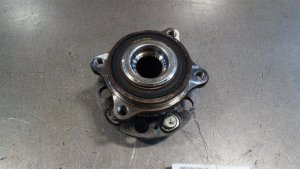
Typical fix: Carefully clean the debris off the face of the magnetic ring with a soft brush or cloth. Do not use magnets, as this can damage the encoder. If the ring is cracked or damaged, the entire wheel hub and bearing assembly must be replaced. 🎬 Watch: How to replace the rear wheel hub and bearing.
Est. part cost: $0 for cleaning, $150-$250 for a new hub assembly
Rare But Worth Checking
- Failed Wheel Hub / Bearing Assembly: → Shop Hub Assembly A worn-out wheel bearing can cause excessive play or 'wobble' in the hub. This movement can damage the integrated magnetic encoder ring or alter the air gap between the ring and the sensor, causing an erratic signal. This is usually accompanied by a humming or grinding noise from that corner of the vehicle.
- Faulty ABS Control Module (HECU): → Shop ABS Control Module In rare cases, the internal circuitry of the ABS module itself can fail for the specific channel related to the right rear wheel. This should only be considered after the sensor, wiring, and hub assembly have been confirmed to be in good condition. This failure may be accompanied by other codes like C0550 (Internal Failure) or C1627 (Communication Loss).
Diagnosis Steps
- Connect an ABS-capable OBD-II scanner and confirm the C0050 code is present.
- View the live data stream for all four wheel speed sensors. Drive the vehicle slowly (above 5-10 mph) in a straight line.
- Confirm that the Right Rear (RR) sensor reads 0 MPH, is erratic, or significantly differs from the other three sensors.
- Raise and safely support the rear of the vehicle. Visually inspect the wheel speed sensor and its wiring harness for any obvious signs of damage, fraying, or corrosion.
- Disconnect the sensor and inspect the connector pins for corrosion or damage.
- If no visual damage is found, remove the brake caliper and rotor to access the wheel hub assembly.
- Inspect the magnetic encoder ring on the hub for metallic debris or cracks. Clean if necessary.
- If the ring is clean and intact and the wiring appears good, the most likely cause is a failed wheel speed sensor/harness assembly.
- If replacing the sensor does not resolve the code, perform continuity and resistance checks on the wiring harness back to the ABS control module.
- If all wiring and components test good, the fault may lie within the ABS control module, which requires advanced diagnostics.
Parts You'll Likely Need
- Right Rear Wheel Speed Sensor Harness (AWD)
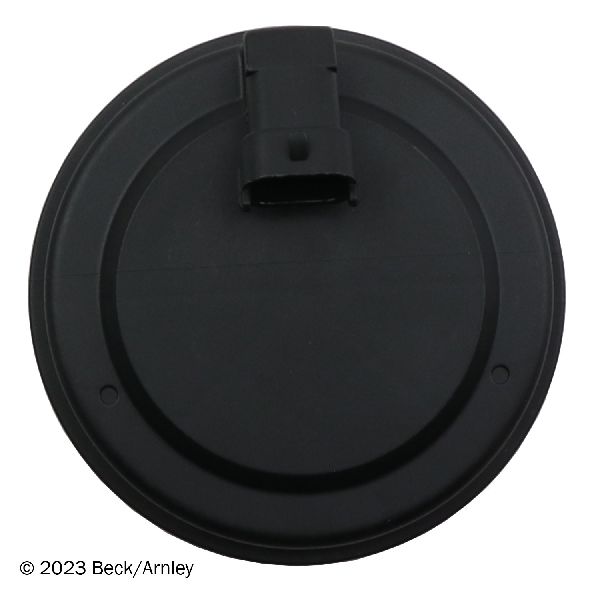
(OEM #95681-C5000)— This is the most common failure point for code C0050 on All-Wheel Drive models. The sensor is integrated into this harness assembly.
Trusted brands: Kia (OEM), Standard Motor Products, Holstein
OEM price range: $90-$150
Aftermarket price range: $60-$100 - Right Rear Wheel Speed Sensor Harness (FWD/2WD)
(OEM #91920-C5100)— This is the most common failure point for code C0050 on Front-Wheel Drive models. The sensor is integrated into this harness assembly.
Trusted brands: Kia (OEM), Mando, Beck/Arnley
OEM price range: $90-$150
Aftermarket price range: $60-$100 - Right Rear Wheel Hub and Bearing Assembly — This part is required if the integrated magnetic encoder ring is found to be cracked or if the wheel bearing itself has failed, causing the erratic signal.
Trusted brands: Kia (OEM), Timken, MOOG, SKF
OEM price range: $200-$300
Aftermarket price range: $120-$200
Related Codes That Often Appear With This One
- U0415 — This code means 'Invalid Data Received From ABS Control Module'. It's often a secondary code set by other modules (like power steering or AWD control) when the ABS module reports a fault like C0050, because they rely on accurate wheel speed data to function. NHTSA ODI #11228687 notes that on some vehicle platforms, C0050 can appear alongside U0415 and other communication codes like U0126 and U0401.
Technical Service Bulletins (TSBs) & Recalls
- SC148 - 'Rear Wheel Speed Sensor Housing Cover Inspection and/or Replacement' for 2011-2015 Sorento 2WD models, relevant for showing historical weakness in the system's sealing against water.
Platform-Specific Known Issues
- While no specific TSBs for C0050 on the 2016-2020 model were found, a service campaign on the prior generation (SC148) addressed water intrusion into the rear wheel speed sensor housing on 2011-2015 Sorentos in coastal states. This campaign involved inspecting, cleaning, and sealing the housing or replacing it if codes like C1206/C1209 were present, indicating a known design weakness to moisture that may persist in later models.
Mechanic-Grade Diagnostic Values
- Active Sensor Reference Voltage — expected: Approximately 11-12 Volts DC (or sometimes 5V) with key on, engine off.. Failure: No voltage indicates a wiring or ABS module power supply issue.
- Active Sensor Signal Fluctuation (Multimeter) — expected: The reference voltage should fluctuate slightly (a change of 0.1V to 1.0V) when the wheel is spun by hand.. Failure: No change in voltage while the wheel is spinning points to a bad sensor or a damaged tone ring.
- Active Sensor Signal (Oscilloscope) — expected: A clean, repeating square wave that increases in frequency as the wheel spins faster.. Failure: A flat, noisy, intermittent, or missing waveform indicates a fault in the sensor, tone ring, or wiring.
Hidden / Shadow Codes Worth Checking
- C0050-18: Indicates low signal amplitude, meaning the signal from the sensor is weak or erratic. This can be caused by an increased air gap, debris on the magnetic ring, or a failing sensor. (see via Professional scan tools like the Kia GDS.)
- C0050-5A: Indicates the signal is not plausible. The ABS module compares all four wheel speeds, and this code sets when the right rear signal is illogical compared to the others (e.g., reading 5 MPH when others read 50 MPH). This often points to a mechanically-induced issue like a damaged tone ring or wheel bearing play, rather than a simple open/short circuit. (see via Professional scan tools like the Kia GDS.)
Scan Tool Commands That Help
- Kia GDS (Global Diagnostic System): Actuator Test — To forcefully activate the ABS hydraulic pump and individual solenoid valves. This is used to diagnose the health of the HECU itself if the sensor and wiring are confirmed to be good.
- Kia GDS (Global Diagnostic System): Air Bleeding Mode — This is a required service function after replacing the ABS hydraulic unit (HECU) to ensure all air is purged from the system, which cannot be done with a traditional brake bleed.
- Kia GDS (Global Diagnostic System): Reset Adaptive Values — After replacing certain control modules, this function may be needed to reset learned values and ensure proper operation. For the ABS system, this could include calibrating a pedal stroke sensor if the HECU is replaced.
Wiring & Ground Locations
- ABS Module (HECU) — Located in the engine bay, typically mounted to the hydraulic pump assembly near the driver's side frame rail or firewall.. This is the control unit that receives the signal from the wheel speed sensor. The wiring harness from the right rear wheel terminates here. Checking for power, ground, and signal integrity at this module is the final step in diagnosing a persistent circuit fault.
- Wheel Speed Sensor Connector — The harness-side connector is typically found in the rear right wheel well, sometimes tucked up behind the fender liner.. This is the primary test point for the sensor circuit. It's exposed to the elements and is a common point of failure due to corrosion or physical damage.
Real Owner Repair Stories
- YouTube channel 'Golden Hands DIY' (2011-2017 Kia Sorento (demonstrated on a similar generation)) — ABS and Traction Control lights on the dashboard.
❌ Tried (didn't work) The video focuses on direct diagnosis and replacement, implying that a scan tool pointed directly to the wheel speed sensor fault.
✅ What actually fixed it The entire rear wheel hub and bearing assembly was replaced along with the integrated sensor. After replacement and clearing the codes with a scanner, the warning lights went out and stayed off, confirming the fix.
Documented NHTSA Reports
- An owner reported in NHTSA ODI #11649367 that the vehicle disabled the ABS and supporting systems, setting codes C0050 and C2227. The report suggests that in some cases, the extra brake fluid required to take up space after service can lead to system discharge issues.
- NHTSA ODI #11693418 describes a situation where a C0050-00 code was present alongside the need to replace rotors, rear brake pads, and the adapter plate.
- While C0050 is primarily a wheel speed sensor code for Kia, owners of other makes have reported different interpretations; for instance, NHTSA ODI #10763888 mentions a C0050 code being diagnosed as a faulty power steering control module (PSCM) on a different manufacturer's platform, though this is unlikely to apply to the Sorento's ABS-centric architecture.
OEM Part Supersession History
58980-C5000→Unknown— Part number 58980-C5000 is frequently listed by retailers for the 2016-2020 Sorento rear sensor. However, the more specific FWD/AWD part numbers (91920-C5100/95681-C5000) are also correct. This may be an assembly number or an older part number, creating potential confusion.
Heads up: Always verify the correct part number using the vehicle's VIN and drivetrain (FWD or AWD) to avoid purchasing the wrong harness.
Diagnostic Flowchart
Other Known Issues on This Vehicle
Issues unrelated to this code that are worth knowing about as an owner of this generation:
- Theta II GDI Engine Failure 🔴 High — Widespread across multiple model years with the 2.0L Turbo and 2.4L GDI engines. Can occur at various mileages, often before 100,000 miles. Subject of a major class-action settlement. (Ref: Multiple recalls and a class-action settlement (In re: Hyundai and Kia Engine Litigation, Case No. 8:18-cv-02223) provide a lifetime warranty and other remedies for failures caused by connecting rod bearing wear.)
- Excessive Oil Consumption 🔴 High — Common complaint for both 2.4L GDI and 3.3L V6 engines. Owners report needing to add oil between changes, sometimes as much as 1 quart per 1,000 miles. Can lead to engine damage or failure if not monitored. (Ref: Kia has internal procedures (TSBs) for dealers to perform oil consumption tests. If consumption exceeds a certain threshold (e.g., >1 quart/1,000 miles), an engine replacement may be covered under warranty or settlement provisions.)
- Tow Hitch Harness Fire Risk 🔴 High — Affects a large number of 2016-2022 Sorento vehicles with an OEM or dealer-installed tow hitch harness. The risk exists regardless of whether a trailer is being used. (Ref: NHTSA Recall 22V703000 (Kia Campaign SC249). Debris and moisture can cause an electrical short in the harness module, leading to a fire risk while driving or parked. Owners were advised to park outside until the repair (fuse and/or module replacement) is completed.)
- Crankshaft Failure (3.3L V6) 🔴 High — Specific to certain 2017 models with the 3.3L V6 engine. (Ref: NHTSA Recall 17V784000. The engine crankshaft may have been improperly heat-treated, which could lead to a fracture and catastrophic engine failure.)
- Head Gasket Failure / Engine Failure 🔴 High — Reported on 2016 models, where a leaking head gasket allows coolant and oil to mix, leading to extensive engine damage.
- Infotainment System Glitches 🟡 Low — Owners report issues with the infotainment system freezing, the reverse camera failing to display, or other electrical bugs. Often requires a software update or, in some cases, hardware replacement. (Ref: TSB ELE320 addresses screen freezing and map delays when using Apple CarPlay on some 2020-2023 models.)
Used vs. New Parts: Buying Guide for This Vehicle
When a used part is the smart pick: A used wheel hub assembly from a reputable salvage yard can be a cost-effective option, especially if the failure is a damaged tone ring on an otherwise good bearing.
Donor-vehicle mileage cap: roughly under 60000 miles for the part to have meaningful remaining life.
What to inspect on the donor part:
- Verify the donor vehicle's mileage.
- Inspect the magnetic tone ring on the hub for any cracks, rust, or physical damage before purchase.
- Spin the bearing by hand to feel for any roughness or grinding.
- Ensure the donor vehicle was not from a heavy salt-belt region to minimize corrosion risk.
OEM-only on this vehicle (don't cheap out):
- ABS Control Module (HECU) - Due to the need for potential programming and its critical safety function, a new OEM or professionally remanufactured unit is strongly recommended over a used one.
Aftermarket brands forum-validated for this vehicle:
- Standard Motor Products (SMP)
- Duralast
- Mando (often an OEM supplier)
- Holstein
- Beck/Arnley
Real Owner Stories
Aggregated from forums and TSBs cited above. Mileages and costs reflect what owners reported in those sources.
2017 Kia Sorento
Symptoms: ABS and traction lights illuminated on the dashboard.
What fixed it: Replacement of the wheel speed sensor.
Source hint: Car Talk Community: A user with a 2017 Sorento reported ABS and traction lights, with a wheel speed sensor being the likely cause.
2017 Kia Sorento
Symptoms: Intermittent ABS and Traction lights appearing on the dash.
What fixed it: The owner identified codes C1207/C1206 relating to the rear wheel speed sensor circuit.
Source hint: Reddit (r/MechanicAdvice): A 2017 Sorento owner experienced intermittent ABS/Traction lights and received codes C1207/C1206
2016 Kia Sorento
Symptoms: ABS warning light and related traction control failures.
What fixed it: Replacing the rear hub and ABS sensor assembly (Part #58980-C5000) by removing the caliper, rotor, and four hub bolts.
Source hint: YouTube: A DIY repair video for a 2016 Kia Sorento shows the process of replacing the rear hub and ABS sensor assembly, referencing part number 58980-C5000
Related OBD-II Codes
Frequently Asked Questions
Which specific part number do I need for the Right Rear Wheel Speed Sensor on my AWD 2016-2020 Sorento?
Does the service campaign SC148 for water intrusion apply to my 2016-2020 Sorento?
Can a faulty wheel speed sensor affect my Sorento's All-Wheel Drive system?
Is it possible to clean the sensor component instead of replacing the whole hub?
Why is my cruise control not working along with the ABS light?
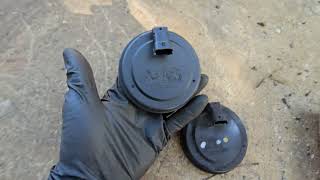
Helpful Videos
Used OEM Parts in Stock
New Aftermarket Parts Available


The information in this article is provided for general reference and educational purposes only. Vehicle specifications, procedures, and part compatibility can vary by production date, trim level, and region. Always consult your vehicle's factory service manual and verify part numbers before purchasing or performing repairs. Safety-critical components such as airbags, seat belts, and braking systems should be installed by a qualified professional.
- Kia Sorento:
- 🧭 Diagnostic Flowchart
- 🎬 Helpful Videos
- 🛍️ Shop This Part
- What's Unique About the 2016-2020 Kia Sorento
- Symptoms You May Notice
- Most Likely Causes
- Rare But Worth Checking
- Diagnosis Steps
- Parts You'll Likely Need
- Related Codes That Often Appear With This One
- Technical Service Bulletins (TSBs) & Recalls
- Platform-Specific Known Issues
- Mechanic-Grade Diagnostic Values
- Hidden / Shadow Codes Worth Checking
- Scan Tool Commands That Help
- Wiring & Ground Locations
- Real Owner Repair Stories
- Documented NHTSA Reports
- OEM Part Supersession History
- Other Known Issues on This Vehicle
- Used vs. New Parts: Buying Guide for This Vehicle
- Real Owner Stories
- 2017 Kia Sorento
- 2017 Kia Sorento
- 2016 Kia Sorento
- Related OBD-II Codes
- Frequently Asked Questions
- 🎟️ Get 5% Off