

C0050 on 2007-2015 Mazda CX-9: Right Rear Wheel Speed Sensor Circuit Causes and Fixes
On a 2007-2015 Mazda CX-9, code C0050 almost always means the right rear ABS wheel speed sensor has failed. Expect to pay $20-$80 for an aftermarket sensor or around $80-$100 for an OEM part. It's a DIY-friendly fix if you're comfortable removing the wheel and some interior trim to access the sensor's electrical connector.
- Code C0050 on a 2007-2015 CX-9 means there is a problem with the right rear wheel speed sensor circuit, which will disable your ABS and stability control.
- The most likely fix is to replace the right rear ABS sensor. However, always inspect the wiring for damage and the magnetic ring on the hub before buying parts.
- It is essential to buy the correct part for your vehicle's drivetrain, as the sensors for FWD and AWD models are different.
- The repair is more involved than on many other cars because the sensor's electrical connector is located inside the cabin, requiring removal of the rear seat and trim.
- Driving with this code is possible, but unsafe in emergency situations or bad weather due to the disabled safety systems.
What's Unique About the 2007-2015 Mazda CX-9
The first-generation Mazda CX-9 shares its CD3 platform with the Ford Edge and Lincoln MKX, so repair procedures can be similar. A key point for the CX-9 is that the rear ABS sensor's wiring harness routes up through the body and connects inside the vehicle, requiring the removal of the rear seat bottom and the driver-side rear quarter trim panel to access the electrical connector. 🎬 Watch: Step-by-step rear ABS sensor replacement walkthrough This makes the job more involved than on cars where the connector is under the vehicle. Also, it is critical to order the correct sensor, as the part numbers differ between Front-Wheel Drive (FWD) and All-Wheel Drive (AWD) models.
Symptoms You May Notice
- ABS warning light is on
- Traction Control (TCS/DSC) warning light is on
- A 'slip' indicator light may be on
- ABS system does not activate during hard braking (wheels may lock up)
- Traction or stability control does not activate on slippery surfaces
- Cruise control may be disabled
- Replacing the ABS module when the fault is a simple sensor or wiring issue.
- Replacing the wrong side sensor; always confirm the code (C0050 is specifically Right Rear).
- Replacing the sensor without first inspecting the wiring and the magnetic encoder ring on the wheel bearing.
- Not cleaning the sensor mounting surface properly, causing the new sensor to have an incorrect air gap and continue to set a code.
Most Likely Causes
- Failed Right Rear Wheel Speed Sensor 🔴 High Probability → Shop ABS Wheel Speed Sensor The sensor is exposed to road salt, water, and debris, which leads to corrosion and electronic failure over time. It can also be easily damaged during rear brake or wheel bearing service. Forum discussions among owners confirm that sensor failure is a frequent issue as the vehicle ages.
How to confirm: Use an OBD-II scanner with ABS capabilities to monitor live data. While driving, observe the wheel speed data; the right rear sensor will likely read 0 MPH or show an erratic, jumpy signal compared to the other three wheels. These are active sensors, so a simple resistance test is not definitive; the proper test involves checking for ~12V reference voltage at the harness connector with the key on and then checking for a changing voltage signal as the wheel is spun.
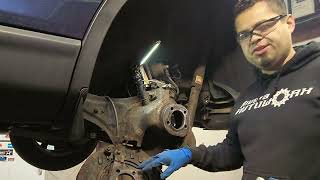
Typical fix: Replace the right rear ABS wheel speed sensor. The sensor is held in by a single 10mm bolt, but the wiring harness must be disconnected from inside the cabin, which requires removing the rear seat and side trim. 🎬 See how to access the interior ABS sensor connector It is crucial to clean the mounting surface on the hub thoroughly to ensure the new sensor sits perfectly flush.
Est. part cost: $20-$80 - Damaged Wiring or Connector 🟡 Medium Probability The wiring harness runs along the suspension and can be damaged by road debris, improper jacking, or corrosion. The section near the wheel hub is most vulnerable. The internal connector, located behind the rear interior trim, can also become loose or corroded.
How to confirm: Visually inspect the entire length of the sensor's wiring harness from the wheel hub to where it enters the vehicle body. Look for any cuts, abrasions, melting, or corrosion. Disconnect the interior connector and check for corrosion or bent pins. Check for reference voltage (typically 11-12V) at the harness-side connector with the key on.
Typical fix: Repair the damaged section of wire using solder and heat-shrink tubing or replace the entire sensor and harness assembly if the damage is severe or close to the sensor itself.
Est. part cost: $5-$20 for repair materials, or the cost of a new sensor assembly. - Damaged Wheel Bearing / Magnetic Encoder Ring ⚪ Low Probability The magnetic encoder ring is integrated into the wheel bearing and hub assembly. Rust jacking can push the sensor away, increasing the air gap, or the ring itself can crack, delaminate, or get covered in metallic debris, leading to a weak or implausible signal. This is a more common failure mode on the platform-mate Ford Edge.
How to confirm: After removing the ABS sensor, use a flashlight to inspect the magnetic ring on the face of the wheel hub. Spin the hub and look for cracks, missing segments, or a heavy buildup of rust or metallic dust. An erratic signal that persists with a new sensor often points to this issue. A failing wheel bearing may also produce a humming or grinding noise while driving.
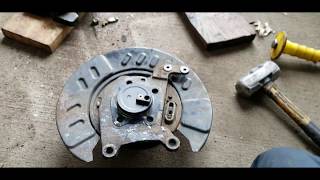
Typical fix: The wheel bearing and hub assembly must be replaced. 🎬 Watch: How to replace the rear wheel bearing assembly The encoder ring is not serviced separately.
Est. part cost: $100-$250
Rare But Worth Checking
- Failed ABS Control Module: → Shop ABS Control Module This is an unlikely cause for a single wheel speed sensor code. An ABS module failure typically results in multiple codes, communication errors, or codes related to the pump motor. However, internal valve failures in the ABS module are a known, though separate, issue on this platform.
- Water Intrusion into Body Control Module (BCM): → Shop Body Control Module On the CX-9, blocked sunroof drains can cause water to leak into the passenger footwell and damage the Body Control Module (BCM). While this typically causes a wide array of seemingly unrelated electrical faults (like no indicators, wiper issues, and communication codes), it has been documented to also trigger ABS/TCS lights simultaneously. This is an edge case, but worth considering if C0050 appears with other bizarre electrical symptoms.
Diagnosis Steps
- Connect an OBD-II scanner capable of reading ABS codes to confirm C0050 is the active code. Check for any sub-codes like :18 (low signal), :5A (implausible signal), or :0F (erratic signal) which can provide more clues.
- Access the live data stream for the ABS module. Graph the outputs for all four wheel speed sensors.
- Drive the vehicle in a straight line above 10 MPH. Confirm that the Right Rear (RR) sensor reads 0 MPH or shows a signal that is erratic or significantly different from the other three sensors.
- If the signal is faulty, raise and secure the rear of the vehicle. Remove the right rear wheel.
- Visually inspect the ABS sensor wiring for any signs of physical damage, melting, or corrosion from the hub to the body grommet.
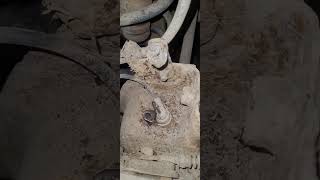
- Remove the single 10mm bolt holding the sensor in the wheel hub. Carefully pry and twist the sensor to remove it. It may be seized by rust.
- Inspect the magnetic encoder ring on the wheel hub for cracks, damage, or heavy metallic debris. Clean any debris found.
- If the visual inspection reveals no issues, the sensor itself is the most likely cause. Proceed with replacement.
- To replace, access the interior connector. This requires removing the rear seat bottom cushion and the rear driver-side quarter panel/trim to unplug the old sensor and route the new one.
- Before installing the new sensor, thoroughly clean the mounting hole and surface on the wheel hub with a wire brush or sandpaper to ensure it sits completely flush. Any rust buildup can create an incorrect air gap and cause the code to return.
- After installing the new sensor, clear the codes with the scan tool. If a scan tool is not available, driving the vehicle for a few minutes may cause the lights to turn off automatically as the system resets itself.
Parts You'll Likely Need
- Rear Right ABS Wheel Speed Sensor (FWD)
(OEM #L206-43-71YC)— This is the most common failure point for code C0050 on Front-Wheel Drive models.
Trusted brands: Mazda (OEM), Beck Arnley, Standard Motor Products (ALS2411), Holstein, Carquest
OEM price range: $75-$100
Aftermarket price range: $20-$75 - Rear Right ABS Wheel Speed Sensor (AWD)
(OEM #L214-43-71YF)— This is the most common failure point for code C0050 on All-Wheel Drive models. The part is different from the FWD version.
Trusted brands: Mazda (OEM), Holstein, Standard Motor Products, SKP
OEM price range: $80-$110
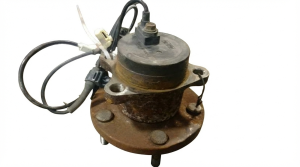
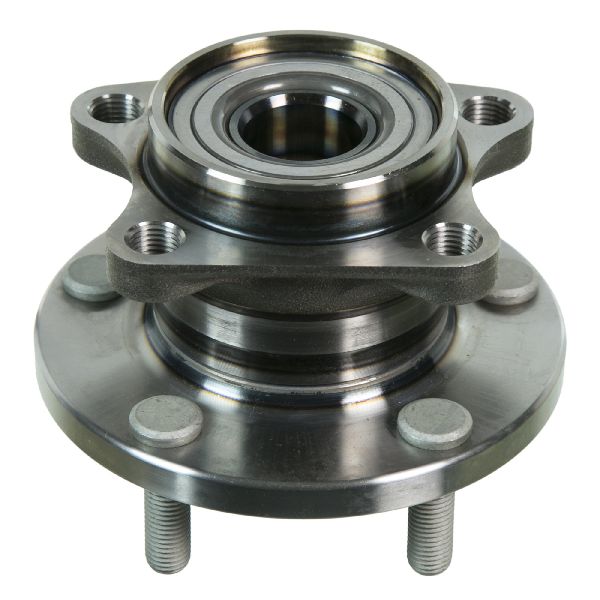
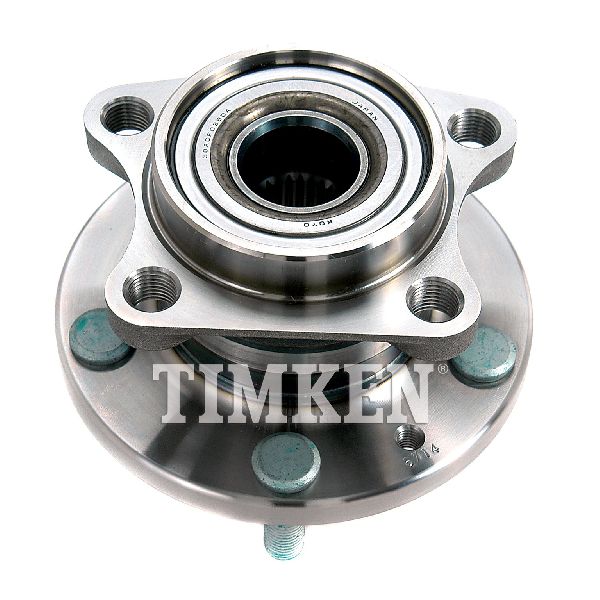
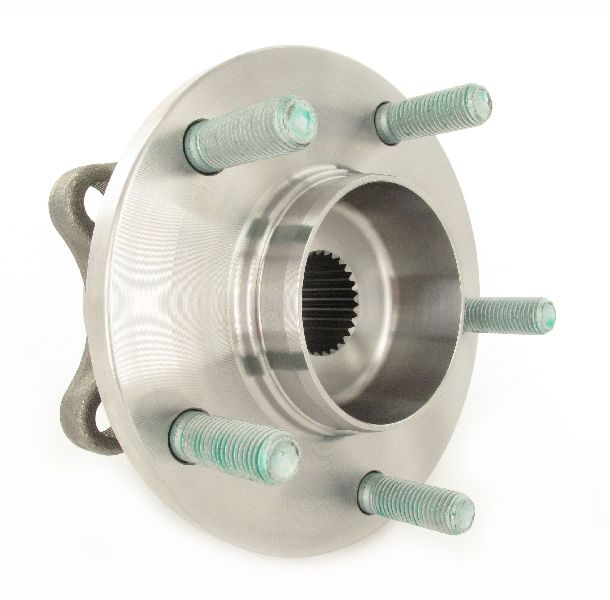
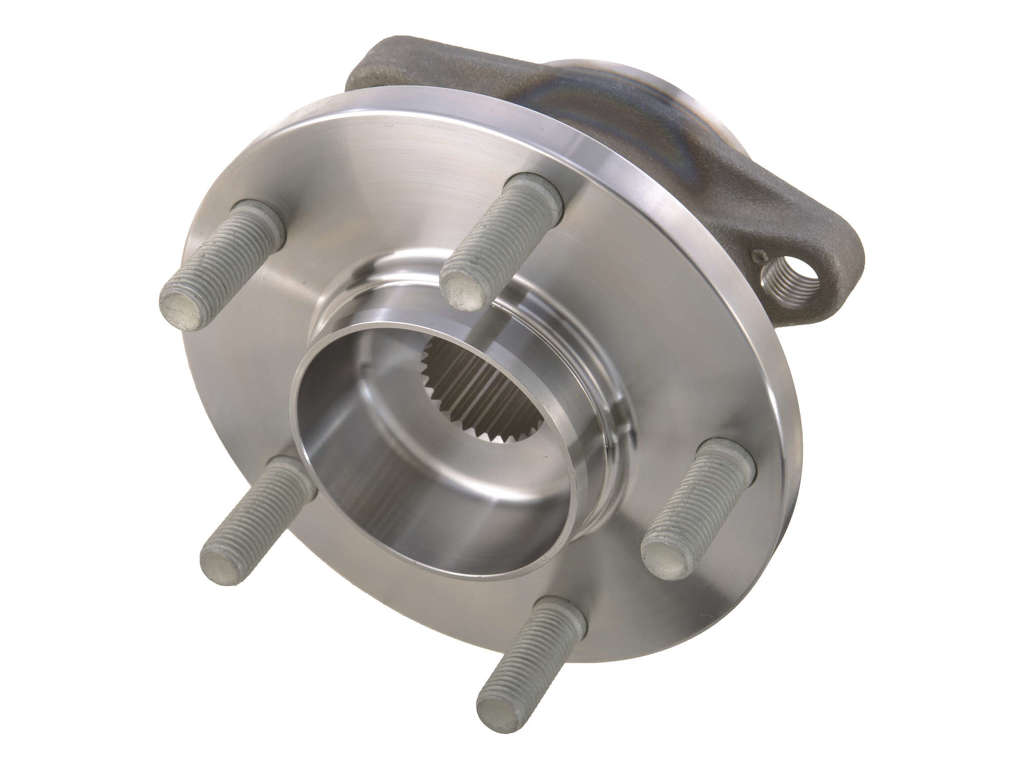
Aftermarket price range: $30-$70 - Rear Wheel Bearing and Hub Assembly — Required if the integrated magnetic encoder ring is damaged, causing a persistent C0050 code even with a new sensor.
Trusted brands: MOOG (512449), SKF, Timken, NSK
OEM price range: $200-$280
Aftermarket price range: $100-$180
Platform-Specific Known Issues
- Real-world experience shows the sensor can become tightly seized in the steering knuckle due to rust, requiring significant force and penetrating oil to remove.
- It is critical to clean the mounting surface on the knuckle before installing the new sensor. Any rust or debris can prevent the sensor from sitting flush, creating an incorrect air gap and causing the code to return immediately.
Mechanic-Grade Diagnostic Values
- ABS Wheel Speed Sensor Harness Voltage (Active Sensor) — expected: 11-12 Volts DC with key on, engine off, sensor unplugged.. Failure: No voltage or significantly lower voltage indicates a problem with the wiring or the ABS module power supply.
- ABS Wheel Speed Sensor Air Gap — expected: 0.87—1.53 mm {0.035—0.060 in}. Failure: A gap outside this range, often caused by rust buildup on the mounting surface, can lead to an erratic or no-signal condition.
- ABS Wheel Speed Sensor Signal (Spinning Wheel) — expected: With the sensor connected and meter back-probed, the DC voltage should show slight fluctuations as the wheel is spun by hand.. Failure: A static, unchanging voltage reading while the wheel is spinning points to a failed sensor or a damaged encoder ring.
Hidden / Shadow Codes Worth Checking
- C0050:06: Right Rear Wheel Speed Sensor Circuit Low Voltage/Open. (see via Mazda Modular Diagnostic System (M-MDS) or advanced aftermarket scanners like FORScan.)
- C0050:0F: Right Rear Wheel Speed Sensor Circuit Signal Erratic. (see via Mazda Modular Diagnostic System (M-MDS) or advanced aftermarket scanners like FORScan.)
- C0050:18: Right Rear Wheel Speed Sensor Circuit Low Signal Amplitude. (see via Mazda Modular Diagnostic System (M-MDS) or advanced aftermarket scanners like FORScan.)
- C0050:5A: Right Rear Wheel Speed Sensor Circuit Not Plausible. (see via Mazda Modular Diagnostic System (M-MDS) or advanced aftermarket scanners like FORScan.)
Scan Tool Commands That Help
- Mazda M-MDS / FORScan: PID Data Monitoring: WSPD_SEN_RR — This is the primary diagnostic step. Monitoring the 'WSPD_SEN_RR' (Wheel Speed Sensor - Right Rear) PID while driving allows a technician to see if the signal drops out, is erratic, or reads zero compared to the other wheels, confirming the fault is at that corner.
- Mazda M-MDS / FORScan: ABS Pump Motor Activation — While not directly for a C0050 code, this bidirectional command is used to test the ABS pump motor and is crucial when bleeding the brake system after ABS module replacement. It confirms the health of a related, but separate, component.
Wiring & Ground Locations
- G13 — At the left 'C' pillar.. This is a major body ground point near the routing path of the rear ABS sensor harness. A corroded or loose G13 ground could potentially introduce electrical noise or resistance into nearby circuits, though it is not the primary ground for the ABS module itself.
- BCM (Body Control Module) — Behind the left kick panel.. The BCM communicates with the ABS module. In rare cases of water intrusion from blocked sunroof drains, the BCM can be damaged, leading to communication faults that may manifest as ABS codes.
- ABS/DSC HU/CM (Hydraulic Unit/Control Module) — Located in the right front corner of the engine compartment.. This is the brain of the system. All wheel speed sensor wiring terminates here. Testing for continuity and voltage should be done between the sensor connector and the connector at this module.
Real Owner Repair Stories
- YouTube video comment section / Forum discussions (2007-2015 Mazda CX-9 (multiple instances)) — ABS, TCS, and Slip indicator lights are on. Code C0050 present.
❌ Tried (didn't work) Replacing the Right Rear ABS sensor.
✅ What actually fixed it The code returned immediately after replacing the sensor. The actual fix was to thoroughly clean the mounting surface on the wheel knuckle with a wire brush and sandpaper. Rust buildup had created an excessive air gap for the new sensor, preventing it from reading the magnetic ring correctly. - YouTube video by 'Cartronics' (Mazda CX-9 (year not specified, but Gen 1)) — ABS light, TCS light, no indicators, one headlight out, multiple 'lost communication with BCM' codes.
❌ Tried (didn't work) Initial assumption was a failed ABS module or sensor.
✅ What actually fixed it The root cause was a water-damaged Body Control Module (BCM) located in the passenger footwell. Blocked sunroof drains had allowed water to leak onto the module, causing widespread corrosion and multiple, seemingly unrelated electrical faults, including the ABS/TCS lights. The BCM was removed, cleaned, corroded traces repaired, and reinstalled, which fixed all issues.
Documented NHTSA Reports
While C0050 is a standard wheel speed sensor code for Mazda, it is important to note that other manufacturers use this identifier differently. For example, NHTSA ODI #10763888 describes a case where C0050 identified a faulty power steering control module (PSCM) on a different make, requiring a steering column replacement. Additionally, an owner reported in NHTSA ODI #11649367 that the vehicle disabled the ABS and supporting systems, setting codes C0050 and C2227 after brake service; the technician noted that extra brake fluid required to return caliper piston contact might be a factor. Another report, NHTSA ODI #11693418, mentions C0050-00 appearing alongside the need to replace rotors, pads, and adapter plates. Finally, NHTSA ODI #11228687 lists C0050 among a large cluster of communication and sensor codes (including C0035 and U0126) that appeared simultaneously on a different vehicle platform.
When the Usual Fixes Don't Work
- While the vast majority of C0050 codes are fixed by replacing the sensor, a notable number of owners report that this does not solve the problem. In these cases, the two most common follow-up fixes are: 1) Thoroughly cleaning rust and scale from the sensor mounting surface on the knuckle to correct the air gap, which often resolves the issue immediately. 2) Replacing the entire rear wheel bearing and hub assembly because the integrated magnetic encoder ring was cracked, delaminated, or covered in metallic debris, providing a bad signal to the new sensor.
Diagnostic Flowchart
Other Known Issues on This Vehicle
Issues unrelated to this code that are worth knowing about as an owner of this generation:
- Internal Water Pump Failure 🔴 High — Common at higher mileage (typically 80k-120k miles). Failure allows coolant to mix with engine oil, which can lead to catastrophic engine failure if not caught early. (Ref: No recall, but it is a widely documented failure. The pump is timing-chain driven, making replacement a labor-intensive job (10-15 hours).)
- AWD Transfer Case (PTU) Failure 🔴 High — Common on AWD models. The PTU is located near the exhaust, causing its fluid to overheat and break down, leading to sludge and eventual gear failure. (Ref: Mazda issued a warranty extension (SSP 92) for some 2010-2014 models, extending coverage to 7 years or 90,000 miles. Many owners recommend proactively changing the PTU fluid despite it being a 'lifetime' fluid.)
- Power Brake Booster Failure 🟠 Medium — Can occur at various mileages, causing a hard brake pedal and a hissing sound from the driver's footwell due to a diaphragm leak. (Ref: Mazda issued a warranty extension (SSP 93) for 2007-2013 models, covering the part for 7 years or 90,000 miles.)
- Worn Front Lower Control Arm Bushings 🟡 Low — A common source of squeaking or creaking noises from the front suspension, especially over bumps or when turning. (Ref: There was a recall/service program for lower ball joints on some earlier models, but bushing wear is a separate, common maintenance item.)
Used vs. New Parts: Buying Guide for This Vehicle
When a used part is the smart pick: A used part is almost never a good choice for this repair. The primary failure parts (sensor, wheel bearing) are wear items exposed to harsh conditions. However, if a diagnosis confirms the wiring connector pigtail is damaged, sourcing a used pigtail from a junkyard is a cost-effective and viable repair.
Donor-vehicle mileage cap: roughly under 80000 miles for the part to have meaningful remaining life.
What to inspect on the donor part:
- For a pigtail: ensure the connector is free of corrosion, the locking tab is intact, and there are several inches of clean, un-spliced wire to work with.
- Avoid parts from vehicles in the 'salt belt' or areas with heavy road salt usage, as corrosion will be more prevalent.
Aftermarket brands forum-validated for this vehicle:
- Wheel Bearings: Timken, SKF, NSK, MOOG are consistently recommended for durability on this heavy SUV.
- ABS Sensors: Standard Motor Products (SMP), Holstein, and Beck Arnley are reputable aftermarket brands.
Brands owners have reported issues with on this vehicle:
- Unbranded, 'white box' wheel bearings and ABS sensors from online marketplaces should be avoided. They often use lower-quality materials and have a high premature failure rate, leading to repeat repairs.
Real Owner Stories
Aggregated from forums and TSBs cited above. Mileages and costs reflect what owners reported in those sources.
2012 Mazda CX-9 — ~100000 miles
Symptoms: The ABS and Traction Control lights came on. When checking live data, the right rear sensor was reading 0 MPH while the others were moving.
What fixed it: Replacement of the right rear ABS wheel speed sensor. The old sensor was seized in the knuckle and required penetrating oil and force to remove, and the mounting surface had to be sanded clean to get the new sensor to sit flush.
Source hint: YouTube - ABS Sensor Replacement Mazda CX9 by 'Fix It Angel'
Related OBD-II Codes
Frequently Asked Questions
Is there a warranty extension for the brake system on my 2007-2013 Mazda CX-9?
Can I just clean the sensor to fix C0050, or do I have to replace it?
Why is my cruise control disabled along with the ABS light?
I'm replacing the right rear sensor; do I really need to remove the rear seat?
Is the C0050 code related to the common PTU failure on AWD CX-9 models?
Can I test the right rear sensor with a multimeter?
Helpful Videos

Used OEM Parts in Stock
New Aftermarket Parts Available


The information in this article is provided for general reference and educational purposes only. Vehicle specifications, procedures, and part compatibility can vary by production date, trim level, and region. Always consult your vehicle's factory service manual and verify part numbers before purchasing or performing repairs. Safety-critical components such as airbags, seat belts, and braking systems should be installed by a qualified professional.
- Mazda CX-9:
- 🧭 Diagnostic Flowchart
- 🎬 Helpful Videos
- 🛍️ Shop This Part
- What's Unique About the 2007-2015 Mazda CX-9
- Symptoms You May Notice
- Most Likely Causes
- Rare But Worth Checking
- Diagnosis Steps
- Parts You'll Likely Need
- Platform-Specific Known Issues
- Mechanic-Grade Diagnostic Values
- Hidden / Shadow Codes Worth Checking
- Scan Tool Commands That Help
- Wiring & Ground Locations
- Real Owner Repair Stories
- Documented NHTSA Reports
- When the Usual Fixes Don't Work
- Other Known Issues on This Vehicle
- Used vs. New Parts: Buying Guide for This Vehicle
- Real Owner Stories
- 2012 Mazda CX-9 — ~100000 miles
- Related OBD-II Codes
- Frequently Asked Questions
- 🎟️ Get 5% Off