

C0050 on 1995-1999 Nissan Maxima: Right Rear Wheel Speed Sensor Fault Guide
This code points to a problem in the right rear wheel speed sensor circuit. On a 1995-1999 Maxima, the most likely cause is a failed sensor or damaged wiring near the wheel. Note: This specific vehicle generation uses a proprietary two-digit flashing code, not a standard C0050 code. A fault in the right rear wheel speed sensor circuit will typically be reported as flash code '31' (open circuit) or '32' (short circuit).
- This fault disables your ABS, so get it fixed to restore this important safety feature.
- The most likely culprit is the right rear wheel speed sensor itself or the wiring connected to it.
- Before buying parts, test the sensor's resistance with a multimeter (spec is ~800-1200 ohms) and visually inspect the wiring for damage.
- Your 1995-1999 Maxima will NOT show a 'C0050' code. You must use the onboard diagnostics to get a flash code; you are looking for '31' or '32' for this fault.
- Due to age, the sensor is often seized in the wheel knuckle and can be difficult to remove without breaking it.
What's Unique About the 1995-1999 Nissan Maxima
The 1995-1999 (A32 generation) Maxima is a pre-CAN bus vehicle that uses a proprietary method for ABS diagnostics. Unlike modern cars where a C0050 code is read directly by a scanner, this Maxima requires a specific self-diagnosis procedure to be initiated. This involves grounding a specific pin on the diagnostic link connector (DLC) and counting the flashes of the ABS warning light to determine a two-digit fault code. For a right rear wheel speed sensor fault, the relevant codes are '31' (open circuit) or '32' (short circuit), not C0050. This manual, non-standard diagnostic process is the key difference for this platform.
Symptoms You May Notice
- ABS warning light is illuminated on the dashboard
- Traction Control or Stability Control light is on (if equipped)
- ABS system does not activate during hard braking (wheels may lock up)
- Traction control does not activate during acceleration on slippery surfaces
- A humming or buzzing noise from the ABS pump may be heard when first turning the key.
- Replacing the ABS control module before thoroughly testing the sensor and wiring.
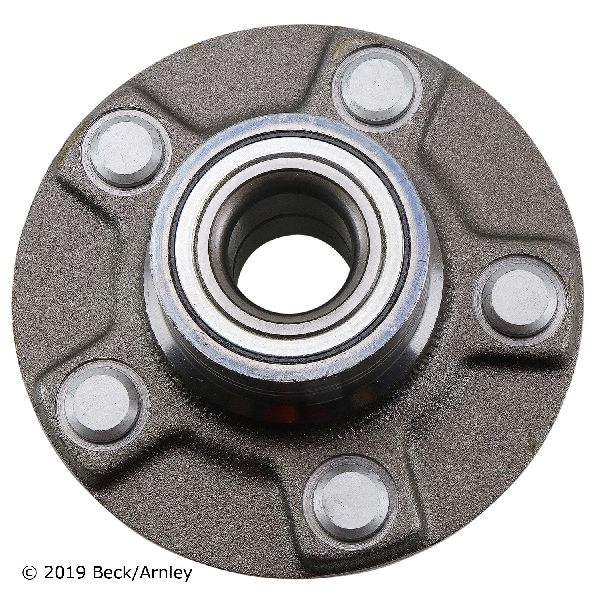
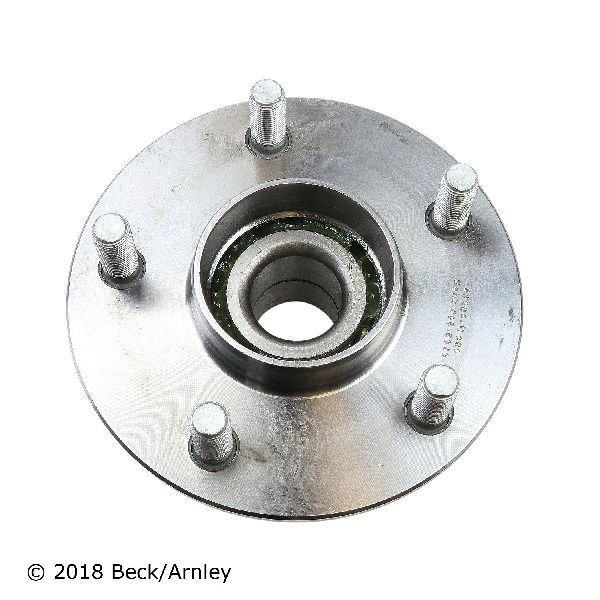
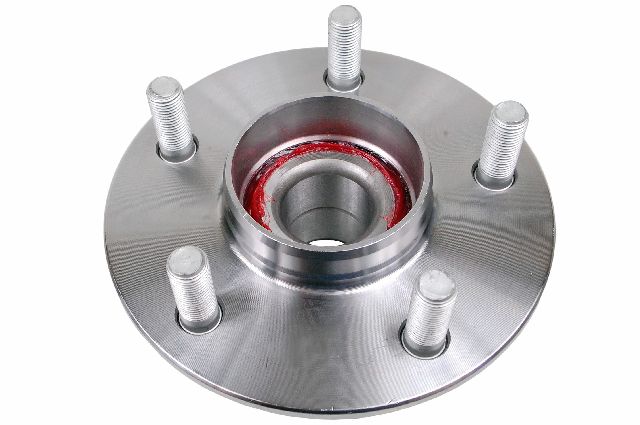
- Replacing the wheel hub/bearing assembly without first confirming the tone ring is actually damaged.
- Replacing the sensor without checking for a simple wiring break or corroded connector first.
Most Likely Causes
- Failed Right Rear Wheel Speed Sensor 🔴 High Probability → Shop ABS Wheel Speed Sensor The sensor is located at the wheel hub, where it is exposed to water, road salt, and debris, leading to internal failure or corrosion over 25+ years of service. These sensors are known to become brittle and can break during removal.
How to confirm: Disconnect the sensor and measure its internal resistance with a multimeter set to Ohms. For this generation Maxima, a good sensor should have a resistance between 800 and 1,200 Ohms (0.8-1.2 kOhms). Some sources suggest a slightly wider range of 800-1,850 Ohms is acceptable. A reading of open-circuit (infinite resistance) or short-circuit (near zero resistance) indicates a bad sensor.
Typical fix: Replace the right rear wheel speed sensor. The sensor can be difficult to remove from the knuckle due to corrosion.
Est. part cost: $50-$150 - Damaged Wiring or Corroded Connector 🟡 Medium Probability The wiring harness running to the wheel hub is subject to constant movement, vibration, and exposure to the elements. This makes it susceptible to fraying, breaking, or corrosion, especially at the connector pins.
How to confirm: Visually inspect the harness from the sensor to where it enters the car body for any signs of physical damage, chafing, or improper routing. Disconnect the connector and check the pins for green or white corrosion. Perform a pin-to-pin continuity test on the wiring harness between the sensor connector and the ABS control module.
Typical fix: Repair the broken wire section with solder and heat shrink tubing, or replace the damaged connector pigtail if available. Clean corroded connectors with electrical contact cleaner.
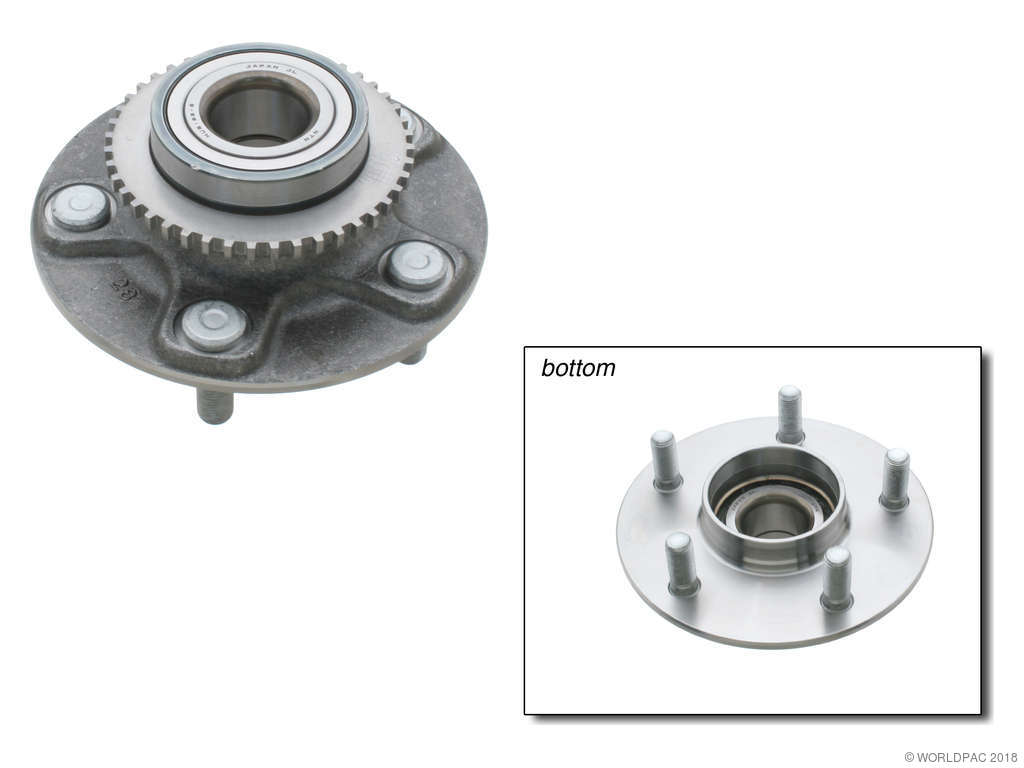
Est. part cost: $10-$40 - Damaged or Debris-Covered Tone Ring ⚪ Low Probability The tone ring (or reluctor ring) is integrated into the wheel hub/axle assembly. Over time, it can accumulate rust or brake dust, or in rare cases, crack. This obstructs the sensor's ability to get a clean reading.
How to confirm: Remove the wheel speed sensor from the knuckle. While slowly rotating the wheel, use a flashlight to visually inspect the teeth of the tone ring through the sensor mounting hole. Look for broken or missing teeth, heavy rust buildup, or significant wobble.
Typical fix: Clean the tone ring with a wire brush and brake cleaner. If the ring is cracked or severely damaged, the entire wheel hub and bearing assembly must be replaced as the ring is not serviced separately.
Est. part cost: $100-$250
Rare But Worth Checking
- Faulty ABS Control Module: → Shop ABS Control Module This is an unlikely cause and should be the last item to consider. An ABS module failure usually triggers multiple wheel speed sensor codes, communication errors, or a specific module failure code (e.g., flash code '71'), not just a single sensor fault. Thoroughly rule out the sensor, wiring, and tone ring before suspecting the module.
Diagnosis Steps
- Confirm the ABS light is on. Drive the vehicle over 20 MPH for at least one minute to ensure the system has completed its self-test.
- Initiate the ABS self-diagnostic mode. For 1995+ models, this typically involves turning the ignition off, grounding pin 'L' of the DLC connector, and then turning the ignition to 'ON'. After about 3.6 seconds, the ABS light will begin to flash a two-digit code.
- Count the flashes to determine the code. For the right rear sensor, you are looking for Code 31 (open circuit) or Code 32 (short circuit).
- Safely raise and support the rear of the vehicle. Remove the right rear wheel.
- Perform a thorough visual inspection of the wheel speed sensor, its wiring harness, and the connector. Look for obvious signs of damage, fraying, or corrosion.
- Disconnect the sensor connector. Using a multimeter set to Ohms, measure the resistance across the two pins of the wheel speed sensor itself. Compare the reading to the specification of 800-1200 ohms. An open (OL) or shorted (near 0 ohms) reading confirms a failed sensor.
- If the sensor resistance is within spec, inspect the tone ring for damage or debris by looking into the sensor mounting hole while rotating the hub.
- If the sensor and tone ring are good, the next step is to check the wiring continuity between the sensor connector and the ABS control module connector. Check for shorts to ground or power in the harness.
- If all wiring and components test good, the fault may lie within the ABS control module, but this is rare and should be the final diagnostic step.
Parts You'll Likely Need
- Right Rear ABS Wheel Speed Sensor
(OEM #47900-32U01)— This is the most common failure point in the circuit due to its exposed location and age.
Trusted brands: Hitachi, Bosch, NTK, Standard Motor Products (SMP)
OEM price range: $120-$200
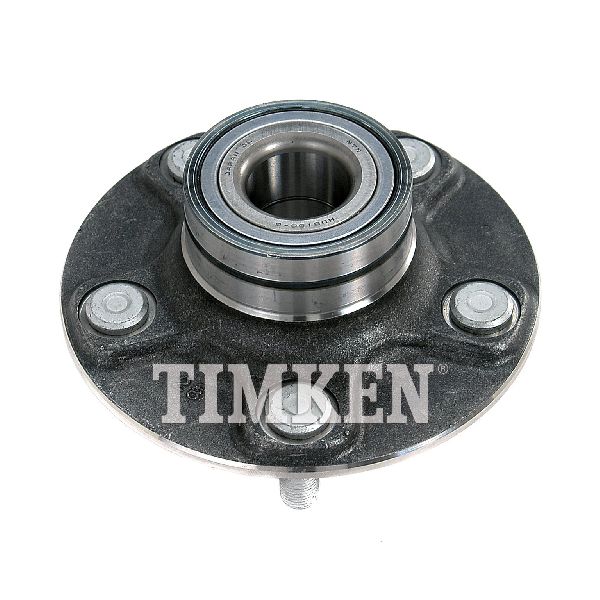
Aftermarket price range: $40-$120 - Right Rear Wheel Hub Assembly — Replaced only if the integrated ABS tone ring is found to be cracked or severely damaged, which is a low-probability cause.
Trusted brands: Timken, SKF, MOOG, National
OEM price range: $200-$350
Aftermarket price range: $100-$250
Mechanic-Grade Diagnostic Values
- Wheel Speed Sensor AC Voltage Output — expected: Voltage should be generated and increase as the wheel is spun faster. No specific voltage is required, but the presence of an AC signal that responds to speed confirms basic sensor function.. Failure: No AC voltage is generated when spinning the wheel, indicating a dead sensor or an open circuit in the wiring.
Hidden / Shadow Codes Worth Checking
- 31: Right Rear Wheel Speed Sensor - Open Circuit (see via Viewed by grounding a pin on the DLC and counting flashes of the ABS warning light.)
- 32: Right Rear Wheel Speed Sensor - Short Circuit (see via Viewed by grounding a pin on the DLC and counting flashes of the ABS warning light.)
- 21 / 22: Front Right Wheel Speed Sensor (Open / Short) (see via Viewed by grounding a pin on the DLC and counting flashes of the ABS warning light.)
- 25 / 26: Front Left Wheel Speed Sensor (Open / Short) (see via Viewed by grounding a pin on the DLC and counting flashes of the ABS warning light.)
- 35 / 36: Rear Left Wheel Speed Sensor (Open / Short) (see via Viewed by grounding a pin on the DLC and counting flashes of the ABS warning light.)
- 71: ABS Control Unit Malfunction (see via Viewed by grounding a pin on the DLC and counting flashes of the ABS warning light.)
Scan Tool Commands That Help
- Nissan Consult-II: Self-Diagnosis, Data Monitor — This is the dealership-level tool used to directly read fault codes and monitor live wheel speed sensor data without using the flash code method. It provides the most comprehensive diagnostic capability.
- Nissan DataScan II (NDS II) Software: Read/Reset ABS Faults — For advanced DIYers, this PC-based software combined with a VAG-COM KKL USB cable can communicate with the ABS module to read and clear codes. Note: Compatibility is not guaranteed, as some A32 Maximas may use a DDL1 diagnostic line for ABS that is not supported by all generic adapters.
Wiring & Ground Locations
- ABS Control Unit (w/o TCS) — The control unit is integrated with the ABS actuator/pump assembly in the engine bay, located under the brake master cylinder. The main electrical connector is designated E9.. This is the primary location to test wiring continuity from the wheel speed sensor harness on models that are not equipped with Traction Control.
- ABS Control Unit (with TCS) — On models equipped with the optional Traction Control System (TCS), the control module is located inside the cabin, under the driver's side dash, possibly near the kick panel. The main connector is designated E91.. Technicians must know this variation exists to avoid searching for the wrong connector (E9) in the engine bay on TCS-equipped cars. All wiring tests must be performed at this interior module.
- Engine Bay Grounds — Key ground points are located behind the headlights, below the airbox, and on the intake manifold.. The ABS system relies on clean, solid grounds. Deteriorated ground connections can cause high resistance and intermittent voltage drops, potentially triggering false sensor codes. Cleaning these grounds is a crucial step in diagnosing any electrical fault.
Real Owner Repair Stories
- Maxima.org forum user (1999 Nissan Maxima SE) — ABS, Slip, and TCS Off lights were illuminated on the dashboard.
❌ Tried (didn't work) Initial multimeter test gave a reading of 0 ohms on the front right sensor, suggesting a short, but the owner was hesitant to buy an expensive OEM sensor based only on this.
✅ What actually fixed it The owner purchased a very cheap ($14) sensor from eBay. Without physically installing it in the wheel hub, they simply plugged the new sensor into the harness connector. After starting the car, the warning lights went out. This confirmed the old sensor was indeed faulty. The owner then confidently purchased a new OEM sensor for the permanent repair.
OEM Part Supersession History
47900-32U01, 47900-31U00→47900-0L700— Part update for mid-generation refresh.
Heads up: The rear right sensor part number appears to change for the 1997-1999 models to 47900-0L700. The earlier 1995 models use numbers like 47900-31U00. While they may be physically similar, wiring connector or mounting differences may exist. Always verify the part number with the vehicle's VIN.
Model Year Variations Within This Range
- 1997-1999: Following the 1997 mid-cycle refresh, the ABS control module part number changed to 47850-0L701 (from 2/97 onward). The location of the module also depends on if the car has the optional Traction Control System (TCS). Non-TCS cars have the module on the actuator in the engine bay, while TCS-equipped cars have the module in the driver's side kick panel.
- 1995-1996 vs 1997-1999: The OEM part number for the rear wheel speed sensors may differ. Part number 47900-0L700 is specified for 1997-1999 models, while earlier models list different numbers. This could be due to minor changes in harness length or connector design after the 1997 refresh.
Diagnostic Flowchart
Other Known Issues on This Vehicle
Issues unrelated to this code that are worth knowing about as an owner of this generation:
- Ignition Coil Failure 🟠 Medium — Common issue, especially on vehicles over 80,000-100,000 miles. Often, when one coil fails, others are likely to fail soon after.
- Starter Motor Failure 🟠 Medium — Starters on the VQ30DE engine are known to fail, often around 100,000 miles. The starter is located in a difficult-to-access position under the intake manifold, making replacement labor-intensive.
- Idle Air Control Valve (IACV) Failure Leading to ECU Damage 🔴 High — A well-documented and critical issue. The original IACV can develop an electrical short that sends excessive voltage to the Engine Control Unit (ECU), destroying the driver circuit for the valve. This results in a no-start or severe idle problems. Replacing only the ECU or IACV will result in the new part failing again.
- Knock Sensor Failure/Ghost Codes 🟡 Low — The knock sensor itself can fail, but more often it will throw a fault code as a secondary result of another engine issue like a misfire. The sensor is located in a very difficult-to-reach spot in the engine valley.
- Power Steering Pump Leaks 🟠 Medium — Leaks from the power steering pump are common around 120,000 miles. The leaking fluid can drip onto and damage the lower control arm bushings, leading to additional repair costs.
Documented NHTSA Reports
While the C0050 code is often associated with the right rear wheel speed sensor on many platforms, cross-manufacturer records show it can sometimes indicate broader mechanical or electronic faults. For instance, NHTSA ODI #10763888 describes a case where a C0050 code was used to identify a faulty power steering control module (PSCM) on a different make, requiring a steering column replacement. Additionally, NHTSA ODI #11649367 notes that the code can be set after brake service if extra fluid is required to return caliper piston contact to the brake pad, disabling the ABS and supporting systems. Another technician reported in NHTSA ODI #11693418 that diagnostic codes including C0050-00 appeared when rotors, rear brake pads, and adapter plates required replacement. Finally, NHTSA ODI #11228687 documented C0050 appearing alongside multiple other suspension and communication codes (C0035, C0040, U0126) on a different vehicle platform.
Used vs. New Parts: Buying Guide for This Vehicle
When a used part is the smart pick: For the ABS Control Module. If the module is diagnosed as faulty (a rare event), a used unit from a reputable salvage yard is a cost-effective alternative to a new OEM part, which may be expensive or no longer available.
Donor-vehicle mileage cap: roughly under 150000 miles for the part to have meaningful remaining life.
What to inspect on the donor part:
- Check for a VIN-match from a vehicle with the same options (TCS or no TCS).
- Inspect the connector pins on the used module for any signs of corrosion or damage.
- Ensure the salvage yard offers a short warranty (e.g., 30-90 days) to protect against a dead-on-arrival part.
OEM-only on this vehicle (don't cheap out):
- While not strictly 'OEM-only', it is highly recommended to use either a genuine Nissan sensor or a premium aftermarket brand for the final repair. Cheap, no-name sensors have a higher failure rate.
Aftermarket brands forum-validated for this vehicle:
- Hitachi (often the OEM supplier)
- Bosch
- NTK
- Standard Motor Products (SMP)
- Delphi
Brands owners have reported issues with on this vehicle:
- Unbranded, low-cost sensors from online marketplaces like eBay or Amazon should be avoided for permanent repairs, though they can serve as cheap diagnostic tools as noted in the 'Real Repair Stories'.
Real Owner Stories
Aggregated from forums and TSBs cited above. Mileages and costs reflect what owners reported in those sources.
1995-1999 Nissan Maxima
Symptoms: The ABS light came on immediately after a brake job was performed on the vehicle.
What fixed it: Replacement of the wheel speed sensor after a dealership diagnosis.
Source hint: Maxima.org: 'Reset ABS light'
1995-1999 Nissan Maxima
Symptoms: ABS light is on; owner looking for the specific two-digit flash codes to identify the failed corner.
What fixed it: Identified Code 31 or 32 for the rear right sensor using the proprietary flash-code method.
Source hint: Maxima.org: 'ABS Codes and basic trouble shooting'
Related OBD-II Codes
Frequently Asked Questions
How do I read the ABS codes on my 1995-1999 Maxima without a scan tool?
What is the correct resistance for a new right rear wheel speed sensor on this generation Maxima?
Can I just clean the sensor, or does it always need replacement?
Why is the right rear sensor so difficult to remove on the A32 Maxima?
Does the Infiniti I30 have the same ABS sensor issues as the Maxima?
If I need an ABS control module, should I buy a new one?
We Have This Part in Stock


The information in this article is provided for general reference and educational purposes only. Vehicle specifications, procedures, and part compatibility can vary by production date, trim level, and region. Always consult your vehicle's factory service manual and verify part numbers before purchasing or performing repairs. Safety-critical components such as airbags, seat belts, and braking systems should be installed by a qualified professional.
- Nissan Maxima:
- 🧭 Diagnostic Flowchart
- 🛍️ Shop This Part
- What's Unique About the 1995-1999 Nissan Maxima
- Symptoms You May Notice
- Most Likely Causes
- Rare But Worth Checking
- Diagnosis Steps
- Parts You'll Likely Need
- Mechanic-Grade Diagnostic Values
- Hidden / Shadow Codes Worth Checking
- Scan Tool Commands That Help
- Wiring & Ground Locations
- Real Owner Repair Stories
- OEM Part Supersession History
- Model Year Variations Within This Range
- Other Known Issues on This Vehicle
- Documented NHTSA Reports
- Used vs. New Parts: Buying Guide for This Vehicle
- Real Owner Stories
- 1995-1999 Nissan Maxima
- 1995-1999 Nissan Maxima
- Related OBD-II Codes
- Frequently Asked Questions
- 🎟️ Get 5% Off