

C0050 on 2007-2010 Saturn Outlook: Right Rear Wheel Speed Sensor Fault Causes & Fixes
On a 2007-2010 Saturn Outlook, code C0050 almost always points to a problem with the right rear wheel speed sensor circuit. This is a well-known issue on the GM Lambda platform (which includes the GMC Acadia, Buick Enclave, and Chevy Traverse). The most common fix is replacing the wheel hub and bearing assembly because metallic debris contaminates its integrated magnetic encoder ring, a weakness highlighted in GM TSB #PIC5428G. Expect to pay $150-$300 for the part.
- C0050 on your Saturn Outlook means the safety systems (ABS and StabiliTrak) are disabled due to a fault with the right rear wheel speed sensor.
- Before buying parts, inspect the magnetic ring on the right rear wheel hub for metallic debris, as this is a very common issue on this vehicle and is highlighted in a manufacturer TSB.
- The most reliable, long-term fix is often replacing the entire right rear wheel hub and bearing assembly, which includes a new magnetic encoder ring.
- While you can drive the vehicle, your car's ability to prevent wheel lock-up and skids is compromised until the issue is repaired.
What's Unique About the 2007-2010 Saturn OUTLOOK
The Saturn Outlook is part of the GM Lambda platform, which is known for a specific weakness highlighted in Technical Service Bulletin (TSB) #PIC5428G and its successors. Debris, such as rust and metal shavings from brakes or other components, can accumulate on the magnetic encoder ring that is integrated into the wheel hub/bearing assembly. This debris disrupts the signal read by the wheel speed sensor, triggering codes like C0050 🎬 Watch: Understanding the causes and fixes for the C0050 code. even if the sensor itself is not faulty. This makes cleaning or, more often, complete hub replacement a very common repair for this specific code on these vehicles and their platform mates (GMC Acadia, Buick Enclave, Chevrolet Traverse).
Diagnostic Flowchart
Tap your situation to follow the diagnostic path that matches what you're seeing on this vehicle.
Symptoms You May Notice
- ABS warning light is on
- StabiliTrak or Traction Control (TC) warning light is on
- "Service StabiliTrak" or "Service Brake System" message on the driver information center
- ABS system may not activate during hard braking
- Cruise control may be disabled
- A brief, intermittent grinding or ratchet noise from the wheels at low speeds as the system incorrectly tries to engage.
- Replacing only the wheel speed sensor when the actual problem is debris on the hub's magnetic ring. The code will often return shortly after if the hub assembly is not cleaned or replaced.
- Assuming the wheel bearing must be bad (noisy/loose) to have a faulty encoder ring. The bearing can be mechanically sound, but the integrated magnetic ring can still be contaminated or damaged, causing the ABS fault.
Most Likely Causes
- Debris on Wheel Bearing Magnetic Encoder Ring 🔴 High Probability As documented in TSB #PIC5428G, the design of the hub assembly on the GM Lambda platform makes it susceptible to contamination from rust and road debris, which interferes with the sensor's magnetic reading. The ring is magnetic and attracts ferrous metallic debris.
How to confirm: Remove the right rear wheel speed sensor (typically one T30 or 10mm bolt). Use a flashlight and mirror to inspect the magnetic ring on the face of the wheel hub. Look for a buildup of rust-colored dust, metallic shavings, or physical damage like cracks or missing chunks of the magnetic material. A clean ring should be a uniform, dark, smooth surface.
Typical fix: GM's TSB suggests cleaning the debris off the ring with a soft nylon brush and mild detergent, then re-testing. However, many owners and technicians find this to be a temporary fix. If the ring is damaged or the debris has compromised the bearing seal, the problem will return. The definitive, long-term repair is to replace the entire wheel hub and bearing assembly.
Est. part cost: $150-$300 - Failed Right Rear Wheel Speed Sensor 🟡 Medium Probability → Shop ABS Wheel Speed Sensor The sensor is exposed to harsh conditions (water, salt, vibrations) at the wheel, leading to eventual electronic failure or internal shorts/opens.
How to confirm: Use a scan tool to monitor live data from all four wheels while driving. If the right rear sensor reads 0 MPH or shows erratic data while the others read correctly, the sensor is a likely culprit. It can also be tested with a multimeter for correct resistance (compare to a known good sensor on another wheel) or by checking for a square wave signal with an oscilloscope.
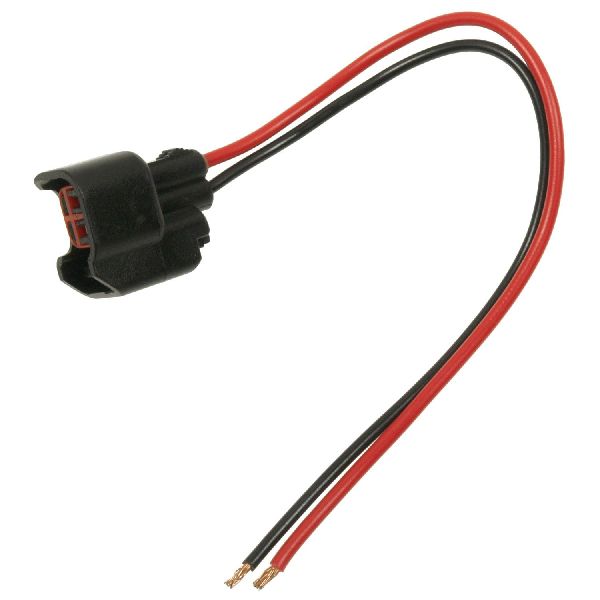
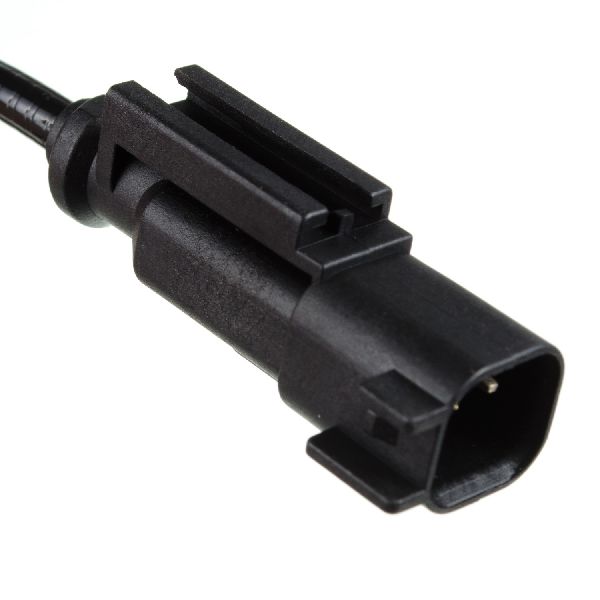
Typical fix: Replace the right rear wheel speed sensor. The sensor is often sold with a new wiring pigtail and is held in by a single bolt.
Est. part cost: $30-$80 - Damaged Wiring or Connector ⚪ Low Probability The wiring harness runs near moving suspension components and is exposed to the elements, making it vulnerable to chafing, corrosion, or impact damage. The connector pins can also corrode, causing an open or high-resistance circuit.
How to confirm: Visually inspect the wiring harness from the wheel speed sensor up into the wheel well and along the frame. Check the connector for green or white corrosion, bent pins, or a loose fit. Use a multimeter to check for continuity and shorts to ground/power between the sensor connector and the EBCM connector.
Typical fix: Repair the broken or corroded section of wire using solder and heat-shrink tubing. If the connector is damaged, replace the pigtail. Ensure the harness is properly secured away from moving parts.
Est. part cost: $15-$40
Rare But Worth Checking
- Failed Electronic Brake Control Module (EBCM): → Shop ABS Control Module This is rare. Before condemning the EBCM, thoroughly rule out all other possibilities (sensor, hub, and wiring). An EBCM failure will typically, but not always, be accompanied by other wheel speed sensor codes or communication faults with other modules.
- Broken Axle Washer Tab: In a documented case on a similar GM vehicle, a tab from the axle washer broke off and became magnetically stuck to the encoder ring, causing a C0050 code. This is an unusual but possible source of debris.
Diagnosis Steps
- Connect an ABS-capable scan tool and confirm C0050 is the active code. Check for any symptom bytes (e.g., 18, 5A, 0F) which can point to a mechanical fault like debris.
- Use the scan tool's live data feature to monitor all four wheel speed sensors while driving slowly in a straight line. Confirm that the right rear sensor reads 0 MPH or provides an erratic/jumpy signal compared to the other three.
- Raise and safely support the vehicle. Remove the right rear wheel.
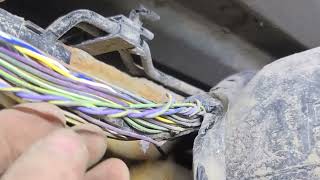
- Visually inspect the wheel speed sensor wiring harness for any signs of chafing, melting, or corrosion from the sensor to where it enters the main vehicle body.
- Disconnect the sensor and inspect the connector terminals for corrosion or damage.
- Unbolt and remove the wheel speed sensor (typically a single T30 or 10mm bolt).
- Carefully inspect the magnetic encoder ring on the face of the wheel hub assembly. Use a mirror and flashlight. Look for a buildup of rust-colored dust, metallic debris, or any cracks/missing pieces of the ring. The ring is the dark, metallic band on the inboard side of the hub.
- If debris is present, GM TSB PIC5428G advises cleaning the ring with a soft nylon brush and the sensor tip thoroughly. Reinstall the sensor, clear the code, and test drive. Be aware this may only be a temporary fix.
- If the ring is clean and intact, or if the fault returns after cleaning, test the sensor itself. You can swap it with the left rear sensor to see if the code changes to C0045. Alternatively, test resistance with a multimeter and compare to the working sensor.
- If the sensor is confirmed good but the signal is still faulty, the magnetic encoder ring is defective. This requires the replacement of the entire wheel hub and bearing assembly. This is the most common and permanent solution.
- If the hub and sensor are known-good and the problem persists, perform a continuity and short-to-ground/power test on the wiring harness between the sensor connector and the EBCM.
Parts You'll Likely Need
- Rear Wheel Hub and Bearing Assembly
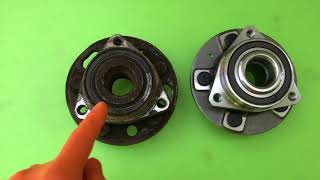
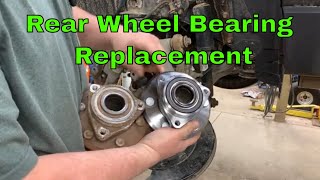
(OEM #25832063 (ACDelco GM Original Equipment))— This is the most common fix because the magnetic encoder ring that fails is integrated into the hub assembly. Replacing the whole unit is the definitive repair for a damaged or debris-contaminated ring.
Trusted brands: ACDelco, Timken, MOOG, SKF, Duralast (DL513276)
OEM price range: $250-$400
Aftermarket price range: $100-$250 - Rear Wheel Speed Sensor
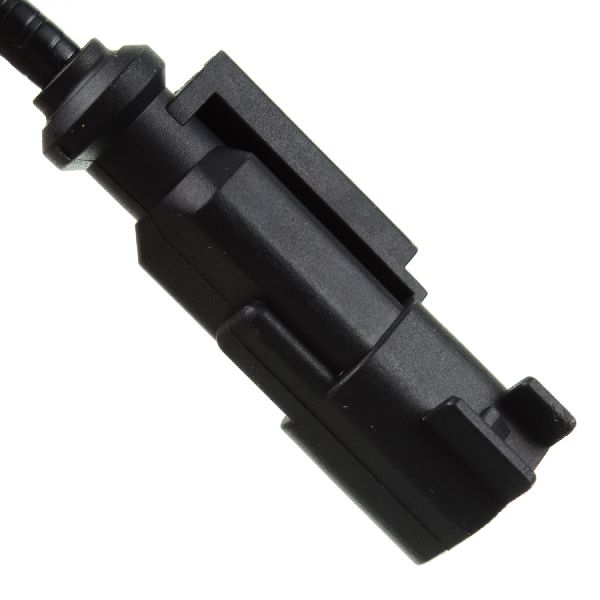
(OEM #20938122 (ACDelco))— If the hub's magnetic ring is clean and intact, the sensor itself may have failed electronically due to age and exposure to the elements.
Trusted brands: ACDelco, Standard Motor Products (SMP), WVE by NTK
OEM price range: $60-$100
Aftermarket price range: $30-$80
Related Codes That Often Appear With This One
- C0035 — Left Front Wheel Speed Sensor Circuit fault. It's common for multiple wheel speed sensors to fail around the same time due to age or similar exposure to debris, as noted in TSB PIC5428G which covers all four corners (C0035-C0050).
- C0040 — Right Front Wheel Speed Sensor Circuit fault. Similar to C0035, this indicates a pattern of failure across the vehicle's wheel speed sensing system.
- C0045 — Left Rear Wheel Speed Sensor Circuit fault. This code appearing with C0050 points towards a common issue affecting the rear axle, such as wiring damage or similar wear on both rear hub assemblies.
- U0415 — Invalid Data Received From Electronic Brake Control Module. On vehicles with electric power steering, the EBCM will stop sending wheel speed data when a fault like C0050 occurs. This causes the Power Steering Control Module to log U0415 and may result in heavier steering feel at low speeds. This is a secondary code and will resolve when C0050 is fixed.
Technical Service Bulletins (TSBs) & Recalls
- PIC5428G: Notes that Service StabiliTrak lights with codes C0035-C0050 can be caused by debris on the wheel bearing, requiring inspection and cleaning or replacement of the hub. It explicitly warns against using magnetic tools for cleaning as they can damage the encoder. This TSB has been superseded by newer versions like 17-NA-047 but the diagnostic principle remains the same.
Platform-Specific Known Issues
- A well-documented issue covered by GM Technical Service Bulletin #PIC5428G involves debris accumulating between the wheel speed sensor and the magnetic encoder on the bearing, causing StabiliTrak warnings and setting codes C0035 through C0050.
- Owners on forums for the Saturn Outlook and its platform mates frequently report the "Service StabiliTrak" and "Service Traction Control" messages appearing, with C0050 (or another corner's equivalent code) being the cause. The consensus repair is almost always the replacement of the wheel hub assembly.
Mechanic-Grade Diagnostic Values
- Wheel Speed Sensor Reference Voltage (Active Sensor) — expected: Approximately 12 Volts at the sensor connector (vehicle side) with Key On, Engine Off.. Failure: No voltage present suggests a wiring issue or a fault in the EBCM supply circuit.
- Wheel Speed Sensor Resistance (Passive Sensor) — expected: Typically 800 - 1700 Ohms, but the most reliable test is comparing the reading to the identical sensor on the other side of the axle. Readings should be within 10% of each other.. Failure: An open circuit (infinite resistance) or a reading that is drastically different from the known-good sensor on the other side indicates a failed sensor.
- Wheel Speed Sensor Signal (Oscilloscope) — expected: A clean, digital square wave that increases in frequency as the wheel is spun.. Failure: An erratic signal, dropouts, or a flat-line signal while the wheel is spinning points to a faulty sensor, a contaminated encoder ring, or a wiring issue.
Hidden / Shadow Codes Worth Checking
- C0050 18: Low Signal Amplitude. This indicates the signal from the sensor is present but weak or erratic, often caused by excessive air gap, debris on the magnetic ring, or a failing sensor. (see via Professional scan tools like the GM Tech2 or GDS2 that can read manufacturer-specific symptom bytes.)
- C0050 5A: Signal Not Plausible. The EBCM is receiving a signal, but it doesn't make sense compared to the other wheel speed sensors (e.g., one wheel reading 5 MPH while others read 30 MPH). This often points to a damaged or heavily contaminated encoder ring. (see via Professional scan tools like the GM Tech2 or GDS2.)
- C0050 0F: Erratic Signal. This symptom byte is mentioned in TSB #PIC5428G and points to an inconsistent signal, reinforcing the common causes of debris or a failing sensor. (see via Professional scan tools like the GM Tech2 or GDS2.)
Wiring & Ground Locations
- EBCM (Electronic Brake Control Module) — Located on the left side of the engine compartment, typically mounted to the brake pressure modulator valve assembly.. This module is the computer that receives the signal from the right rear wheel speed sensor. All wiring tests for the sensor circuit will ultimately lead back to the EBCM connector.
- G102 — On the right side of the engine compartment, on the inner fender panel.. This is a primary ground point for the Electronic Brake Control Module (EBCM). A corroded or loose G102 ground can cause a variety of erratic ABS faults, including C0050, even if the sensor and wiring at the wheel are perfectly fine.
Real Owner Repair Stories
- YouTube channel 'ScannerDanner' affiliate content on a 2017 GMC Sierra (2017 GMC Sierra) — ABS and StabiliTrak lights on, code C0050 active.
❌ Tried (didn't work) Replacing the right rear wheel speed sensor did not fix the problem.
✅ What actually fixed it A corroded wire was found inside the harness along the frame. The corrosion was not visible externally. A graphing ohmmeter was used to detect the high resistance/intermittent open while wiggling the harness, pinpointing the location of the internal break. - YouTube channel 'DiagnoseDan' on a 2007 GMC Sierra (2007 GMC Sierra 1500 4x4) — ABS light comes on intermittently, especially after the vehicle has been driven for a while. Code C0050 stored in history.
❌ Tried (didn't work) Initial testing with the vehicle cold showed the sensor working correctly.
✅ What actually fixed it The technician diagnosed a heat-sensitive failure by running the vehicle on a hoist and using a heat gun on the right rear speed sensor. When heated, the sensor's signal dropped out completely. Replacing the sensor resolved the issue.
"I Checked Everything" — The Actual Cause
- In a documented repair on a similar GM truck, a C0050 code persisted after the wheel speed sensor was replaced. A visual inspection of the wiring harness showed no damage. The root cause was found to be internal corrosion within a wire along the frame, which was only detectable by using a graphing multimeter to measure resistance while physically manipulating the harness. The resistance would spike, revealing the hidden fault that a simple visual check or continuity test on a static harness would miss.
When the Usual Fixes Don't Work
- While the most common cause of C0050 on the Saturn Outlook is debris on the hub's encoder ring, it should not be the only diagnosis. Real-world repairs on similar GM platforms show that assuming it's the hub can lead to unnecessary parts replacement. In one case, a technician found the fault was a hidden, internally corroded wire along the frame that was only found by measuring resistance while wiggling the harness. In another case, the fault was an intermittent, heat-sensitive wheel speed sensor that tested perfectly fine when the vehicle was cold but failed once it warmed up. These examples prove that a thorough diagnosis of the sensor and its entire wiring circuit is critical before condemning the expensive hub assembly.
Helpful Videos
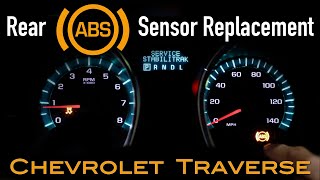
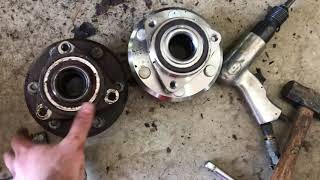
We Have This Part in Stock


The information in this article is provided for general reference and educational purposes only. Vehicle specifications, procedures, and part compatibility can vary by production date, trim level, and region. Always consult your vehicle's factory service manual and verify part numbers before purchasing or performing repairs. Safety-critical components such as airbags, seat belts, and braking systems should be installed by a qualified professional.
- Saturn OUTLOOK:
- 🧭 Diagnostic Flowchart
- 🎬 Helpful Videos
- 🛍️ Shop This Part
- What's Unique About the 2007-2010 Saturn OUTLOOK
- Symptoms You May Notice
- Most Likely Causes
- Rare But Worth Checking
- Diagnosis Steps
- Parts You'll Likely Need
- Related Codes That Often Appear With This One
- Technical Service Bulletins (TSBs) & Recalls
- Platform-Specific Known Issues
- Mechanic-Grade Diagnostic Values
- Hidden / Shadow Codes Worth Checking
- Wiring & Ground Locations
- Real Owner Repair Stories
- "I Checked Everything" — The Actual Cause
- When the Usual Fixes Don't Work
- 🎟️ Get 5% Off