

C0050 on 2007-2011 Toyota Camry: Right Rear Wheel Speed Sensor Circuit Explained
Code C0050 on a 2007-2011 Toyota Camry means there's a fault in the right rear wheel speed sensor circuit. This usually requires replacing the right rear ABS sensor or the entire wheel hub assembly due to a contaminated magnetic ring. Expect to pay $40-$100 for a sensor or $100-$250 for a hub assembly.
- C0050 means your Camry's ABS and stability control are offline due to a fault with the right rear wheel speed sensor.
- The most likely fix is replacing the right rear ABS sensor.
- Before replacing the sensor, inspect the wheel hub's internal magnetic ring for metallic debris; if it's contaminated, the entire hub assembly needs replacement.
- This is a safety-critical repair. While drivable, your car's ability to prevent skids is compromised until fixed.
What's Unique About the 2007-2011 Toyota Camry
On the 2007-2011 (XV40 generation) Camry, the magnetic encoder ring that the ABS sensor reads is integrated into the rear wheel hub and bearing assembly. While the sensor itself can fail, it is also very common for metallic debris and rust to build up on this non-serviceable magnetic ring, disrupting the signal. This means that even if the sensor is working, the code can be triggered, often requiring the replacement of the entire wheel hub assembly to resolve the issue. This design is shared with its platform-mate, the 2007-2012 Lexus ES350, which also experiences this issue.
Symptoms You May Notice
- ABS warning light is on
- Traction Control (TRAC) or Vehicle Stability Control (VSC) warning light is on
- Brake warning light may be on
- ABS system does not activate during hard braking (wheels may lock up)
- Cruise control may be disabled
- A buzzing or grinding noise may be heard from the ABS pump area
- Replacing only the ABS sensor when the actual problem is a contaminated or damaged magnetic encoder ring on the wheel hub assembly. This results in the code returning shortly after the repair.
- Assuming the sensor is good based on a resistance test alone. An intermittent failure in the wiring or sensor may only show up during a 'wiggle test' or when viewing live data while driving.
Most Likely Causes
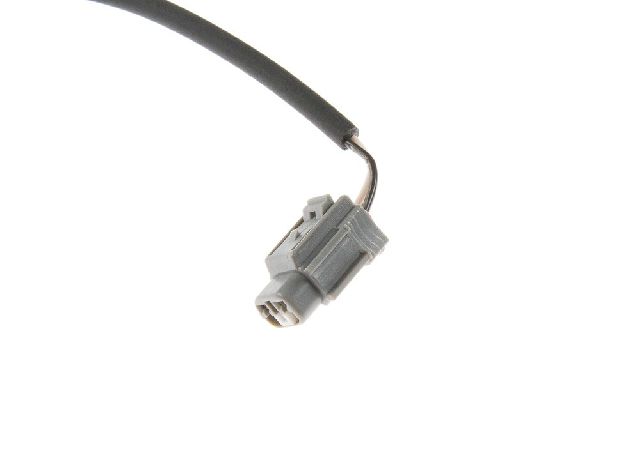
- Failed Right Rear Wheel Speed Sensor 🔴 High Probability → Shop ABS Wheel Speed Sensor The sensor is exposed to road debris, water, and salt, leading to corrosion and electronic failure over time. Higher mileage vehicles are more susceptible.
How to confirm: Use a scan tool to view live data; the right rear wheel speed should read 0 MPH or erratically while the other wheels show speed. You can also test the sensor's internal resistance with a multimeter. While specific values vary, a reading of 'OL' (open loop) or 0 ohms indicates a failed sensor. Compare to the reading from the left rear sensor to confirm.
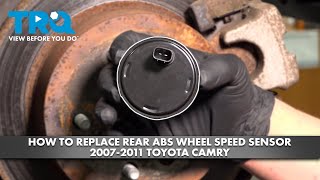
Typical fix: Replace the right rear wheel speed sensor. 🎬 Watch: Step-by-step guide to replacing the rear ABS sensor. Ensure the mounting surface on the knuckle is cleaned of all rust and debris before installing the new sensor to ensure a proper air gap.
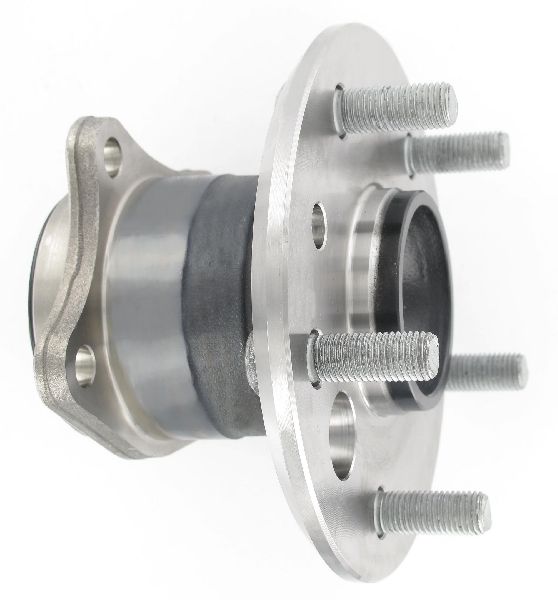
Est. part cost: $40-$100 - Contaminated or Damaged Wheel Hub Encoder Ring 🟡 Medium Probability The magnetic encoder ring is part of the wheel bearing assembly and can attract metallic debris from brake wear or corrosion. This debris disrupts the magnetic field the sensor reads. This is a common failure mode for this type of ABS system.
How to confirm: Visually inspect the inboard side of the wheel hub assembly after removing the sensor. Look for a build-up of rust or metallic 'fuzz' on the magnetic ring. A damaged or worn wheel bearing (often causing a humming or grinding noise that changes with speed) can also cause this issue, requiring hub replacement.
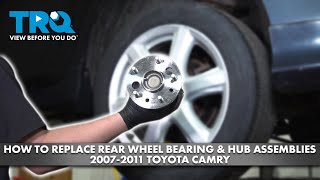
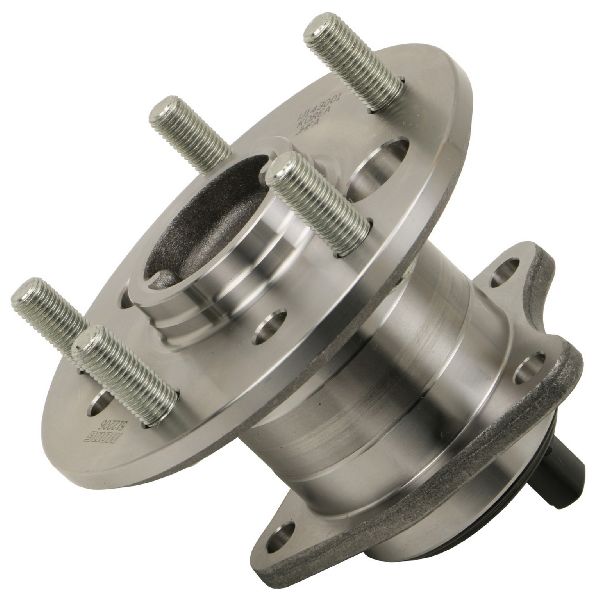
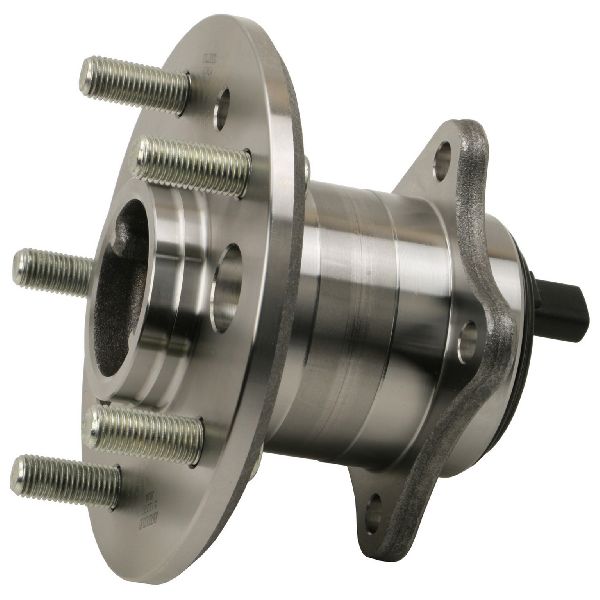
Typical fix: The encoder ring is not separately replaceable. The entire rear wheel hub and bearing assembly must be replaced. 🎬 See how to replace the rear wheel hub and bearing.
Est. part cost: $100-$250 - Damaged Wiring Harness or Connector ⚪ Low Probability The wiring harness runs down the suspension and can be damaged by road debris, improper jacking, or corrosion, especially at the connector plug. Rodent damage is also a possibility.
How to confirm: Visually inspect the entire length of the sensor harness for breaks, chafing, or corrosion. Use a multimeter to check for continuity and for shorts to power or ground from the sensor connector to the ABS module connector.
Typical fix: Repair the damaged section of wire or replace the sensor pigtail/connector.
Est. part cost: $20-$50
Rare But Worth Checking
- Failed ABS/VSC Control Module: This is very uncommon and should be the last item to check. Before condemning the module, ensure the sensor, hub, and wiring are all confirmed to be in good condition. A failing module often triggers multiple wheel speed sensor codes (e.g., C0045 and C0050 together), not just one.
Diagnosis Steps
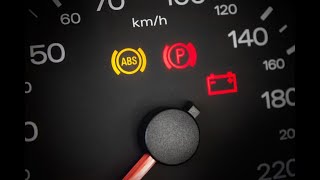
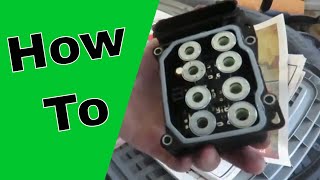
- Connect an ABS-capable scan tool and confirm C0050 is the active code. 🎬 Learn how to diagnose Toyota ABS lights without a scan tool. Check for any sub-codes (e.g., C0050-5A for implausible signal) which can provide more diagnostic clues.
- View the live data stream for all four wheel speed sensors. Drive the vehicle slowly (above 5 MPH) or spin the wheel by hand (if safely raised).
- Observe the reading for the 'Right Rear Wheel Speed'. If it reads 0 MPH or jumps erratically while the others give a smooth reading, the fault is confirmed to be in that corner.
- Safely raise and support the rear of the vehicle. Remove the right rear wheel.
- Visually inspect the ABS sensor and its wiring harness for any obvious damage, corrosion, or loose connections. Pay close attention to where the harness is clipped to the suspension.
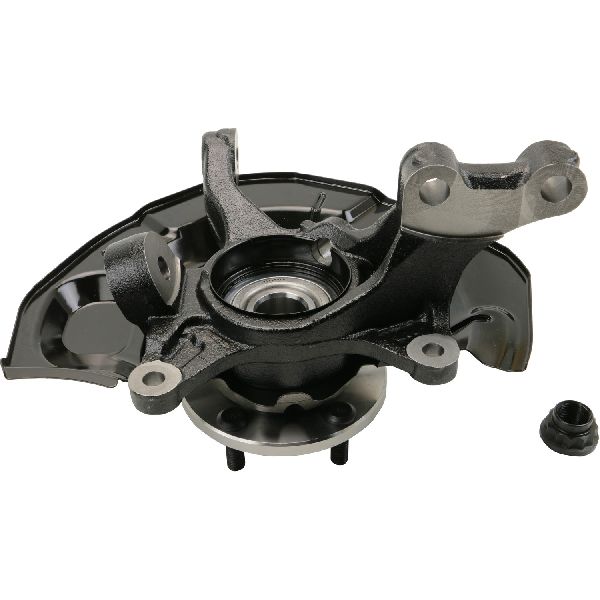
- Unbolt and remove the 10mm bolt holding the ABS sensor. Carefully attempt to remove the sensor from the steering knuckle. It may be seized with rust and require significant effort, penetrating oil, or even destructive removal.
- Inspect the magnetic encoder ring on the inside of the wheel hub assembly. Check for a build-up of metallic debris or rust. If debris is present, the hub assembly is the likely cause and must be replaced.
- If the encoder ring is clean, test the sensor. Using a multimeter set to Ohms (Ω), check the resistance across the sensor's two pins. A typical reading for a good sensor on this vehicle is in the range of 0.89k to 1.29k Ohms at 68°F (20°C). An open circuit (infinite resistance) or a short (zero resistance) indicates a bad sensor.
- If the sensor and hub appear good, check the wiring. Disconnect the sensor and check for reference voltage (usually 5V or 12V depending on the system) and ground at the vehicle-side connector with the key on. Check for continuity on both wires from the sensor connector back to the main ABS module connector.
- If all other components test good, the ABS control module may be at fault, though this is rare. This step should only be considered after exhausting all other possibilities.
Parts You'll Likely Need
- Rear ABS Wheel Speed Sensor (Right)
(OEM #89545-06030)— This is the most frequent point of failure for the C0050 code due to electronic failure from age and exposure.
Trusted brands: Denso, NTK, Standard Motor Products (SMP), Delphi, Holstein
OEM price range: $120-$180
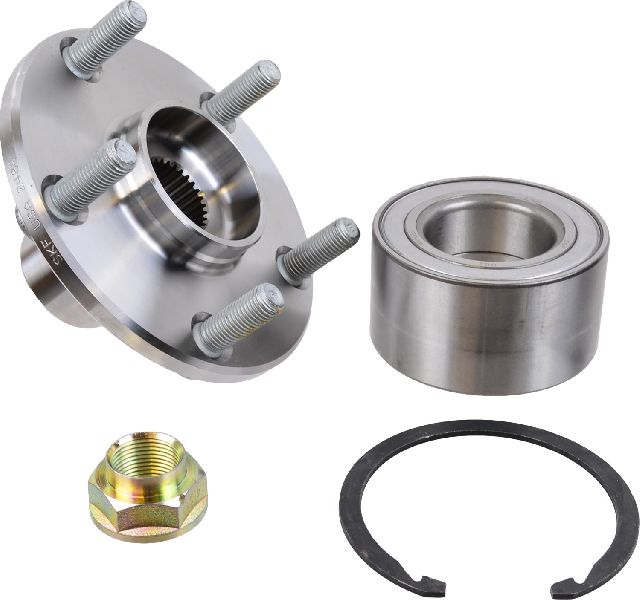
Aftermarket price range: $40-$100 - Rear Wheel Hub and Bearing Assembly (Right)
(OEM #42450-06050)— Required if the integrated magnetic encoder ring is contaminated or damaged, or if the wheel bearing itself has failed, causing the code.
Trusted brands: Koyo, Timken, SKF, WJB, MOOG, Dorman
OEM price range: $250-$350
Aftermarket price range: $100-$250
Related Codes That Often Appear With This One
- C1333: Open circuit in left rear speed sensor circuit (Note: some forum users report this code appearing alongside others when a fuse is blown or a central wiring issue occurs)
- P0500: Vehicle Speed Sensor Circuit Malfunction (This is a generic powertrain code that can sometimes be triggered by an ABS wheel speed sensor fault)
Technical Service Bulletins (TSBs) & Recalls
- While no specific TSB for C0050 on the Camry was found, TSB T-SB-0041-14 for the Camry Hybrid is relevant as it addresses similar warning lights (ABS/VSC/TRAC) caused by a different component (brake actuator), highlighting the need for accurate code reading.
- A general TSB for some 2007-2011 Camry models (NHTSA ID #10132769) mentions brake, ABS, and/or TRAC lights being on, which could be related to wheel speed sensor issues, though it doesn't specify code C0050.
Platform-Specific Known Issues
- At higher mileages, it is common for the ABS sensor mounting location on the knuckle to accumulate significant rust, making sensor removal extremely difficult. Owners often report having to destroy the old sensor to remove it and meticulously clean the bore with a wire brush or drill bit before a new one will fit correctly.
- While not a direct cause, Camry Hybrids of this generation have a known issue with the brake actuator assembly (TSB T-SB-0041-14) that can also cause ABS, VSC, and TRAC lights. It's crucial to confirm the C0050 code specifically before assuming it's a wheel speed sensor issue on a Hybrid model.
Mechanic-Grade Diagnostic Values
- Rear Wheel Speed Sensor Resistance — expected: 0.89 kΩ to 1.29 kΩ at 20°C (68°F). Failure: A reading of 0 ohms (short circuit) or infinite/OL (open circuit).
- Sensor Connector Voltage (Key On) — expected: A reference voltage (typically 5V or battery voltage) on one pin and a good ground on the other.. Failure: Absence of voltage or ground points to a problem in the wiring harness or the ABS control module.
Hidden / Shadow Codes Worth Checking
- C0050 with detail code/sub-code: Toyota systems may provide a 2-digit detail code (sometimes called a sub-code) with the main DTC. Examples include C0050-18 (Low Signal Amplitude), C0050-5A (Signal Not Plausible), or C0050-0F (Signal Erratic), which can help pinpoint whether the issue is a weak signal, an illogical reading, or an intermittent one. (see via These codes are visible using advanced scan tools like Toyota's Techstream software.)
Scan Tool Commands That Help
- Toyota Techstream: Data List for ABS/VSC/TRAC — This is the primary function for diagnosing C0050. It allows you to view and graph the live speed readings from all four wheels simultaneously while driving. A faulty right rear sensor will show a speed of 0 or an erratic reading compared to the other three.
- Toyota Techstream: Health Check — Performs a scan of all vehicle control modules. This is useful to see if other systems are reporting faults and to confirm communication with the ABS module. If the ABS module doesn't respond at all, it could indicate a power, ground, or module failure.
- Toyota Techstream: Air Bleeding Utility — This is not for diagnosing C0050, but it is a required service function if the ABS actuator/module assembly is replaced. It electronically cycles the pump and valves to properly bleed air from the hydraulic unit.
Wiring & Ground Locations
- Brake Actuator Assembly (ABS Module) — In the engine bay, typically located near the coolant reservoir on the driver's side.. This is the control unit that receives the signal from the right rear wheel speed sensor. All wiring checks for continuity will terminate at this module's main connector.
- RR+ and RR- Pins — On the main connector of the Brake Actuator Assembly. A wiring diagram shows the Right Rear sensor wires connect to pins 16 (RR-) and 17 (RR+).. These are the specific pins to test for continuity and shorts when diagnosing a wiring fault between the sensor and the module. This avoids having to probe the entire connector.
- Chassis Grounds — Major chassis ground points are located on the inner fenders in the engine bay and under the dashboard near the kick panels. The main engine-to-chassis ground strap is also critical.. A poor ground connection for the ABS module can cause a variety of difficult-to-diagnose electrical faults, including erroneous sensor codes. Verifying clean, tight grounds is a key step if direct circuit tests are inconclusive.
Real Owner Repair Stories
- IH8MUD.com Forum User (Toyota 200-series Land Cruiser (similar ABS system logic)) — Intermittent ABS, Traction Control, and other warning lights on the dashboard.
❌ Tried (didn't work) Initially suspected a loose battery connection which was fixed but did not solve the issue.
✅ What actually fixed it The user connected Toyota Techstream software, which identified a fault with a specific wheel speed sensor. Replacing the sensor identified by the software resolved all the warning lights.
OEM Part Supersession History
42450-06020→42450-48011— Part number update by Toyota for the rear wheel hub and bearing assembly.
Heads up: The provided OEM number in Pass 2 (42450-06050) appears to be for different models like the 4Runner. The correct original part for a Camry is 42450-06020, which was later superseded. Using the wrong hub assembly can result in fitment or ABS signal issues.
Model Year Variations Within This Range
- 2007-2009: These model years used the 2.4L 2AZ-FE 4-cylinder engine, which is known for potential oil consumption issues. This is unrelated to the C0050 code but is a critical point of inspection for overall vehicle health.
- 2010-2011: These models received the updated and more reliable 2.5L 2AR-FE 4-cylinder engine. The ABS system and causes for C0050 remained the same, but the overall vehicle reliability is considered better for these years.
Diagnostic Flowchart
Other Known Issues on This Vehicle
Issues unrelated to this code that are worth knowing about as an owner of this generation:
- Excessive Oil Consumption (2AZ-FE Engine) 🔴 High — Very common on 2007-2009 models with the 2.4L 4-cylinder engine. Can start as early as 60,000 miles, with many owners reporting consumption of 1 quart per 1,000-1,500 miles. (Ref: Toyota issued a Technical Service Bulletin and later a warranty enhancement program, but these have since expired. The issue is caused by a faulty piston ring design.)
- Melting / Sticky Dashboard 🟠 Medium — Extremely common in hot, humid climates across the entire 2007-2011 model run. The dashboard surface degrades, becoming shiny, sticky, and prone to cracking. (Ref: Toyota initiated Warranty Enhancement Program ZE6, which extended the warranty to cover replacement. This program expired on May 31, 2017, for primary coverage.)
- Transmission Hesitation or Harsh Shifting 🟠 Medium — More prevalent on 2010-2011 models with the 6-speed automatic (U760E), but can affect earlier 5-speed models (U250E) as well. Symptoms include hesitation on acceleration and hard shifts. (Ref: No specific recall, but some owners have had success with transmission fluid flushes or software updates. In severe cases, a rebuild or replacement may be necessary.)
Used vs. New Parts: Buying Guide for This Vehicle
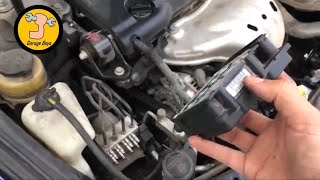
When a used part is the smart pick: A used ABS sensor or wiring pigtail from a reputable auto recycler (like LKQ) can be a cost-effective option, as they are simple electronic components. A complete used ABS actuator/module assembly is also a viable option to save significant money over a new OEM unit, as shown in owner repair videos.
Donor-vehicle mileage cap: roughly under 120000 miles for the part to have meaningful remaining life.
What to inspect on the donor part:
- For a sensor/harness: Check for any cuts, abrasions, or corrosion on the wiring and connector pins.
- For a hub assembly: Spin the bearing by hand; it should be completely smooth with no noise or roughness. Inspect the magnetic encoder ring on the back for any visible debris, rust, or physical damage.
- For an ABS module: Ensure the donor vehicle was not in a major front-end collision. Check that the electrical connector pins are straight and clean.
OEM-only on this vehicle (don't cheap out):
- While not strictly OEM-only, the wheel hub and bearing assembly is a critical component. Using a high-quality OEM (Koyo) or top-tier aftermarket (Timken, SKF, MOOG) brand is highly recommended over a generic, unbranded part to ensure longevity and proper ABS function.
Aftermarket brands forum-validated for this vehicle:
- Sensors: Denso, NTK, Standard Motor Products (SMP), Delphi
- Hub Assemblies: Koyo (OEM), Timken, SKF, MOOG, WJB
Brands owners have reported issues with on this vehicle:
- Unnamed or 'white box' sensors and hub assemblies from online marketplaces. These often have high failure rates, leading to the code returning shortly after repair.
Documented NHTSA Reports
While C0050 is a standard wheel speed sensor code for Toyota, it is important to note that other manufacturers may use this identifier differently. For instance, in a Chevrolet HHR, NHTSA ODI #10763888 identifies C0050 as a fault in the power steering control module (PSCM), requiring replacement of the steering column. Additionally, a Chevrolet Silverado owner reported C0050 appearing alongside several other communication codes (U0077, U0126) in NHTSA ODI #11228687. In modern Jeep Grand Cherokee L models, technicians have noted C0050 can be set after brake service if extra fluid is required to return caliper piston contact (NHTSA ODI #11649367), or may appear when rotors and adapter plates require replacement (NHTSA ODI #11693418).
Real Owner Stories
Aggregated from forums and TSBs cited above. Mileages and costs reflect what owners reported in those sources.
2007 Toyota Camry
Symptoms: ABS warning light on; troubleshooting an open circuit in the rear speed sensor circuit.
What fixed it: Replacement of the rear sensor, which required removing the hub assembly due to the difficulty of the installation.
Source hint: Reddit r/AskAMechanic - 2007 Camry ABS Rear speed sensor
2011 Toyota Camry LE
Symptoms: P0500 code appearing randomly along with other electrical issues like the radio not working.
What fixed it: Diagnostic investigation into speed sensor related codes and electrical fuses.
Source hint: CamryForums - 2011 Camry LE- No radio but good fuses, and P0500 code randomly and other issues
Related OBD-II Codes
Frequently Asked Questions
I have a 2007-2011 Camry Hybrid with ABS and VSC lights; is it definitely the C0050 wheel speed sensor?
Can I just replace the magnetic encoder ring on my 2007 Camry's rear hub?
What resistance should I see when testing the right rear sensor on my Camry?
Why is it so difficult to remove the rear ABS sensor on high-mileage Camrys?
Does the 2007-2011 Toyota Camry have a TSB for the ABS light being on?
Helpful Videos
We Have This Part in Stock

The information in this article is provided for general reference and educational purposes only. Vehicle specifications, procedures, and part compatibility can vary by production date, trim level, and region. Always consult your vehicle's factory service manual and verify part numbers before purchasing or performing repairs. Safety-critical components such as airbags, seat belts, and braking systems should be installed by a qualified professional.
- Toyota Camry:
- 🧭 Diagnostic Flowchart
- 🎬 Helpful Videos
- 🛍️ Shop This Part
- What's Unique About the 2007-2011 Toyota Camry
- Symptoms You May Notice
- Most Likely Causes
- Rare But Worth Checking
- Diagnosis Steps
- Parts You'll Likely Need
- Related Codes That Often Appear With This One
- Technical Service Bulletins (TSBs) & Recalls
- Platform-Specific Known Issues
- Mechanic-Grade Diagnostic Values
- Hidden / Shadow Codes Worth Checking
- Scan Tool Commands That Help
- Wiring & Ground Locations
- Real Owner Repair Stories
- OEM Part Supersession History
- Model Year Variations Within This Range
- Other Known Issues on This Vehicle
- Used vs. New Parts: Buying Guide for This Vehicle
- Documented NHTSA Reports
- Real Owner Stories
- 2007 Toyota Camry
- 2011 Toyota Camry LE
- Related OBD-II Codes
- Frequently Asked Questions
- 🎟️ Get 5% Off