

C0050 on 2012-2017 Toyota Camry: Right Rear Wheel Speed Sensor Circuit Explained
Code C0050 on a 2012-2017 Toyota Camry means there's a fault in the right rear wheel speed sensor circuit. This usually points to a bad sensor, damaged wiring, or a faulty wheel hub. Expect to pay $40-$90 for an aftermarket sensor or $120-$200 for an OEM part. The repair is straightforward for a DIYer with basic tools.
- C0050 means a problem with the right rear wheel speed sensor circuit, which will disable your ABS and stability control.
- The most likely cause is a failed sensor, followed by damaged wiring near the wheel.
- Use a scan tool that can read ABS live data to confirm the right rear wheel is the problem before buying parts.
- The correct rear sensor for all 2012-2017 Camrys is OEM part number 89516-06190.
- This is a safety-critical repair; if you are not comfortable working on brake system components, seek professional service.
What's Unique About the 2012-2017 Toyota Camry
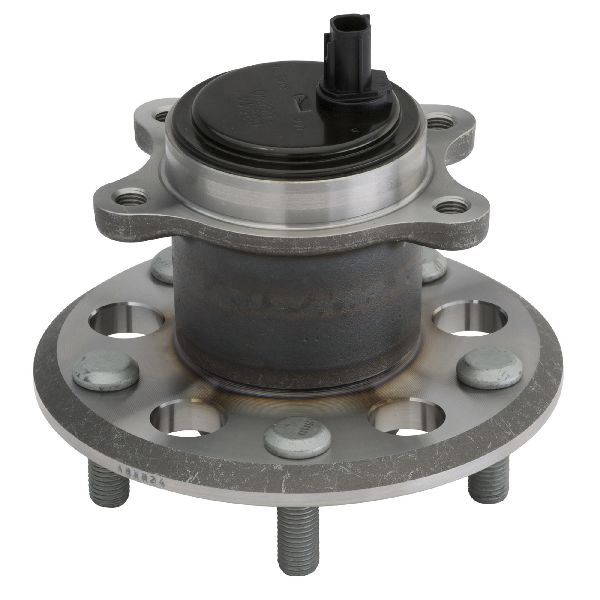
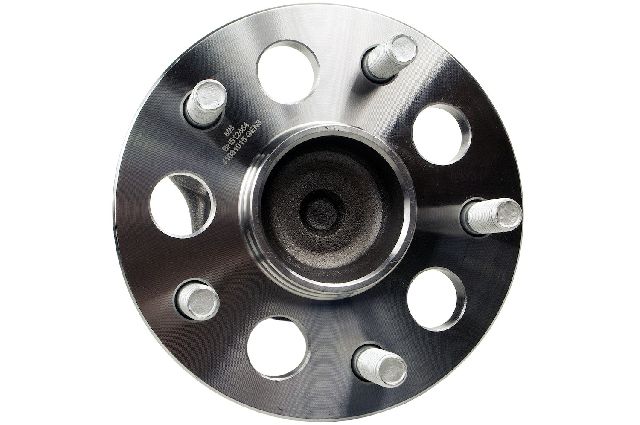
For the 2012-2017 Toyota Camry (XV50 generation), the C0050 code is a very common and straightforward diagnostic issue. The most frequent failures are the sensor itself or the wiring harness leading to it. Unlike some other vehicles where this code can be triggered by complex module failures, on the Camry, the issue is almost always located at the wheel. The magnetic tone ring (or encoder) the sensor reads is integrated into the rear wheel hub and bearing assembly. This design protects the ring from direct debris, but it means that any damage to the ring requires replacing the entire hub assembly.
Symptoms You May Notice
- ABS warning light is on
- Traction Control (TRAC) or Vehicle Stability Control (VSC) warning light is on
- BRAKE warning light may be illuminated
- ABS system does not activate during hard braking (wheels may lock up)
- Cruise control may be disabled
- In some cases, the speedometer may behave erratically if it relies on an average of wheel speed sensor data
- Replacing the wrong wheel speed sensor. Always use a scan tool with live data to confirm which corner is faulting before buying parts. 🎬 Watch: How to use a scanner to find the bad sensor.
- Replacing the sensor when the actual fault is a broken wire or corroded connector pin further up the harness.
Most Likely Causes
- Failed Right Rear Wheel Speed Sensor 🔴 High Probability → Shop ABS Wheel Speed Sensor The sensor is located in a harsh environment behind the wheel, constantly exposed to water, road salt, dirt, and vibrations, which leads to internal electronic failure over time.
How to confirm: Use an OBD-II scanner with ABS live data capabilities. While driving slowly (above 5 MPH), observe the wheel speed readings for all four wheels. If the right rear sensor shows 0 MPH or an erratic reading while the others show a steady speed, the sensor is the primary suspect. You can also test the sensor's internal resistance with a multimeter; a value outside the manufacturer's specification (typically 800Ω to 1,400Ω) confirms failure.
Typical fix: Replace the right rear wheel speed sensor. The sensor is held into the steering knuckle by a single 10mm bolt. 🎬 See this walkthrough for replacing the rear wheel speed sensor. After replacement, clear the codes with a scan tool.
Est. part cost: $40-$200 - Damaged Wiring Harness or Connector 🟡 Medium Probability The wiring runs along the suspension and is vulnerable to damage from road debris, improper jacking, animal chews, or corrosion from moisture and salt. The connector pins are a common point for corrosion to develop, causing an open or short circuit.
How to confirm: Visually inspect the entire length of the wiring harness from the sensor to where it enters the vehicle body. Look for chafing, breaks, melting, or green/white corrosion on the connector pins. A multimeter can be used to check for continuity (no breaks in the wire) and shorts to ground or power from the ABS module connector to the sensor connector.
Typical fix: Repair the damaged section of wire using solder and heat shrink tubing. If the connector pigtail is corroded, it should be replaced. In some cases, the entire harness section from the sensor to the interior connection point must be replaced.
Est. part cost: $25-$120 - Damaged or Debris-Covered Magnetic Tone Ring ⚪ Low Probability The tone ring is integrated into the sealed wheel hub assembly. While this protects it, internal bearing failure can cause excessive play, damaging the ring. Rust can also build up and cause the ring to delaminate or crack, or heavy metallic brake dust can coat the surface, obscuring the signal.
How to confirm: After removing the wheel speed sensor, use a flashlight to inspect the magnetic encoder ring on the wheel hub. Rotate the hub and look for cracks, missing segments, or a heavy buildup of metallic debris. Any wobble or play in the wheel bearing when shaking the tire at the 12 and 6 o'clock positions also points to a bad hub.
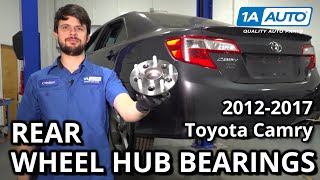
Typical fix: If the tone ring is damaged, the entire rear wheel hub and bearing assembly must be replaced. 🎬 Watch: Step-by-step guide to replacing the rear wheel hub assembly. If it's just dirty, cleaning it with brake cleaner and a rag may resolve the issue, but this is less common.
Est. part cost: $150-$400
Rare But Worth Checking
- Faulty ABS Control Module: → Shop ABS Control Module This is very rare. Before condemning the module, all other possibilities (sensor, wiring, hub) must be exhaustively ruled out. A faulty module will typically have other codes present, may not communicate with a scan tool, or will fail internal self-tests.
Diagnosis Steps
- Connect an OBD-II scanner capable of reading ABS codes and live data.
- Confirm C0050 is the active code. Note any other codes, especially sub-codes like C0050-18 (low signal) or C0050-5A (implausible signal).
- View the live data stream for all four wheel speed sensors.
- Drive the vehicle slowly (above 5 MPH) in a straight line. Observe the readings. The right rear sensor should read close to the other three. If it reads 0, jumps erratically, or is inconsistent, the problem is in that corner.
- Safely raise and support the rear of the vehicle. Remove the right rear wheel.
- Visually inspect the wheel speed sensor and its wiring harness for obvious damage, such as cut wires, chafing near suspension components, or corrosion.
- Unbolt and remove the 10mm bolt holding the sensor. Gently twist and pull the sensor out of the steering knuckle. It may be seized; penetrating oil can help.
- Inspect the sensor tip for metallic debris. Inspect the magnetic encoder ring inside the hub for damage, cracks, or heavy debris. Clean as necessary.
- Check for excessive play in the wheel bearing by rocking the hub. Any movement indicates the hub assembly is bad.
- If no visual faults are found, use a multimeter. Disconnect the sensor and measure its resistance. Compare to specifications (typically in the 800Ω - 1.4 kΩ range). An open or shorted reading means the sensor is bad. Check the harness connector for reference voltage (should be around 11-12V with key on) and ground from the ABS module.
- If the sensor and wiring test good, the issue is likely the wheel hub/bearing assembly's internal tone ring.
- After replacing any parts, clear the codes with the scan tool and perform a test drive to ensure the warning lights do not return. Some systems may require a 'zero point calibration' after repair, which can be done with an advanced scan tool.
Parts You'll Likely Need
- Rear Wheel Speed Sensor (Right)
(OEM #89516-06190)— This is the most common failure point for code C0050. The sensor is an electronic component that fails from heat cycles and exposure to the elements.
Trusted brands: Denso, NTK, Standard Motor Products (SMP), Aisin, Toyota Genuine Parts
OEM price range: $120-$200
Aftermarket price range: $40-$90 - Rear Wheel Hub and Bearing Assembly (Right)
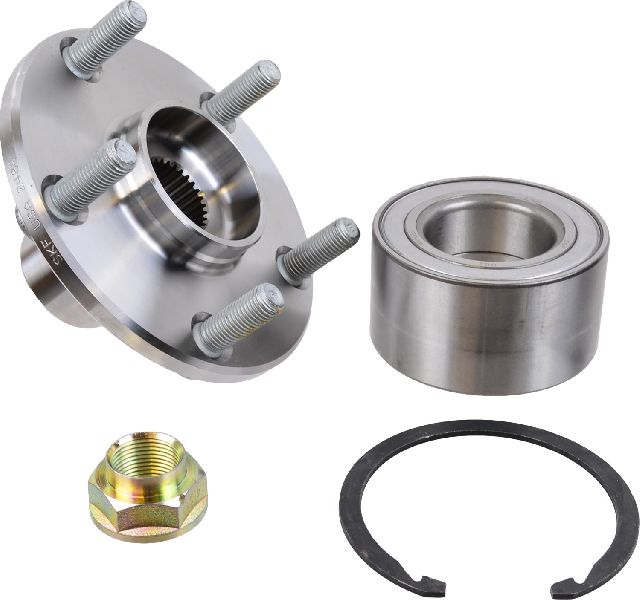
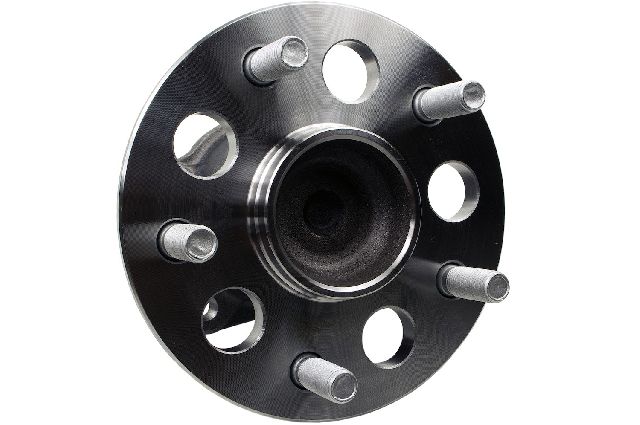
(OEM #42450-06110)— Required if the magnetic tone ring, which is integrated into the hub, is cracked or damaged, or if the bearing itself has failed. This is the second most likely part needed.
Trusted brands: Koyo, Timken, SKF, MOOG, NSK
OEM price range: $250-$400
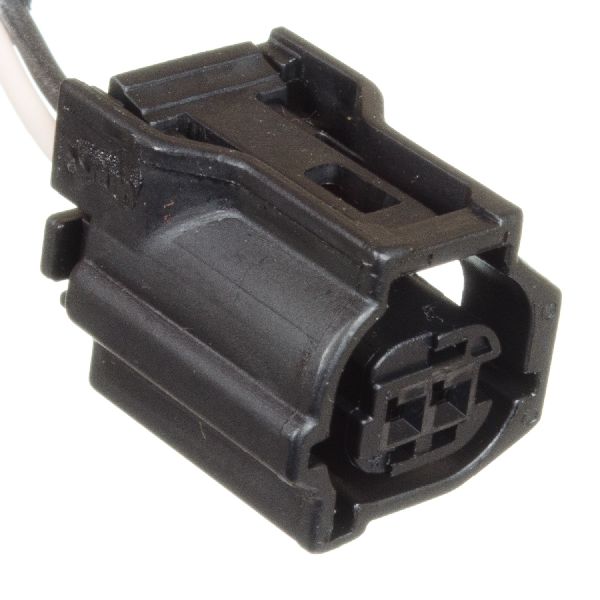
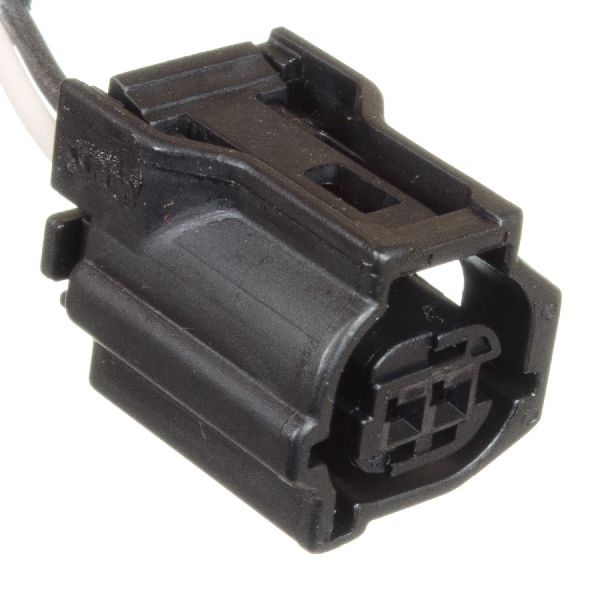
Aftermarket price range: $100-$200 - Rear ABS Wheel Speed Sensor Harness — Needed if the wiring is broken, chafed through, or the connector is damaged beyond repair. A pigtail connector is a cheaper alternative if only the connector end is bad.
Trusted brands: Dorman, Standard Motor Products (SMP), Toyota Genuine Parts
OEM price range: $80-$150
Aftermarket price range: $25-$60
Related Codes That Often Appear With This One
- C1467 — This is the code for the Left Rear Wheel Speed Sensor. Seeing both rear sensor codes together could point to a shared wiring issue, a problem with the ABS module, or a systemic issue like water intrusion in both rear connectors.
- U0415 — This code indicates 'Invalid Data Received From Electronic Brake Control Module.' It can be triggered as a secondary fault when the ABS module sets a primary code like C0050 and stops broadcasting reliable data to other vehicle systems. An owner reported this code appearing alongside C0050 and several other communication faults during a diagnostic session (NHTSA ODI #11228687).
- C1404 — This is a more specific Toyota code for 'Rear Speed Sensor Malfunction (Right).' It often accompanies C0050 and reinforces that the issue is with the right rear sensor signal.
Platform-Specific Known Issues
- Wiring Harness Routing: On the XV50 Camry, the rear sensor harness is clipped to the suspension components and can be susceptible to chafing or being snagged by road debris. A thorough visual inspection of the harness routing is critical before replacing parts.
Mechanic-Grade Diagnostic Values
- Rear Wheel Speed Sensor Internal Resistance — expected: 800Ω - 1,400Ω (0.8 - 1.4 kΩ) at room temperature.. Failure: A reading of infinite resistance (Open Loop) or near zero (short circuit) indicates a failed sensor.
- Voltage at Sensor Harness Connector (Key On) — expected: ~11-12 Volts (Battery Voltage). Failure: No voltage suggests a problem upstream in the wiring or with the ABS module's power supply to the sensor.
Hidden / Shadow Codes Worth Checking
- C0050-18: Low signal amplitude. This indicates the signal from the sensor is weak or erratic, often pointing to a failing sensor or a poor connection. (see via An advanced scan tool like Toyota Techstream or a high-end professional scanner capable of reading manufacturer-specific sub-codes.)
- C0050-5A: Signal not plausible. The ABS module is receiving a signal, but it doesn't make sense compared to the other wheel speed sensors (e.g., one wheel reading 20 MPH while others read 5 MPH). This can point to a damaged tone ring or a sensor that is failing intermittently. (see via An advanced scan tool like Toyota Techstream or a high-end professional scanner.)
- C0050-00: General failure. In some cross-manufacturer instances, this code has been documented alongside the need to replace rotors, rear brake pads, and adapter plates (NHTSA ODI #11693418).
Scan Tool Commands That Help
- Toyota Techstream: Data List for ABS/VSC/TRAC — This is the primary diagnostic screen. It allows you to view and graph the live speed readings from all four wheels simultaneously while driving. A faulty right rear sensor will show a reading of 0, or a value that jumps erratically compared to the other three.
- Toyota Techstream: Active Test — While less common for a sensor circuit code, the Active Test menu can be used to command the ABS pump motor and solenoids to operate. This helps confirm the ABS module itself is responsive, which is a useful step if you suspect a rare module failure after confirming the sensor and wiring are good.
Wiring & Ground Locations
- h1 — Connector for the Rear Speed Sensor RH (Right Hand).. This is the specific connector designator for the right rear wheel speed sensor on a 2014 Camry wiring diagram. Knowing this helps locate the correct component and its corresponding pins (RR+ and RR-) on the Brake Actuator Assembly (ABS module) for continuity testing.
- A49 — The Brake Actuator Assembly (ABS Control Module), located in the engine compartment.. The wires from the 'h1' sensor connector terminate at this module. For C0050, the relevant pins are Pin 29 (RR+) and Pin 31 (RR-). Testing for continuity between the h1 connector and these pins can definitively rule out a wiring break.
Real Owner Repair Stories
- YouTube channel 'Diagnosing a toyota active wheel speed sensor' (2015 Toyota Tundra (Note: While a different model, it uses a nearly identical active wheel speed sensor and diagnostic logic to the Camry)) — ABS, traction, and stability control lights on the dashboard due to a right rear speed sensor code.
❌ Tried (didn't work) Initial diagnosis was difficult as the fault was intermittent. Driving the vehicle would sometimes not trigger the fault.
✅ What actually fixed it The technician found a completely corroded and broken power wire for the sensor. The break was located on top of the frame rail, hidden from easy view. Repairing the broken wire solved the problem without needing to replace the sensor itself.
Documented NHTSA Reports
While C0050 is primarily a wheel speed sensor code on Toyotas, other manufacturers use this identifier for different systems. For example, NHTSA ODI #10763888 describes a case where C0050 identified a faulty power steering control module (PSCM) requiring a full steering column replacement. Additionally, a technician noted in NHTSA ODI #11649367 that the code could be set after brake service if extra fluid is required to return caliper piston contact to the brake pad, disabling the ABS and supporting systems.
OEM Part Supersession History
89516-33050→89516-06090— Part number update for the rear skid control sensor wire (harness).
Heads up: While 89516-06090 fits some early XV50 models, the primary part for the right rear is 89516-06190. Always verify by VIN.
Model Year Variations Within This Range
- 2012-2014 vs 2015-2017: The Toyota Camry XV50 received a significant facelift for the 2015 model year. While the fundamental ABS components and C0050 diagnosis remained the same, some connector locations and interior trim removal steps to access wiring may vary slightly. However, the core parts (sensor 89516-06190, hub 42450-06110) remained consistent across the entire 2012-2017 generation.
Diagnostic Flowchart
Other Known Issues on This Vehicle
Issues unrelated to this code that are worth knowing about as an owner of this generation:
- Torque Converter Shudder 🟠 Medium — Common between 80,000-120,000 miles. Feels like driving over rumble strips between 25-50 MPH under light throttle. (Ref: TSB T-SB-0023-15 (for RAV4, but describes same issue), Warranty Enhancement ZH1.)
- Melting / Sticky Dashboard 🟡 Low — Widespread issue in hot, humid climates. The dashboard material degrades, becoming shiny, sticky, or cracking. (Ref: Warranty Enhancement Program ZLD / ZE6 covered some earlier models, but has since expired for most vehicles.)
- EVAP System / Charcoal Canister Failure 🟠 Medium — Can occur at various mileages, often leading to Check Engine Light codes like P0441, P0455. Symptoms include a fuel smell or difficulty refueling.
- Transmission Shifting Problems (Hesitation/Jerking) 🟡 Low — Some owners report rough shifting or hesitation, particularly in early models of the generation. Often attributed to software that can be updated.
Used vs. New Parts: Buying Guide for This Vehicle
When a used part is the smart pick: A used part is generally not recommended for the electronic sensor itself due to its failure mode (age, heat cycles). However, a complete used wheel hub assembly from a low-mileage, non-corroded donor vehicle can be a cost-effective option if the failure is confirmed to be the tone ring and not the bearing.
Donor-vehicle mileage cap: roughly under 60000 miles for the part to have meaningful remaining life.
What to inspect on the donor part:
- Check for zero play or roughness when spinning the bearing by hand. A good bearing is silent and smooth.
- Inspect the magnetic encoder ring through the sensor hole for any visible cracks, rust jacking, or heavy metallic debris.
- Source the part from a vehicle in a dry, salt-free climate to minimize the risk of corrosion and water intrusion.
- Ensure the wiring pigtail on the sensor (if included with the hub) is free of cracks, corrosion, or previous repairs.
OEM-only on this vehicle (don't cheap out):
- While not strictly OEM-only, the ABS Control Module is a part where a new or professionally remanufactured OEM unit is highly advised due to the need for potential programming and the high cost of a misdiagnosis.
Aftermarket brands forum-validated for this vehicle:
- Sensors: Denso, NTK, Standard Motor Products (SMP), Aisin
- Hub Assemblies: Koyo, Timken, SKF, MOOG, NSK
Brands owners have reported issues with on this vehicle:
- Avoid unbranded, 'white-box' sensors and hub assemblies from online marketplaces. Forum discussions frequently mention premature failure and inconsistent quality with no-name parts, leading to repeat repairs.
Real Owner Stories
Aggregated from forums and TSBs cited above. Mileages and costs reflect what owners reported in those sources.
2012-2017 Toyota Camry
Symptoms: The 'trifecta' of ABS, Brake, and TRAC lights illuminated simultaneously.
What fixed it: Replacement of a single rear wheel speed sensor.
Source hint: ToyotaNation Forums - General Discussion
2010 Toyota Camry (XV40 platform)
Symptoms: Faulty rear ABS sensor signal requiring harness replacement.
What fixed it: Replacing the rear ABS harness by removing the rear seat bottom and side bolster to access the interior connector.
Source hint: Reddit r/MechanicAdvice - ABS Sensor Harness - Camry
Related OBD-II Codes
Frequently Asked Questions
My 2012-2017 Camry has the ABS, Brake, and TRAC lights all on at once. Is this a common failure?
I suspect a wiring issue on my XV50 Camry; where is the harness most vulnerable?
Can I just replace the magnetic tone ring if it's damaged on my Camry?
What is the correct resistance for a replacement right rear wheel speed sensor?
Do I need to take the interior apart to fix a C0050 wiring fault?
Is there a TSB for the transmission shudder I'm feeling alongside my ABS issues?
Helpful Videos

We Have This Part in Stock

The information in this article is provided for general reference and educational purposes only. Vehicle specifications, procedures, and part compatibility can vary by production date, trim level, and region. Always consult your vehicle's factory service manual and verify part numbers before purchasing or performing repairs. Safety-critical components such as airbags, seat belts, and braking systems should be installed by a qualified professional.
- Toyota Camry:
- 🧭 Diagnostic Flowchart
- 🎬 Helpful Videos
- 🛍️ Shop This Part
- What's Unique About the 2012-2017 Toyota Camry
- Symptoms You May Notice
- Most Likely Causes
- Rare But Worth Checking
- Diagnosis Steps
- Parts You'll Likely Need
- Related Codes That Often Appear With This One
- Platform-Specific Known Issues
- Mechanic-Grade Diagnostic Values
- Hidden / Shadow Codes Worth Checking
- Scan Tool Commands That Help
- Wiring & Ground Locations
- Real Owner Repair Stories
- Documented NHTSA Reports
- OEM Part Supersession History
- Model Year Variations Within This Range
- Other Known Issues on This Vehicle
- Used vs. New Parts: Buying Guide for This Vehicle
- Real Owner Stories
- 2012-2017 Toyota Camry
- 2010 Toyota Camry (XV40 platform)
- Related OBD-II Codes
- Frequently Asked Questions
- 🎟️ Get 5% Off