

C0050 on 2004-2009 Toyota Prius: Right Rear Wheel Speed Sensor Causes and Fixes
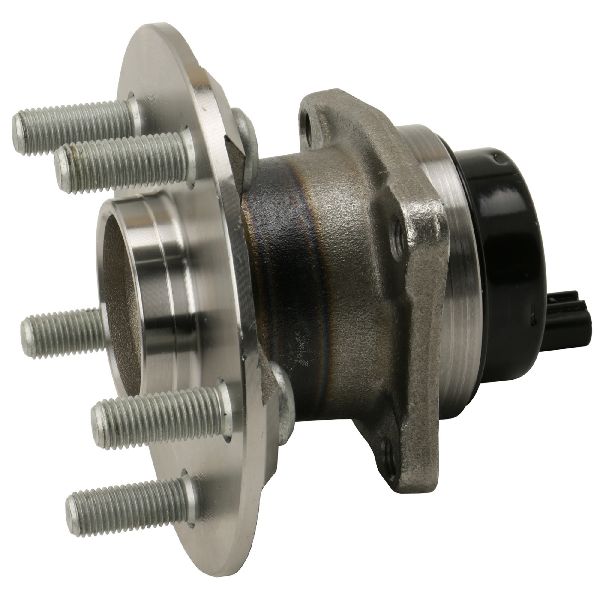
On a 2004-2009 Prius, code C0050 almost always means the right rear wheel hub assembly has failed. The ABS sensor is integrated into the hub, so the entire unit must be replaced. Before replacement, inspect the wiring harness for damage. Expect to pay $100-$250 for a quality aftermarket hub assembly; DIY difficulty is 3/5.
- Code C0050 on a 2004-2009 Prius means there's a problem with the right rear wheel speed signal, which disables ABS and VSC.
- The most common cause is a failed right rear wheel hub assembly, because the sensor is built into it on this specific car.
- Before replacing the hub, always inspect the wiring harness leading to it for any visible damage, as this is a cheaper fix.
- Use an ABS-capable scanner to watch live data from all four wheels to confirm the right rear is the one not reporting speed.
- This is a safety-critical repair; if you are not comfortable working on brakes and suspension components, seek professional service.
What's Unique About the 2004-2009 Toyota Prius
For the second-generation (XW20) Prius, the front wheel speed sensors are separate, bolt-on parts, but the rear wheel speed sensors are integrated directly into the wheel hub and bearing assembly. This means that if the right rear sensor or its magnetic encoder ring fails, the entire hub assembly must be replaced. This design is different from many other vehicles where the sensor can be unbolted and replaced independently, making the diagnosis and repair path for a rear sensor code on this Prius very specific.
Symptoms You May Notice
- ABS warning light is on
- VSC (Vehicle Stability Control) warning light is on
- Brake system warning light (!) is on
- Traction Control (TRAC) system is disabled
- Noticeable decrease or jerking in regenerative braking, potentially leading to lower fuel economy.
- A humming, rumbling, or grinding noise from the rear of the car if the wheel bearing itself has failed mechanically in addition to the sensor.
- Replacing only a standalone sensor. On the rear of a 2004-2009 Prius, the sensor is not sold separately from the hub assembly.
- Assuming the problem is the ABS actuator. While these are known to fail, an isolated wheel speed sensor code is almost always a problem at the wheel itself or its wiring.
- Installing a cheap, low-quality aftermarket hub. Owners on forums report these parts failing quickly, sometimes within months, causing the C0050 code to return.
Most Likely Causes
- Failed Right Rear Wheel Hub Assembly 🔴 High Probability → Shop Hub Assembly The wheel speed sensor and its magnetic encoder ring are integrated into the hub assembly, which is a wear item exposed to road debris, water, and salt. Failure of either the sensor electronics or physical damage to the ring requires replacement of the whole unit. Forum users frequently report that choosing a high-quality OEM (Aisin) or top-tier aftermarket (Timken, SKF, Koyo) hub is critical, as cheap aftermarket hubs are known to fail prematurely or be dead-on-arrival.
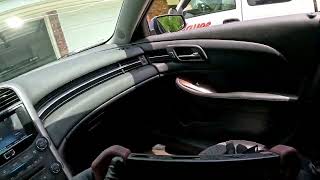
How to confirm: Using an OBD-II scanner capable of reading ABS live data, monitor all four wheel speeds while driving. 🎬 See how to diagnose an erratic speed sensor using live data. The right rear sensor will likely read 0 MPH, or its signal will be erratic compared to the other three wheels. Additionally, with the rear of the vehicle raised, grab the wheel at the 12 and 6 o'clock positions and attempt to rock it; any play indicates a worn wheel bearing, confirming the need for hub replacement.
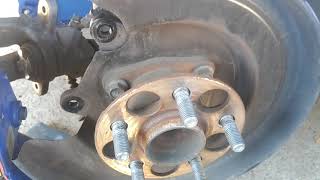
Typical fix: Replace the entire right rear wheel hub and bearing assembly. 🎬 Watch this step-by-step guide to replacing the rear hub and sensor.
Est. part cost: $100 - $250 - Damaged Wheel Speed Sensor Wiring or Connector 🟡 Medium Probability → Shop ABS Wheel Speed Sensor The wiring harness runs down to the wheel hub and is susceptible to damage from road debris, improper jacking, or corrosion at the connector plug. The damage is often found within a few inches of the connector itself.
How to confirm: Visually inspect the wiring harness from the back of the hub assembly up into the wheel well for any signs of chafing, breaks, or melted sections. Unplug the connector and check for corrosion, moisture, or bent/broken pins. Use a multimeter to check for continuity on the wires between the connector and the ABS module if a wiring diagram is available.
Typical fix: Repair the damaged section of wire or replace the pigtail connector. A replacement wiring harness is available from aftermarket suppliers.
Est. part cost: $20 - $60
Rare But Worth Checking
- Failed ABS Actuator / Skid Control ECU: While a widespread problem on the Gen 2 Prius, this unit typically fails with other codes like C1252, C1256, or C1391 and is often accompanied by a loud, frequently running pump motor. It is an unlikely cause for an isolated C0050 code but should be considered if replacing the hub and checking the wiring does not resolve the issue.
Diagnosis Steps
- Connect an ABS-capable OBD-II scanner to confirm code C0050 is present.
- Use the scanner's live data function to view the speeds of all four wheels while driving slowly in a straight line. Confirm that the Right Rear (RR) wheel speed reads 0 MPH or is erratic while the others read correctly.
- Safely raise and support the rear of the vehicle. Check for mechanical bearing failure by grabbing the tire at 12 and 6 o'clock and rocking it forcefully. Any play or clicking indicates a bad bearing.
- Remove the right rear wheel.
- Perform a thorough visual inspection of the ABS wire that runs from the back of the wheel hub up into the car's body. Check for cuts, chafing, melting, or other damage.
- Disconnect the sensor's electrical plug and inspect the terminals for corrosion, moisture, or damage. The release tab can be difficult to access and is located on the bottom of the connector.
- If the wiring appears damaged, repair or replace the harness pigtail.
- If the wiring appears intact, the most likely cause is a failed wheel hub assembly.
- Replace the right rear wheel hub assembly. This involves removing the brake caliper, caliper bracket, and brake rotor/drum, then unbolting the hub from the axle carrier. The hub can be seized and may require a hammer and drift or other methods to remove.
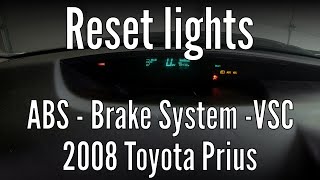
- After installation, reconnect the battery (if disconnected), and clear the code with the scanner. The warning lights should go out after a short test drive. 🎬 Watch how to reset your ABS and VSC warning lights. Some owners report needing to clear codes even after a successful repair.
Parts You'll Likely Need
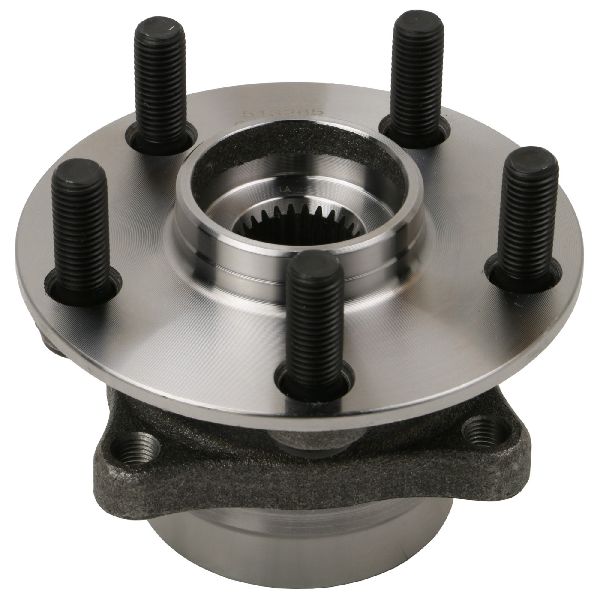
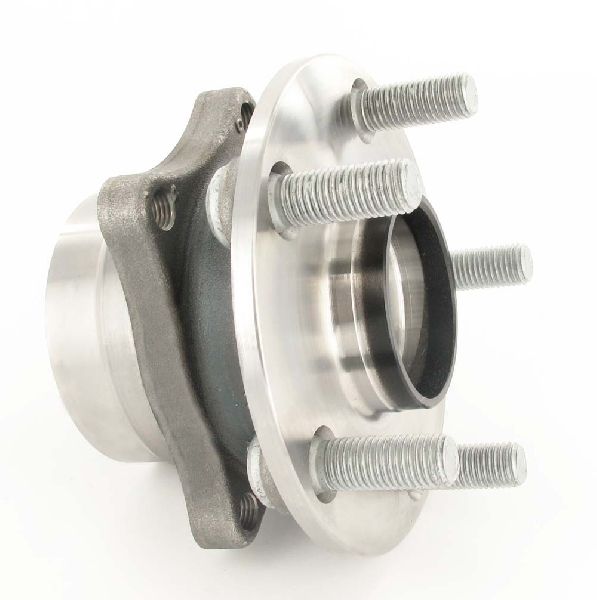
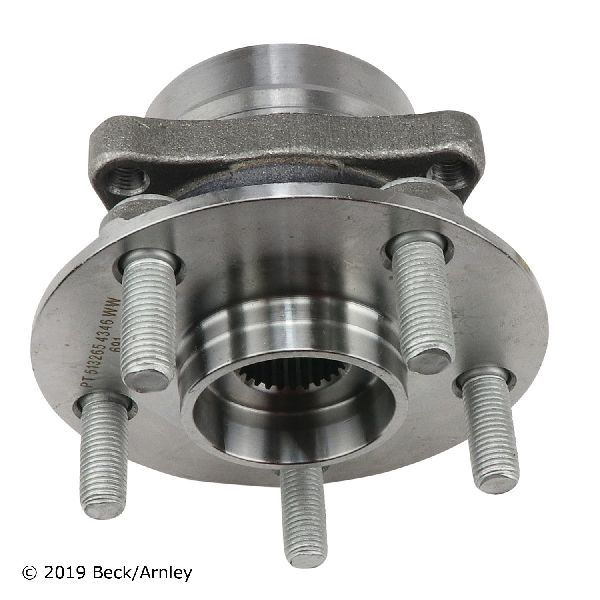
- Rear Wheel Hub and Bearing Assembly
(OEM #42450-47040)— This is the primary fix for code C0050 on this vehicle, as the wheel speed sensor and magnetic encoder ring are integrated into this single unit for the rear wheels.
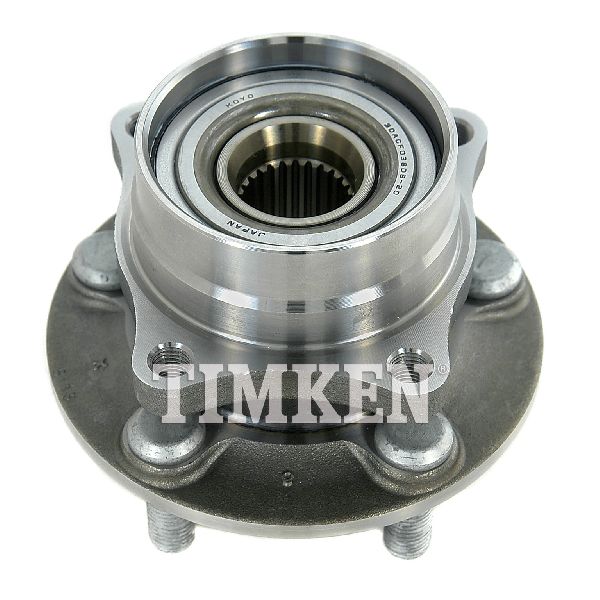
Trusted brands: Toyota (OEM), Aisin (Often the OEM manufacturer), Timken (e.g., HA590373), SKF (e.g., VKBA 7577), Koyo
OEM price range: $200-$300
Aftermarket price range: $100-$200 - Rear ABS Wheel Speed Sensor Wiring Harness — Needed if a visual inspection reveals the wiring leading to the hub is damaged, frayed, or corroded.
Trusted brands: Standard Motor Products (SMP), Dorman, Carquest (e.g., ARC1696)
OEM price range: N/A
Aftermarket price range: $20-$60
Platform-Specific Known Issues
- Owner Experience with Cheap Aftermarket Hubs: A user on PriusChat detailed an experience where they replaced a failed front hub with an aftermarket part, which failed again in 9 months. A second aftermarket replacement failed within 6 months. The issue was only resolved by installing an OEM Toyota hub assembly. This highlights the risk of using low-cost, unverified parts for this critical component.
- Difficulty Removing Seized Hub: In a PriusChat forum thread, a DIYer in the salt belt described the process of removing a seized rear hub. They had to use a propane torch to heat the brake drum to get it off, then used a long drift punch on the hub bolts to break it free from the backing plate.
- Warning Lights Persisting After Repair: Multiple owners have reported that the ABS/VSC warning lights remained on immediately after replacing the hub. In some cases, this was due to using a defective cheap aftermarket hub. In other cases, the codes simply needed to be cleared with a capable scanner or by disconnecting the 12V battery for a few minutes.
Documented NHTSA Reports
While C0050 is a wheel speed sensor code on the Prius, it is important to note that this code can have different meanings on other vehicle platforms. For example, NHTSA ODI #10763888 describes a case where a Chevrolet dealership identified C0050 as a faulty power steering control module (PSCM) requiring a steering column replacement. On other vehicles, such as described in NHTSA ODI #11228687, the code appeared alongside multiple other communication and sensor faults (C0035, C0040, U0077) during a suspension-related diagnostic. Furthermore, some manufacturers link this code to brake service procedures; NHTSA ODI #11649367 notes that the code may be set if extra brake fluid is required to return caliper piston contact to the brake pad after service, while NHTSA ODI #11693418 reports the code appearing when rotors, pads, and adapter plates required replacement.
Mechanic-Grade Diagnostic Values
- Voltage between RR sensor signal wire (RR+) and ground at the Skid Control ECU connector. — expected: Pulsing between approx. 0.7V and 1.4V when the wheel is spun slowly.. Failure: No voltage or a steady, non-pulsing voltage indicates a bad sensor or an open/short in the wiring.
- Resistance between the two pins of the wheel speed sensor harness connector (testing the wiring, not the sensor). — expected: Should be an open circuit (infinite resistance) with the ECU disconnected.. Failure: Low resistance indicates a short between the two wires.
- Resistance between Skid Control ECU connector pins S8-1, S8-2, S9-1, S9-2, S10-4 and body ground. — expected: Below 1 Ω.. Failure: High resistance indicates a bad ground connection for the ECU.
Hidden / Shadow Codes Worth Checking
- C1238/38 or C1277/77: These are detail codes or Test Mode DTCs that correspond to the Right Rear Wheel Speed Sensor. C1238 can indicate foreign matter on the sensor tip, while C1277 indicates an abnormal change in the output signal. They pinpoint the fault to the RR sensor circuit when the main code is a more generic C-code. (see via Toyota Techstream software or by using the jumper wire method on the DLC3 connector and counting warning light flashes.)
Scan Tool Commands That Help
- Toyota Techstream: Data List -> ABS/VSC/TRAC — This is the primary diagnostic step. It allows for real-time monitoring of all four wheel speed sensors simultaneously to confirm the RR sensor is the one providing an erratic or zero-speed signal.
- Toyota Techstream: Utility -> Test Mode — Puts the ABS system into a diagnostic mode where it can perform self-checks of the sensors. Driving the vehicle in this mode can help confirm sensor functionality after a repair.
- OBD-II Jumper Wire: Clear DTCs (Jumping pins 4 & 13) — A non-scanner method to clear ABS/VSC codes. After connecting a jumper wire between pins 4 (CG) and 13 (TC) on the DLC3, turn the ignition ON and press the brake pedal 8 or more times within 5 seconds. This can reset the lights after a successful repair if a scanner is not available.
Wiring & Ground Locations
- Skid Control ECU — Behind the glove box assembly. It has multiple connectors, labeled S7, S8, S9, S10 in wiring diagrams.. This is the module that receives the signal from the wheel speed sensor. Testing for signal voltage and continuity at its connector pins is the definitive way to isolate a wiring problem from a sensor problem.
- A26 (RR Speed Sensor Connector) — In the right rear wheel well, connecting the hub pigtail to the main body harness.. This is the most common point of failure for wiring due to exposure to elements and physical stress. Inspecting this connector for corrosion or damage is a key step.
- Skid Control ECU Pins (RR Sensor) — On the Skid Control ECU. The Right Rear sensor connects to pins RR+ (Pin 31) and RR- (Pin 23) on connector S8.. Knowing these pin numbers allows a technician to perform continuity and voltage tests directly at the ECU, bypassing the entire vehicle harness to confirm if the signal is reaching the module.
- ECU Ground Points — The Skid Control ECU has multiple ground pins (GND, GND2-6) on connectors S7, S8, S9, and S10 that secure to the chassis.. A poor ground connection for the ECU can cause a variety of erratic issues, including false sensor codes. Verifying these grounds have less than 1 Ohm of resistance is a crucial step in advanced diagnosis.
Real Owner Repair Stories
- PriusChat user (2006 Toyota Prius) — ABS, VSC, and (!) warning lights came on after a shop replaced the right front wheel bearing.
❌ Tried (didn't work) Resetting codes using a jumper wire procedure temporarily turned lights off, but they returned., The car would jerk upon light braking as if ABS was engaging incorrectly before the lights came back on.
✅ What actually fixed it The user took the car to a Toyota dealership, who diagnosed that the independent shop had installed a faulty aftermarket hub assembly. Replacing the new, faulty aftermarket hub with a genuine Toyota hub assembly resolved all issues.
OEM Part Supersession History
42450-47040→42450-47040 (current)— This part number has remained stable for the specified vehicle range. While other similar numbers exist, they are typically for different models (like the Prius C) or generations.
Heads up: Be cautious of parts listed for 'Prius' that are actually for the smaller Prius C, which uses a different hub. The 42450-47040 part is specified for the 2004-2009 Gen 2 Prius (and some early Gen 3 models).
Diagnostic Flowchart
Other Known Issues on This Vehicle
Issues unrelated to this code that are worth knowing about as an owner of this generation:
- ABS Brake Actuator Failure 🔴 High — Very common. Often occurs after 100,000 miles. Symptoms include a loud, frequently running pump, and a dashboard lit with Brake, ABS, and VSC lights. Triggers codes like C1256, C1391. (Ref: TSB-0032-16 addresses diagnosis for this issue.)
- Combination Meter (Dashboard) Failure 🟠 Medium — Common issue where the entire digital dashboard fails to illuminate, particularly at startup in cold weather. The car may still be drivable but without any instrumentation. (Ref: Toyota issued a Warranty Enhancement Program (ZE1) extending coverage to 9 years/unlimited miles.)
- Hybrid Inverter Coolant Pump Failure 🔴 High — A common failure where the electric pump that cools the hybrid inverter stops working, which can lead to hybrid system shutdown. Triggers code P0A93. (Ref: Toyota issued a recall (Safety Recall C0U) and a Limited Service Campaign to replace the pump.)
- High Voltage (HV) Traction Battery Degradation 🔴 High — Inevitable with age and mileage (typically over 10-15 years or 150,000+ miles). Symptoms include poor fuel economy, reduced power, and the P0A80 trouble code.
- Excessive Oil Consumption 🟠 Medium — Some owners report higher-than-normal oil consumption, potentially due to piston ring design, requiring frequent top-offs between oil changes.
- HID Headlight Bulb Failure 🟡 Low — The original HID bulbs are known to flicker and fail over time. While not a critical failure, replacement can be expensive with OEM parts.
Used vs. New Parts: Buying Guide for This Vehicle
When a used part is the smart pick: For this specific repair, using a used part from a junkyard is strongly discouraged by experienced owners and mechanics. A wheel hub is a wear-and-tear item containing both a mechanical bearing and sensitive electronics. The risk of premature failure of either the bearing or the integrated sensor is high, and the labor cost to replace it again outweighs any initial savings.
Donor-vehicle mileage cap: roughly under 80000 miles for the part to have meaningful remaining life.
What to inspect on the donor part:
- If a used part must be considered, source it from a low-mileage vehicle from a dry, salt-free climate.
- Inspect the electrical pigtail for any signs of brittleness, cracking, or corrosion.
- Spin the hub by hand; it should be perfectly smooth with zero noise or notchiness.
- There should be absolutely no play when trying to rock the hub flange.
OEM-only on this vehicle (don't cheap out):
- Rear Wheel Hub Assembly
Aftermarket brands forum-validated for this vehicle:
- Aisin (OEM manufacturer)
- Koyo (OEM bearing manufacturer)
- Timken (Ensure it contains a Koyo bearing, as some production has shifted)
- SKF
- MOOG
Brands owners have reported issues with on this vehicle:
- Unbranded, low-cost hubs from online marketplaces like Amazon or eBay. Forum users consistently report these failing within months or even being dead-on-arrival.
Real Owner Stories
Aggregated from forums and TSBs cited above. Mileages and costs reflect what owners reported in those sources.
2004-2009 Toyota Prius
Symptoms: ABS/VSC lights recurring after replacing a failed hub with an aftermarket part; the first replacement lasted 9 months and the second failed within 6 months.
What fixed it: Installing an OEM Toyota hub assembly.
Source hint: PriusChat: The great speed sensor mystery
Gen 2 Toyota Prius
Symptoms: Seized rear hub and brake drum due to road salt; required a propane torch and long drift punch to break the components free.
What fixed it: Replacing the rear wheel hub assembly after using heat and force to remove the seized unit.
Source hint: PriusChat: Rear wheel bearing replacement
2004-2009 Toyota Prius
Symptoms: ABS lights appeared immediately after a shop replaced a wheel bearing.
What fixed it: Investigation suggested a misaligned dust shield or a sensor damaged during the installation process.
Source hint: Reddit r/prius: ABS Brake problems after having shop fixed wheel bearing!
2004-2009 Toyota Prius — ~125000 miles
Symptoms: Loud, frequently running pump with Brake, ABS, and VSC lights illuminated on the dashboard.
What fixed it: Diagnosis of the ABS Brake Actuator failure (related to TSB-0032-16).
Source hint: Known Issues: ABS Brake Actuator Failure
Related OBD-II Codes
Frequently Asked Questions
Can I just replace the sensor on my 2004-2009 Prius, or do I have to buy the whole hub?
Are there any specific brands of hub assemblies recommended by other Prius owners?
I replaced the hub but the ABS and VSC lights are still on. Is the new part bad?
Is there a TSB for the brake actuator failing on the Gen 2 Prius?
My dashboard went completely dark in the cold; is this related to the C0050 code?
Why is my regenerative braking acting jerky since the ABS light came on?
Helpful Videos
![How to change rear wheel bearing TOYOTA PRIUS 2 [TUTORIAL AUTODOC]](https://img.youtube.com/vi/PgJF1v54wxA/mqdefault.jpg)
Used OEM Parts in Stock
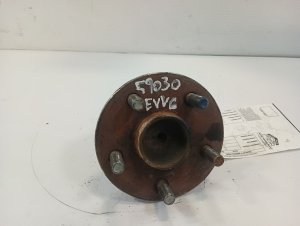
New Aftermarket Parts Available


The information in this article is provided for general reference and educational purposes only. Vehicle specifications, procedures, and part compatibility can vary by production date, trim level, and region. Always consult your vehicle's factory service manual and verify part numbers before purchasing or performing repairs. Safety-critical components such as airbags, seat belts, and braking systems should be installed by a qualified professional.
- Toyota Prius:
- 🧭 Diagnostic Flowchart
- 🎬 Helpful Videos
- 🛍️ Shop This Part
- What's Unique About the 2004-2009 Toyota Prius
- Symptoms You May Notice
- Most Likely Causes
- Rare But Worth Checking
- Diagnosis Steps
- Parts You'll Likely Need
- Platform-Specific Known Issues
- Documented NHTSA Reports
- Mechanic-Grade Diagnostic Values
- Hidden / Shadow Codes Worth Checking
- Scan Tool Commands That Help
- Wiring & Ground Locations
- Real Owner Repair Stories
- OEM Part Supersession History
- Other Known Issues on This Vehicle
- Used vs. New Parts: Buying Guide for This Vehicle
- Real Owner Stories
- 2004-2009 Toyota Prius
- Gen 2 Toyota Prius
- 2004-2009 Toyota Prius
- 2004-2009 Toyota Prius — ~125000 miles
- Related OBD-II Codes
- Frequently Asked Questions
- 🎟️ Get 5% Off