

C0050 on 2004-2010 Toyota Sienna: Right Rear Wheel Speed Sensor Circuit Fault
This code indicates a fault with the right rear wheel speed sensor circuit. The most common fix is replacing the right rear ABS wheel speed sensor. In rust-prone regions, the sensor often seizes in the knuckle, making removal difficult and often requiring destruction of the old sensor. Expect to pay $150-$300 for an OEM sensor and $50-$100 for an aftermarket one.
- C0050 means your Sienna's computer has lost the signal from the right rear wheel, disabling the ABS and VSC safety systems.
- The most likely cause is a failed ABS sensor, followed by damaged wiring.
- Before replacing parts, use a scanner with live data to confirm the right rear sensor is the one not reporting speed.
- Be prepared for a difficult repair in rust-prone areas, as the sensor often seizes in place and must be forcibly removed.
- The correct OEM part number for the right rear sensor on a 2004-2010 Sienna is 89545-08010.
What's Unique About the 2004-2010 Toyota Sienna
On the second-generation Sienna (XL20), particularly in regions with road salt, the C0050 code is frequently complicated by corrosion. The steel body of the ABS sensor tends to rust and seize inside the aluminum steering knuckle, making removal extremely difficult without breaking it. Forum users on BobIsTheOilGuy.com describe needing to drill, chisel, and apply heat to remove the stuck sensor remnants. Additionally, rust can build up under the sensor's mounting flange, lifting it slightly and creating an excessive air gap that weakens the signal and triggers the code even if the sensor itself hasn't failed electronically.
Symptoms You May Notice
- ABS warning light is on
- VSC warning light is on
- TRAC OFF warning light is on
- Brake warning light may be on
- ABS system does not activate during hard braking
- Traction control does not activate on slippery surfaces
- A 'Check VSC System' message may appear on the information display.
- Replacing the wheel hub/bearing when only the sensor or wiring is bad.
- Replacing the Skid Control ECU when the actual fault is a simple wiring break or corroded sensor.
Most Likely Causes
- Failed Right Rear Wheel Speed Sensor 🔴 High Probability → Shop ABS Wheel Speed Sensor The sensor is exposed to harsh elements like water, salt, and dirt, leading to internal electronic failure or severe corrosion that causes it to seize in the wheel knuckle.
How to confirm: Disconnect the sensor and test its resistance with a multimeter; a typical reading for a good sensor is around 1.1 kΩ. A reading of infinity (OL) indicates an open circuit and a failed sensor.
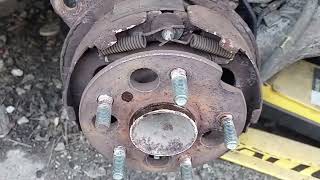
Typical fix: Replace the right rear wheel speed sensor. This may require destroying the old sensor to remove it if it's seized by drilling it out or breaking it apart with a chisel. 🎬 Watch this video to see how to remove a seized sensor.
Est. part cost: $50-$300 - Damaged Wiring Harness or Connector 🟡 Medium Probability The wiring harness runs along the suspension and is susceptible to damage from road debris, chafing, or corrosion, especially at the connector where it passes into the vehicle body.
How to confirm: Visually inspect the entire length of the harness from the sensor to where it enters the body for breaks, chafing, or melted sections. Check the connector pins for green or white corrosion. With the key on, check for voltage at the harness-side connector; you should see a reference voltage, often around 4-5 volts.
Typical fix: Repair the broken or corroded section of wire. If the damage is at the connector, a new pigtail may need to be spliced in. Clean corroded connector pins with electrical contact cleaner. The harness itself is available as a separate part if damage is extensive.
Est. part cost: $15-$70 - Excessive Air Gap / Debris ⚪ Low Probability Rust can form on the sensor's mounting surface on the knuckle, pushing the sensor away from the tone ring and creating too large of an air gap for a reliable signal. This is a well-documented issue on many vehicles in the rust belt.
How to confirm: Remove the sensor and inspect the mounting surface for a buildup of rust or scale. The surface should be clean and flat.
Typical fix: Remove the sensor, clean the mounting surface on the knuckle with a wire brush or file until it is bare metal, apply a thin layer of anti-seize compound to the sensor body and mounting surface, and reinstall the sensor.
Est. part cost: $0
Rare But Worth Checking
- Damaged Tone Ring / Wheel Hub Assembly: → Shop Hub Assembly The toothed or magnetic ring that the sensor reads can be damaged, become excessively rusty, or crack. This is less common than sensor or wire failure, but worth checking by inspecting through the sensor hole if a new sensor doesn't fix the issue.
- Faulty Skid Control ECU (ABS Module): This is the least likely cause. An ECU failure will typically trigger multiple wheel speed sensor codes or other specific ECU fault codes, not just C0050 alone.
Diagnosis Steps
- Connect an OBD-II scanner capable of reading ABS codes to confirm C0050 is present.
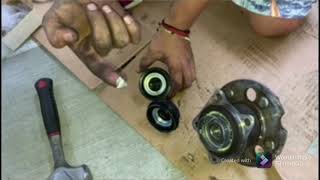
- Use the scanner's live data function to monitor the speed of all four wheels while driving. Confirm that the Right Rear (RR) wheel speed reads 0 MPH or is erratic while the other three wheels show a consistent speed. 🎬 See a quick rundown on diagnosing and replacing the rear sensor.
- Safely raise and support the vehicle. Remove the right rear wheel.
- Visually inspect the ABS sensor wire for any obvious signs of damage, such as cuts, chafing, or melting. Follow it from the hub to where it enters the vehicle body.
- Disconnect the sensor's electrical connector (located inside the vehicle, typically behind the rear quarter interior trim panel). Inspect the pins on both sides for corrosion or damage.
- Turn the ignition to the 'ON' position (engine off). Use a multimeter to check for voltage at the vehicle-side harness connector. You should see approximately 4-5 volts. If there is no voltage, the problem is in the wiring harness or the ECU.
- With the connector still unplugged, switch your multimeter to measure resistance (Ohms) and test the two pins on the sensor itself. A good sensor should read around 1.1 kΩ. An 'OL' or infinite reading means the sensor is bad.
- If tests point to a bad sensor, remove the 10mm bolt holding the sensor in the knuckle. Attempt to twist and pull the sensor out. If it is seized, apply penetrating oil. If it still won't budge, it will likely need to be destroyed for removal using a combination of drilling, prying, and chiseling.
- Once the sensor is out, thoroughly clean the hole and the sensor mounting surface on the knuckle with a wire brush or small file to remove all rust and corrosion. Inspect the tone ring through the hole for damage.
- Apply anti-seize to the new sensor body and bolt, install it, and reconnect the harness. Clear the codes and perform a test drive.
- After the repair, a Zero Point Calibration may be required to re-initialize the VSC system. This can be done with a scan tool or by jumping pins on the OBD-II port as described in TSB BR001-04. 🎬 Watch: How to perform a Zero Point Calibration on your Toyota.
Parts You'll Likely Need
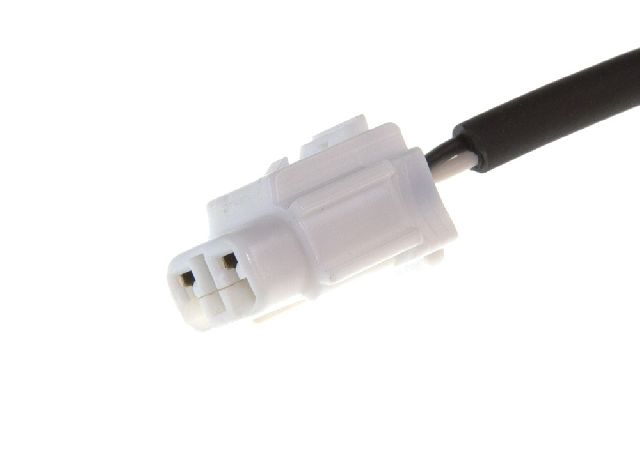
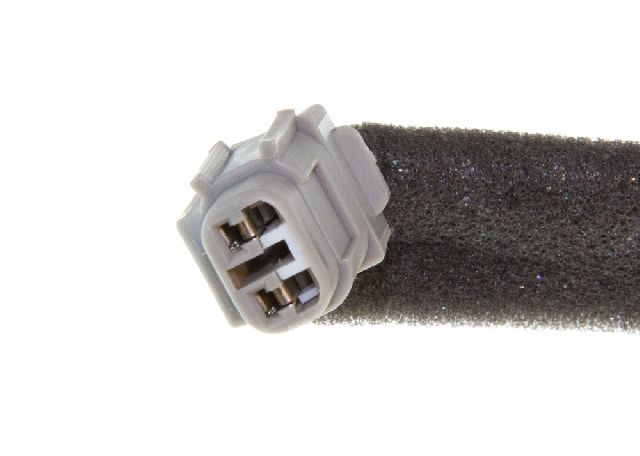
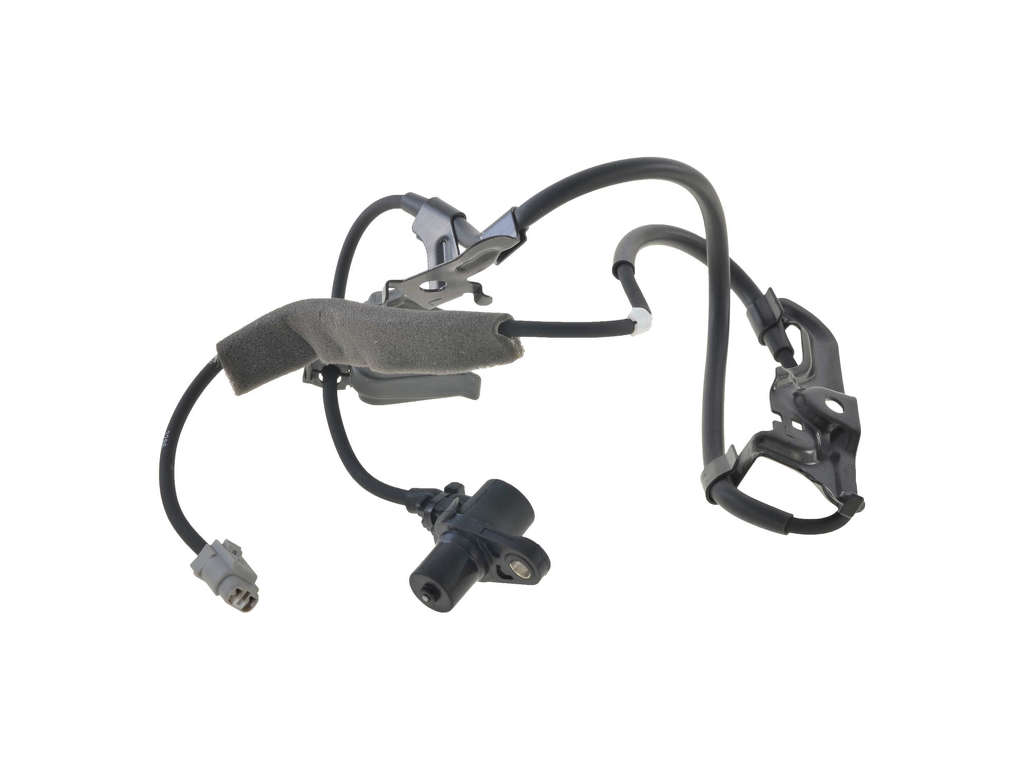
- Right Rear ABS Wheel Speed Sensor
(OEM #89545-08010 (AWD Models), 89545-08020 (FWD Models))— This is the most common failure point for the C0050 code, either due to internal electronic failure or physical damage from corrosion.
Trusted brands: Toyota (Genuine OEM), Aisin, Standard Motor Products (SMP), Holstein, Beck/Arnley, Dorman
OEM price range: $280-$300
Aftermarket price range: $50-$120
Related Codes That Often Appear With This One
- C0210 — This code also translates to 'Right Rear Wheel Speed Sensor Signal Malfunction'. It often appears alongside C0050, reinforcing the diagnosis of a fault in that specific corner of the vehicle.
- C1223 — This is a general 'ABS Control System Malfunction' code. It often sets as a secondary code when a specific fault like C0050 is detected, indicating the overall system has been disabled due to the primary fault.
Technical Service Bulletins (TSBs) & Recalls
- TSB BR001-04: Details the procedure for 'Zero Point Calibration' of the steering angle sensor and yaw rate sensor, which is often required after disconnecting the battery or performing work on the ABS/VSC system.
Platform-Specific Known Issues
- The rear ABS sensors are highly prone to seizing in the wheel knuckle due to galvanic corrosion between the sensor body and the aluminum knuckle, especially in the Rust Belt. Removal often requires destroying the old sensor.
- Rust buildup on the knuckle's mounting surface can increase the air gap between the sensor and the tone ring, causing a weak signal and triggering code C0050.
- The electrical connector for the rear sensor is located inside the cabin, behind the interior quarter panel trim, requiring trim removal for access.
Mechanic-Grade Diagnostic Values
- Right Rear Wheel Speed Sensor Resistance — expected: 0.85 to 1.35 kΩ. Failure: A reading of infinity (OL) or outside the specified range indicates a failed sensor.
- Skid Control ECU CAN Bus Resistance — expected: 54 to 69 Ω. Failure: Resistance outside this range indicates a problem with the CAN communication wiring or the ECU itself.
- Skid Control ECU Power Supply Voltage (IG1) — expected: 10 to 14 V. Failure: Voltage below 10V can indicate a power supply issue to the module, preventing proper operation.
Hidden / Shadow Codes Worth Checking
- C0050-00: General circuit malfunction (short to ground, open, or high resistance). This is a generic sub-code indicating a fundamental electrical fault. (see via Advanced OBD-II scanners or Toyota Techstream software.)
- C0050-18: Low signal amplitude. This indicates the signal from the sensor is weak or erratic, often caused by an excessive air gap from rust buildup or a failing sensor. (see via Advanced OBD-II scanners or Toyota Techstream software.)
- C0050-5A: Signal not plausible. The sensor's reading is inconsistent with the other wheel speed sensors, suggesting an intermittent signal or mechanical issue like a damaged tone ring. (see via Advanced OBD-II scanners or Toyota Techstream software.)
Scan Tool Commands That Help
- Toyota Techstream: Chassis / ABS/VSC/TRAC / Utility / Reset Memory — Use this function to clear stored calibration data before performing a new Zero Point Calibration. This is required after replacing VSC-related components.
- Toyota Techstream: Chassis / ABS/VSC/TRAC / Utility / Test Mode — This function puts the VSC system into a diagnostic mode to perform the Zero Point Calibration of the yaw rate and acceleration sensor. The vehicle must be on a level surface.
- Toyota Techstream: Chassis / ABS/VSC/TRAC / Data List — Use this to view live data from all four wheel speed sensors simultaneously. This is the primary method to confirm that the right rear sensor is the one providing no reading or an erratic reading compared to the others.
Wiring & Ground Locations
- Skid Control ECU w/ Actuator — Located in the left rear of the engine compartment.. This is the control module that receives the signal from the right rear wheel speed sensor and sets code C0050. All diagnostic wiring tests ultimately lead back to the connector for this module (Connector A19).
- Ground Points GND1 & GND2 (at ECU) — These are pins 32 (GND1) and 1 (GND2) on the A19 connector of the Skid Control ECU.. A poor ground connection at the ECU can cause a variety of faults, including misinterpretation of sensor signals. A resistance check from these pins to the body ground should be below 1 Ω.
- Driver Side J/B (Junction Block) — Located behind the dashboard, to the left of the steering column.. This junction block contains fuses and relays that power the ABS system, including the ECU-IG1 fuse. A fault here could cut power to the Skid Control ECU.
Real Owner Repair Stories
- YouTube video by 'sd p' (2004 Toyota Sienna) — ABS and VSC lights were on, codes C0210 and C0215 present, indicating faults with both rear wheel speed sensors.
❌ Tried (didn't work) The owner knew the sensors were the likely cause but the main issue was removal.
✅ What actually fixed it The sensor was seized by rust. The owner used an M12 air hammer to hit the flange of the sensor, which successfully split it and allowed for removal. After cleaning the bore and installing a new aftermarket sensor (tested at 1.1 kΩ), the codes were resolved. - YouTube video by 'Fix It Angel' (2010 Toyota Sienna) — False ABS activation at low speeds, especially when braking and turning. It felt like the brakes were letting go momentarily.
❌ Tried (didn't work) Initial diagnosis pointed towards a sensor issue.
✅ What actually fixed it The front ABS wheel speed sensor tips were covered in rust particles and metallic debris. The owner removed the sensors, thoroughly cleaned the magnetic tips and the mounting holes, and reinstalled them. This cleaning procedure resolved the false activation problem without replacing any parts.
Documented NHTSA Reports
While the C0050 code is standard for the Sienna's right rear sensor, cross-manufacturer records provide additional context for this fault. For instance, NHTSA ODI #10763888 describes a case where a C0050 code was diagnosed as a faulty control module, requiring replacement of the entire steering column assembly. In other vehicle platforms, NHTSA ODI #11649367 notes that the code can be triggered after brake service if extra fluid is required to return caliper piston contact to the brake pad, potentially disabling the ABS. Furthermore, NHTSA ODI #11693418 reports C0050-00 appearing alongside mechanical wear where rotors, brake pads, and adapter plates required replacement. Finally, NHTSA ODI #11228687 illustrates that C0050 often appears in a cluster of communication and sensor codes (such as C0035 and U0126) during complex electronic failures.
OEM Part Supersession History
89545-08010→89545-08010— No supersession. This part number remains the current valid number for AWD models within the 2004-2010 generation.
Heads up: This part is for All-Wheel Drive (AWD) models only.89545-08020→89545-08020— No supersession. This part number remains the current valid number for FWD models. Note that this same part number is used for later generation Siennas as well.
Heads up: This part is for Front-Wheel Drive (FWD) models only for the 2004-2010 generation.
Model Year Variations Within This Range
- 2004-2010: The primary variation is the part number for the rear ABS sensor based on the drivetrain. FWD models use part number 89545-08020, while AWD models use 89545-08010. The physical fitment and electrical properties are different between the two.
Diagnostic Flowchart
Other Known Issues on This Vehicle
Issues unrelated to this code that are worth knowing about as an owner of this generation:
- VVT-i Oil Feed Line Rupture (2GR-FE V6) 🔴 High — Common on 2007-2010 models with the 3.5L V6. The original rubber hose section degrades, leading to catastrophic oil loss. Failure can occur without warning. (Ref: Toyota issued a Limited Service Campaign (LSC 90K) to replace the rubber line with an all-metal line (Part No. 15772-31030). Many vehicles may have missed this campaign.)
- Power Sliding Door Cable Failure 🟠 Medium — Extremely common across all years. The steel cable that pulls the door open and closed frays and eventually snaps, disabling the power function. (Ref: Toyota issued an extended warranty (T-SB-0039-12) for some models, but most are now out of coverage. Repair is labor-intensive.)
- Cracked Dashboard 🟡 Low — Very common, especially in sunnier climates. The dashboard material becomes brittle and develops large cracks over time. (Ref: Toyota had a warranty enhancement program (ZE6) that covered replacement for 10 years from the date of first use, but this has expired for all affected vehicles.)
- Ruptured Rubber Oil Cooler Hose (3MZ-FE V6) 🔴 High — Common on 2004-2006 models with the 3.3L V6. Similar to the VVT-i line issue on the later engine, this rubber hose can rupture and cause rapid oil loss and engine seizure. (Ref: No recall, but a common DIY and shop fix is to replace the rubber hose with the updated all-metal pipe, OEM Part No. 15767-31020.)
- Erratic VSC Activation 🟠 Medium — Reported on earlier models (approx. 2004-2005). The vehicle's stability control may activate unexpectedly at highway speeds due to a faulty steering angle sensor, creating a dangerous situation. (Ref: A TSB was issued indicating an updated sensor was used in production starting in February 2005.)
Used vs. New Parts: Buying Guide for This Vehicle
When a used part is the smart pick: A used wiring harness pigtail from a junkyard is a viable option if only the connector is damaged and the rest of the harness is intact. A complete used Skid Control ECU could be a cost-effective alternative to a new one, but only after exhaustive diagnosis proves the original ECU is faulty.
Donor-vehicle mileage cap: roughly under 120000 miles for the part to have meaningful remaining life.
What to inspect on the donor part:
- For a wiring harness, inspect for any signs of brittleness, cracking, or previous repairs (splices). Ensure connector pins are clean and straight.
- For an ECU, check that the donor vehicle is from a dry, non-salt-belt region to minimize the chance of internal corrosion.
- Verify the part number on the used component exactly matches the original part.
OEM-only on this vehicle (don't cheap out):
- Skid Control ECU (ABS Module) - While a used OEM part is an option, avoid aftermarket ECUs due to potential software and communication issues with other vehicle systems.
Aftermarket brands forum-validated for this vehicle:
- Aisin (often the original OEM supplier)
- Standard Motor Products (SMP)
- Beck/Arnley
- Holstein
Brands owners have reported issues with on this vehicle:
- Avoid unbranded, 'white-box' sensors from online marketplaces. While some may work initially, their long-term reliability and signal quality can be questionable, potentially causing the issue to return.
Real Owner Stories
Aggregated from forums and TSBs cited above. Mileages and costs reflect what owners reported in those sources.
2004-2010 Toyota Sienna AWD
Symptoms: The rear ABS sensor was completely stuck in the knuckle. During an attempted removal, the sensor broke off inside the hole.
What fixed it: The owner had to drill out the old sensor and use heat to remove the remaining fragments from the knuckle before installing a new one.
Source hint: BobIsTheOilGuy.com: 'Toyota Sienna AWD Rear ABS Sensor Stuck'
2004-2010 Toyota Sienna
Symptoms: ABS, VSC, and TRAC OFF warning lights were illuminated. Diagnostic confirmed a C0050 code for the right rear speed sensor.
What fixed it: The old sensor was seized and had to be removed by drilling it out and using a chisel. The bore was meticulously cleaned before the new sensor was installed.
Source hint: SiennaChat.com threads regarding C0050 and seized sensors
Related OBD-II Codes
Frequently Asked Questions
Do I need to perform any special procedures after replacing the right rear sensor on my 2004-2010 Sienna?
Why is the ABS sensor so difficult to remove from the knuckle on my Sienna?
Where is the electrical connector for the C0050 sensor located on this vehicle?
Can I just clean the sensor instead of replacing it?
What resistance should I see when testing the Right Rear wheel speed sensor?
Helpful Videos
We Have This Part in Stock


The information in this article is provided for general reference and educational purposes only. Vehicle specifications, procedures, and part compatibility can vary by production date, trim level, and region. Always consult your vehicle's factory service manual and verify part numbers before purchasing or performing repairs. Safety-critical components such as airbags, seat belts, and braking systems should be installed by a qualified professional.
- Toyota Sienna:
- 🧭 Diagnostic Flowchart
- 🎬 Helpful Videos
- 🛍️ Shop This Part
- What's Unique About the 2004-2010 Toyota Sienna
- Symptoms You May Notice
- Most Likely Causes
- Rare But Worth Checking
- Diagnosis Steps
- Parts You'll Likely Need
- Related Codes That Often Appear With This One
- Technical Service Bulletins (TSBs) & Recalls
- Platform-Specific Known Issues
- Mechanic-Grade Diagnostic Values
- Hidden / Shadow Codes Worth Checking
- Scan Tool Commands That Help
- Wiring & Ground Locations
- Real Owner Repair Stories
- Documented NHTSA Reports
- OEM Part Supersession History
- Model Year Variations Within This Range
- Other Known Issues on This Vehicle
- Used vs. New Parts: Buying Guide for This Vehicle
- Real Owner Stories
- 2004-2010 Toyota Sienna AWD
- 2004-2010 Toyota Sienna
- Related OBD-II Codes
- Frequently Asked Questions
- 🎟️ Get 5% Off