

C0051 on 2020-2022 Ford Escape: Steering Angle Sensor Fault Causes and Fixes
Code C0051 on a 2020-2022 Ford Escape, especially models built before September 2020, most often indicates a damaged front ABS wheel speed sensor harness rubbing on a wheel. This is a known issue covered by Ford TSBs 20-2323 and 20-2302. Inspecting and repairing the harness is the most common fix. Other documented causes include software glitches and steering column misalignment.
- On the 2020-2022 Escape, C0051 is most frequently caused by a chafed front ABS wiring harness, not a bad sensor.
- Always check for the specific Technical Service Bulletins (TSBs) related to this code before replacing parts.
- Note any other codes that appear with C0051, as they can pinpoint the exact cause (e.g., harness chafing vs. software vs. alignment).
- This fault disables important safety features. Driving should be done with caution, and repair should be a priority.
- Repair may involve simple wiring repair, a software update, or a steering calibration, not always expensive sensor replacement.
What's Unique About the 2020-2022 Ford ESCAPE

For the 2020-2022 Escape and its platform mates (Lincoln Corsair, Bronco Sport), this code is frequently caused by specific, well-documented platform weaknesses rather than a primary sensor failure. Ford has issued multiple Technical Service Bulletins (TSBs) pointing to a wiring harness that rubs against the front wheels (TSB 20-2323) 🎬 Watch: How to find and tuck the rubbing wiring harness., software glitches in the Power Steering Control Module (SSM 51437), and steering column misalignment (TSB 21-2252). A proper diagnosis involves checking for these known issues first before condemning the sensor itself.
Diagnostic Flowchart

Tap your situation to follow the diagnostic path that matches what you're seeing on this vehicle.
Symptoms You May Notice

- Illuminated Anti-lock Brake System (ABS) light
- Illuminated Stability/Traction Control (AdvanceTrac) light
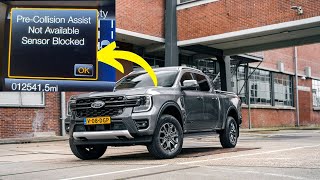
- "Pre-Collision Assist Not Available" warning message
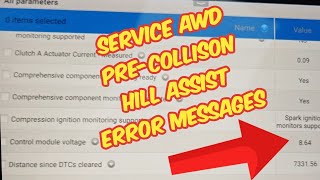
- "Hill Start Assist Not Available" warning message.
- "Service AdvanceTrac" warning message.
- "Adaptive Cruise Control Malfunction" warning message.
- "Collision Warning Malfunction" message.
- Replacing the steering angle sensor without first inspecting for the common ABS harness chafing issue. Given the high prevalence of the TSB-documented harness problem, this should be the first physical inspection performed.
- Replacing the steering angle sensor when the root cause is a software glitch that requires a simple PSCM update at the dealership.
- Performing a wheel alignment to center the steering wheel without also performing the required steering angle sensor calibration, which will cause the code to return.
Most Likely Causes

- ABS Wheel Speed Sensor Harness Chafing 🔴 High Probability → Shop ABS Wheel Speed Sensor Ford identified a design flaw on vehicles built on or before September 2, 2020, where the front ABS wheel speed sensor harness lacks sufficient clearance and can rub against the front wheels, damaging the wires. This is documented in TSB 20-2323 and TSB 20-2302.
How to confirm: With the front wheels removed, visually inspect the entire length of both front ABS wheel speed sensor harnesses. Look for signs of rubbing, abrasion, exposed copper wires, or electrical tape repairs, particularly in the area where the harness passes the suspension and inner wheel barrel.
Typical fix: Repair the damaged wire(s) using the official Ford service pigtail kit (Part No. LU2Z-14S411-FA). The procedure involves splicing the new pigtail, covering the repair with Coroplast tape, and using a new zip tie to secure the harness away from the wheel to prevent recurrence.
Est. part cost: $25-$60 for the pigtail kit - Control Module Software Issue 🟡 Medium Probability Ford Service Bulletin SSM 51437 applies to vehicles built on or before March 23, 2022. It states that a software glitch in the Power Steering Control Module (PSCM) can cause C0051:67 along with other codes, leading to various driver-assist warnings.
How to confirm: A Ford dealership or a qualified shop with access to Ford's Diagnostic and Repair System (FDRS) software can check the current software version of the PSCM. If it's outdated, this is the likely cause.
Typical fix: Update the Power Steering Control Module (PSCM) to the latest software level using the FDRS scan tool.
Est. part cost: $0 (labor for programming, may be covered under warranty) - Steering Column/Wheel Misalignment 🟡 Medium Probability → Shop Steering Column TSB 21-2252 documents an issue where a misalignment between the steering column shaft and the steering wheel can cause the steering angle sensor to generate fault code C0051:67.
How to confirm: This issue is typically confirmed when a diagnostic scan reveals both C0051:67 in the ABS module and C1B00:62 in the Power Steering Control Module (PSCM). A visual inspection may show the steering wheel is not centered when driving straight.
Typical fix: The fix involves a professional alignment of the steering column to the steering wheel, followed by a mandatory steering angle sensor calibration using a diagnostic scan tool.
Est. part cost: $0 (labor for adjustment and calibration) - Failed Steering Angle Sensor ⚪ Low Probability → Shop Steering Angle Sensor
How to confirm: After ruling out all TSB-related causes (wiring, software, alignment), use a scan tool with live data capability. Monitor the steering angle sensor's output while turning the wheel lock-to-lock. The reading should be smooth, consistent, and return to near 0° when centered. If the data is erratic, jumps, or is absent, the sensor is likely faulty.
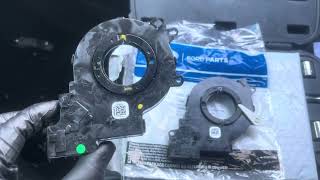
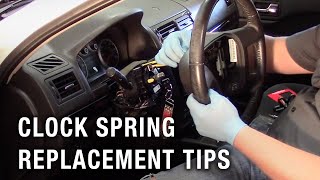
Typical fix: Replace the steering angle sensor, which is integrated into the clock spring assembly behind the steering wheel. After replacement, a calibration procedure must be performed.
Est. part cost: $170-$320
Rare But Worth Checking
- Failing ABS Module: → Shop ABS Control Module While uncommon, the ABS module itself can fail internally. This is a diagnosis of exclusion and should only be considered after all wiring, software, alignment, and sensor issues have been definitively ruled out by a professional.
- Weak 12V Battery: A failing or weak 12-volt battery can cause low voltage conditions that lead to communication errors between modules, sometimes triggering a C0051 code among other electrical faults. Always test the battery's health as a preliminary step.
Diagnosis Steps
- Scan all vehicle modules for DTCs. Note any codes accompanying C0051, as they are key to diagnosis (e.g., C0031, C1B00:62, U0415:00).
- If the vehicle was built on or before Sept 2, 2020, the first and most critical step is to physically inspect both front ABS wheel speed sensor harnesses for chafing damage, per TSB 20-2323.
- If code C1B00:62 is present with C0051:67, investigate the steering column alignment as per TSB 21-2252.
- If codes U0415:00 and U0418:86 are present and the vehicle was built on or before March 23, 2022, consult a dealer about a PSCM software update as per SSM 51437.
- Use a scan tool to view live data from the steering angle sensor. Turn the steering wheel lock-to-lock. The angle should change smoothly and return to near 0° when the wheels are straight.
- Test the 12V battery to ensure it is healthy and providing stable voltage, as low voltage can cause spurious electronic faults.
- If wiring, software, and alignment are all confirmed to be good, the steering angle sensor (clock spring) itself is the most likely failed component.
Parts You'll Likely Need
- ABS Wheel Speed Sensor Harness Pigtail Kit
(OEM #LU2Z-14S411-FA)— This is the most common failure point for vehicles built before Sept. 2020, according to Ford TSBs 20-2323 & 20-2302. The original harness rubs on the front wheel, and this kit is the official fix.
Trusted brands: Motorcraft
OEM price range: $45-$60
Aftermarket price range: $25-$40 - Steering Angle Sensor (Clock Spring)
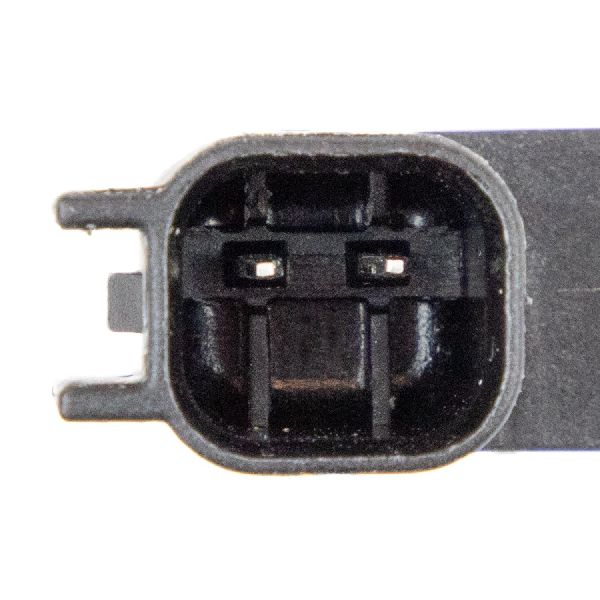
(OEM #GN1Z-14A664-D (w/o Heated Wheel), GN1Z-14A664-E (w/ Heated Wheel))— This part is replaced only when it is confirmed to be internally faulty after ruling out all other TSB-related causes. It is integrated with the clock spring.
Trusted brands: Motorcraft, Dorman
OEM price range: $170-$320
Aftermarket price range: $80-$200
Related Codes That Often Appear With This One
- C0031 — Indicates a fault with the front left ABS wheel speed sensor. It frequently appears with C0051 when the harness on that side is chafing, as documented in TSB 20-2323.
- C0034 — Indicates a fault with the front right ABS wheel speed sensor. It often accompanies C0051 when the harness on that side is damaged from rubbing, per TSB 20-2323.
- C1B00:62 — This PSCM code specifically points to a steering shaft/wheel misalignment that directly causes the C0051:67 fault in the ABS module, as outlined in TSB 21-2252.
- U0415:00 / U0418:86 — These communication codes may be stored in the power steering (PSCM) and image processing (IPMA) modules, respectively. They point towards the software issue described in SSM 51437 as the root cause for the C0051:67 code.
Technical Service Bulletins (TSBs) & Recalls
- SSM 51437: Addresses DTC C0051:67 related to a software issue in the Power Steering Control Module (PSCM) affecting driver-assist systems.
- TSB 21-2252: Details the diagnostic and repair procedure for a steering column misalignment causing C0051:67 and C1B00:62.
- TSB 20-2323 / TSB 20-2302: Describes the common issue of the front ABS wheel speed sensor harness chafing on the front wheels and provides the repair procedure.
Platform-Specific Known Issues
- TSB 20-2323 / TSB 20-2302: A known issue on vehicles built before 09/02/2020 where the ABS wheel speed sensor harness rubs on the front wheels, causing codes C0031, C0034, and/or C0051.
- TSB 21-2252: A documented problem where misalignment between the steering column shaft and steering wheel causes codes C1B00:62 and C0051:67.
- SSM 51437: A known software issue in the PSCM on vehicles built before 03/23/2022 that can trigger C0051:67 along with other DTCs, resulting in warnings for Adaptive Cruise Control and Forward Collision Avoidance systems.
Mechanic-Grade Diagnostic Values
- Steering Angle Sensor Live Data PID — expected: Should read at or very near 0° when the steering wheel is physically centered and the vehicle is driving straight.. Failure: A reading significantly different from 0° (e.g., 22°) when the wheel is centered indicates a calibration issue or a faulty sensor.
Hidden / Shadow Codes Worth Checking
- C0051:67: This specific sub-code, frequently cited in Ford TSBs for the Escape, translates to 'Signal Incorrect After Event'. This indicates the ABS module received a steering angle signal that was implausible or unexpected following a specific event, such as a key cycle or a signal from another module. (see via Ford's FDRS/IDS software or a professional-grade aftermarket scan tool capable of reading manufacturer-specific sub-codes.)
- C0051:28: Seen on other Ford platforms, this means 'Signal Bias Level Out of Range / Zero Adjustment Failure'. It points directly to a failure during the calibration process or an inability to find the zero point. (see via Professional-grade scan tool.)
Scan Tool Commands That Help
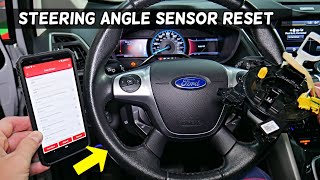
- FDRS, IDS, FORScan, Autel/Thinkdiag: Steering Angle Sensor (SAS) Calibration — This function is mandatory after replacing the steering angle sensor, clock spring, ABS module, or performing a wheel alignment. It must also be performed after any repairs related to TSB 21-2252 (steering column misalignment). Failure to calibrate will cause the C0051 code to return immediately.
- FDRS, IDS, capable aftermarket scanners: PSCM (Power Steering Control Module) Self-Test — As recommended by Ford SSM 47701 for a similar issue on F-150s, running a PSCM self-test can help isolate whether the fault originates in the power steering system before condemning the ABS module or steering angle sensor.
Wiring & Ground Locations
- ABS Module — Located in the engine bay, underneath the battery and battery tray. Access requires removing the windshield wipers, plastic cowl, battery, and tray.. This is the module that sets code C0051. All related wiring, including the wheel speed sensor harnesses and the steering angle sensor communication lines, terminates here. Physical access is required for connector inspection and module replacement.
- AWD Control Module Ground — The All-Wheel Drive (AWD) module is located under the front passenger seat. Access may require removing the seat or pushing it fully forward and cutting the carpet.. A known issue on 2020+ Escapes is a poor ground for this module through its case. This causes low voltage, module malfunction, and a cascade of communication (U-code) errors across the vehicle, which can mimic or accompany the symptoms of a C0051 fault. The fix is to add a dedicated ground wire to pin 46 of the connector and attach it to a chassis ground point, such as the module's M6 mounting stud.
Real Owner Repair Stories
- Reddit user on r/fordescape (2020 Ford Escape) — AWD Fault Service Required message, along with other electronic warnings. The user noted many owners were having the entire AWD module replaced by dealers, sometimes with the issue returning.
❌ Tried (didn't work) Dealer replacement of the entire AWD module.
✅ What actually fixed it The owner followed a forum guide to add a dedicated ground wire. They accessed the AWD module under the passenger seat, located the empty Pin 46 on the connector, inserted a new wire with a terminal, and grounded the other end to one of the module's own mounting posts. After this, they cleared the DTCs in the AWD and ABS modules, and the fault was resolved.
"I Checked Everything" — The Actual Cause
- While not a smoke test issue, a similar diagnostic trap exists for this vehicle's electronics. Multiple communication codes (U-codes) and warnings for various systems (AWD, AdvanceTrac, Pre-Collision) can appear alongside C0051. Diagnostics may point to a failed AWD control module due to low operating voltage shown on a scan tool (e.g., 10.9V when system voltage is 14V+). However, the root cause is often not the module itself, but an insufficient ground path through the module's mounting screws. The actual fix is to add a dedicated ground wire to the module's connector, a solution many technicians would miss without prior knowledge of this specific platform flaw.
OEM Part Supersession History
GN1Z-14A664-B→GN1Z-14A664-D— Part revision by manufacturer. The new part is the current service replacement.
Heads up: The new part number GN1Z-14A664-D is the correct replacement for vehicles without a heated steering wheel.
Model Year Variations Within This Range
- 2020 models built on or before Sept 2, 2020: These vehicles are prone to the front ABS wheel speed sensor harness chafing against the front wheels, as documented in TSB 20-2323. Later models have revised harness routing or clearance.
- 2020-2022 models: The electric power steering assist motor is located on the steering column itself, rather than on the steering rack. A failure of this motor requires replacement of the entire steering column assembly.
Helpful Videos
We Have This Part in Stock


The information in this article is provided for general reference and educational purposes only. Vehicle specifications, procedures, and part compatibility can vary by production date, trim level, and region. Always consult your vehicle's factory service manual and verify part numbers before purchasing or performing repairs. Safety-critical components such as airbags, seat belts, and braking systems should be installed by a qualified professional.
- Ford ESCAPE:
- 🧭 Diagnostic Flowchart
- 🎬 Helpful Videos
- 🛍️ Shop This Part
- What's Unique About the 2020-2022 Ford ESCAPE
- Symptoms You May Notice
- Most Likely Causes
- Rare But Worth Checking
- Diagnosis Steps
- Parts You'll Likely Need
- Related Codes That Often Appear With This One
- Technical Service Bulletins (TSBs) & Recalls
- Platform-Specific Known Issues
- Mechanic-Grade Diagnostic Values
- Hidden / Shadow Codes Worth Checking
- Scan Tool Commands That Help
- Wiring & Ground Locations
- Real Owner Repair Stories
- "I Checked Everything" — The Actual Cause
- OEM Part Supersession History
- Model Year Variations Within This Range
- 🎟️ Get 5% Off