

OBD-II Code C0052: Steering Wheel Position Sensor Signal 'A' Fault
What C0052 means, why it triggers, and how to fix it
- Code C0052 disables your vehicle's Electronic Stability Control (ESC) and traction control, drastically increasing the risk of losing control on wet or icy roads.
- Before replacing any parts, verify your battery voltage is above 11.5V and attempt a steering angle sensor calibration with a bidirectional scan tool.
- On 2005-2014 Subaru models, C0052 usually indicates a failed ABS/VDC pump module requiring a $1,200+ repair, not a faulty steering sensor.
- Expect to pay between $300 and $650 at an independent shop to replace a failed steering angle sensor, which includes the mandatory post-installation software calibration.
What Does C0052 Mean?
Code C0052 means the main computer detected a problem with 'Signal A' from the steering wheel position sensor. This sensor tells the computer the precise angle and direction you are turning the steering wheel. This data is essential for anti-lock brakes (ABS), electronic stability control (ESC), and advanced driver-assistance systems (ADAS).
Technical definition: The SAE/OBD-II definition is Steering Wheel Position Sensor 'Signal A' (Subfault). The Powertrain Control Module (PCM), Electronic Brake Control Module (EBCM), or Body Control Module (BCM) detected the voltage from the sensor's 'A' circuit is out of range (typically 0.5V to 4.5V), intermittent, or missing. Sensors use multiple signals (A, B, C) for redundancy; this code isolates a failure on the primary 'A' channel.
Can I Drive With C0052?
Yes, But With Caution. Yes, but drive with extreme caution. Your vehicle's electronic stability control (ESC), traction control, and ABS are disabled, drastically reducing safety in emergency maneuvers or on slippery surfaces. Vehicles with electric power steering often experience heavy, inconsistent, or complete loss of steering assist. Have the vehicle diagnosed and repaired immediately.
Common Causes
- Needs Steering Angle Sensor Calibration (Very Common) — After a wheel alignment, battery replacement, or suspension repair, the sensor's zero point no longer matches the straight-ahead position. The computer sees this discrepancy and sets the code.
- Faulty Steering Wheel Position Sensor (Very Common) — Internal components like coils, magnets, or optical discs wear out or get contaminated with dust, causing the signal to drop or become erratic.
- Damaged or Worn Clockspring (Common) — The clockspring houses wiring for the airbag and steering controls. Repetitive turning fatigues and breaks these wires, interrupting the sensor's signal.
- Damaged or Corroded Wiring/Connectors (Common) — The wiring harness running through the steering column is subject to movement. Wires fray or connector pins corrode from moisture, breaking the circuit.
- Low or Unstable Battery Voltage (Less Common) — A failing battery or bad alternator causes system voltage to drop below 11.5V. This triggers communication errors and spurious codes from the steering angle sensor.
- Control Module Fault or Software Anomaly (Rare) — The ABS, VDC, or BCM module interpreting the signal fails internally. This requires a hardware replacement or a manufacturer software update.
Symptoms
- Traction Control (TCS) or Stability Control (ESC/VDC) Warning Light On — The ESC system disables itself and illuminates a warning light on the dashboard because it requires steering angle data to function.
- ABS Warning Light On — The Anti-lock Braking System uses steering angle data to manage braking forces during a turn. A sensor fault triggers the ABS light.
- Loss of or Inconsistent Power Steering Assist — Electric power steering (EPS) systems use sensor input to determine assistance levels. Steering becomes heavy, feels notchy, or switches between assisted and unassisted.
- Airbag (SRS) Warning Light On — Advanced dual-stage airbag systems use steering wheel position to determine deployment angles. A fault triggers the airbag warning light as a precaution.
- Incorrect Steering Angle Displayed on Scan Tool (scan-tool only — no driver-felt sign) — When viewing live data, the steering angle value freezes, jumps erratically, or does not correspond to the actual movement of the steering wheel.
Diagnostic Flowchart
Tap your situation to follow the diagnostic path that matches what you're seeing on this code.
Common Fixes & Costs
- Steering Angle Sensor Calibration — Parts: $0, Labor: $100-$200 (often bundled with wheel alignment), ~0.8 hr book time (Professional)
- Steering Angle Sensor Replacement — Parts: $150-$400, Labor: $150-$250 (plus calibration cost), ~1.8 hr book time (Intermediate)
- Clockspring Replacement — Parts: $100-$350, Labor: $150-$300, ~1.5 hr book time (Intermediate)
- Wiring Repair — Parts: $10-$30, Labor: $100-$300, ~1.5 hr book time (Intermediate)
- ABS/VDC Control Module Repair or Replacement — Parts: $200-$500 (repair service) or $800-$2000+ (new part), Labor: $150-$300, ~2 hr book time (Professional)
Used vs. New Parts: Buying Guide
When a used part is worth it: Buying a used steering angle sensor or clockspring is not recommended due to its critical safety function. Only consider a used OEM part from a low-mileage donor vehicle if you are on a strict budget for an older, low-value car.
Donor-vehicle mileage cap: roughly under 60000 miles for the part to have meaningful remaining life.
Donor quality checklist:
- Match the OEM part number exactly.
- Ensure the donor vehicle was not in a frontal collision.
- Avoid parts from flood-damaged vehicles.
Decision logic:
- If Part is a clockspring assembly (contains airbag wiring) → Buy new OEM or a reputable aftermarket brand. The risk of airbag failure is not worth the savings.
- If Vehicle is newer or a primary family car → Buy new OEM or high-quality aftermarket for reliability and warranty.
- If Vehicle is >150K miles and a beater → A used OEM part is a budget-conscious choice, but accept the risk of a shorter lifespan.
Warranty tradeoff: Used parts offer a 30-90 day functional warranty. New aftermarket parts range from 1-year to limited lifetime. New OEM parts carry a 12-month/12,000-mile warranty.
Worst-case if a used part fails: $300-$600 if a used part fails prematurely, requiring repeat labor plus the cost of another part.
What Happens If You Wait — Timeline
- Immediate: Code C0052 is set. ABS, Traction Control (TCS), and Electronic Stability Control (ESC) warning lights illuminate and the systems are disabled. (MPG impact: 0%% · Added cost: $0)
- 0-1 month: Driving without ESC/TCS creates an immediate safety risk in emergency maneuvers. If the root cause is a bad alignment, uneven tire wear begins. Steering may feel heavy. (MPG impact: 0-1%% · Added cost: $0-$50 (Potential increased tire wear))
- 1-6 months: The vehicle fails state safety inspections checking for ABS/SRS warning lights. Continued driving with a bad alignment results in scalloped, worn tires requiring premature replacement. (MPG impact: 0-2%% · Added cost: $200-$1000 (Cost of new tires if alignment is the underlying cause))
- 6+ months: No direct progressive mechanical damage occurs. The driver becomes accustomed to operating a vehicle with compromised safety systems, drastically increasing the likelihood of a loss-of-control accident. (MPG impact: 0-2%% · Added cost: Potentially infinite (cost of an accident))
Cost of Not Fixing It
- Immediate: ABS, Traction Control, and Electronic Stability Control (ESC) are disabled. This creates a significant safety risk in emergency maneuvers or on wet/icy roads. (Added cost: Potentially infinite (cost of an accident))
- 1-6 months: If the fault causes incorrect steering feel or pulling, it leads to accelerated and uneven tire wear. (Added cost: $200-$1000 (cost of premature tire replacement))
- 6+ months: Continued operation without safety systems normalizes a high-risk driving condition. The primary safety risk grows with every trip. (Added cost: $0 (direct mechanical), High (accident risk))
Diagnosis Steps
- Read the Fault Codes
Use an OBD-II scanner capable of reading Chassis (C-codes) and ABS data to confirm C0052 is present. Note any other codes, especially U-codes (communication) or C0053/C0054 (other sensor channels).
Tools: OBD-II Scanner (with ABS/Chassis capability) (Beginner) - Analyze Live Data
Access the live data stream for the steering angle sensor. With wheels centered, the angle must read 0° (+/- 3°). Turn the wheel lock-to-lock; the reading must change smoothly. Jumps or freezes confirm a sensor or wiring issue.
Tools: OBD-II Scanner (with live data) (Beginner) - Attempt Recalibration
If the live data is smooth but off-center, a calibration fixes the issue. Use a bidirectional scan tool to perform the steering angle sensor zero-point calibration.
Tools: Professional Scan Tool (Intermediate) - Visually Inspect Wiring and Connectors
Inspect the wiring harness going to the steering angle sensor on the steering column. Look for chaffed insulation, frayed wires, or loose, corroded connector pins.
Tools: Flashlight, Trim removal tools (Intermediate) - Perform a 'Wiggle Test'
With the live data stream open, gently wiggle the wiring harness and connector for the steering angle sensor. If the readings jump or drop out, repair the loose connection.
Tools: OBD-II Scanner (with live data) (Intermediate) - Test the Sensor Circuit with a Multimeter
Backprobe the sensor's connector. Verify 5V reference voltage and a solid ground (<1Ω resistance). Test the Signal 'A' wire; voltage must sweep smoothly (e.g., 0.5V to 4.5V) as you turn the wheel. A static 0V or 5V indicates a short or open circuit.
Tools: Multimeter, Vehicle-specific wiring diagram (Advanced) - Check for Shorts to Ground
Disconnect the battery and unplug the sensor and ABS/VDC module connectors. Check for continuity between the Signal 'A' pin and chassis ground. Continuity confirms a short to ground in the harness.
Tools: Multimeter, Vehicle-specific wiring diagram (Advanced) - Analyze Signal with an Oscilloscope (Pro Tip)
Connect to the Signal 'A' and ground wires. A good sensor produces a clean analog voltage sweep or a crisp digital square wave. Look for signal dropouts or noise invisible to a multimeter.
Tools: Oscilloscope, Wiring diagram (Professional)
When This Code Triggers (Freeze-Frame Conditions)
- Vehicle Speed: 15-65 mph (Any speed above initial system check)
- System Voltage: 13.5-14.5 V (Normal operating voltage, engine running)
- Steering Input: Active (Fault logged during a turn when signal is expected but lost or erratic)
- Engine State: Running (ABS/ESC module is active only when the engine is on)
Related Codes
- C0053, C0054, C0055 — These codes indicate faults with other signal channels ('B', 'C', 'D') from the same steering wheel position sensor. Having C0052 with one of these confirms a faulty sensor assembly.
- C0710 — A GM-specific code for 'Steering Position Signal.' It is frequently triggered along with C0052 and confirms a failing steering angle sensor on Chevy and GMC trucks.
- C0052:14 / C0052:2F (Mazda) — Mazda-specific sub-codes. C0052:14 indicates an 'open circuit or short to ground'. C0052:2F indicates a 'signal malfunction' (erratic or stuck).
- U0126, U0429 — Communication codes. U0126 means 'Lost Communication With Steering Angle Sensor Module.' These suggest the control module is receiving no data, caused by a complete sensor failure or wiring break.
Climate & Environmental Factors
- Temperature Extremes: High heat increases resistance in circuits, while extreme cold makes wires and plastic connectors brittle. GM StabiliTrak issues are more common in warmer weather due to intermittent connections expanding with heat.
- High Humidity: Moisture accelerates corrosion on connector pins and circuit boards, leading to high-resistance connections that trigger the fault code.
How to Talk to a Mechanic About This Code
Say this: "I have a C0052 fault code and my traction control light is on. I'd like to book a diagnostic appointment. Please check the live data from the steering angle sensor to see if the signal is erratic or frozen, and confirm if a calibration is attempted before we discuss replacing the sensor."
This signals that you understand the common causes (bad sensor vs. calibration) and directs the technician to perform specific diagnostic steps. It prevents them from immediately quoting a sensor replacement without proper testing.
Avoid saying:
- 'My traction control light is on, can you just fix it?'
- 'I think I need a new steering sensor, how much is that?'
- 'Just do whatever it takes to get the light off.'
Questions to ask before authorizing the repair:
- What did the live data for the steering angle sensor show when you turned the wheel? Was it smooth, frozen, or jumpy?
- Did you confirm the sensor has proper power and ground before condemning it?
- If a replacement is needed, does your estimate include the mandatory steering angle sensor calibration after installation?
- What is the warranty on the part and the labor for this specific repair?
Where to Take It: Dealer vs Independent vs Chain
- Dealer:
Best for: Vehicles under warranty., Complex manufacturer-specific issues (like the Subaru VDC module fault or BMW optical sensor cleaning)., Very new models where independent shops lack updated tools.
Downsides: Highest labor rates, often 1.5-2x more than independent shops., Defaults to replacing an entire assembly rather than attempting a simple fix like cleaning. (Typical cost: +50% vs. baseline) - Independent Shop:
Best choice for most situations. A reputable independent shop with a bidirectional scan tool diagnoses and repairs C0052 effectively at a much better price than a dealer.
Best for: Most out-of-warranty vehicles where cost is a factor., Standard sensor replacements and calibrations on common makes/models., Building a long-term relationship with a trusted mechanic.
Downsides: Shop quality and diagnostic capability vary widely., May lack the latest dealer-level tools for very new European cars. (Typical cost: +0% vs. baseline) - Chain Shop:
Use with caution. They may perform an alignment but be unable to finish the job with the required calibration, forcing you to go elsewhere.
Best for: Performing a wheel alignment that may have caused the code (if they have the tool to perform the subsequent calibration).
Downsides: Technician skill varies dramatically., Lacks the specific bidirectional scan tools needed for calibration on all models., High pressure to upsell services. (Typical cost: -10% vs. baseline)
When to Walk Away From the Repair
If the estimated repair cost exceeds 40-50% of the car's private-party value, seriously consider selling or trading in the vehicle instead of repairing it.
- Car worth $3500, fix is $1800: Walk away. The repair cost is over 50% of the car's value. It's not a sound financial decision.
- Car worth $12000, fix is $750: Fix it. The repair cost is well under the threshold and restores critical safety systems.
- Car worth $8000, fix is $3500: Borderline. The cost is approaching 45% of the vehicle's value. Get a second opinion and assess the car's overall health before proceeding.
What Scan Tool You Need for This Code
Minimum: A scanner that reads and clears ABS/SRS/Chassis ('C') codes and displays live sensor data. A basic engine-only code reader will not work for C0052.
A cheap scanner won't see Chassis codes like C0052. You MUST view the live data stream from the steering angle sensor to see if its value is frozen or erratic. For the final repair, a bidirectional tool is needed to perform the mandatory calibration.
Budget: Autel AutoLink AL619 / Foxwell NT630 Plus (~$90) — Reads and clears ABS/SRS codes and displays live data. This is enough to perform initial diagnosis but CANNOT perform the final calibration.
Mid-range: Autel MaxiCOM MK808S / Foxwell NT510 Elite (~$350) — This is the sweet spot. These tools offer full bidirectional control, allowing you to perform the essential Steering Angle Sensor (SAS) zero-point calibration after a repair or alignment.
Professional: Autel MaxiSys Series (MS906+) / Launch X431 Series (~$900-2000) — Provides full, dealer-level diagnostics, including coding and programming for replacement modules, advanced topology mapping, and access to guided functions for complex procedures.
Rent vs buy: Auto parts stores do not rent out the bidirectional scanners required for SAS calibration. For C0052, you either need to buy a mid-range scanner or pay a shop for the diagnosis and calibration.
How to Clear the Code After You Fix It
- Perform mandatory steering angle sensor calibration using a bidirectional scan tool.
- Use the scan tool to clear the C-code from the ABS/BCM module.
- Perform a test drive that includes several turns and straight-line driving above 25 mph to confirm the light stays off.
Drive cycle (~15 minutes): Start the vehicle and drive for 10-15 minutes, including city turns and steady-speed driving. This allows the ABS/ESC module to confirm it is receiving a valid signal.
Readiness monitors affected: None
Watch out for:
- Forgetting to perform the mandatory zero-point calibration after replacing the sensor or performing an alignment.
- Clearing the code with a basic scanner without fixing the root cause; the code returns immediately.
- Disconnecting the battery, which does not clear the fault from the module's non-volatile memory.
Will This Fail Emissions / State Inspection?
No — by itself this code doesn't fail OBD inspection (but it can keep readiness monitors from setting, which causes a separate fail).
- California: This code is not an emissions failure, but the illuminated ABS/ESC/Airbag warning light causes a failure of the mandatory vehicle safety inspection.
- New York: NYS vehicle safety inspection explicitly checks for illuminated ABS and SRS warning lights. An active C0052 is an automatic failure.
- Texas: In the 17 counties requiring a full safety inspection, an illuminated ABS warning light is a criterion for failure.
Most Commonly Affected Vehicles
- Chevrolet / GMC Silverado, Sierra, Tahoe, Suburban, Yukon (2007-2014) — Extremely common failure causing 'Service StabiliTrak' messages. The sensor (part #25858693) is located at the base of the steering column. Replacement requires careful alignment.
- Subaru Legacy, Outback (2005-2014) — CRITICAL: On these models, C0052 indicates a 'Motor and motor relay current' fault within the VDC (ABS) hydraulic control unit, not the steering sensor. Diagnosis must focus on the VDC module's power and ground.
- BMW 3-Series (E90/E92), 5-Series (E60) (2004-2013) — Presents as the 'trifecta' of ABS, BRAKE, and DSC warning lights. BMW uses an optical sensor that gets dirty. Disassemble and clean the internal optical disc with isopropyl alcohol to resolve the fault.
- Ford Explorer (2011-2013) — Subject to safety recall 14S06 and extended coverage program 15N01 for faults in the Power Steering Control Module (PSCM) within the steering gear assembly, leading to a loss of power assist.
- Hyundai / Kia Sonata, Elantra, Optima, Sorento (2011-2018) — Failures of the steering angle sensor, often integrated with the clockspring assembly, are common. Replacement requires removing the steering wheel and airbag, followed by a mandatory calibration.
- Mazda Mazda3, Mazda6, CX-5 (2014-2020) — Presents with specific sub-codes. C0052:14 indicates an open circuit or short to ground. C0052:2F indicates an erratic or stuck signal, pointing to a faulty sensor.
- Toyota Camry, Corolla, RAV4 (2012-2021) — Steering angle sensor failure is a known issue. The sensor is located on the steering column behind the clockspring and requires calibration after replacement.
Manufacturer-Specific Notes
- Subaru: For 2005-2014 models, C0052 is defined as a 'Motor and motor relay current' fault. This points directly to a failure inside the ABS/VDC hydraulic control unit pump, NOT the steering angle sensor.
- BMW: The simultaneous appearance of ABS, BRAKE, and DSC/DTC lights is the 'trifecta.' A dirty optical disc inside the steering angle sensor is the primary cause. Clean it with isopropyl alcohol to restore function.
- General Motors (Chevy/GMC): On trucks and SUVs, this code is always accompanied by a 'Service StabiliTrak' message. The failure is so common that technicians diagnose it based on the message alone.
- Ford: On 2020-2021 Police Interceptor Utility vehicles, TSB SSM 49386 states code C0052 may be found in the Trailer Module (TRM) and should be disregarded if there are no symptoms.
Real Owner Stories
2013 Subaru Legacy with C0052 at 110K miles
ABS and traction control lights appeared suddenly. Owner assumed a bad steering sensor.
What they tried:
- Took the car to the dealer. The dealer diagnosed code C0052 as a 'Motor and motor relay current' fault.
- Owner was quoted $4,000 for a new VDC (ABS) hydraulic control unit.
Outcome: The issue was correctly identified as a failure within the VDC module itself, a known issue on these models. The high repair cost highlights the importance of diagnosing this specific Subaru quirk correctly before replacing the steering angle sensor.
Lesson: On 2005-2014 Subarus, C0052 points to the expensive VDC/ABS pump module, not the steering sensor. Confirm the specific definition of the code for your vehicle before buying parts.
2008 BMW 3-Series (E90) with 'Trifecta' lights
The ABS, BRAKE, and DSC warning lights (the 'trifecta') came on simultaneously. A scan confirmed a steering angle sensor fault.
What they tried:
- Instead of immediate replacement, the owner followed forum advice to clean the sensor.
- The owner removed the steering wheel and airbag, disassembled the sensor, and cleaned the internal optical disc with isopropyl alcohol.
Outcome: After reassembly and clearing codes, the fault was resolved. This saved the owner from purchasing a new sensor assembly, which costs several hundred dollars.
Lesson: For BMWs with optical steering angle sensors, a dirty optical disc is a common failure mode. Cleaning the disc is a viable, low-cost first step before replacement.
2010 Chevy Silverado with 'Service StabiliTrak' message
The 'Service StabiliTrak' message appeared on the dash with code C0052. This is an extremely common issue for this platform.
What they tried:
- The owner tried a 'wiggle test' on the sensor wiring at the base of the steering column but saw no change.
- Live data on a scan tool showed the steering angle was frozen.
Outcome: The steering angle sensor was replaced with an aftermarket Dorman part. After installation and a professional scan tool calibration, the code cleared permanently.
Lesson: On 2007-2014 GM trucks, the 'Service StabiliTrak' message combined with C0052 almost always indicates a failed steering angle sensor. Confirm with live data and replace the sensor.
2014 Toyota Tacoma after a dead battery
After a jump-start, the dashboard lit up with VSC and pre-collision malfunction errors.
What they tried:
- A local mechanic scanned the vehicle and found a fault for the steering angle sensor.
- The owner was told the sensor was likely damaged by a voltage spike.
Outcome: The owner replaced the steering angle sensor and had it calibrated, resolving the lights. However, simply driving the vehicle or performing a lock-to-lock turn often allows the system to re-learn the sensor's center point without parts replacement.
Lesson: A dead battery causes the steering angle sensor to lose calibration. Before replacing parts, try a manual recalibration: turn the wheel lock-to-lock, then drive straight for a short distance.
How to Prevent This Code From Triggering
- Insist on Steering Angle Sensor Calibration After Every Wheel Alignment (After any alignment) — When toe angles change, the steering wheel's center position changes. Failing to recalibrate tells the computer the car is turning when it's going straight, triggering C0052 and disabling ESC.
- Maintain a Healthy Battery and Clean Terminals (Every oil change) — The steering angle sensor and control module are sensitive to low voltage. A weak battery causes voltage drops that lead to communication errors and false fault codes.
- Be Careful During Steering Column Repairs (During related DIY repairs) — When removing a steering wheel, the clockspring spins freely. If not re-centered correctly upon installation, its internal ribbon cable tears instantly, breaking the connection for the airbag and steering angle sensor.
Frequently Asked Questions
What is the most common misdiagnosis for code C0052?
Immediately replacing the steering angle sensor without performing a full diagnosis. The code is frequently caused by needing a simple software calibration after a wheel alignment. On Subarus, the most common misdiagnosis is replacing the steering sensor when the code actually points to a failed ABS/VDC module.
Can a bad battery cause code C0052?
Yes. Control modules require a stable voltage above 11.5V to operate correctly. A weak battery or faulty alternator causes voltage drops that interrupt communication with the steering angle sensor, falsely triggering code C0052.
Can a bad clockspring cause code C0052?
Yes. The clockspring is a coil of wires connecting the steering wheel's electronics to the car. Because the steering angle sensor's wiring often passes through it, a broken wire inside the clockspring is a common cause of this code.
What is the 'trifecta' of warning lights on a BMW?
The 'trifecta' refers to the simultaneous illumination of the ABS, BRAKE, and DSC warning lights. This indicates a fault in the stability and braking system. A frequent cause for this combination is a dirty or faulty steering angle sensor.
Can I reset the C0052 code by disconnecting the battery?
No. Disconnecting the battery temporarily clears the dashboard lights, but it does not fix the underlying problem. The code is stored in non-volatile memory and returns as soon as the system runs its self-check.
What is a 'Service StabiliTrak' message?
This is a General Motors-specific message indicating a fault in the electronic stability control system. A bad steering angle sensor triggering code C0052 is one of the most common reasons this message appears on GM trucks and SUVs.
Do I need a wheel alignment after replacing the steering angle sensor?
An alignment is not required after replacing the sensor, but a software steering angle sensor calibration is mandatory. However, since an incorrect wheel alignment causes the C0052 code, the proper procedure is to perform an alignment first, then calibrate the sensor.
Key Takeaways
- Code C0052 disables your vehicle's Electronic Stability Control (ESC) and traction control, drastically increasing the risk of losing control on wet or icy roads.
- Before replacing any parts, verify your battery voltage is above 11.5V and attempt a steering angle sensor calibration with a bidirectional scan tool.
- On 2005-2014 Subaru models, C0052 usually indicates a failed ABS/VDC pump module requiring a $1,200+ repair, not a faulty steering sensor.
- Expect to pay between $300 and $650 at an independent shop to replace a failed steering angle sensor, which includes the mandatory post-installation software calibration.
Shop the Parts Behind C0052
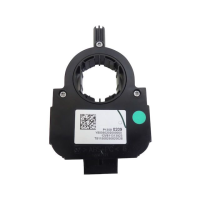
Below are the parts most often responsible for code C0052, ranked by how frequently each one is the actual culprit (per the diagnosis above). Tap any to see what we have for your vehicle.


The information in this article is provided for general reference and educational purposes only. Vehicle specifications, procedures, and part compatibility can vary by production date, trim level, and region. Always consult your vehicle's factory service manual and verify part numbers before purchasing or performing repairs. Safety-critical components such as airbags, seat belts, and braking systems should be installed by a qualified professional.
- 🧭 Diagnostic Flowchart
- 🛍️ Shop This Part
- What Does C0052 Mean?
- Can I Drive With C0052?
- Common Causes
- Symptoms
- Common Fixes & Costs
- Used vs. New Parts: Buying Guide
- What Happens If You Wait — Timeline
- Cost of Not Fixing It
- Diagnosis Steps
- When This Code Triggers (Freeze-Frame Conditions)
- Related Codes
- Climate & Environmental Factors
- How to Talk to a Mechanic About This Code
- Where to Take It: Dealer vs Independent vs Chain
- When to Walk Away From the Repair
- What Scan Tool You Need for This Code
- How to Clear the Code After You Fix It
- Will This Fail Emissions / State Inspection?
- Most Commonly Affected Vehicles
- Manufacturer-Specific Notes
- Real Owner Stories
- 2013 Subaru Legacy with C0052 at 110K miles
- 2008 BMW 3-Series (E90) with 'Trifecta' lights
- 2010 Chevy Silverado with 'Service StabiliTrak' message
- 2014 Toyota Tacoma after a dead battery
- How to Prevent This Code From Triggering
- Frequently Asked Questions
- What is the most common misdiagnosis for code C0052?
- Can a bad battery cause code C0052?
- Can a bad clockspring cause code C0052?
- What is the 'trifecta' of warning lights on a BMW?
- Can I reset the C0052 code by disconnecting the battery?
- What is a 'Service StabiliTrak' message?
- Do I need a wheel alignment after replacing the steering angle sensor?
- Key Takeaways
- 🎟️ Get 5% Off