

OBD-II Code C0054: Steering Angle Sensor Circuit 'C' Malfunction
What C0054 means, why it triggers, and how to fix it
- Code C0054 disables your ABS and stability control systems, significantly increasing your risk of a skid or rollover during emergency maneuvers.
- On 2012-2017 Subaru models, a faulty $40 brake light switch causes over 90% of C0054 codes; check NHTSA recall WUE-90 for a free dealer fix.
- Replacing the steering angle sensor costs $300 to $700 and requires a mandatory electronic zero-point calibration using a bidirectional scan tool.
- If this code appears immediately after a wheel alignment or battery replacement, the sensor simply needs a $100 to $180 recalibration, not a replacement.
What Does C0054 Mean?
Your car's computer lost the 'Signal C' input from the steering angle sensor. This sensor tracks how far and fast you turn the steering wheel—data essential for the ABS and stability control systems to prevent skidding.
Technical definition: The SAE/OBD-II definition is Steering Wheel Position Sensor 'Signal C' (Subfault). The ABS or ESC control module detected a fault in the 'Signal C' circuit of the steering wheel position sensor over the CAN bus network.
Can I Drive With C0054?
Yes, But With Caution. You can drive, but critical safety systems (Anti-lock Braking System and Electronic Stability Control) are disabled, significantly increasing the risk of skidding or rollover during emergency maneuvers. Your driver's airbag is likely disabled. On Subarus, your brake lights may also fail. Drive with extreme caution and fix this immediately.
Common Causes
- Faulty Steering Angle Sensor (Very Common) — Internal semiconductor components or optical elements wear out, causing a complete loss of the 'Signal C' output.
- Faulty Brake Light Switch (Subaru) (Very Common) — On 2012-2017 Subarus, a defective brake light switch feeds conflicting data to the computer, triggering C0054. This is a documented recall (WUE-90).
- Software or Calibration Issue (Common) — Failing to recalibrate the sensor after a wheel alignment or battery replacement causes the computer to reject the sensor's signal.
- Damaged Wiring or Poor Connections (Common) — Wires running from the sensor to the control module fray or pinch inside the steering column. Connector pins corrode from moisture.
- Low Battery Voltage (Less Common) — A weak battery causes a voltage drop during startup, preventing control modules from initializing correctly and setting false codes.
- Failing ABS/VDC Control Module (Rare) — The control module fails to process incoming signals due to cracked internal solder joints or memory corruption.
Symptoms
- ABS and Traction Control Lights On — The ABS and ESC/VDC warning lights illuminate simultaneously, disabling advanced safety features like lane-keep assist.
- Airbag (SRS) Warning Light On — The system disables the driver's airbag as a precaution because it cannot determine the steering wheel's position.
- Brake Lights Malfunction (Subaru) — On Subarus, brake lights fail to illuminate when pressing the pedal, or stay on continuously.
- Cruise Control Disabled — Cruise control refuses to engage because it lacks reliable steering and braking data.
Diagnostic Flowchart
Tap your situation to follow the diagnostic path that matches what you're seeing on this code.
Common Fixes & Costs
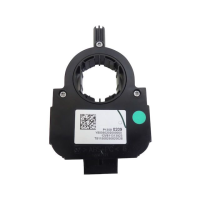
- Replace Steering Angle Sensor — Parts: $150-$400, Labor: $150-$300, ~2.5 hr book time (Intermediate)
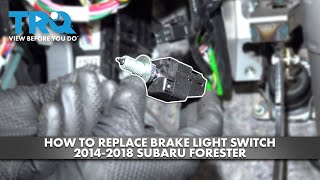
- Replace Brake Light Switch (Subaru) — Parts: $25-$60, Labor: $75-$150, ~0.8 hr book time (DIY)
- Recalibrate Steering Angle Sensor — Parts: $0, Labor: $100-$180, ~0.7 hr book time (Professional)
- Repair Damaged Wiring or Connector — Parts: $5-$30, Labor: $100-$250, ~1.5 hr book time (Intermediate)
- Replace ABS/VDC Control Module — Parts: $800-$1,500, Labor: $150-$300, ~2.0 hr book time (Professional)
DIY vs Professional
- Replace Brake Light Switch (Subaru) — Beginner: Yes
Tools: Basic hand tools, multimeter, ruler. - Replace Steering Angle Sensor — Beginner: No
Tools: Socket set, trim tools, steering wheel puller, bidirectional scan tool. - Recalibrate Steering Angle Sensor — Beginner: No
Tools: Professional-grade bidirectional scan tool.
Used vs. New Parts: Buying Guide
When a used part is worth it: Only when purchasing a complete used steering column assembly. For individual electronic sensors or brake switches, buy new.
Donor-vehicle mileage cap: roughly under 60000 miles for the part to have meaningful remaining life.
Donor quality checklist:
- Verify the donor vehicle was not in a frontal collision.
- Match the part number exactly.
- Avoid parts from flood-damaged environments.
Decision logic:
- If The fix is a Subaru brake light switch → Buy new OEM. The redesigned part solves the original flaw.
- If The fix is the steering angle sensor → Buy new OEM or premium aftermarket. The risk of paying for labor twice outweighs the savings.
Warranty tradeoff: Used parts typically have a 30-90 day warranty. New aftermarket parts offer 1-year to limited lifetime warranties.
Worst-case if a used part fails: $300-$600 if a used sensor fails, requiring a second part purchase and repeat labor.
What Happens If You Wait — Timeline
- Immediate: Code sets, ABS and Stability Control warning lights illuminate. Safety systems are completely disabled. (MPG impact: 0%% · Added cost: $0. The cost is a significant, immediate increase in safety risk.)
- 1-3 months: The vehicle fails state safety inspections due to illuminated dashboard warning lights. (MPG impact: 0%% · Added cost: $25-$100 in potential fines and re-inspection fees.)
- 3-12 months: The driver becomes complacent with disabled safety systems, leading to overconfidence in bad weather. (MPG impact: 0%% · Added cost: $0 in direct costs, but cumulative accident risk increases.)
Cost of Not Fixing It
- Immediate: ABS and Stability/Traction Control systems are disabled. Increased risk of skidding or rollover. (Added cost: Potential cost of an accident.)
- 1-6 months: Vehicle fails state safety inspection due to illuminated dashboard warning lights. (Added cost: $25-$100 in fines and re-inspection fees.)
- 6+ months: Driver becomes accustomed to disabled safety systems, leading to overconfidence and cumulative accident risk. (Added cost: Significant liability in the event of an at-fault accident.)
Diagnosis Steps
- Read Codes and Check Recalls
Scan for Chassis ('C') codes. If C1531 is present on a Subaru, the brake switch is the culprit. Check your VIN on the NHTSA website for the Subaru WUE-90 recall.
Tools: Advanced OBD-II Scanner, Internet Access (Beginner) - Check Live Data
View the steering angle sensor live data. The angle must read 0° (+/- 5°) with wheels straight and change smoothly as you turn. A stuck or erratic value confirms a sensor or wiring fault.
Tools: Advanced OBD-II Scanner (Intermediate) - Test the Brake Light Switch (Subaru)
Check for continuity as the switch plunger is pressed. Subaru TSB 06-48-15 specifies the pedal stroke before lights activate must be 3mm to 7mm. Replace if out of spec.
Tools: Multimeter, Ruler/Feeler Gauge (Intermediate) - Attempt Sensor Recalibration
Perform a steering angle sensor zero-point calibration. If the calibration fails or the code returns immediately, you have a hard hardware failure.
Tools: High-end Bi-directional Scanner (Advanced) - Perform a 'Wiggle Test'
Watch the live data stream while gently wiggling the wiring harness near the steering column. If the reading drops out, you found an intermittent wiring break.
Tools: Advanced OBD-II Scanner (Advanced) - Test the Sensor Circuit
Disconnect the sensor and verify a 5V reference voltage and a solid ground (under 0.1V). Check continuity on the 'Signal C' wire between the sensor and ABS module.
Tools: Multimeter, Vehicle-specific wiring diagram (Advanced)
When This Code Triggers (Freeze-Frame Conditions)
- Vehicle Speed: 15-45 mph (During a turn or on initial startup self-test)
- Steering Angle: Erratic or No Signal (Module expected a changing value but received none)
- System Voltage: 11.5-14.5V (Normal operating voltage; rules out low voltage as primary cause)
Related Codes
- C1531 — This Subaru-specific code for 'Brake Switch Off Stuck' confirms brake switch failure. If present with C0054, replace the brake switch.
- C0055 — Indicates a fault with 'Signal D' from the same sensor. Seeing both C0054 and C0055 confirms the sensor has an internal multi-circuit failure.
- C0071 — Relates to the yaw rate sensor. Helps differentiate between steering input issues (C0054) and actual vehicle rotation issues (C0071).
Climate & Environmental Factors
- Chemical Contamination (Subaru): Silicone gas from interior cleaners ruins brake switch contacts, forming a non-conductive layer that triggers C0054.
- Humidity and Road Salt: Moisture penetrates unprotected connectors, causing pin corrosion and high resistance that interrupts the 'Signal C' circuit.
- Cold Weather: Drops battery voltage during startup, triggering false module communication codes.
How to Talk to a Mechanic About This Code
Say this: "I have a C0054 code and my ABS/Traction Control lights are on. If it's a Subaru, please inspect the brake light switch and check for the WUE-90 recall. For any other make, check the steering angle sensor live data and wiring before quoting a sensor replacement. Is calibration included in your quote?"
Directs the mechanic to perform efficient diagnostic steps rather than replacing the most expensive part. Mentioning 'live data' and 'calibration' signals you understand the technical requirements.
Avoid saying:
- 'My traction control light is on, can you fix it?'
- 'Just replace the steering angle sensor.'
- 'I'm not sure what's wrong, just do whatever it takes.'
Questions to ask before authorizing the repair:
- Did you check the live data from the steering angle sensor? What did it show?
- Is the final price inclusive of the mandatory steering angle sensor calibration?
- (For Subaru) Have you confirmed my VIN is not eligible for the free brake light switch recall?
- What is the warranty on the parts and labor for this specific repair?
Where to Take It: Dealer vs Independent vs Chain
- Dealer:
Best fit for Subaru owners due to the high likelihood of a free recall repair. Strong choice for software-related issues.
Best for: Subaru vehicles, to get the brake light switch recall (WUE-90) performed for free., Vehicles still under warranty., Complex electrical issues requiring manufacturer-specific software updates.
Downsides: Highest labor rates., Defaults to replacing entire assemblies. (Typical cost: +50% vs. baseline) - Independent Shop:
Excellent choice, provided you verify they have the necessary calibration equipment.
Best for: Out-of-warranty vehicles with sensor or wiring failures.
Downsides: Must confirm they have a bidirectional scan tool capable of performing the steering angle sensor calibration. (Typical cost: +0% vs. baseline) - Chain Shop:
Use with caution. Acceptable for straightforward parts replacement only if you confirm they can perform the SAS calibration.
Best for: Simple diagnostics like reading the code.
Downsides: Technician skill varies widely., Often lack the advanced bidirectional scanners needed for mandatory calibration. (Typical cost: -10% vs. baseline)
When to Walk Away From the Repair
If the estimated repair cost for the C0054 fault exceeds 40-50% of your car's current private-party value, consider selling or trading in the vehicle.
- Car worth $4000, fix is $700: Fix it. The repair cost is under the 50% threshold and restores critical safety features.
- Car worth $3000, fix is $1600: Walk away. The repair cost is over 50% of the car's value.
- Car worth $8000, fix is $60: Fix it immediately. Typical for a Subaru needing only the inexpensive brake light switch.
What Scan Tool You Need for This Code
Minimum: A scanner that reads Chassis (C-prefix) codes and views live sensor data for the steering angle sensor.
A basic $20 code reader cannot see Chassis codes or display live steering angle data to determine if the sensor is dead, intermittent, or out of calibration.
Budget: BlueDriver Pro (~$100) — Reads Chassis codes and displays live data. Lacks bidirectional capability to perform the SAS calibration.
Mid-range: Foxwell NT510 Elite (~$150) — Minimum recommended for DIY. Reads codes, shows live data, and performs the Steering Angle Sensor (SAS) calibration.
Professional: Autel MaxiCOM MK808 (~$500) — Offers full bidirectional control to read codes, view live data, and perform SAS calibration with OEM-level precision.
Rent vs buy: Renting is not viable. Parts stores lend basic code readers, not bidirectional scanners capable of performing the required steering angle sensor calibration.
How to Clear the Code After You Fix It
- Reconnect battery if disconnected
- Use an advanced OBD-II scan tool to clear codes from the ABS/ESC module
- Perform steering angle sensor calibration/relearn procedure with the scan tool
- Perform a test drive to confirm the fix
Drive cycle (~15 minutes): Drive straight above 20 mph for a short distance. Make a few 90-degree left and right turns. This allows the ABS/ESC module to verify plausible data from the sensor.
Readiness monitors affected: Not applicable to emissions readiness monitors
Watch out for:
- Using a basic code reader that cannot access Chassis (C) codes.
- Forgetting to perform the mandatory steering angle sensor calibration after replacement.
- Assuming disconnecting the battery clears the code from the ABS module's memory.
Will This Fail Emissions / State Inspection?
No — by itself this code doesn't fail OBD inspection (but it can keep readiness monitors from setting, which causes a separate fail).
- California: The code won't fail the OBD-II emissions portion, but the illuminated ABS or Traction Control light results in a safety inspection failure.
- New York: Requires all dashboard warning lights to be off. An illuminated ABS light is an automatic failure.
- Texas: The ABS lamp must illuminate when the key is turned on and then turn off. If it stays on, the vehicle fails inspection.
Most Commonly Affected Vehicles
- Subaru Impreza / Crosstrek (2012-2017) — Extremely common due to a faulty brake light switch. Covered by NHTSA recall 19V149000 (WUE-90).
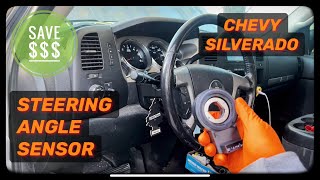
- Chevrolet / GMC Silverado / Sierra (2007-2014) — Common failure of the steering angle sensor or a loose connector under the dash (addressed in GM TSB PI0639D).
- Ford F-150 (2015-2020) — Prone to sensor faults and missing calibration codes (C0051:54). TSB 20-2046 advises an ABS module software update.
- BMW 3-Series / 5-Series (2005-2013) — Known for the 'trifecta' of DSC, ABS, and BRAKE lights. Often fixed by a lock-to-lock steering wheel recalibration after a battery change.
- Toyota Corolla (2019-2022) — Premature failure of the steering angle sensor, often requiring replacement of the entire clock spring assembly.
Manufacturer-Specific Notes
- Subaru: Brake light switch contamination from silicone gas causes C0054. Subaru issued NHTSA recall WUE-90 for a redesigned switch.
- General Motors (GM): On 2007-2014 trucks, the steering angle sensor connector becomes loose. A TSB suggests shimming the connector for a tighter fit.
- BMW: Calibration loss occurs frequently after a battery replacement. Attempt a recalibration by turning the steering wheel full lock-to-lock before replacing parts.
- Ford: On 2015+ F-150s, missing calibration codes are often software issues. TSB 20-2046 advises an ABS module software update before hardware replacement.
Real Owner Stories
2013 Subaru Crosstrek at 110K miles
ABS, traction control, and hill assist lights came on simultaneously. Cruise control stopped working.
What they tried:
- Owner suspected the common brake light switch issue.
- Purchased a new switch (part #83311FJ001) for $40.
Outcome: Replaced the brake light switch in 15 minutes. All warning lights went off, avoiding an expensive misdiagnosis.
Lesson: On a Subaru with C0054, the brake light switch is the prime suspect. Check for recall WUE-90 first.
2011 Chevy Silverado at 150K miles
'Service Stabilitrak' message appeared intermittently on bumpy roads.
What they tried:
- Mechanic quoted $500 for a steering angle sensor replacement.
- Owner found GM TSB #PI0639D regarding a loose connector.
Outcome: Cleaned the terminals and added a foam shim to the connector housing. The code did not return. Total cost was near zero.
Lesson: For GM trucks, an intermittent C0054 is often a poor connection. Check TSBs before replacing parts.
2021 Toyota Corolla after minor accident
After a wheel alignment, the traction control light came on with code C0054.
What they tried:
- Initial shop failed to perform a steering angle sensor calibration.
- Took the car to a dealership.
Outcome: Dealership performed a zero-point calibration for $150, avoiding an $800 sensor replacement quote from a local mechanic.
Lesson: If C0054 appears immediately after an alignment, the cause is a missed calibration step, not a failed part.
How to Prevent This Code From Triggering
- Avoid Silicone-Based Interior Cleaners (Subaru) (Always) — Silicone gas ruins the brake light switch contacts. Use silicone-free cleaners inside the cabin.
- Maintain Battery Health (Every 6 months) — Low voltage during startup causes communication glitches, setting false codes.
- Insist on Calibration After Service (After every alignment or battery change) — Confirm your shop performs a steering angle sensor recalibration after an alignment to prevent procedural codes.
Frequently Asked Questions
Can I just clear the code?
You can clear it, but a hardware fault triggers it again immediately. A 'hard reset' by disconnecting the battery for 15 minutes fixes temporary voltage glitches. It will not fix a failed part.
What are the most common misdiagnosis mistakes for C0054?
On Subarus, replacing the expensive steering angle sensor before checking the $40 brake light switch is the top mistake. Across all makes, forgetting to perform the mandatory electronic calibration after replacing the sensor guarantees the code returns.
Do I need a wheel alignment after replacing the sensor?
No, a physical wheel alignment is not required. However, you must perform an electronic steering angle sensor calibration with a bidirectional scan tool. This teaches the car the new sensor's 'straight-ahead' zero point.
Why did my airbag light come on?
The airbag system requires steering wheel position data to deploy the driver's airbag correctly during an offset collision. When this signal drops, the system disables the airbag to prevent improper deployment and illuminates the warning light.
Is the steering angle sensor the same as a clock spring?
No, but they are often packaged together behind the steering wheel. The clock spring is a rotary electrical connector for the airbag and horn. The steering angle sensor is a separate electronic component that reads the wheel's position.
Key Takeaways
- Code C0054 disables your ABS and stability control systems, significantly increasing your risk of a skid or rollover during emergency maneuvers.
- On 2012-2017 Subaru models, a faulty $40 brake light switch causes over 90% of C0054 codes; check NHTSA recall WUE-90 for a free dealer fix.
- Replacing the steering angle sensor costs $300 to $700 and requires a mandatory electronic zero-point calibration using a bidirectional scan tool.
- If this code appears immediately after a wheel alignment or battery replacement, the sensor simply needs a $100 to $180 recalibration, not a replacement.
Helpful Videos
Shop the Parts Behind C0054
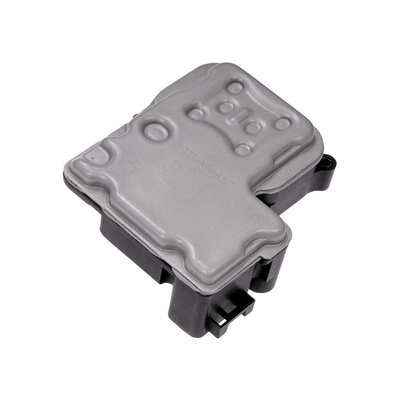
Below are the parts most often responsible for code C0054, ranked by how frequently each one is the actual culprit (per the diagnosis above). Tap any to see what we have for your vehicle.


The information in this article is provided for general reference and educational purposes only. Vehicle specifications, procedures, and part compatibility can vary by production date, trim level, and region. Always consult your vehicle's factory service manual and verify part numbers before purchasing or performing repairs. Safety-critical components such as airbags, seat belts, and braking systems should be installed by a qualified professional.
- 🧭 Diagnostic Flowchart
- 🎬 Helpful Videos
- 🛍️ Shop This Part
- What Does C0054 Mean?
- Can I Drive With C0054?
- Common Causes
- Symptoms
- Common Fixes & Costs
- DIY vs Professional
- Used vs. New Parts: Buying Guide
- What Happens If You Wait — Timeline
- Cost of Not Fixing It
- Diagnosis Steps
- When This Code Triggers (Freeze-Frame Conditions)
- Related Codes
- Climate & Environmental Factors
- How to Talk to a Mechanic About This Code
- Where to Take It: Dealer vs Independent vs Chain
- When to Walk Away From the Repair
- What Scan Tool You Need for This Code
- How to Clear the Code After You Fix It
- Will This Fail Emissions / State Inspection?
- Most Commonly Affected Vehicles
- Manufacturer-Specific Notes
- Real Owner Stories
- 2013 Subaru Crosstrek at 110K miles
- 2011 Chevy Silverado at 150K miles
- 2021 Toyota Corolla after minor accident
- How to Prevent This Code From Triggering
- Frequently Asked Questions
- Can I just clear the code?
- What are the most common misdiagnosis mistakes for C0054?
- Do I need a wheel alignment after replacing the sensor?
- Why did my airbag light come on?
- Is the steering angle sensor the same as a clock spring?
- Key Takeaways
- 🎟️ Get 5% Off