

C0055 on 2007-2013 Cadillac Escalade ESV: Rear Speed Sensor Circuit Causes and Fixes
On a 2007-2013 Escalade ESV, C0055 means there's a fault in the rear vehicle speed sensor circuit. This is almost always caused by a failed sensor on the transfer case (4WD) or transmission (2WD). A new sensor costs about $30-$75 and is a simple DIY fix. Before replacing, inspect the wiring harness that runs over the transmission for chafing, a very common failure point.
- C0055 on your Escalade points to the single rear speed sensor on the transmission or transfer case, not sensors at the wheels.
- The most likely fix is replacing the Vehicle Speed Sensor (VSS), an inexpensive part that is relatively easy to access.
- Before replacing the sensor, inspect the wiring harness above the transmission for chafing or damage, as this is another common failure point.
- If a new sensor fails quickly, have a mechanic check for a worn output shaft bushing inside the transfer case, a known issue on these vehicles.
What's Unique About the 2007-2013 Cadillac ESCALADE ESV
The GMT900 platform, which includes this Escalade, uses a single speed sensor for the rear axle, making it a critical point of failure for the ABS and StabiliTrak systems. A unique and important issue for these trucks, documented in GM Technical Service Bulletins, is that internal wear inside the transfer case can cause this code. Specifically, a worn output shaft bushing can allow the tone wheel to wobble, generating an erratic signal or even physically destroying the new sensor. Another very common failure point is the wiring harness chafing where it runs over the top of the transmission, between the firewall and the back of the engine.
Diagnostic Flowchart
Tap your situation to follow the diagnostic path that matches what you're seeing on this vehicle.
Symptoms You May Notice
- Service StabiliTrak or Traction Control message on the Driver Information Center
- ABS warning light is on.
- Cruise control is inoperative.
- In some cases, the speedometer may behave erratically or be delayed in responding.
- Vehicle may feel sluggish or exhibit harsh, erratic transmission shifting.
- Brake pedal feels different or makes a grinding/buzzing noise at low speeds as the ABS incorrectly activates. 🎬 Watch: How this sensor fault causes brake lock up and light issues.
- Replacing the front wheel speed sensors. This code specifically points to the single rear sensor circuit.
- Replacing the EBCM or PCM without first diagnosing the sensor, wiring, and mechanical tone wheel condition.
- Confusing the single rear VSS on the transmission/transfer case with individual ABS sensors at each rear wheel, which this platform does not have.
Most Likely Causes
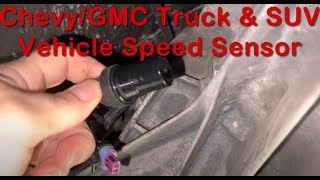
- Failed Vehicle Speed Sensor (VSS) 🔴 High Probability → Shop Drive Shaft Sensor The sensor is mounted on the transmission/transfer case and is subject to heat, vibration, and potential fluid contamination over its service life. It is the most frequently replaced part for this code.
How to confirm: Use a scan tool to observe the rear wheel speed signal. If it is erratic, drops to zero, or is absent while the vehicle is moving, the sensor is the primary suspect. Resistance across the two pins should be between 1300-2900 ohms. The sensor is held by a single 13mm or 19mm bolt.
Typical fix: Replace the vehicle speed sensor on the transfer case (4WD) or transmission tail shaft (2WD). The new sensor should come with a new O-ring; lubricate it with transmission fluid before installation. 🎬 Watch: How a faulty speed sensor causes erratic shifting and speedometer issues.
Est. part cost: $30-$75 - Damaged Wiring or Connector 🟡 Medium Probability The wiring harness runs over the top of the transmission and can be susceptible to chafing against the transmission tunnel or heat shield, or damage from heat and road debris. This is a very well-documented failure point in owner forums.
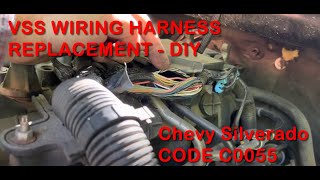
How to confirm: Visually inspect the wiring harness from the sensor up towards the main vehicle harness, especially the section between the back of the engine and the firewall. 🎬 See this walkthrough on tracing and repairing damaged VSS wiring. Check for melted, frayed, or corroded wires. Test for continuity, shorts to ground, or shorts to power using a multimeter.
Typical fix: Repair the damaged section of the wiring harness or replace the pigtail connector. In some cases, a new harness extension is required. The wires are a twisted pair and must be repaired correctly to avoid signal interference.
Est. part cost: $15-$40 - Excessive Tone Wheel / Output Shaft Movement ⚪ Low Probability As cited in TSB #PIP4966B, wear in the transfer case output shaft bushing or slip yoke bushing can cause excessive play. This allows the tone wheel (which the sensor reads) to wobble, creating an erratic signal or physically striking and destroying the sensor.
How to confirm: After removing the speed sensor, attempt to move the output shaft and tone wheel by hand. Any significant side-to-side or up-and-down play indicates a problem. You may also see strike marks on the old sensor's tip.
Typical fix: This is a major repair requiring removal and disassembly of the transfer case to replace the worn bushing and any related seals or bearings.
Est. part cost: $50-$200 in parts, but significant labor
Rare But Worth Checking
- Faulty Electronic Brake Control Module (EBCM): → Shop ABS Control Module This is uncommon. All other possibilities, especially wiring and the sensor itself, should be thoroughly ruled out before condemning the EBCM. TSB #PIT4815C provides advanced diagnostic steps for testing the signal at the EBCM to confirm if the module is receiving a valid signal.
Diagnosis Steps
- Connect a professional scan tool capable of reading ABS codes. Confirm C0055 is present and check for any symptom bytes (e.g., '00' for circuit fault, '5A' for erratic signal).
- Monitor the 'Rear Wheel Speed' or 'Vehicle Speed' PID in the EBCM data list while driving. Watch for the signal to drop out, jump erratically, or fail to register.
- Raise and support the vehicle safely. Locate the speed sensor on the rear of the transfer case (4WD) or transmission (2WD).
- Thoroughly inspect the sensor's electrical connector and the wiring harness for corrosion, chafing, or heat damage, paying close attention to the area where the harness goes over the transmission.
- Disconnect the sensor. Remove the single retaining bolt (typically 13mm or 19mm) and pull the sensor out of its housing.
- Inspect the tip of the sensor for any signs of physical contact or damage. Inspect the tone wheel through the sensor hole for visible damage or looseness.
- As per TSB #PIP4966B, check for excessive movement of the output shaft and tone wheel. Any noticeable play is a sign of internal transfer case/transmission wear.
- If no mechanical issues are found, test the sensor's internal resistance with a multimeter. A good sensor should read between 1300-2900 ohms. If the reading is out of spec or open, replace the sensor.
- If a new sensor does not resolve the issue, perform circuit integrity tests (checking for continuity, shorts, and opens) on the signal and ground wires between the sensor connector and the EBCM. TSB #PIT4815C provides specific instructions for testing the frequency on circuit 817 at the EBCM.
- If the sensor, wiring, and mechanicals are all confirmed good, the EBCM itself may be faulty, but this is rare.
Parts You'll Likely Need
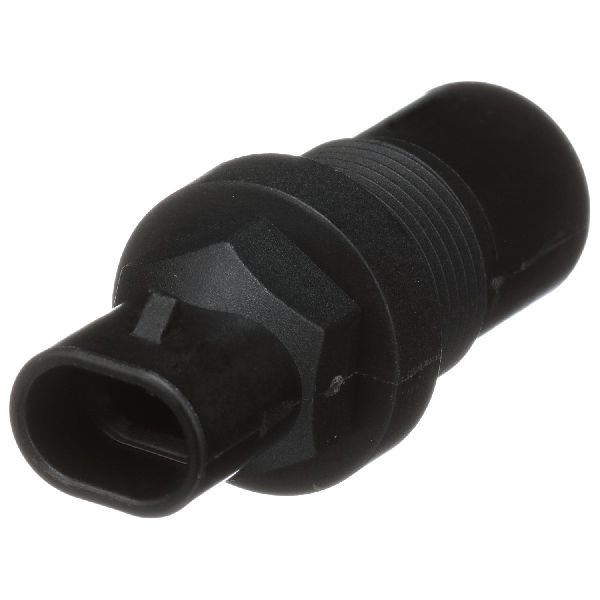
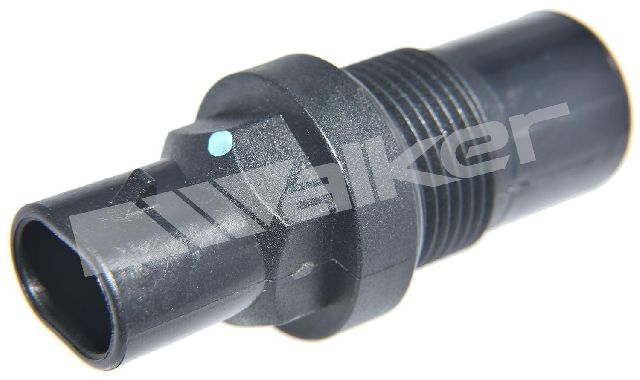
- Vehicle Speed Sensor (VSS) / Transfer Case Output Speed Sensor
(OEM #19302667)— This is the sensor that reads the rear axle speed from the transfer case or transmission. It is the most common part to fail, triggering code C0055.
Trusted brands: ACDelco (OE), Standard Motor Products, NTK, Dorman
OEM price range: $50-$75
Aftermarket price range: $25-$55 - VSS Connector Pigtail
(OEM #Contact Dealer)— If the wiring is corroded or damaged at the sensor connector, replacing the pigtail is the standard repair. The harness is also known to chafe further up, which may require a more involved wiring repair.
Trusted brands: Dorman, ACDelco
OEM price range: $25-$40
Aftermarket price range: $15-$30
Related Codes That Often Appear With This One
- P2771 — TSB #PIP4966B explicitly links C0055 and P2771 (Four-Wheel Drive (4WD) Low Switch Circuit) as potentially appearing together, suggesting a related issue in the transfer case area.
- C0561 — C0561 is an informational code indicating the Stabilitrak system has been disabled due to a fault in another system. C0055 is a very common root cause for C0561.
Technical Service Bulletins (TSBs) & Recalls
- PIP4966B: Mentions C0055 with a service anti-lock brake message, advises checking for excess movement of the tone wheel or output shaft.
- PIT4815C: Provides specific electrical diagnostic steps for C0055 when the ABS light is on, detailing how to test various signal circuits (817, 821, 822, 1827, 6399) with a multimeter set to Hertz.
Platform-Specific Known Issues
- TSB #PIP4966B notes that C0055 can be caused by excess movement of the tone wheel or output shaft, pointing to an internal transfer case or transmission problem rather than just a sensor failure.
- TSB #PIT4815C provides a specific diagnostic procedure for testing circuit 817 (a digital signal with a typical frequency of ~1.1 Hz per MPH) when C0055 is present with no other complaints, indicating a known issue with that circuit.
- A very common point of failure is the wiring harness chafing on a heat shield or the transmission housing itself, located between the back of the engine and the firewall.
Mechanic-Grade Diagnostic Values
- VSS Resistance — expected: 1200 - 2900 Ohms. Failure: Open circuit (infinite resistance), shorted (zero resistance), or a reading far outside the expected range.
- Processed Speed Signal Frequency at EBCM (Circuit 817) — expected: Approximately 1.1 Hz per 1 MPH. Failure: Signal is absent, erratic, or does not correlate with vehicle speed.
- VSS Signal at EBCM (Oscilloscope) — expected: A clean square wave signal that increases in frequency with speed.. Failure: A missing, erratic, or 'garbage' signal pattern indicates a problem with the sensor, wiring, or the processing module (PCM/TCM).
Hidden / Shadow Codes Worth Checking
- C0055 00: Indicates the EBCM has detected a circuit fault, such as an open, a short to ground, or a short to voltage in the rear wheel speed sensor circuit. This points to a wiring fault or a completely failed sensor. (see via A professional scan tool capable of reading GM-specific ABS codes and symptom bytes (e.g., Tech2, GDS2, high-end Autel/Snap-on).)
- C0055 5A: Indicates the EBCM has detected an erratic or implausible signal from the rear wheel speed sensor. This often points to a failing sensor, a loose tone wheel, or electrical interference in the wiring. (see via A professional scan tool capable of reading GM-specific ABS codes and symptom bytes.)
Wiring & Ground Locations
- VSS Circuit Wires — The twisted pair of wires running from the VSS connector on the transfer case, up over the bellhousing to the main engine harness. Typically a Purple wire and a Green/Yellow or Yellow wire.. This is the most common location for wiring harness chafing, which can cause shorts or opens in the circuit, directly triggering C0055.
- EBCM Connector Pin B3 — Pin B3 on the large electrical connector at the Electronic Brake Control Module, which is mounted to the inside of the frame rail under the driver's side.. This pin receives the final processed vehicle speed signal from the ECM/PCM. A diagnostic technician can back-probe this pin to verify if a clean square wave signal is reaching the EBCM, confirming the integrity of the entire circuit up to that point.
- G104 — A primary engine ground located on the rear of the driver's side cylinder head.. While not the direct ground for the sensor, G104 grounds multiple modules and sensors. A poor connection here can introduce electrical noise or faulty signal interpretation across various systems, including those that process the VSS signal.
Real Owner Repair Stories
- YouTube user 'FreeAutoMechanic' (1999-2006 Chevy/GMC Truck (similar GMT800 platform)) — Erratic/twitching speedometer, unwilling to shift properly, and code C0055.
❌ Tried (didn't work) Replacing the Vehicle Speed Sensor (VSS) did not fix the issue.
✅ What actually fixed it The wiring harness that runs up over the top of the transmission, between the firewall and the back of the engine, had rubbed through. Repairing this section of the harness resolved all symptoms and the code. - DuramaxDiesels.com forum user (Duramax-powered GM Truck) — C0055 code found during data logging, but no ABS light or noticeable shifting issues. Code would return immediately after clearing.
❌ Tried (didn't work) Confirmed sensor resistance was good (1362 ohms)., Checked wiring from TCM to sensor for shorts/opens and found none.
✅ What actually fixed it The user noted a known leak from the transfer case slip yoke seal and suspected a worn bushing was allowing the tone ring to contact the sensor, as mentioned in TSBs. The final fix was replacing the worn rear bearing and extension housing bushing in the transfer case, which stopped the output shaft wobble and prevented the tone ring from hitting the sensor.
OEM Part Supersession History
12376520, 88984527→19302667— Part consolidation and design updates over the long production run of compatible transmissions and transfer cases.
Heads up: The part is widely backward and forward compatible for GM trucks from the late 90s to late 2010s, but always verify fitment for the specific transfer case model (RPO code).
Model Year Variations Within This Range
- 2007-2008: Most early models were equipped with the 4-speed (4L60-E/4L65-E) or early 6-speed (6L80) transmissions.
- 2009-2013: The 6-speed 6L80 transmission became standard. Some engine changes also occurred; for instance, the 6.2L V8 gained Active Fuel Management (AFM) in 2010, which is unrelated to the VSS but marks a significant powertrain change within the generation. The VSS sensor and its function for code C0055 remained consistent across these transmission changes.
Helpful Videos
We Have This Part in Stock


The information in this article is provided for general reference and educational purposes only. Vehicle specifications, procedures, and part compatibility can vary by production date, trim level, and region. Always consult your vehicle's factory service manual and verify part numbers before purchasing or performing repairs. Safety-critical components such as airbags, seat belts, and braking systems should be installed by a qualified professional.
- Cadillac ESCALADE ESV:
- 🧭 Diagnostic Flowchart
- 🎬 Helpful Videos
- 🛍️ Shop This Part
- What's Unique About the 2007-2013 Cadillac ESCALADE ESV
- Symptoms You May Notice
- Most Likely Causes
- Rare But Worth Checking
- Diagnosis Steps
- Parts You'll Likely Need
- Related Codes That Often Appear With This One
- Technical Service Bulletins (TSBs) & Recalls
- Platform-Specific Known Issues
- Mechanic-Grade Diagnostic Values
- Hidden / Shadow Codes Worth Checking
- Wiring & Ground Locations
- Real Owner Repair Stories
- OEM Part Supersession History
- Model Year Variations Within This Range
- 🎟️ Get 5% Off