

C0055 on 2007-2011 GMC Sierra Denali: Rear Wheel Speed Sensor Circuit Causes and Fixes
On a 2007-2011 Sierra, C0055 usually means the rear Vehicle Speed Sensor (VSS) on the transmission or transfer case has failed. It's an affordable part (~$25-$70) and a common DIY fix. Before replacing, inspect the wiring harness for chafing where it runs over the transmission, as this is an extremely common failure point.
- C0055 on your Sierra Denali means there's a problem with the rear wheel speed signal, which comes from a single sensor (VSS) on the transmission or transfer case.
- The most common fix is replacing the VSS, an affordable and accessible part.
- Before replacing any parts, carefully inspect the VSS wiring harness for chafing, especially where it runs over the top of the transmission.
- Driving with this code is possible, but your ABS and StabiliTrak safety systems will be inactive, so it should be addressed promptly.
What's Unique About the 2007-2011 Gmc SIERRA DENALI
The key difference for the GMT900 platform (which includes the 2007-2011 Sierra Denali) is the use of a single rear speed sensor located on the driveline, not at the wheels. This design means one sensor failure disables ABS and StabiliTrak for the entire rear axle. Furthermore, GM has issued technical bulletins for this platform noting that internal transfer case issues, like a loose tone wheel due to a worn bushing, can also trigger this code, making diagnosis more complex than a simple sensor swap. The wiring harness is also notoriously prone to rubbing through on the top of the transmission bellhousing, a very frequent cause of this specific code.
Diagnostic Flowchart
Tap your situation to follow the diagnostic path that matches what you're seeing on this vehicle.
Symptoms You May Notice
- ABS warning light is on
- StabiliTrak or Traction Control warning light is on
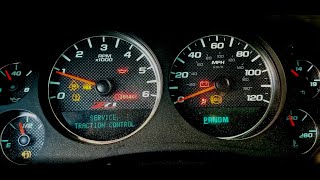
- "Service StabiliTrak" or "Service Traction Control" message in the Driver Information Center
- Cruise control is disabled
- In some cases, the speedometer may act erratically or transmission shifting may feel harsh
- Brake light may be illuminated 🎬 Watch this guide to diagnosing StabiliTrak and ABS warning lights.
- Replacing the EBCM or other modules before thoroughly inspecting the VSS wiring harness. The harness chafing issue is very common and often overlooked.
- Replacing rear wheel hub bearings. These trucks do not have individual ABS sensors at the rear wheels; they use the single VSS on the driveline.
Most Likely Causes
- Failed Rear Vehicle Speed Sensor (VSS) 🔴 High Probability → Shop Drive Shaft Sensor The sensor is exposed to constant heat from the transmission/transfer case, vibration, and potential fluid leaks, leading to eventual electronic failure. It is the most frequently replaced part for this code.
How to confirm: After checking for wiring damage, test the sensor's resistance with a multimeter. It should be between 1,300 and 1,400 ohms, though some sources state a wider acceptable range of 1,500-2,900 ohms. Alternatively, use a scan tool to monitor the 'Rear Wheel Speed' PID while driving; if the signal is zero, erratic, or drops out, the sensor is likely bad.
Typical fix: Replace the Vehicle Speed Sensor. It is held in by a single bolt (often 13mm) on the rear of the transfer case (4WD) or transmission housing (2WD). Ensure the new sensor comes with a new O-ring. 🎬 Watch this quick walkthrough on replacing the VSS sensor.
Est. part cost: $25-$70 - Chafed or Damaged Wiring Harness 🟡 Medium Probability The VSS wiring harness is commonly routed over the top of the transmission and bellhousing, where engine and transmission movement causes it to rub against the housing. This eventually wears through the insulation of the purple and green/yellow wires, causing a short or open circuit.
How to confirm: Visually inspect and feel the entire length of the VSS wiring harness, paying close attention to the area where it passes over the transmission and bellhousing, between the firewall and the back of the engine. Look for any signs of rubbing, melting, or exposed copper wires. On 4WD models, there is an additional pigtail extension harness that is often the point of failure.
Typical fix: Repair the damaged section of wire using solder and heat shrink tubing. Ensure the repaired section is protected with loom and routed away from sharp edges. If damage is near the connector, replace the connector pigtail. 🎬 See how to trace and repair damaged VSS wiring harnesses.
Est. part cost: $10-$40 - Excessive Tone Wheel Movement ⚪ Low Probability As noted in TSB #PIP4966B, wear in the transfer case output shaft bushing can allow the output shaft and the toothed tone wheel (reluctor ring) to have excessive play. This movement can cause an erratic signal or even physical contact with the VSS, damaging it.
How to confirm: With the VSS removed, check for excessive up-and-down or side-to-side movement of the output shaft and the toothed tone wheel inside the housing. A leaking output shaft seal is often a preceding symptom. A forum user on DuramaxDiesels.com confirmed this exact failure mode: a trashed rear bearing in the transfer case led to a worn housing bushing, allowing the output shaft to 'wallow around' and the tone ring to contact the sensor.
Typical fix: This is a major repair requiring the transfer case to be removed and rebuilt to replace the worn bushings, bearings, or other internal components causing the excess play.
Est. part cost: $500-$2000+
Rare But Worth Checking
- Faulty Electronic Brake Control Module (EBCM): → Shop ABS Control Module This is uncommon, but if the sensor, wiring, and tone wheel are all confirmed to be good, the EBCM itself may have an internal fault. One diagnostic video showed a good square wave signal arriving at the EBCM, proving the module was at fault for not processing it. This should be the last item to consider after all other possibilities are exhausted.
- Swapped Sensor Connectors: A forum moderator on GMTNation noted that if work was recently done on the transfer case, it's possible to accidentally swap the front and rear speed sensor connectors, which would immediately trigger this code.
- Software Anomaly / History Code: According to TSB #06-05-25-003, a C0055 code stored in history with no active ABS light or other symptoms can sometimes be a harmless software glitch caused by a specific ignition key sequence. In these cases, the code can be cleared and may not require any repair.
Diagnosis Steps
- Read the ABS module for codes using a capable OBD-II scanner. Confirm C0055 is present and active.
- Perform a thorough visual and physical inspection of the VSS wiring harness from the sensor connector up and over the top of the transmission/transfer case. Feel for any signs of chafing, brittleness, or damage, especially between the engine and firewall.
- If wiring appears intact, disconnect the VSS and test its internal resistance using a multimeter. Compare the reading to the specification (typically 1300-2900 ohms).
- If you have a scan tool with live data, monitor the 'Rear Wheel Speed' PID. While driving, look for the signal to be 0 mph, or for it to be erratic or drop out completely.
- If the sensor and wiring test good, remove the sensor (one bolt). Inspect the magnetic tip for metal shavings, which could indicate internal damage. Look inside the bore and check the tone ring for damage or debris. Physically check the output shaft for excessive up-and-down or side-to-side play, as mentioned in TSB #PIP4966B.
- If the sensor is bad, replace it. If the wiring is damaged, repair it, ensuring the repair is sealed and protected.
- If all external components and the tone wheel play are good, the problem may be a wiring issue between the PCM and EBCM, or, rarely, a faulty EBCM.
Parts You'll Likely Need
- Vehicle Speed Sensor (VSS)
(OEM #20938122)— This sensor is the most common failure point for code C0055. It is an electronic component that fails over time due to heat and vibration.
Trusted brands: ACDelco (OEM), Delphi, Standard Motor Products, Dorman
OEM price range: $45-$70
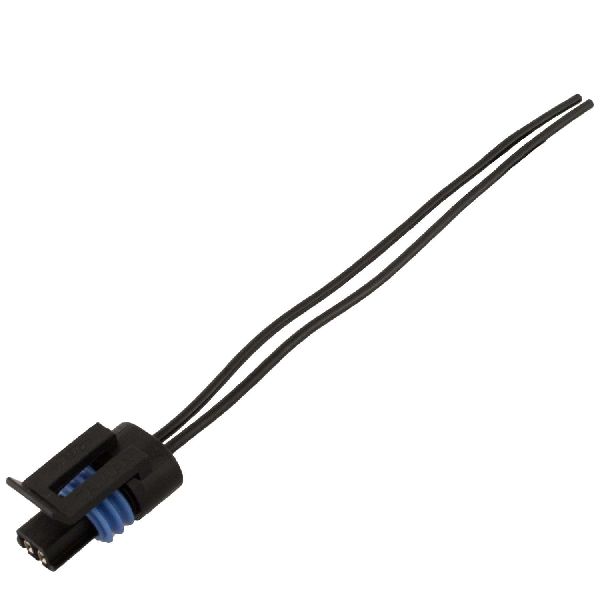
Aftermarket price range: $25-$50 - VSS Connector Pigtail
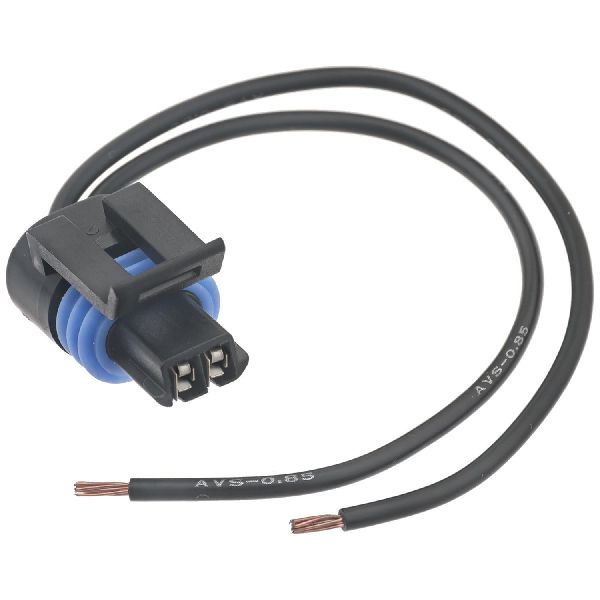
(OEM #PT2301 (ACDelco))— Needed if the connector itself is damaged or if the wiring is broken too close to the connector to be repaired. The locking tab often becomes brittle and breaks.
Trusted brands: Dorman, ACDelco
OEM price range: $20-$40
Aftermarket price range: $10-$25
Related Codes That Often Appear With This One
- P2771 — TSB #PIP4966B explicitly links C0055 and P2771 (Four Wheel Drive Low Switch Circuit) as potentially occurring together, pointing to a shared issue in the transfer case area or its electronics.
Technical Service Bulletins (TSBs) & Recalls
- PIP4966B: Instructs technicians to check for excess movement of the tone wheel or output shaft when C0055 is present, indicating a potential internal mechanical fault like a worn bushing.
- PIT4815C: Provides specific electrical diagnostic procedures for technicians when C0055 is present, involving checking the signal frequency on circuit 817.
Platform-Specific Known Issues
- The VSS wiring harness is known to chafe on the top of the transmission/bellhousing, causing a short circuit. This is a very common cause for C0055 on this platform.
- TSB #PIP4966B points to the possibility of excessive movement of the internal tone wheel or output shaft due to worn bushings, which is a more severe mechanical problem within the transfer case.
- On 4WD models, a separate extension pigtail harness connects the main harness to the VSS, adding another potential point of failure for wiring damage.
Mechanic-Grade Diagnostic Values
- Vehicle Speed Sensor (VSS) internal resistance — expected: 1300-1426 ohms. Some sources allow a wider range up to 2900 ohms.. Failure: An open loop (OL), short (near 0 ohms), or resistance significantly outside the specified range.
- VSS AC Signal Output (at sensor) — expected: Approximately 1.0V peak-to-peak AC sine wave when the driveshaft is spinning at one revolution per second.. Failure: No AC voltage, or a very weak/distorted signal, indicates a failed sensor.
- VSS Signal (at EBCM) — expected: A clean square wave signal on an oscilloscope.. Failure: A missing, erratic, or 'garbage' signal indicates a problem in the wiring between the PCM and EBCM, or a faulty module (PCM/EBCM).
Hidden / Shadow Codes Worth Checking
- C0055 00: Indicates the EBCM has detected a hard circuit fault: a short to ground, short to voltage, or an open/high resistance in the VSS circuit. This points directly to a wiring or sensor failure. (see via A professional scan tool capable of reading GM-specific ABS/EBCM symptom bytes (e.g., Tech2, high-end Autel/Snap-on).)
- C0055 5A: Indicates the EBCM has detected an erratic or implausible signal. The signal is present but doesn't make sense (e.g., drops to zero during acceleration). This often points to a failing sensor, a loose tone wheel, or electrical interference. (see via A professional scan tool capable of reading GM-specific ABS/EBCM symptom bytes.)
Wiring & Ground Locations
- VSS Circuit Wires — Running from the VSS connector on the transmission/transfer case, up and over the bellhousing to the main engine harness.. These wires, typically Purple (VSS Signal) and a Yellow/Green or Black/White (Low Reference/Ground), are in a known chafe point on top of the transmission, making them a primary cause of C0055 due to shorts or opens.
- EBCM Ground — A bolt securing the EBCM ground wire to the frame rail, located near the EBCM itself under the driver's side of the vehicle.. A poor ground connection at the EBCM can cause faulty signal interpretation and trigger various ABS codes, including C0055. Cleaning this ground is a critical diagnostic step.
- G103 / G104 — G103 is on the front of the right cylinder head. G104 is on the rear of the driver's side cylinder head.. These are major engine and body-related grounds. While not directly for the VSS circuit, a poor connection at these points can cause communication issues between the PCM and EBCM, which process the speed signal.
- VSS Signal at Junction Block — A Green with White wire in a long black plug at the bottom of the junction block to the left of the foot brake.. This is an alternate, more accessible point to tap into the VSS signal wire for testing purposes, rather than accessing the EBCM directly.
Real Owner Repair Stories
- DuramaxDiesels.com user 'elliottw' (2007 GM Truck (LBZ)) — C0055 code, no speed reading from the rear sensor. Lights would flicker off and on when hitting a large bump.
❌ Tried (didn't work) Inspecting the sensor (it looked fine)., Checking for chafed wiring behind the driver's front wheel well and near the transfer case.
✅ What actually fixed it The owner discovered that mice had chewed through about 5 wires in the harness located underneath the underhood fuse box. Repairing the damaged wires by soldering in new sections resolved the code. - PerformanceTrucks.net Forums user (2007 Silverado WT 2WD with 4L80E conversion) — C0055 5A (Not Plausible) sets only during a hard launch from a complete stop. Scan tool shows rear wheel speed drops to 0 mph during the event, then returns to normal. Speedometer remains accurate the entire time.
❌ Tried (didn't work) Cleaning the EBCM ground., Checking for >10V at EBCM pin 31., Replacing both speed sensors on the transmission., Replacing both front wheel hub/sensor assemblies.
✅ What actually fixed it The user concluded that since the speedometer (fed by the PCM) was always correct, the VSS signal to the PCM was good. The issue was in the converted square wave signal from the PCM to the EBCM, or the EBCM itself. The problem was isolated to the communication between modules, likely triggered by the specific conditions of a hard launch. The final resolution was not posted, but the diagnosis pointed away from the common sensor/wiring failures.
OEM Part Supersession History
15121067→20763147, then 20938122— Standard part revision and consolidation by the manufacturer.
Heads up: The latest part number, 20938122, is the correct service replacement for the entire 2007-2014 generation.
Model Year Variations Within This Range
- 2007-2011: There are no significant documented mechanical or electrical differences for the rear VSS system within this specific year range for the Sierra Denali. The design and common failure points (sensor, wiring chafe) are consistent across these model years.
Helpful Videos
We Have This Part in Stock


The information in this article is provided for general reference and educational purposes only. Vehicle specifications, procedures, and part compatibility can vary by production date, trim level, and region. Always consult your vehicle's factory service manual and verify part numbers before purchasing or performing repairs. Safety-critical components such as airbags, seat belts, and braking systems should be installed by a qualified professional.
- Gmc SIERRA DENALI:
- 🧭 Diagnostic Flowchart
- 🎬 Helpful Videos
- 🛍️ Shop This Part
- What's Unique About the 2007-2011 Gmc SIERRA DENALI
- Symptoms You May Notice
- Most Likely Causes
- Rare But Worth Checking
- Diagnosis Steps
- Parts You'll Likely Need
- Related Codes That Often Appear With This One
- Technical Service Bulletins (TSBs) & Recalls
- Platform-Specific Known Issues
- Mechanic-Grade Diagnostic Values
- Hidden / Shadow Codes Worth Checking
- Wiring & Ground Locations
- Real Owner Repair Stories
- OEM Part Supersession History
- Model Year Variations Within This Range
- 🎟️ Get 5% Off