

C0055 on 2007-2013 GMC Yukon XL: Rear Wheel Speed Sensor Circuit Fault
Code C0055 on a 2007-2013 GMC Yukon XL almost always points to a problem with the single rear wheel speed sensor, also known as the Vehicle Speed Sensor (VSS). This sensor is located on the transmission or transfer case, not at the wheels. A new sensor, like the ACDelco 20938122, is typically under $75 and is a straightforward DIY replacement. However, the code can also be triggered by wiring issues or, less commonly, internal transfer case problems.
- C0055 means there's a problem with the single rear speed sensor located on your transfer case or transmission, not at the wheels.
- The most likely fix is replacing the sensor itself, which is an affordable and accessible part.
- Before buying parts, inspect the wiring harness near the sensor for any signs of melting or chafing.
- If you only have a C0055 in history with no ABS light on, it might be a harmless glitch that can be cleared and ignored per TSB 06-05-25-003.
- Driving with this code is possible, but your ABS and StabiliTrak safety systems will not work.
What's Unique About the 2007-2013 Gmc YUKON XL
The key difference for the GMT900 platform (which includes the Yukon XL, Tahoe, Suburban, and Sierra/Silverado) is the use of a single rear speed sensor located on the driveline, not at the wheel hubs. This often confuses owners and technicians who are used to finding a sensor at each wheel, leading to misdiagnosis. This design means a single sensor failure disables ABS and stability control for both rear wheels. Furthermore, GM has issued bulletins noting that internal transmission or transfer case issues, like a loose tone wheel due to a worn bushing, can trigger this code, a repair far more involved than a simple sensor swap. A user on DuramaxDiesels.com experienced this exact scenario, where a worn transfer case bushing caused the tone ring to contact and damage the sensor.
Diagnostic Flowchart
Tap your situation to follow the diagnostic path that matches what you're seeing on this vehicle.
Symptoms You May Notice
- Illuminated ABS warning light.
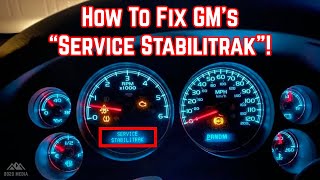
- "Service StabiliTrak" or "Service Traction Control" message on the Driver Information Center.
- Traction control and stability control systems are disabled.
- In some cases, the transmission may exhibit harsh, erratic, or delayed shifting.
- Speedometer may behave erratically or drop to zero.
- Cruise control may be inoperative.
- Replacing the rear wheel hub bearings. The speed sensor is not located at the wheels on this vehicle.
- Replacing the Electronic Brake Control Module (EBCM) before thoroughly testing the sensor and wiring. EBCM failure is much less common than a sensor or wiring issue.
Most Likely Causes
- Faulty Rear Wheel Speed Sensor (VSS) 🔴 High Probability → Shop ABS Wheel Speed Sensor The sensor is exposed to constant heat from the transmission/transfer case and contamination from potential fluid leaks, leading to failure over time. The plastic housing can become brittle and crack.
How to confirm: Use a scan tool to monitor the 'Rear Wheel Speed' data PID while driving. If the signal is erratic, drops to zero, or doesn't match the front wheel speeds, the sensor is likely bad. You can also test the sensor's resistance with a multimeter; a good sensor typically reads between 1200-2900 ohms. A user on a forum measured their faulty sensor at 6.9 mega-ohms, while the new one was 2.3 kilo-ohms.
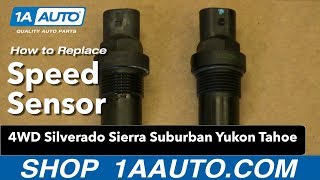
Typical fix: Replace the rear wheel speed sensor on the transfer case or transmission housing. The sensor is 🎬 Watch this step-by-step guide on replacing the vehicle speed sensor. typically held in by a single bolt (13mm or 19mm head) and has an O-ring that should be lightly coated in transmission fluid before installation.
Est. part cost: $25-$75 - Damaged Wiring or Connector 🟡 Medium Probability The wiring harness runs along the transmission and is susceptible to damage from heat, chafing, and environmental exposure. A common chafe point is where the harness runs up over the top of the transmission, between the firewall and the back of the engine. Other TSBs for similar platforms note chafing against the ECM/TCM bracket, upper control arm, and shock tower.
How to confirm: Visually inspect the entire wiring harness from the sensor to where it enters the main loom. Look for melted insulation, chafed sections, or corroded pins in the connector. Perform a continuity test on the signal and ground wires between the sensor connector and the EBCM. TSB PIT4815C details checking the yellow/black wire.
Typical fix: Repair the damaged section of wire or replace the connector pigtail (e.g., Standard Motor Products S2412). When repairing, ensure the wires are properly shielded and routed away from heat sources and sharp edges.
Est. part cost: $15-$40 - Excessive Tone Wheel Movement / Internal Failure ⚪ Low Probability As noted in TSB #PIP4966B, wear in the transmission output shaft bushing or transfer case bearings can allow for excessive movement of the tone wheel (reluctor ring) that the sensor reads. This can cause an erratic signal or even physical contact that damages the sensor tip. A leaking slip yoke seal is often a precursor to this issue, indicating a worn bushing.
How to confirm: After removing the speed sensor, try to move the tone wheel inside the housing with a screwdriver or by checking for excessive play in the output shaft/yoke. There should be no significant side-to-side or up-and-down movement. Inspect the tip of the old sensor for scuff marks or physical damage.
Typical fix: This requires significant mechanical repair, such as replacing the transfer case extension housing bushing or rebuilding the transfer case/transmission to address the worn internal components.
Est. part cost: $200-$1500+
Rare But Worth Checking
- Software Anomaly: According to TSB #06-05-25-003, a C0055 code can be stored in history without any actual fault if the ignition is turned from RUN to ACCESSORY for more than one second. If there are no warning lights or symptoms, the code can be cleared and ignored.
- Faulty Electronic Brake Control Module (EBCM): → Shop ABS Control Module While a possible cause, this is rare. The EBCM should only be considered after the sensor, wiring, and tone wheel have been definitively ruled out. A forum user on 2CarPros documented replacing the EBCM with no change in symptoms, pointing to the need for thorough diagnosis first.
- Faulty Transmission Control Module (TCM): In a documented case, after replacing the sensor, EBCM, and ECM, the final fix was a faulty TCM that was corrupting the speed signal before it reached the EBCM. This is a last-resort diagnosis.
Diagnosis Steps
- Connect an OBD-II scanner capable of reading ABS codes. Confirm C0055 is the active code. Note if it is C0055 00 (circuit fault) or C0055 5A (erratic signal), as this can help focus the diagnosis.
- Check for TSB #06-05-25-003. If the code is only in history and there are no symptoms, clear it, perform the key cycle test, and see if it returns.
- Use the scanner's live data function to monitor the rear wheel speed sensor signal while driving. Compare it to the front wheel speed sensors. The signal should be smooth, consistent, and match the front sensors.
- If the signal is erratic or absent, locate the sensor on the rear of the transfer case (4WD) or transmission (2WD).
- Visually inspect the sensor's connector and wiring harness for any signs of damage, melting, or corrosion. Pay close attention to the area above the transmission near the firewall.
- If wiring appears intact, disconnect and remove the sensor (typically one 13mm bolt). Inspect the sensor tip for metal debris or signs of physical damage from making contact with the tone wheel.
- With the sensor removed, inspect the tone wheel inside the housing for any visible damage or excessive play by wiggling the output yoke.
- Test the sensor's internal resistance with a multimeter. A reading between 1.2k and 2.9k Ohms is generally considered good. If it's open, shorted, or has very high resistance, replace it.
- If the sensor tests good, perform continuity and voltage checks on the signal and ground wires between the sensor connector and the EBCM to rule out a wiring break, as detailed in TSB #PIT4815C.
- If the sensor, wiring, and tone wheel are all confirmed to be good, the fault may lie with the EBCM or TCM, which requires more advanced diagnostics.
Parts You'll Likely Need
- Rear Wheel Speed Sensor / Vehicle Speed Sensor (VSS)
(OEM #20938122)— This is the most common failure point for code C0055. It is a relatively inexpensive and accessible part that frequently fails due to heat and contamination.
Trusted brands: ACDelco, Dorman, Standard Motor Products (VSS241)
OEM price range: $50-$75
Aftermarket price range: $25-$50
Related Codes That Often Appear With This One
- P2771 — TSB #PIP4966B explicitly lists C0055 and P2771 (Four Wheel Drive (4WD) Low Switch Circuit) together, suggesting a related issue within the transfer case or its electronics.
- P0300-P0308 — Engine misfire codes can sometimes appear alongside StabiliTrak warnings, as the system relies on a stable engine RPM signal to function correctly. While not directly related to the C0055 fault, it's a common reason for the "Service StabiliTrak" message to appear.
Technical Service Bulletins (TSBs) & Recalls
- PIP4966B: Mentions C0055 with instructions to check for excess movement of the tone wheel or output shaft, pointing to internal mechanical wear.
- PIT4815C: Provides diagnostic steps for testing the sensor circuit when C0055 is present, specifically referencing checks between the sensor connector and the EBCM.
- 06-05-25-003: Informs that a history C0055 code can be set falsely by a specific ignition key sequence (RUN to ACC) and may not require repair if no symptoms are present.
Platform-Specific Known Issues
- Software Anomaly (History Code): A stored history code C0055 with no other symptoms may be a harmless software anomaly per TSB #06-05-25-003 and can be cleared.
- Worn Transfer Case Bushing: → Shop Transfer Case Motor TSB #PIP4966B notes that a worn bushing can cause excessive movement of the tone wheel, leading to an erratic signal or physical damage to the sensor. This is often preceded by a leaking output shaft seal and may be accompanied by a clunking noise.
Mechanic-Grade Diagnostic Values
- Rear Wheel Speed Sensor (VSS) Resistance — expected: 1,200 - 2,900 Ohms (1.2kΩ - 2.9kΩ). Failure: An open circuit (OL), short circuit (near 0Ω), or a reading significantly outside the expected range.
- Rear Wheel Speed Sensor (VSS) AC Voltage Output — expected: Voltage should rise smoothly from <1V AC to over 5V AC as wheel speed increases.. Failure: No AC voltage produced while the shaft is turning, or a jumpy/erratic voltage reading.
- Rear Wheel Speed Sensor (VSS) Frequency (at sensor) — expected: Approximately 25 Hz per 1 MPH of driveshaft speed.. Failure: Signal is erratic, absent, or does not correspond to the speed.
- Processed Speed Signal Frequency (at EBCM) — expected: Approximately 1.1 Hz per 1 MPH. This is the signal sent from the ECM to the EBCM on circuit 817 (Yellow/Black wire).. Failure: Signal is erratic, absent, or does not correspond to the speed seen by the ECM.
Hidden / Shadow Codes Worth Checking
- C0055 00: Indicates the EBCM has detected a circuit fault, such as an open, a short to ground, or a short to voltage in the rear wheel speed sensor circuit. (see via A professional scan tool capable of reading ABS/EBCM manufacturer-specific codes and symptom bytes.)
- C0055 5A: Indicates the EBCM has detected an erratic or implausible signal from the rear wheel speed sensor. This often points to a failing sensor, a loose tone wheel, or interference in the wiring. (see via A professional scan tool capable of reading ABS/EBCM manufacturer-specific codes and symptom bytes.)
Wiring & Ground Locations
- EBCM (Electronic Brake Control Module) — Mounted to the ABS pump assembly, located on the inside of the driver-side frame rail, roughly below the driver's seat.. This module receives and interprets the rear wheel speed signal. The main connector is a common point for corrosion, and the module itself is the destination for all diagnostic wiring tests.
- ECM-to-EBCM Signal Wire Continuity Check — The wire runs from the ECM's C1 (blue) connector at Pin 46 to the large EBCM connector at Pin B3.. This is the specific data line that carries the processed rear wheel speed signal from the engine computer to the brake computer. A break or high resistance in this wire will directly cause a C0055 code.
- VSS Harness Chafe Point — The wiring harness that runs from the sensor up over the top of the transmission, between the transmission and the vehicle's firewall.. This is a very common area for the harness to rub through due to engine and transmission movement, causing a short or open in the sensor circuit.
Real Owner Repair Stories
- YouTube channel 'Working Man' (Chevy/GMC Truck (GMT800, but same principle as GMT900)) — Erratic speedometer, poor shifting, and code C0055.
❌ Tried (didn't work) Replacing the rear wheel speed sensor (VSS).
✅ What actually fixed it The user found the wiring harness that runs over the top of the transmission had chafed through against the back of the engine/firewall. Repairing the damaged wires in the harness resolved the code and all symptoms. - YouTube channel 'American Automotive' (2005 Chevrolet Silverado (GMT800, but EBCM connector is similar on GMT900)) — Intermittent ABS light, unwanted brake pedal pulsing, codes C0035, C0040, and C0055.
❌ Tried (didn't work) Initial diagnosis was unclear.
✅ What actually fixed it The final fix was repairing heavy corrosion ('green crusties') on the pins inside the main EBCM connector. The user had to cut the affected wires, crimp on new terminal pins, and re-insert them into the connector housing to restore a solid connection.
OEM Part Supersession History
15121067→20938122— Standard part update/revision by the manufacturer.
Helpful Videos
We Have This Part in Stock


The information in this article is provided for general reference and educational purposes only. Vehicle specifications, procedures, and part compatibility can vary by production date, trim level, and region. Always consult your vehicle's factory service manual and verify part numbers before purchasing or performing repairs. Safety-critical components such as airbags, seat belts, and braking systems should be installed by a qualified professional.
- Gmc YUKON XL:
- 🧭 Diagnostic Flowchart
- 🎬 Helpful Videos
- 🛍️ Shop This Part
- What's Unique About the 2007-2013 Gmc YUKON XL
- Symptoms You May Notice
- Most Likely Causes
- Rare But Worth Checking
- Diagnosis Steps
- Parts You'll Likely Need
- Related Codes That Often Appear With This One
- Technical Service Bulletins (TSBs) & Recalls
- Platform-Specific Known Issues
- Mechanic-Grade Diagnostic Values
- Hidden / Shadow Codes Worth Checking
- Wiring & Ground Locations
- Real Owner Repair Stories
- OEM Part Supersession History
- 🎟️ Get 5% Off