

OBD-II Code C0062: Longitudinal Acceleration Sensor
What C0062 means, why it triggers, and how to fix it
- Code C0062 instantly disables your ABS and Electronic Stability Control, increasing your risk of a loss-of-control accident by up to 50%.
- Do not automatically replace the sensor; over 60% of C0062 codes stem from wiring faults, missing zero-point calibrations, or pending software updates.
- For 2019-2022 Ram 1500s, C0062 is almost always a software glitch requiring a 1-hour dealer PCM update (TSB 18-058-20).
- Replacing the sensor or disconnecting the battery often erases the zero-point calibration, requiring a $75-$150 reset procedure with a bidirectional scan tool to clear the code.
What Does C0062 Mean?
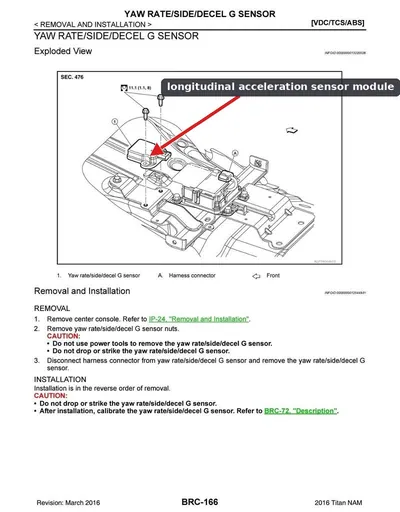
Code C0062 means the vehicle's computer detects a problem with the longitudinal acceleration sensor. This sensor measures forward (acceleration) and backward (deceleration) G-forces. This data is critical for the Anti-lock Braking System (ABS), Electronic Stability Control (ESC), and adaptive cruise control. When this data is missing or unreliable, the vehicle disables these safety systems as a precaution and triggers dashboard warning lights.
Technical definition: OBD-II code C0062 is defined as "Longitudinal Acceleration Sensor (Subfault)". It indicates the sensor's electrical signal is out of range, missing, or inconsistent with wheel speed sensor data, as detected by the ABS, Electronic Stability Control (ESC), or Restraints Control Module (RCM).
Can I Drive With C0062?

Yes, But With Caution. Yes, but with extreme caution. Driving with code C0062 instantly disables your Anti-lock Braking (ABS) and Electronic Stability Control (ESC) systems. This significantly increases the risk of losing control or skidding during emergency maneuvers or in rain and snow. Stopping distances on slippery surfaces will increase. While it won't cause progressive mechanical damage, your vehicle's active safety net is gone. Drive slowly, double your following distance, and schedule service immediately.
Common Causes

- Missing Sensor Calibration (Very Common) — If the battery was disconnected, or suspension/sensor parts were replaced, the system loses its 'zero' baseline. A scan tool zero-point calibration is required to clear the code.
- Wiring or Connector Issues (Very Common) — Damage to the sensor's wiring harness or a corroded connector interrupts the signal to the control module.
- Control Module Software Glitch (Common) — On 2019+ Ram trucks, this code is frequently triggered by a Powertrain Control Module (PCM) software bug, requiring a dealer update.
- Water Intrusion (Common) — Clogged sunroof drains or spilled drinks cause water to pool under seats or the center console, shorting the sensor or its connector.
- Faulty Longitudinal Acceleration Sensor (Common) — The sensor fails internally due to age, moisture, or severe physical shock (like a massive pothole).
- Faulty ABS or Restraints Control Module (RCM) (Less Common) — The control module receiving the signal fails internally. This is highly likely if codes C0061 or C0063 are also present.
- Low Battery Voltage (Less Common) — A failing battery or alternator causes voltage drops, which sensitive modules misinterpret as sensor faults.
Symptoms
- ABS Warning Light On — The Anti-lock Braking System light illuminates on the dashboard.
- Traction/Stability Control Light On — The ESC/TCS light illuminates, often accompanied by a 'Service AdvanceTrac' message.
- Disabled Safety Systems — Traction control, stability control, hill start assist, and adaptive cruise control stop functioning.
- Erratic Braking Feel — Braking feels harsher than normal during hard stops due to disabled brake-assist functions.
- Implausible Live Data (scan-tool only — no driver-felt sign) — On a scan tool, the longitudinal G-sensor PID is stuck at 0V or 2.5V and does not change during acceleration.
Diagnostic Flowchart

Tap your situation to follow the diagnostic path that matches what you're seeing on this code.
Common Fixes & Costs
- Perform Zero-Point Calibration — Parts: $0, Labor: $75-$150, ~0.5 hr book time (Professional)
- Update Control Module Software — Parts: $0, Labor: $150-$200, ~1.0 hr book time (Professional)
- Repair Wiring or Clean Connector — Parts: $5-$30, Labor: $150-$300, ~1.5 hr book time (Intermediate)
- Replace Longitudinal Acceleration Sensor
— Parts: $100-$300, Labor: $100-$200, ~1.0 hr book time
(DIY)
Ram 1500 (2019-2022): OEM {'part_number': '68339336AB', 'price': '$160'} (Alt: {"brand": "Standard Motor Products", "part_number": "ALS2634", "price": "$120"}) - Replace and Program ABS or Restraints Control Module
— Parts: $400-$800, Labor: $200-$400, ~2.5 hr book time
(Professional)
Ford F-150 (2015-2020, sensor in RCM): OEM {'part_number': 'JL3Z-14B321-A', 'price': '$450'} (Alt: {"brand": "Dorman (Remanufactured)", "part_number": "591-xxx series", "price": "$250"})
Used vs. New Parts: Buying Guide
When a used part is worth it: Buy a used standalone sensor from a low-mileage vehicle to save money. For integrated control modules (ABS/RCM), avoid used parts unless you have professional tools to reprogram the VIN; rebuilding your original module is safer and requires no programming.
Donor-vehicle mileage cap: roughly under 80000 miles for the part to have meaningful remaining life.
Donor quality checklist:
- Match the OEM part number exactly; AWD and FWD models use different modules.
- Ensure the donor vehicle has no flood or fire damage.
- Obtain the donor vehicle's VIN for programming lookup.
Decision logic:
- If The fix is a standalone sensor and a new OEM part is < $150 → Buy new to avoid repeat labor.
- If The fix is an entire ABS or RCM module → Rebuild your original module to avoid $150-$400 in VIN programming fees.
- If Your original module is destroyed → Buy a used module but factor in $200-$400 for professional VIN programming.
Warranty tradeoff: Used parts offer 30-90 day warranties. New aftermarket parts offer 1-3 years. Rebuilt modules often include a limited lifetime warranty.
Worst-case if a used part fails: $300-$600 (Cost of repeat labor and programming if a used module fails).
What Happens If You Wait — Timeline
- Immediate: ABS and ESC are disabled. The vehicle drives normally, but active safety systems are offline. (MPG impact: 0%% · Added cost: $0)
- First drive in adverse conditions: Risk of a loss-of-control accident increases by up to 50% without Electronic Stability Control. (MPG impact: 0%% · Added cost: $5,000-$50,000+ (Potential cost of an at-fault accident))
- First annual safety inspection: Vehicle fails state safety inspections in NY, TX, CA, and others due to illuminated ABS lights. (MPG impact: 0%% · Added cost: $50-$150 (Failed inspection and re-test fees))
- 6+ months: No mechanical damage occurs, but the continuous safety risk exposes the driver to severe liability in an accident. (MPG impact: 0%% · Added cost: Potentially unlimited)
Cost of Not Fixing It
- Immediate: ABS and Electronic Stability Control (ESC) are disabled. Increased risk of skidding or losing control in emergency braking. Adaptive cruise control and hill start assist are disabled. (Added cost: $0)
- 0-6 Months: The vehicle automatically fails state safety inspections in states that check ABS/airbag lights (e.g., NY, TX, CA). (Added cost: $50-$150 (Failed inspection and re-test fees))
- 6+ Months: High risk of an at-fault accident due to disabled stability control, potentially resulting in severe financial and legal liability. (Added cost: $5,000-$50,000+ (Potential cost of an at-fault accident))
Diagnosis Steps
- Read All Trouble Codes
Use a bidirectional scanner to read Chassis (C) and Network (U) codes. Codes like C0061, C0063, or U0452 indicate module or wiring issues, not just the sensor.
Tools: Bidirectional OBD-II Scanner (Beginner) - Check Technical Service Bulletins (TSBs)
Search TSBs for your VIN. For Ram trucks, a PCM software update is the official fix for C0062.
Tools: Internet access, VIN (Beginner) - Analyze Live Data PIDs
Monitor the 'Longitudinal Acceleration' PID on a scan tool. At rest on a level surface, it should read 0.0 g. If it is stuck or erratic during a test drive, the sensor or wiring is faulty.
Tools: Bidirectional OBD-II Scanner (Advanced) - Visually Inspect Sensor and Wiring
Locate the sensor (often under the center console or front seat). Check for water damage, loose bolts, or corroded connector pins.
Tools: Flashlight, Basic hand tools (Intermediate) - Perform a Wiggle Test
With the scanner displaying live data, gently wiggle the sensor's wiring harness. If the voltage drops out, you have an intermittent wiring fault.
Tools: Bidirectional OBD-II Scanner (Intermediate) - Test Sensor Power and Ground
Disconnect the sensor. Use a multimeter to verify a 5V reference voltage and a solid ground (<0.1V) at the harness connector.
Tools: Multimeter (Intermediate) - Test Sensor Signal Output
Back-probe the signal wire with the sensor connected. Voltage should be ~2.5V at rest and sweep smoothly between 0.5V and 4.5V during acceleration/deceleration.
Tools: Multimeter, Back-probe kit (Advanced) - Perform Zero-Point Calibration
If the sensor tests fine but the code persists (or if parts were replaced), use a scan tool to perform the sensor initialization procedure.
Tools: Bidirectional OBD-II Scanner (Intermediate)
When This Code Triggers (Freeze-Frame Conditions)
- Vehicle Speed: 15-55 mph (Set during normal driving when the ABS module detects an irrational signal during continuous self-tests.)
- System Status: ABS/ESC Inactive (Logged when the system is armed but not actively intervening.)
- Module Voltage: 12.5-14.5V (Occurs during normal electrical operation. Low voltage triggers separate codes.)
- Fault Condition: Signal Out of Range / No Signal (Sensor data is missing, stuck at a fixed value (e.g., 2.5V), or at an implausible value (0V or 5V).)
Related Codes
- C0061 — Shares power/ground with the longitudinal sensor. If both appear, suspect a shared wiring fault or failed sensor cluster.
- C0063 — Housed in the same cluster. Seeing C0062 and C0063 together points to a failed cluster or main connector.
- U0452 — Confirms a communication error with the Restraints Control Module, which houses the sensor on many Fords.
- C006A — Indicates a discrepancy between the yaw and longitudinal sensor readings, pointing to a failure within the shared sensor cluster.
Climate & Environmental Factors
- High Humidity / Water Intrusion: Clogged sunroof drains or window leaks cause water to pool under seats or consoles, destroying the sensor or its connector.
- Road Salt (Winter Climates): Salt spray aggressively corrodes underbody wiring harnesses and module connectors, causing intermittent signal loss.
- Extreme Cold: Freezing temperatures cause wire insulation to crack and marginal electrical connections to contract, leading to open circuits.
How to Talk to a Mechanic About This Code
Say this: "I have an ABS light on with code C0062. Please check for any TSBs or software updates for my VIN first. If a new sensor is required, confirm if a zero-point calibration is included in the estimate."
This language signals you are an informed consumer. It directs the technician to perform a proper diagnosis by checking for common, low-cost issues like software bugs and wiring faults before suggesting an expensive part replacement.
Avoid saying:
- 'My ABS light is on, can you just fix it?'
- 'I think I need a new ABS sensor, can you give me a price?'
- 'Just do whatever you think is best.'
Questions to ask before authorizing the repair:
- Did you check for any Technical Service Bulletins (TSBs) for this code on my vehicle?
- If you are recommending a new sensor, did you test for correct power, ground, and signal voltage at the old sensor's connector first?
- If you are replacing a module, does the new part require programming to my vehicle's VIN, and is that included in the labor cost?
- Does this repair require a 'zero-point calibration' to be performed afterward, and is that part of the quote?
Where to Take It: Dealer vs Independent vs Chain
- Dealer:
Strongly Recommended. Dealers have the proprietary software needed for the PCM updates (Ram) and module programming (Ford/GM) that frequently cause this code.
Best for: Vehicles under warranty., Repairs that are known to be caused by a software bug (common on Ram, Ford)., Complex jobs requiring module replacement and VIN programming.
Downsides: Highest labor rates., Defaults to expensive module replacement instead of component-level repair. (Typical cost: +50% vs. baseline) - Independent Shop:
Good Choice. Verify the shop has a bidirectional scan tool capable of performing ABS zero-point calibrations for your specific make before scheduling.
Best for: Out-of-warranty vehicles where the cause is likely a wiring issue or a standalone sensor., Shops you have a trusted relationship with.
Downsides: May not have the specific, up-to-date scan tools for calibration or programming on all vehicle makes., Technician expertise with complex electronics varies widely. (Typical cost: +0% vs. baseline) - Chain Shop:
AVOID. Chain shops lack the advanced diagnostic tools required for module programming, software updates, and sensor calibrations.
Best for: Simple jobs like tire changes or oil services.
Downsides: Technicians are often inexperienced with complex electronic diagnostics., Unlikely to have the necessary tools for software updates, programming, or calibration., High risk of misdiagnosis leading to unnecessary part replacement. (Typical cost: -10% vs. baseline)
When to Walk Away From the Repair
If the estimated repair cost exceeds 50% of the car's private-party value, pause and evaluate your options. However, because C0062 disables critical safety systems (ABS/ESC), the threshold to walk away is higher than for a non-safety issue.
- Car worth $4000, fix is $2000: Borderline, but lean towards fixing it due to the safety risk. Get a second opinion to confirm the diagnosis and cost before proceeding.
- Car worth $12000, fix is $1800: Fix it. The cost is well below the threshold and restores critical safety features.
- Car worth $2500, fix is $1500: Walk away. The repair cost is too high relative to the vehicle's value. The car is nearing the end of its economic life.
What Scan Tool You Need for This Code
Minimum: A bidirectional scanner that can read and clear Chassis (C) codes and perform zero-point calibrations.
A basic $20 engine code reader cannot see Chassis codes like C0062. Furthermore, this fault requires a 'zero-point calibration' after the repair, a special function that entry-level tools cannot perform.
Budget: FORScan (with OBDLink EX adapter) (~$80) — Essential for Ford/Mazda owners to perform the mandatory 'Longitudinal Sensor Calibration'.
Mid-range: Autel MaxiCOM MK808S (~$300) — Reads ABS codes, graphs live G-sensor data, and performs zero-point calibrations across most vehicle brands.
Professional: Innova 5610 (~$450) — Offers full bidirectional control to test ABS components and perform module initializations.
Rent vs buy: Renting is NOT viable. Free auto parts store scanners cannot read ABS codes or perform the zero-point calibrations required for this repair.
How to Clear the Code After You Fix It
- Use a bidirectional OBD-II scan tool to clear the code from the ABS/Chassis module.
- Perform a 'Zero-Point Calibration' using the scan tool if the sensor, module, or suspension was altered.
- Drive the vehicle above 15 mph for 10 minutes to allow the ABS module to run its self-tests.
Drive cycle (~15 minutes): 1) Cold start. 2) Drive above 15 mph to initialize the ABS module. 3) Perform three moderate stops from 30 mph. 4) Cruise at a steady speed for 10 minutes. 5) Restart the vehicle to confirm warning lights remain off.
Readiness monitors affected: None. This is a chassis code and does not affect emissions readiness monitors.
Before emissions retest: drive at least 10 miles to fully set monitors.
Watch out for:
- Using a basic $20 engine code reader that cannot access or clear Chassis (C) codes.
- Skipping the mandatory zero-point calibration after replacing a sensor, causing the code to return instantly.
- Clearing the code without fixing the root cause; the ABS module will trigger the code again on the next drive.
Will This Fail Emissions / State Inspection?
No — by itself this code doesn't fail OBD inspection (but it can keep readiness monitors from setting, which causes a separate fail).
- California: An illuminated ABS or SRS warning light is grounds for a safety inspection failure.
- New York: Official NYS inspection regulations state that an illuminated ABS warning light is an automatic failure for the safety inspection.
- Texas: The Texas Department of Public Safety requires the ABS warning light to be checked. If the light is on, the vehicle fails its annual safety inspection.
Most Commonly Affected Vehicles
- Ram 1500 (2019-2022) — Prone to a software glitch causing C0062 alongside engine codes. Fixed via dealer PCM update (TSB 18-058-20).
- Ford F-150 (2015-2020) — Sensor is integrated into the Restraints Control Module (RCM). Requires RCM replacement and VIN programming after any airbag deployment.
- Ford Explorer (2011-2019) — Code C0062:54 means 'Missing Calibration' and requires a scan tool initialization, often after battery replacement.
- Chevrolet / GMC Silverado, Sierra, Tahoe, Suburban (2014-2019) — Frequently caused by an internal failure of the ABS module (EBCM), requiring replacement and programming.
- Honda Various (Accord, CR-V, Vezel, Fit) (2013-2018) — Often appears as C0062-F0, indicating an internal failure of the VSA modulator or SRS unit.
- Hyundai Santa Fe, Tucson (2013-2018) — Commonly traced to a faulty sensor or wiring connector beneath the center console. Check for spilled liquids.
- Mazda Various (3, 6, CX-5) (2014-2019) — Code C0062:54 appears after battery disconnects. Requires sensor initialization via scan tool.
- Nissan Rogue, Altima (2014-2020) — Triggered by a failure in the ABS actuator. AWD and FWD modules are different and not interchangeable.
Manufacturer-Specific Notes
- Ford: Connector C210 near the parking brake pedal corrodes, triggering C0061, C0062, and C0063 simultaneously.
- Ram / Dodge / Chrysler (FCA): A PCM software bug on 2019+ models triggers C0062 with unrelated engine codes. Fixed via TSB update.
- Honda / Acura: Code C0062-F0 usually requires replacing the entire VSA modulator or SRS unit.
- Mazda: Suffix C0062:54 means 'Missing Calibration' and requires a scan tool reset, not a new part.
- General Motors (GM): A faulty brake light switch sends erratic voltage to the BCM, intermittently triggering a C0062 code.
Real Owner Stories
2019 Ram 1500 with 35K miles
Check engine light and ABS/Traction control lights came on simultaneously. Truck drove fine, but had multiple codes including C0062, P0456, and P0175.
Outcome: The dealer confirmed TSB 18-058-20 applied. They performed a PCM software update in under an hour. All codes cleared permanently under warranty.
Lesson: On modern vehicles, a cluster of seemingly unrelated codes often points to a single software bug. Always check for TSBs before replacing parts.
2013 Ford Explorer with 110K miles
ABS and 'Service AdvanceTrac' lights appeared after replacing the battery. Code C0062:54 was present.
Outcome: Learned the ':54' suffix meant 'Missing Calibration'. Purchased a FORScan adapter for $80 and successfully ran the 'Calibrate Longitudinal Sensor' procedure. The code cleared.
Lesson: Pay attention to code suffixes. C0062:54 specifically means a calibration is needed, not a failed part. A battery change triggers this.
2015 Honda CR-V with 85K miles
ABS and VSA warning lights came on after driving through a large puddle.
Outcome: A second mechanic found the main connector to the VSA modulator was full of water. They cleaned the connector with contact cleaner and applied dielectric grease for $150. The code cleared.
Lesson: If a fault appears after water exposure, suspect a wiring or connector issue first. A simple cleaning prevents unnecessary module replacement.
How to Prevent This Code From Triggering
- Clean sunroof drains and cowl vents (Annually) — Prevents water from pooling in the cabin and shorting floor-mounted sensors.
- Apply dielectric grease to connectors (Every 3-5 years) — Seals ABS and sensor connectors against moisture and road salt corrosion.
- Wash undercarriage in winter (Monthly) — Removes corrosive road salt from underbody wiring harnesses.
Frequently Asked Questions
I replaced the sensor, but the code came back. What now?
You likely missed the mandatory zero-point calibration. Replacing the sensor requires a bidirectional scan tool to teach the vehicle its new baseline. If calibrated, check for wiring faults or pending software updates.
Can a bad alignment cause code C0062?
Not directly. However, if suspension components were replaced during the alignment, the sensor's zero-point calibration was likely erased and must be reset.
My C0062 code appeared after replacing the battery. Why?
Disconnecting the battery on certain vehicles (like Mazda and Toyota) erases the sensor's calibration memory. You must perform a zero-point calibration with a scan tool to clear the code.
Where is the longitudinal acceleration sensor located?
It is usually bolted to the floor under the center console or a front seat. On many modern vehicles, it is integrated directly into the ABS or Airbag Control Module (RCM).
What does the code suffix C0062:54 mean?
This Ford and Mazda suffix specifically means 'Missing Calibration'. The sensor is fine, but you must run the initialization procedure with a diagnostic tool to clear the code.
My car was in an accident, and now I have this code. Why?
On many vehicles, the sensor is part of the airbag system's control module (RCM). After an accident where airbags deploy, manufacturer procedures require this module to be replaced and programmed, not reset.
The shop says I need a software update. Is that a real fix?
Yes. On many modern vehicles, particularly 2019+ Ram trucks, a known software bug falsely triggers this code. A dealer PCM update is the official and only fix.
Key Takeaways
- Code C0062 instantly disables your ABS and Electronic Stability Control, increasing your risk of a loss-of-control accident by up to 50%.
- Do not automatically replace the sensor; over 60% of C0062 codes stem from wiring faults, missing zero-point calibrations, or pending software updates.
- For 2019-2022 Ram 1500s, C0062 is almost always a software glitch requiring a 1-hour dealer PCM update (TSB 18-058-20).
- Replacing the sensor or disconnecting the battery often erases the zero-point calibration, requiring a $75-$150 reset procedure with a bidirectional scan tool to clear the code.
Shop the Parts Behind C0062
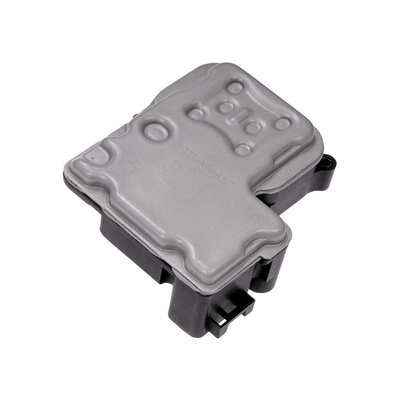
Below are the parts most often responsible for code C0062, ranked by how frequently each one is the actual culprit (per the diagnosis above). Tap any to see what we have for your vehicle.


The information in this article is provided for general reference and educational purposes only. Vehicle specifications, procedures, and part compatibility can vary by production date, trim level, and region. Always consult your vehicle's factory service manual and verify part numbers before purchasing or performing repairs. Safety-critical components such as airbags, seat belts, and braking systems should be installed by a qualified professional.
- 🧭 Diagnostic Flowchart
- 🛍️ Shop This Part
- What Does C0062 Mean?
- Can I Drive With C0062?
- Common Causes
- Symptoms
- Common Fixes & Costs
- Used vs. New Parts: Buying Guide
- What Happens If You Wait — Timeline
- Cost of Not Fixing It
- Diagnosis Steps
- When This Code Triggers (Freeze-Frame Conditions)
- Related Codes
- Climate & Environmental Factors
- How to Talk to a Mechanic About This Code
- Where to Take It: Dealer vs Independent vs Chain
- When to Walk Away From the Repair
- What Scan Tool You Need for This Code
- How to Clear the Code After You Fix It
- Will This Fail Emissions / State Inspection?
- Most Commonly Affected Vehicles
- Manufacturer-Specific Notes
- Real Owner Stories
- 2019 Ram 1500 with 35K miles
- 2013 Ford Explorer with 110K miles
- 2015 Honda CR-V with 85K miles
- How to Prevent This Code From Triggering
- Frequently Asked Questions
- I replaced the sensor, but the code came back. What now?
- Can a bad alignment cause code C0062?
- My C0062 code appeared after replacing the battery. Why?
- Where is the longitudinal acceleration sensor located?
- What does the code suffix C0062:54 mean?
- My car was in an accident, and now I have this code. Why?
- The shop says I need a software update. Is that a real fix?
- Key Takeaways
- 🎟️ Get 5% Off