

OBD-II Code C0063: Yaw Rate Sensor Malfunction
What C0063 means, why it triggers, and how to fix it
- Code C0063 disables your vehicle's Electronic Stability Control (ESC) and Traction Control due to a yaw rate sensor circuit or signal fault.
- Always check for manufacturer software updates (TSBs) first, as a 30-minute dealer reflash fixes this code on many modern vehicles like the 2022-2025 Jeep Compass.
- You can safely drive with this code, but your vehicle will not automatically intervene to prevent a skid during sharp turns or on slippery roads.
- Never replace the $300+ yaw rate sensor without first verifying battery health, testing the 5V reference wire, and ensuring a zero-point calibration isn't the actual missing step.
What Does C0063 Mean?
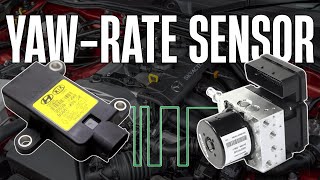
Your car's computer detected a problem with the yaw rate sensor, which measures how fast the vehicle rotates around its vertical axis during a turn. When this code triggers, the safety systems that prevent skids and spins (stability and traction control) shut down.
Technical definition: The SAE/OBD-II definition is "Yaw Rate Sensor Circuit Malfunction". The stability control module detected a fault in the yaw rate sensor's circuit, signal, or the sensor itself. This data is critical for the Anti-lock Brake System (ABS) and Electronic Stability Control (ESC) to detect when the vehicle begins to spin.
Can I Drive With C0063?
Yes, But With Caution. Driving is possible, but your vehicle's Electronic Stability Control (ESC) and Traction Control systems are disabled. The vehicle will not automatically intervene to prevent a skid. This does not cause further mechanical damage, but the increased risk of losing control in an emergency maneuver requires immediate attention.
Common Causes
- Damaged or corroded wiring/connectors (Very Common) — Wires and connectors for the sensor are exposed to moisture, road salt, and vibrations. This exposure causes them to break, chafe, or corrode, interrupting the 5V reference signal or ground.
- Control module software issue (Very Common) — The ABS or stability control module often develops a software glitch that incorrectly flags a C0063 code. A manufacturer software update resolves this, particularly on 2022+ Jeep and Chrysler vehicles.
- Faulty yaw rate sensor (Common) — The internal MEMS element of the sensor fails from age, impact, or moisture intrusion, causing it to send an erratic signal or no signal at all.
- Low battery voltage (Common) — A weak battery causes low voltage drops to control modules during engine cranking. This triggers communication errors and false trouble codes, including C0063, in voltage-sensitive stability systems.
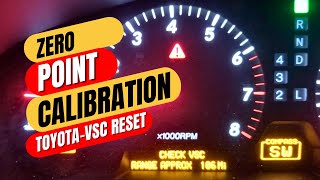
- Failure to perform zero-point calibration (Less Common) — After replacing the yaw rate sensor, ABS module, or performing a wheel alignment, the system requires a zero-point calibration. Skipping this step leaves the system without a baseline, immediately setting a C0063 code. 🎬 See how to perform a zero point calibration on Toyota/Lexus.
- Poor wheel alignment or loose suspension (Less Common) — Excessive play in suspension components or a bad wheel alignment creates a discrepancy between the steering angle sensor and the actual yaw rate, triggering the code.
- Improperly mounted sensor (Less Common) — If the sensor bracket is loose, it cannot get an accurate reading of the vehicle's rotation. This occurs after an accident repair or if factory mounting bolts back out.
- Faulty ABS/ESC control module (Rare) — The control module that receives the signal fails internally, misinterpreting the data. This is a last-resort diagnosis after verifying wiring, software, and the sensor itself.
Symptoms
- ESC or Traction Control warning light is on — The stability control light illuminates solidly or flashes on the dashboard.
- ABS warning light is on — The Anti-lock Braking System (ABS) light illuminates because it shares data with the ESC/TCS systems.
- Loss of stability control assistance — The vehicle drifts, wanders, or feels unstable in corners because the anti-skid system is offline.
- "Stability Control Disabled" message — The driver information center displays a text warning indicating the traction system is off.
- Limp Home Mode activated — On motorcycles and trikes like the Can-Am Spyder, this code triggers a safety mode that severely restricts engine power and speed.
Diagnostic Flowchart
Tap your situation to follow the diagnostic path that matches what you're seeing on this code.
Common Fixes & Costs
- Updating control module software — Parts: $0, Labor: $150-$250, ~1.0 hr book time (Professional)
- Repairing damaged wiring or cleaning connectors — Parts: $10-$30, Labor: $150-$300, ~1.5 hr book time (Intermediate)
- Performing a zero-point calibration — Parts: $0, Labor: $100-$200, ~1.0 hr book time (Professional)
- Replacing the yaw rate sensor
— Parts: $150-$450, Labor: $150-$300, ~1.5 hr book time
(DIY)
: OEM 56038985AB, 68373836AA (Alt: Dorman, SMP)
: OEM 20967462, 22743204 (Alt: ACDelco, Dorman)
: OEM 89180-42020, 89183-48030 (Alt: NTK, Denso) - Replacing the ABS/ESC control module — Parts: $600-$1200, Labor: $200-$400, ~2.0 hr book time (Professional)
Used vs. New Parts: Buying Guide
When a used part is worth it: A used sensor makes sense when the vehicle has over 100,000 miles, the budget is tight, and the new OEM part exceeds $400. Buy from reputable sellers offering at least a 30-day warranty.
Donor-vehicle mileage cap: roughly under 100000 miles for the part to have meaningful remaining life.
Donor quality checklist:
- Match the part number exactly; superseded numbers are often incompatible.
- Ensure the seller offers a testing guarantee and warranty.
- Avoid parts from flood-damaged or rust-belt vehicles to prevent moisture-related failures.
Decision logic:
- If The vehicle is under warranty OR the known cause is a software update → Go to the dealer; do not buy any parts.
- If A new aftermarket sensor (e.g., Bosch, Denso) is available for under $200 → Buy new for the longer warranty and guaranteed reliability.
- If The new OEM sensor costs over $400 and the vehicle is high-mileage → Purchase a tested, warrantied used part to save money.
Warranty tradeoff: Used parts offer 30-90 day warranties. New aftermarket parts offer 1-year to lifetime warranties. New OEM parts carry a 1-year/12,000-mile warranty.
Worst-case if a used part fails: $300-$500 if a used part fails, requiring you to pay for labor and calibration a second time.
What Happens If You Wait — Timeline
- Immediate: Code C0063 stores. The ESC/TCS warning light illuminates. Stability and traction control systems are immediately disabled. (MPG impact: 0%% · Added cost: $0)
- 0-3 months: The vehicle will not automatically assist in a skid. The risk of a single-vehicle, loss-of-control crash increases significantly in adverse weather. (MPG impact: 0%% · Added cost: Cost of an accident.)
- 3-12 months: Dependent systems like advanced driver-assistance systems (ADAS) or rollover mitigation remain compromised. The underlying wiring fault worsens. (MPG impact: 0%% · Added cost: Cost of an accident.)
- 12+ months: The vehicle fails any state safety inspection checking for illuminated warning lights. No cascading mechanical damage occurs. (MPG impact: 0%% · Added cost: Cost of an accident, plus mandatory repair costs to pass inspection.)
Cost of Not Fixing It
- Immediate: Electronic Stability Control (ESC) and Traction Control are disabled. The vehicle will not assist the driver during a skid. (Added cost: $0)
- 0-6 months: Significantly increased risk of losing control during emergency maneuvers or in adverse weather, potentially leading to an accident. (Added cost: Cost of an accident, ranging from minor bodywork to total vehicle loss.)
- 6+ months: Continued operation without a legally mandated safety system. Advanced driver-assistance systems (ADAS) relying on yaw data remain compromised. (Added cost: Failing mandatory state safety inspections.)
Diagnosis Steps
- Read Codes and Freeze Frame Data
Use an advanced OBD-II scanner to confirm C0063. Note any suffixes (e.g., -2F, -62) for specific clues. Check for U-codes (communication) or C0051 (steering angle), which dictate a different diagnostic path.
Tools: Advanced OBD-II Scanner (Beginner) - Check for Technical Service Bulletins (TSBs)
Search for manufacturer TSBs related to C0063. A simple software reflash at the dealership is the definitive fix for many modern vehicles, saving hours of manual testing.
Tools: Internet access (Beginner) - Check Battery and Charging System
Verify the battery has at least 12.4V with the engine off and 13.5V-14.5V running. Cranking voltage below 9.6V causes false electronic codes and must be fixed first.
Tools: Multimeter (Intermediate) - Perform Visual Inspection and Wiggle Test
Locate the sensor (usually under the center console or front seat). Inspect the harness for corrosion. With the scan tool displaying live yaw rate data, wiggle the connector. If the reading jumps, repair the intermittent wiring fault.
Tools: Flashlight, Advanced OBD-II Scanner (Intermediate) - Analyze Live Data Signal
View the 'Yaw Rate' PID on a scan tool. Stationary on level ground, the reading must be stable between -2.0 and +2.0 deg/s. If the value is stuck at a high number or wildly erratic at rest, the sensor is faulty.
Tools: Advanced OBD-II Scanner (Advanced) - Test Sensor Power and Ground
Back-probe the sensor connector with the ignition on. Verify a steady 5.0V reference voltage. Measure the ground wire against the battery negative; it must show less than 0.1V (100mV). Missing voltage indicates a wiring or module failure, not a bad sensor.
Tools: Multimeter, Vehicle-specific wiring diagram (Advanced) - Check CAN Bus Resistance
If the sensor uses CAN bus, disconnect the battery and measure resistance between CAN-High and CAN-Low at the DLC. A reading of 120 Ohms indicates a broken circuit; a healthy reading is 60 Ohms.
Tools: Multimeter (Advanced) - Perform Zero-Point Calibration
After replacing the sensor or fixing alignment, use a bidirectional scan tool to run the 'Yaw Rate Sensor Calibration'. This resets the baseline zero point and is mandatory to keep the code from returning.
Tools: Professional Scan Tool (Professional)
When This Code Triggers (Freeze-Frame Conditions)
- Vehicle Speed: > 15 mph (The ESC system is active and actively monitoring sensor inputs.)
- Steering Angle: Not 0° (The vehicle is in a turn, creating a discrepancy between steering input and yaw rate.)
- System Voltage: 9-12V (A low voltage condition during engine cranking causes a temporary communication glitch.)
- ESC/TCS Status: Active (The fault triggers when the system attempts to intervene on a slippery surface or sharp corner.)
Related Codes
- C006C — Indicates a general stability system fault. On Can-Am models, both codes trigger simultaneously due to mechanical issues like poor wheel alignment or a weak battery. Diagnose C0063 first.
- U0401 — Indicates a network communication failure. If present with C0063, the CAN bus network is down. The network must be fixed first, as it prevents the yaw sensor signal from reaching the control module.
- C0061 / C0062 — Codes for Lateral (C0061) and Longitudinal (C0062) Acceleration sensors, which share a cluster with the yaw sensor. If all three trigger, suspect a shared power/ground wire failure rather than three bad sensors.
- C0051 — Steering Angle Sensor (SAS) fault. The ESC module compares steering angle to yaw rate. A fault in either triggers codes for both. Check live data to see which sensor provides the illogical reading.
Climate & Environmental Factors
- Road Salt and Humidity: Moisture and salt accelerate corrosion on the sensor's wiring harness and connector pins, interrupting the 5V signal. This is the primary cause of failure in rust-belt regions.
- Extreme Cold: Sub-zero temperatures make wiring insulation brittle. Condensation during temperature swings introduces moisture into aging connectors, causing shorts.
- Heat and Vibration: Years of cabin heat and road vibration degrade the internal MEMS components of the sensor, eventually causing erratic live data readings.
How to Talk to a Mechanic About This Code
Say this: "I have a C0063 code and the stability control light is on. Before replacing parts, please check for software TSBs, verify the sensor has 5V power and ground, and check the live data. If a new sensor is needed, confirm the quote includes the zero-point calibration."
This proves you understand the diagnostic steps. It prevents a shop from immediately replacing a $300 sensor without checking for cheaper causes like wiring, software, or missing calibrations.
Avoid saying:
- My traction control light is on, can you just fix it?
- I think I need a new yaw sensor, can you give me a price?
- Just do whatever it takes to get the light off.
Questions to ask before authorizing the repair:
- Did you check for technical service bulletins or software updates first?
- What was the yaw rate sensor's reading on the scan tool when the car was stationary?
- Did you test the 5V reference and ground wires at the sensor's connector?
- Does the estimate include the cost of the mandatory zero-point calibration?
Where to Take It: Dealer vs Independent vs Chain
- Dealer:
Highly recommended if a software update is the likely fix or the vehicle is under warranty.
Best for: Vehicles under warranty., Known software-related issues (e.g., 2022+ Jeep Compass)., Complex module replacements requiring OEM programming.
Downsides: Highest labor rates., Often push to replace entire wiring harnesses rather than repairing a single broken wire. (Typical cost: +50% vs. baseline) - Independent Shop:
Best overall fit for out-of-warranty vehicles, provided the shop confirms they can perform the calibration.
Best for: Out-of-warranty vehicles., Diagnosing and repairing specific wiring faults., Sensor replacement and calibration on common makes.
Downsides: The shop must own a professional bidirectional scan tool to perform the zero-point calibration. (Typical cost: +0% vs. baseline) - Chain Shop:
Not Recommended. The risk of misdiagnosis or an incomplete repair (missing calibration) is extremely high.
Best for: Tires, brakes, and oil changes.
Downsides: Technicians lack advanced diagnostic training for complex electronic faults., Rarely possess the expensive bidirectional scan tools required for calibration. (Typical cost: -10% vs. baseline)
When to Walk Away From the Repair
If the estimated repair cost for the C0063 fault exceeds 50% of your car's private-party value, consider selling the vehicle.
- Car worth $4000, fix is $1600: Walk away. The repair cost is a massive percentage of the car's value, and the disabled ESC makes it difficult to sell privately.
- Car worth $15000, fix is $600: Fix it. The repair cost is low relative to the vehicle's value and restores a critical safety system.
- Car worth $8000, fix is $250: Fix it immediately. A low-cost repair like a software update or calibration is well worth restoring safety and value.
What Scan Tool You Need for This Code
Minimum: A scanner that reads ABS/Chassis (C-codes) and displays live sensor data.
A basic $20 engine code reader cannot access the ABS module to read C0063. Without live data, you cannot tell if the sensor is dead, has a wiring issue, or just needs calibration.
Budget: BlueDriver Pro (~$100) — Reads and clears ABS codes like C0063. Graphs live data from the yaw rate sensor for diagnosis. It does NOT perform the final calibration.
Mid-range: Foxwell NT630 Plus (~$150) — Reads/clears ABS codes and shows live data. Offers special functions like 'Steering Angle Sensor Calibration,' which is part of the zero-point procedure for many brands.
Professional: Autel MaxiCOM MK900 (~$500-1200) — Provides full bidirectional control to perform the mandatory 'Yaw Rate Sensor Zero-Point Calibration' after replacement.
How to Clear the Code After You Fix It
- Perform the mandatory zero-point calibration using a bidirectional scan tool.
- Clear the C-code from the ABS/ESC module memory.
- Perform a complete drive cycle to allow the system to run internal self-tests.
Drive cycle (~20 minutes): Start the engine and idle for 2 minutes. Drive in both city and highway conditions, making several left and right turns. Drive for at least 10 minutes above 45 mph to allow the ESC system to verify the sensor responds correctly to steering inputs.
Readiness monitors affected: Does not affect emissions readiness monitors., Relates exclusively to the internal self-test monitor of the ABS/ESC control module.
Watch out for:
- Clearing the code without fixing the underlying wiring or sensor fault guarantees it returns immediately.
- Forgetting to perform the zero-point calibration after sensor replacement is the most common reason for a failed repair.
Will This Fail Emissions / State Inspection?
Yes — this code typically fails an OBD-II emissions inspection.
- California: The illuminated ABS/ESC warning light on the dashboard results in an automatic failure of the safety inspection portion of the smog check.
- New York: An illuminated Malfunction Indicator Lamp (MIL), including stability control lights, is grounds for immediate annual safety inspection failure.
- Texas: Counties requiring annual safety inspections check all warning lights. An illuminated ABS or ESC light results in a failed inspection.
Most Commonly Affected Vehicles
- Jeep Compass (2022-2025) — Frequently caused by a software glitch in the ABS module. Fixable with a dealer software update per TSBs 08-007-23, 08-128-24, or 08-144-25. Do not replace the sensor before checking for updates.
- Chevrolet / GM Silverado, Sierra, Tahoe (2007-2014) — The yaw rate sensor is part of a multi-axis acceleration sensor under the driver's seat. Failure indicates an internal fault confirmed by signal dropouts on a scan tool. Replacement is the standard fix.
- Subaru Outback, Legacy (2008-2014) — Code C0063 often indicates a malfunction within the VDC Control Module rather than the sensor itself. Diagnosis requires checking live data values, which must sit between -4 and 4 deg/s at rest.
- Toyota RAV4 (2019-2022) — A known factory defect involves the sensor module being improperly secured. Physically inspecting and tightening the module bracket resolves the issue without parts cost.
- Honda Insight, Accord, Civic (2021-2024) — This code frequently requires an 'All Sensors' calibration procedure using a dealer-level scan tool (HDS) to resolve, especially after a battery replacement or alignment.
- Ford Explorer, F-150 (2011-2019) — Ford uses two-digit suffixes (e.g., C0063-2F for Signal Erratic) pointing to specific wiring faults. Diagnose the wiring harness before condemning the module.
- Can-Am Spyder, Ryker (2016-2022) — Triggered by miscommunication between steering angle and yaw sensors. Frequently caused by loose front suspension components or poor wheel alignment, requiring a mechanical fix and BUDS2 reset.
Manufacturer-Specific Notes
- Jeep: On 2022-2025 Compass models, C0063 is almost exclusively a software glitch. A dealer software update is the mandatory first step and is often covered under the 3-year/36,000-mile warranty.
- Honda/Acura: Requires a specific 'All Sensors' calibration procedure using the dealer HDS tool after any suspension repair or part replacement. Failing to calibrate guarantees the code returns.
- Ford: Utilizes specific two-digit suffixes (e.g., -2F, -62, -64) that pinpoint the exact fault type, such as 'Signal Erratic' or 'Signal Plausibility Failure', drastically reducing diagnostic time.
Real Owner Stories
2022 Jeep Compass with C0063-29
ESC and EPB warning lights appeared intermittently with code C0063-29 (Yaw Rate Sensor - Invalid Signal).
Outcome: The dealership identified TSB 08-007-23, indicating a software issue in the ABS module. They reprogrammed the module in 30 minutes. The codes cleared permanently under warranty.
Lesson: Always check for software TSBs on modern vehicles before assuming hardware failure. A quick dealer reflash saves hundreds on unnecessary parts.
2016 Can-Am Spyder F3-T with 15k miles
After upgrading the sway bar, the bike entered limp mode with codes C0063 and C006C.
Outcome: The dealer found a miscommunication between the steering angle and yaw sensors caused by the suspension work. A steering sensor reset via the BUDS2 tool resolved the issue instantly.
Lesson: Suspension work alters alignment, triggering C0063. A simple electronic reset/calibration is often the only necessary fix.
2014 Can-Am Spyder RTL with intermittent C0063
The bike went into 'Limp Home' mode with C0063 immediately after starting the engine on cold mornings.
Outcome: The issue traced back to a weak battery dropping below 9.6V during cranking. Replacing the battery stabilized the voltage and permanently eliminated the false codes.
Lesson: Verify battery health before diagnosing complex electronic faults. Weak batteries cause a cascade of false codes on sensitive stability systems.
Can-Am Ryker with high mileage
VSS fault codes C0063, C0051, and C006C appeared simultaneously.
Outcome: Inspection revealed excessive play in the front suspension components. Replacing worn tie rods and performing a laser wheel alignment, followed by a sensor reset, fixed all codes.
Lesson: Do not overlook mechanical causes. Worn suspension parts create a conflict between steering input and actual vehicle yaw, triggering electronic sensor codes.
How to Prevent This Code From Triggering
- Apply dielectric grease to sensor connectors (During any related service or every 3-5 years) — Creates a moisture-proof barrier on connector pins, preventing the corrosion that interrupts signals in rust-belt regions.
- Maintain a healthy battery and clean terminals (Annually) — Prevents low voltage spikes during engine startup, stopping false electronic codes in sensitive stability control modules.
- Wash the vehicle's undercarriage (Seasonally, especially after winter) — Removes road salt and grime that corrodes exposed wiring harnesses and connectors for chassis-mounted sensors.
- Check for manufacturer software updates (During routine dealer service) — Patches software bugs that cause modules to misinterpret sensor data and falsely trigger C0063.
Frequently Asked Questions
Can I drive my car with a C0063 code?
Yes, but with caution. Your vehicle drives normally, but the electronic stability and traction control systems are inactive. The car will not automatically correct a skid, requiring extra care in bad weather or sharp turns.
What are the most common mistakes when diagnosing C0063?
The biggest mistake is replacing the yaw rate sensor without checking for software updates (TSBs) or verifying battery health first. Another common pitfall is failing to perform the required zero-point calibration after replacing the sensor. This guarantees the code returns immediately.
Can wheel alignment or suspension problems cause a C0063 code?
Yes. If the wheel alignment is off or suspension components are loose, the vehicle travels in a different direction than the steering wheel indicates. This creates a conflict between the steering angle sensor and the yaw rate sensor, triggering a C0063 fault.
Will a C0063 code clear itself?
If the problem was a temporary voltage drop, it clears after a few drive cycles. However, if the cause is a faulty part or persistent wiring issue, the code remains until repaired. Never ignore this code, as it disables a primary safety system.
Where is the yaw rate sensor located?
The sensor sits inside the cabin to protect it from the elements and keep it near the vehicle's center of gravity. Common locations include under the center console, beneath a front seat, or under the dashboard.
Do I need to calibrate the new yaw rate sensor?
Yes. Most vehicles require the new sensor to be calibrated using a professional bidirectional scan tool. This procedure establishes the sensor's baseline 'zero' reading on a flat surface; skipping it causes the code to return.
Can a weak battery cause a C0063 code?
Yes. A weak battery causes low voltage to control modules during startup, leading to communication errors and false C0063 codes. Always verify your battery has at least 12.4V before diagnosing complex electronic faults.
How much does it cost to fix a C0063 code?
Costs depend entirely on the root cause. A dealer software update or zero-point calibration costs $100-$250. Replacing the sensor itself ranges from $300 to $750 for parts and labor.
Key Takeaways
- Code C0063 disables your vehicle's Electronic Stability Control (ESC) and Traction Control due to a yaw rate sensor circuit or signal fault.
- Always check for manufacturer software updates (TSBs) first, as a 30-minute dealer reflash fixes this code on many modern vehicles like the 2022-2025 Jeep Compass.
- You can safely drive with this code, but your vehicle will not automatically intervene to prevent a skid during sharp turns or on slippery roads.
- Never replace the $300+ yaw rate sensor without first verifying battery health, testing the 5V reference wire, and ensuring a zero-point calibration isn't the actual missing step.
Helpful Videos
Shop the Parts Behind C0063
Below are the parts most often responsible for code C0063, ranked by how frequently each one is the actual culprit (per the diagnosis above). Tap any to see what we have for your vehicle.


The information in this article is provided for general reference and educational purposes only. Vehicle specifications, procedures, and part compatibility can vary by production date, trim level, and region. Always consult your vehicle's factory service manual and verify part numbers before purchasing or performing repairs. Safety-critical components such as airbags, seat belts, and braking systems should be installed by a qualified professional.
- 🧭 Diagnostic Flowchart
- 🎬 Helpful Videos
- 🛍️ Shop This Part
- What Does C0063 Mean?
- Can I Drive With C0063?
- Common Causes
- Symptoms
- Common Fixes & Costs
- Used vs. New Parts: Buying Guide
- What Happens If You Wait — Timeline
- Cost of Not Fixing It
- Diagnosis Steps
- When This Code Triggers (Freeze-Frame Conditions)
- Related Codes
- Climate & Environmental Factors
- How to Talk to a Mechanic About This Code
- Where to Take It: Dealer vs Independent vs Chain
- When to Walk Away From the Repair
- What Scan Tool You Need for This Code
- How to Clear the Code After You Fix It
- Will This Fail Emissions / State Inspection?
- Most Commonly Affected Vehicles
- Manufacturer-Specific Notes
- Real Owner Stories
- 2022 Jeep Compass with C0063-29
- 2016 Can-Am Spyder F3-T with 15k miles
- 2014 Can-Am Spyder RTL with intermittent C0063
- Can-Am Ryker with high mileage
- How to Prevent This Code From Triggering
- Frequently Asked Questions
- Can I drive my car with a C0063 code?
- What are the most common mistakes when diagnosing C0063?
- Can wheel alignment or suspension problems cause a C0063 code?
- Will a C0063 code clear itself?
- Where is the yaw rate sensor located?
- Do I need to calibrate the new yaw rate sensor?
- Can a weak battery cause a C0063 code?
- How much does it cost to fix a C0063 code?
- Key Takeaways
- 🎟️ Get 5% Off