

OBD-II Code C0071: Steering Angle Sensor or 4WD Status Fault
The Ultimate 2026 Guide to Diagnosing and Fixing Code C0071
- Identify your vehicle's system first: C0071 indicates a Steering Angle Sensor (SAS) fault in most cars, but points to a failed 4WD selector switch in 2000-2014 GM and Nissan trucks.
- Always perform a 'Zero Point Calibration' with a bi-directional scan tool before replacing parts, as this $100-$150 service fixes over 70% of SAS-related C0071 codes after a battery change or alignment.
- Replace the dash-mounted 4WD selector switch on Chevrolet and GMC trucks if C0071 appears alongside code B2725, as this $40-$80 part is the definitive root cause.
- Do not authorize a $1,000+ control module replacement (ABS, VDC, TCCM) until a technician verifies the sensor's live data and performs a mandatory harness short-to-ground test.
What Does C0071 Mean?
C0071 has two distinct meanings. For most passenger cars and crossovers (Subaru, Toyota, Honda), it signifies an invalid, missing, or uncalibrated signal from the Steering Angle Sensor (SAS). For trucks and SUVs (General Motors, Nissan), it indicates a fault with the 2-wheel/4-wheel drive selector switch, preventing the computer from knowing the drivetrain status.
Technical definition: The SAE/ISO definition is '2/4 Wheel Drive Status Input (Subfault)'. However, manufacturers adapt this generic code. Subaru and others use it exclusively for 'Steering Angle Sensor Malfunction'. This sensor is a critical input for ESC, Vehicle Dynamics Control (VDC), and ABS, providing data on the steering wheel's exact position and turn rate.
Can I Drive With C0071?
Yes, But With Caution. Yes, but with significant caution. Code C0071 disables primary active safety systems: Electronic Stability Control (ESC), Traction Control, and the Anti-lock Braking System (ABS). Base hydraulic brakes still function, but the risk of losing control during emergency maneuvers or on slippery roads is substantially higher. Repair promptly to restore safety functionality.
Common Causes
- Steering Angle Sensor (SAS) Needs Recalibration (Very Common) — The most frequent cause. The sensor loses its 'zero point' memory after a wheel alignment, battery replacement, jump-start, or suspension repair.
- Failed 4WD Selector Switch (GM/Nissan Trucks) (Very Common) — For trucks and SUVs, the dash-mounted 2WD/4WD switch wears out, suffers liquid damage, or fails electronically, sending a missing or erratic signal.
- Low Battery Voltage (Common) — A weak battery or disconnection causes the SAS to lose its volatile memory, triggering the code even if the sensor is perfectly fine.
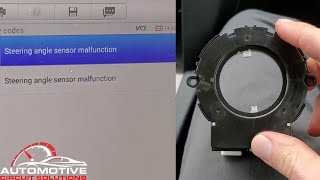
- Faulty Steering Angle Sensor (SAS) (Common) — The sensor fails internally from age or wear. Scan tools show frozen data (e.g., stuck at 719 degrees), erratic jumps, or no change when turning the wheel.
- Faulty Clockspring Assembly (Less Common) — The SAS integrates with the clockspring. A broken internal ribbon cable damages SAS connections. This is the definitive cause if the airbag light is on and steering wheel buttons fail simultaneously.
- Wiring or Connector Issues (Less Common) — Wires to the SAS or 4WD switch fray, corrode, or disconnect. GM trucks frequently suffer corrosion in the 4WD switch connector.
- Faulty Control Module (VDC, TCCM) (Very Rare) — The main computer reading the sensor fails or suffers software corruption. Consider this only after exhaustively ruling out all other possibilities to avoid expensive misdiagnosis.
Symptoms
- Traction Control or ESC/VDC light is on — The most common symptom. Stability systems are disabled when the steering angle signal is invalid.
- "Service 4WD" or 4x4 warning light is on — The primary symptom on GM, Ford, and Nissan trucks when the code relates to a four-wheel-drive system fault.
- ABS light is on — Because the SAS is integral to overall stability, a fault disables the Anti-lock Braking System as a precaution.
- Inability to switch between 2WD and 4WD — The vehicle remains stuck in its current drive mode and ignores selector switch inputs.
- Flashing 'BRAKE' light (Subaru) — Subaru models flash the main red 'BRAKE' warning light alongside VDC and ABS lights to indicate a system-wide fault.
Common Fixes & Costs
- Recalibrate Steering Angle Sensor — Parts: $0, Labor: $100-$150, ~1 hr book time (Professional)
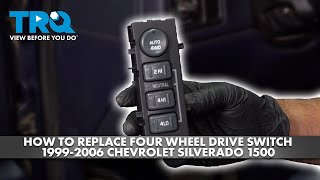
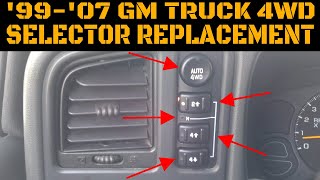
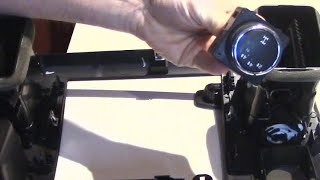
- Replace 4WD Selector Switch 🎬 See this 4WD switch replacement walkthrough for GM trucks
— Parts: $30-$80, Labor: $50-$100, ~0.5 hr book time
(DIY)
: OEM (Alt: {"brand": "Dorman", "part_number": "901-072"}, {"brand": "ACDelco", "part_number": "19259313"}) - Replace Steering Angle Sensor
— Parts: $150-$400, Labor: $150-$300, ~1.5 hr book time
(Advanced)
: OEM (Alt: {"brand": "Bosch", "part_number": "LWS Series"}) - Replace Clockspring Assembly
— Parts: $100-$300, Labor: $150-$300, ~1.5 hr book time
(Advanced)
: OEM (Alt: {"brand": "Dorman", "part_number": "525-201"}) - Repair Wiring or Connectors — Parts: $10-$50, Labor: $150-$400, ~2.0 hr book time (Professional)
Used vs. New Parts: Buying Guide
When a used part is worth it: For a 4WD selector switch, a used part from a salvage yard is a reasonable, low-risk option. For a Steering Angle Sensor (SAS), a used part is a risky choice, as its history is unknown and it is a sensitive electronic component. Only recommended if the vehicle is old and the budget is extremely tight.
Donor-vehicle mileage cap: roughly under 100000 miles for the part to have meaningful remaining life.
Donor quality checklist:
- For SAS, ensure the donor vehicle did not have a front-end collision.
- Match the OEM part number exactly; revisions are rarely compatible.
- Ask for a short warranty (30-90 days) on the part's functionality.
Decision logic:
- If Part is the 4WD selector switch (<$80 new) → Buy new. The savings from a used part are minimal and not worth the potential hassle.
- If Part is the Steering Angle Sensor AND the vehicle is less than 10 years old → Buy a new OEM or high-quality aftermarket part. The labor cost to replace it is high, requiring a reliable part.
- If Part is the SAS, vehicle is >10 years old, AND budget is the primary concern → A used part is a viable option, but accept the risk of premature failure.
Warranty tradeoff: Used parts typically offer a 30-90 day warranty. New aftermarket parts offer 1-year to limited lifetime warranties. New OEM parts carry a 1-year/12,000-mile warranty.
Worst-case if a used part fails: $300-600 if a used SAS fails after installation, requiring a second labor charge and another part.
Cost of Not Fixing It
- Immediate: Electronic Stability Control (ESC) and Traction Control are disabled. Risk of losing control in an emergency maneuver or on slippery roads increases significantly. (Added cost: N/A (Safety Risk))
- 0-6 months: Continued operation without active safety systems. The vehicle automatically fails any state safety inspection. (Added cost: Cost of original repair + potential cost of an at-fault accident.)
- 6+ months: No direct additional mechanical damage occurs from ignoring C0071. The primary cost remains the extreme safety risk and inability to pass inspections. (Added cost: The eventual repair cost is unavoidable.)
Diagnosis Steps
- Identify Your Vehicle's System
Determine the likely cause based on your vehicle. For cars/crossovers (Subaru, Toyota, Honda), focus on Steering Angle Sensor (SAS) diagnostics. For trucks/SUVs (Chevy, GMC, Nissan), focus on the 4WD system.
Tools: None (Beginner) - Attempt a Steering Angle Sensor Recalibration
The single most important diagnostic step for SAS faults. Use a scan tool to perform the 'Steering Angle Sensor Calibration' or 'Zero Point Calibration'. If it succeeds and the code clears, the repair is complete.
Tools: Bi-directional Scan Tool (Intermediate) - Read Live Data with a Bi-Directional Scan Tool
For SAS issues, view the 'Steering Angle' PID. With wheels straight, it must read near 0 degrees (+/- 5). Turn the wheel; the reading must change smoothly. A stuck value (e.g., -719) indicates a failed or physically misaligned sensor. For 4WD issues, monitor the '4WD Status' PID while operating the switch.
Tools: Bi-directional Scan Tool (Beginner) - Inspect and Test the 4WD Switch (GM/Ford)
Remove the 4WD switch from the dash. Inspect the connector for corrosion. Use a multimeter to test the switch's internal contacts by pressing each button. Each selection corresponds to a specific resistance value in the service manual. Infinite resistance means the switch is dead.
Tools: Trim removal tool, Multimeter, Wiring Diagram (Intermediate) - Check Sensor Voltage and Ground Circuits
Unplug the SAS or 4WD switch connector. Check for power (10-15V) and ground at the connector with the key on. No power or a bad ground points to a wiring or fuse issue, not a bad sensor.
Tools: Multimeter, Vehicle Service Manual (Intermediate) - Perform a Harness Short-to-Ground Test (Subaru)
Per Subaru TSB 06-47-14: With the sensor and VDC module disconnected, measure resistance between the SAS signal wire terminals and chassis ground. Resistance must be 10 Ω or more. A lower reading indicates a short circuit in the harness.
Tools: Multimeter, Vehicle Service Manual, TSB 06-47-14 (Advanced) - Physical Sensor Inspection and Manual Centering
If live data is stuck at a maximum value (e.g., 719 degrees), the sensor is physically off-center by a full rotation. Remove the steering wheel and manually rotate the SAS mechanism 360 degrees to its mechanical center before attempting calibration again.
Tools: Steering wheel puller, Socket set, Trim tools (Advanced) - Check CAN Bus Network
If accompanied by U0126 'Lost Communication with Steering Angle Sensor', check the CAN bus. With ignition off, measure resistance between CAN High (Pin 6) and CAN Low (Pin 14) at the OBD-II port; it must be ~60 Ω. Incorrect values indicate a wiring break.
Tools: Multimeter, Oscilloscope (Professional)
When This Code Triggers (Freeze-Frame Conditions)
- Steering Angle Sensor Value: Stuck at a high number (e.g., 719, -719) or 0 (A key indicator in freeze frame data is a sensor value that is implausible or does not change when the wheel turns, triggering the fault.)
- Battery Voltage: 11.5V - 14.8V (While the code sets in this normal range, a previous dip in voltage (e.g., during a battery change or jump-start) is the underlying cause for the sensor losing its memory.)
- Vehicle Speed: 0 mph (at startup) or 15-65 mph (during driving) (Code sets at key-on if calibration is lost, or during a turn if the sensor signal conflicts with yaw rate sensors.)
- Engine State: Key On, Engine Running (The VDC/ABS module performs self-checks as soon as the ignition is turned on, logging calibration-related C0071 codes immediately.)
Related Codes
- B2725 — The GM-specific code for 'ATC Mode Switch Circuit Malfunction'. If a Chevy/GMC truck has C0071, B2725 confirms the 4WD dash switch is the culprit.
- U0126 — Means 'Lost Communication with Steering Angle Sensor Module.' C0071 means the module gets an implausible signal; U0126 means it gets no signal at all. Check CAN bus wiring.
- C0073 / C0074 — Yaw Rate Sensor and Lateral G-Sensor codes. Appearing alongside C0071 on Subarus, this 'trifecta' points to a system-wide calibration loss due to low battery voltage, not three simultaneous sensor failures.
- C1231 — A specific Toyota/Lexus code for 'Steering Angle Sensor Circuit Fault'. Seeing both codes strongly points to a hardware problem (bad sensor/wiring) rather than just a calibration loss.
Climate & Environmental Factors
- Humidity and Water Intrusion: High humidity and road salt cause moisture intrusion and corrosion in the 4WD selector switch connector on GM trucks. This disrupts the voltage signal, triggering C0071 and B2725.
- Cold Weather: Cold weather lowers a weak battery's voltage during engine cranking. This voltage drop erases the Steering Angle Sensor's calibration memory, triggering a C0071 code upon startup.
How to Clear the Code After You Fix It
- Perform required repair (e.g., replace 4WD switch, replace SAS).
- Use a bi-directional scan tool to perform the 'Zero Point Calibration' (mandatory for SAS issues).
- Use the scan tool to clear the C-code from the ABS/VDC module.
- Turn the steering wheel lock-to-lock to confirm the light does not return.
- Perform a short test drive including several turns.
Drive cycle (~20 minutes): A C0071 does not require a complex emissions drive cycle. After clearing the code, a 15-20 minute drive with a mix of city turns and steady-speed driving confirms the fix is complete.
Readiness monitors affected: Not applicable. This is a chassis code and does not affect emissions readiness monitors.
Watch out for:
- Simply clearing the code without performing the necessary recalibration results in the code returning instantly.
- Forgetting to perform the 'Zero Point Calibration' after a wheel alignment or battery replacement is the #1 cause of this code.
- Disconnecting the battery does not fix the root cause and triggers the code by erasing calibration memory.
Will This Fail Emissions / State Inspection?
No — by itself this code doesn't fail OBD inspection (but it can keep readiness monitors from setting, which causes a separate fail).
- California: An ABS light does NOT cause a failure on a standard smog check. However, for a vehicle requiring a 'Brake and Lamp' inspection (e.g., salvage title), an active ABS light is a failure.
- New York: According to NYS DMV regulations, an illuminated ABS warning light is an advisory, not a cause for inspection failure.
- Texas: While an ABS light alone is not cause for rejection, an inspector fails the vehicle if they determine the steering or braking system is compromised due to the illuminated stability control light.
Most Commonly Affected Vehicles
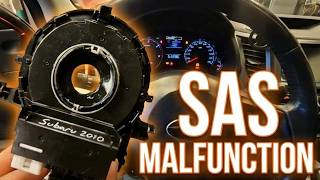
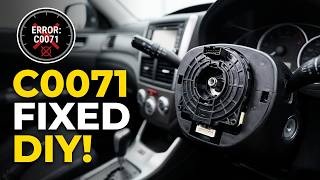
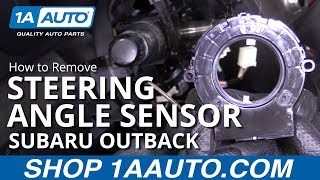
- Subaru Legacy, Outback, Forester, Impreza, WRX/STI (2004-2018) — Extremely common. TSB 06-47-14 corrects diagnostic procedures. Always attempt a Zero Point Calibration first. 🎬 Watch: Fix C0071 and traction lights on a Subaru Outback
- Chevrolet Silverado, Tahoe, Suburban (2000-2014) — Almost exclusively a faulty 4WD selector switch on the dash. The related GM-specific code is B2725. TSB 02-04-21-004 addresses this.
- GMC Sierra, Yukon (2000-2014) — Identical to Chevrolet counterparts. The cause is overwhelmingly the 4WD dash switch.
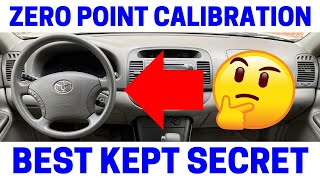
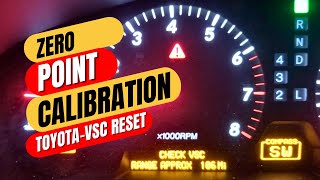
- Toyota Camry, RAV4, Tacoma (2007-2020) — Indicates an SAS fault. Older models allow a manual 'Zero Point Calibration' by jumping pins Ts and CG in the OBD-II port. 🎬 Watch: How to perform a Toyota Zero Point Calibration
- Ford F-150, Escape, Focus (2008-2019) — Indicates an SAS fault (Escape, Focus) or a 4WD status issue (F-150). Models with Electric Power Assisted Steering (EPAS) require specific EPAS recalibration.
- Hyundai Elantra, Sonata, Santa Fe (2011-2017) — Points to an SAS fault. OEM replacement sensor assemblies are notoriously expensive, making calibration attempts critical.
- Nissan Titan, Armada, Frontier (2004-2015) — Similar to GM trucks, this code relates to a fault in the 4WD system, typically the transfer case position switch or its wiring.
- Honda Accord, Civic, CR-V (2008-2016) — Indicates an SAS issue. A 'VSA Sensor Neutral Position Memorization' procedure is required after battery replacement.
Manufacturer-Specific Notes
- Subaru: Do not replace the expensive VDC module. The fix is almost always a 'Zero Point Calibration'. TSB 06-47-14 stops technicians from misdiagnosing wiring faults by changing the required resistance check from '1 MΩ or more' to '10 Ω or more'.
- General Motors (Chevrolet/GMC): On trucks/SUVs, ignore steering diagnostics. The code points directly to the 4WD selector switch or its wiring. TSB 02-04-21-004 confirms this is a highly common failure.
- Toyota / Lexus: Many models allow a manual 'Zero Point Calibration' without a scan tool by jumping specific pins in the OBD-II port and following a sequence of steps.
- Ford: On models with Electric Power Assisted Steering (EPAS), a C0071 sets if the EPAS module loses configuration. This requires a specific 'EPAS/SAS recalibration' procedure using Ford software like FORScan.
Frequently Asked Questions
The C0071 code appeared right after a wheel alignment. Is that related?
Yes. An alignment changes the wheels' toe angles, altering the steering wheel's 'straight ahead' position. The SAS requires recalibration to learn this new center. Without it, the sensor reports a turning angle while driving straight, triggering C0071.
Why did the C0071 code appear after I replaced my car battery?
The SAS uses volatile memory to store its calibrated center position. Disconnecting the battery erases this memory, causing the sensor to lose its position. A scan tool recalibration is the required fix.
Can I pass a state inspection with a C0071 code?
No. C0071 illuminates the ABS and Stability Control warning lights. An active warning light for a primary safety system is an automatic failure in jurisdictions with safety inspections.
My mechanic wants to replace the VDC module for $1,500+. Is this necessary?
This is extremely unlikely and should be the absolute last resort. Always insist on attempting a 'Zero Point Calibration' first, followed by thorough wiring diagnosis. Unnecessary module replacement is a common, expensive misdiagnosis.
Why are my ABS, VDC, and flashing BRAKE lights all on?
Subaru uses the ABS, VDC, and flashing 'BRAKE' lights to indicate a Vehicle Dynamics Control system fault. C0071 triggers this system-wide shutdown. The root cause is typically a single steering angle sensor calibration issue.
What is the difference between the steering angle sensor and the clockspring?
The clockspring maintains electrical connections to the airbag and steering wheel buttons while turning. The SAS measures the wheel's position for stability control. Because they share an assembly, a failed clockspring often damages the SAS connection, requiring replacement of both.
Will disconnecting the battery clear the C0071 code?
No. Disconnecting the battery temporarily clears the module's memory, but the code returns immediately upon driving. In fact, disconnecting the battery is a primary cause of C0071 because it erases the sensor's calibration.
Key Takeaways
- Identify your vehicle's system first: C0071 indicates a Steering Angle Sensor (SAS) fault in most cars, but points to a failed 4WD selector switch in 2000-2014 GM and Nissan trucks.
- Always perform a 'Zero Point Calibration' with a bi-directional scan tool before replacing parts, as this $100-$150 service fixes over 70% of SAS-related C0071 codes after a battery change or alignment.
- Replace the dash-mounted 4WD selector switch on Chevrolet and GMC trucks if C0071 appears alongside code B2725, as this $40-$80 part is the definitive root cause.
- Do not authorize a $1,000+ control module replacement (ABS, VDC, TCCM) until a technician verifies the sensor's live data and performs a mandatory harness short-to-ground test.
Helpful Videos

Shop the Parts Behind C0071
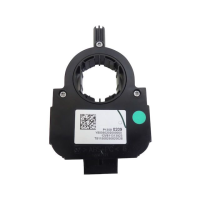
Below are the parts most often responsible for code C0071, ranked by how frequently each one is the actual culprit (per the diagnosis above). Tap any to see what we have for your vehicle.


The information in this article is provided for general reference and educational purposes only. Vehicle specifications, procedures, and part compatibility can vary by production date, trim level, and region. Always consult your vehicle's factory service manual and verify part numbers before purchasing or performing repairs. Safety-critical components such as airbags, seat belts, and braking systems should be installed by a qualified professional.
- 🎬 Helpful Videos
- 🛍️ Shop This Part
- What Does C0071 Mean?
- Can I Drive With C0071?
- Common Causes
- Symptoms
- Common Fixes & Costs
- Used vs. New Parts: Buying Guide
- Cost of Not Fixing It
- Diagnosis Steps
- When This Code Triggers (Freeze-Frame Conditions)
- Related Codes
- Climate & Environmental Factors
- How to Clear the Code After You Fix It
- Will This Fail Emissions / State Inspection?
- Most Commonly Affected Vehicles
- Manufacturer-Specific Notes
- Frequently Asked Questions
- The C0071 code appeared right after a wheel alignment. Is that related?
- Why did the C0071 code appear after I replaced my car battery?
- Can I pass a state inspection with a C0071 code?
- My mechanic wants to replace the VDC module for $1,500+. Is this necessary?
- Why are my ABS, VDC, and flashing BRAKE lights all on?
- What is the difference between the steering angle sensor and the clockspring?
- Will disconnecting the battery clear the C0071 code?
- Key Takeaways
- 🎟️ Get 5% Off