

OBD-II Code C0075: Comprehensive Guide to Brake System Faults
What C0075 means, why it triggers, and how to fix it — The definitive guide.
- Code C0075 instantly disables your ABS and Electronic Stability Control (ESC), increasing your risk of a collision during panic stops or on slick roads.
- Before replacing parts, test your battery; a voltage drop below 12.4V frequently erases the ABS module's sensor calibration and triggers this code.
- Never replace the $1,000+ ABS/VDC control unit without first performing a scan-tool sensor relearn and an automated ABS brake bleed.
- Fixing C0075 requires a bi-directional scan tool (costing $150+) to read manufacturer-specific detail codes, reset sensor zero-points, and cycle the internal ABS pump.
What Does C0075 Mean?
Code C0075 indicates a critical failure in the brake control system. Depending on the manufacturer, it points to a faulty hydraulic pressure sensor inside the ABS module or a malfunctioning brake pedal position sensor. This fault instantly disables the ABS and stability control safety nets.
Technical definition: The SAE/OBD-II definition for C0075 varies by manufacturer. Subaru defines it as 'Wheel Cylinder Pressure Sensor Output,' while GM and Ford define it as 'Extended Brake Pedal Travel, output to PCM.' Both indicate a malfunction compromising the vehicle's ability to manage braking forces.
Can I Drive With C0075?
Yes, But With Caution. You can drive, but with extreme caution. Your Anti-lock Braking System (ABS) and Electronic Stability Control (ESC/VDC) are disabled. In a panic stop, especially on wet or icy roads, your wheels will lock up, causing you to skid and lose steering control. Your car's conventional brakes still work, but driving with these warning lights on is illegal in some jurisdictions and impacts your insurance coverage in an accident.
Common Causes
- Low Battery Voltage or Recent Jump-Start (Very Common) — A weak battery dropping below 12V causes the ABS module to lose its brake pressure sensor calibration. This triggers the code even when no parts are broken.
- Internal Fault in the ABS/VDC Hydraulic Control Unit (Very Common) — The pressure sensor built into the ABS control unit fails. On many Subaru models, this stems from an internal logic flaw requiring complete module replacement.
- Faulty Brake Pedal Position Sensor (BPPS) (Common) — On GM and Ford vehicles, the sensor tracking brake pedal travel fails or sends incorrect voltage signals to the computer.
- Air in the Brake Lines (Common) — Air trapped in the hydraulic lines after a brake service causes incorrect pressure readings. This requires a scan-tool-assisted automated bleed to resolve.
- Improperly Adjusted Stop Lamp (Brake Light) Switch (Less Common) — The brake light switch sends conflicting data to the brake control module if misadjusted. Subaru TSBs 06-54-17 and 06-52-15 specifically address this.
- Damaged Wiring or Connectors (Less Common) — Corroded pins on the ABS module connector or broken wires introduce resistance, scrambling the sensor signals.
Symptoms
- ABS Warning Light On — The ABS light illuminates, indicating the anti-lock braking system is disabled.
- Traction/Stability Control Light On — The Vehicle Dynamics Control (VDC) or Electronic Stability Control (ESC) light illuminates, showing these systems are offline.
- Brake Warning Light On — A general red or yellow brake system warning light illuminates or flashes.
- Soft, Spongy, or Inconsistent Brake Pedal — The brake pedal requires more travel to the floor to stop the car, indicating an intermittent hydraulic fault.
- Cruise Control Disabled — The vehicle's computer disables the cruise control system as a standard safety precaution.
Diagnostic Flowchart
Tap your situation to follow the diagnostic path that matches what you're seeing on this code.
Common Fixes & Costs
- Replace Vehicle Battery — Parts: $150-$250, Labor: $50-$100, ~0.5 hr book time (DIY)
- Perform Sensor Reset/Relearn with Scan Tool — Parts: $0, Labor: $100-$200, ~1.0 hr book time (Professional)
- Replace Brake Pedal Position Sensor (BPPS) — Parts: $20-$50, Labor: $150-$300, ~1.5 hr book time (Intermediate)
- Perform ABS/VDC Power Brake Bleed — Parts: $20-$40, Labor: $150-$300, ~1.5 hr book time (Professional)
- Replace ABS/VDC Hydraulic Control Unit — Parts: $800-$1500, Labor: $250-$500, ~2.5 hr book time (Professional)
DIY vs Professional
- Replace Vehicle Battery 🟢 Beginner
Tools: Basic hand tools (socket set/wrenches). - Replace Brake Pedal Position Sensor (BPPS) 🟢 Beginner
Tools: Basic hand tools, trim removal tools, multimeter. - Perform Sensor Reset/Relearn or ABS Bleed 🟢 Beginner
Tools: Manufacturer-specific bi-directional scan tool. - Replace ABS/VDC Hydraulic Control Unit 🟢 Beginner
Tools: Professional bi-directional scan tool, full brake bleeding equipment, line wrenches, torque wrench.
Used vs. New Parts: Buying Guide
When a used part is worth it: For the primary fix, the ABS/VDC Hydraulic Control Unit, a used part makes sense when the vehicle is older (over 10 years or 150K miles) and the cost of a new OEM part exceeds $1,500.
Donor-vehicle mileage cap: roughly under 100000 miles for the part to have meaningful remaining life.
Donor quality checklist:
- Match the part number exactly; superseded or different numbers are incompatible.
- Obtain the VIN of the donor car to verify compatibility.
- Avoid parts from flood-damaged or heavy-corrosion vehicles.
Decision logic:
- If Vehicle is under warranty or part is subject to a TSB recommending replacement → Use a new OEM part to ensure the latest software/hardware revisions.
- If Vehicle is over 10 years old and the cost of a new part exceeds 25% of the vehicle's value → A used part from a reputable seller with a warranty is a reasonable option.
- If The cause of failure on the original part was a known internal logic flaw (e.g., Subaru TSB 06-80-20) → Favor a new part, as a used part from the same era likely has the same defect.
Warranty tradeoff: Used parts typically come with a 30-90 day warranty. New aftermarket parts offer 1 year to a limited lifetime warranty. New OEM parts usually have a 1-year warranty.
Worst-case if a used part fails: $350-700. If a used module is defective, you pay for installation labor twice, plus the cost of another module and brake bleeding procedure.
What Happens If You Wait — Timeline
- Immediate: ABS, Vehicle Stability Control (VSC/ESC), and Traction Control warning lights illuminate. The associated safety systems are immediately disabled. (MPG impact: 0%% · Added cost: $0. The immediate cost is a critical loss of safety.)
- 0-3 months: The vehicle's conventional brakes function, but without the anti-lock feature, wheels lock and skid during a panic stop. Risk of collision in adverse weather is significantly higher. (MPG impact: 0%% · Added cost: Potential for catastrophic cost from an accident. Possible fees for a failed inspection.)
- 3-12 months: Driving without stability control leads to slightly accelerated and uneven tire wear, especially if the driver's habits normally trigger the system. (MPG impact: 0-1%% · Added cost: $50-$200 in premature tire wear. The main cost continues to be the unmitigated safety hazard.)
- 12+ months: No further direct mechanical damage occurs. However, in the event of an accident, an insurance company argues negligence for knowingly operating the vehicle with a disabled safety system. (MPG impact: 0%% · Added cost: Potential for denied insurance claims or increased legal liability in an at-fault accident.)
Cost of Not Fixing It
- Immediate: ABS and Stability/Traction Control systems are disabled. There is a significantly increased risk of losing control and collision during emergency braking or on slippery surfaces. (Added cost: Potential for catastrophic cost from an accident.)
- 0-6 months: No direct mechanical damage occurs from ignoring the code itself. The primary cost is the ongoing safety risk and failing a state safety inspection. (Added cost: Negligible, aside from potential traffic citations or inspection failure fees.)
- 6+ months: Continued driving without stability control leads to uneven tire wear if driving habits are aggressive. The main cost remains the elevated safety risk and legal liability in an accident. (Added cost: $50-$200 for tire wear, but the primary cost is safety-related.)
Diagnosis Steps
- Check Battery Health and Terminals
Verify the battery's health. Use a multimeter to ensure the battery has at least 12.4 volts with the car off and over 13.2 volts when running. Get it professionally load tested to confirm stability.
Tools: Multimeter, Battery Load Tester (Beginner) - Read All Codes & Detail Codes
Use an advanced OBD-II scanner to read all codes from the ABS/VDC module. Pay special attention to manufacturer-specific detail codes (like 5090 or 5101 on a Subaru) for critical clues.
Tools: Advanced OBD-II Scanner (Beginner) - Test Brake Pedal Position Sensor (BPPS) Circuit
For GM and Ford vehicles, back-probe the BPPS signal wire with the ignition on. The voltage must rise smoothly from approximately 1.0V to 5.0V as you press the pedal. Jumps or dead spots indicate a faulty sensor.
Tools: Multimeter, Back-probe kit (Advanced) - Inspect and Adjust the Stop Lamp Switch
Locate the switch near the top of the brake pedal arm. Verify it is adjusted to manufacturer specifications (e.g., 1.5-2.5mm gap for a 2012-2016 Impreza).
Tools: Basic hand tools, Feeler gauge (Intermediate) - Visually Inspect VDC/ABS Module and Harness
Check the main electrical connector on the ABS/VDC hydraulic unit for corrosion, moisture, or pushed-out pins. Trace the wiring harness for physical damage.
Tools: Flashlight, Basic hand tools (Intermediate) - Inspect Brake Fluid and Mechanical Components
Check the brake fluid level and condition. Look for leaks around brake lines, calipers, and the ABS module. Inspect pads and rotors for extreme wear.
Tools: Flashlight (Beginner) - Test VDC/ABS Module Power and Ground Circuits
Verify the VDC module's power supply pin reads between 10V and 15V with the ignition on. Check the resistance between the module's ground pin and chassis ground; it must be less than 0.5 Ω.
Tools: Multimeter, Vehicle-specific wiring diagram (Advanced) - Analyze Live Sensor Data
Monitor live data from the brake system using a scan tool. Watch the 'BPP Sensor (%)' PID for GM/Ford, or 'Lateral G Sensor' and 'Yaw Rate Sensor' for Subaru to ensure inputs are plausible.
Tools: Advanced/Bi-directional Scan Tool (Professional) - Perform a Sensor Reset/Relearn Procedure
Use a professional scan tool to perform manufacturer-specific functions, such as 'Zero setting of Pressure sensor' (Subaru) or 'Brake Pedal Position Sensor Learn' (GM).
Tools: Advanced/Bi-directional Scan Tool (Professional) - Perform a Specialized ABS/VDC Brake Bleed
Use a scan tool to cycle the internal ABS and VDC pumps and valves to force trapped air out of the hydraulic control unit. A standard manual bleed is insufficient.
Tools: Advanced/Bi-directional Scan Tool, Brake Bleeding Kit (Professional)
When This Code Triggers (Freeze-Frame Conditions)
- Vehicle Speed: 0 mph (The code sets at startup, immediately after a low-voltage event.)
- Battery Voltage: < 11.0V (Freeze frame shows low voltage at the time the fault was logged, pointing to a battery or charging system issue.)
- Brake Pedal: Not Applied (The fault triggers during the system's self-test before the brake pedal is pressed.)
- Engine State: Running (The code logs when the engine is running and the ABS/VDC module is active.)
Related Codes
- C0074 — Indicates 'Incorrect input of pressure sensor'. TSB 06-41-11 confirms C0074 and C0075 appear together after a low battery event. Perform a 'Zero setting of Pressure sensor' before replacing parts.
- C0042 — Indicates 'Power Supply Voltage Failure'. Seeing C0042 with C0075 confirms the root cause is a weak battery or failing alternator. Address the C0042 power issue first.
- C0071 — Points to a fault with the steering angle sensor. The computer sets C0075 because brake pressure data seems incorrect relative to faulty steering angle data. Diagnose C0071 first.
- C0054 — Relates to the Brake Light Switch. Seeing them together strongly points to a misadjusted switch sending conflicting on/off signals against the pressure reading.
Climate & Environmental Factors
- Extreme Cold Weather: Temperatures below freezing cause sensors to temporarily malfunction. Moisture inside the brake booster or hydraulic lines freezes, restricting fluid flow and causing a hard brake pedal.
- High Humidity / Road Salt: Climates with high humidity or road salt accelerate corrosion. This degrades electrical connections at the main ABS module harness, leading to high resistance and intermittent signals.
How to Talk to a Mechanic About This Code
Say this: "I have a C0075 code and the ABS and VDC lights are on. I'd like to book a diagnostic, but I want to ensure you follow the manufacturer's TSBs before recommending a new ABS module. Specifically, please check for low battery voltage, perform the 'Zero Setting of Pressure Sensor' or 'BPPS Learn' procedure, and rule out air in the lines with a scan tool bleed before quoting a part replacement."
This signals you are aware of the common, inexpensive fixes for C0075. It directs the technician to perform the required diagnostic steps in the correct order, preventing them from jumping to the most expensive conclusion.
Avoid saying:
- 'My ABS light is on, can you fix it?'
- 'Just replace whatever is broken.'
- 'I think I need a new ABS module.'
Questions to ask before authorizing the repair:
- Did you load test the battery and check the charging system voltage?
- Did you attempt the sensor recalibration procedure ('Zero Setting' for Subaru, 'BPPS Learn' for GM) with a scan tool, and did it fail?
- Did you perform the scan tool-activated ABS bleed procedure to rule out trapped air?
- If you are recommending an ABS module replacement, can you confirm that you followed the diagnostic steps outlined in the Technical Service Bulletins for this code?
Where to Take It: Dealer vs Independent vs Chain
- Dealer:
Use with caution. A good dealer follows the TSBs correctly, but you must specifically request they perform the cheaper diagnostic steps first. Best for warranty work.
Best for: Vehicles under warranty., Complex cases where multiple TSBs apply and an independent shop has already failed to diagnose it., When you want the guaranteed latest part and software version.
Downsides: Highest labor rates (1.5-2x independent shops)., Quick to recommend full module replacement ($1,500+) instead of cheaper diagnostic procedures ($150-$300). (Typical cost: +75% vs. baseline) - Independent Shop:
Best fit for most customers. An experienced independent shop with the right scan tool performs all necessary diagnostic steps and part replacements at a significantly lower cost than a dealer.
Best for: Out-of-warranty vehicles where cost is a major factor., Shops that specialize in your vehicle's brand (e.g., a Subaru-specific indie shop)., Getting an affordable second opinion after a high dealer quote.
Downsides: Must verify they own a professional, bi-directional scan tool capable of ABS/VDC functions for your specific vehicle., Quality varies; check for ASE certifications and good reviews on brake/electrical work. (Typical cost: +0% vs. baseline) - Chain Shop:
AVOID for diagnosis. They test/replace your battery, but lack the specialized tools and expertise for this complex electronic fault.
Best for: Simple battery replacement or purchasing brake fluid.
Downsides: Technicians lack the high-level scan tools or specific training required for ABS module bleeding, sensor calibration, or module programming., High risk of misdiagnosis, leading to unnecessary and expensive part recommendations. (Typical cost: -10% vs. baseline)
When to Walk Away From the Repair
If the estimated repair cost for the most expensive fix (ABS module replacement) exceeds 40-50% of your car's private-party value, you should pause and consider alternatives.
- Car worth $8000, fix is $2000: Fix it. The repair cost is about 25% of the car's value, which is a reasonable investment to restore critical safety systems.
- Car worth $4000, fix is $2200: Walk away. The repair cost is over 50% of the car's value. Selling the car 'as-is' with full disclosure is likely more economical than paying for the repair.
- Car worth $12000, fix is $250: Fix it. If the diagnosis reveals a simple fix like a sensor recalibration or a new BPPS sensor, the cost is minimal compared to the car's value.
What Scan Tool You Need for This Code
Minimum: A bi-directional scan tool with manufacturer-specific software that accesses the ABS module to perform special functions like 'Automated Bleed' and sensor calibrations/relearns.
A standard $50 code reader cannot fix this issue. It cannot read 'C' codes and lacks the bi-directional control needed to perform the mandatory sensor recalibration and ABS bleed procedures.
Budget: None (~$0) — No scanner under $100 has the reliable bi-directional capability needed for the ABS bleed and sensor relearn functions required for C0075.
Mid-range: Foxwell NT510 Elite (~$159) — When loaded with specific software for your car brand, this tool offers bi-directional control. It performs the critical 'Zero setting of Pressure sensor' for Subaru, the 'Brake Pedal Position Sensor Learn' for GM, and initiates the ABS bleed sequence.
Professional: Autel MaxiCOM MK900-BT / Autel MS906 MAX (~$600-1200) — These professional-grade tools offer extensive bi-directional capabilities across many vehicle makes. They reliably perform ABS automated bleeds, all sensor calibrations, module programming, and provide detailed live data.
Rent vs buy: Buy. Because this code requires a bi-directional tool with manufacturer-specific functions, you cannot rent a suitable scanner from a standard auto parts store. Investing in a mid-range tool like the Foxwell NT510 Elite is the most cost-effective option.
How to Clear the Code After You Fix It
- Reconnect battery if disconnected for repair.
- Use an advanced OBD-II scan tool to clear the code from the ABS/VDC module.
- Perform required relearn procedures, such as 'Zero setting of Pressure sensor' (Subaru) or 'Brake Pedal Position Sensor Learn' (GM).
- Perform a test drive including several stops to confirm warning lights remain off.
Drive cycle (~20 minutes): A specific drive cycle is not required. After clearing the code, start the vehicle and let it idle. Warning lights reappear immediately if the underlying fault remains. A short test drive with gentle braking verifies the repair.
Readiness monitors affected: This is a chassis code ('C' code) and does not affect emissions readiness monitors.
Watch out for:
- Using a basic code reader that only clears powertrain ('P' codes) fails to erase a C0075 from the ABS module.
- The code returns instantly if a required calibration procedure is skipped after part replacement.
Will This Fail Emissions / State Inspection?
No — by itself this code doesn't fail OBD inspection (but it can keep readiness monitors from setting, which causes a separate fail).
- California: An illuminated ABS light does NOT cause a failure of the emissions-only Smog Check. California does not currently have a separate mandatory vehicle safety inspection.
- New York: An illuminated ABS warning light is NOT a cause for rejection during the annual safety inspection. However, the base brake system must pass a performance test (stopping without pulling).
- Texas: As of 2025, most non-commercial vehicles are exempt from the annual safety inspection. For commercial vehicles, an illuminated ABS light is NOT a cause for rejection, though service brakes must function correctly.
Most Commonly Affected Vehicles
- Subaru Legacy / Outback (2010-2014) — Extremely common. TSB 06-80-20 points to an internal VDC unit logic flaw requiring replacement. TSB 06-41-11 addresses low battery voltage as a primary cause.
- Subaru Impreza / Crosstrek (2012-2017) — TSB 06-80-20 points to an internal logic flaw in the VDC unit. For EyeSight models, TSB 06-67-18 outlines a mandatory brake bleeding procedure to rule out trapped air.
- Nissan Rogue / Murano (2014-2020) — Logs a general 'Chassis Control System Fault' warning caused by weak batteries or faulty ABS sensors.
- GMC Acadia (2007-2012) — Related to the 'Extended Brake Pedal Travel' definition, pointing towards issues with the brake pedal position sensor or its wiring.
- Ford F-150 (2011-2014) — Triggered by a faulty brake pedal position sensor (BPPS). TSB SSM 51962 notes some models require a pressure bleed of the brake system.
- Chevrolet Equinox (2010-2017) — Appears with other ABS codes and relates to a failing electronic brake control module (EBCM) or corrosion at the main EBCM connector.
- BMW X1 / X3 (2009-2015) — Relates to failures in the DSC (Dynamic Stability Control) module. Water intrusion into the parking brake module causes related faults.
- Toyota RAV4 / Corolla (2020-2021) — A similar code (C059746) produces identical symptoms due to a software logic failure in the skid control ECU, fixed via software update (TSB T-SB-0078-21).
Manufacturer-Specific Notes
- Subaru: Technicians must follow a strict diagnostic order: rule out low battery voltage (TSB 06-41-11), perform a special VDC brake bleed (TSB 06-67-18), and check stop lamp switch adjustment (TSB 06-52-15) before replacing the VDC unit.
- General Motors (GMC, Chevrolet): This code relates to the Brake Pedal Position Sensor (BPPS) on the brake pedal assembly. After replacement, a 'Brake Pedal Position Sensor Learn' procedure must be performed using a scan tool for both the BCM and ECM.
- Ford: C0075 relates to a faulty BPPS that is part of a larger assembly. Check for recalls or extended warranty programs related to brake system sensors before paying for a full repair.
- Nissan: Displays a generic 'Chassis Control System Error' highly sensitive to battery voltage. Dealerships quote high prices for module replacement, making a second opinion from an independent shop worthwhile.
Real Owner Stories
2015 Subaru Forester at 80K miles with intermittent warnings
Owner experienced intermittent flashing of VDC, ABS, Brake, and Hill Start Assist warning lights. The lights turned off by the next day, making diagnosis difficult.
Outcome: The dealer identified a failed ABS/VDC hydraulic control unit, a known issue per TSB 06-80-20. The unit was replaced, costing the owner $2,700.
Lesson: For intermittent issues, take the vehicle to a shop while the warning lights are actively on. Mentioning specific TSBs to the service advisor speeds up diagnosis.
2015 GMC Acadia with 'Service Stabilitrak' message
The 'Service Stabilitrak' and 'Service Traction Control' messages appeared on the dashboard, disabling the traction control system.
Outcome: The owner replaced the BPPS themselves using basic tools. This resolved the warning lights.
Lesson: On GM vehicles, C0075 and Stabilitrak warnings are frequently caused by the inexpensive BPPS, not the expensive ABS module.
2010 Subaru Outback after a battery replacement
Immediately after replacing a dead battery, the ABS, VDC, and BRAKE warning lights illuminated, storing code C0075.
Outcome: The shop recognized the symptom from Subaru TSB 06-41-11, where low voltage erases sensor calibration. They performed the 'Zero setting of Pressure sensor' procedure for $150, fixing the problem without replacing parts.
Lesson: If code C0075 appears directly after a jump-start or battery change, do not replace parts. The fix is a simple software recalibration.
Jeep rear-ended, leading to denied insurance claim
After being rear-ended, the owner's ABS, brake, and traction control lights came on. A shop diagnosed a faulty ABS module, quoting $1,800.
Outcome: The insurance company denied the claim, arguing the impact was on the opposite side of the vehicle and there was no visible damage to the module itself.
Lesson: Proving an electronic module failure was caused by a collision is difficult. Insurance adjusters often deny claims without direct physical evidence of damage to the part.
How to Prevent This Code From Triggering
- Perform a brake fluid flush every 2 years or 30,000 miles (Every 2 years) — Brake fluid absorbs moisture over time, corroding sensitive internal components and valves inside the ABS hydraulic control unit. Clean fluid protects the expensive module.
- Test battery health annually after 3 years of service (Annually) — A weak battery is a primary trigger for C0075, as low voltage corrupts the ABS module's sensor calibrations. Proactively replacing an aging battery prevents this fault.
- Clean and protect battery terminals and ABS module connectors (Every 1-2 years) — Applying dielectric grease to electrical connectors prevents corrosion that causes high resistance and triggers sensor performance codes like C0075.
- Address worn brake components (pads/rotors) promptly (As needed per inspection) — Severely worn or rusted brakes cause pressure fluctuations that sensitive ABS sensors misinterpret as a fault. Maintaining the mechanical brake system reduces stress on the electronics.
Frequently Asked Questions
What are the most common misdiagnosis mistakes for C0075?
The biggest mistake is immediately replacing the expensive ABS/VDC Hydraulic Control Unit. Technicians often fail to perform the required preliminary checks. You must first rule out a weak battery, air in the brake lines, and a misadjusted brake light switch.
The code appeared right after I got a jump-start. Are they related?
Absolutely. A low or dead battery is a primary cause for this code. The voltage drop erases the learned settings for the brake pressure sensor, triggering the fault on the next startup.
Can I fix C0075 myself?
For most people, this is not a DIY-friendly repair. Diagnosing it correctly requires professional scan tools to read manufacturer-specific codes, reset sensors, and properly bleed the ABS module. Replacing the hydraulic unit is an advanced job affecting critical safety systems.
My mechanic says I need a new ABS module, but the car brakes fine. Is that right?
Yes, that is very possible. The car's primary hydraulic braking still works, but the ABS and stability control will not. The C0075 code indicates an electronic fault that requires fixing to ensure safety systems work in an emergency.
Can a bad brake light switch really cause this major fault?
Yes. The computer needs to know precisely when you are braking to manage the stability control system. If the brake light switch is misadjusted or faulty, it sends conflicting information and triggers the C0075 code.
Can physical damage like hitting a pothole cause a C0075 code?
Yes. Hard impacts from potholes or snowbanks damage or disconnect the wiring to a wheel speed sensor. The resulting implausible data causes the VDC module to log a C0075 as part of a cascade of faults.
Will replacing the wheel speed sensor fix a C0075 code?
No, not directly. This code points to a pressure sensor inside the main ABS module or a brake pedal sensor, not a wheel speed sensor. However, damaged wiring to a wheel speed sensor sometimes causes a chain reaction of codes including C0075.
The code appeared right after I installed new LED taillights. Are they related?
Yes, it is possible. Aftermarket lighting, especially LED conversions, often have incorrect resistance or faulty wiring. This causes electrical feedback or voltage fluctuations that confuse the brake control module and trigger a C0075.
Is it illegal to drive with the ABS or VDC/ESC light on?
In many jurisdictions, driving with the ABS light on causes your vehicle to fail a mandatory safety inspection. More importantly, if you are in an accident, your insurance company can argue you were negligent for driving with a known safety system fault.
What is the difference between ABS and VDC/ESC?
ABS prevents your wheels from locking up and skidding during a hard, straight-line stop. VDC or ESC uses ABS components plus steering angle sensors to prevent skids during cornering by braking individual wheels. A C0075 fault typically disables both systems.
Key Takeaways
- Code C0075 instantly disables your ABS and Electronic Stability Control (ESC), increasing your risk of a collision during panic stops or on slick roads.
- Before replacing parts, test your battery; a voltage drop below 12.4V frequently erases the ABS module's sensor calibration and triggers this code.
- Never replace the $1,000+ ABS/VDC control unit without first performing a scan-tool sensor relearn and an automated ABS brake bleed.
- Fixing C0075 requires a bi-directional scan tool (costing $150+) to read manufacturer-specific detail codes, reset sensor zero-points, and cycle the internal ABS pump.
Shop the Parts Behind C0075
Below are the parts most often responsible for code C0075, ranked by how frequently each one is the actual culprit (per the diagnosis above). Tap any to see what we have for your vehicle.
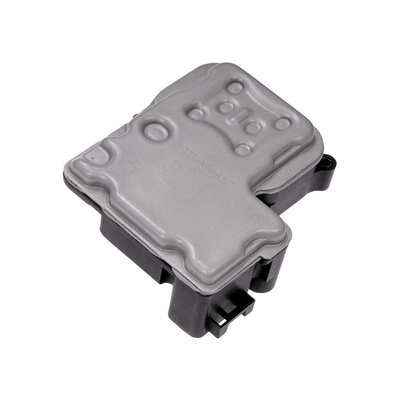



The information in this article is provided for general reference and educational purposes only. Vehicle specifications, procedures, and part compatibility can vary by production date, trim level, and region. Always consult your vehicle's factory service manual and verify part numbers before purchasing or performing repairs. Safety-critical components such as airbags, seat belts, and braking systems should be installed by a qualified professional.
- 🧭 Diagnostic Flowchart
- 🛍️ Shop This Part
- What Does C0075 Mean?
- Can I Drive With C0075?
- Common Causes
- Symptoms
- Common Fixes & Costs
- DIY vs Professional
- Used vs. New Parts: Buying Guide
- What Happens If You Wait — Timeline
- Cost of Not Fixing It
- Diagnosis Steps
- When This Code Triggers (Freeze-Frame Conditions)
- Related Codes
- Climate & Environmental Factors
- How to Talk to a Mechanic About This Code
- Where to Take It: Dealer vs Independent vs Chain
- When to Walk Away From the Repair
- What Scan Tool You Need for This Code
- How to Clear the Code After You Fix It
- Will This Fail Emissions / State Inspection?
- Most Commonly Affected Vehicles
- Manufacturer-Specific Notes
- Real Owner Stories
- 2015 Subaru Forester at 80K miles with intermittent warnings
- 2015 GMC Acadia with 'Service Stabilitrak' message
- 2010 Subaru Outback after a battery replacement
- Jeep rear-ended, leading to denied insurance claim
- How to Prevent This Code From Triggering
- Frequently Asked Questions
- What are the most common misdiagnosis mistakes for C0075?
- The code appeared right after I got a jump-start. Are they related?
- Can I fix C0075 myself?
- My mechanic says I need a new ABS module, but the car brakes fine. Is that right?
- Can a bad brake light switch really cause this major fault?
- Can physical damage like hitting a pothole cause a C0075 code?
- Will replacing the wheel speed sensor fix a C0075 code?
- The code appeared right after I installed new LED taillights. Are they related?
- Is it illegal to drive with the ABS or VDC/ESC light on?
- What is the difference between ABS and VDC/ESC?
- Key Takeaways
- 🎟️ Get 5% Off