

OBD-II Code C0090: ABS Solenoid or AWD Actuator Circuit Fault
What C0090 means, why it triggers, and how to fix it
- Code C0090 indicates an anti-lock brake system (ABS) failure on GM vehicles or an all-wheel drive (AWD) failure on Ford and BMW models.
- Driving with C0090 disables critical safety systems, increasing emergency stopping distances and causing unpredictable handling on slippery roads.
- On GM trucks and SUVs, C0090 almost guarantees an internal Electronic Brake Control Module (EBCM) failure, requiring a $200-$500 rebuild or replacement.
- For 2020-2022 Ford Escapes and Bronco Sports, C0090-18 signals a known AWD module grounding defect fixable with a $15 DIY ground wire.
- Always test the module's power and ground circuits with a multimeter before spending $800+ on replacement control modules or actuators.
What Does C0090 Mean?
Code C0090 indicates a problem in one of two different systems, depending on your vehicle's manufacturer. For General Motors, it signals a circuit malfunction with the Right Rear ABS Solenoid. For Ford and BMW, it points to a fault in the All-Wheel Drive (AWD) Power Transfer Unit (PTU) or transfer case actuator.
Technical definition: The formal definition of C0090 varies by manufacturer:
Can I Drive With C0090?
Yes, But With Caution. You can drive, but we strongly advise against it. Your Anti-lock Braking System (ABS) or All-Wheel Drive (AWD) system is disabled. ABS failure increases the risk of wheel lock-up and skidding in emergency stops. AWD failure reduces traction and causes unpredictable handling. Continuing to drive with a failing AWD system causes expensive secondary damage to the transfer case or differentials.
Common Causes
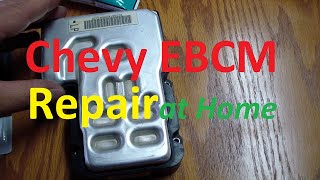
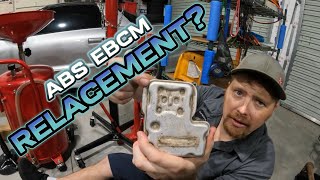
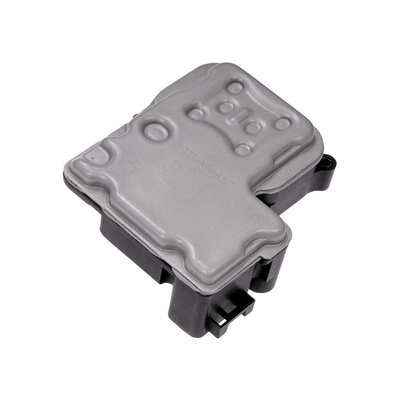
- [GM] Internal Failure of the Electronic Brake Control Module (EBCM) (Very Common) — On GM vehicles, the ABS solenoids are built directly into the EBCM. A fault in the solenoid circuit almost always means the entire module has failed internally due to broken solder joints and requires replacement or rebuilding. 🎬 See how to repair a GM EBCM at home
- [FORD] Poor Ground Connection to the AWD Control Module (Very Common) — On 2020+ Ford Escapes and Bronco Sports, a factory design flaw causes the AWD module to lose its ground connection. This drops the operating voltage below 8V, triggering the code and disabling the AWD system.
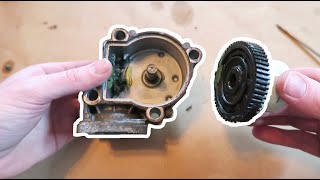
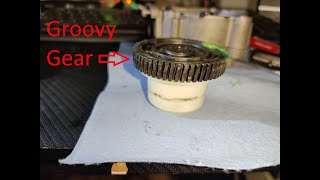
- [FORD/BMW] Failed Power Transfer Unit (PTU) or Transfer Case Actuator (Common) — The electric motor or internal mechanism that engages the AWD system burns out, seizes, or suffers from stripped internal plastic gears, preventing it from responding to module commands.
- [GENERAL] Damaged Wiring Harness or Connectors (Common) — The wiring harness leading to the AWD actuator, ABS module, or wheel speed sensors becomes frayed, corroded, or pinched from road debris and moisture, causing a loss of signal or a short circuit.
- [BMW] Corroded/Swollen ABS Reluctor Ring (Less Common) — The metal reluctor ring on the axle shaft corrodes and swells. This causes it to physically contact the wheel speed sensor, generating erratic signals that trigger various ABS and 4x4 faults.
- [GENERAL] Low System Voltage / Weak Battery (Rare) — Sensitive electronic modules require a stable voltage to operate correctly. A failing battery or alternator causes voltage drops that trigger false diagnostic codes.
Symptoms
- Dashboard Warning Lights Illuminated — The ABS, AWD/4x4, or Traction Control warning lights illuminate on the dashboard, indicating the respective system is disabled.
- Brakes Lock Up During Hard Braking — With the ABS disabled, the wheels lock up and skid during an emergency stop.
- Inability to Engage AWD/4WD — The vehicle remains in two-wheel drive, resulting in a noticeable lack of traction on slippery surfaces.
- Drivetrain Binding, Grinding, or Clicking Noises — A failing AWD actuator or binding drivetrain components cause mechanical grinding, whining, or clicking noises during acceleration or tight turns.
Diagnostic Flowchart
Tap your situation to follow the diagnostic path that matches what you're seeing on this code.
Common Fixes & Costs
- [FORD] Add a Dedicated Ground to the AWD Control Module — Parts: $5-$15, Labor: $100-$200, ~1.5 hr book time (Intermediate)
- [GM] Replace or Rebuild the Electronic Brake Control Module (EBCM) — Parts: $200-$800, Labor: $150-$350, ~2.0 hr book time (Professional)
- [FORD] Replace the Power Transfer Unit (PTU) Actuator — Parts: $200-$400, Labor: $150-$250, ~1.8 hr book time (Intermediate)
- [BMW] Replace the Transfer Case Actuator Motor — Parts: $350-$800, Labor: $200-$400, ~2.5 hr book time (Professional)
- [GENERAL] Repair Damaged Wiring or Connectors — Parts: $10-$30, Labor: $100-$250, ~1.5 hr book time (Intermediate)
Used vs. New Parts: Buying Guide
When a used part is worth it: For a simple mechanical part like an external AWD actuator motor, a used part from a low-mileage vehicle is a cost-effective option. For complex electronic modules like an EBCM, a used part is a gamble, as it likely has the same internal flaws as the failed original.
Donor-vehicle mileage cap: roughly under 60000 miles for the part to have meaningful remaining life.
Donor quality checklist:
- Verify the exact part number matches; modules are often not interchangeable between years or models.
- For electronic modules, ask about the donor vehicle's history (e.g., flood, accident).
- Prefer sellers who offer a short warranty (30-90 days) to protect against receiving a dead-on-arrival part.
Decision logic:
- If The part is an EBCM or integrated control module → Favor a professional rebuild service or a new OEM part. Rebuilders fix known factory weaknesses and offer a warranty.
- If The part is a simple external actuator and the new price is over $500 → A used part from a reputable salvage yard with a warranty is a reasonable choice.
- If The vehicle is older (15+ years) and has a high-failure, no-longer-available module → A functional used part is the only option available, but expect to pay a premium.
Warranty tradeoff: Used parts typically have a 30-90 day warranty. Remanufactured modules often come with a 1-year to lifetime warranty. New OEM parts carry the manufacturer's warranty, usually 12 months.
Worst-case if a used part fails: $300-$600 if a used electronic module fails after the return period, requiring repeat labor costs plus the price of another replacement.
What Happens If You Wait — Timeline
- 0-1 month: Code sets, ABS or AWD warning light illuminates. The corresponding system is disabled as a safety precaution. No physical damage is occurring yet. (MPG impact: 0%% · Added cost: $0)
- 1-6 months: For an AWD fault with mechanical symptoms (binding, grinding), continued driving causes accelerated wear on tires and drivetrain components like the transfer case clutches. (MPG impact: 1-3%% · Added cost: $200-$800)
- 6-12 months: For a binding AWD system, the actuator motor burns out completely from fighting resistance, or internal transfer case components suffer significant damage. (MPG impact: 3-5%% · Added cost: $800-$2,500)
- 12+ months: Catastrophic failure. A neglected binding AWD system destroys the transfer case or power transfer unit, requiring a complete replacement. (MPG impact: 5-10%% · Added cost: $2,500-$5,000+)
Cost of Not Fixing It
- Immediate: Loss of ABS or AWD functionality. This results in an immediate safety risk: increased stopping distance and potential for skidding in an ABS fault, or loss of traction and vehicle stability in an AWD fault. (Added cost: Negligible)
- 1-6 months: For AWD faults where the system is binding or making noise, continued driving causes excessive wear on tires, axle shafts, and transfer case clutches. (Added cost: $300-$1500)
- 6+ months: Ignoring a binding or malfunctioning AWD system leads to catastrophic failure of the transfer case or rear differential, requiring complete replacement. (Added cost: $2000-$4000+)
Diagnosis Steps
- Confirm the Fault and Identify the System
Use an advanced OBD-II scanner to confirm C0090 is present. The scanner's description and any suffix codes (e.g., C0090-18) dictate whether it relates to the 'Right Rear ABS Solenoid' (GM) or the 'AWD Power Transfer Unit Actuator' (Ford).
Tools: Advanced OBD-II Scanner (Beginner) - [FORD] Check for Voltage Drop at the AWD Module
For Ford AWD faults, use a scan tool to monitor the AWD module's supply voltage with the engine running. If this voltage reads below 12V (often 8.6V-10.9V) while the battery voltage is over 14V, you have the common grounding issue.
Tools: Multimeter, Advanced OBD-II Scanner (Intermediate) - Perform a Visual Inspection and Check Fuses
Inspect the wiring harness and connectors going to the ABS module or AWD actuator. Look for frayed wires, corrosion, or loose connections. Check the owner's manual to locate and test the fuses for the ABS and AWD systems.
Tools: Flashlight, Owner's Manual, Fuse Puller (Beginner) - Test for Power and Ground at the Component
Disconnect the electrical connector from the suspect component. Check for battery voltage (12V) at the power pin and good continuity to ground (near 0 ohms) at the ground pin. A lack of power or ground indicates a wiring problem upstream.
Tools: Multimeter, Vehicle-Specific Wiring Diagram (Intermediate) - Test Actuator or Solenoid Resistance
Measure the electrical resistance across the motor or solenoid pins with a multimeter. Compare this reading to the manufacturer's specification. A reading that is too high (open circuit) or too low (short circuit) indicates internal failure.
Tools: Multimeter, Service Manual (Intermediate) - Use a Scan Tool for Active Command Tests
Command the AWD actuator or ABS solenoids to activate using an advanced scanner. Listen for the click or hum of the component activating. No movement or sound despite having good power and ground confirms a failed component.
Tools: Advanced OBD-II Scanner (Advanced) - [GM] Confirm EBCM Failure
For GM vehicles, the solenoid circuit is internal to the EBCM. If power and ground to the module are good but the C0090 code persists (especially if paired with C0095), the EBCM itself requires replacement or rebuilding.
Tools: Advanced OBD-II Scanner, Multimeter (Advanced)
When This Code Triggers (Freeze-Frame Conditions)
- System Voltage: 10.5-11.5V (Faulty), 13.5-14.5V (Normal) (The code sets when the module's operating voltage drops below a specific threshold (e.g., 8V for Ford's C0090-18), even if overall system voltage is normal.)
- Vehicle Speed: 5-15 mph (For ABS faults, the code is set during the initial self-test that the module performs shortly after the vehicle starts moving.)
- Command Status: Actuator Commanded ON (For AWD faults, the code sets when the control module attempts to engage the AWD actuator but does not receive the expected feedback or sees a voltage drop.)
- Time Since Engine Start: 0-2 minutes (The fault is detected during the system's power-up sequence or initial self-checks immediately after starting the vehicle.)
Related Codes
- C0095 — This code is for the 'Right Rear ABS Solenoid 2 Circuit Malfunction'. On GM vehicles, seeing C0090 and C0095 together is a very strong confirmation that the EBCM has failed internally.
- C00A2 / C00A3 — These codes relate to the AWD Power Transfer Unit and Rear Differential control circuits. On Ford vehicles, they frequently accompany C0090-18 as a direct result of the poor module ground.
- U-Series Codes (e.g., U0121, U0415) — A 'U' code indicates a loss of communication with the module. C0090 means the module is powered but has an internal fault. Diagnose 'U' codes first by checking main power, ground, and CAN bus wiring.
- C0031 / C0034 — These codes point to faults in the front wheel speed sensor circuits. Issues like a chafed wiring harness cause multiple, sometimes misleading, ABS-related codes to appear.
Climate & Environmental Factors
- Temperature Extremes & Cycling: Repeated heating and cooling causes expansion and contraction of electronic components. Over time, this thermal stress creates microscopic cracks in the solder joints inside ABS/EBCM modules, known as 'cold solder joints'.
- Humidity and Moisture (Rust Belt): High humidity and road salt accelerate corrosion. This damages wiring harnesses, electrical connectors, and external components like AWD actuators and ABS reluctor rings, leading to short circuits.
How to Talk to a Mechanic About This Code
Say this: "I have a C0090 code and I need a diagnostic. For a Ford, I'd say: 'My scanner shows a C0090-18 for the AWD actuator. Before quoting a new module, please test the voltage at the AWD module to check for the common grounding issue.' For a GM vehicle: 'I have C0090, likely for the right rear ABS solenoid. Can you quote me for both a new EBCM and to install a rebuilt unit if I provide one?' For a BMW: 'My car has 4x4 and ABS lights. Before diagnosing the transfer case actuator, please visually inspect the rear ABS reluctor rings for corrosion.'"
This language shows you researched the specific, high-probability failures for your vehicle. It directs the mechanic to the most likely fix first, protecting you from paying for unnecessary diagnostic time or an expensive part you do not need.
Avoid saying:
- 'My ABS/AWD light is on, can you fix it?'
- 'Just do whatever it takes to get the light off.'
- 'I read on a forum that I need a new...' (Instead, ask them to test the theory)
Questions to ask before authorizing the repair:
- [For Ford] Did you measure the voltage at the AWD module, and what was the reading compared to battery voltage?
- [For GM] If I get my EBCM rebuilt, what is your labor cost to reinstall it and perform the ABS brake bleed?
- [For BMW] Did you find the plastic gear in the transfer case actuator was stripped, or is the motor burned out? Is a gear replacement an option?
- Will the new module require programming or calibration, and is that included in the labor cost?
- What is the warranty on the replacement part and your labor?
Where to Take It: Dealer vs Independent vs Chain
- Dealer:
Recommended if a new module requires manufacturer-specific programming that an independent shop cannot perform.
Best for: Vehicles under warranty, Complex module programming and calibration (newer Fords, BMWs), When you want an OEM-guaranteed repair and are not sensitive to cost
Downsides: Highest labor rates, May refuse to install customer-provided or rebuilt parts (like a rebuilt EBCM), Less likely to perform non-standard, money-saving fixes like the Ford ground wire repair (Typical cost: +50% vs. baseline) - Independent Shop:
Best overall fit, especially for the most common GM and Ford failures. A good independent shop with advanced diagnostic tools offers the best balance of expertise and value.
Best for: Out-of-warranty vehicles, Well-known fixes (Ford ground issue, GM EBCM rebuild), Owners who want to supply their own rebuilt parts
Downsides: Quality and diagnostic capabilities vary greatly; choose a shop specializing in your vehicle's brand or in diagnostics. (Typical cost: +0% vs. baseline) - Chain Shop:
AVOID. The diagnostic nuance required for C0090 is beyond the scope of most chain repair shops. The risk of misdiagnosis and paying for unnecessary parts is very high.
Best for: Simple jobs like tire rotations or oil changes.
Downsides: Technicians often lack the specialized diagnostic tools and training for complex electronic faults like C0090., High pressure to sell parts leads to recommending an expensive module replacement without proper diagnosis. (Typical cost: -10% vs. baseline)
When to Walk Away From the Repair
If the estimated repair cost exceeds 50% of your car's private-party value, seriously consider not fixing it. For older, high-mileage vehicles, lower this threshold to 30-40%.
- Car worth $3500, fix is $1500: Walk away. A $1500 EBCM replacement on a $3500 older GM truck is a poor investment. The repair is over 40% of the car's value, and other age-related failures are likely imminent.
- Car worth $16000, fix is $1200: Fix it. A $1200 AWD module replacement on a newer Ford Escape is only 7.5% of the vehicle's value. First, confirm it is not the $15 ground wire fix.
- Car worth $6000, fix is $1800: Borderline. A $1800 BMW transfer case actuator is 30% of the car's value. If the rest of the car is in excellent condition, it may be worth it. Get a second opinion and explore the cheaper gear rebuild option first.
What Scan Tool You Need for This Code
Minimum: A scan tool that reads and clears Chassis (C) / ABS codes. A basic engine-only code reader will not see code C0090.
A standard $20 OBD-II reader only accesses Powertrain (P) codes for the engine and emissions. C0090 is a Chassis (C) code stored in the ABS or AWD module. Without an ABS-capable scanner, you will not know the code is there.
Budget: BlueDriver Pro (~$90) — Reads and clears enhanced codes (ABS, Airbag, Transmission) for most GM and Ford vehicles. It confirms the specific C0090 fault definition (ABS vs. AWD) and reads freeze-frame data.
Mid-range: Foxwell NT530 / Autel MaxiCheck MX808 (~$350) — Provides bidirectional control. This is critical for C0090 repairs as it allows you to perform the 'ABS Auto-Bleed' function after replacing a GM EBCM and the 'VTG Calibration' after replacing a BMW transfer case actuator.
Professional: Autel MaxiCOM MK906BT / Launch X431 Series (~$500-1200) — Offers OEM-level diagnostics, including full module programming (PMI) for replacing modules on newer Ford and GM vehicles that cannot be simply swapped.
Rent vs buy: For initial diagnosis, some auto parts stores have loaner tools that read ABS codes for free. However, these tools cannot perform the bidirectional functions required for the repair itself. Buying a mid-range scanner is often cheaper than paying for a single diagnostic and programming session at a shop.
How to Clear the Code After You Fix It
- Perform the physical repair (e.g., replace module, repair wiring).
- Reconnect the battery if it was disconnected for the repair.
- Use an ABS-capable OBD-II scan tool to access the Chassis module and select the 'Clear Codes' or 'Erase DTCs' function.
- Perform any required calibration or relearn procedures as specified by the manufacturer (e.g., for a new AWD module or BMW transfer case actuator).
Drive cycle (~15 minutes): After clearing the code, start the engine and drive the vehicle. Accelerate to a speed above 15 mph to allow the ABS/AWD module to run its self-test. Drive for 10-15 minutes, including some turns and varied speeds, to confirm the warning lights do not reappear.
Readiness monitors affected: This is a Chassis (C) code, so it does not directly affect the primary emissions readiness monitors (like Catalyst or O2 sensors).
Before emissions retest: drive at least 10 miles to fully set monitors.
Watch out for:
- Using a basic OBD-II scanner that can only read Powertrain (P) codes will not be able to clear a Chassis (C) code.
- Simply disconnecting the battery temporarily turns off the light, but the code remains stored and returns as soon as the module runs its self-test.
- Failing to perform a required programming or calibration step after replacing a module causes the code to return immediately.
Will This Fail Emissions / State Inspection?
Yes — this code typically fails an OBD-II emissions inspection.
- California: While an ABS light itself will not fail the emissions portion of the Smog Check, it causes a failure of the mandatory safety inspection required for rebuilt/salvage title vehicles.
- New York: An illuminated ABS warning light causes an automatic failure of the annual safety inspection. The light must function correctly (on with key, off when running) to pass.
- Texas: As of 2025, annual safety inspections are no longer required for non-commercial vehicles. However, in the 17 counties requiring emissions testing, some inspectors fail the vehicle if the ABS light is on during the bulb check.
Most Commonly Affected Vehicles
- Ford Escape (2020-2022) — Highly prone to the AWD actuator fault (C0090-18) due to a poor ground design in the AWD Control Module. The common fix is adding a dedicated ground wire.
- Chevrolet Silverado, Camaro (2000-2014) — Commonly experiences the ABS solenoid fault (C0090), where the issue is an internal failure of the Electronic Brake Control Module (EBCM).
- BMW 3-Series, X3, X5 (2005-2023) — Presents ABS/4x4 lights due to a faulty transfer case actuator motor or a corroded rear ABS reluctor ring. The plastic gear inside the actuator motor is a common failure point.
- Ford Bronco Sport, Lincoln Corsair (2021-2022) — Shares the same platform and AWD module grounding issue as the Ford Escape, leading to C0090 and related AWD fault codes.
- Buick LaCrosse, Rendezvous (2002-2010) — Logs C0090 for a Right Rear ABS Solenoid fault, which is internal to the EBCM and not serviceable separately.
- Ford Explorer, F-150 (2010-2021) — Experiences C0090 related to the AWD/4WD system's PTU actuator or control module.
- GMC Sierra, Yukon (2000-2014) — Susceptible to C0090 caused by internal EBCM failure, identical to Chevrolet counterparts.
- Ford Maverick (2022-2024) — Shares the same platform as the Bronco Sport and exhibits the same AWD system faults.
- Pontiac Grand Prix (2002-2008) — Sets C0090 for a Right Rear ABS Solenoid 1 circuit fault, pointing to a failed EBCM.
Manufacturer-Specific Notes
- General Motors (Chevrolet, GMC, Buick, Cadillac): C0090 almost always points to an internal, non-serviceable fault within the Electronic Brake Control Module (EBCM). The diagnostic procedure leads directly to replacing or rebuilding the module.
- Ford: On 2020-2022 Escapes and Bronco Sports, C0090-18 is caused by a poor ground design within the AWD module. Adding a new ground wire to the module's case resolves the issue without replacing the expensive module.
- BMW: On xDrive models, ABS and 4x4 warning lights are caused by a failed transfer case actuator motor (stripped plastic gear) or a corroded rear ABS reluctor ring swelling and hitting the wheel speed sensor.
Real Owner Stories
2020 Ford Escape with 21,000 miles
Multiple intermittent warnings appeared on the dash, including 'AWD FAULT SERVICE REQUIRED' and a wrench light.
Outcome: Added a dedicated ground wire from an unused pin on the AWD module connector to a chassis ground point. This cost less than $15 in parts. The module voltage returned to 14.5V, and all codes cleared successfully.
Lesson: On modern Fords with multiple warning lights and an AWD fault, suspect the AWD module's ground first. A voltage drop test is key to avoiding a $1000 misdiagnosis.
2008 BMW X5 (E70) with 88,000 miles
Intermittent '4x4!' warning light that eventually became permanent, accompanied by ABS and limp mode errors.
Outcome: Replacing the actuator motor only worked for a few miles before the fault returned. The crucial missing step was performing the specific 'VTG Calibration' adaptation reset with a BMW-specific scan tool after installing the new part.
Lesson: On BMWs, replacing the transfer case actuator requires performing the transfer case adaptation reset with a proper scan tool. Skipping this step causes the new part to fail.
2007 Chevrolet Silverado with C0090 and C0095
ABS and Traction Control lights were on. A scan showed codes C0090 (Right Rear ABS Solenoid 1) and C0095 (Right Rear ABS Solenoid 2).
Outcome: Given that both solenoid 1 and solenoid 2 for the same wheel reported faults simultaneously, the diagnosis pointed directly to internal module failure. The owner had the EBCM rebuilt for $250, permanently clearing the codes.
Lesson: When C0090 and C0095 appear together on a GM vehicle, it strongly indicates the EBCM itself has failed. Do not waste money on wheel speed sensors.
How to Prevent This Code From Triggering
- Perform a brake fluid flush every 2-3 years. (Every 2-3 years) — Brake fluid absorbs moisture from the air. This moisture causes internal corrosion of the delicate solenoid valves inside the ABS module, leading to seized components.
- Clean underbody and electrical connectors. (Annually (after winter)) — Road salt and moisture cause corrosion on external components like AWD actuators and wiring harnesses. Rinsing the undercarriage prevents electrical failures.
- Change transfer case and differential fluids. (Every 30,000-60,000 miles) — Clean fluid is essential for the proper function and cooling of AWD clutches. Old fluid leads to overheating and mechanical failure, triggering electronic fault codes.
- Ensure tires are matched and rotated regularly. (Every 5,000-7,500 miles) — AWD systems are sensitive to differences in tire circumference. Unevenly worn tires cause the system to bind and put constant strain on the transfer case and actuators.
Frequently Asked Questions
Why does C0090 have two different meanings?
The Society of Automotive Engineers (SAE) provides generic codes, but manufacturers assign them to specific faults. GM uses C0090 for the ABS system, while Ford uses it for the AWD system.
What are common misdiagnosis pitfalls with code C0090?
A common mistake is replacing expensive modules without testing the wiring first. For example, shops often quote $800+ for a new Ford AWD module when a $15 ground wire fixes the issue. Always verify power and ground before condemning a module.
My scanner shows C0090 with a suffix like -18. What does that mean?
The suffix provides more specific information. On a 2020 Ford Escape, C0090-18 indicates the 'PTU Actuator Voltage is Out of Range (Below Threshold)', pointing directly towards the known grounding problem with the AWD module.
Is it safe to drive with code C0090?
It is not recommended. If the fault is in your ABS, your brakes lock up in an emergency, increasing stopping distances and risk of skidding. If it is in your AWD system, you have reduced traction and unpredictable handling on slippery roads.
How do I know if my C0090 is an ABS or AWD problem?
Use a quality OBD-II scanner that provides a detailed description of the code. It specifies if the fault is with the 'ABS Solenoid' or the 'AWD Actuator'. The warning lights on your dash (ABS vs. AWD/4x4) also provide a major clue.
Can a bad battery cause code C0090?
Yes. Low system voltage causes communication errors and triggers false faults in sensitive electronic modules like the ABS or AWD controllers.
My mechanic wants over $1,000 to fix code C0090. Is that a fair price?
Repair costs range from $15 for a Ford ground wire fix to over $1,700 for a BMW transfer case actuator. A GM EBCM replacement typically costs $700-$800. Always get a specific diagnosis before authorizing four-figure repairs.
Can a bad wheel bearing cause a C0090 code?
Indirectly, yes. A worn wheel bearing causes excessive movement in the hub, damaging the nearby ABS wheel speed sensor or reluctor ring. This erratic signal triggers various ABS codes, potentially including C0090 on susceptible systems.
Key Takeaways
- Code C0090 indicates an anti-lock brake system (ABS) failure on GM vehicles or an all-wheel drive (AWD) failure on Ford and BMW models.
- Driving with C0090 disables critical safety systems, increasing emergency stopping distances and causing unpredictable handling on slippery roads.
- On GM trucks and SUVs, C0090 almost guarantees an internal Electronic Brake Control Module (EBCM) failure, requiring a $200-$500 rebuild or replacement.
- For 2020-2022 Ford Escapes and Bronco Sports, C0090-18 signals a known AWD module grounding defect fixable with a $15 DIY ground wire.
- Always test the module's power and ground circuits with a multimeter before spending $800+ on replacement control modules or actuators.
Helpful Videos
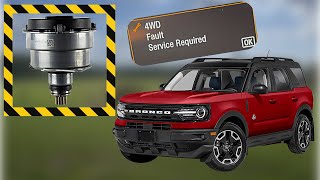
Shop the Parts Behind C0090
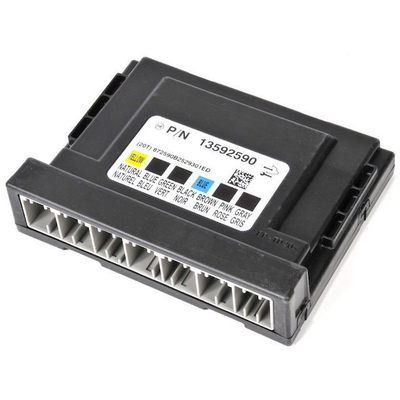
Below are the parts most often responsible for code C0090, ranked by how frequently each one is the actual culprit (per the diagnosis above). Tap any to see what we have for your vehicle.



The information in this article is provided for general reference and educational purposes only. Vehicle specifications, procedures, and part compatibility can vary by production date, trim level, and region. Always consult your vehicle's factory service manual and verify part numbers before purchasing or performing repairs. Safety-critical components such as airbags, seat belts, and braking systems should be installed by a qualified professional.
- 🧭 Diagnostic Flowchart
- 🎬 Helpful Videos
- 🛍️ Shop This Part
- What Does C0090 Mean?
- Can I Drive With C0090?
- Common Causes
- Symptoms
- Common Fixes & Costs
- Used vs. New Parts: Buying Guide
- What Happens If You Wait — Timeline
- Cost of Not Fixing It
- Diagnosis Steps
- When This Code Triggers (Freeze-Frame Conditions)
- Related Codes
- Climate & Environmental Factors
- How to Talk to a Mechanic About This Code
- Where to Take It: Dealer vs Independent vs Chain
- When to Walk Away From the Repair
- What Scan Tool You Need for This Code
- How to Clear the Code After You Fix It
- Will This Fail Emissions / State Inspection?
- Most Commonly Affected Vehicles
- Manufacturer-Specific Notes
- Real Owner Stories
- 2020 Ford Escape with 21,000 miles
- 2008 BMW X5 (E70) with 88,000 miles
- 2007 Chevrolet Silverado with C0090 and C0095
- How to Prevent This Code From Triggering
- Frequently Asked Questions
- Why does C0090 have two different meanings?
- What are common misdiagnosis pitfalls with code C0090?
- My scanner shows C0090 with a suffix like -18. What does that mean?
- Is it safe to drive with code C0090?
- How do I know if my C0090 is an ABS or AWD problem?
- Can a bad battery cause code C0090?
- My mechanic wants over $1,000 to fix code C0090. Is that a fair price?
- Can a bad wheel bearing cause a C0090 code?
- Key Takeaways
- 🎟️ Get 5% Off