

OBD-II Code C0091: PTU Position Sensor 'A' Circuit Range/Performance
The Ultimate Expert Guide to Diagnosing and Fixing C0091
- Code C0091 instantly disables your 4WD/AWD system and defaults the vehicle to 2WD due to a transfer case position sensor circuit fault.
- On 2020-2023 Ford Escape, Bronco Sport, and Lincoln Corsair models, a faulty AWD control module or a bad module ground causes 90% of C0091 codes.
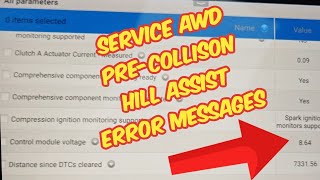
- Expect a cluster of warning lights—including AWD Malfunction, Hill Start Assist, and Pre-Collision Assist—because these safety systems rely on the disabled AWD network.
- Perform a live data voltage drop test on the AWD module before replacing parts; a reading below 11.0V while the engine runs confirms a bad ground.
- Repair costs range from a $20 DIY ground wire addition to over $1,400 for a dealership to replace and program a new AWD control module.
What Does C0091 Mean?
Code C0091 means the Driveline Control Module (DCM) or Powertrain Control Module (PCM) detects an out-of-range signal from the 'A' position sensor in the transfer case or Power Transfer Unit (PTU). This sensor reports the exact rotational position of the transfer case shift mechanism, indicating the current 4WD/AWD gear (e.g., 2WD, 4-High, 4-Low). If the computer receives a voltage signal that is irrational, intermittent, or mismatched with the commanded position, it triggers C0091 and disables the AWD system as a fail-safe.
Technical definition: The SAE/ISO definition for C0091 is 'PTU Position Sensor A Circuit Range/Performance'. This means the control module reads a voltage signal from the Power Transfer Unit (PTU) position sensor 'A' that falls outside calibrated thresholds or fails to match the expected mechanical movement. For example, the module sets the code if the sensor signal drops below 0.5 volts or exceeds 4.8 volts for a set duration.
Can I Drive With C0091?
Yes, But With Caution. You can drive, but understand the risks. The AWD/4WD system disables instantly, defaulting the vehicle to two-wheel drive and drastically reducing traction on slick surfaces. Because the AWD system goes offline, critical safety features like Traction Control, Stability Control, and Pre-Collision Assist also disable. This increases stopping distances and reduces control during emergency maneuvers. Limit driving to essential trips and prioritize repairs to restore your safety systems.
Common Causes
- Faulty All-Wheel Drive (AWD) Control Module (Very Common) — On 2020+ Ford and Lincoln SUVs, the AWD control module is the primary culprit. Internal transistor failures or software corruption force the module to set C0091, even with a perfectly functioning sensor.
- Poor Ground Connection at the AWD Module (Very Common) — A corroded or insufficient ground path for the AWD module plagues Ford Escapes and Explorers. This creates a voltage drop, starving the module of power and causing it to misinterpret sensor data, triggering C0091 alongside C0090, C00A2, and C00A3. 🎬 Watch: Troubleshooting multiple AWD fault codes on a Ford Escape
- Failed Transfer Case Position Sensor (Common) — The potentiometric or Hall-effect sensor degrades internally from vibration, heat, and age. This wear causes it to send erratic, weak, or dead signals to the control module.
- Wiring Harness or Connector Issues (Common) — Wires chafing against the chassis or driveshaft, water-contaminated connectors, and corroded pins create open or short circuits in the sensor harness.
- Low System Voltage / Weak Battery (Less Common) — A dying battery or failing alternator drops system voltage below the 9-volt operating threshold. This voltage starvation triggers a cascade of communication faults, including C0091.
- Corrupted Driveline Control Module (DCM) Software (Less Common) — A glitch in the module's programming forces it to misinterpret valid sensor readings. A dealer software re-flash resolves this logic error without replacing hardware.
- Obstructed Front Radar/Camera Sensor (Less Common) — A dirty front radar sensor or windshield camera disables Pre-Collision Assist and Traction Control, illuminating an identical set of dashboard warning lights. Always clean these sensors to rule out a false alarm before starting electrical diagnostics.
- Mechanical Binding in Transfer Case (Rare) — Worn or binding internal shift forks prevent the sensor from moving through its full range. The sensor works, but the stuck mechanical parts cause a mismatch between commanded and actual positions.
- Fluid Contamination in Connectors (Rare) — Transfer case fluid leaks seep into the sensor's electrical connector, shorting the circuit and triggering the code.
Symptoms
- Multiple Dashboard Warning Lights — A sudden cluster of dashboard lights appears simultaneously: 'AWD Malfunction', 'Service 4WD', 'Hill Start Assist Not Available', and 'Pre-Collision Assist Not Available'.
- AWD or 4WD System Disabled — The vehicle locks into two-wheel drive, causing a severe lack of traction in slippery or off-road conditions.
- Inability to Shift 4WD Modes — The electronic 4WD selector switch becomes completely unresponsive to mode change attempts.
- Grinding or Clunking Noises — Grinding or clunking sounds emit from the transfer case at low speeds as the system unsuccessfully attempts to engage.
- Erratic or Jerky AWD Engagement — Drivers experience jerky or hesitant AWD engagement, feeling like the drivetrain is binding or slipping as power applies incorrectly.
Diagnostic Flowchart
Tap your situation to follow the diagnostic path that matches what you're seeing on this code.
Common Fixes & Costs
- Repair AWD Module Ground Connection — Parts: $5-$20, Labor: $122-$179, ~1.5 hr book time (Intermediate)
- Replace the AWD Control Module — Parts: $700-$1100, Labor: $100-$200, ~1.2 hr book time (Professional)
- Replace the Transfer Case Position Sensor — Parts: $120-$250, Labor: $80-$181, ~1.0 hr book time (Intermediate)
- Repair Damaged Wiring Harness or Connector — Parts: $10-$50, Labor: $150-$300, ~2.0 hr book time (Intermediate)
- Recalibrate or Reprogram the AWD Control Module — Parts: $0, Labor: $100-$200, ~1.0 hr book time (Professional)
Used vs. New Parts: Buying Guide
When a used part is worth it: A used AWD Control Module makes sense for older, out-of-warranty vehicles on a strict budget. However, given the high failure rate of original Ford modules, buying used is a gamble.
Donor-vehicle mileage cap: roughly under 60000 miles for the part to have meaningful remaining life.
Donor quality checklist:
- Verify the exact part number matches; superseded numbers are often incompatible.
- Source from a reputable salvage yard with a minimum 30-day warranty.
- Avoid modules from vehicles with flood or fire damage.
Decision logic:
- If The vehicle is a 2020+ Ford/Lincoln with this common issue → Buy a new OEM module with the latest part number (e.g., M1PZ-7P238-C), as it contains internal revisions to improve reliability.
- If The budget is extremely tight and you have access to programming tools → A used module is a viable option, but factor in the non-negotiable cost of programming.
- If The required part is the transfer case sensor itself → Buy new. The cost savings for a used sensor are minimal, and it is a wear item not worth the risk of premature failure.
Warranty tradeoff: Used modules typically carry a 30-90 day warranty. New OEM parts purchased from and installed by a dealer carry a 2-year warranty. Aftermarket new parts vary from 1 year to a limited lifetime warranty.
Worst-case if a used part fails: $200-400 if a used module is dead on arrival or fails shortly after installation, representing the sunk cost of programming and labor.
What Happens If You Wait — Timeline
- 0-1 month: Warning lights illuminate, disabling AWD, Traction Control, and Stability Control. The vehicle locks into 2WD. (MPG impact: 0%% · Added cost: $0. The primary cost is a significant reduction in vehicle safety.)
- 1-6 months: Driving in 2WD accelerates wear on the driven tires. The disabled stability control drastically increases the chance of an accident in adverse weather. (MPG impact: 0-1%% · Added cost: $0-$50 in slightly uneven tire wear. The true potential cost is an accident deductible ($500+).)
- 6-12 months: The active warning light causes an automatic failure of state OBD-II emissions and safety inspections. The underlying fault rarely damages other components. (MPG impact: 0-1%% · Added cost: $200-$1400. The cost is no longer avoidable, as the repair is now required to keep the vehicle legally on the road in many states.)
- 1+ year: The vehicle remains in fail-safe 2WD without cascading mechanical failure. The true long-term consequence is the continuous safety hazard and inspection failures. (MPG impact: 0-1%% · Added cost: The cost remains the eventual, mandatory repair. The cumulative safety risk is the most significant factor.)
Cost of Not Fixing It
- Short-Term (0-3 months): You lose AWD/4WD capability, traction control, and stability control. This drastically reduces vehicle safety on slippery surfaces, though it causes no immediate mechanical damage. (Added cost: Negligible)
- Medium-Term (3-12 months): Driving in 2WD places slightly more wear on the driven wheels. An unresolved electrical short occasionally worsens to affect other circuits, but the primary cost remains the ongoing safety hazard. (Added cost: Negligible)
- Long-Term (1+ year): Ignoring the code rarely causes cascading mechanical failures, as the system fail-safes into 2WD. The true long-term cost is the high probability of an accident in adverse conditions that functional stability control would have prevented. (Added cost: Potential for accident-related costs.)
Diagnosis Steps
- Scan for All DTCs
Read codes from ALL modules (PCM, DCM, ABS) using an OBD-II scanner. If C0091 appears alongside C0090, C00A2, and C00A3, the AWD module or its power supply is the definitive culprit.
Tools: OBD-II Scanner (with all-module access) (Beginner) - Check for Technical Service Bulletins (TSBs)
Check for Technical Service Bulletins (TSBs) or customer satisfaction programs. Ford's program 21B19 directly addressed C0091 on 2020-2021 models due to a known faulty AWD module.
Tools: Smartphone or Computer (Beginner) - PRO TIP: Live Data Voltage Drop Analysis
Monitor the AWD module's live voltage data with the engine running. Compare it to the battery voltage measured with a multimeter. A difference exceeding 1.0V (e.g., module reads 9V while battery reads 14V) confirms a severe voltage drop caused by a poor ground.
Tools: Advanced Scan Tool, Multimeter (Intermediate) - Inspect Wiring and Connectors
Inspect the transfer case sensor and AWD module wiring harnesses for chafing, melting, or corrosion. Check the harness near the front driveshaft on GM trucks, and inspect the AWD module under the passenger seat carpet on Ford Escapes for moisture.
Tools: Flashlight, Trim removal tools (Intermediate) - Test AWD Module Power and Ground Manually
Backprobe the power and ground pins at the AWD module connector. Verify battery voltage on the power wire. Perform a voltage drop test on the ground pin to a clean chassis ground; it must read under 0.2 volts with the system on. Higher readings confirm a bad ground.
Tools: Multimeter, Vehicle-specific wiring diagram, Backprobe pins (Advanced) - Test the Sensor Circuit
Verify the sensor receives a 4.8V-5.2V reference voltage from the module. Measure the signal wire's voltage while manually shifting the transfer case; it must produce a smooth, linear change from 0.5V to 4.5V. Jumps, dropouts, or fixed voltages indicate a failed sensor.
Tools: Multimeter, Vehicle-specific wiring diagram (Advanced) - Advanced: Sensor Resistance Test (Potentiometer Type)
Disconnect the sensor and measure resistance between the specified pins while actuating the sensor lever. The resistance must change smoothly. An open circuit (infinite resistance) or short (zero resistance) confirms internal sensor failure.
Tools: Multimeter, Vehicle-specific service manual (Advanced) - PRO TIP: Scope Pattern Analysis
Graph the sensor's signal voltage using an oscilloscope. A failing sensor displays hash, spikes, or sudden dropouts in the waveform that a multimeter misses. This definitively proves sensor failure.
Tools: Automotive Oscilloscope (Lab Scope), Wiring diagram (Professional) - Module Communication Test
Attempt an AWD module self-test using a bi-directional scan tool. If the module fails the internal test, reports communication errors, or fails to respond despite perfect power and ground feeds, it requires replacement.
Tools: Advanced Bi-directional Scan Tool (Professional)
When This Code Triggers (Freeze-Frame Conditions)
- Engine Coolant Temp: 180-205°F (The fault typically triggers after the vehicle reaches full operating temperature.)
- Vehicle Speed: 15-55 mph (The code sets during normal city or highway driving, independent of active 4WD engagement.)
- Module Voltage: < 11.0V (Freeze frame data shows the AWD module voltage dropping significantly below the 14V+ battery voltage, confirming a bad ground.)
- Time Since Engine Start: 5-20 minutes (The fault rarely triggers on a cold start, appearing after 5-20 minutes of driving as components heat up and electrical resistance increases.)
Related Codes
- C0090 — Appears alongside C0091. Seeing C0090, C00A2, and C00A3 together confirms the AWD module or its power/ground circuit is at fault. Measure voltage directly at the module to verify a bad ground.
- C00A2 — Indicates a PTU Control Circuit Driver fault. Paired with C0091, it proves the module is failing internally, ruling out external sensor issues.
- C00A3 — Indicates a Rear Differential Unit Control Circuit Driver fault. Paired with C0091, it confirms complete control module failure.
- P0562 — Indicates System Voltage Low. If the AWD module's supply voltage drops below 9.0V due to a weak battery or bad ground, it shuts down and triggers C0091. Always fix system voltage first.
Climate & Environmental Factors
- High Humidity: Elevated humidity accelerates corrosion on electrical connectors and module ground points, directly causing the poor ground connection issue on AWD modules.
- Water Intrusion: Heavy rain forces water into vulnerable connectors. The Ford Escape's under-carpet AWD module is highly susceptible to moisture from missing floor pan drain plugs or wet shoes.
- Road Salt (Rust Belt Regions): Road salt attacks underbody wiring, connectors, and chassis ground points, drastically increasing wiring and ground-related failures.
- Temperature Cycles: Extreme temperature swings cause metal expansion and contraction, worsening intermittent connections and fracturing the internal ground connection within Ford AWD modules.
How to Talk to a Mechanic About This Code
Say this: "I have a C0091 code on my [Year, Make, Model]. This frequently stems from a voltage drop at the AWD module due to a bad ground. Before quoting a module replacement, please perform a voltage drop test on the module's power and ground pins and report the results."
This proves you are an informed consumer and steers the technician toward the cheapest, most common fix. It prevents them from defaulting to an expensive module replacement.
Avoid saying:
- 'My AWD light is on, can you fix it?'
- 'I think I need a new AWD computer.'
- 'Just do whatever it takes to fix the light.'
Questions to ask before authorizing the repair:
- What was the measured voltage at the AWD module's power pin compared to battery voltage?
- What was the voltage drop reading on the module's ground circuit?
- If you are recommending a new module, can you confirm it requires programming to my vehicle's VIN?
- What is the warranty on this repair, including both the part and your labor?
Where to Take It: Dealer vs Independent vs Chain
- Dealer:
A safe but potentially expensive option. Best if you suspect the module itself has failed and need guaranteed programming, or if the vehicle is under warranty.
Best for: Vehicles under warranty., Repairs that require mandatory module replacement and programming with proprietary software (like Ford's FDRS).
Downsides: Highest labor rates., Dealerships refuse non-standard fixes like adding a ground wire, defaulting to the $1,400 module replacement. (Typical cost: +50% vs. baseline) - Independent Shop:
The best fit for most out-of-warranty Ford owners. Seek a reputable independent shop with good reviews for electrical diagnostics and specifically ask if they are familiar with the Ford AWD module ground issue.
Best for: Out-of-warranty vehicles where cost is a major factor., Diagnosing and performing the common ground wire or wiring harness repair.
Downsides: Requires vetting to ensure the shop handles modern electronics and C-codes., May not have the expensive tools to program a new module if one is truly needed, potentially requiring a second trip to a dealer. (Typical cost: +0% vs. baseline) - Chain Shop:
AVOID. The diagnostic complexity and potential need for manufacturer-specific programming are beyond the scope of most chain repair shops.
Best for: Simple, unrelated maintenance like oil changes or tires.
Downsides: Technician skill varies widely., Lacks the advanced scan tools and training required for complex chassis codes and module programming., High pressure to upsell may lead to incorrect diagnosis. (Typical cost: -10% vs. baseline)
When to Walk Away From the Repair
Sell or trade the vehicle if the estimated repair cost exceeds 50% of its private-party value.
- Car worth $12000, fix is $1400: Fix it. The repair cost is only about 12% of the vehicle's value and restores critical safety systems.
- Car worth $4500, fix is $1400: Borderline. This is ~30% of the car's value. Get a second opinion to see if a cheaper fix (like a ground repair for $200) is possible before authorizing the expensive repair.
- Car worth $3000, fix is $1400: Walk away. The repair is nearly 50% of the car's value. It is not economically sensible.
What Scan Tool You Need for This Code
Minimum: A scanner capable of reading Chassis (C-codes), ABS codes, and live data. Basic engine-only readers cannot detect C0091.
A $20 reader pulling only 'P' codes misses C0091 entirely. Proper diagnosis requires viewing live AWD module voltage data to identify the common bad ground issue.
Budget: BlueDriver Pro (~$90) — Reads and clears enhanced codes (ABS, Airbag, Chassis) for most major brands. Crucially, it displays live data, allowing you to monitor the AWD module's voltage to check for the tell-tale voltage drop.
Mid-range: Foxwell NT510 Elite (~$200) — Provides bi-directional control for a specific manufacturer (e.g., Ford). This allows you to run module self-tests and command actuators, providing deeper diagnostic capability than a read-only tool.
Professional: Autel MaxiCOM MK808 (~$500) — Offers full bi-directional control, extensive service functions, and performs the 'Programmable Module Installation' (PMI) required to configure a new Ford AWD module to the vehicle, making a DIY module swap possible.
Rent vs buy: AutoZone's free loaner tool is typically a basic engine code reader and may not be able to read the 'C' code required for this diagnosis. If you are a DIYer, buying a tool like the BlueDriver is a worthwhile investment for any modern car owner.
How to Clear the Code After You Fix It
- Reconnect any disconnected components (e.g., battery, AWD module).
- Use a compatible OBD-II scan tool to clear the C0091 code and any related codes from all modules.
- For module replacement, perform the Programmable Module Installation (PMI) and Active Torque Coupling Configuration using dealer-level software.
- Perform a complete drive cycle to allow the system's readiness monitors to run.
Drive cycle (~20 minutes): A general drive cycle includes a cold start, a few minutes of idling, mixed city driving (stops, accelerations to ~35 mph), and a period of steady highway-speed driving (55-60 mph for 5-10 minutes). The goal is to operate the vehicle under various conditions to allow the onboard diagnostics to self-test the repair.
Readiness monitors affected: Comprehensive Component Monitor (CCM), Transmission Control Module (TCM), Chassis/Drivetrain Systems
Before emissions retest: drive at least 50 miles to fully set monitors.
Watch out for:
- Disconnecting the battery does not fix the hardware fault; the code returns immediately.
- A new AWD control module remains inoperative until programmed to the vehicle's VIN using dealer-level software.
- After clearing codes, readiness monitors read 'Not Ready'. The vehicle must complete a full drive cycle before passing an emissions test.
Will This Fail Emissions / State Inspection?
Yes — this code typically fails an OBD-II emissions inspection.
- California: A 'C' code like C0091 that illuminates a warning light causes an automatic failure of the smog check. After repair, a full drive cycle must be completed to set the readiness monitors before a re-test.
- New York: The NYS inspection includes checking for illuminated malfunction indicator lights. An active AWD warning light triggered by C0091 results in an inspection failure.
- Texas: In counties requiring emissions testing, any active Diagnostic Trouble Code (DTC) commanding the Malfunction Indicator Lamp (MIL) on causes an automatic failure. Even though C0091 is a chassis code, it triggers a general warning light, failing the test.
Most Commonly Affected Vehicles
- Ford Escape (2020-2023) — Widespread AWD control module failures stem from a faulty internal transistor or poor module ground. Ford's expired 21B19 program covered early models, but the issue persists through 2023.
- Ford Bronco Sport (2021-2023) — Shares the faulty AWD module with the Escape. Early 2021 builds were covered under program 21B19, but failures occur across all model years.
- Lincoln Corsair (2021-2023) — Shares the identical platform and faulty AWD module as the Escape and Bronco Sport.
- Ford Explorer (2020-2023) — Frequent AWD module failures and poor ground connections cause identical symptoms, with dealership repair costs exceeding $1,200.
- Ford Edge (2019-2022) — Widespread 'AWD Malfunction' messages trace directly to the AWD control module, its wiring harness, or a related wheel speed sensor fault.
- Chevrolet / GMC Silverado, Sierra, Tahoe, Suburban (2014-2019) — C0091 stems from the transfer case range selector sensor or its wiring harness, which routes dangerously close to the front driveshaft and chafes.
- Hyundai Santa Fe, Tucson, Palisade (2018-2023) — Identical symptoms (AWD disabled, multiple warning lights) frequently result from a faulty front radar sensor rather than a true transfer case fault.
- Nissan Rogue, Murano, Pathfinder (2017-2022) — 'AWD Error' messages trigger from C0091, faulty wheel speed sensors, or AWD coupling overheating during strenuous use.
Manufacturer-Specific Notes
- Ford: On 2020+ Escape, Bronco Sport, and Corsair models, C0091 guarantees a faulty AWD Control Module or bad ground. Adding a dedicated ground wire from the module to the chassis permanently resolves the issue for under $20.
- General Motors (GM): GM definitions for C0091 sometimes refer to an ABS solenoid circuit rather than the PTU. Use a manufacturer-specific scan tool to avoid misdiagnosis. On trucks, the transfer case wiring harness is the primary failure point.
- Hyundai / Kia: A nearly identical cluster of warning lights triggers when the front radar sensor is dirty or blocked by ice. Clean the lower grille sensor before assuming an AWD system fault.
- Nissan: Nissan AWD systems overheat easily in deep snow or sand. This overheating disables the system and posts an 'AWD Error'. Letting the vehicle cool for 20 minutes resolves heat-induced faults.
Real Owner Stories
2020 Ford Escape at 65K miles - The <$20 Ground Wire Fix
While driving, the dashboard suddenly lit up with 'AWD Malfunction', 'Pre-Collision Assist Not Available', and 'Hill Start Assist Not Available' warnings. The AWD system was completely disabled.
What they tried:
- Initially thought it was a major failure and feared a $1,500+ dealership repair bill for a new AWD module.
- After researching forums, found numerous owners with identical issues pointing to a poor ground connection for the AWD module located under the passenger seat carpet.
- Performed a DIY repair by adding a 14-gauge ground wire from an unused pin on the module's connector (pin 46) directly to a chassis ground point under the seat.
Outcome: The repair cost $15 in wire and took two hours. After clearing the codes, all warning lights extinguished and full AWD functionality returned permanently.
Lesson: On modern Ford Escapes, Explorers, and related models, a cluster of AWD-related warnings is very frequently caused by a simple bad ground, not a failed $1,000 module. A voltage drop test or this simple ground wire addition can save a fortune in unnecessary parts and labor.
2021 Ford Escape at 70K miles - A Costly Misdiagnosis
Intermittent 'AWD Fault' messages appeared, especially on hot days. Eventually, the warnings became permanent.
What they tried:
- Took the vehicle to the dealership. The first diagnosis was a weak battery causing voltage issues. The owner paid ~$350 for a new battery and registration.
- The warning lights returned the next day.
- On the second visit, the dealer diagnosed a failed AWD Control Module and quoted $1,300 for replacement and programming.
- The owner declined and went to an independent mechanic who was aware of the common ground issue. The mechanic performed the ground wire fix for $150.
- The independent mechanic's fix solved the problem permanently.
Outcome: The owner wasted $350 on an unnecessary battery because the dealership failed to check for the known ground issue. The independent mechanic's $150 ground repair solved the problem permanently.
Lesson: Don't automatically accept the first diagnosis, especially if it's a generic one like a 'bad battery' for a very specific set of warning lights. If your vehicle is known for a specific common failure (like the Ford AWD module ground), mention it to your mechanic and insist they investigate that specific possibility before replacing expensive components.
2015 GMC Sierra at 110K miles - The Wiring Harness Chafe
The 'Service 4WD' message appeared on the dash, and the 4WD selector switch was inoperative. The truck was stuck in 2WD.
What they tried:
- A scan revealed code C0091. The owner first suspected the transfer case position sensor (encoder motor).
- While inspecting the sensor connector underneath the truck, they noticed the wiring harness was routed very close to the front driveshaft.
- A closer look revealed that the harness loom was worn through, and one of the wires inside (an orange power wire) was corroded and broken from rubbing against the chassis.
Outcome: The owner spliced the broken wire with a weatherproof butt connector and secured the harness away from the driveshaft. The $10 repair cleared the C0091 code and restored 4WD.
Lesson: On GM trucks, C0091 is less likely to be the control module and more likely to be the sensor itself or its wiring. Always perform a thorough visual inspection of the underbody wiring harness for chafing or corrosion, particularly near moving parts like driveshafts, before replacing the sensor or TCCM.
How to Prevent This Code From Triggering
- Apply Dielectric Grease to Connectors (Every 3-5 years or during any related service) — Applying dielectric grease to underbody connector seals prevents moisture and road salt from corroding the pins.
- Inspect and Secure Wiring Harnesses (During every oil change) — Inspecting underbody wiring near moving parts catches chafing issues before wires break. Secure loose harnesses with zip ties.
- Proactively Add a Dedicated Ground (Affected Fords) (Once, as a preventative measure) — Adding a dedicated 14-gauge ground wire from the AWD module to the chassis bypasses the poorly designed internal ground on 2020+ Ford SUVs.
- Check for Cabin Water Leaks (Annually or after heavy rain) — Ensure floor pan drain plugs are intact and carpets are dry. Water leaks from clogged sunroof drains destroy under-carpet electronics.
Frequently Asked Questions
Why did my Pre-Collision Assist and Hill Start Assist warning lights turn on with the AWD light?
Modern safety systems are heavily interconnected. Pre-Collision Assist and Stability Control rely on data from the AWD system to function. When C0091 takes the AWD module offline, these dependent systems disable themselves as a precaution.
Can I just reset the code or disconnect the battery?
A battery reset rarely provides a permanent fix. C0091 stems from persistent hardware faults like a bad module, broken wire, or failed sensor. The code returns within a few drive cycles until you repair the underlying problem.
My Ford has this code. Wasn't there a recall for this?
Ford never issued an official safety recall. They released Customer Satisfaction Program 21B19 for faulty AWD modules on 2020-2021 models, but it expired on April 30, 2022. Repairs are no longer covered for free.
What is the difference between a recall and a Customer Satisfaction Program?
The NHTSA mandates safety recalls to fix critical defects, and they rarely expire. Manufacturers issue voluntary Customer Satisfaction Programs for non-safety defects, which carry strict expiration dates and mileage limits.
How much does it cost to fix code C0091?
Costs range from a $20 DIY ground wire repair to $150-$300 for professional wiring fixes. Replacing the position sensor costs $200-$430. Replacing a Ford AWD control module runs $900-$1,400 at a dealership.
Could a weak battery really cause this code?
Yes, control modules are highly sensitive to voltage drops. A weak battery plummets system voltage during cranking, causing modules to improperly initialize or lose communication. Test your battery and charging system before replacing expensive AWD components.
I just drove in heavy rain and now these lights are on. What happened?
This guarantees water intrusion into a connector or damaged wire. The under-carpet AWD module connectors and the transfer case sensor are primary suspects. Dry the connectors and ensure the front radar sensor is clear of debris.
Is it safe to drive with a C0091 code?
It is safe for short-term driving on clear roads, as the vehicle operates normally in 2WD. However, lacking traction and stability control makes the vehicle dangerous in emergency maneuvers or slick conditions. Repair it immediately to restore critical safety systems.
Key Takeaways
- Code C0091 instantly disables your 4WD/AWD system and defaults the vehicle to 2WD due to a transfer case position sensor circuit fault.
- On 2020-2023 Ford Escape, Bronco Sport, and Lincoln Corsair models, a faulty AWD control module or a bad module ground causes 90% of C0091 codes.
- Expect a cluster of warning lights—including AWD Malfunction, Hill Start Assist, and Pre-Collision Assist—because these safety systems rely on the disabled AWD network.
- Perform a live data voltage drop test on the AWD module before replacing parts; a reading below 11.0V while the engine runs confirms a bad ground.
- Repair costs range from a $20 DIY ground wire addition to over $1,400 for a dealership to replace and program a new AWD control module.
Helpful Videos

Shop the Parts Behind C0091
Below are the parts most often responsible for code C0091, ranked by how frequently each one is the actual culprit (per the diagnosis above). Tap any to see what we have for your vehicle.


The information in this article is provided for general reference and educational purposes only. Vehicle specifications, procedures, and part compatibility can vary by production date, trim level, and region. Always consult your vehicle's factory service manual and verify part numbers before purchasing or performing repairs. Safety-critical components such as airbags, seat belts, and braking systems should be installed by a qualified professional.
- 🧭 Diagnostic Flowchart
- 🎬 Helpful Videos
- 🛍️ Shop This Part
- What Does C0091 Mean?
- Can I Drive With C0091?
- Common Causes
- Symptoms
- Common Fixes & Costs
- Used vs. New Parts: Buying Guide
- What Happens If You Wait — Timeline
- Cost of Not Fixing It
- Diagnosis Steps
- When This Code Triggers (Freeze-Frame Conditions)
- Related Codes
- Climate & Environmental Factors
- How to Talk to a Mechanic About This Code
- Where to Take It: Dealer vs Independent vs Chain
- When to Walk Away From the Repair
- What Scan Tool You Need for This Code
- How to Clear the Code After You Fix It
- Will This Fail Emissions / State Inspection?
- Most Commonly Affected Vehicles
- Manufacturer-Specific Notes
- Real Owner Stories
- 2020 Ford Escape at 65K miles - The <$20 Ground Wire Fix
- 2021 Ford Escape at 70K miles - A Costly Misdiagnosis
- 2015 GMC Sierra at 110K miles - The Wiring Harness Chafe
- How to Prevent This Code From Triggering
- Frequently Asked Questions
- Why did my Pre-Collision Assist and Hill Start Assist warning lights turn on with the AWD light?
- Can I just reset the code or disconnect the battery?
- My Ford has this code. Wasn't there a recall for this?
- What is the difference between a recall and a Customer Satisfaction Program?
- How much does it cost to fix code C0091?
- Could a weak battery really cause this code?
- I just drove in heavy rain and now these lights are on. What happened?
- Is it safe to drive with a C0091 code?
- Key Takeaways
- 🎟️ Get 5% Off