

OBD-II Code C0197: Yaw Rate / Wheel Speed Sensor Circuit Malfunction
What C0197 means, why it triggers, and how to fix it
- Code C0197 disables your vehicle's ABS and Electronic Stability Control, significantly increasing the risk of a loss-of-control skid during emergency maneuvers.
- General Motors vehicles typically log C0197 for a faulty Yaw Rate Sensor, while other manufacturers use it to indicate an intermittent Wheel Speed Sensor signal.
- Over 50% of C0197 codes stem from damaged wiring, corroded connectors, or a worn wheel bearing rather than a failed sensor.
- Diagnosing this code requires an advanced OBD-II scanner capable of reading live ABS data streams to identify exactly which sensor is dropping out.
- Replacing a yaw rate sensor requires a mandatory 'Zero Point Calibration' using a bidirectional scan tool to clear the code permanently.
What Does C0197 Mean?
A C0197 code indicates a critical signal failure in the electronic stability control (ESC) or anti-lock brake system (ABS). The computer detected an unreliable, intermittent, or out-of-range signal from a key safety sensor. Depending on the manufacturer, this points to a fault in the Yaw Rate Sensor circuit or an intermittent signal in a Wheel Speed Sensor circuit.
Technical definition: The SAE/ISO definition for C0197 varies by manufacturer. General Motors defines it as 'Yaw Rate Circuit Range/Performance', set when the yaw rate sensor's signal exceeds expected parameters (e.g., >8 degrees/second at a standstill). Other manufacturers define it as 'Intermittent Signal in the Wheel Speed Sensor Circuit', indicating a signal dropout from a wheel hub sensor.
Can I Drive With C0197?
Yes, But With Caution. Yes, but your vehicle's primary active safety systems (ABS and Electronic Stability Control) are disabled. Drive with extreme caution, especially in adverse weather. Without stability control, the risk of a loss-of-control spin is substantially higher, and the system causes erratic brake application in some vehicles. Schedule a diagnostic appointment immediately.
Common Causes
- Damaged Wiring or Poor Ground Connections (Very Common) — Wiring and connectors for chassis sensors are exposed to harsh environments. Frayed wires, moisture-corroded connectors, or loose chassis grounds cause intermittent signal loss. This is the most frequent trigger for C0197.
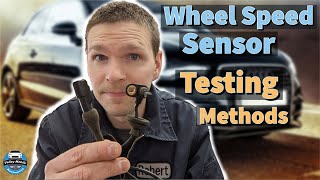
- Faulty Wheel Speed Sensor (Common) — A wheel speed sensor located at the hub fails electronically or becomes blinded by metallic brake debris, preventing the ABS module from reading that wheel's rotational speed.
- Worn Wheel Bearing or Damaged Tone Ring (Common) — A worn wheel bearing introduces excessive wobble in the hub, altering the air gap between the wheel speed sensor and its tone ring. A cracked or rust-packed tone ring also distorts the magnetic signal, triggering the code.
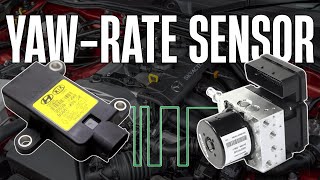
- Faulty Yaw Rate Sensor (Common) — The yaw rate sensor (a gyroscope typically located under the center console) fails internally, sending implausible rotational data to the stability control module.
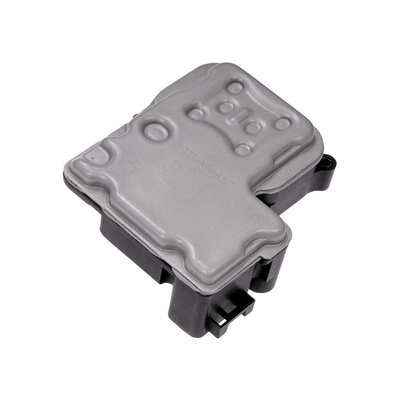
- Faulty ABS Control Module (Less Common) — The Anti-lock Brake System (ABS) control module fails internally, causing it to misinterpret valid sensor data or lose communication entirely.
- Low Battery Voltage (Less Common) — Erratic or low system voltage from a failing battery or alternator causes sensitive ABS/ESC controllers to behave unpredictably and log false sensor codes.
- Missing Sensor Calibration (Rare) — After a sensor replacement or wheel alignment, the yaw rate sensor requires a 'zero point calibration'. Skipping this step leaves the sensor's baseline incorrect, immediately triggering a fault.
Symptoms
- ABS and Stability Control Lights Illuminated — The ABS, Traction Control (TCS), and Electronic Stability Control (ESC/VSC) warning lights turn on, and the systems are disabled.
- Erratic Brake Application During Turns — The stability system receives false spin data and incorrectly applies the brakes to individual wheels during normal driving.
- Cruise Control Disabled — Modern cruise control systems rely on wheel speed data and automatically disable themselves when a C0197 fault is present.
Diagnostic Flowchart
Tap your situation to follow the diagnostic path that matches what you're seeing on this code.
Common Fixes & Costs
- Repairing Damaged Wiring or Connectors — Parts: $10-$50, Labor: $125-$250, ~1.5 hr book time (Intermediate)
- Replacing a Faulty Wheel Speed Sensor — Parts: $30-$150, Labor: $85-$175, ~1.2 hr book time (DIY)
- Replacing a Worn Wheel Hub Assembly — Parts: $150-$400, Labor: $200-$400, ~2.0 hr book time (Intermediate)
- Replacing the Yaw Rate Sensor — Parts: $150-$600, Labor: $100-$220, ~1.5 hr book time (Intermediate)
- ABS Module Rebuild Service — Parts: $150-$400, Labor: $100-$200, ~2.0 hr book time (Intermediate)
- Replacing the ABS Control Module — Parts: $500-$1200, Labor: $150-$550, ~2.5 hr book time (Professional)
DIY vs Professional
- Replacing a Faulty Wheel Speed Sensor 🟢 Beginner
Tools: Jack, jack stands, socket set, wrenches. - Replacing the Yaw Rate Sensor 🟢 Beginner
Tools: Socket set, Torx sockets, trim removal tools. - Replacing a Worn Wheel Hub Assembly 🟢 Beginner
Tools: Axle nut socket, torque wrench, breaker bar, pry bars. - Replacing the ABS Control Module 🟢 Beginner
Tools: Advanced OBD-II scanner with programming capabilities, flare nut wrenches.
Used vs. New Parts: Buying Guide
When a used part is worth it: Buying used electronic sensors is not recommended due to high failure rates. A used ABS Control Module is viable if you use a mail-in rebuild service to avoid dealership programming fees.
Donor-vehicle mileage cap: roughly under 50000 miles for the part to have meaningful remaining life.
Donor quality checklist:
- Verify the donor vehicle was not scrapped due to flood damage.
- Avoid wheel speed sensors from the 'Rust Belt' due to inevitable corrosion.
- Match the part number exactly, as different trim levels use different sensors.
Decision logic:
- If The part is a wheel speed sensor. → Buy a new, quality aftermarket (Bosch, NTK) or OEM part. Used sensors fail too quickly to justify the labor.
- If The part is a yaw rate sensor. → Buy new OEM. Given the difficult access and calibration requirements, you do not want to repeat the job.
- If The part is an ABS Control Module. → Send your original module to a mail-in rebuild service. This avoids the $150+ cost of VIN programming required for a new or used replacement.
Warranty tradeoff: Used sensors carry 30-day warranties. Quality aftermarket and OEM parts offer 1-year to lifetime warranties, which is critical for safety components.
Worst-case if a used part fails: $200-$400 in repeat labor if a cheap used sensor fails.
What Happens If You Wait — Timeline
- Immediate: ABS and Electronic Stability Control are disabled. Warning lights illuminate. (MPG impact: 0%% · Added cost: $0)
- 0-3 Months: Erratic, uncommanded brake application occurs during turns, causing premature wear on brake pads and rotors. (MPG impact: 0%% · Added cost: $150-$300)
- 3-6 Months: If caused by a worn wheel bearing, continued driving leads to complete bearing failure, damaging the hub and spindle. (MPG impact: 2%% · Added cost: $500-$1500)
- 6+ Months: If caused by wiring corrosion, the corrosion migrates up the harness, shorting out unrelated electronic modules. (MPG impact: 0%% · Added cost: $500+)
Cost of Not Fixing It
- Immediate: ABS and Electronic Stability Control are disabled. Wheels lock up during emergency stops, and the risk of a loss-of-control spin increases dramatically. (Added cost: $0 in repairs, high risk of accident damage)
- 0-6 Months: A faulty yaw sensor causes erratic, uncommanded brake application during turns, leading to unexpected pulling and accelerated brake pad wear. (Added cost: $150-$300 for premature brake service)
- 6+ Months: If caused by corroded wiring, the corrosion migrates up the harness, shorting out unrelated electronic systems and creating complex electrical faults. (Added cost: $500+ for advanced electrical diagnostics)
Diagnosis Steps
- Read Codes and Analyze Live Data
Connect an advanced OBD-II scanner. Confirm C0197 and note any specific wheel speed codes (e.g., C0035). Switch to live data and monitor all four wheel speed sensors and the yaw rate sensor while driving safely. Identify which sensor drops to 0, spikes erratically, or freezes.
Tools: Advanced OBD-II Scanner (Beginner) - Visual Inspection of Wheel Speed Sensors and Wiring
Raise and secure the vehicle. Inspect the wiring leading to the suspect wheel speed sensor. Look for chafed wires, stretched harnesses, and corrosion inside the connector. Check the sensor head and tone ring for debris.
Tools: Flashlight, Jack and Jack Stands (Beginner) - Check for Wheel Bearing Play
Grasp the tire at the 12 and 6 o'clock positions and rock it firmly. Repeat at 3 and 9 o'clock. Any clicking, clunking, or visible play indicates a worn wheel bearing, which distorts the sensor signal.
Tools: Jack and Jack Stands (Intermediate) - Visual Inspection of Yaw Rate Sensor
If live data points to the yaw sensor, locate it (usually under the center console or front seats). Inspect its wiring harness for damage, ensure the mounting bolts are tight, and check for water intrusion under the carpet.
Tools: Flashlight, Basic Hand Tools (Intermediate) - Test Wheel Speed Sensor Circuit
Disconnect the sensor. For active sensors, turn the key ON and back-probe the harness connector to verify a DC reference voltage (typically 1.5V-5V) from the ABS module. Missing voltage indicates a wiring break or bad module.
Tools: Multimeter, Vehicle Service Manual (Advanced) - Test Yaw Rate Sensor Circuit
Disconnect the yaw sensor. Verify the harness provides a 5V reference and a solid ground. Reconnect and back-probe the signal wire; it should read a stable voltage (often 2.5V) while stationary and change smoothly when the sensor is physically tilted.
Tools: Multimeter with Back-Probes, Vehicle Service Manual (Advanced) - Test Sensor Signal with an Oscilloscope
Connect an oscilloscope to the wheel speed sensor signal wire. Spin the wheel by hand. A clean square or sine wave confirms a good sensor and tone ring. A jagged or dropping signal confirms a mechanical gap issue or internal sensor failure.
Tools: Oscilloscope (Professional) - Perform Yaw Rate Sensor Calibration
If the yaw rate sensor was replaced or the vehicle was aligned, use a bidirectional scan tool to perform a 'Zero Point Calibration' on a perfectly level surface to clear the code permanently.
Tools: Advanced OBD-II Scanner (Advanced)
When This Code Triggers (Freeze-Frame Conditions)
- Vehicle Speed: 20-55 mph (The code sets during steady-state driving when the module expects consistent signals. A sudden dropout conflicting with other vehicle data triggers the fault.)
- Yaw Rate: >8 deg/sec while driving straight (The module sees a rotational value indicating a spin while the steering angle sensor confirms the vehicle is moving straight, triggering a plausibility fault.)
- Wheel Speeds: One wheel reads 0 mph while others read 40 mph (A wheel speed sensor circuit drops out entirely, creating an implausible speed differential that sets the code.)
- System Voltage: 12.6V - 14.8V (C0197 typically logs under normal power conditions. If voltage is below 12V, the code is likely a false flag caused by a dying battery.)
Related Codes
- C0196 — Indicates a specific electrical fault (open/short) in the Yaw Rate Sensor Circuit. Seeing C0196 and C0197 together confirms a failure of the yaw rate sensor or its dedicated wiring.
- C0186 — Lateral Accelerometer Circuit fault. Because the yaw rate sensor and lateral accelerometer are usually housed in the same physical unit, seeing both codes confirms the entire sensor assembly has failed.
- U0125 — Lost Communication With Multi-axis Sensor. C0197 means the module is sending bad data; U0125 means the module is completely offline. Diagnose U0125 first by checking power and ground.
- C0035 - C0051 — Specific wheel speed sensor codes (e.g., C0035 for Front Left). If C0197 appears alongside one of these, the fault is isolated to that specific wheel's circuit.
Climate & Environmental Factors
- Road Salt and Cold Climates: Regions using winter road salt see a massive spike in C0197 faults. Salt accelerates corrosion in exposed wheel speed sensor wiring and chassis ground points, creating the intermittent open circuits that trigger this code.
- High Humidity: Sustained humidity promotes moisture intrusion into unsealed electrical connectors, corroding pins and degrading sensor signals over time.
How to Talk to a Mechanic About This Code
Say this: "I have an ABS and stability control light on, and my scanner shows code C0197. I want you to check the live data from all four wheel speed sensors and the yaw rate sensor to pinpoint the fault. Please also perform a visual inspection of the wiring harnesses at the wheels and check for play in the wheel bearings."
This signals that you are an informed customer. It directs the shop to perform a data-driven diagnosis using live streams rather than just guessing and replacing the most expensive sensor.
Avoid saying:
- 'My ABS light is on, can you fix it?'
- 'Just replace the sensor the code is for.'
- 'Do whatever you think is best.'
Questions to ask before authorizing the repair:
- What did the live data show? Was one wheel speed sensor dropping out or was the yaw rate sensor signal erratic?
- Did you find any damage to the wiring or corrosion in the connectors?
- Did you check for play in the wheel bearing at the affected corner?
- If the yaw rate sensor needs replacement, does your quote include the mandatory zero-point calibration?
Where to Take It: Dealer vs Independent vs Chain
- Dealer:
A safe but expensive choice. Recommended if you suspect a module failure or a known TSB applies.
Best for: Vehicles under warranty., Complex manufacturer-specific issues, like the GM StabiliTrak TSB., Repairs requiring ABS module VIN programming.
Downsides: Highest labor rates., May default to replacing expensive assemblies instead of repairing wiring. (Typical cost: +50% vs. baseline) - Independent Shop:
Best overall fit. A well-regarded independent shop handles over 90% of C0197 causes effectively and affordably.
Best for: Out-of-warranty vehicles., Diagnosing common C0197 causes like bad wheel speed sensors, wiring damage, or worn wheel bearings.
Downsides: Must ensure they have an advanced scanner capable of reading ABS live data and performing calibrations. (Typical cost: +0% vs. baseline) - Chain Shop:
AVOID for diagnosis. The risk of throwing unnecessary parts at an electrical issue is too high.
Best for: Simple part replacements only after a proper diagnosis has been made elsewhere.
Downsides: Often lack the advanced diagnostic tools (oscilloscopes) needed for intermittent electrical faults., High risk of misdiagnosing a wiring issue as a sensor failure. (Typical cost: -10% vs. baseline)
When to Walk Away From the Repair
If the estimated repair cost for the C0197 fault exceeds 50% of your car's private-party value, seriously consider selling the car as-is.
- Car worth $10000, fix is $450: Fix it. This is a routine repair cost.
- Car worth $4000, fix is $1800: Walk away. The repair cost is approaching half the car's value.
- Car worth $2500, fix is $800: Borderline. Get a second opinion to confirm the diagnosis. If other repairs are needed, walk away.
What Scan Tool You Need for This Code
Minimum: A scanner that reads Anti-lock Brake System (ABS) codes and displays LIVE DATA streams from the ABS module.
A basic $20 engine code reader cannot access the ABS module. For C0197, you MUST view live data from all four wheel speed sensors and the yaw rate sensor simultaneously to identify the fault.
Budget: BlueDriver Pro (~$100) — Connects via Bluetooth. Reads ABS codes and graphs live data from wheel speed and yaw rate sensors, allowing DIYers to pinpoint the failing component.
Mid-range: Foxwell NT630 Plus (~$150) — A dedicated handheld scanner that graphs live data and performs ABS bleeding. Offers 'Zero Point Calibration' for the yaw rate sensor on many vehicle makes.
Professional: Autel MaxiCOM MK808BT (~$500) — Offers full bidirectional control. Reliably performs the critical 'Zero Point Calibration' required after yaw sensor replacement on almost all makes.
Rent vs buy: Auto parts store loaner tools read ABS codes but rarely offer live data graphing. Buying a tool like the BlueDriver is a necessary investment for this code.
How to Clear the Code After You Fix It
- Perform the physical repair and reconnect all components.
- Connect an advanced OBD-II scan tool to the ABS/Chassis module.
- Select 'Clear Fault Codes' or 'Erase DTCs'.
- If a yaw rate sensor was replaced, perform the 'Zero Point Calibration' procedure.
- Test drive the vehicle to confirm the warning lights remain off.
Drive cycle (~20 minutes): Start the vehicle and idle for 2 minutes. Drive in mixed conditions, exceeding 40 mph for at least 5 minutes. Perform several normal turns to the left and right. Come to a complete stop several times. If the ABS light stays off, the repair is successful.
Readiness monitors affected: None directly by C0197
Watch out for:
- Disconnecting the battery will not clear a C-prefix code from the ABS module.
- The code returns immediately if the underlying wiring fault is not corrected.
- Forgetting the mandatory 'Zero Point Calibration' after replacing a yaw rate sensor guarantees the light stays on.
Will This Fail Emissions / State Inspection?
No — by itself this code doesn't fail OBD inspection (but it can keep readiness monitors from setting, which causes a separate fail).
- California: An illuminated ABS warning light fails the vehicle safety inspection portion of the smog check, preventing registration.
- New York: Current regulations dictate that an illuminated ABS warning light is grounds for failing the annual safety inspection.
- Texas: An illuminated ABS warning light is NOT a cause for failure. The Texas inspection manual explicitly states to disregard the ABS light.
Most Commonly Affected Vehicles
- Chevrolet / GMC Silverado, Sierra, Tahoe, Yukon (2014-2018) — GM TSB 15-05-25-001 addresses a related plausibility code caused by stone impacts on the transmission tunnel vibrating the yaw sensor. Requires a sound-deadening patch.
- Ford Expedition (2007-2014) — A faulty yaw rate sensor frequently causes erratic, uncommanded brake application during low-speed turns.
- Ford F-150 (2011-2013) — Known for wiring harness vulnerabilities near the driver's side firewall, leading to intermittent wheel speed sensor signal loss.
- Pontiac Grand Prix (2005-2008) — Highly prone to yaw rate circuit faults. Dealers frequently misdiagnose this as a failed EBCM when the issue is corroded wiring.
- Buick LaCrosse (2006-2009) — Service manuals specifically define C0197 as 'Yaw Rate Circuit Range/Performance', making the yaw sensor the primary diagnostic target.
- Toyota Camry (2018) — Prone to C0197 caused by corroded chassis ground connections rather than failed sensors.
- Honda Accord (2013-2017) — Suspension movement frequently fatigues and frays the wheel speed sensor wiring harness near the wheel arch.
- Hyundai Elantra, Sonata (2011-2020) — Steering angle and yaw rate sensor network faults frequently trigger stability control warnings requiring recalibration.
Manufacturer-Specific Notes
- General Motors: GM strictly defines C0197 as a 'Yaw Rate Circuit' fault. TSB PIC5436C notes that related yaw codes falsely set after the vehicle is transported on a tow truck, requiring only a code clear.
- Toyota / Lexus: Replacing the yaw rate sensor, performing an alignment, or disconnecting the battery requires a 'zero point calibration'. This is done via scan tool or manually by jumping pins 4 and 12 on the OBD-II port.
- Ford: On large SUVs, a failing yaw rate sensor causes the brakes to aggressively apply themselves during turns. On trucks, the main wiring harness near the firewall is the most common failure point.
- Subaru: Subaru provides specific bench-test voltages for the yaw sensor. Tilting the sensor exactly 90 degrees must produce a reading of 3.3-3.7V, offering a definitive pass/fail test.
Real Owner Stories
2018 Toyota Camry with C0197 and ABS light
ABS and traction control lights stayed on permanently. No driveability issues were noticed.
What they tried:
- Performed a visual inspection of the engine bay and undercarriage before buying parts.
Outcome: Found a heavily corroded chassis ground connection. Cleaned the connection with a wire brush and re-secured it. The code cleared and did not return. Total cost: $10.
Lesson: Always check the basics first. A poor ground mimics a failed electronic component perfectly.
2015 GMC Sierra 1500 with 'Service StabiliTrak'
The warning appeared frequently after driving on gravel roads. Dealer scanned code C0196-5A (Yaw Rate Sensor Plausibility).
What they tried:
- Dealer consulted GM Technical Service Bulletins before replacing the expensive sensor module.
Outcome: Found TSB #15-05-25-001. Stone impacts on the transmission tunnel vibrated the yaw sensor, triggering the code. Installed a mastic sound-deadening patch under the sensor. Fixed under warranty.
Lesson: If your symptoms match a known TSB, it saves you from an expensive and incorrect part replacement.
2011 Ford F-150 with multiple warning lights
ABS, traction control, and brake lights illuminated. Cruise control disabled. Scanner showed C0197.
What they tried:
- Replaced the front right wheel speed sensor based on forum advice. Lights returned.
- Replaced the front right wheel hub assembly. Lights returned.
Outcome: Took the truck to a diagnostic specialist. An oscilloscope revealed the ABS module itself was faulty and failing to process the sensor signal. Installed a remanufactured ABS module for $800.
Lesson: Don't throw parts at a problem. Proper diagnosis of intermittent electrical faults requires an oscilloscope to confirm the point of failure.
How to Prevent This Code From Triggering
- Wash vehicle undercarriage in salt-prone climates (Monthly during winter) — Removes corrosive road salt that destroys exposed wheel speed sensor wiring and ground points.
- Apply dielectric grease to sensor connectors (During any brake or suspension service) — Blocks moisture and oxygen from reaching metal pins, preventing the corrosion that triggers C0197.
- Address noisy wheel bearings promptly (As soon as grinding noises are heard) — Prevents excessive hub vibration from physically destroying the delicate wheel speed sensor or tone ring.
- Inspect and secure sensor wiring harnesses (During every tire rotation) — Ensures wires are not rubbing against suspension parts, preventing chafed insulation and short circuits.
Frequently Asked Questions
Can I drive my car with a C0197 code?
Yes, but it is unsafe. Your ABS and stability control systems are offline, increasing the risk of an accident in slippery conditions. Get it diagnosed immediately.
What are the most common mistakes when diagnosing a C0197 code?
The biggest mistake is replacing a sensor without testing the circuit. Technicians frequently find the actual cause is a frayed wire, corroded connector, or bad ground. Always use a scanner with live data to confirm the fault.
What's the difference between a Yaw Rate Sensor and a Wheel Speed Sensor?
A wheel speed sensor measures how fast an individual wheel rotates. A yaw rate sensor is a gyroscope measuring how fast the vehicle's body rotates (spins out). C0197 points to either depending on the vehicle manufacturer.
Will clearing the code fix the problem?
No. The control module continuously runs self-tests and will detect the intermittent fault again immediately. You must diagnose and repair the root cause.
Can a bad wheel bearing cause a C0197 code?
Yes. A worn wheel bearing creates excessive movement in the hub, altering the distance between the wheel speed sensor and its tone ring. This generates an erratic signal that triggers C0197.
My stability light came on after hitting a pothole. What should I check?
A sharp impact damages wiring, knocks sensors loose, or cracks tone rings. Visually inspect the wiring harnesses and mounting brackets for all four wheel speed sensors.
Is it more likely that the sensor is bad or the wiring?
Wiring failures are far more common. Wheel speed sensor wiring is highly vulnerable to suspension movement, road debris, and salt corrosion. Always inspect the harness before buying a sensor.
Do I need a special tool to fix this?
You need an advanced OBD-II scanner that reads Chassis (C) codes and displays live ABS data. Proper diagnosis and post-repair recalibration are impossible with a basic $20 code reader.
What is 'zero point calibration'?
This procedure sets the baseline 'zero' reading for the yaw rate sensor while the car is stationary on a level surface. You must perform this after replacing the sensor or doing an alignment to restore the stability system.
What does a yaw rate sensor do?
It is a small gyroscope that measures your car's rotation on its vertical axis to detect spin-outs. The Electronic Stability Control (ESC) system uses this data to apply individual brakes and maintain vehicle control.
Key Takeaways
- Code C0197 disables your vehicle's ABS and Electronic Stability Control, significantly increasing the risk of a loss-of-control skid during emergency maneuvers.
- General Motors vehicles typically log C0197 for a faulty Yaw Rate Sensor, while other manufacturers use it to indicate an intermittent Wheel Speed Sensor signal.
- Over 50% of C0197 codes stem from damaged wiring, corroded connectors, or a worn wheel bearing rather than a failed sensor.
- Diagnosing this code requires an advanced OBD-II scanner capable of reading live ABS data streams to identify exactly which sensor is dropping out.
- Replacing a yaw rate sensor requires a mandatory 'Zero Point Calibration' using a bidirectional scan tool to clear the code permanently.
Helpful Videos
Shop the Parts Behind C0197
Below are the parts most often responsible for code C0197, ranked by how frequently each one is the actual culprit (per the diagnosis above). Tap any to see what we have for your vehicle.




The information in this article is provided for general reference and educational purposes only. Vehicle specifications, procedures, and part compatibility can vary by production date, trim level, and region. Always consult your vehicle's factory service manual and verify part numbers before purchasing or performing repairs. Safety-critical components such as airbags, seat belts, and braking systems should be installed by a qualified professional.
- 🧭 Diagnostic Flowchart
- 🎬 Helpful Videos
- 🛍️ Shop This Part
- What Does C0197 Mean?
- Can I Drive With C0197?
- Common Causes
- Symptoms
- Common Fixes & Costs
- DIY vs Professional
- Used vs. New Parts: Buying Guide
- What Happens If You Wait — Timeline
- Cost of Not Fixing It
- Diagnosis Steps
- When This Code Triggers (Freeze-Frame Conditions)
- Related Codes
- Climate & Environmental Factors
- How to Talk to a Mechanic About This Code
- Where to Take It: Dealer vs Independent vs Chain
- When to Walk Away From the Repair
- What Scan Tool You Need for This Code
- How to Clear the Code After You Fix It
- Will This Fail Emissions / State Inspection?
- Most Commonly Affected Vehicles
- Manufacturer-Specific Notes
- Real Owner Stories
- 2018 Toyota Camry with C0197 and ABS light
- 2015 GMC Sierra 1500 with 'Service StabiliTrak'
- 2011 Ford F-150 with multiple warning lights
- How to Prevent This Code From Triggering
- Frequently Asked Questions
- Can I drive my car with a C0197 code?
- What are the most common mistakes when diagnosing a C0197 code?
- What's the difference between a Yaw Rate Sensor and a Wheel Speed Sensor?
- Will clearing the code fix the problem?
- Can a bad wheel bearing cause a C0197 code?
- My stability light came on after hitting a pothole. What should I check?
- Is it more likely that the sensor is bad or the wiring?
- Do I need a special tool to fix this?
- What is 'zero point calibration'?
- What does a yaw rate sensor do?
- Key Takeaways
- 🎟️ Get 5% Off