

OBD-II Code C0223: Right Front Wheel Speed Signal Erratic
What C0223 means, why it triggers, and how to fix it
- Code C0223 indicates an erratic right front wheel speed signal, instantly disabling your ABS, traction control, and stability control systems.
- Over 80% of C0223 codes stem from damaged wiring, a failed sensor, a worn wheel bearing, or a contaminated tone ring.
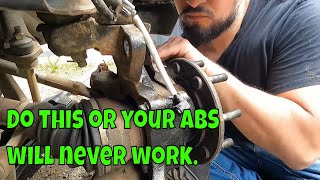
- For 1999-2007 GM trucks, fix this code by removing the sensor and wire-brushing the rust off the hub's mounting surface to restore the correct signal gap.
- You can drive with C0223, but your standard hydraulic brakes will lock up during panic stops, increasing your stopping distance on wet roads.
- Diagnose the exact failure point using an ABS-capable scanner to monitor live wheel speed data above 25 mph before replacing any $150+ hub assemblies.
What Does C0223 Mean?
Code C0223 means the Electronic Brake Control Module (EBCM) is receiving an unstable or irrational signal from the right front wheel speed sensor. The sensor sends a consistent signal corresponding to the wheel's rotational speed. When this signal jumps, drops out, or mismatches the other wheels, the EBCM flags it as 'erratic' and shuts down the ABS and traction control systems to prevent unpredictable braking behavior.
Technical definition: The SAE/ISO definition is "Right Front Wheel Speed Signal Erratic." The EBCM sets this code when it detects the right front wheel speed sensor signal fluctuating rapidly or missing pulses for 105 milliseconds while the vehicle exceeds 25 mph.
Can I Drive With C0223?
Yes, But With Caution. Yes, you can drive, but your Anti-lock Braking System (ABS), Traction Control, and Stability Control systems are disabled. Your regular hydraulic brakes continue to function, but you lose a critical safety net. In a panic stop or on a slippery surface, your front right wheel will lock up, causing a skid and a loss of steering control. Have the vehicle inspected and repaired immediately.
Common Causes
- Rust Buildup Under Sensor Mounting Point (Very Common) — On GM trucks and SUVs, rust builds up on the hub's mounting surface directly underneath the sensor. This 'rust jacking' pushes the sensor away from the tone ring, increasing the air gap and weakening the signal until it becomes erratic.
- Damaged or Corroded Wiring/Connector (Very Common) — The wiring harness is exposed to road debris, water, and constant steering flex. This causes chafed insulation, internal wire breaks, or green corrosion in the connector pins, disrupting the signal.
- Defective Right Front Wheel Speed Sensor (Very Common) — The magnetic or Hall-effect sensor fails internally due to age, heat cycles, or moisture intrusion, causing it to send a weak or noisy signal.
- Failing or Loose Wheel Hub Bearing (Common) — A worn wheel bearing allows excessive play in the hub. This constantly changes the air gap between the sensor and tone ring, causing the signal's amplitude to fluctuate wildly.
- Contaminated or Damaged Tone Ring (Common) — If the toothed reluctor ring or magnetic encoder ring on the wheel hub cracks, loses teeth, or gets covered in thick rust or metallic shavings, the sensor cannot get a clean reading.
- Inferior Quality Aftermarket Parts (Less Common) — Low-quality aftermarket wheel hubs or sensors often fail to meet OEM specifications for magnetism or tone ring precision, triggering an erratic signal code shortly after installation.
- Faulty Electronic Brake Control Module (EBCM) (Rare) — The EBCM develops an internal processing fault or a bad solder joint on the circuit board, preventing it from correctly interpreting a perfectly good signal from the sensor.
Symptoms
- ABS Light On — The ABS warning light on your dashboard illuminates and stays on immediately after the fault is detected.
- Traction/Stability Control Lights On — Because these systems rely on wheel speed data, their warning lights (TCS, ESC, StabiliTrak) illuminate alongside the ABS light.
- ABS Activates Incorrectly at Low Speeds — The brake pedal pulsates or the ABS pump runs during normal braking under 10 mph. 🎬 See how to fix low-speed ABS activation on GM trucks. The erratic signal falsely tricks the EBCM into thinking the wheel is locking up.
- Loss of ABS and Traction Control Function — During a hard stop, the wheels lock up and skid. On slippery surfaces, traction control fails to prevent wheel spin during acceleration.
Diagnostic Flowchart
Tap your situation to follow the diagnostic path that matches what you're seeing on this code.
Common Fixes & Costs
- Clean Tone Ring and Sensor Mounting Surface — Parts: $5-$15, Labor: $75-$150, ~0.8 hr book time (DIY)
- Replace Right Front Wheel Speed Sensor — Parts: $30-$150, Labor: $100-$150, ~1.0 hr book time (DIY)
- Repair or Replace Wiring Harness Pigtail — Parts: $25-$75, Labor: $125-$250, ~1.5 hr book time (Intermediate)
- Replace Right Front Wheel Hub Bearing Assembly — Parts: $150-$400, Labor: $150-$300, ~1.8 hr book time (Intermediate)
- Replace ABS Control Module (EBCM) — Parts: $300-$1,200, Labor: $150-$400, ~2.0 hr book time (Professional)
DIY vs Professional
- Clean Tone Ring and Sensor Mounting Surface — Beginner: Yes
Tools: Socket set, jack and jack stands, wire brush, brake cleaner. - Replace Right Front Wheel Speed Sensor — Beginner: Yes
Tools: Socket set, torque wrench, jack and jack stands. - Repair or Replace Wiring Harness Pigtail — Beginner: No
Tools: Wire cutters/strippers, crimping tool, heat shrink tubing, heat gun. - Replace Right Front Wheel Hub Bearing Assembly — Beginner: No
Tools: Breaker bar, high-capacity torque wrench, jack and jack stands, slide hammer.
Used vs. New Parts: Buying Guide
When a used part is worth it: Never buy a used bolt-on wheel speed sensor; the cost savings are minimal compared to a new aftermarket part. For a complete wheel hub assembly, a low-mileage used OEM part is a viable alternative to a cheap aftermarket hub, as OEM parts feature superior bearing and sensor quality.
Donor-vehicle mileage cap: roughly under 60000 miles for the part to have meaningful remaining life.
Donor quality checklist:
- Verify the donor vehicle's mileage; lower is mandatory.
- Avoid parts from Rust Belt vehicles, as corrosion is the primary failure mode for sensors and bearings.
- Match the part number exactly, verifying 2WD vs. 4WD.
- Visually inspect the wiring pigtail for cracking or brittleness.
Decision logic:
- If The failed part is a simple bolt-on sensor. → Buy a new, quality aftermarket (NTK, Delphi) or OEM sensor.
- If The failed part is a complete wheel hub assembly and the budget is tight. → Buy a used OEM assembly from a low-mileage, non-corroded donor.
- If The vehicle is newer or the part is for a critical safety application. → Buy new OEM or top-tier aftermarket parts to ensure longevity.
Warranty tradeoff: Used parts carry a 30-90 day warranty. New aftermarket parts offer 1-year to limited lifetime warranties. New OEM parts carry a 1-2 year manufacturer warranty.
Worst-case if a used part fails: $200-$500 if a used part fails shortly after installation, requiring repeat labor costs.
What Happens If You Wait — Timeline
- 0-4 weeks: Code C0223 sets, and the ABS/Traction Control lights remain constantly on. All related safety systems are disabled. (MPG impact: 0%% · Added cost: $0)
- 1-3 months: Erratic signals cause the ABS pump to activate unnecessarily at low speeds, causing premature wear on the ABS hydraulic unit and brake pads. (MPG impact: 0-1%% · Added cost: $50-$150)
- 3-9 months: If the cause is a bad wheel bearing, continued driving leads to increased humming noise, steering vibration, and uneven tire wear. (MPG impact: 1-3%% · Added cost: $200-$400)
- 9+ months: Catastrophic failure of the wheel bearing occurs. The bearing disintegrates, causing the wheel to wobble severely, lock up, or separate from the vehicle. (MPG impact: 5%+% · Added cost: $800 - $2,500+)
Cost of Not Fixing It
- Immediate: Total loss of ABS, Traction Control, and Stability Control. The vehicle skids and loses steering control during panic stops or on wet roads. (Added cost: 0)
- Weeks to Months: Erratic signals cause the ABS pump to activate unnecessarily at low speeds, causing premature wear on the ABS hydraulic pump motor and brake pads. (Added cost: $500 - $2000)
- Long-Term: If the root cause is a bad wheel bearing, continued driving destroys the bearing, damages the wheel hub and spindle, and causes wheel separation. (Added cost: $800 - $2500)
Diagnosis Steps
- Read Codes and Live Data
Use an ABS-capable OBD-II scanner to confirm C0223. Access the live data stream and monitor the speed of all four wheels while driving. The right front wheel speed reading will jump erratically, drop to zero, or lag behind the others.
Tools: OBD-II Scanner with ABS/Live Data (Beginner) - Visually Inspect Wiring and Connector
Inspect the right front wheel speed sensor wire from the sensor to the frame. Look for cuts, chafing against suspension parts, or stretched wires. Disconnect the connector and check for green or white corrosion on the pins.
Tools: Flashlight (Beginner) - Inspect the Tone Ring and Sensor Mounting Surface
Remove the wheel and brake caliper. Check the tone ring for heavy rust, broken teeth, or cracks. Remove the sensor (one bolt) and inspect the mounting surface on the hub for rust buildup. This surface must be perfectly clean and flat.
Tools: Socket Set, Wire Brush, Brake Cleaner (Intermediate) - Check for Wheel Bearing Play
Safely raise the right front wheel. Grasp the tire at the 12 and 6 o'clock positions and rock it. Any noticeable play or clunking sound confirms a worn wheel bearing, which causes the erratic signal.
Tools: Jack, Jack Stands (Intermediate) - Test Sensor AC Voltage Output (Passive Sensors)
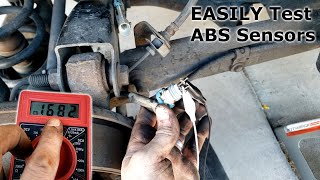
Set a multimeter to AC Volts. Connect the probes to the sensor's pins. Spin the wheel hub by hand at one revolution per second. Look for a steady AC voltage of 100-350mV that increases smoothly with speed. An erratic or absent voltage confirms a bad sensor or damaged tone ring.
Tools: Multimeter with Alligator Clips (Advanced) - Test Sensor Resistance (Passive Sensors)
Disconnect the sensor and set a multimeter to Ohms (Ω). Probe the two pins on the sensor side. A good sensor reads between 800 and 2,000 Ohms. A reading of OL (infinite resistance) or near 0 Ohms confirms a failed sensor.
Tools: Multimeter (Intermediate) - Analyze the Waveform with an Oscilloscope
Connect a lab scope to the sensor's signal wire. A passive sensor shows a clean sine wave; an active sensor shows a square wave. Gaps, misshapen waves, or 'hash' on the signal pinpoint a problem with the sensor, tone ring, or air gap.
Tools: Oscilloscope, Back-probe Pins (Professional)
When This Code Triggers (Freeze-Frame Conditions)
- Vehicle Speed: > 25 mph (40 km/h) (The code sets when the vehicle moves at a steady speed above this threshold.)
- Right Front Wheel Speed: Erratic / Drops to Zero (The right front sensor data jumps, becomes inconsistent, or drops out completely for 105 milliseconds while other wheels show a steady speed.)
- Brake Pedal Status: Not Applied (This fault logs during normal driving without the brakes applied, distinguishing it from a fault occurring only during a braking event.)
- System State: ABS/TCS Active (Pre-Fault) (The ABS and Traction Control systems are enabled and monitoring wheel speeds when the erratic signal is detected, instantly disabling the systems.)
Related Codes
- C0221 — 'Right Front Wheel Speed Sensor Circuit Open.' Indicates a total electrical break (cut wire or unplugged connector). C0223 implies a signal is present but unstable, while C0221 means there is no signal path at all.
- C0222 — 'Right Front Wheel Speed Signal Missing.' Sets when a signal is completely absent while the vehicle moves. On live data, C0222 shows 0 MPH, while C0223 shows the speed value jumping erratically.
- C0227 — 'Left Front Wheel Speed Signal Erratic.' Seeing both front codes simultaneously points to a systemic issue like a shared wiring ground, water in a common connector, or an internal EBCM fault.
- C0265 — 'EBCM Relay Circuit.' Points directly to a power relay fault inside the ABS module. If present with C0223, the EBCM is failing to provide stable power to the sensor. Diagnose C0265 first.
Climate & Environmental Factors
- Rust Belt / High Humidity / Salty Air: Road salt and moisture accelerate corrosion of the wiring connector pins, tone ring, and wheel hub. This directly causes 'rust jacking' on GM trucks and disintegrates magnetic encoder rings on VW and BMW models.
- Extreme Cold: Wiring insulation becomes brittle and cracks in freezing temperatures. Water inside the connector freezes and expands, breaking the sensor housing.
How to Talk to a Mechanic About This Code
Say this: "I have an ABS light on and my scanner shows code C0223 for the right front wheel. I'd like to schedule a diagnostic. Before replacing any parts, please inspect the wiring harness for damage, check the wheel bearing for play, and look at the tone ring. If it's a GM truck, please check for rust jacking under the sensor mount."
This directs the technician to perform a thorough diagnosis instead of immediately replacing the most expensive part (the hub assembly), potentially saving you hundreds of dollars.
Avoid saying:
- 'My ABS light is on, can you fix it?' (too vague, invites upselling)
- 'Just replace the ABS sensor.' (prevents proper diagnosis of a wiring or bearing issue)
- 'Whatever you think is best.' (gives up all control over the repair process)
Questions to ask before authorizing the repair:
- What were the results of the live data test for the wheel speed sensor?
- Did you find any play in the wheel bearing or damage to the wiring?
- What is the condition of the tone ring and the sensor mounting surface?
- What is the warranty on the recommended parts and labor?
Where to Take It: Dealer vs Independent vs Chain
- Dealer:
Recommended only if the vehicle is under warranty or if other shops fail to diagnose a complex electrical fault.
Best for: Vehicles still under warranty, Complex electrical issues where the ABS control module (EBCM) is suspected
Downsides: Significantly higher labor rates (1.5-2x vs independent)., Defaults to replacing the entire hub assembly even for a sensor or wiring fault. (Typical cost: +50% vs. baseline) - Independent Shop:
Best fit. A reputable independent shop has the tools to diagnose C0223 correctly and attempts simpler fixes (cleaning a mount) before replacing assemblies.
Best for: Out-of-warranty vehicles where cost is a factor., Common codes like C0223 with well-known fixes.
Downsides: Quality and diagnostic capability vary widely; check reviews and ASE certifications. (Typical cost: +0% vs. baseline) - Chain Shop:
Avoid for initial diagnosis. Acceptable only if you have already diagnosed the problem as a simple, bolt-on sensor replacement.
Best for: Simple, clear-cut part replacements like brakes or tires.
Downsides: Technicians lack in-depth diagnostic experience for electrical faults., High pressure to upsell leads to unnecessary replacement of the entire hub assembly. (Typical cost: -10% vs. baseline)
When to Walk Away From the Repair
If the estimated repair cost exceeds 40-50% of the car's private-party value, pause and consider alternatives like selling the car as-is.
- Car worth $4500, fix is $750: Fix it. The repair cost is well below the 50% threshold and restores a critical safety system.
- Car worth $3000, fix is $1600: Walk away. The repair requires replacing the EBCM and a hub, costing over 50% of the car's value.
What Scan Tool You Need for This Code
Minimum: An OBD-II scanner that reads and clears Anti-lock Brake System (ABS) codes and displays live data.
A standard $20 engine code reader cannot communicate with the ABS module. It will not see, diagnose, or clear a 'C' code like C0223.
Budget: BlueDriver Pro Scan Tool (~$100) — Connects to your smartphone to read/clear ABS codes. Graphs live data, allowing you to watch the right front wheel speed signal as you drive.
Mid-range: Innova 5610 (~$350) — A powerful handheld unit that reads ABS codes and live data. Offers bidirectional controls to test ABS system components.
Professional: Autel MaxiCOM MK808Z (~$500-800) — Provides full bidirectional control to test ABS solenoids and offers advanced data graphing to pinpoint tough wiring or module faults.
Rent vs buy: AutoZone and O'Reilly Auto Parts offer free parking lot scans with tools that read ABS codes. This is the best option for a one-time diagnosis.
How to Clear the Code After You Fix It
- Perform the physical repair (e.g., clean mount, replace sensor).
- Use an ABS-capable OBD-II scan tool to access the ABS module and select 'Clear DTCs'.
- Turn the ignition off, then back on.
- Perform a short test drive above 15 mph to allow the EBCM to verify the repair.
Drive cycle (~10 minutes): Drive the vehicle and accelerate above 15 mph (25 km/h). The EBCM performs a self-test and verifies the signals from all wheel speed sensors. The ABS light turns off once the system confirms the signal is stable.
Readiness monitors affected: None
Watch out for:
- Using a standard $20 engine code reader fails to clear the C-code because it cannot communicate with the ABS module.
- Disconnecting the battery does not clear hard ABS codes.
- If the underlying fault remains, the code sets again instantly as soon as the vehicle exceeds 15 mph.
Will This Fail Emissions / State Inspection?
No — by itself this code doesn't fail OBD inspection (but it can keep readiness monitors from setting, which causes a separate fail).
- California: An illuminated ABS light is not an automatic failure for the smog check, but law enforcement can cite the vehicle for a safety violation.
- New York: An illuminated ABS warning light causes an automatic failure of the annual safety inspection.
- Texas: An illuminated ABS lamp does not cause rejection in the safety inspection, provided the base hydraulic brake system works properly.
Most Commonly Affected Vehicles
- Chevrolet Silverado / Tahoe / Suburban (1999-2007) — Extremely common issue caused by rust building up on the hub's sensor mounting surface, increasing the air gap. TSB 03-05-25-007B outlines the fix: remove sensor, clean hub to bare metal, apply grease.
- GMC Sierra / Yukon (1999-2007) — Mechanically identical to Chevrolet trucks, suffering from the exact same rust jacking failure mode.
- Ford F-150 (2004-2014) — Wiring harness damage is frequent. On many models, the sensor integrates into the wheel hub assembly, requiring total hub replacement for a sensor fault.
- Volkswagen Golf / Jetta / GTI (2006-2014) — The magnetic encoder ring integrated into the wheel bearing's outer seal corrodes, swells, and disintegrates. This requires replacing the entire wheel hub assembly.
- BMW 3-Series (E90) / X3 (2005-2013) — A corroded and swollen reluctor ring on the axle shaft physically contacts and destroys the wheel speed sensor.
Manufacturer-Specific Notes
- General Motors (Chevrolet/GMC): On 1999-2007 trucks, the primary cause is rust building up on the wheel hub's sensor mounting pad. Per TSB 03-05-25-007B, the official repair is removing the sensor, cleaning the hub mounting surface to bare metal, and applying wheel bearing grease before reinstalling.
- Ford: On many F-150 and Fusion models, the wheel speed sensor integrates into the wheel hub bearing assembly. If the sensor fails, the entire hub requires replacement.
- Volkswagen: On Mk5/Mk6 platforms, the magnetic encoder integrates into the wheel bearing's dust seal. This seal frequently corrodes and breaks apart, requiring total wheel hub replacement.
Real Owner Stories
2002 GMC Sierra 1500 with ABS light and low-speed activation
The ABS light was on, and the brake pedal pulsed just before coming to a stop under 5 mph. The scanner showed code C0223.
Outcome: The owner discovered the issue was the rusted mounting surface on the hub. After removing the sensor, wire-brushing the rust off the hub's mounting pad, and reinstalling the sensor, the signal stabilized.
Lesson: On GM trucks, always perform the 'rust jacking' cleaning procedure before replacing parts. A brand new sensor gives an erratic signal if the mounting surface isn't perfectly clean and flat.
2004 Chevy Silverado with C0223 after replacing hubs
After replacing both front wheel hubs with new Timken assemblies, the ABS light remained on with code C0223. Live data showed the right front wheel speed at zero until 15 mph, then jumping erratically.
Outcome: The evidence pointed to a defective sensor out of the box or a wiring issue not resolved by the hub replacement.
Lesson: Even new, quality-brand parts fail out of the box. Always use a live data scanner after a repair to verify the signal matches the other wheels.
2002 Chevy Tahoe with multiple ABS codes after DIY suspension work
After installing new MOOG hub assemblies, the ABS light illuminated. The scanner showed C0223 (Right Front Erratic) and C0227 (Left Front Erratic).
Outcome: Forum contributors identified that simultaneous front sensor failures indicate a central issue. The problem was a damaged wiring harness common to both sensors.
Lesson: If you get codes for both front wheels simultaneously, stop replacing sensors. The culprit is a common connector, ground, or the control module itself.
How to Prevent This Code From Triggering
- Clean and treat the sensor mounting surface during brake jobs (Every time brakes are replaced) — On GM trucks, cleaning rust from the hub's sensor mount and applying wheel bearing grease prevents 'rust jacking' that increases the air gap.
- Apply anti-seize compound to the hub face (During every tire rotation) — Applying anti-seize to the surface where the wheel contacts the hub prevents galvanic corrosion from creeping into the bearing and sensor mounting area.
- Inspect and secure wiring harnesses (During oil changes or tire rotations) — Visually checking that the ABS sensor wire is secured in its clips prevents the chafing and wire damage that causes over 30% of these failures.
- Periodically wash the undercarriage and wheel wells (Monthly, especially in the Rust Belt) — Washing away road salt and grime reduces the corrosive environment that attacks the sensor body, wiring connectors, and tone ring.
Frequently Asked Questions
What are common misdiagnosis mistakes for code C0223?
The most common mistake is replacing the wheel hub assembly when only the sensor wiring pigtail is bad. Conversely, replacing only the sensor when the root cause is a bad wheel bearing leads to the code's quick return. Always verify the signal with a live data scanner before throwing parts at it.
What does 'erratic' actually mean compared to 'missing' or 'open'?
Think of it like a radio signal. 'Open' (C0221) means the radio is unplugged, while 'Erratic' (C0223) means you receive a signal full of static. On a scanner, an erratic signal jumps unpredictably while the wheel turns at a steady speed.
Can I use a cheaper aftermarket hub or sensor?
Low-quality aftermarket hubs and sensors frequently cause repeat failures due to poor machining or noisy signals. Stick to reputable OEM or top-tier aftermarket brands like Timken, MOOG, or SKF. This prevents doing the same labor-intensive job twice.
Can I just clean the ABS sensor to fix code C0223?
Cleaning the sensor tip helps if it is covered in metallic debris. However, for many GM trucks, the definitive fix requires removing the sensor and wire-brushing the rust from the hub's mounting surface. This restores the correct air gap between the sensor and tone ring.
Will clearing the C0223 code fix the problem?
No. Clearing the code only turns the ABS light off temporarily. The EBCM detects the erratic signal again as soon as you drive over 15 mph, instantly triggering the light and disabling the ABS.
If both front wheel codes (C0223 and C0227) are present, what does that mean?
It is extremely rare for both front sensors to fail simultaneously. Seeing both codes strongly suggests a common-point failure. Suspect a damaged shared wiring harness, a bad ground connection, or an internal fault within the ABS control module.
How much does it cost to fix code C0223?
Costs range from $75 for a simple sensor mount cleaning to $300 for a standalone sensor replacement at a shop. If the sensor is integrated into the wheel hub bearing, the entire assembly requires replacement. This pushes the total repair cost to $300-$700 depending on the vehicle.
Can a bad alignment cause code C0223?
A bad alignment does not directly cause this code. However, severely worn suspension components causing the bad alignment also create excessive play in the wheel hub. This hub wobble damages the sensor or its wiring, triggering the code.
Key Takeaways
- Code C0223 indicates an erratic right front wheel speed signal, instantly disabling your ABS, traction control, and stability control systems.
- Over 80% of C0223 codes stem from damaged wiring, a failed sensor, a worn wheel bearing, or a contaminated tone ring.
- For 1999-2007 GM trucks, fix this code by removing the sensor and wire-brushing the rust off the hub's mounting surface to restore the correct signal gap.
- You can drive with C0223, but your standard hydraulic brakes will lock up during panic stops, increasing your stopping distance on wet roads.
- Diagnose the exact failure point using an ABS-capable scanner to monitor live wheel speed data above 25 mph before replacing any $150+ hub assemblies.
Helpful Videos
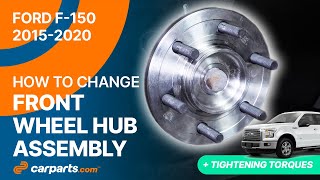
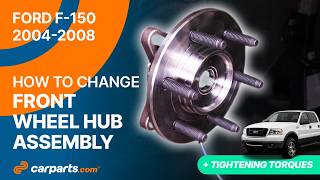

Shop the Parts Behind C0223
Below are the parts most often responsible for code C0223, ranked by how frequently each one is the actual culprit (per the diagnosis above). Tap any to see what we have for your vehicle.

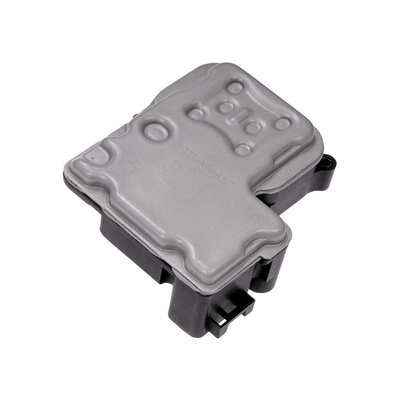
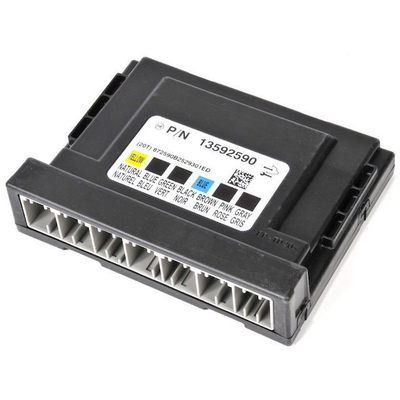


The information in this article is provided for general reference and educational purposes only. Vehicle specifications, procedures, and part compatibility can vary by production date, trim level, and region. Always consult your vehicle's factory service manual and verify part numbers before purchasing or performing repairs. Safety-critical components such as airbags, seat belts, and braking systems should be installed by a qualified professional.
- 🧭 Diagnostic Flowchart
- 🎬 Helpful Videos
- 🛍️ Shop This Part
- What Does C0223 Mean?
- Can I Drive With C0223?
- Common Causes
- Symptoms
- Common Fixes & Costs
- DIY vs Professional
- Used vs. New Parts: Buying Guide
- What Happens If You Wait — Timeline
- Cost of Not Fixing It
- Diagnosis Steps
- When This Code Triggers (Freeze-Frame Conditions)
- Related Codes
- Climate & Environmental Factors
- How to Talk to a Mechanic About This Code
- Where to Take It: Dealer vs Independent vs Chain
- When to Walk Away From the Repair
- What Scan Tool You Need for This Code
- How to Clear the Code After You Fix It
- Will This Fail Emissions / State Inspection?
- Most Commonly Affected Vehicles
- Manufacturer-Specific Notes
- Real Owner Stories
- 2002 GMC Sierra 1500 with ABS light and low-speed activation
- 2004 Chevy Silverado with C0223 after replacing hubs
- 2002 Chevy Tahoe with multiple ABS codes after DIY suspension work
- How to Prevent This Code From Triggering
- Frequently Asked Questions
- What are common misdiagnosis mistakes for code C0223?
- What does 'erratic' actually mean compared to 'missing' or 'open'?
- Can I use a cheaper aftermarket hub or sensor?
- Can I just clean the ABS sensor to fix code C0223?
- Will clearing the C0223 code fix the problem?
- If both front wheel codes (C0223 and C0227) are present, what does that mean?
- How much does it cost to fix code C0223?
- Can a bad alignment cause code C0223?
- Key Takeaways
- 🎟️ Get 5% Off