

OBD-II Code C0232: Rear Wheel Speed Signal Circuit Open
What C0232 means, why it triggers, and how to fix it
- Code C0232 indicates a total loss of signal from a rear wheel speed sensor, immediately disabling your ABS, traction control, and stability control.
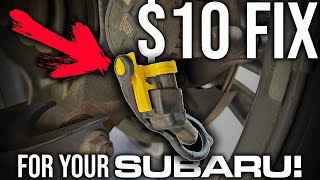
- On 2015-2019 Subaru Legacy and Outback models, C0232 almost always indicates a broken electronic parking brake connector clip, covered under a 15-year extended warranty.
- Over 50% of C0232 codes stem from a broken wire or corroded connector rather than a failed sensor, making a wiring continuity test mandatory before buying parts.
- Replacing a wheel speed sensor without testing the wiring harness first wastes an average of $150 to $300 in unnecessary parts and labor.
- Driving with an active C0232 code increases emergency stopping distances on wet roads due to disabled anti-lock brakes, requiring immediate repair.
What Does C0232 Mean?
Code C0232 means the ABS module detects a complete loss of signal from a rear wheel speed sensor. This stems from a broken wire, a failed sensor, or a corroded connection. Because these sensors are critical for ABS and traction control, the vehicle shuts down those safety systems as a precaution.
Technical definition: The SAE/ISO definition for C0232 is "Rear Wheel Speed Signal Circuit Open". The ABS control module expects a constantly changing voltage signal as the wheel turns, but receives zero voltage, indicating a severed physical or electrical connection.
Can I Drive With C0232?
Yes, But With Caution. You can drive the vehicle, but your Anti-lock Braking System (ABS), Traction Control, and Stability Control are completely disabled. Normal hydraulic brakes still function, but the risk of wheel lock-up and skidding during a hard stop increases significantly on wet or slippery roads. Address the issue immediately to restore these critical safety features.
Common Causes
- Damaged or Broken Wiring Harness (Very Common) — Wires leading to the wheel speed sensor break internally or get cut by road debris and constant suspension flexing, causing an open circuit.
- Corroded or Unplugged Connector (Common) — Water and road salt infiltrate the sensor's electrical connector, corroding the metal pins until the connection is completely lost.
- Failed Wheel Speed Sensor (Common) — The sensor fails internally from age, heat, and vibration within the harsh environment of the wheel hub.
- Failed Wheel Hub/Bearing Assembly (Uncommon) — A failing wheel bearing creates excessive play, physically damaging the delicate integrated magnetic encoder or the sensor itself.
- Damaged ABS Tone Ring (Less Common) — The toothed or magnetic ring that the sensor reads cracks or rusts away, preventing the sensor from generating a signal.
- Poor Connection at ABS Control Module (Rare) — Pins in the main wiring harness connector at the ABS control module corrode or loosen, interrupting the signal before it reaches the computer.
- Faulty ABS Control Module (Rare) — The ABS computer itself fails internally. All wiring and sensor possibilities must be exhausted before suspecting the module.
Symptoms
- ABS Warning Light is On — The computer illuminates the ABS warning on the dashboard immediately upon detecting the open circuit.
- Traction Control or Stability Control Light is On — Because traction and stability control rely on wheel speed sensors, their warning lights illuminate and the systems disable.
- ABS and Traction Control Do Not Work — Wheels lock up and skid during hard stops. In slippery conditions, wheels spin freely during acceleration.
- Erratic Speedometer Behavior — On older vehicles with a single rear differential sensor, a C0232 code causes the speedometer to read incorrectly or drop to zero.
Diagnostic Flowchart
Tap your situation to follow the diagnostic path that matches what you're seeing on this code.
Common Fixes & Costs
- Repair Damaged Wiring or Connector — Parts: $10-$30, Labor: $125-$350, ~1.5 hr book time (Intermediate)
- Replace Wheel Speed Sensor — Parts: $40-$150, Labor: $100-$250, ~1.2 hr book time (DIY)
- Replace Subaru EPB Connector Clip (Subaru-specific) — Parts: $10-$15, Labor: $0-$125, ~0.5 hr book time (DIY)
- Replace Wheel Hub and Bearing Assembly — Parts: $150-$400, Labor: $250-$500, ~2.5 hr book time (Intermediate)
- Replace ABS Wheel Speed Sensor Wiring Harness — Parts: $75-$400, Labor: $200-$600+, ~4.5 hr book time (Professional)
DIY vs Professional
- Replace Wheel Speed Sensor — Beginner: Yes
Tools: Jack and jack stands, socket/wrench set, torque wrench, penetrating oil. - Repair Damaged Wiring or Connector — Beginner: No
Tools: Soldering iron, heat shrink tubing, wire strippers, multimeter. - Replace Wheel Hub and Bearing Assembly — Beginner: No
Tools: Heavy-duty tools including large axle nut socket, breaker bar, torque wrench, slide hammer. - Replace Subaru EPB Connector Clip — Beginner: Yes
Tools: Small flathead screwdriver.
Used vs. New Parts: Buying Guide
When a used part is worth it: A used wheel speed sensor from a reputable salvage yard makes sense only for older, high-mileage vehicles where the cost of a new OEM part is prohibitively expensive.
Donor-vehicle mileage cap: roughly under 100000 miles for the part to have meaningful remaining life.
Donor quality checklist:
- Verify the part comes with at least a 30-day warranty.
- Match the part number exactly.
- Avoid parts from vehicles in heavy rust-belt areas.
Decision logic:
- If The vehicle is a 2015-2019 Subaru with C0232 → Do not buy a wheel speed sensor. Buy the specific EPB connector clip (OEM part X9904AL110).
- If The vehicle is less than 10 years old and a daily driver → Buy a new OEM or high-quality aftermarket (e.g., Bosch, NTK) sensor. The reliability justifies the cost.
- If The vehicle is over 15 years old or a project car → A tested used part or a lower-cost aftermarket sensor is an acceptable risk.
Warranty tradeoff: Used parts typically offer a 30-90 day functional warranty. New OEM parts usually carry a 12-month warranty.
Worst-case if a used part fails: $150-$300 if a cheap aftermarket part fails shortly after installation, requiring repeat labor costs.
What Happens If You Wait — Timeline
- Day 1: ABS, Traction Control, and Stability Control lights illuminate. Systems are disabled. Normal hydraulic brakes function. (MPG impact: 0%% · Added cost: $0)
- 1 week - 3 months: The driver becomes accustomed to driving without ABS, increasing the chance of wheel lock-up in an emergency stop. (MPG impact: 0%% · Added cost: $0, but accident risk is high.)
- 3-12 months: Moisture and corrosion creep down the copper wire from a small crack, making a simple spot repair impossible. (MPG impact: 0%% · Added cost: $100-$500 (Forces replacement of a more expensive pigtail or harness section).)
- 12+ months: Severe corrosion spreads from the ABS wiring to adjacent pins, damaging the ABS control module itself. (MPG impact: 0%% · Added cost: $500-$2000+ (Requires module repair or replacement).)
Cost of Not Fixing It
- Immediate: ABS, Traction Control, and Stability Control are disabled. Increased risk of skidding and loss of control during emergency braking. (Added cost: $0)
- 0-6 months: Continued operation normalizes a high-risk driving condition. The financial liability of an accident caused by loss of control is extreme. (Added cost: Potential for accident-related costs.)
- 6+ months: The underlying cause, such as a corroded connector, worsens and destroys adjacent pins in the ABS module harness. (Added cost: $500-$2000+ for complex electrical repairs.)
Diagnosis Steps
- Confirm the Code and Identify the Wheel
Use an OBD-II scanner capable of reading ABS/Chassis codes to confirm C0232. Note which rear wheel the code specifies (e.g., 'Rear Left'). A standard engine code reader cannot see 'C' codes.
Tools: OBD-II Scanner (with ABS capability) (Beginner) - Visually Inspect the Wiring and Connector
Safely raise the vehicle. Follow the wire from the back of the wheel hub into the vehicle's body. Look for breaks, cuts, or chafing. Unplug the connector and check for green or white corrosion on the pins.
Tools: Jack and Jack Stands, Flashlight (Beginner) - Analyze Live Data with a Scan Tool
Connect an advanced scan tool. Select the PIDs for all four wheel speed sensors. Drive slowly (above 5 mph). Three sensors show matching speeds, while the sensor associated with C0232 reads 0 MPH, confirming the dead signal.
Tools: Advanced OBD-II Scanner with Live Data (Intermediate) - Test the Wiring Harness for Continuity
Unplug the harness from both the sensor and the ABS control module. Set a multimeter to continuity mode. Test each wire end-to-end. If the meter does not beep, the wire is broken inside the harness.
Tools: Multimeter with long leads, Service Manual (Advanced) - Measure Sensor Resistance (Passive Sensors Only)
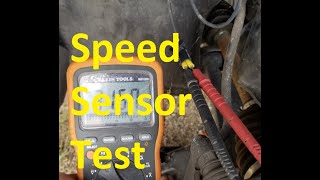
For 2-wire passive sensors: Disconnect the sensor. Measure resistance across the sensor's pins. A reading of 800-2,500 Ohms is normal. 'OL' (Open Loop) confirms an internal break, requiring sensor replacement.
Tools: Digital Multimeter (Intermediate) - Check for Reference Voltage (Active Sensors Only)
For 2/3-wire active sensors: Disconnect the harness. Turn ignition 'ON'. Probe the harness connector pins. One pin must show a reference voltage (5V-12V) from the ABS module. Lack of voltage proves a wiring or module fault, not a bad sensor.
Tools: Digital Multimeter (Advanced) - Test for a Live AC Signal (Passive Sensors Only)
Set multimeter to AC Volts. Reconnect the sensor, back-probe the wires, and spin the wheel by hand. You should see a small AC voltage (0.5-1.0V) that increases with speed. Zero voltage indicates a bad sensor or tone ring.
Tools: Multimeter with back-probe pins (Advanced) - Inspect the ABS Tone Ring and Wheel Bearing
Inspect the toothed or magnetic ring for cracks, missing teeth, or heavy rust. Grab the tire at the top and bottom and rock it; excessive play indicates a bad wheel bearing damaging the sensor.
Tools: Flashlight, Jack and Jack Stands (Intermediate) - Analyze the Signal with an Oscilloscope
Back-probe the sensor's signal wire. Spin the wheel. A good passive sensor produces a clean sine wave; an active sensor produces a square wave. A flat line confirms no signal is produced.
Tools: Oscilloscope, Back-probe pins (Professional)
When This Code Triggers (Freeze-Frame Conditions)
- Vehicle Speed: > 5 mph (Sets once the vehicle moves and the ABS module detects three wheels reporting speed while one reports zero.)
- System Voltage: 11.5-14.5V (Detected reliably when the electrical system is stable, ruling out low voltage from a weak battery.)
- ABS/TCS/VSC Status: Disabled (The systems disable immediately upon detecting the open circuit during startup or initial movement.)
Related Codes
- C0233 — Means 'Rear Wheel Speed Signal Circuit Short to Battery.' C0232 shows no signal, while C0233 shows steady battery voltage on the signal wire.
- C0231 — Means 'Rear Wheel Speed Signal Erratic'. The computer gets a jumpy signal, usually from a damaged tone ring. C0232 means no signal is present at all.
- C0238 — Means 'Wheel Speed Mismatch'. An open circuit from C0232 causes one wheel to report zero speed, immediately triggering C0238 as a secondary symptom.
- P0700 — On Subaru models, this generic transmission code triggers alongside C0232 to indicate a fault originating in the parking brake system.
Climate & Environmental Factors
- Road Salt and De-icing Chemicals: Highly corrosive salt is the primary cause of corroded connectors and wiring pins, leading directly to an open circuit.
- Snow and Ice Buildup: Packed snow and ice physically rip the exposed wiring harness or connector loose from the sensor.
- High Humidity: Moisture works its way into connectors with aging weather seals, accelerating pin corrosion.
How to Talk to a Mechanic About This Code
Say this: "I have an ABS light on, and my scanner shows a C0232 code for the rear wheel speed circuit. Please start by visually inspecting the wiring harness and connector for damage, and then test the wiring for continuity before recommending a new sensor."
This signals to the shop that you understand the common causes of C0232 and expect a thorough diagnosis, preventing them from selling you a sensor when the real problem is a broken wire.
Avoid saying:
- 'My ABS light is on, can you look at it?' (Too vague, invites expensive diagnostics).
- 'Just replace the rear wheel speed sensor.' (Common misdiagnosis; you pay for unneeded parts).
- 'Just fix whatever is wrong.' (Gives the shop a blank check).
Questions to ask before authorizing the repair:
- What were the specific results of the wiring continuity test from the sensor to the ABS module?
- If the sensor is bad, what was the resistance reading you measured on the old part?
- If you are recommending a wiring repair, can you show me the location of the break?
- What is the warranty on the parts and labor for this repair?
Where to Take It: Dealer vs Independent vs Chain
- Dealer:
Recommended only for the specific Subaru TSB issue or if the vehicle is under warranty. Otherwise, an independent shop is more cost-effective.
Best for: 2015-2019 Subaru models, to utilize the warranty extension for the EPB clip., Vehicles still under the factory bumper-to-bumper warranty., Extremely complex electrical issues where an independent has failed.
Downsides: Highest labor and parts costs., May recommend replacing an entire harness when a simpler spot repair is possible. (Typical cost: +50% vs. baseline) - Independent Shop:
Best overall fit. A reputable independent shop is perfectly equipped to diagnose and repair a C0232 code correctly.
Best for: Most out-of-warranty vehicles., Diagnosing common electrical faults like broken wires or failed sensors.
Downsides: Shop quality and diagnostic skill vary widely; look for ASE certifications., May not be aware of niche manufacturer TSBs like the Subaru EPB issue. (Typical cost: +0% vs. baseline) - Chain Shop:
AVOID for diagnosis. Only consider if you have already diagnosed the problem yourself and simply need a sensor installed.
Best for: Simple, pre-diagnosed part replacement if you are certain the sensor itself has failed.
Downsides: Technicians are often ill-equipped for in-depth electrical diagnostics., Business model encourages upselling and quick part replacement over accurate diagnosis. (Typical cost: -10% vs. baseline)
When to Walk Away From the Repair
If the estimated repair cost exceeds 40-50% of the car's current private-party value, seriously consider replacing the vehicle.
- Car worth $3000, fix is $1200: Borderline. The repair is 40% of the car's value. Given that this is a critical safety system, it's worth fixing if the rest of the car is in good shape.
- Car worth $15000, fix is $700: Fix it. The repair cost is well below the threshold and restores a critical safety feature.
- Car worth $2000, fix is $1500: Walk away. The repair cost is 75% of the car's value. It is not financially sensible to proceed.
What Scan Tool You Need for This Code
Minimum: A scanner that reads and clears ABS/Chassis ('C') codes. A standard engine-only code reader will NOT see this code.
A basic $20 engine code reader cannot communicate with the ABS module. It shows 'No Codes Found' even with the ABS light on.
Budget: BlueDriver Bluetooth Pro (~$100) — Reads and clears ABS codes, and provides live data graphing for all four wheel speed sensors on most major brands.
Mid-range: Foxwell NT510 Elite (~$200) — Provides deep, dealer-level diagnostics for a specific car brand, including robust live data and bi-directional controls.
Professional: Autel MaxiCOM MK808S (~$450-600) — Offers comprehensive all-system diagnostics. Its large screen makes viewing live data from all four wheels simultaneously very easy.
Rent vs buy: For a one-time diagnosis, auto parts stores offer loaner tool programs with ABS-capable scanners. Buy a scanner only if you plan to do your own diagnostics regularly.
How to Clear the Code After You Fix It
- Use an OBD-II scan tool with ABS capabilities to erase the fault codes.
- Perform a short test drive, exceeding 10 mph to allow the system to verify the repair.
Drive cycle (~10 minutes): Start the vehicle and drive for 5-10 minutes, ensuring vehicle speed surpasses 10 mph. The ABS light remains off if the repair is successful.
Readiness monitors affected: None directly, though an active ABS fault prevents certain emissions readiness monitors from completing on specific makes.
Watch out for:
- Using a standard engine code reader that cannot access or clear ABS ('C') codes.
- Clearing the code without fixing the open circuit; the code returns immediately upon driving.
- Assuming a battery disconnect permanently fixes the issue.
Will This Fail Emissions / State Inspection?
No — by itself this code doesn't fail OBD inspection (but it can keep readiness monitors from setting, which causes a separate fail).
- California: An illuminated ABS light does not cause a Smog Check failure, but the inspector notes it as a safety concern.
- New York: Currently, an illuminated ABS warning light is NOT a cause for rejection in a NYS safety inspection, though proposed legislation aims to change this.
- Texas: An illuminated ABS warning light is explicitly listed as NOT being a cause for rejection in the Texas vehicle safety inspection.
Most Commonly Affected Vehicles
- Subaru Legacy, Outback (2015-2019) — Extremely common for this code to appear due to a cracked plastic connector tab on the Electronic Parking Brake (EPB) actuator. Subaru issued TSB 06-87-22R and extended the warranty to 15 years under campaign WI22-015.
- General Motors Colorado, Equinox, Acadia (2004-2017) — GM vehicles log a C1232 code for the same fault. Frequently caused by the wiring harness breaking near the wheels from repeated suspension movement.
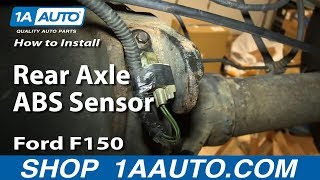
- Ford Explorer, Ranger, F-150 (1998-2011) — Older Ford trucks use a single speed sensor mounted on the rear differential housing. This single sensor provides the speed signal for the rear ABS and speedometer.
- Jeep Wrangler (JL), Grand Cherokee (WK2) (2018-2022) — Prone to chafed or shorted ABS wiring harnesses, triggering an open circuit code. Careful inspection and spot repair is preferred over full harness replacement.
- Dodge/Mercedes-Benz Sprinter (2007-2018) — Multiple wheel speed sensor circuit faults appear at once, often due to wiring issues or contamination of the magnetic tone rings.
- Hyundai / Kia Elantra, Sonata, Optima, Sorento (2011-2018) — Experience failures of the rear wheel speed sensors or damage to the wiring harness. The sensor itself is the most common failure point.
- Honda Civic, CR-V, Accord (2006-2017) — Points directly to a failed wheel speed sensor or a break in the pigtail connector right at the sensor. Replacement pigtails are widely available.
- Nissan Altima, Maxima, Juke, Rogue (2007-2016) — Failures are often due to the sensor itself, but are sometimes complicated by issues with related systems like a faulty brake light switch.
Manufacturer-Specific Notes
- Subaru: On 2015-2019 models, C0232 means 'AT Abnormal' and is caused by a broken plastic clip on the electronic parking brake actuator, not a wheel speed sensor. Covered by TSB 06-87-22R.
- General Motors (GM): GM uses code C1232 to report the exact same 'circuit open' fault, frequently caused by a broken wire within the harness.
- Ford: Older trucks with a solid rear axle use a single sensor in the rear differential (VSS) to report speed for both rear wheels. A fault here triggers C0232.
- Toyota / Lexus: On some Toyota models, C0232 is defined as 'Brake Actuator Malfunction' or 'ABS Motor Circuit', pointing to the ABS pump rather than a wheel speed sensor.
Real Owner Stories
2017 Subaru Outback at 75K miles
ABS, EyeSight, and flashing parking brake lights illuminated simultaneously. The car drove normally, but advanced safety features were disabled.
What they tried:
- Owner suspected the common Electronic Parking Brake (EPB) connector issue.
- Took the car to the dealership and mentioned TSB 06-87-22R.
- Dealer confirmed the plastic locking tab on the rear EPB connector was broken.
Outcome: Dealer installed the reinforced connector clip kit (Part X9904AL110). The repair was fully covered under Subaru's 15-year extended warranty (Campaign WI22-015). Total cost: $0.
Lesson: On a 2015-2019 Subaru, C0232 with a flashing parking brake light is the EPB connector, not the wheel speed sensor. Mention the TSB to your dealer.
2015 Chevy Colorado at 110K miles
ABS and Traction Control lights came on. Scanner showed C0232 for the left rear wheel speed sensor.
What they tried:
- Replaced the left rear wheel speed sensor with a new aftermarket part ($60).
- Cleared the code, but the light returned within a mile.
- Took it to a mechanic who inspected the harness where it flexes with the suspension.
Outcome: The mechanic found an internal break in the wire six inches from the connector. The wire looked fine externally but had no continuity. The mechanic spliced in a new section of wire. Total cost: $180.
Lesson: A new part failing to fix the problem is a classic sign of a wiring issue. Internal wire breaks are invisible and require a continuity test to find.
2004 Ford F-150 at 160K miles
ABS light was on, and the speedometer behaved erratically, dropping to zero while driving. Code C0232 was present.
What they tried:
- Learned this model uses a single sensor on the rear differential for both rear wheels and the speedometer.
- Visually inspected the sensor and found the wiring connector full of dirt and brittle wires.
Outcome: Replaced the single rear differential speed sensor (Motorcraft DY1123). The ABS light went off and the speedometer worked perfectly. Total cost: $25.
Lesson: On older trucks with a solid rear axle, check the single sensor on the differential. This one part affects ABS and the speedometer and is an inexpensive fix.
How to Prevent This Code From Triggering
- Apply dielectric grease to sensor connectors during brake jobs (Whenever wheels/brakes are serviced) — Seals the electrical connector, preventing moisture and road salt from corroding the pins.
- Clean wheel wells and suspension components (Once per season, especially after winter) — Washes away built-up road salt and grime that attack wiring insulation and connector housings.
- Visually inspect sensor wiring when rotating tires (Every 5,000-7,500 miles) — Detects chafed insulation or loose mounting clips before the wire breaks completely.
Frequently Asked Questions
What is the difference between an 'open circuit' and a 'short circuit'?
An 'open circuit' (like C0232) is a cut wire where the electrical signal cannot travel. A 'short circuit' means the wire touches another wire or metal part, sending the signal to the wrong place.
My Subaru has a C0232 code and a flashing parking brake light. Is it a wheel speed sensor?
No. On 2015-2019 Legacy and Outback models, this points to a broken connector clip on the electronic parking brake. Subaru extended the warranty to cover this specific repair for 15 years under TSB 06-87-22R.
Can I just clean the sensor to fix a C0232 code?
Cleaning the sensor will not fix an 'open circuit' code. This code indicates a complete physical or electrical break in the connection. Cleaning only helps with 'erratic signal' codes.
I replaced the wheel speed sensor, but the C0232 code came back. What now?
If a new sensor fails to fix the code, the problem is in the wiring or connector. Perform a continuity test on the wiring harness from the sensor plug to the ABS module to locate the break.
My scanner shows C0232 and C0238 at the same time. Is that two separate problems?
No, this is normal. C0232 causes one wheel to report zero speed, which the computer immediately flags as a mismatch (C0238). Fix the C0232 open circuit, and the C0238 code resolves itself.
Is it safe to drive with the ABS light on from a C0232 code?
Your regular brakes still work, but you lack anti-lock brakes, traction control, and stability control. This significantly increases the risk of skidding in an emergency, requiring prompt repair.
Why did my traction control light also come on?
Traction and stability control systems rely on the exact same wheel speed sensors as the ABS. When the computer loses one sensor's signal, it shuts down all related safety systems.
What does a C0232 repair cost?
A simple wiring repair costs $150-$350, while replacing a wheel speed sensor runs $140-$400. If the sensor is integrated into the wheel hub, expect to pay $400-$900. The Subaru-specific parking brake clip fix is often free under warranty.
Key Takeaways
- Code C0232 indicates a total loss of signal from a rear wheel speed sensor, immediately disabling your ABS, traction control, and stability control.
- On 2015-2019 Subaru Legacy and Outback models, C0232 almost always indicates a broken electronic parking brake connector clip, covered under a 15-year extended warranty.
- Over 50% of C0232 codes stem from a broken wire or corroded connector rather than a failed sensor, making a wiring continuity test mandatory before buying parts.
- Replacing a wheel speed sensor without testing the wiring harness first wastes an average of $150 to $300 in unnecessary parts and labor.
- Driving with an active C0232 code increases emergency stopping distances on wet roads due to disabled anti-lock brakes, requiring immediate repair.
Helpful Videos
Shop the Parts Behind C0232
Below are the parts most often responsible for code C0232, ranked by how frequently each one is the actual culprit (per the diagnosis above). Tap any to see what we have for your vehicle.



The information in this article is provided for general reference and educational purposes only. Vehicle specifications, procedures, and part compatibility can vary by production date, trim level, and region. Always consult your vehicle's factory service manual and verify part numbers before purchasing or performing repairs. Safety-critical components such as airbags, seat belts, and braking systems should be installed by a qualified professional.
- 🧭 Diagnostic Flowchart
- 🎬 Helpful Videos
- 🛍️ Shop This Part
- What Does C0232 Mean?
- Can I Drive With C0232?
- Common Causes
- Symptoms
- Common Fixes & Costs
- DIY vs Professional
- Used vs. New Parts: Buying Guide
- What Happens If You Wait — Timeline
- Cost of Not Fixing It
- Diagnosis Steps
- When This Code Triggers (Freeze-Frame Conditions)
- Related Codes
- Climate & Environmental Factors
- How to Talk to a Mechanic About This Code
- Where to Take It: Dealer vs Independent vs Chain
- When to Walk Away From the Repair
- What Scan Tool You Need for This Code
- How to Clear the Code After You Fix It
- Will This Fail Emissions / State Inspection?
- Most Commonly Affected Vehicles
- Manufacturer-Specific Notes
- Real Owner Stories
- 2017 Subaru Outback at 75K miles
- 2015 Chevy Colorado at 110K miles
- 2004 Ford F-150 at 160K miles
- How to Prevent This Code From Triggering
- Frequently Asked Questions
- What is the difference between an 'open circuit' and a 'short circuit'?
- My Subaru has a C0232 code and a flashing parking brake light. Is it a wheel speed sensor?
- Can I just clean the sensor to fix a C0232 code?
- I replaced the wheel speed sensor, but the C0232 code came back. What now?
- My scanner shows C0232 and C0238 at the same time. Is that two separate problems?
- Is it safe to drive with the ABS light on from a C0232 code?
- Why did my traction control light also come on?
- What does a C0232 repair cost?
- Key Takeaways
- 🎟️ Get 5% Off