

OBD-II Code C0234: Engine and Transmission Communication Malfunction
What C0234 means, why it triggers, and how to fix it
- Code C0234 indicates a communication failure with the ABS control module, instantly disabling your anti-lock brakes and traction control.
- Check the battery voltage and the main ABS ground wire before replacing any parts, as these two issues cause over 50% of C0234 codes.
- Your conventional hydraulic brakes still work, but stopping distances increase by up to 25% on loose surfaces without ABS.
- Use an advanced OBD-II scanner capable of reading Chassis ('C') codes, as basic $20 code readers cannot detect ABS communication faults.
What Does C0234 Mean?
Code C0234 means the Engine Control Module (ECM) lost communication with the ABS Control Module. This communication failure disables your anti-lock brakes and traction control. It indicates the ABS module detected an internal or input-related fault and shut down its network communication.
Technical definition: The SAE/ISO definition for C0234 varies by manufacturer but generally indicates an 'Engine and Transmission System Malfunction' or a communication failure with a chassis control module. On GM vehicles, it means 'Brake Contact ABS Open'. On Subaru, it signifies a 'VDC Failure'. On other makes, it indicates a 'Rear Wheel Speed Signal Circuit Short to Ground'.
Can I Drive With C0234?
Yes, But With Caution. Yes, but with extreme caution. Your regular hydraulic brakes still work, but the Anti-lock Braking System (ABS) and Traction Control are disabled. Without ABS, stopping distances increase by 15% on dry pavement and over 25% on loose surfaces like gravel. The vehicle sometimes enters a reduced power 'limp mode,' limiting speed to 30-50 mph. Drive directly to a repair shop.
Common Causes
- Corroded or Loose ABS Module Ground Wire (Very Common) — On many vehicles, especially GM trucks on the GMT800/GMT900 platforms, the main ground wire for the ABS module sits under the driver's side door frame exposed to moisture. This wire corrodes and loses connection, causing intermittent communication failures.
- Low or Unstable Battery Voltage (Very Common) — A weak or failing battery causes a drop in system voltage during startup. Sensitive electronic modules, like the ABS controller, interpret this low voltage as a fault, shut down temporarily, and log communication codes.
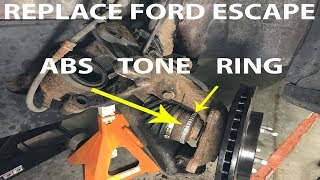
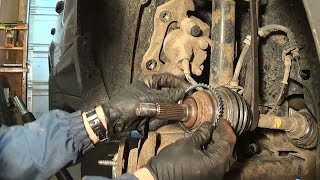
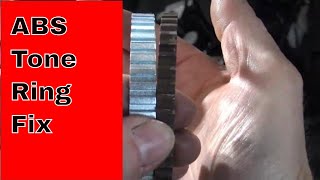
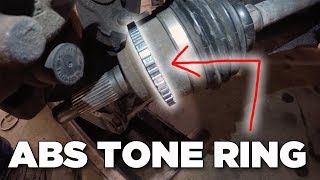
- Failed Wheel Speed Sensor or Tone Ring (Common) — A wheel speed sensor provides crucial data to the ABS module. If the sensor fails, or the toothed 'tone ring' it reads from cracks or slips out of place, the module receives bad data and shuts down communication.
- Damaged Wiring or Corroded Connectors (Common) — The wiring harness going to the ABS module or individual wheel speed sensors suffers damage from road debris, heat, or moisture. Corroded pins inside the connectors lead to high resistance and poor signal quality.
- Defective ABS Control Module (EBCM) (Less Common) — The electronic module fails internally due to cracked solder joints on the circuit board from years of vibration and heat cycles. The module requires a specialized rebuild service or complete replacement.
- Faulty Brake Pedal Position Switch (Rare) — This switch tells the ABS module when you press the brake pedal. A faulty or out-of-adjustment switch sends an incorrect signal, causing the ABS system to log a fault and disable itself.
- CAN Bus Network Fault (Rare) — The Controller Area Network (CAN bus) allows all vehicle computers to communicate. A short or open circuit in the CAN bus wiring, often caused by chafing or rodent damage, prevents the ABS module from talking to the ECM.
- Failed or Uncalibrated Steering Angle Sensor (Rare) — The Steering Angle Sensor (SAS) is a critical input for the Vehicle Stability Control system. If the SAS fails or loses calibration after an alignment, it sends faulty data, triggering a C0234 code.
Symptoms
- ABS Light On — The ABS warning light illuminates permanently on your dashboard.
- Traction Control / Stability Control Light On — The traction control (TCS) or stability control (VSC/ESC) lights turn on, as these systems rely entirely on the ABS to function.
- Brakes Lock Up During Hard Braking — Without ABS, your wheels lock up and skid during a panic stop. You lose the pulsing sensation in the pedal that ABS provides.
- Reduced Engine Power ('Limp Mode') — The vehicle limits engine RPM and speed to 30-50 mph to prevent safety issues when the ABS and traction systems are offline.
- Erratic Speedometer or Cruise Control Issues — The ABS module processes wheel speed data for the instrument cluster. A fault causes the speedometer to read incorrectly or disables the cruise control.
Diagnostic Flowchart
Tap your situation to follow the diagnostic path that matches what you're seeing on this code.
Common Fixes & Costs
- Clean or Repair ABS Module Ground Connection — Parts: $0-$10, Labor: $50-$150, ~0.8 hr book time (DIY)
- Replace Wheel Speed Sensor — Parts: $40-$150, Labor: $150-$300, ~1.5 hr book time (Intermediate)
- Rebuild ABS Control Module — Parts: $150-$400, Labor: $200-$350, ~2.5 hr book time (Intermediate)
- Replace ABS Control Module — Parts: $700-$2,500, Labor: $200-$400, ~3.0 hr book time (Professional)
- Repair or Replace Damaged Wiring Harness — Parts: $10-$50, Labor: $200-$600, ~3.5 hr book time (Professional)
DIY vs Professional
- Clean or Repair ABS Module Ground Connection 🟢 Beginner
Tools: Socket set, wire brush, sandpaper, dielectric grease. - Replace Wheel Speed Sensor 🟢 Beginner
Tools: Jack and jack stands, lug wrench, socket/wrench set, torque wrench, penetrating oil. - Rebuild/Replace ABS Control Module (Electronics Only) 🟢 Beginner
Tools: Socket/wrench set, Torx bit set. - Repair or Replace Damaged Wiring Harness 🟢 Beginner
Tools: Vehicle-specific wiring diagrams, multimeter, wire strippers, soldering iron, heat shrink tubing. - Replace Full ABS Module Assembly (with Hydraulics) 🟢 Beginner
Tools: Full socket/wrench set, line wrenches, professional scan tool, brake fluid, brake bleeding equipment.
Used vs. New Parts: Buying Guide
When a used part is worth it: A used ABS module makes sense for older vehicles (over 150K miles) where a new module is cost-prohibitive. It saves hundreds of dollars but carries a risk of premature failure.
Donor-vehicle mileage cap: roughly under 100000 miles for the part to have meaningful remaining life.
Donor quality checklist:
- Match part numbers EXACTLY. A module from the same model but different year or trim fails to communicate.
- Purchase from a reputable seller offering at least a 30-day warranty.
- Avoid parts from flood or severe collision vehicles.
Decision logic:
- If The fault is diagnosed as internal cracked solder joints on the EBCM. → Choose a mail-in REBUILD service. It is more reliable than used, cheaper than new, and requires no programming.
- If Vehicle is less than 10 years old and a new part is available for under $800. → Buy a new or OEM remanufactured part. The reliability and warranty justify the cost.
- If A used module costs under $100 and you have access to a professional scan tool for reprogramming. → A used part is a reasonable financial risk.
Warranty tradeoff: Used parts typically have a 30-90 day warranty covering the part only. Rebuilt services offer a 1-year to lifetime warranty. New OEM parts carry a 1-2 year warranty.
Worst-case if a used part fails: $300-600 if a used module fails, covering repeat labor for installation and diagnostics, plus another replacement part.
What Happens If You Wait — Timeline
- Immediately: ABS, Traction Control, and Stability Control lights illuminate. The associated safety systems are disabled. The vehicle's conventional brakes still work. (MPG impact: 0%% · Added cost: $0, but safety is compromised. Increased risk of skidding in a panic stop.)
- 1-3 months: If the root cause is an intermittent wiring or sensor issue, continued driving causes the connection to degrade further, making the fault permanent. If the cause is a failing wheel bearing, a humming noise develops. (MPG impact: 0-1%% · Added cost: $0-$50 in wasted diagnostic time if the fault becomes harder to trace.)
- 3-12 months: If the cause is a failing wheel bearing, continued driving leads to excessive play, damaging the hub and steering knuckle. Repeated power cycles on a failing module lead to complete failure. (MPG impact: 1-3%% · Added cost: $400 - $1,200 if a neglected wheel bearing fails catastrophically and damages the hub assembly.)
- 12+ months: The primary risk remains safety-related. A minor electrical issue escalates if moisture intrudes into a failed connector over time, requiring a full harness replacement instead of a simple pin repair. (MPG impact: 0%% · Added cost: Potentially thousands in accident-related damages or escalated repair costs from a simple wiring fix to a major harness replacement ($1,500+).)
Cost of Not Fixing It
- Immediately: ABS and Traction/Stability Control are disabled. Increased risk of skidding and loss of control during panic braking or on slippery surfaces. (Added cost: 0, but significant increase in accident risk.)
- 1-6 months: Continued driving masks other developing issues. If the cause is a failing wheel bearing, it eventually seizes, causing a loss of control. (Added cost: $500 - $1500 if a bearing failure causes collateral damage to the hub and knuckle.)
- 6+ months: A minor wiring fault leads to a severe internal failure of the ABS module from repeated error states. The ultimate cost is an accident. (Added cost: Potentially thousands in vehicle repair or total loss.)
Diagnosis Steps
- Read the Trouble Codes
Use an OBD-II scanner capable of reading ABS (Chassis 'C') codes. Note all codes present, as specific wheel speed sensor codes point directly to the root cause.
Tools: Advanced OBD-II Scanner (Beginner) - Test Battery Voltage
Use a multimeter to measure battery voltage across the terminals. A healthy battery reads 12.4V to 12.6V with the engine off and 13.7V to 14.7V with the engine running. Low voltage during cranking causes the ABS module to shut down.
Tools: Multimeter (Beginner) - Inspect the ABS Module Ground Wire
Locate the main ground wire for the ABS module. On GM trucks, this sits on the frame rail below the driver's door. Check for rust, corrosion, or looseness.
Tools: Flashlight, Wire Brush, Socket Set (Beginner) - Inspect Wheel Speed Sensors and Tone Rings
Remove each wheel and inspect the wheel speed sensor and the toothed tone ring. Look for cracks, heavy rust, or a ring that slipped out of position on the axle shaft.
Tools: Jack and Jack Stands, Lug Wrench, Flashlight (Intermediate) - Visually Inspect Wiring and Connectors
Check the wiring harness leading to the ABS control module and each wheel speed sensor. Look for signs of damage, melting, or corrosion on the connector pins.
Tools: Flashlight (Intermediate) - Analyze Live Wheel Speed Data
View the live data stream for all four wheel speed sensors while driving. All sensors must read within 1-2 MPH of each other. A sensor that drops to zero or reads erratically is the source of the fault.
Tools: Advanced OBD-II Scanner (with Live Data) (Advanced) - Test Wheel Speed Sensor Resistance and Voltage
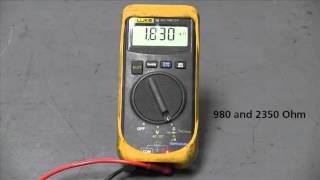
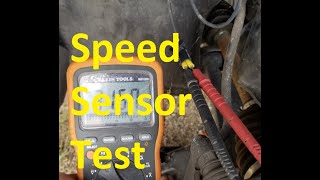
Disconnect the sensor and measure resistance; passive sensors read between 800 and 2,700 Ohms. Next, set the multimeter to AC Volts, spin the wheel by hand, and measure the output. A good sensor generates 100-250 mV.
Tools: Multimeter, Jack and Jack Stands (Advanced) - Check Power and Ground at the ABS Module
Using a wiring diagram, confirm the ABS module receives proper battery voltage (12.0-12.6V engine off) and has a solid ground connection (less than 0.1 Ohms resistance to chassis ground) directly at its connector.
Tools: Multimeter, Vehicle-Specific Wiring Diagram (Advanced) - Test the Brake Pedal Position Switch
Locate the switch above the brake pedal. Use a multimeter to test for proper continuity, ensuring it opens and closes correctly as you press and release the pedal.
Tools: Multimeter (Intermediate) - Pro Tip: Check CAN Bus Resistance and Voltage
Disconnect the battery and measure resistance between OBD-II pins 6 and 14; a healthy bus reads 60 Ohms. Reconnect the battery, turn the key on, and measure DC voltage from pin 6 to ground (approx 2.5V-3.0V) and pin 14 to ground (approx 2.0V-2.5V). Deviations indicate a short or open circuit.
Tools: Multimeter (Advanced)
When This Code Triggers (Freeze-Frame Conditions)
- Vehicle Speed: 0 mph (During initial startup sequence (Key On, Engine Off))
- Battery Voltage: 10.5-11.8V (During engine cranking (low voltage event))
- Vehicle Speed: 25-55 mph (Steady driving when an intermittent sensor or wiring fault occurs)
- RPM: 1200-2500 (Light acceleration or cruise when a data dropout happens)
Related Codes
- U0121 — Means 'Lost Communication With ABS Control Module'. U0121 is set by the ECM when it can't hear from the ABS module. C0234 is set by the ABS module itself, indicating why it stopped communicating.
- C0035 to C0050 — These point to a specific wheel speed sensor circuit fault. A faulty sensor circuit feeds bad data to the ABS module, which then logs C0234 and shuts down. Always repair the specific wheel speed sensor code first.
- C1233 / C1234 — On Ford vehicles, these mean 'Wheel Speed Sensor Input Signal Missing'. They are the root cause, and C0234 is the resulting communication fault. Fix the C1233/C1234 fault first.
- P0700 — Means 'Transmission Control System Malfunction'. The Transmission Control Module sets P0700 because it lost the wheel speed data it needs from the ABS module. P0700 is a downstream symptom of the ABS fault.
Climate & Environmental Factors
- Humidity and Road Salt: Moisture and salt accelerate corrosion on the ABS module's main ground wire, connector pins, and wheel speed sensor wiring, leading to high resistance or open circuits.
- Cold Weather: Extreme cold makes aging plastic connectors and wire insulation brittle. A pothole breaks fragile wires, causing an intermittent or permanent loss of communication.
- Heat: High under-hood temperatures break down the ABS control module's internal circuit board. Heat cycles cause solder joints to expand and contract, leading to microscopic cracks.
How to Talk to a Mechanic About This Code
Say this: "I have an ABS and traction control light on, and a scanner pulled code C0234. Based on my research, the most common causes are often simple, like a corroded ground wire or a weak battery. Can you please ensure the technician checks the ABS module ground and tests the battery and charging system before looking at more expensive components like the module itself?"
This signals to the shop that you are an informed consumer. It directs them to start with the most likely and least expensive fixes first, reducing diagnostic time and preventing them from immediately quoting a costly module replacement.
Avoid saying:
- My brake light is on, can you just fix it?
- I don't know what's wrong, just do whatever it takes.
- My car is acting weird, I think I need a new ABS computer.
Questions to ask before authorizing the repair:
- What was the specific point of failure you found? Was it a bad ground, a wiring issue, a sensor, or the module itself?
- If you recommend a module replacement, did you confirm it has proper power and ground at the connector?
- Is a rebuilt or remanufactured ABS module an option? What is the cost and warranty difference compared to a new one?
- Does the quoted price include any necessary programming or an ABS brake bleed after the new part is installed?
- Can I have the old part that is being replaced?
Where to Take It: Dealer vs Independent vs Chain
- Dealer:
A safe but expensive bet. Use if your vehicle is under warranty or if an independent shop is unable to solve the problem.
Best for: Vehicles under warranty, Complex, manufacturer-specific CAN bus or programming issues, Newer vehicles where independent shops lack specific training or tools
Downsides: Highest labor rates and parts costs, Defaults to replacing an entire module assembly rather than repairing a wire or offering a rebuild service (Typical cost: +50% vs. baseline) - Independent Shop:
Best fit for most cases. A reputable independent shop with strong electrical diagnostic skills is the ideal choice for a C0234 code, offering the best balance of expertise and value.
Best for: Out-of-warranty vehicles, Diagnosing common, well-known failures (like the GM ground issue), Cost-conscious owners, as they offer wiring repairs or use remanufactured parts
Downsides: Quality and diagnostic skill vary widely; vetting is crucial, Lacks the very latest dealer-level programming tools for brand-new models (Typical cost: +0% vs. baseline) - Chain Shop:
AVOID for initial diagnosis. A chain shop is not the right place to diagnose a C0234 communication code.
Best for: Simple jobs like battery replacement or a pre-vetted wheel speed sensor replacement
Downsides: Technician skill varies dramatically, Lacks the advanced diagnostic tools and training for complex communication faults, High pressure to sell parts leads to misdiagnosis (e.g., selling an ABS module when the ground is bad) (Typical cost: -10% vs. baseline)
When to Walk Away From the Repair
If the estimated repair cost exceeds 50% of your car's private-party value, pause and carefully consider your options. For older, high-mileage cars, use a lower threshold of 40%.
- Car worth $3000, fix is $2000: Walk away. The repair cost is 67% of the car's value. It is not a sound financial decision.
- Car worth $10000, fix is $1800: Fix it. The repair is 18% of the car's value, which is well below the threshold. This is a reasonable cost to maintain a safe, functional vehicle.
- Car worth $4000, fix is $2000: Borderline. At 50% of the car's value, the decision depends on other factors. If the car is otherwise in excellent condition, fixing it is reasonable. If it has other pending repairs, it is time to sell.
What Scan Tool You Need for This Code
Minimum: A scanner that reads and clears Anti-lock Brake System (ABS) / Chassis ('C') codes. It must also display live data for all four wheel speed sensors.
A basic $20 code reader only reads Powertrain ('P') codes for the engine and emissions systems. It will not see the C0234 code, making it completely useless for this diagnosis.
Budget: Autel ML629 / Topdon TopScan Lite (~$90) — Reads and clears codes from the four major systems: Engine, Transmission, ABS, and SRS (Airbags). It is a reliable unit for identifying the C0234 code and any related wheel speed sensor codes.
Mid-range: Innova 5610 / Foxwell NT510 Elite (~$300) — Adds crucial features like graphing live wheel speed sensor data to spot dropouts. Offers bidirectional controls to help test components.
Professional: Autel MaxiCOM MK808S / XTOOL D7W (~$450) — Provides full bidirectional control. This is essential if you replace the ABS hydraulic unit, as it allows you to command the 'ABS Bleed' function to properly purge air from the module.
Rent vs buy: Auto parts stores offer free loaner tools that read ABS codes. This is a great first step to confirm the code. However, these tools cannot graph live data or perform an ABS bleed. If your diagnosis points to needing live data or replacing the module yourself, buying a midrange or pro-level scanner is necessary.
How to Clear the Code After You Fix It
- Ensure the underlying fault (e.g., bad sensor, corroded ground) is properly repaired.
- Use an OBD-II scan tool with ABS/Chassis capability to clear the C0234 and any related codes.
- Perform a drive cycle to allow the ABS module to self-test and confirm the repair.
Drive cycle (~15 minutes): After clearing the code, start the vehicle and drive for 15 minutes, including several turns and stops. Accelerate to over 20 mph to allow the wheel speed sensors to provide valid readings. The ABS light remains off if the repair is successful.
Readiness monitors affected: Clearing codes resets all emissions readiness monitors., Vehicle Stability Control (VSC/ESC) requires a separate calibration or initialization procedure on some models.
Before emissions retest: drive at least 50 miles to fully set monitors.
Watch out for:
- Using a basic code reader that cannot access or clear ABS (Chassis 'C') codes.
- Disconnecting the battery fails to clear the fault from the ABS module's memory and erases all emissions monitors.
- The code returns immediately if the root cause of the communication failure remains unfixed.
Will This Fail Emissions / State Inspection?
No — by itself this code doesn't fail OBD inspection (but it can keep readiness monitors from setting, which causes a separate fail).
- California: An illuminated ABS light does NOT fail a standard smog check. However, it causes a failure of the Vehicle Safety Systems Inspection (VSSI) required for salvaged vehicles.
- New York: An illuminated ABS light is NOT a cause for rejection during the annual safety inspection. Only the 'Check Engine' light causes an automatic emissions failure.
- Texas: An illuminated ABS light is NOT cause for rejection in a safety inspection. As of 2025, annual safety inspections are eliminated for most non-commercial vehicles.
Most Commonly Affected Vehicles
- Chevrolet Silverado 1500/2500HD (1999-2013) — Highly prone to a corroded EBCM ground wire on the frame rail and internal module failure.
- GMC Sierra, Yukon, Denali (1999-2013) — Shares the same platform and EBCM components as the Chevrolet Silverado, making it susceptible to the exact same ground wire issues.
- Ford Escape (2001-2012) — Known for cracked or slipped ABS tone rings on the front CV axles, causing signal errors that lead to communication codes.
- Ford Fusion (2006-2012) — Reports common issues with ABS controller or pump failures, triggering communication faults.
- Hyundai Sonata, Elantra, Tucson (2011-2022) — Subject to major recalls for Hydraulic Electronic Control Units (HECU) that short circuit. Also susceptible to faulty brake light switches.
- Subaru Outback, Legacy (2010-2018) — Code points to a Vehicle Dynamics Control (VDC) failure. For 2015-2018 models, TSB 06-87-22R identifies a faulty electronic parking brake connector clip.
- Toyota Camry, Prius (2010-2019) — Often triggered by low 12-volt battery voltage. Recalls exist for ABS-related software failures.
- Volkswagen Jetta, Golf, Passat (TDI) (2009-2015) — On TDI models, this code is a side effect of a P0234 (Engine Overboost) condition caused by carbon buildup restricting the turbo actuator.
Manufacturer-Specific Notes
- General Motors (Chevy/GMC): The most common cause is a bad ground connection located on the frame under the driver's side door. Cleaning this ground point to bare metal fixes the problem for free.
- Ford: On the Escape, the underlying cause is frequently a cracked or rusted ABS tone ring that slipped off the CV axle shaft. Visually inspect the axle before replacing sensors.
- Subaru: C0234 is defined as a 'VDC Failure' and relates to the electronic parking brake (EPB) system. TSB 06-87-22R details a 15-year extended warranty for a brittle EPB connector clip on 2015-2018 models.
- Hyundai: Check for active recalls concerning the Hydraulic Electronic Control Unit (HECU), which shorts internally and poses a fire risk. Dealers perform this remedy free of charge.
Real Owner Stories
2006 Chevy Silverado 1500 at 175K miles
ABS and Brake lights came on intermittently, especially after driving in rain or hitting bumps. No other symptoms.
What they tried:
- Checked brake fluid, which was full.
- Found forum posts describing the exact issue and pointing to the EBCM ground wire.
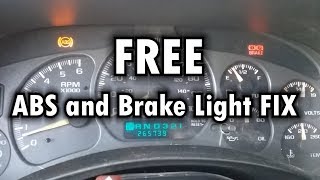
Outcome: Located the ground wire on the frame rail under the driver's door. The bolt and terminal were heavily corroded. Cleaned the frame and terminal to bare metal with a wire brush, applied dielectric grease, and re-secured it. Total cost was under $5. The lights went off permanently.
Lesson: For GM trucks of this era, always check the frame ground wire under the driver's door first. It is the most common cause and a virtually free fix.
2008 Ford Escape at 128K miles
ABS light came on, 4WD light flashed, and the brake pedal pulsed at low speeds. Speedometer fluctuated.
What they tried:
- A shop scanned the codes and found C1234 (Right Front Wheel Speed Signal Missing).
- The shop replaced the right front wheel speed sensor, but the problem returned the next day.
Outcome: Owner visually inspected the tone ring on the front passenger CV axle and found it cracked and loose. Replacing the CV axle (which included a new tone ring) for $150 in parts permanently fixed the issue.
Lesson: On Ford Escapes, a cracked tone ring is a more frequent cause of wheel speed signal codes than the sensor itself. Visually inspect the toothed ring on the axle shaft for cracks before replacing the sensor.
2015 Subaru Outback at 80K miles
ABS, Hill Assist, and Vehicle Dynamics Control (VDC) warning lights all came on simultaneously. The electronic parking brake light flashed.
What they tried:
- Took the vehicle to the dealer, concerned about a major ABS module failure.
- Dealer scanned the codes and confirmed a C0234 'VDC Failure' code.
Outcome: The dealer identified the cause based on TSB 06-87-22R. The plastic connector for the electronic parking brake (EPB) became brittle and lost connection. The dealer added a retaining clip to the connector, clearing the codes free of charge under a 15-year extended warranty.
Lesson: For 2015-2018 Subarus, check for TSB 06-87-22R. What appears to be a major electronic failure is often a simple, warranty-covered connector issue.
How to Prevent This Code From Triggering
- Periodically clean and protect main electrical grounds. (Every 2-3 years or during other underbody service) — Corrosion on main ground points creates high resistance and causes communication faults. Cleaning to bare metal and applying dielectric grease prevents moisture and salt from causing this corrosion.
- Perform a brake fluid flush. (Every 2-3 years or 30,000 miles) — Brake fluid absorbs moisture over time. This moisture causes internal corrosion within the delicate valves and solenoids of the ABS hydraulic unit, leading to expensive mechanical failure.
- Maintain a healthy battery and clean its terminals. (Test annually, clean terminals as needed.) — Sensitive electronic modules require stable voltage. A weak battery causes voltage drops during startup that trigger communication codes. Corroded terminals prevent proper charging.
- Inspect and clean wheel speed sensors during brake service. (Whenever wheels are off for brake jobs or tire rotation.) — Metallic brake dust and road grime accumulate on the magnetic tip of the wheel speed sensor, weakening its signal to the ABS module. A quick wipe-down prevents signal-related faults.
Frequently Asked Questions
Can I drive my car with a C0234 code?
Yes, but with extreme caution. Your normal hydraulic brakes work, but your ABS and traction control are disabled. This increases your stopping distance and risk of skidding, so driving for an extended period is not recommended.
Will a C0234 code fail a safety inspection?
Yes. An illuminated ABS warning light is an automatic failure for safety inspections in most jurisdictions.
Is fixing a C0234 code expensive?
It depends on the root cause. Fixing a bad ground wire or weak battery costs under $50, while replacing a failed ABS module costs between $1,000 and $2,000 including programming.
Can a weak or old battery cause a C0234 code?
Absolutely. Sensitive electronic modules require stable voltage to operate correctly. During engine cranking, a weak battery's voltage drops significantly, causing the ABS computer to shut down and post a communication fault.
What are the most common misdiagnosis mistakes for a C0234 code?
The biggest mistake is immediately replacing the expensive ABS control module without performing basic electrical checks. Technicians often overlook simple, high-frequency failure points like the main ABS ground wire or a weak battery. Always rule out these inexpensive causes before condemning a costly computer.
Why did my ABS, Brake, and Traction Control lights all come on at once?
These systems all work together and rely on the ABS module to function. When the module detects a critical communication error like C0234, it shuts down all related safety systems. It then turns on their respective warning lights to alert you.
Can I fix C0234 myself?
Sometimes. A DIY-savvy owner can easily clean a corroded ground wire, replace a weak battery, or swap a damaged wheel speed sensor. However, diagnosing CAN bus faults or programming a new ABS module requires advanced tools and professional knowledge.
What is a CAN bus and how does it relate to C0234?
The CAN (Controller Area Network) bus is a two-wire network allowing modules like the engine, transmission, and ABS computers to communicate. Code C0234 is a symptom of a problem on this network. It means the ABS module can no longer transmit or receive data.
Key Takeaways
- Code C0234 indicates a communication failure with the ABS control module, instantly disabling your anti-lock brakes and traction control.
- Check the battery voltage and the main ABS ground wire before replacing any parts, as these two issues cause over 50% of C0234 codes.
- Your conventional hydraulic brakes still work, but stopping distances increase by up to 25% on loose surfaces without ABS.
- Use an advanced OBD-II scanner capable of reading Chassis ('C') codes, as basic $20 code readers cannot detect ABS communication faults.
Helpful Videos


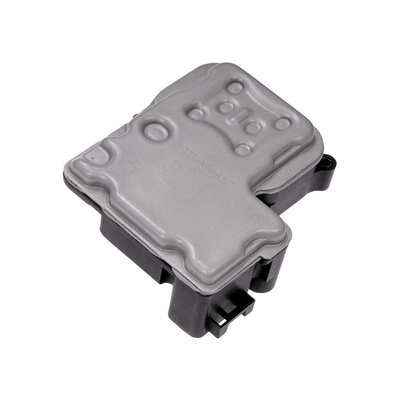
Shop the Parts Behind C0234
Below are the parts most often responsible for code C0234, ranked by how frequently each one is the actual culprit (per the diagnosis above). Tap any to see what we have for your vehicle.


The information in this article is provided for general reference and educational purposes only. Vehicle specifications, procedures, and part compatibility can vary by production date, trim level, and region. Always consult your vehicle's factory service manual and verify part numbers before purchasing or performing repairs. Safety-critical components such as airbags, seat belts, and braking systems should be installed by a qualified professional.
- 🧭 Diagnostic Flowchart
- 🎬 Helpful Videos
- 🛍️ Shop This Part
- What Does C0234 Mean?
- Can I Drive With C0234?
- Common Causes
- Symptoms
- Common Fixes & Costs
- DIY vs Professional
- Used vs. New Parts: Buying Guide
- What Happens If You Wait — Timeline
- Cost of Not Fixing It
- Diagnosis Steps
- When This Code Triggers (Freeze-Frame Conditions)
- Related Codes
- Climate & Environmental Factors
- How to Talk to a Mechanic About This Code
- Where to Take It: Dealer vs Independent vs Chain
- When to Walk Away From the Repair
- What Scan Tool You Need for This Code
- How to Clear the Code After You Fix It
- Will This Fail Emissions / State Inspection?
- Most Commonly Affected Vehicles
- Manufacturer-Specific Notes
- Real Owner Stories
- 2006 Chevy Silverado 1500 at 175K miles
- 2008 Ford Escape at 128K miles
- 2015 Subaru Outback at 80K miles
- How to Prevent This Code From Triggering
- Frequently Asked Questions
- Can I drive my car with a C0234 code?
- Will a C0234 code fail a safety inspection?
- Is fixing a C0234 code expensive?
- Can a weak or old battery cause a C0234 code?
- What are the most common misdiagnosis mistakes for a C0234 code?
- Why did my ABS, Brake, and Traction Control lights all come on at once?
- Can I fix C0234 myself?
- What is a CAN bus and how does it relate to C0234?
- Key Takeaways
- 🎟️ Get 5% Off