

OBD-II Code C0236: Rear Wheel Speed Sensor Signal Problem
The Ultimate 2026 Guide to What C0236 Means, Why It Triggers, and How to Fix It
- Code C0236 flags a rear wheel speed sensor signal failure, immediately disabling your ABS, traction control, and stability control systems.
- Use an ABS-capable OBD-II scanner to view live wheel speed data; a sensor reading 0 MPH while driving pinpoints the exact failing component.
- Inspect the wiring harness and tone ring before spending $50-$150 on a new sensor, as frayed wires or rust cause nearly half of these faults.
- On 1999-2008 GM trucks, C0236 almost always points to a single Vehicle Speed Sensor (VSS) on the transmission, not a wheel hub sensor.
What Does C0236 Mean?
Trouble code C0236 indicates the ABS module detects a missing or erratic signal from a rear wheel speed sensor. This sensor reports the wheel's rotational speed. When the signal fails or contradicts other wheels, the computer disables ABS and Traction Control, illuminates dashboard warning lights, and stores this code.
Technical definition: The SAE/ISO definition for C0236 is "Rear Wheel Speed Sensor Circuit Range/Performance" or "Rear Wheel Speed Signal Missing". The ABS control module sets this code when the rear wheel speed signal is irrational, missing, or outside expected parameters for a predetermined period, such as dropping to 0 mph while the vehicle travels above 8 mph.
Can I Drive With C0236?
Yes, But With Caution. Yes, but your Anti-lock Braking System (ABS), Traction Control, and Stability Control are disabled. Your normal hydraulic brakes still function. However, the risk of wheel lock-up and skidding during emergency braking increases significantly on wet or loose surfaces. Address this promptly to restore critical safety systems.
Common Causes
- Faulty Rear Wheel Speed Sensor (Very Common) — The sensor is the most frequent failure point. Internal electronic components degrade from age, heat cycles, and vibration. Active sensors fail electronically, while passive sensors suffer broken internal coil windings. 🎬 Watch: How to test a wheel speed sensor with a multimeter.
- Damaged or Corroded Wiring/Connector (Very Common) — Exposed to road debris, water, and salt, the wiring harness frequently frays, breaks, or corrodes. Water intrusion into the connector shorts the signal. On some GM trucks, the harness rubs through on top of the transmission housing.
- Damaged, Dirty, or Rusted Tone Ring (Common) — The sensor reads a toothed or magnetic tone ring spinning with the wheel. If this ring cracks, loses teeth, swells with rust, or collects metallic debris, the sensor cannot read the rotational speed.
- Failing Wheel Hub Bearing (Common) — Modern vehicles integrate the tone ring into the wheel hub bearing. A worn bearing introduces excessive play, altering the critical air gap between the sensor and ring, which disrupts the signal.
- Low Battery Voltage or Charging System Issues (Less Common) — The ABS control module requires stable voltage. A weak battery, failing alternator, or poor ground connection causes erratic behavior and triggers false diagnostic codes. Voltage below 10.5V triggers faults.
- Faulty ABS Control Module (Rare) — Though uncommon, the ABS control module fails internally. Circuit board failures or cracked solder joints prevent it from processing signals from a perfectly good sensor. Consider this only after exhausting all other checks.
- Electrical Interference (RFI) (Rare) — Low-quality aftermarket LED or HID headlights generate radio frequency interference (RFI). This disrupts the ABS module's ground circuit, triggering false wheel speed codes.
Symptoms
- ABS Warning Light On — The primary and most certain symptom. The ABS light on your instrument cluster illuminates immediately.
- Traction Control (TCS) or Stability Control (ESC/VSC) Light On — Because traction and stability control rely on wheel speed data, their warning lights illuminate alongside the ABS light.
- Speedometer Malfunction or Transmission Shifting Issues — On many trucks and older cars, the rear wheel speed signal drives the speedometer and transmission shift scheduling. C0236 causes an erratic speedometer, harsh shifting, or 'limp mode'. 🎬 See how a bad speed sensor causes shifting and transmission issues.
- Brake Warning Light On — On older GM models, a critical ABS fault like C0236 triggers the main red 'BRAKE' warning light.
- Cruise Control Inoperative — Vehicles disable cruise control when an ABS fault is present, as vehicle speed cannot be reliably determined.
Diagnostic Flowchart
Tap your situation to follow the diagnostic path that matches what you're seeing on this code.
Common Fixes & Costs
- Replace Rear Wheel Speed Sensor — Parts: $30-$150, Labor: $80-$150, ~1 hr book time (DIY)
- Repair Wiring or Replace Connector Pigtail — Parts: $15-$60, Labor: $120-$300, ~1.8 hr book time (Intermediate)
- Clean or Replace Tone Ring — Parts: $5-$40, Labor: $50-$150, ~1.0 hr book time (DIY)
- Replace Wheel Hub Bearing Assembly — Parts: $120-$450, Labor: $150-$350, ~2 hr book time (Intermediate)
- Replace or Repair ABS Control Module — Parts: $250-$800, Labor: $150-$300, ~1.8 hr book time (Professional)
Used vs. New Parts: Buying Guide
When a used part is worth it: Buying a used wheel speed sensor is not recommended. It is a common wear item, and small cost savings are negated by the high risk of premature failure and repeat labor.
Donor-vehicle mileage cap: roughly under 20000 miles for the part to have meaningful remaining life.
Donor quality checklist:
- Source from a low-mileage vehicle wrecked due to collision.
- Avoid parts from rust belt regions.
- Match the part number exactly.
Decision logic:
- If Budget is the absolute top priority and you are doing the labor yourself. → A name-brand aftermarket sensor offers a good balance of cost and quality.
- If The vehicle is newer or you are paying a professional for labor. → Buy an OEM or OEM-supplier (e.g., Bosch, Denso) sensor. The higher initial cost prevents repeat labor charges.
- If You see an extremely cheap, no-name sensor online. → Avoid it. These have high failure rates and waste money.
Warranty tradeoff: Used parts have a 30-day warranty. Quality aftermarket parts offer 1-year to limited lifetime warranties. OEM parts typically carry a 12-month warranty.
Worst-case if a used part fails: $200-$400 if a cheap part fails, representing repeat labor and a new quality part.
What Happens If You Wait — Timeline
- 0-1 Month: Code C0236 sets. ABS, Traction Control, and Stability Control disable. Normal hydraulic brakes function without the anti-lock safety net. (MPG impact: 0%% · Added cost: $0)
- 1-4 Months: On vehicles where the VSS signal is critical (older GM trucks), the speedometer dies and the transmission enters 'limp mode', stressing transmission components. (MPG impact: 0-5%% · Added cost: $50-$200)
- 2-8 Months: If caused by a failing wheel bearing, wear accelerates. A humming or grinding noise becomes noticeable, causing uneven tire wear. (MPG impact: 2-8%% · Added cost: $250-$500)
- 8+ Months: Catastrophic failure of the ignored wheel bearing destroys the wheel hub and knuckle, posing an extreme safety risk. (MPG impact: N/A% · Added cost: $1500-$2500)
Cost of Not Fixing It
- Immediate: Loss of ABS, traction control, and stability control. This creates a significant safety risk, increasing the chance of wheel lock-up and skidding in panic stops. (Added cost: 0)
- 1-6 Months: On older GM trucks, this causes persistent harsh transmission shifting and incorrect speedometer readings, leading to premature transmission wear. (Added cost: $200-$1000)
- 6+ Months: If the root cause is a failing wheel bearing, continued driving destroys the bearing completely, potentially damaging the hub, knuckle, and axle. (Added cost: $500-$2500)
Diagnosis Steps
- Read Codes with an ABS-Capable Scanner
Use an OBD-II scanner that accesses the ABS/Chassis module to confirm C0236. A basic engine code reader will not see it. A capable scanner specifies the location (e.g., 'Rear Left') and provides freeze frame data.
Tools: OBD-II Scanner (with ABS capability) (Beginner) - View Live Wheel Speed Data
Use your scanner to view the live data stream for all four wheel speed sensors. Drive slowly. The problematic sensor reads 0 MPH or shows an erratic value compared to the others.
Tools: Advanced OBD-II Scanner (Intermediate) - Visual Inspection of Sensor, Wiring, and Tone Ring
Safely raise the vehicle. Inspect the sensor for physical damage. Trace the wiring harness, looking for chafing, melting, or breaks. Inspect the tone ring for heavy rust, cracks, missing teeth, or metallic debris.
Tools: Jack, Jack Stands, Flashlight (Beginner) - Harness 'Wiggle Test'
With the scanner displaying live wheel speed data, wiggle and flex the wiring harness between the sensor and the ABS module. If the speed reading flickers or drops out, you found the wiring fault.
Tools: Advanced OBD-II Scanner, Helper (Intermediate) - Check Wheel Bearing Play
With the wheel off the ground, grasp the tire at 12 and 6 o'clock and rock it. Significant play or grinding noises indicate a worn wheel bearing, which alters the sensor air gap and triggers C0236.
Tools: Hands (Intermediate) - Test Active Sensor Power and Ground
For active (2 or 3-wire powered) sensors, disconnect the harness and turn the ignition 'ON'. Use a multimeter to check the harness-side connector. Expect a reference voltage (5V or 12V) on one pin and a good ground on another. Lack of voltage points to a wiring or ABS module issue.
Tools: Multimeter, Vehicle-Specific Wiring Diagram (Advanced) - Test Passive Sensor Resistance
For passive (2-wire non-powered) sensors, measure resistance across the sensor's pins with a multimeter set to Ohms. A typical reading is 800-2,000 Ohms. A reading of OL (Open Loop) or 0 Ohms confirms a failed sensor.
Tools: Multimeter, Vehicle-Specific Service Manual (Advanced) - Sensor Scope Analysis (Advanced)
Use an oscilloscope to backprobe the sensor's signal wire. A passive sensor produces an AC sine wave; an active sensor produces a DC square wave. A missing or noisy waveform confirms a bad sensor or tone ring.
Tools: Oscilloscope, Backprobe Pins, Wiring Diagram (Advanced) - Check ABS Module Connections
If the sensor, tone ring, and wiring test good, inspect the main connector at the ABS control module for corrosion or loose pins. If wiring shows continuity to the module but the signal is lost, the module is faulty.
Tools: Basic Hand Tools, Multimeter (Advanced)
When This Code Triggers (Freeze-Frame Conditions)
- Vehicle Speed: 15-55 mph (The code sets when the vehicle is in motion. A speed above 8 mph is typically required.)
- Brake Pedal: OFF (The fault registers during steady driving or cruising when brakes are not applied.)
- Engine RPM: 1200-2500 RPM (Reflects steady driving or light acceleration, where a stable wheel speed signal is expected.)
- Engine Coolant Temp: 180-210°F (The fault occurs at any temperature, but freeze frame data typically shows a fully warmed-up engine.)
Related Codes
- C0237 — Means "Rear Wheel Speed Sensor Signal Erratic". C0236 is for a missing signal, while C0237 is for a choppy signal, pointing to a damaged tone ring or failing sensor.
- C0235 — Means "Rear Wheel Speed Sensor Circuit Open". Points directly to a broken wire or a completely failed sensor with an open internal coil.
- C0238 — Means "Wheel Speed Mismatch". Set when the ABS module sees one sensor reporting a significantly different speed. Often appears alongside C0236.
- U0121 — Means "Lost Communication With ABS Control Module". If present with C0236, the problem is a power, ground, or internal failure of the ABS module, not the sensors.
Climate & Environmental Factors
- Road Salt and Humidity (Rust Belt/Coastal Areas): Salt and moisture accelerate corrosion of the sensor body, wiring connectors, and tone ring. Wires become brittle, connector pins lose contact, and rust buildup causes the tone ring to swell and strike the sensor.
- Extreme Cold: Wiring harnesses become stiff and brittle in freezing temperatures. A frayed wire breaks contact when flexed by suspension movement, leading to an intermittent or sudden fault.
- Water Intrusion: Driving through deep puddles or using a pressure washer forces water into poorly sealed connectors or cracked wire insulation, causing a short circuit that triggers the code.
How to Talk to a Mechanic About This Code
Say this: "I have an ABS light on and my scanner shows code C0236 for a rear wheel speed sensor signal. I'd like to book a diagnostic appointment. Please use a scanner to watch live data from all four wheel sensors while driving to confirm which one is failing. I also want a visual inspection of the wiring harness and tone ring before replacing parts."
This signals you understand the diagnostic process. It directs the shop to perform specific tests (live data, visual inspection) and prevents them from replacing the sensor without checking for cheaper wiring or tone ring issues.
Avoid saying:
- 'My ABS light is on, can you fix it?'
- 'I think I need a new wheel speed sensor.'
- 'Just replace the rear speed sensor.'
Questions to ask before authorizing the repair:
- Did the live data show the sensor signal dropping out or reading zero?
- Did you inspect the wiring harness for visible damage, chafing, or corrosion?
- Was the tone ring clean, intact, and free of rust or debris?
- What is the warranty on the part and your labor?
Where to Take It: Dealer vs Independent vs Chain
- Dealer:
Recommended only if the vehicle is under warranty or requires specific module programming.
Best for: Vehicles under factory or extended warranty., Known complex manufacturer-specific issues (e.g., ABS module programming).
Downsides: Significantly higher labor rates and part costs., Less flexible on repair options, preferring full assembly replacements. (Typical cost: +50% vs. baseline) - Independent Shop:
Best fit. A competent independent shop has the scanners and experience to diagnose and repair C0236 correctly and cost-effectively.
Best for: Most out-of-warranty vehicles., Getting a proper diagnosis that considers all causes (sensor, wiring, bearing)., Better value and building a relationship with a trusted mechanic.
Downsides: Quality varies; choose a well-reviewed shop with ASE-certified technicians. (Typical cost: +0% vs. baseline) - Chain Shop:
Use with caution. Acceptable if you already diagnosed a bad sensor. Avoid for initial diagnosis, as they frequently misdiagnose wiring issues.
Best for: Simple part replacements when you are certain of the diagnosis.
Downsides: Technician skill varies widely., Lacks advanced diagnostic tools for electrical faults., High pressure to upsell services. (Typical cost: -10% vs. baseline)
When to Walk Away From the Repair
If the estimated repair cost exceeds 40-50% of your car's private-party market value, consider selling or trading it in instead of repairing it.
- Car worth $4500, fix is $550: Fix it. A $550 repair for a new wheel hub bearing is well below the threshold and restores a critical safety system.
- Car worth $4500, fix is $1800: Borderline. If the fix is a complex ABS module replacement, the cost approaches 40% of the car's value. Get a second opinion.
- Car worth $2500, fix is $1800: Walk away. Spending $1,800 on a $2,500 car is not a sound financial decision.
What Scan Tool You Need for This Code
Minimum: An OBD-II scanner that reads and clears codes from the ABS/Chassis module and displays a live data stream of wheel speed sensor inputs.
A basic $20 engine code reader cannot communicate with the ABS module. It will not see the C0236 code, clear the ABS light, or show live wheel speed data.
Budget: BlueDriver Pro Scan Tool (~$100) — Connects to your smartphone via Bluetooth. Reads and clears ABS codes and graphs live data from all wheel speed sensors, allowing you to see which one malfunctions while driving.
Mid-range: Foxwell NT510 Elite (~$160) — A handheld scanner providing brand-specific diagnostics. Offers robust live data graphing and bi-directional controls to activate the ABS pump and solenoids for advanced diagnostics.
Professional: Autel MaxiCOM MK808 / MK808S (~$450) — An entry-level professional tablet scanner. Offers comprehensive all-system scanning, detailed live data, and bi-directional control for ABS components.
Rent vs buy: For a one-time repair, AutoZone or Advance Auto Parts offer loaner tool programs. You pay a deposit for an ABS-capable scanner, fully refunded upon return.
How to Clear the Code After You Fix It
- Perform the physical repair.
- Use an ABS-capable OBD-II scan tool to access the Chassis/ABS module.
- Select 'Clear DTCs' or 'Erase Codes'.
- Perform the ABS drive cycle to allow the module to self-test.
Drive cycle (~15 minutes): Start the engine and drive the vehicle. Accelerate over 25 mph and maintain speed for 2 minutes, making gradual turns. Safely come to a stop. Repeat this process three times. The ABS light remains off if the repair was successful.
Readiness monitors affected: This code does not affect emissions-related readiness monitors.
Watch out for:
- Using a basic engine code reader that cannot access the ABS module to clear the code.
- The code returning immediately, indicating the root cause was not fixed.
- Skipping the drive cycle, only to have the light reappear later.
Will This Fail Emissions / State Inspection?
Yes — this code typically fails an OBD-II emissions inspection.
- California: An ABS light will NOT fail a standard smog check. It will fail a salvaged vehicle inspection or the comprehensive Vehicle Safety Systems Inspection.
- New York: An illuminated ABS warning light fails the mandatory annual safety inspection.
- Texas: An illuminated ABS warning light passes the safety inspection, but an illuminated red 'BRAKE' warning light results in failure.
Most Commonly Affected Vehicles
- Chevrolet/GMC Silverado, Sierra, Tahoe, Yukon, Suburban (1999-2008) — Extremely common. C0236 often points to a single Vehicle Speed Sensor (VSS) on the transfer case (4WD) or transmission tail shaft (2WD). A chafed wiring harness over the transmission causes ABS/Brake lights, kills the speedometer, and causes harsh shifting.
- Ford F-150, Explorer, Ranger (1998-2014) — Frequently caused by a failed sensor or damaged tone ring on the axle shaft. On older Fords, this points to the rear differential speed sensor (Motorcraft DY-1123).
- Toyota 4Runner (1996-2020) — On 2014-2020 models, TSB T-TT-0597-20 notes aftermarket LED/HID headlights cause electrical noise, triggering C0236. On 1996-2002 models, read ABS codes manually by jumping pins on the diagnostic connector.
- BMW 3-Series (E90), X3 (E83), X5 (E53/E70) (2004-2013) — A bad rear sensor triggers the 'trifecta' of ABS, DSC (stability), and Brake warning lights. On xDrive models, the 4x4 light also illuminates.
- Subaru Legacy, Outback, Forester, Impreza (2005-2014) — On 2010-2014 Legacy/Outback models, if the ABS module fails, a used replacement MUST come from a vehicle of the exact same year and trim level to communicate with the CAN bus.
- Kia / Hyundai Sorento, Santa Fe, Optima, Sonata (2011-2017) — Prone to wheel speed sensor failures. Diagnosis requires live data on an ABS-capable scanner to identify the non-reporting wheel.
- Volkswagen/Audi Golf, Jetta, A3, A4 (2006-2015) — A faulty rear sensor frequently triggers ABS and ESC lights. These use an 'active' sensor powered by the ABS module, requiring voltage testing at the connector.
- Buick Rainier, Rendezvous (also Chevy Trailblazer, GMC Envoy) (2002-2009) — On the GMT360 platform, C0236 is an early sign of a failing ABS control module. It causes the transmission to enter limp mode and disables the speedometer.
Manufacturer-Specific Notes
- General Motors (GM): On 1999-2008 trucks and SUVs, C0236 almost always refers to the single Vehicle Speed Sensor (VSS) on the transmission or transfer case. The primary cause is the wiring harness chafing on top of the transmission, which disables the speedometer and causes severe shifting problems.
- Toyota: Per TSB T-TT-0597-20, 2014-2020 4Runner models set C0236 due to radio frequency interference from aftermarket LED/HID headlights. The fix is reverting to OEM halogen bulbs.
- Subaru: On 2010-2014 models, the ABS control module is coded to the specific trim level. A used replacement module must come from a car with the exact same trim to communicate correctly.
- Ford: On older vehicles using the SCP (J1850) protocol, C0236 triggers from a network-wide data corruption issue rather than a sensor fault. Diagnosing requires checking for U-series codes.
Real Owner Stories
2002 Chevy Silverado 1500 4x4 with dead speedometer.
ABS and Brake lights illuminated, speedometer died, and transmission stuck in first gear. Scanned code C0236.
What they tried:
- Replaced the Vehicle Speed Sensor (VSS) on the transfer case, but the problem remained.
- Tested wiring from the VSS pigtail to the PCM and found a dead wire shorted to ground.
Outcome: The owner ran a new pair of wires from the VSS pigtail directly to the PCM, completely solving the problem.
Lesson: On older GM trucks, C0236 points to the transmission VSS. The most common cause is the wiring harness chafing on the transmission housing. Inspect wiring thoroughly before replacing the sensor.
2000 GMC Yukon with multiple failed fixes.
ABS light on, erratic speedometer, and transmission stuck in low gear with code C0236. Live data showed rear sensor stuck at 3 mph.
What they tried:
- Replaced both front hubs/sensors and the rear speed sensor.
- Replaced the ABS pump and EBCM with a used unit.
Outcome: After all parts failed, the owner found a bad ground connection for the EBCM on a heavily rusted mounting bracket. Cleaning the ground solved the issue.
Lesson: Do not shotgun parts. When multiple expensive replacements fail, suspect a fundamental problem like a bad ground or power supply to the control module.
2014-2020 Toyota 4Runner with multiple ABS codes.
ABS light illuminated with C0236 and other wheel speed sensor codes (C0226, C0246, C0256).
What they tried:
- Initial diagnosis pointed towards a potential ABS module failure.
Outcome: A Toyota TSB (T-TT-0597-20) identified the cause: radio frequency interference from aftermarket LED headlight bulbs. Removing the aftermarket bulbs resolved the codes.
Lesson: Unrelated aftermarket electronic accessories cause strange electrical problems. Return the vehicle to stock configuration before complex diagnostics.
2005 Buick Rainier with limp mode.
Above 8 mph, ABS and Brake lights illuminated, transmission entered limp mode, and speedometer died. Code C0236 present.
What they tried:
- Replaced the transmission VSS and checked resistance on front wheel sensors.
Outcome: A technician diagnosed an internal failure of the ABS module (EBCM). The module failed to process and relay the signal from a perfectly good sensor.
Lesson: On the GMT360 platform, the ABS module is a critical communication hub. If C0236 pairs with limp mode and a dead speedometer, the ABS module itself is the likely culprit.
How to Prevent This Code From Triggering
- Clean and Protect Wiring Harnesses (During brake service or tire rotation) — Wiring is vulnerable. Clean mud from the harness and secure loose sections with zip ties. Applying split loom provides extra physical protection against debris.
- Inspect and Clean Tone Rings (Whenever brake rotors are replaced) — Rust causes the tone ring to swell and strike the sensor. Metallic debris sticks to the magnetic ring, disrupting the signal. Cleaning prevents signal-blocking issues.
- Apply Dielectric Grease to Connectors (Anytime a sensor connector is disconnected) — Dielectric grease seals electrical contacts from moisture and salt, preventing corrosion that leads to intermittent signals.
- Perform Regular Brake Fluid Flushes (Every 2 years or 30,000 miles) — Brake fluid absorbs moisture, corroding internal ABS hydraulic components. Flushing maintains the health of the expensive ABS module.
Frequently Asked Questions
Can I drive my car with a C0236 code?
Yes, your standard brakes still work, but ABS and traction control are disabled. You must drive cautiously. Your wheels can lock up and cause a skid in a panic stop, especially on slippery roads.
Will a C0236 code fail an inspection?
Yes. In virtually all regions with safety inspections, an illuminated ABS warning light results in an automatic failure.
How do I clear the C0236 code after repair?
Use an ABS-capable OBD-II scanner to erase the code from the ABS module. Disconnecting the battery is not a reliable method for clearing chassis codes. Sometimes, the light turns off automatically after a few drive cycles verify the repair.
What's the difference between a passive and an active wheel speed sensor?
A passive sensor generates its own AC voltage signal as a toothed ring passes it. An active sensor requires power from the car and produces a precise digital DC square wave signal, making it more accurate at low speeds.
Why are my ABS, Brake, and Traction Control lights all on at once?
These systems are interconnected and rely on the same wheel speed data. When a critical fault like C0236 occurs, the computer shuts down all related systems as a precaution, illuminating all respective warning lights.
What is the most common mistake when fixing code C0236?
Replacing the wheel speed sensor without proper diagnosis is the biggest mistake. Always use a scanner's live data to confirm the faulty sensor and visually inspect the wiring and tone ring first. On older GM trucks, owners mistakenly replace wheel sensors when the actual fault is the transmission VSS.
My ABS light is intermittent. What could be the cause?
An intermittent light is usually caused by a poor electrical connection. A frayed wire that breaks contact over bumps or corrosion inside a connector are common culprits. Perform a 'wiggle test' on the harness while watching live data to find the short.
Can a bad wheel alignment cause a C0236 code?
No, a bad alignment itself will not cause the code. However, the root cause of the bad alignment—such as hitting a curb or a severely worn wheel bearing—can damage the sensor, wiring, or tone ring.
Key Takeaways
- Code C0236 flags a rear wheel speed sensor signal failure, immediately disabling your ABS, traction control, and stability control systems.
- Use an ABS-capable OBD-II scanner to view live wheel speed data; a sensor reading 0 MPH while driving pinpoints the exact failing component.
- Inspect the wiring harness and tone ring before spending $50-$150 on a new sensor, as frayed wires or rust cause nearly half of these faults.
- On 1999-2008 GM trucks, C0236 almost always points to a single Vehicle Speed Sensor (VSS) on the transmission, not a wheel hub sensor.
Helpful Videos
Shop the Parts Behind C0236
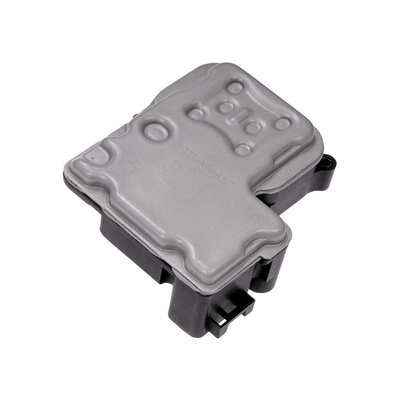
Below are the parts most often responsible for code C0236, ranked by how frequently each one is the actual culprit (per the diagnosis above). Tap any to see what we have for your vehicle.




The information in this article is provided for general reference and educational purposes only. Vehicle specifications, procedures, and part compatibility can vary by production date, trim level, and region. Always consult your vehicle's factory service manual and verify part numbers before purchasing or performing repairs. Safety-critical components such as airbags, seat belts, and braking systems should be installed by a qualified professional.
- 🧭 Diagnostic Flowchart
- 🎬 Helpful Videos
- 🛍️ Shop This Part
- What Does C0236 Mean?
- Can I Drive With C0236?
- Common Causes
- Symptoms
- Common Fixes & Costs
- Used vs. New Parts: Buying Guide
- What Happens If You Wait — Timeline
- Cost of Not Fixing It
- Diagnosis Steps
- When This Code Triggers (Freeze-Frame Conditions)
- Related Codes
- Climate & Environmental Factors
- How to Talk to a Mechanic About This Code
- Where to Take It: Dealer vs Independent vs Chain
- When to Walk Away From the Repair
- What Scan Tool You Need for This Code
- How to Clear the Code After You Fix It
- Will This Fail Emissions / State Inspection?
- Most Commonly Affected Vehicles
- Manufacturer-Specific Notes
- Real Owner Stories
- 2002 Chevy Silverado 1500 4x4 with dead speedometer.
- 2000 GMC Yukon with multiple failed fixes.
- 2014-2020 Toyota 4Runner with multiple ABS codes.
- 2005 Buick Rainier with limp mode.
- How to Prevent This Code From Triggering
- Frequently Asked Questions
- Can I drive my car with a C0236 code?
- Will a C0236 code fail an inspection?
- How do I clear the C0236 code after repair?
- What's the difference between a passive and an active wheel speed sensor?
- Why are my ABS, Brake, and Traction Control lights all on at once?
- What is the most common mistake when fixing code C0236?
- My ABS light is intermittent. What could be the cause?
- Can a bad wheel alignment cause a C0236 code?
- Key Takeaways
- 🎟️ Get 5% Off