

OBD-II Code C0245: Wheel Speed Sensor Frequency Error
What C0245 means, why it triggers, and how to fix it
- Code C0245 triggers when one wheel speed sensor reports a speed at least 15% different from the others, instantly disabling your ABS and traction control.
- Over 80% of C0245 codes stem from a frayed sensor wire, a dead wheel speed sensor, or a rusted tone ring.
- You can drive with C0245, but braking distances on wet roads increase by up to 50% without ABS, making immediate repair a critical safety priority.
- Never replace a sensor blindly; use an ABS-capable scanner to view live wheel speed data and pinpoint exactly which of the four wheels is dropping the signal.
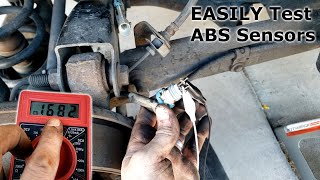
- Test passive 2-wire sensors for 800-2,500 Ohms of resistance, and test active 3-wire sensors for a 5V or 12V reference voltage before condemning the part.
What Does C0245 Mean?

Code C0245 means the Electronic Brake Control Module (EBCM) detects an illogical or inconsistent signal from one wheel speed sensor. The computer sees a wheel speed that contradicts the other wheels. This code sets when the signal frequency from one wheel deviates from the average of the others by a predetermined threshold, typically 15-25%.
Technical definition: The SAE/ISO definition for C0245 is "Wheel Speed Sensor Frequency Malfunction." The Electronic Brake Control Module (EBCM) sets this code when the frequency signal from a wheel speed sensor is erratic or irrational compared to the other sensors. It triggers when the EBCM receives no specific circuit fault code (like C0035) but observes a speed difference exceeding 20% while driving straight.
Can I Drive With C0245?

Yes, But With Caution. Yes, but with extreme caution. Your Anti-lock Braking System (ABS) and Traction/Stability Control are disabled. You lose the ability to steer during a panic stop, as the wheels will lock up and skid. On wet surfaces, braking distance increases by up to 50%; one test showed a stop from 70 mph took 68 meters without ABS versus 45 meters with it. In vehicles with electronically controlled transmissions, it causes erratic shifting. Repair this promptly to restore critical safety systems.
Common Causes


- Damaged or Frayed Wheel Speed Sensor Wiring (Very Common) — The wiring harness leading to the wheel speed sensor is exposed to road debris and constant suspension movement. Wires break internally, chafe, or corrode, causing an intermittent or complete loss of signal. This is a known weak point on 2004-2008 Pontiac Grand Prix models, where the harness flexes and breaks near the front wheels.
- Faulty Wheel Speed Sensor (Common) — The magnetic sensor fails internally due to age, heat, or contamination from road grime and metal particles, losing its ability to generate a consistent electrical signal.
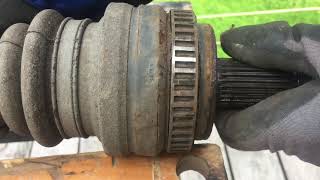
- Damaged, Corroded, or Swollen Tone/Reluctor Ring (Common) — The tone ring is a notched ring the sensor reads. If cracked, missing teeth, or heavily rusted, the sensor cannot get an accurate reading. On 2005-2013 BMW 3-Series (E90/E91/E92), the metal reluctor ring corrodes underneath, swells, and physically strikes the sensor tip, destroying it. 🎬 Watch: How to replace a corroded BMW ABS reluctor ring.
- Rust Buildup Under Sensor Mount ('Rust Jacking') (Common) — On 2006-2011 Honda Civics and various GM models, rust builds up on the steering knuckle underneath the wheel speed sensor mount. This pushes the sensor away from the tone ring, increasing the air gap and causing a weak signal.
- Faulty Wheel Hub Bearing Assembly (Less Common) — Modern vehicles integrate the tone ring into the wheel hub bearing assembly's seal. Excessive play in a worn wheel bearing causes the tone ring to move erratically, creating an inconsistent signal.
- Incorrectly Sized Tires or Uneven Tire Pressure (Less Common) — If one tire is a significantly different size (e.g., a compact spare) or has drastically lower air pressure, it rotates at a different speed. The ABS module interprets this consistent difference as a sensor frequency fault.
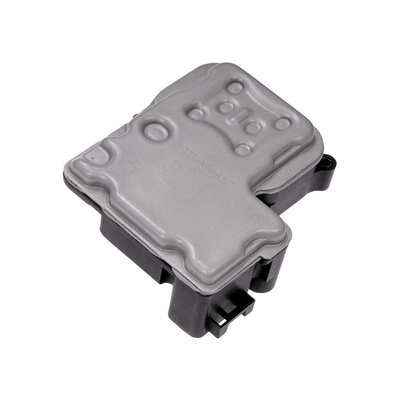
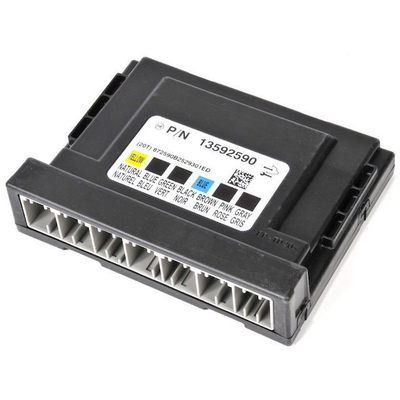
- Faulty Electronic Brake Control Module (EBCM) (Rare) — The ABS computer fails due to internal solder joint fractures from vibration and heat. This is a highly documented issue on 1999-2013 GM trucks (Silverado/Sierra), usually accompanied by code C0265. 🎬 Watch: DIY repair for common GM EBCM module failures.
- Poor Electrical Ground (Rare) — The EBCM relies on a solid chassis ground. A corroded ground point on the frame rail causes voltage drops, leading the module to misinterpret sensor data and set false codes.
Symptoms

- ABS and Traction Control Warning Lights On (Systems Disabled) — The ABS, Traction Control (TCS), and Stability Control (ESC) warning lights illuminate immediately. These systems are disabled, meaning wheels will lock during hard braking and traction control will not intervene on slippery surfaces.
- Brake Warning Light On — The main red brake warning light illuminates alongside the ABS light to indicate a general braking system fault, often pointing to an EBCM failure.
- Erratic Transmission Shifting — Vehicles with electronically controlled transmissions (like VW DSG) use wheel speed data for shift logic. A faulty signal causes harsh shifts, delayed engagement, or prevents shifting altogether.
- Speedometer Malfunction or Cruise Control Inoperative — Vehicle speed is calculated using an average of the wheel speed sensors. A faulty signal causes the speedometer to read incorrectly or drop to zero, instantly disabling cruise control.
Diagnostic Flowchart
Tap your situation to follow the diagnostic path that matches what you're seeing on this code.
Common Fixes & Costs
- Replacing a Wheel Speed Sensor
— Parts: $50-$150, Labor: $100-$200, ~1.2 hr book time
(DIY)
2007-2013 Chevrolet Silverado 1500 (Front): OEM - Repairing Damaged Wiring or Connector
— Parts: $20-$50, Labor: $120-$200, ~1.5 hr book time
(Intermediate)
2004-2008 Pontiac Grand Prix (Front): OEM - Cleaning Sensor Mount / Replacing Tone Ring
— Parts: $20-$100, Labor: $150-$400, ~2.5 hr book time
(Intermediate)
2005-2013 BMW 3-Series E90/E91/E92 (Rear): OEM - Replacing a Wheel Hub Bearing Assembly — Parts: $100-$350, Labor: $150-$350, ~2.2 hr book time (Intermediate)
- Replacing the Electronic Brake Control Module (EBCM) — Parts: $150-$1,200, Labor: $100-$250, ~1.5 hr book time (Professional)
Used vs. New Parts: Buying Guide
When a used part is worth it: For the expensive Electronic Brake Control Module (EBCM), a professionally remanufactured unit is a cost-effective choice. For wheel speed sensors, buying new is mandatory due to their exposure to harsh elements.
Donor-vehicle mileage cap: roughly under 100000 miles for the part to have meaningful remaining life.
Donor quality checklist:
- For a used EBCM, ensure the part number matches exactly.
- Buy from a reputable recycler that offers a 6-month warranty.
- For sensors, opt for OEM or well-regarded aftermarket brands (e.g., Bosch, VDO) to avoid premature failure.
Decision logic:
- If The fault is a wheel speed sensor → Buy a new OEM or high-quality aftermarket sensor. The savings on a used sensor are not worth the risk of early failure.
- If The fault is the EBCM and a new unit is over $800 → A remanufactured or used unit with a warranty is a sensible option.
- If The part is a wiring harness/pigtail → New is always the best choice to ensure good wires and weather seals.
Warranty tradeoff: Used parts typically come with a 30-day to 6-month functional warranty. Aftermarket new parts often have a 1-year warranty. New OEM parts usually carry a 12-month warranty.
Worst-case if a used part fails: $200-$400 if a used sensor or module fails after the warranty period, requiring repeat labor costs.
What Happens If You Wait — Timeline
- 0-1 week: Code sets, ABS and Traction Control lights illuminate. The ABS and stability systems are immediately disabled. (MPG impact: 0%% · Added cost: $0 (Safety risk is the primary cost))
- 1 week - 3 months: Driving without ABS/TCS becomes the norm, increasing accident risk. On vehicles where the TCM uses wheel speed for shift logic, the driver notices occasional harsh shifts. (MPG impact: 0-1%% · Added cost: $0-$50 (Minor increase in transmission clutch wear))
- 3-12 months: Continued erratic shifting causes noticeable wear on transmission solenoids and clutch packs. (MPG impact: 0-2%% · Added cost: $200-$800 (Accelerated wear on transmission components))
- 12+ months: Prolonged operation with a faulty signal contributes to premature transmission failure in vehicles with integrated transmission controls. (MPG impact: 0-2%% · Added cost: $2,500-$5,000+ (Transmission rebuild))
Cost of Not Fixing It
- Immediate: Loss of Anti-lock Brakes (ABS) and Traction/Stability Control (TCS/ESC). This creates a significant safety risk, increasing the chance of skidding and losing steering control. (Added cost: N/A (Safety Risk))
- 1-6 months: In vehicles where the transmission control module uses wheel speed data, continued driving causes excessive wear on transmission components due to prolonged harsh shifting. (Added cost: $200-$800 (Potential for solenoid or clutch pack wear))
- 6+ months: Severe, cumulative wear on the transmission leads to catastrophic failure, requiring a full rebuild or replacement. (Added cost: $2,500-$5,000+ (Transmission rebuild/replacement))
Diagnosis Steps
- Read the Codes with an ABS-Capable Scanner
Use an OBD-II scanner that reads ABS/Chassis codes to confirm C0245. Check for specific circuit codes like C0040 (Right Front Wheel Speed Sensor Circuit), which tells you exactly which wheel to investigate. If only C0245 is present, proceed to live data analysis.
Tools: OBD-II Scanner (with ABS capability) (Beginner) - Analyze Live Wheel Speed Data
Using your scanner's live data function, monitor the speed (PIDs) of all four wheels while driving straight. The faulty sensor shows a speed that is erratic, lagging, jumping, or drops to zero compared to the other three. This is the only definitive way to identify the problem wheel when you only have a C0245 code.
Tools: Advanced OBD-II Scanner with Live Data (Beginner) - Visual Inspection of Sensor, Wiring, and Tone Ring
Raise the vehicle safely at the suspect wheel. Inspect the sensor wiring for chafing, breaks, or corrosion. Look at the tone ring for cracks, missing teeth, or heavy rust. On BMWs, check for the tell-tale sign of the ring swelling and scraping the sensor tip.
Tools: Jack and jack stands, flashlight (Intermediate) - Check Tire Size and Pressure
Ensure all four tires are the correct, matching size and inflated to the pressure listed on the driver's door jamb sticker. A compact spare or a severely underinflated tire causes this code.
Tools: Tire pressure gauge (Beginner) - Inspect Sensor Mounting Surface and Air Gap
Remove the wheel speed sensor bolt. Check the mounting surface on the knuckle for rust buildup (common on Hondas). Clean this surface to bare metal with a wire brush to ensure the sensor sits at the correct distance (air gap) from the tone ring, typically 0.016 to 0.050 inches.
Tools: Socket set, wire brush, brake cleaner, feeler gauge (Intermediate) - Pro Tip: The 'Wiggle Test' for Wiring
Connect a multimeter to the sensor harness to measure resistance. While watching the meter, wiggle and pull the wiring harness at common flex points near the suspension. A jump in resistance or a move to OL (Open Line) confirms an internal wire break.
Tools: Multimeter (Intermediate) - Pro Tip: Test Passive Sensor Output (2-wire)
Passive sensors have a resistance between 800 and 2,500 Ohms at 70°F. A reading outside this range indicates a bad sensor. Switch your multimeter to AC Volts, unplug the sensor, and spin the wheel by hand at one revolution per second. It must generate an AC voltage of at least 100-250mV.
Tools: Multimeter, back-probe pins (Advanced) - Pro Tip: Test Active Sensor Output (2 or 3-wire)
Active sensors require power from the EBCM. With the key on, unplug the sensor and check the harness connector for a 5V or 12V reference voltage. If voltage is present, back-probe the signal wire with an oscilloscope; you must see a clean square wave pattern that increases in frequency as the wheel spins.
Tools: Multimeter, Oscilloscope, back-probe pins (Advanced)
When This Code Triggers (Freeze-Frame Conditions)
- Vehicle Speed: > 9 MPH (14 km/h) (The fault is detected during steady driving, not at a standstill.)
- Brake Pedal Status: Not Applied (The system checks for illogical wheel speeds when the brakes are not applied to avoid false triggers during a skid.)
- Steering Angle: Near 0° (Driving Straight) (The comparison between wheel speeds is most accurate when driving straight, as turning naturally causes wheels to rotate at different speeds.)
- ABS/TCS Status: Not Active (The code sets during normal operation, not when the ABS or traction control is actively intervening.)
Related Codes
- C0035 to C0051 — These are specific wheel speed sensor circuit codes (e.g., C0035 for Left Front). C0245 indicates a 'frequency' error, while these codes indicate a specific electrical fault like an open circuit. Having one of these codes pinpoints the exact wheel to diagnose.
- C0561 — This code for 'System Disabled Information Stored' is a secondary code that appears alongside C0245. It simply indicates the EBCM disabled the ABS/Traction Control system because of the primary fault.
- C0265 — Indicates a fault in the EBCM relay or power supply circuit. On 1999-2013 GM trucks, a failing EBCM sets both C0265 and C0245 simultaneously, proving the module itself is the culprit.
- U0121 — Means 'Lost Communication With Anti-Lock Brake System Control Module'. If seen with C0245, it points to a faulty EBCM, a bad ground connection, or a data bus wiring issue.
Climate & Environmental Factors
- Road Salt / High Humidity (Rust Belt / Coastal Regions): Salt and moisture accelerate the corrosion of ABS tone rings, causing them to crack, swell, or delaminate. It also causes 'rust jacking' under the sensor mounting point, increasing the air gap and weakening the signal.
- Extreme Cold Weather: Old, brittle wiring harnesses lose continuity when they contract in freezing temperatures, leading to an intermittent fault. Water inside a connector freezes, expands, and breaks the connection.
How to Talk to a Mechanic About This Code
Say this: "I have an ABS light on and my scanner shows code C0245. I'd like to book a diagnostic appointment. Can you please use a scan tool to monitor the live data from all four wheel speed sensors to identify which corner is causing the fault?"
This signals that you understand C0245 is a 'comparison' code and that the first step is data analysis, not guessing. It focuses the technician on the correct procedure and prevents them from immediately selling you a sensor without proof.
Avoid saying:
- 'My ABS light is on, can you just fix it?'
- 'I think I need a new wheel speed sensor.'
- 'Just do whatever you think is best.'
Questions to ask before authorizing the repair:
- Can you show me the live data graph that confirms which wheel speed sensor is failing?
- Before we replace the sensor, did you visually inspect the wiring harness and the tone ring for damage?
- If you recommend a wheel hub assembly, is that because the tone ring failed, or is there play in the bearing?
- What is the warranty on the recommended parts and labor?
Where to Take It: Dealer vs Independent vs Chain
- Dealer:
A good option if you suspect a known manufacturer quirk, but the most expensive choice for a common sensor or wiring issue.
Best for: Vehicles under warranty, Well-documented, manufacturer-specific issues (like the BMW reluctor ring or Honda rust jacking), Complex diagnostics involving module programming
Downsides: Highest labor rates, typically 1.5-2x more than independent shops., Defaults to replacing an entire assembly (e.g., hub) when a smaller component (e.g., cleaning a mount) suffices. (Typical cost: +50% vs. baseline) - Independent Shop:
Best fit for most C0245 repairs. A reputable independent shop has the necessary ABS scan tools to diagnose and fix the issue correctly at a fair price.
Best for: Out-of-warranty vehicles where cost is a factor., Most C0245 situations, as it is a common code., Building a relationship with a trusted mechanic.
Downsides: Quality and diagnostic capabilities vary widely; vet shops by looking for ASE certification., Lacks access to the very latest manufacturer-specific software. (Typical cost: +0% vs. baseline) - Chain Shop:
Acceptable if you already diagnosed the specific faulty sensor. AVOID for initial diagnosis, as they rarely investigate wiring, tone rings, or underlying causes.
Best for: Simple, pre-diagnosed repairs like replacing an accessible wheel speed sensor.
Downsides: Technician skill varies dramatically., Lacks the advanced diagnostic tools for anything beyond a simple code read and part swap., Prone to upselling unnecessary services. (Typical cost: -10% vs. baseline)
When to Walk Away From the Repair
If the total estimated repair cost for the C0245 code exceeds 40-50% of your car's private-party market value, evaluate your options.
- Car worth $4000, fix is $350: Fix it. This is a standard repair cost and well below the threshold.
- Car worth $3500, fix is $1800: Walk away. The repair requires a new EBCM module and programming, costing over 50% of the car's value.
- Car worth $8000, fix is $750: Fix it. The repair involves a new wheel hub assembly, which is a reasonable cost relative to the vehicle's value.
What Scan Tool You Need for This Code
Minimum: An OBD-II scanner that reads and displays LIVE DATA for the ABS (Anti-lock Braking System).
A basic $20 engine code reader cannot access the ABS module. It will not see the C0245 code or show the wheel speed data needed for diagnosis. You will waste money guessing which sensor to replace.
Budget: Foxwell NT630 Plus / Autel AutoLink AL619 (~$90) — Reads/clears ABS codes and streams live data from the wheel speed sensors, allowing you to drive and see which sensor drops out.
Mid-range: Innova 5610 / Foxwell NT809 / XTOOL D7 (~$350) — Offers live data plus bidirectional controls. This allows you to perform an 'ABS auto-bleed' after replacing hydraulic components and activates individual ABS solenoids for deeper testing.
Professional: Autel MaxiCOM MK808 / MK906BT (~$500-1200) — Provides full, OEM-level diagnostics. Offers fast live data graphing, topology mapping, and advanced coding functions for module replacement.
Rent vs buy: Some auto parts stores loan tools that read ABS codes, but their capability to show live data is inconsistent. If you plan on doing your own diagnostics, buying a budget pick with ABS live data is a worthwhile investment.
How to Clear the Code After You Fix It
- Use an ABS-capable OBD-II scan tool to clear the fault codes from the EBCM.
- Perform a test drive that includes straight-line driving above 15 MPH to allow the system to verify the repair.
- Some systems clear the warning light on the next ignition cycle after the fault is no longer detected.
Drive cycle (~20 minutes): After clearing the code, start the engine and idle for 2 minutes. Drive in mixed city/highway conditions, reaching a steady speed above 20 MPH for at least 5 minutes. The ABS light turns off if the repair was successful.
Readiness monitors affected: This is a chassis code and does not affect emissions readiness monitors.
Before emissions retest: drive at least 50 miles to fully set monitors.
Watch out for:
- Using a basic code reader that cannot access or clear ABS (Chassis) codes.
- Disconnecting the battery will not clear the code from the ABS module on modern vehicles.
- The code returns immediately if the underlying mechanical or electrical fault is not fixed.
Will This Fail Emissions / State Inspection?
Yes — this code typically fails an OBD-II emissions inspection.
- California: An illuminated ABS light is considered a safety system failure and causes the vehicle to fail the inspection.
- New York: An illuminated ABS warning light, by itself, is not a cause for rejection in the annual safety inspection. The vehicle only fails the OBD-II emissions portion if the Check Engine Light is on.
- Texas: An illuminated Anti-lock (ABS) lamp is not a cause for rejection. The vehicle only fails if the main red 'BRAKE' warning light is on.
Manufacturer-Specific Notes
- General Motors (Chevrolet/GMC): On 1999-2013 trucks and SUVs, the Kelsey-Hayes EBCM is a common failure point. Solder joints for the power relay crack from heat and vibration, leading to codes C0265 and C0245. Mail-in repair services are the standard fix.
- BMW: On 2005-2013 3-Series (E90/E91/E92), moisture gets trapped under the pressed-on rear ABS reluctor ring. The ring rusts, swells, and grinds against the ABS sensor tip, destroying it. The fix requires replacing the sensor and the ring.
- Honda: On 2006-2011 Civics, 'rust jacking' on the front steering knuckles is rampant. Corrosion builds up under the ABS sensor mount, pushing it away from the encoder ring. The fix is filing the rust off the mounting surface until it's bare metal.
- Toyota: For 2007-2008 Tundras, Toyota issued TSB-0346-08 for a faulty rear speed sensor wiring harness highly susceptible to corrosion and damage.
Real Owner Stories
2006 Chevy Equinox with 150K+ miles
ABS/Traction Control lights were on. Owner replaced a noisy LF wheel hub, but the lights remained. Scanned codes C0035, C0040, and C0245.
Outcome: Live data proved faults with both front sensors, despite one hub being brand new. The C0245 code triggered due to the illogical speed readings compared to the functional rear sensors.
Lesson: Even new parts fail. Live data is essential for diagnosing a C0245 code to see exactly which sensor misbehaves, preventing guesswork.
2000 Chevrolet Silverado with intermittent ABS/Brake lights
ABS and brake lights illuminated intermittently. Scanning revealed C0245 and C0265 (EBCM Relay Circuit).
Outcome: After re-soldering the joints, the ABS and brake lights did not return. The DIY repair successfully fixed the issue.
Lesson: On 1999-2013 GM trucks, intermittent C0245 paired with C0265 strongly points to cracked internal EBCM solder joints. A DIY re-soldering or mail-in repair saves over $1,000.
2008 Buick Lacrosse with intermittent ABS messages
ABS and Traction Control disabled messages appeared randomly. Scanned codes C0245 and C0035 (Front Left Wheel Speed Sensor).
Outcome: The cause was a poor connection at the replacement wheel bearing assembly.
Lesson: For intermittent faults, check and clean electrical connectors first. Recently replaced aftermarket parts are prime suspects.
Jeep Wrangler after hitting a pothole
Immediately after hitting a large pothole, the ABS, traction control, and service 4WD lights illuminated.
Outcome: All warning lights went away immediately afterward. The impact caused non-permanent physical interference with the sensor.
Lesson: A sharp impact knocks debris onto the sensor. Thoroughly cleaning the sensor and surrounding area is a valid first step before replacing parts.
How to Prevent This Code From Triggering
- Thoroughly clean wheel wells and suspension components (At every tire rotation or at least annually) — Using a pressure washer to remove road salt and brake dust prevents corrosion and the buildup of metallic debris that interferes with the magnetic sensor.
- Apply dielectric grease to sensor connectors (Whenever a sensor is replaced or disconnected) — Applying dielectric grease to the inside of the electrical connector seals out moisture and prevents pin corrosion.
- Inspect wiring harnesses during brake service (Whenever brake pads or rotors are replaced) — Visually inspect the wiring for chafing or cracking. Securing loose wires away from moving suspension parts prevents future breaks.
- Address failing wheel bearings promptly (As soon as symptoms (humming, roaring noise) appear) — A worn wheel bearing creates excessive play in the hub, changing the critical air gap between the sensor and the tone ring, causing an erratic signal.
Frequently Asked Questions
Can I fix a C0245 code myself?
Yes, replacing a wheel speed sensor, cleaning a rusty mounting surface, or repairing a visible wire break are DIY-friendly tasks. However, diagnosing the exact cause without a live-data scanner leads to replacing the wrong parts.
My scanner only shows C0245. How do I know which wheel is bad?
You must use a scanner that displays live ABS data. By driving the vehicle and watching the data stream for all four wheels, you see which sensor provides an erratic reading. Without live data, you are just guessing.
What are common misdiagnosis mistakes for C0245?
The most common mistake is immediately replacing a wheel speed sensor without a full diagnosis. The actual fault is often the wiring, a swollen tone ring (BMW), or rust under the sensor mount (Honda).
Why is my transmission shifting weirdly with an ABS light on?
Many modern vehicles use wheel speed sensor data to determine shift points. If one sensor provides an erratic signal, the Transmission Control Module gets confused, leading to harsh shifts or improper gear selection.
Why did the ABS light come on after hitting a pothole?
A sharp impact physically damages the sensor or the tone ring. Most commonly, it shocks and breaks an old, brittle wire inside the sensor's wiring harness, creating an open circuit.
Is it safe to drive with the C0245 code?
It is not recommended. While normal brakes still work, your anti-lock braking (ABS) and stability control systems are disabled. Your wheels will lock up and cause a complete loss of steering control in a panic stop.
What is the difference between an active and a passive wheel speed sensor?
A passive sensor is a 2-wire magnetic pickup that generates its own AC voltage as a tone ring passes by it. An active sensor is a 2 or 3-wire Hall-effect sensor requiring a 5V or 12V supply from the EBCM to produce a digital square-wave signal.
Key Takeaways
- Code C0245 triggers when one wheel speed sensor reports a speed at least 15% different from the others, instantly disabling your ABS and traction control.
- Over 80% of C0245 codes stem from a frayed sensor wire, a dead wheel speed sensor, or a rusted tone ring.
- You can drive with C0245, but braking distances on wet roads increase by up to 50% without ABS, making immediate repair a critical safety priority.
- Never replace a sensor blindly; use an ABS-capable scanner to view live wheel speed data and pinpoint exactly which of the four wheels is dropping the signal.
- Test passive 2-wire sensors for 800-2,500 Ohms of resistance, and test active 3-wire sensors for a 5V or 12V reference voltage before condemning the part.
Helpful Videos

Shop the Parts Behind C0245
Below are the parts most often responsible for code C0245, ranked by how frequently each one is the actual culprit (per the diagnosis above). Tap any to see what we have for your vehicle.



The information in this article is provided for general reference and educational purposes only. Vehicle specifications, procedures, and part compatibility can vary by production date, trim level, and region. Always consult your vehicle's factory service manual and verify part numbers before purchasing or performing repairs. Safety-critical components such as airbags, seat belts, and braking systems should be installed by a qualified professional.
- 🧭 Diagnostic Flowchart
- 🎬 Helpful Videos
- 🛍️ Shop This Part
- What Does C0245 Mean?
- Can I Drive With C0245?
- Common Causes
- Symptoms
- Common Fixes & Costs
- Used vs. New Parts: Buying Guide
- What Happens If You Wait — Timeline
- Cost of Not Fixing It
- Diagnosis Steps
- When This Code Triggers (Freeze-Frame Conditions)
- Related Codes
- Climate & Environmental Factors
- How to Talk to a Mechanic About This Code
- Where to Take It: Dealer vs Independent vs Chain
- When to Walk Away From the Repair
- What Scan Tool You Need for This Code
- How to Clear the Code After You Fix It
- Will This Fail Emissions / State Inspection?
- Manufacturer-Specific Notes
- Real Owner Stories
- 2006 Chevy Equinox with 150K+ miles
- 2000 Chevrolet Silverado with intermittent ABS/Brake lights
- 2008 Buick Lacrosse with intermittent ABS messages
- Jeep Wrangler after hitting a pothole
- How to Prevent This Code From Triggering
- Frequently Asked Questions
- Can I fix a C0245 code myself?
- My scanner only shows C0245. How do I know which wheel is bad?
- What are common misdiagnosis mistakes for C0245?
- Why is my transmission shifting weirdly with an ABS light on?
- Why did the ABS light come on after hitting a pothole?
- Is it safe to drive with the C0245 code?
- What is the difference between an active and a passive wheel speed sensor?
- Key Takeaways
- 🎟️ Get 5% Off