

OBD-II Code C0277: Brake Pedal Position Sensor Circuit Malfunction
The Ultimate 2026 Guide to What C0277 Means, Why It Triggers, and How to Fix It for Good
- Always check the two-digit code suffix first; a C0277-4B means you must perform a 5-minute scan tool calibration, not replace parts.
- Do not drive normally with code C0277; it completely disables your brake lights, ABS, and stability control, creating an immediate rear-end collision hazard.
- Search your VIN for recalls before buying parts, as millions of 2013-2019 Subarus have free dealer replacements for silicone-contaminated switches.
- Budget $50 to $150 for shop labor to perform a mandatory BPP Sensor Calibration if you replace the sensor yourself without a $400+ bi-directional scanner.
What Does C0277 Mean?

Code C0277 means the vehicle's Body Control Module (BCM) or Electronic Brake Control Module (EBCM) detects an electrical fault in the Brake Pedal Position (BPP) sensor circuit. Unlike older on/off brake light switches, this sensor tells the computer exactly how far and how fast you press the brake pedal. The vehicle requires this precise data to operate the brake lights, cruise control, ABS, and stability control systems.
Technical definition: The SAE/ISO definition for C0277 is "Brake Pedal Position Sensor Circuit." The code almost always includes a two-digit suffix (e.g., C0277-06, C0277-4B) specifying the exact fault. Suffix -06 means Short to Ground/Open, -07 means Voltage Above Threshold, and -4B means Calibration Not Learned. These suffixes dictate the entire diagnostic path.
Can I Drive With C0277?

Yes, But With Caution. Yes, but only for a short distance to a repair shop using extreme caution. Driving with code C0277 is a severe safety hazard. Your brake lights are likely inoperative, delayed, or stuck on, dramatically increasing the risk of a rear-end collision. Critical safety systems like ABS, traction control, and stability control are completely disabled, reducing vehicle stability in emergency maneuvers. Driving without functional brake lights also guarantees traffic citations and total legal liability in an accident.
Common Causes

- BPP Sensor Calibration Required (Very Common) — After replacing the sensor, BCM, or EBCM, you must perform a 'relearn' procedure with a scan tool to set the sensor's home position. Failing to calibrate the sensor immediately triggers a C0277 code, specifically with a '4B' suffix. This is the number one reason the code returns after a DIY repair.
- Faulty Brake Pedal Position (BPP) Sensor (Very Common) — The sensor itself is the most frequent hardware failure. Constant physical movement and sensitive internal electronics wear out over time, sending erratic, incorrect, or dead voltage signals to the BCM.
- Worn or Missing Brake Pedal Stopper Pad (Hyundai/Kia) (Common) — On many Hyundai and Kia models, a small plastic stopper pad on the brake pedal arm degrades and falls off. This creates a physical gap, preventing the pedal arm from depressing the sensor plunger when released, instantly triggering the code.
- Silicone Contamination of Brake Light Switch (Subaru) (Common) — On millions of recalled Subaru models, silicone gas from interior cleaning products seeps into the brake light switch housing. This bakes into a silicon dioxide deposit on the electrical contacts, destroying the connection.
- Body Control Module (BCM) Software Anomaly (GM) (Common) — General Motors vehicles frequently trigger this code due to a known software glitch within the Electronic Brake Control Module (EBCM). A dealer software update (TSB 19-NA-202) is the only fix; replacing parts will not solve it.
- Wiring or Connector Issues (Less Common) — The wiring harness, the direct sensor connector, or an intermediate inline connector (like GM's X205 under the dash) suffers from loose terminals, corrosion, or broken wires. This causes a short to ground, short to voltage, or an open circuit.
- Binding Brake Pedal Assembly (Less Common) — High heat and humidity cause the brake pedal's pivot bushing to swell and bind. The pedal fails to return fully to the top, causing the sensor to send a 'slightly applied' signal that conflicts with acceleration data.
- Faulty Body Control Module (BCM) (Rare) — If the sensor, wiring, and calibration are perfect, the BCM itself has an internal hardware failure. Occasionally, cleaning the BCM's main harness connectors with electronic contact cleaner resolves high-resistance communication drops.
Symptoms

- ABS, Traction, and Stability Control Lights On — The ABS, Traction Control (TCS), and Stabilitrak warning lights illuminate immediately. These systems disable themselves because they cannot trust the braking data.
- Brake Lights Inoperative, Stuck On, or Delayed — Brake lights fail to turn on, stay illuminated constantly (draining the battery), or only light up when you press the pedal extremely hard.
- Vehicle Will Not Start — On push-to-start vehicles and specific models like the Chevrolet Corvette, the BCM blocks engine startup entirely if it detects a current C0277 fault, preventing you from driving without brake lights.
- Difficulty Shifting Out of Park — The shift interlock solenoid requires a confirmed brake-press signal to release the shifter. A dead sensor locks the transmission in Park.
- Cruise Control Disabled — Cruise control refuses to engage or drops out unexpectedly because the system cannot verify if you are pressing the brakes.
- Engine Power Reduced — The vehicle's 'Brake Override' system cuts engine power because a faulty sensor tricks the computer into thinking you are pressing the gas and brake simultaneously.
Diagnostic Flowchart
Tap your situation to follow the diagnostic path that matches what you're seeing on this code.
Common Fixes & Costs
- BPP Sensor Calibration/Relearn Procedure — Parts: $0, Labor: $50-$150, ~0.5 hr book time (Professional)
- Brake Pedal Position (BPP) Sensor Replacement — Parts: $20-$70, Labor: $80-$150, ~0.8 hr book time (DIY)
- Brake Pedal Stopper Pad Replacement (Hyundai/Kia) — Parts: $5, Labor: $0-$50, ~0.2 hr book time (DIY)
- BCM/EBCM Software Update (GM) — Parts: $0, Labor: $100-$200, ~1.2 hr book time (Professional)
- Repairing Damaged Wiring or Connectors — Parts: $5-$25, Labor: $100-$300, ~1.5 hr book time (Intermediate)
- Body Control Module (BCM) Replacement — Parts: $300-$800, Labor: $150-$400, ~2.5 hr book time (Professional)
Used vs. New Parts: Buying Guide
When a used part is worth it: Never. The BPP sensor is a cheap, high-wear electronic component. Buying used guarantees you will pay for labor twice when the used part fails.
Donor-vehicle mileage cap: roughly under 20000 miles for the part to have meaningful remaining life.
Donor quality checklist:
- Ensure exact part number match.
- Avoid parts from flood-damaged vehicles.
Decision logic:
- If You need a Brake Pedal Position Sensor. → Always buy a new OEM or premium aftermarket part.
- If You need a Body Control Module (BCM). → A used BCM is acceptable if you have a shop capable of wiping and reprogramming it to your VIN.
Warranty tradeoff: Used sensors have a 30-day warranty that does not cover labor. New sensors offer 1-year to lifetime warranties.
Worst-case if a used part fails: $150-$300 to pay a shop to remove the failed used sensor, buy a new one, and recalibrate the system again.
What Happens If You Wait — Timeline
- 0-1 week: ABS/Traction Control warning lights illuminate. Cruise control drops out. Brake lights function intermittently. (MPG impact: 0%% · Added cost: $0)
- 1 week - 1 month: Brake lights stick on constantly or fail completely. The vehicle refuses to shift out of Park or start. (MPG impact: 0%% · Added cost: $150-$300 (Cost of a new battery ruined by parasitic drain).)
- 1-3 months: Driving without brake lights or ABS significantly increases accident risk. The vehicle fails state safety inspections. (MPG impact: 0%% · Added cost: $100-$500 (Traffic citations or failed inspection fees).)
- 3+ months: A rear-end collision occurs due to inoperative brake lights, leading to total liability. (MPG impact: 0%% · Added cost: $1,000-$10,000+ (At-fault accident repairs and insurance hikes).)
Cost of Not Fixing It
- Immediate: Inoperative or stuck-on brake lights create an extreme risk of a rear-end collision. ABS and Stability Control are disabled. (Added cost: Cost of an at-fault accident, traffic citation, or failed safety inspection.)
- 0-1 month: If the sensor fails in the 'applied' position, the brake lights stay on while parked, completely draining and ruining the battery. (Added cost: $150-$300 for a new battery and roadside assistance.)
- 1-6 months: Driving without ABS or traction control leads to a loss of vehicle control during emergency braking or rain/snow conditions. (Added cost: Thousands in accident-related damages and increased insurance premiums.)
Diagnosis Steps
- Read the Full Code and Suffix
Use an OBD-II scanner to read the C-code and its two-digit suffix. A -4B suffix means you only need a scan tool calibration. A -06 or -07 suffix means you have a hard electrical circuit fault to track down.
Tools: OBD-II Scanner (capable of reading C-codes) (Beginner) - Check for TSBs and Recalls
Search your VIN online. Subaru has massive recalls for switch contamination, and GM has specific software update TSBs. Confirming this saves you from buying unnecessary parts.
Tools: Internet access, Vehicle VIN (Beginner) - Visually Inspect the Pedal Assembly and Stopper Pad
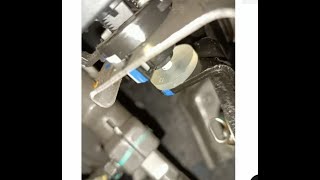
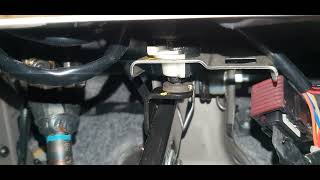
Look under the dash at the brake pedal arm. Ensure the pedal returns fully without binding. On Hyundai/Kia models, verify the plastic stopper pad that hits the sensor plunger is intact and hasn't shattered onto the floor mat.
Tools: Flashlight (Beginner) - Attempt a BPP Sensor Calibration
If your code is C0277-4B, or if you recently replaced the sensor, use a bi-directional scan tool to run the 'BPP Sensor Calibration' in the BCM menu. Do not touch the brake pedal during this process.
Tools: Bi-directional Scan Tool (Advanced) - Analyze Scan Tool Live Data PIDs
Monitor the 'Brake Pedal Position' PID on your scanner. Released, it should read 0% (or <0.5V). Pressed fully, it should smoothly rise to 100% (or ~4.5V). Erratic jumps confirm a bad sensor or wiring.
Tools: OBD-II Scan Tool with Live Data (Intermediate) - Test the Circuit's Power and Ground
Disconnect the sensor. Turn the ignition ON. Use a multimeter to verify 5 volts (4.8V-5.2V) on the reference wire and near-zero ohms on the ground wire. Incorrect readings mean the wiring or BCM is at fault, not the sensor.
Tools: Multimeter, Vehicle Wiring Diagram (Intermediate) - Test the Sensor's Signal Voltage
Reconnect the sensor and back-probe the signal wire. Voltage must sit below 0.5V with the pedal released and climb smoothly to roughly 4.5V as you press the pedal. Dropouts indicate internal sensor failure.
Tools: Multimeter, Back-probe pins (Intermediate) - Test Sensor Resistance (Ohms)
Disconnect the sensor. Measure resistance across the signal pins while manually moving the plunger. You need a smooth, linear change in resistance. Sudden jumps to 'Open Loop' (OL) confirm a dead sensor.
Tools: Multimeter (Intermediate) - Analyze the Signal with an Oscilloscope
For intermittent faults that a multimeter misses, connect an oscilloscope to the signal wire. Press the pedal repeatedly. The waveform must be a clean ramp. Glitches or static confirm a failing sensor track.
Tools: Oscilloscope (Advanced) - Test the Body Control Module (BCM)
If the sensor, wiring, and calibration are perfect, the BCM is suspect. Clean the main BCM harness connectors with contact cleaner first. If communication codes (U0140) are present, verify BCM main power and grounds.
Tools: Advanced Scan Tool, Multimeter, Wiring Diagrams (Advanced)
When This Code Triggers (Freeze-Frame Conditions)
- Battery Voltage: 11-14V (The diagnostic runs continuously when the ignition is ON and voltage is stable.)
- Vehicle Speed: 0-70 mph (The fault triggers at any speed when the BCM receives an implausible signal.)
- Brake Pedal Status: Applied or Released (Triggers when the pedal is pressed and the signal drops out, or released and the signal fails to return to 0V.)
- RPM: 800-3000 (Independent of engine RPM; strictly monitors the electrical integrity of the brake circuit.)
Related Codes
- C0890 — Indicates a fault in the BPP sensor's 5V reference circuit. If present with C0277, the sensor is likely fine; you must fix the power supply wiring from the BCM.
- C0161 — Means 'ABS Brake Switch Circuit Plausibility Failure'. The EBCM sets this when it detects brake fluid pressure but no signal from the BPP sensor. Fix C0277 first.
- U0140 — Means 'Lost Communication with Body Control Module'. If present, the BCM is offline. Stop diagnosing the sensor and fix the BCM power/ground issue first.
- C0595 — Means 'Brake Booster Control Module Internal Driver Performance'. Often sets alongside C0277 on GM vehicles due to the software glitch outlined in TSB 19-NA-202.
Climate & Environmental Factors
- High Heat and Humidity: Swells the brake pedal's pivot bushing, causing the pedal to bind and fail to return to the 0% resting position.
- Cold Weather: Turns plastic components, specifically the Hyundai/Kia brake pedal stopper pad, brittle. The pad shatters, creating a gap that prevents the switch from actuating.
- Interior Cleaning Products (Subaru): Silicone gases from detailing sprays penetrate the unsealed brake light switch housing, baking a layer of silicon dioxide onto the contacts and destroying the circuit.
How to Talk to a Mechanic About This Code
Say this: "I have a C0277 code with my ABS and traction control lights on. Can you confirm your shop has a bi-directional scan tool capable of performing a 'Brake Pedal Position Sensor Calibration' for a [Your Year/Make/Model]?"
This proves you understand the repair requires programming, filtering out ill-equipped shops and preventing wasted diagnostic fees.
Avoid saying:
- 'My ABS light is on, can you fix it?'
- 'My car is acting weird, I think it's a brake sensor.'
- 'Just do whatever it takes to fix the lights.'
Questions to ask before authorizing the repair:
- What was the specific two-digit suffix for the C0277 code (e.g., -06, -4B)?
- Does the estimate include the mandatory BPP sensor calibration procedure?
- Have you checked for any Technical Service Bulletins or open recalls related to this code?
- If the code was C0277-4B, can we try performing the calibration procedure before replacing the sensor?
Where to Take It: Dealer vs Independent vs Chain
- Dealer:
Recommended only if your vehicle falls under a known TSB or recall; otherwise, an independent shop is cheaper.
Best for: Vehicles under warranty., GM vehicles requiring the TSB 19-NA-202 software update., Subaru or Hyundai/Kia vehicles with open recalls.
Downsides: Highest labor rates., May push for sensor replacement when only calibration is needed. (Typical cost: +50% vs. baseline) - Independent Shop:
Best overall fit, provided you call ahead to verify they can perform the 'Brake Pedal Position Sensor Calibration'.
Best for: Out-of-warranty vehicles., Cost-conscious owners.
Downsides: Not all independent shops own the bi-directional scan tools required for calibration. (Typical cost: +0% vs. baseline) - Chain Shop:
AVOID. They will replace the sensor but fail to perform the calibration, causing the code to return immediately.
Best for: Simple mechanical part swaps.
Downsides: Technicians rarely have access to advanced bi-directional scanners., High pressure to upsell. (Typical cost: -10% vs. baseline)
When to Walk Away From the Repair
If the estimated repair cost exceeds 40-50% of the car's private-party value, consider selling it.
- Car worth $4000, fix is $200: Fix it. This is a critical safety repair well below the threshold.
- Car worth $2500, fix is $1500: Walk away. If the C0277 fix requires a new BCM and wiring harness totaling $1500, it exceeds 50% of the car's value.
What Scan Tool You Need for This Code

Minimum: A bi-directional scan tool capable of performing 'Special Functions' for the Body Control Module (BCM).
A basic $50 code reader cannot perform the mandatory 'Brake Pedal Position Sensor Calibration'. If you replace the sensor using a basic scanner, the repair will fail.
Budget: BlueDriver Pro (~$100) — Reads the specific C-code and suffix. Views live sensor voltage data. CANNOT perform the calibration.
Mid-range: Foxwell NT510 Elite (~$180) — Provides bi-directional control for a single car make. Performs the BPP sensor calibration and ABS bleeding.
Professional: Autel MaxiCOM MK808S (~$450) — Full bi-directional control for all makes. Easily performs BPP sensor calibration and module resets.
Rent vs buy: You must buy. Auto parts stores only rent basic code readers, which cannot perform the required calibration.
How to Clear the Code After You Fix It
- Perform the physical repair (replace sensor, fix wiring, or replace stopper pad).
- Perform the BPP Sensor Calibration procedure using a bi-directional scan tool.
- Clear the C-codes from the BCM memory.
- Cycle the ignition OFF for 60 seconds, then ON, and press the brake pedal to confirm the code does not return.
Drive cycle (~15 minutes): A specific drive cycle is not required to clear C0277. Simply clearing the code and pressing the brake pedal while parked verifies the repair. To reset emissions monitors cleared during the process: idle for 2 minutes, drive at 45 mph for 5 minutes, and drive at 60 mph for 5 minutes.
Readiness monitors affected: C0277 is a Chassis code and does not affect emissions monitors., However, using a scanner to 'Clear All Codes' resets all emissions monitors to 'Incomplete'.
Before emissions retest: drive at least 50 miles to fully set monitors.
Watch out for:
- Skipping the BPP Sensor Calibration after replacing the sensor guarantees the code returns instantly.
- Clearing the code without fixing the hardware fault results in the lights returning the moment you press the brake pedal.
Will This Fail Emissions / State Inspection?
No — by itself this code doesn't fail OBD inspection (but it can keep readiness monitors from setting, which causes a separate fail).
- California: Passes the OBD-II smog check, but fails the mandatory safety inspection due to the illuminated ABS light and inoperative brake lights.
- New York: Fails the NYS safety inspection instantly for inoperative brake lights.
- Texas: An ABS light alone does not fail a Texas inspection, but non-functioning brake lights result in an immediate failure.
Most Commonly Affected Vehicles
- Chevrolet Malibu (2016-2019) — A software anomaly triggers this code. TSB 19-NA-202 dictates an EBCM software update, not a sensor replacement.
- Chevrolet Silverado / GMC Sierra (2012-2018) — Highly prone to needing a BPP sensor relearn. Also suffers from poor terminal tension at the X205 intermediate harness connector under the dash.
- Chevrolet Corvette (2005-2013) — A current C0277 code completely prevents the engine from starting. Dirty BCM connectors are a frequent hidden cause.
- GMC Acadia (2008-2017) — Frequently logs C0277. You must read the suffix to determine if it requires a circuit repair (-06, -07) or a scan tool calibration (-4B).
- Ford Focus / Fusion (2012-2018) — The switch is self-adjusting. Pressing the brake pedal firmly after installation sets its correct position without needing a scan tool.
- Subaru Outback / Forester / Crosstrek / Impreza (2013-2019) — Subject to massive recall WUE-90 (NHTSA #19V149000) for silicone contamination of the switch. Dealers replace it with an updated, sealed part for free.
- Hyundai / Kia Elantra / Sonata / Optima (2011-2020) — The plastic stopper pad on the brake pedal arm shatters. Replacing this $5 part fixes the issue instantly. Subject to multiple recalls.
Manufacturer-Specific Notes
- General Motors (Chevrolet, GMC, Cadillac, Buick): GM requires a scan tool calibration after almost any brake pedal service. They also issued TSB 19-NA-202, which mandates a software update rather than parts replacement for specific models.
- Subaru: Recall WUE-90 covers millions of vehicles because silicone interior cleaners destroy the brake light switch. Always check your VIN for this free fix before buying parts.
- Hyundai / Kia: Always inspect the brake pedal arm for a missing rubber/plastic stopper pad before testing electronics. This $5 piece of plastic shatters and causes the exact same symptoms as a dead sensor.
- Ford: Ford uses a self-adjusting ratcheting switch on many models. You install it, press the brake pedal firmly once, and it calibrates mechanically without a scan tool.
Real Owner Stories
2013 Chevrolet Corvette with delayed brake lights
Brake lights only illuminated after a hard pedal press. A shop scan revealed code C0277-06.
Outcome: A forum expert explained that replacing the sensor requires a 'BPP Sensor Calibration' using a scan tool. The owner paid a shop $80 to perform the 5-minute calibration, which permanently fixed the issue.
Lesson: Replacing the BPP sensor is only half the job on modern cars. You must perform the calibration procedure, or the symptoms will persist.
2011 Chevrolet Cruze with recurring codes after DIY repair
Owner replaced the BPP sensor. Afterward, C0277-06 and U0140 (Lost Communication with BCM) appeared.
Outcome: The combination of a circuit code and a U-code points to a deeper issue than calibration. The BCM itself was failing, causing both the communication drop and the erratic sensor readings.
Lesson: If a communication code (U-code) appears alongside C0277, stop diagnosing the sensor. The BCM or its main wiring harness is the actual problem.
C6 Corvette with C0277-06 preventing calibration
The owner attempted a BPP sensor relearn with a Tech2 scanner, but the tool returned a 'Device Control Not Allowed' error.
Outcome: Before tearing the dash apart, the owner drenched the large blue connectors at the BCM with electronic contact cleaner. This removed oxidation, restored the connection, and allowed the calibration to complete successfully.
Lesson: Before replacing expensive modules or tracing wires, clean the main BCM harness connectors. High resistance from dirt mimics a failed component.
How to Prevent This Code From Triggering
- Avoid Silicone-Based Interior Cleaners (Subaru) (Always) — Silicone gases from detailing products seep into unsealed brake light switches, destroying the electrical contacts. Use silicone-free cleaners.
- Inspect Brake Pedal Stopper Pad (Hyundai/Kia) (Every 30,000 miles) — The plastic stopper pad becomes brittle and shatters. Catching a cracked pad early saves you from a sudden no-start or brake light failure.
- Ensure Brake Pedal Returns Freely (Monthly) — Pull up on the brake pedal with your foot. If you feel slack, the pivot bushing is binding, which keeps the sensor partially activated and triggers codes.
- Keep Floor Mats Clear of Pedals (Every drive) — A bunched-up floor mat physically obstructs the pedal from returning to 0%, triggering a plausibility code and disabling safety systems.
- Apply Dielectric Grease During Replacement (Once, during sensor replacement) — A small amount of dielectric grease on the connector seals blocks moisture and prevents corrosion-related circuit codes (-06, -07).
Frequently Asked Questions
Can I replace the Brake Pedal Position sensor myself?
Yes, the physical replacement is easy. However, on most vehicles, you must use a bi-directional scan tool to perform a calibration procedure afterward. Skipping this step guarantees the code returns immediately.
What does the suffix on C0277 mean, like C0277-4B?
The suffix tells you exactly what is wrong. A '4B' means 'Calibration Not Learned', requiring a 5-minute scan tool reset. Suffixes like '-06' or '-07' indicate physical wiring shorts or broken sensors.
I replaced the sensor but the code came back. What did I do wrong?
You failed to perform the BPP Sensor Calibration procedure with a scan tool. If you did calibrate it, you likely have a wiring harness issue or need a dealer software update.
My brake lights work, so can the sensor still be bad?
Yes. The sensor sends a variable voltage signal. It might send enough voltage to trigger the brake lights, but the signal is too erratic for the ABS and traction control systems to trust.
Why did my ABS, traction control, and brake lights all come on?
These systems require precise braking data to function safely. When the sensor fails, the computer disables ABS and traction control to prevent unpredictable braking behavior, illuminating the warning lights.
My car won't start and is showing a C0277 code. Why?
On push-to-start vehicles and specific models like the Corvette, the computer blocks engine startup if it detects a critical brake sensor fault. This prevents you from driving a vehicle with no brake lights.
Can cleaning my car's interior cause code C0277?
Yes, on millions of 2013-2019 Subarus. Silicone gases from interior detailing sprays seep into the unsealed switch and destroy the electrical contacts, prompting a massive recall.
Could a weak battery cause code C0277?
A weak battery rarely causes C0277 directly. However, if your brake lights are stuck ON due to a failed sensor, it will drain and kill your battery overnight.
Key Takeaways
- Always check the two-digit code suffix first; a C0277-4B means you must perform a 5-minute scan tool calibration, not replace parts.
- Do not drive normally with code C0277; it completely disables your brake lights, ABS, and stability control, creating an immediate rear-end collision hazard.
- Search your VIN for recalls before buying parts, as millions of 2013-2019 Subarus have free dealer replacements for silicone-contaminated switches.
- Budget $50 to $150 for shop labor to perform a mandatory BPP Sensor Calibration if you replace the sensor yourself without a $400+ bi-directional scanner.
Helpful Videos
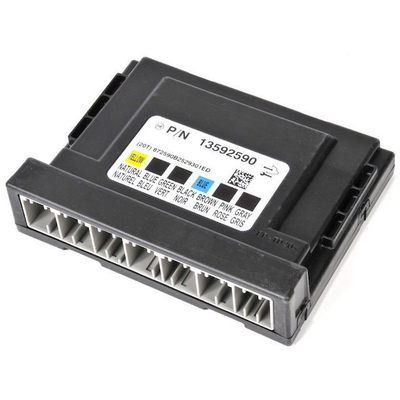
Shop the Parts Behind C0277
Below are the parts most often responsible for code C0277, ranked by how frequently each one is the actual culprit (per the diagnosis above). Tap any to see what we have for your vehicle.


The information in this article is provided for general reference and educational purposes only. Vehicle specifications, procedures, and part compatibility can vary by production date, trim level, and region. Always consult your vehicle's factory service manual and verify part numbers before purchasing or performing repairs. Safety-critical components such as airbags, seat belts, and braking systems should be installed by a qualified professional.
- 🧭 Diagnostic Flowchart
- 🎬 Helpful Videos
- 🛍️ Shop This Part
- What Does C0277 Mean?
- Can I Drive With C0277?
- Common Causes
- Symptoms
- Common Fixes & Costs
- Used vs. New Parts: Buying Guide
- What Happens If You Wait — Timeline
- Cost of Not Fixing It
- Diagnosis Steps
- When This Code Triggers (Freeze-Frame Conditions)
- Related Codes
- Climate & Environmental Factors
- How to Talk to a Mechanic About This Code
- Where to Take It: Dealer vs Independent vs Chain
- When to Walk Away From the Repair
- What Scan Tool You Need for This Code
- How to Clear the Code After You Fix It
- Will This Fail Emissions / State Inspection?
- Most Commonly Affected Vehicles
- Manufacturer-Specific Notes
- Real Owner Stories
- 2013 Chevrolet Corvette with delayed brake lights
- 2011 Chevrolet Cruze with recurring codes after DIY repair
- C6 Corvette with C0277-06 preventing calibration
- How to Prevent This Code From Triggering
- Frequently Asked Questions
- Can I replace the Brake Pedal Position sensor myself?
- What does the suffix on C0277 mean, like C0277-4B?
- I replaced the sensor but the code came back. What did I do wrong?
- My brake lights work, so can the sensor still be bad?
- Why did my ABS, traction control, and brake lights all come on?
- My car won't start and is showing a C0277 code. Why?
- Can cleaning my car's interior cause code C0277?
- Could a weak battery cause code C0277?
- Key Takeaways
- 🎟️ Get 5% Off